Skip to search results
loaded 2 results
Black Diamond Internal Frame Skiing
(2 products)Products (2)
Filter
- Unisex (2)
- Backcountry Skiing (2)
- Splitboarding (1)
- Reservoir Compatible (1)
- Hipbelt Pockets (1)
- Avalanche Airbag (1)
- Waterproof (1)
- Bluetooth (1)
- Frameless (6)
- Internal Frame (2)
- JetForce (1)
- Backpack (1)
- Top (1)
- 1.50 to 2.99 (1)
- 5 to 7.99 (1)
- 21 to 35 (2)
Sort: Best Match
View:
- Black DiamondJetForce Pro Split 25L Avalanche Airbag Pack$1,499.95(14)14 reviews with an average rating of 3.4 out of 5 stars
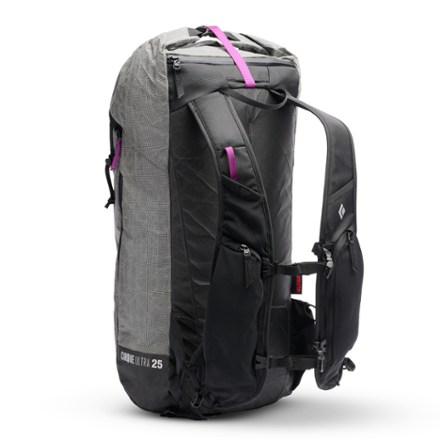
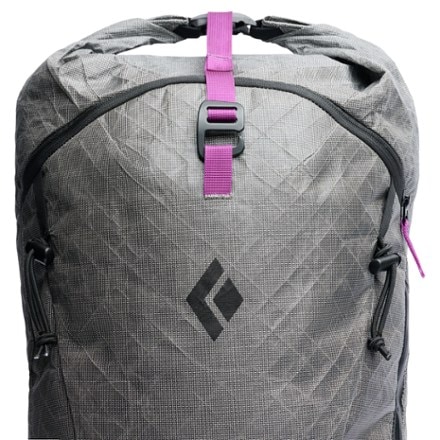
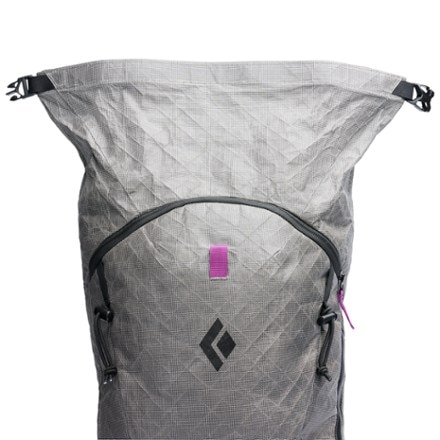
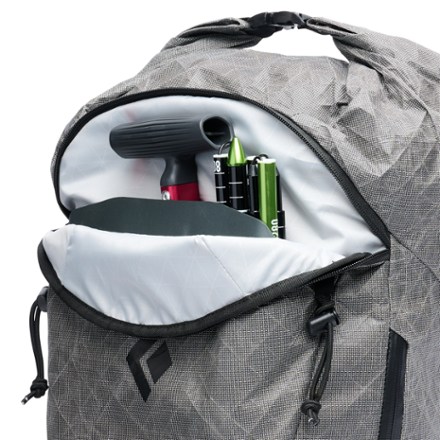
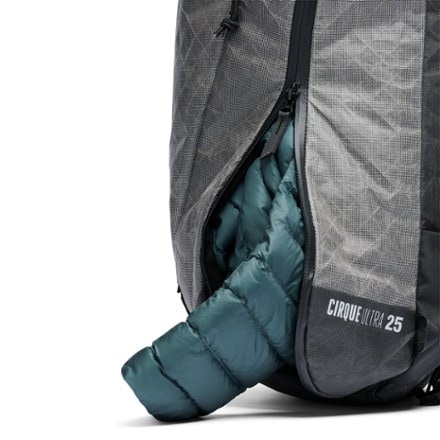
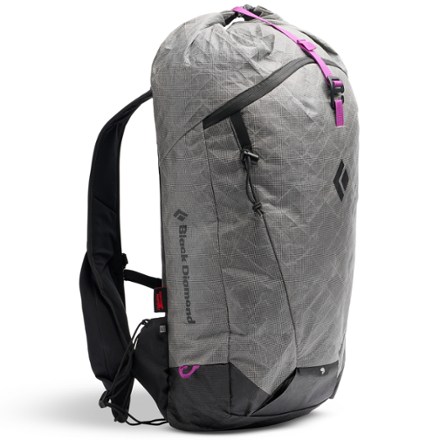
- Black DiamondCirque Ultra 25 Snow Pack$369.95(0)0 reviews
Sort: Best Match
Related Expert Advice articles
What type of skiing will you be doing?
- Downhill skiing: Helps balance and time turns; most are fixed length
- Backcountry skiing: Adjustable poles let you lengthen for uphill travel, shorten for descents
- Cross-country skiing: Longer and lighter, designed to help you glide forward efficiently. Poles for skate skiing are longer than for classic skiing.
Sizing downhill poles:
- Stand in your ski boots on a level floor
- Grip the poles just below the basket
- Your elbow should form a 90° angle
- If the angle is less than 90°, try a shorter pole
- If the angle is greater, get a longer pole.
Basket type:
- Standard: for most conditions
- Powder: for deep snow
- Powder and standard: Interchangeable baskets
What is an avalanche transceiver?
- If you recreate in snowy backcountry terrain, an avalanche transceiver is an essential safety device—along with a probe and shovel
- Transceivers help you locate someone buried in an avalanche and it helps rescuers find you if you’re buried
What features should I look for?
- Analog or digital: Most modern transceivers are digital; some are both digital and analog
- Multiple burials: Allows searchers to detect more than one buried person; most offer this feature
- Marking function: Lets a searcher to mark the location of a buried person so they can search for another one
- Display screen: Displays direction and distance to a buried person
- Range: Listed in meters (typically 40-70m), the circular range at which one transceiver can detect another
Read full article: How to Choose and Use an Avalanche Transceiver
Snowshoeing is an easy, fun and relatively low-risk winter activity—as long as you follow a few basic guidelines about avoiding avalanches.
This overview of topics covered in an avalanche rescue class introduces essential skills such as searching, probing and digging for a buried victim.
Learn how to identify and avoid avalanche terrain and choose safer travel routes.
Read full article: Reducing Risk: How to Recognize Avalanche Terrain
An avalanche forecast tells you about potential slide dangers. Learn what it is, where to find it and how to read a forecast.