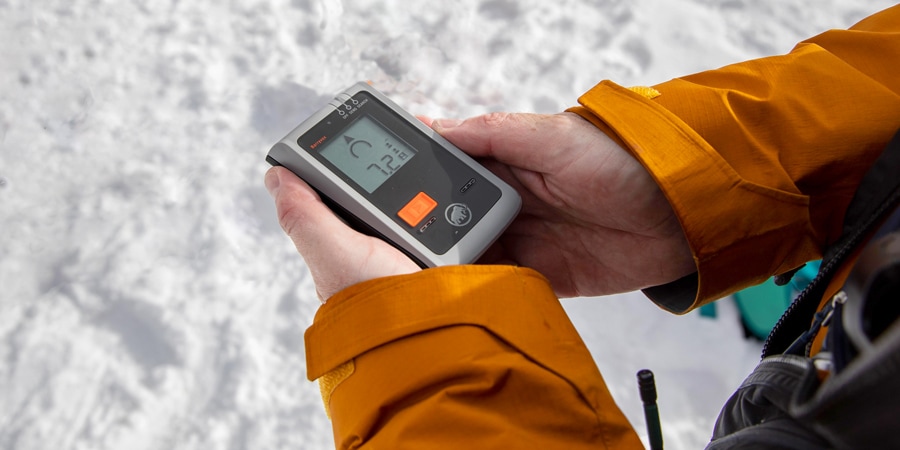
If you spend time in the backcountry during winter, there’s an inherent risk of avalanches. That’s something we all need to take seriously, and there are lots of ways to stay prepared with training, knowledge and rescue tools. One of the most important rescue tools is an avalanche transceiver, a device that helps you locate a person buried in an avalanche or helps others find you if you’re buried.
Do you need an avalanche transceiver? If you’ll be skiing, splitboarding, snowshoeing or otherwise recreating out of bounds, it’s essential, along with a probe and shovel. Survival in an avalanche often depends on how quickly rescuers can pinpoint and dig out a buried person, so it’s important to travel with one.
In this article, we will discuss what avalanche transceivers do and how to choose the transceiver that is best for you:
- What are avalanche transceivers?
- Understanding modern avalanche transceivers
- Features to consider
- Tips on using an avalanche transceiver
- How to maintain your transceiver
- Common questions
For more information, read our article series on Avalanche Awareness.
Remember: Safety is your responsibility. No internet article or video can replace proper instruction and experience—this article is intended solely as supplemental information. Be sure you're practiced in proper techniques and safety requirements before heading to the backcountry.
Why Trust This Guide?
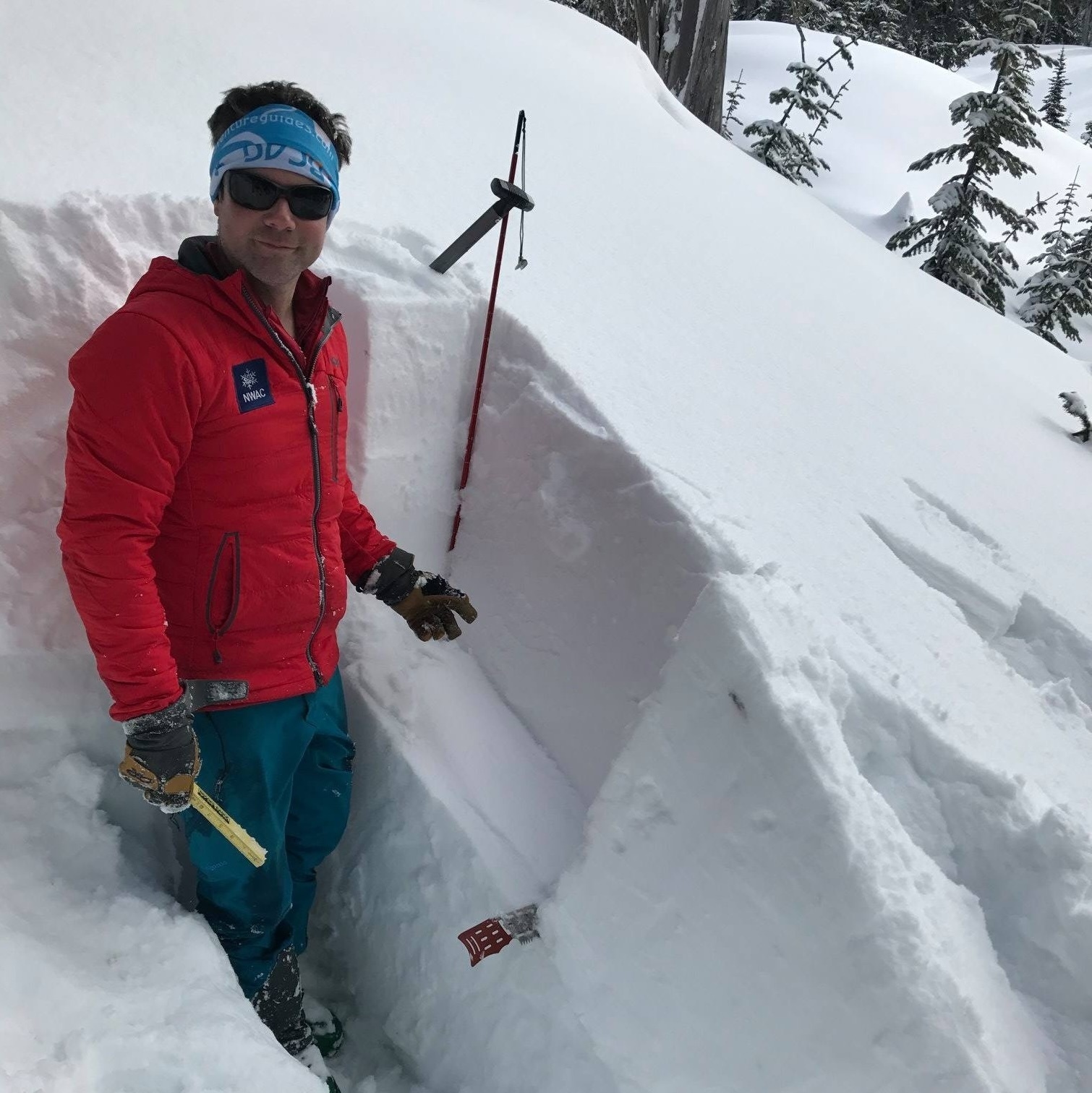
As a certified American Mountain Guides Association (AMGA) ski and splitboard guide as well as a course lead instructor for the American Institute for Avalanche Research and Education (AIARE), I’ve spent the last decade guiding, teaching and working with transceivers. For this piece, I also chatted with Ian Nicholson, an International Federation of Mountain Guides Association (IFMGA) guide with 20 years of experience. Nicholson is also a former professional forecaster for the Northwest Avalanche Center (NWAC) and is currently an AMGA National Instructor team member. He has taught over 150 recreational avalanche courses, is the author of two rescue books and has worked with many different types of avalanche transceivers throughout the years.
What are Avalanche Transceivers?
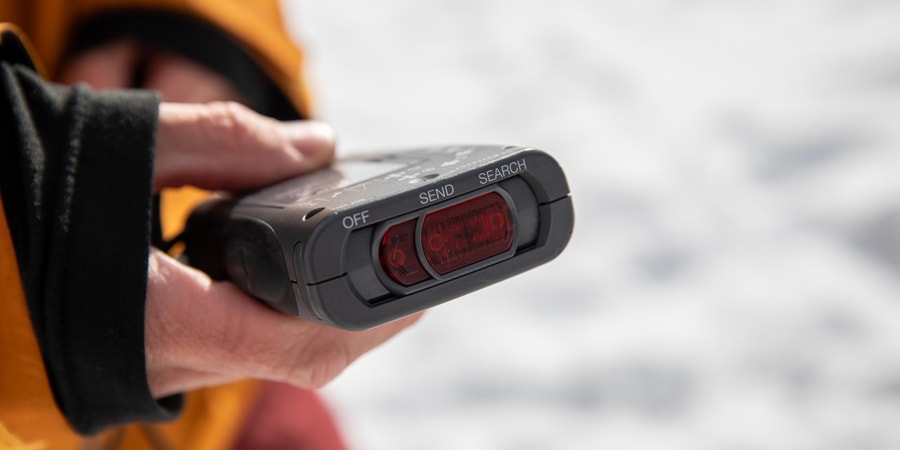
Avalanche transceivers, sometimes referred to as avalanche beacons, are safety devices used during backcountry snow travel. Backcountry skiers, snowboarders, snowshoers and rescuers use the device—roughly the size of a thick cellphone—to locate a missing companion buried in an avalanche or to be found if they're buried themselves. Avalanche transceivers are worn close to the body and continuously emit a radio signal that can be picked up by other transceivers in the area.
Modern transceivers operate at 457kHz, an internationally recognized frequency standard that allows different brands to communicate with each other. Users begin each tour with the device in transmit or send mode so it continuously broadcasts signals. If an avalanche occurs, companions switch their transceivers into “search mode” to detect the buried person’s signal and pinpoint their location before probing and digging.
For an overview of all avalanche safety essentials—including additional gear and tools to consider—see our Avalanche Safety Gear and Checklist. For tips specifically on snow shovels, read How to Choose a Snow Shovel.
How are avalanche transceivers different from personal locator beacons and satellite messengers? An avalanche transceiver is not the same as a personal locator beacon (PLB). A PLB can only send one-way SOS signals to search-and-rescue teams. Meanwhile, satellite communicators allow two-way messaging in remote areas and often require a subscription service. Neither satellite communicators nor PLBs communicate with each other the way that avalanche transceivers do. Instead, they are used to send an SOS or messages when you need help in areas without cell service.
In the event of an avalanche, a transceiver is the necessary tool for rescue. However, a PLB or satellite messenger is still important if you need medical support, evacuation or additional help after digging out a victim especially in areas without cell phone service. But they’re not substitutes for transceivers, which send and receive signals to help locate someone buried in an avalanche. (For more information, read “How to Choose Between a PLB and a Satellite Messenger.”
Device | Purpose | Communication |
|---|---|---|
Helps locate people buried in an avalanche using other nearby transceivers |
| |
Personal locator beacons | Sends one-way SOS signals to nearest rescue services via satellite |
|
Allows two-way communication (text messaging, tracking) in remote areas |
|
Understanding Modern Avalanche Transceivers
Digital vs. analog: Modern transceivers are digital. These models use up-to-date technology that is straightforward and simpler to use than previous analog versions. Some avalanche transceivers like the Mammut Barryvox S Avalanche Transceiver or the Pieps Powder BT Avalanche Beacon offer both digital and analog, but models that only transmit analog signals are generally outdated.
2-antenna vs. 3-antenna models: All modern transceivers use a 3-antenna design that allows searchers to efficiently pinpoint the location of the victim. Today, 3-antenna models are considered the industry standard and are strongly recommended over older 2-antenna models. (All units sold at REI Co-op use 3-antenna designs.)
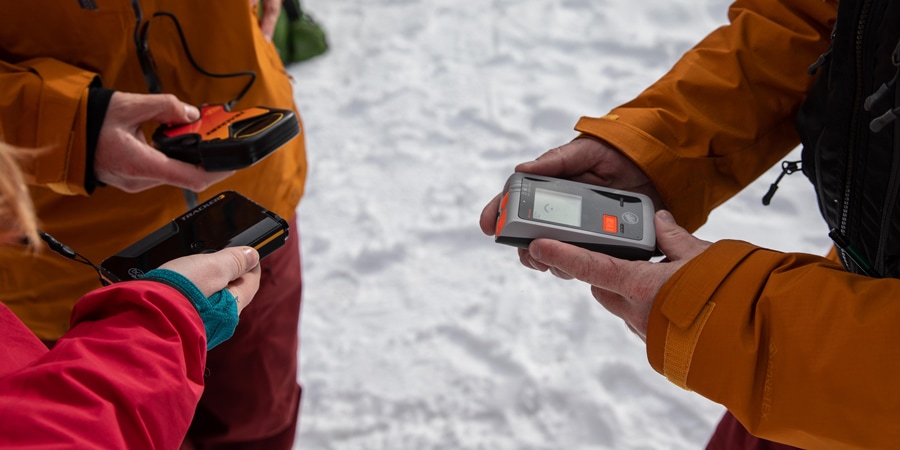
Compatibility: All modern-day transceivers should be compatible with other transceivers, meaning they should send and receive a signal that matches other transceivers in the group. Before going into the backcountry, it is important to conduct what’s called a beacon or trailhead transceiver check to ensure that everyone’s transceivers are working properly and picking up signals from the rest of the group.
Transceiver Features
When choosing an avalanche transceiver, all the added features can make the decision feel overwhelming. When in doubt, stick to a simple option, especially if you are new to the backcountry and transceivers. “Simple is often better,” says Nicholson.
Typically, a higher-priced transceiver reflects the quantity and sophistication of its features. For example, Bluetooth-enabled updates and a lighter, more compact design will cost more. However, more bells and whistles don’t necessarily mean it’s the right choice for you. “The best beacon is the one you are most familiar with,” notes Nicholson.
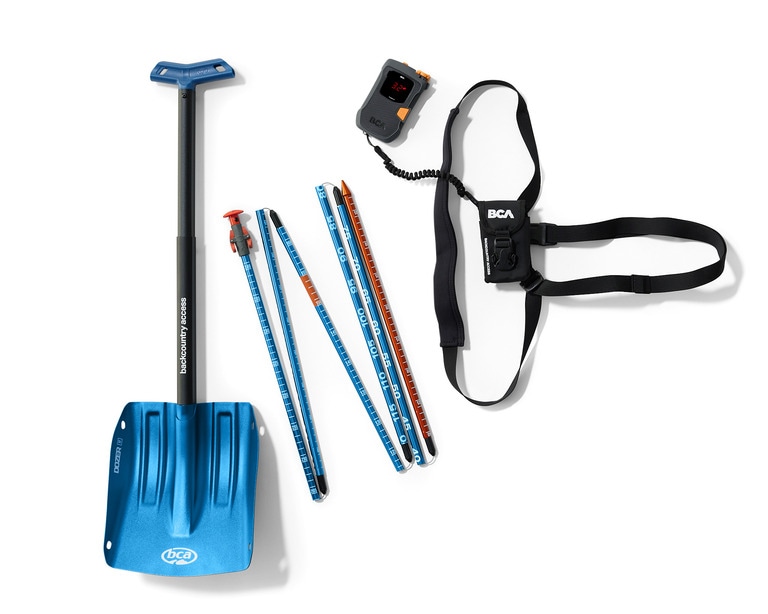
If you’re just starting out, consider a package like the Backcountry Access Tracker 3+ Rescue Package pictured below that includes the three rescue tools: snow shovel, avalanche transceiver and a probe.
If you have a chance, take an avalanche course before purchasing. You may be able to get hands-on experience with multiple transceiver models or talk to others so you can get a feel for which one you prefer.
A few things to consider with an avalanche transceiver:
Display screen: A display communicates the direction and distance to a buried victim. User interfaces vary by brand and model, but most are intuitive to use and will include arrows and numbers in the event of a search. Also, when the transceiver is transmitting it may show that display on the screen or through a blinking light on the device. Higher end models may have a backlit, larger screen that you can use with sunglasses. Others may display LED lights that indicate distance and direction to a buried companion.
Range: Brands will list in meters the circular range in which one transceiver can sense others’ signals. A greater range may allow you to pick up a signal from a farther distance. Still, consider stated range distances to be a best-case scenario. In practice, the range is often shorter because the orientation of a sending unit to a searching unit is rarely ideal. Some transceivers may pick up a signal range of 70 meters or more, but the unit may not pick up a steady or accurate signal until you’re about 30-40 meters away from the buried victim.
Multiple burials: Modern-day transceivers have the ability to pick up multiple buried victims. This feature allows searchers to identify the location of one victim before locating the others. Most reputable brands offer multiple burial tracking even in their most basic models.
Marking function: This flagging function allows the searcher to mark or flag the location of each buried person.
Audio signal: Newer transceivers will emit an audible tone that also helps searchers know when they're getting closer to a victim. This may come in the form of a louder, more repetitive beeping noise that coincides with closer proximity. Some, like the Ortovox Diract Voice, take this a step further by being the first transceiver to provide voice guidance.
Automatic revert to transmit mode: This function automatically switches a transceiver to transmit or send mode if the searcher has remained motionless for a specific amount of time. This could happen in the event of, for example, a secondary avalanche or a misplaced or lost beacon. This feature varies among different models and brands; consult the manufacturer's manual to learn more.
Tips on Using an Avalanche Transceiver
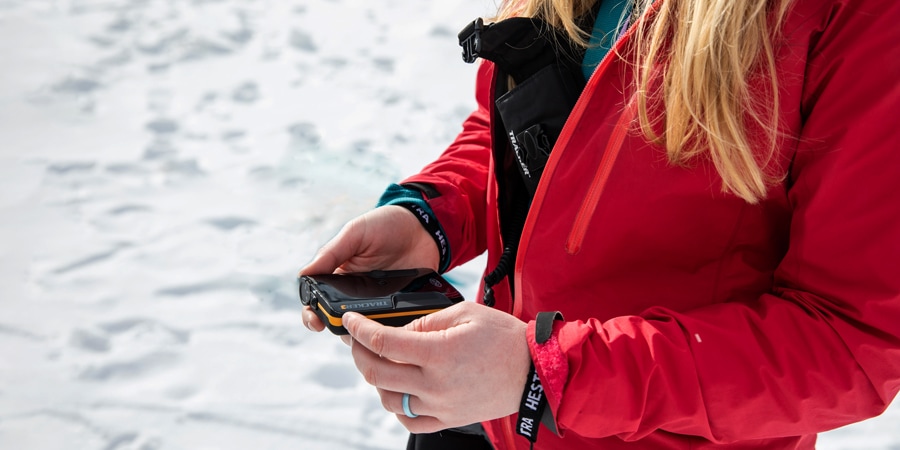
The only transceiver that can help you in an emergency is one you haven’t lost, so check your manual for the recommended way to carry your transceiver and make it your priority to keep it secure.
How should you carry your transceiver? Consult the manufacturer's manual for specific recommendations on how to carry your device. Transceivers are typically worn on your body using the chest harness or other carrying system that's supplied. It should also be worn underneath at least one layer of clothing, so it doesn't get knocked off during an avalanche. Some brands may offer specific instructions for carrying the device in a securely zipped pocket, attached using a leash or lanyard.
Learn and practice how to use your transceiver
Survival rates drop off significantly after someone is buried for just 10 minutes, according to a 2024 study, so it is essential to master the rescue process and use of your transceiver. Read your transceiver manual; take an avalanche rescue class or an avalanche course; and regularly practice using your transceiver, probe and shovel.
For more information, read Avalanche Rescue Overview in our Avalanche Awareness Series.
Always keep a transceiver in send mode (until a search is needed)
It's critical to always keep your transceiver in "send mode” (aka "transmit mode”) while in the field. In the event of a burial, your partners can pick up on your signal and initiate a rescue. In this event, the searchers will assess the scene for safety and then immediately switch their units to "search mode” to receive the signal your transceiver is sending out.
Always Perform a Trailhead Transceiver Check
As mentioned above, this is a must-do step. It ensures that both the send and search modes for all transceivers are functioning properly, that they are compatible with each other, and that everyone is in "send mode” before setting off.
Here are the steps for the transceiver check:
Step 1: Check the display screen
- Ensure that there are no cracks on the screen and that it is readable.
Step 2: Check the battery level
- This varies depending on what the manufacturer recommends. A good practice is to change batteries when they have 50-65% life left.
Step 3: Maintain distance between the transceiver and other electronics
- Interference between the transceiver and other electronics can affect how a transceiver receives or sends a signal. You can prevent this by keeping the transceiver away from other electronic equipment.
- A good rule of thumb is to keep electronics like cellphones, GPS devices, communication radios and other electronic equipment about 40-60 cm (15-20 inches) away from an avalanche transceiver.
- If possible, turn off electronics like heated socks, radios and tracking watches during a fine search (when you’re trying to pinpoint the buried person).
Step 4: Make sure your "search" function works
- Stand in a circle with the leader's transceiver turned to ‘send/transmit’ mode.
- Others in the group then switch to ‘search’ mode and the leader walks around the circle.
- As the leader approaches each person, the number on their screen should get smaller.
Step 5: Make sure your "send" function works
- The group puts the transceivers back into “send mode” and stows them away for the day.
- The leader switches their device into “search mode” before moving around the circle or down the trail about 20 yards.
- They check each member of the group, either in the circle or as they walk by, maintaining space between each individual.
- The leader verifies each received signal and that the number descends the closer each person gets.
Step 6: Verify that the leader is also in "send mode”
- The leader switches to “send mode” and someone else from the group visually verifies this adjustment.
- Everyone in the group should now be in "send mode” and all set to move out.
Transceiver Care
Avalanche transceivers should be treated with care because the antennas are fragile. Try not to bang them or drop them, as it could affect their performance. It is also necessary to keep an eye out for recalls. Most modern transceivers have firmware updates that you can complete by downloading that brand’s app on a smartphone or computer, or in some cases by shipping the device directly to the manufacturer.
Nicholson says that he will typically send his avalanche transceiver in every other year to have it tested by the manufacturer. (This is typically free of charge.) It’s worth doing especially if you notice anything strange. (Barryvox, for example, recommends that its avalanche transceivers be sent to a service center every three years.) Nicholson adds that most manufacturers recommend a new avalanche transceiver after five to six years of use.
Batteries should be removed from the transceiver in the off-season or during long periods without use, as they could potentially corrode and affect performance. Remember too that they’re water-resistant, not waterproof. If you’re out on a wet day, it’s a good idea to let the device dry thoroughly and store in a dry place at room temperature. When in doubt, all this information will be listed in the manufacturer's manual, which will have more specific details regarding different makes and models.
Transceiver Batteries
Transceivers typically require AAA alkaline batteries, but some newer models are moving toward rechargeable battery systems as the cold-weather performance for lithium batteries have improved. The Ortovox Diract Voice, for example, is one of the first to use rechargeable lithium-ion batteries. Nicholson thinks this trend will continue and that more brands will offer rechargeable batteries.
Consult the user manual and use only the battery recommended for that transceiver.
Common Questions About Avalanche Transceivers
Why should I use an avalanche beacon?
Avalanche transceivers are an essential tool to help in a rescue if an avalanche burial does occur by pinpointing where someone is buried. In the event of a rescue, having an avalanche transceiver and knowing how to use it effectively can be a lifesaver for the victim involved. If you are traveling in the backcountry and especially in avalanche terrain, carry and know how to use an avalanche transceiver.
Do cellphones affect avalanche transceivers?
Cellphones and other electronic devices affect the way a transceiver receives and emits a signal, especially while in search mode. This is known as Electromagnetic Interference (EMI). To prevent this, keep some distance between electronic items. BCA, for example, recommends about 8 inches of separation from a transmitting transceiver and about 20 inches while in search mode. In the event of a search and especially in a fine search, turn off any sort of tracking devices (GPS, heating socks/gloves, smart watch, radio, etc.) Refer to the manufacturer's manual for recommendations on electronic interference.

What’s the difference between RECCO® reflectors and avalanche transceivers?
RECCO reflectors are not transceivers. People wearing these passive reflectors (typically sewn into ski clothes or ski packs) can be located by ski patrols and search-and-rescue groups that carry a large, technically sophisticated RECCO detector unit. A RECCO detector sends a signal that bounces off the wearer's reflector; no transmission is required by the buried person. RECCO detection and rescue is really only practical in a confined area like a ski resort because rescue timelines are too tight to send out a distress call and have distant search-and-rescue teams respond in time. However, in the event of an in-bounds avalanche—or any burial where it’s unclear whether the victim has a transceiver—rescuers such as ski patrol will attempt a beacon search first to check for a signal.