One pole or two?
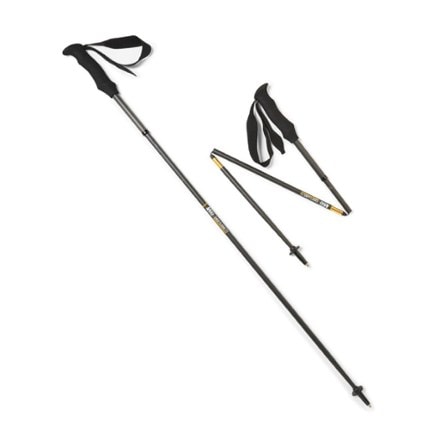
- Trekking poles: Used in pairs, can improve stability and reduce force on knees while hiking and backpacking under loads
- Hiking staff: Single pole used for stability, most effective on flat terrain with little to no load. Some can be used as a camera monopod
Find the right size
- Your elbows should bend at a 90° angle when holding the poles with their tips on the ground near your feet.
- For adjustable poles or staff: If you're taller than 6 feet, choose an option that has a max length of at least 51 inches. If you're under 6 feet tall, most poles can be shortened enough to work for you
- For fixed-length poles: Check the manufacturer's size chart for suggested sizing
Shaft material
- Aluminum: durable and less expensive but heavier, will bend before they break
- Composite: made entirely or partially of carbon, lightweight, can reduce vibration but are more breakable and more expensive
Grip material
- Cork: wicks sweat, molds to your hand, decreases vibration
- Foam: softer to hold but absorbs sweat
- Rubber: insulates from cold, shock and vibration but can chafe when wet
Read full article: How to Choose Trekking Poles and Hiking Staffs