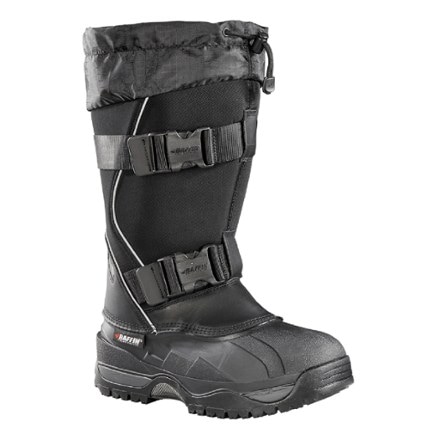
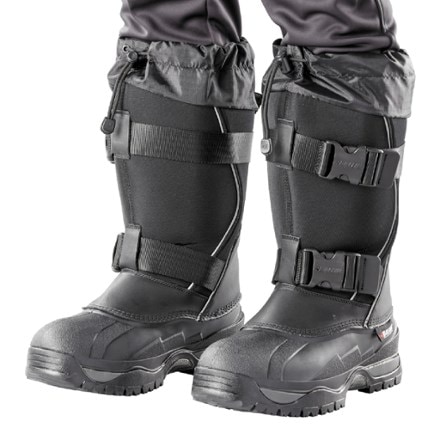
Buckle Boots
(1 product)- Winter Boots (1)
- Baffin (1)
- Men's (1)
- 9 (1)
- Waterproof (1)
- Insulated (1)
- Snowsports (1)
- Casual (1)
- Buckle (1)
- Bungee Lace (13)
- Dial Lace (7)
- Lace-up (523)
- Single-pull Lace (18)
- Slip-on (184)
- Strap (13)
- Zipper (29)
- Regular (1)
- Mid-calf (1)
- Black (1)
- 5 to 7.99 (1)
Related Expert Advice articles
Rent or buy?
- Rent if you have a one-time, guided trip planned
- Buy if you have multiple trips or long training season
Choose based on your activity
Long approaches: insulated boots for warmth and broken-in comfort
Hiking, scrambling: lighter, three-season boots are versatile and lower-cost
Mountaineering: durable, rigid, waterproof plastic shell boots are common as rentals
After you buy your boots
- Consider adding insoles for comfort and support
- Break them in before your summit attempt
- Find crampons that fit: either strap on, semi-automatic or hybrid
- Clean between outings
- Reapply water repellent when moisture absorbs instead of beads
Understand boot flex
- Soft flex: Comfortable; ideal for beginners or recreational riders
- Medium flex: Balances all-mountain performance and comfort
- Stiff flex: Maximum support for edge power and control at high speeds
Match riding style to flex
- All-mountain: Soft to medium for most riders; stiffer boots for racers
- Freeride: Stiffer for edge power and control at high speeds
- Freestyle: Softer for quick response and maneuverability in park terrain
Boot lacing system
- Dial lace: Uses one or two dials attached to cable for precise fit, higher cost
- Hybrid lace: Combines a dial system and traditional laces
- Traditional lace: Tried-and-true and easy to replace but can loosen during rides
- Quick pull: A single-pull lacing system that's fast and allows zonal tightening
Find a good fit
- Boots should feel snug and secure without cramping your feet
- It's OK for toes to barely graze the boot's toecap
- A snug heel fit is also key
Find the right size boot
A boot should fit snugly and hold your foot securely in place, without causing pain or pressure points.
- Measure your feet and consult the brand’s ski boot sizing chart
- If possible, try boots on in person
Consider the last width
Last is the width (mm) of the inside of the boot at the ball of your foot.
Narrower last: Ideal for narrow feet or those who want a tighter, high-performance fit
Wider last: Better for wider feet or those prioritizing comfort
Understand ski boot flex
Softer: Comfortable and forgiving; great for beginners or smaller skiers
Medium: Best for intermediate to advanced skiers; balances comfort and responsiveness
Stiff flex: Ideal for expert skiers; prioritizes performance
Related searches