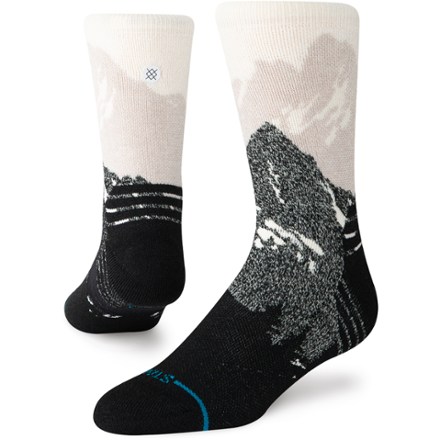
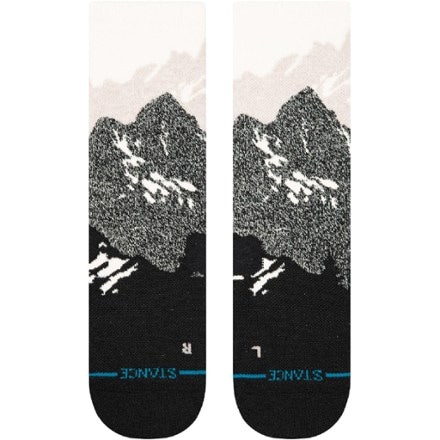
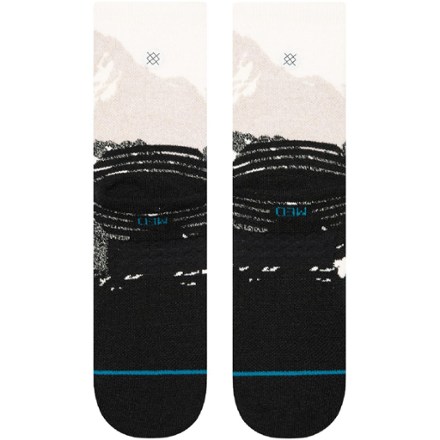
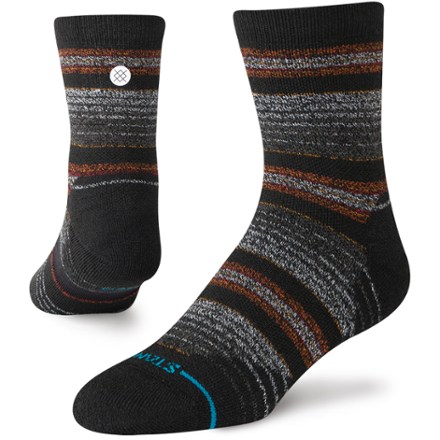
Select your sock height
- No-show: Minimal protection; best with low-cut footwear like trail-running or light hiking shoes
- Ankle: Covers your ankle bone; best for low- to mid-cut shoes and boots
- Crew: Extends above ankle; good for boots or shoes
- Knee-high: Provides warmth and protection against high-cut boots
Choose your preferred cushioning level
- None: Ultralight; ideal for hot weather or as sock liners
- Light: Thin cushioning; better for warm conditions
- Medium: Targeted cushioning in the heel and ball; ideal for moderate to cold conditions
- Heavy: Thickest and most cushioned; best for long trips, rugged terrain and cold
Select a fabric
- Choose moisture-wicking, quick-drying materials like wool, polyester or nylon
- Spandex adds stretch to prevent bunching
- Cotton isn't recommended as it absorbs moisture and dries slowly
Find your fit
- Choose based on your foot size, not shoe size.
- If you're between sizes, size down to avoid excess material that can bunch up and cause blisters.
- Socks should feel snug but not tight, and the sock's heel cup should naturally line up with your heel.
Read full article: How to Choose Hiking Socks