You've invested a lot of time and money to find the right gear for your outdoor excursions. The next step is to make sure your skis, kayaks, bikes and other equipment get where they need to go safely and securely. Car racks help you transport gear while freeing up room inside your vehicle. There are many car racks to choose from, including options that mount on the roof, in a truck bed or behind your vehicle. Finding the right one will depend on what you plan to carry and what type of vehicle you have. In this guide, we'll cover key considerations to help you choose the best car rack for your next big adventure.
Here are some things to know before choosing a car rack:
- What do you want to carry? Do you need to haul bikes, paddle boards, kayaks and/or skis—and how many? Don't forget to consider all the activities you'll do throughout the year and plan accordingly. You could save money by choosing a more versatile system, especially if you add new gear over time.
- What kind of vehicle do you have? You'll need to get a car rack that fits your specific make and model. The major brands like Thule and Yakima have rack fit guides that will help you figure out which racks will work for your vehicle and situation.
- How are your vehicles outfitted? Does your vehicle already come with roof crossbars or a receiver trailer hitch (if so, what size?) or will you need to get those installed as well?
Choose the Right Rack Type
Below is a quick overview of your gear-hauling choices, followed by a more detailed look at car rack options based on the activity or activities you're doing.
Base roof racks
A base roof rack system—often called cross bars—is a base for hauling gear on your vehicle's roof. Roof rack cross bars run horizontally across the roof of your car and allow you to safely haul a range of outdoor gear like kayaks, surfboards, snowboards, bikes and cargo roof boxes.
While it's technically possible to strap gear directly onto the bare roof of your vehicle, it's much safer and more secure to attach gear onto cross bars. Car racks like cargo roof boxes and roof bike racks don't sit directly on your vehicle's roof; they're designed to attach with clamps onto cross bars.
"A roof rack is your gateway to mounting stuff on your roof. You can do a lot of different things with the roof rack," says Luke Shellen, a retail specialist at the REI store in San Diego who has helped over 100 customers find the right car rack for them and use his to haul surfboards.
A base roof rack system typically includes three components:
- Cross bars: Some vehicles may come with factory cross bars; cross bars are sold in a range in bar lengths.
- Towers (also called feet): Towers secure cross bars to the vehicle's roof; which you get will depend on your vehicle roof type—naked roof, flush rails, fixed point or raised rails.
- Clips and fit kits: These allow the roof rack to mount to your specific vehicle.
Shellen recommends consulting brand fit guides like Thule rack fit guide and the Yakima rack fit guide to find compatible roof racks for your car. Look up your vehicle's make, model and year to find out which car racks and components are compatible with your vehicle.
Bike Racks
There are many different ways to haul bikes on your car—whether on the car's roof, at the rear, on the truck bed or attached to your rear hatch or trunk.
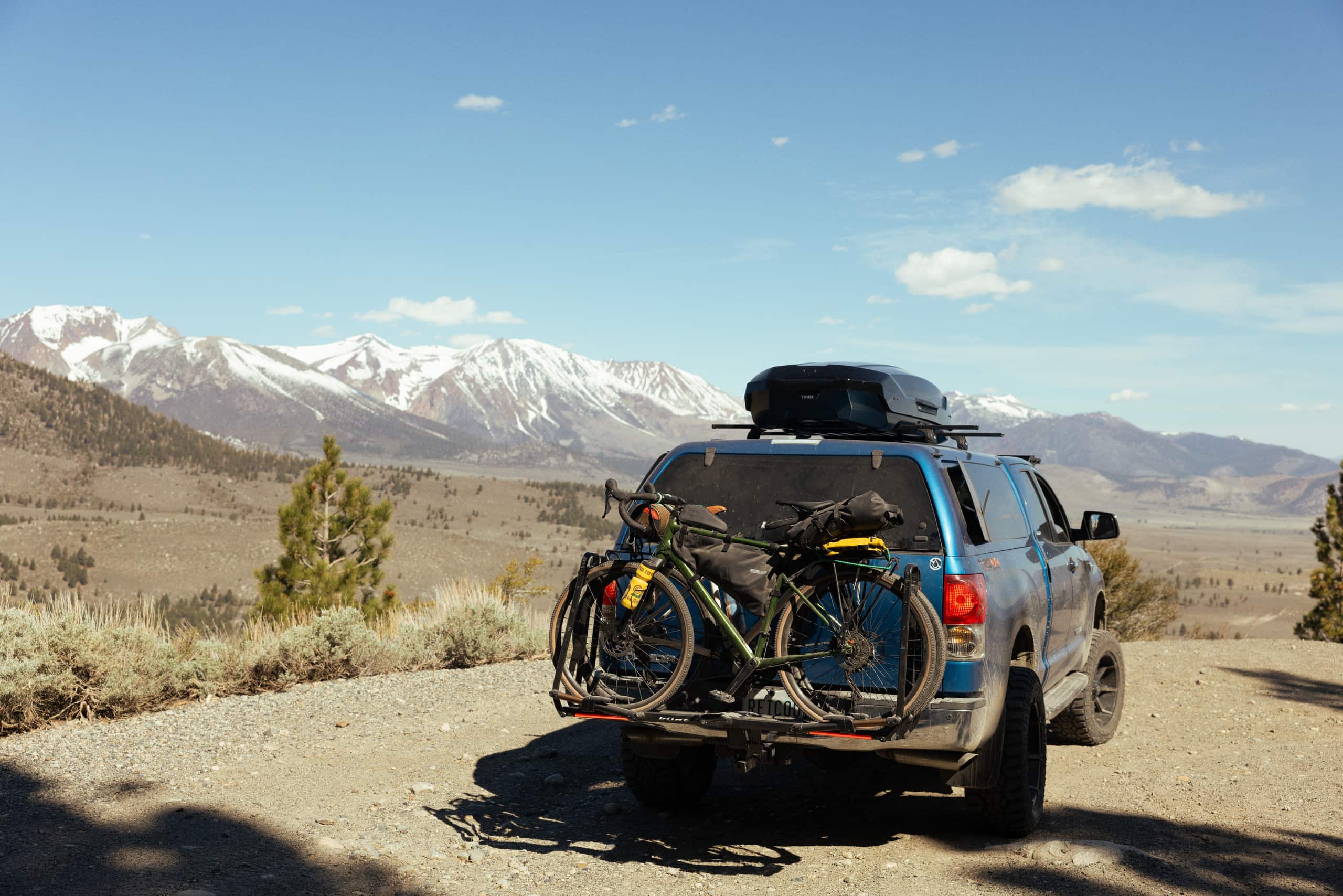
- Hitch bike racks: Hitch-mounted bike racks slide into the receiver of a trailer hitch. A hitch receiver usually can be installed on a vehicle not originally equipped with one, but it's an additional expense to consider.
- Truck bed bike racks: Truck racks involve internal rails or support bars that can be temporarily installed in a truck bed to anchor bikes in place. Racks are available to haul boats and cargo boxes.
- Roof bike racks: These racks secure your bike to roof cross bars by attaching the bike's fork (requires removing the front wheel), the frame, or the wheel.
- Trunk bike racks: These racks fasten to trunks or hatches with a system of straps and hooks. They carry one to three bikes that rest on support arms. They're easy to use, economical and lightweight. On the downside, they only transport bikes and limit access to the trunk. Also, bikes may sway or bump into each other during transport.
- Spare-tire bike racks: These racks are lightweight, affordable options for vehicles with exterior spare tire racks.
Cargo boxes
Cargo are hard-sided containers that keep gear secure in an enclosed system. Cargo roof boxes mount to a roof rack (crossbars), while hitch cargo boxes mount to a trailer hitch at the rear of the vehicle. Cargo roof boxes are ideal for storing long gear such as skis, or loose, odd-size gear. They can generate wind resistance and noise during travel. For help choosing which the right type of cargo box, read our in-depth buying guide, How to Choose the Right Size Cargo Box.
Car Rack Comparison Chart
| Rack Style | Carries | Pros | Cons |
|---|---|---|---|
Base Roof Racks($$-$$$$) |
|
|
|
Cargo Roof Boxes($$$-$$$$) |
|
|
|
Hitch Bike Racks($$-$$$$) |
|
|
|
Trunk Bike Racks($-$$) |
|
|
|
Truck Bed Racks($$) |
|
|
|
| $ = Up to $120 $$ = $120-$200 $$$ = $200-$400 $$$$ = $400+ | |||
Car Racks for Bikes
If biking is your sport, you've got several options for hauling one or more bikes.
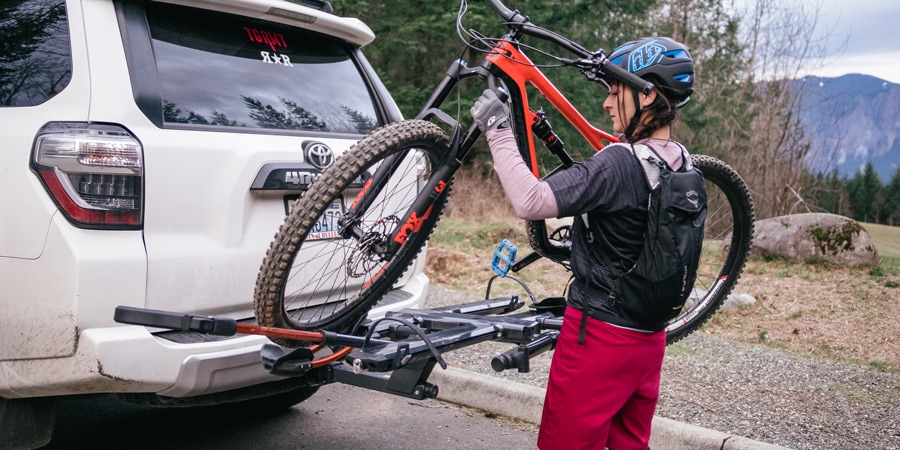
Hitch bike racks: These racks mount on the trailer hitch at the rear and allow you to easily get to your bikes with moderate lifting (unlike roof racks). They're simple to install and easy to use. They extend the length of your vehicle so backing up or maneuvering may be a concern for some. They also limit rear access but many models tilt down or swing away from the vehicle. Make sure the rack you choose is compatible with the size hitch receiver you have.
There are two types of hitch bike racks:
- Platform-style bike racks: Bikes are anchored in place on trays, which resist bike sway and minimize the risk of bike-to-bike contact during transport. They typically carry two bikes, but you can use extensions to carry up to four bikes. They're more expensive than the hanging style. They handle a wider variety of bike sizes and shapes; some can haul heavier electric bikes.
- Hanging (mast-style) bike racks: These racks have a mast with arms that support bikes by the frame. They're compact and tend to be cheaper than platform bike racks. Some can haul multiple bikes, even four to five at a time. But they don't fit as many bike shapes and sizes (such as kids' bikes) as the platform-style racks.
Roof bike racks: You may want to put your bike on the roof because it's more secure, you need access to your rear trunk or you don't want to install a trailer hitch. Roof racks are a good choice if you don't mind lifting the bike onto the roof and low-clearance garages or ceilings aren't an issue. Some roof rack styles let you secure bikes while keeping both wheels on while others require you to take the front wheel off and secure the fork.
Trunk bike racks are mounted to the trunk of your sedan or hatchback and secure bikes using a system of straps. They're the most economical option for hauling bikes and don't require a hitch or rack system. These racks can carry one to three bikes.
Truck bed bike racks: If you have a pickup truck, you have several truck bike rack options for hauling bikes. Using different mounts and other accessories, you can carry your bikes on a protective pad over the tailgate, upright in the truck bed or with bike forks secured onto a bar across the bed, in the bed or on the truck side rail. Some tailgate pads can handle up to seven bikes.
Spare tire bike racks: Fewer vehicles have spare tires in the rear these days, but if you do, spare tire bike racks are affordable options for hauling bikes. They typically carry about two bikes.
Cargo Boxes for Camping Gear and Other Cargo
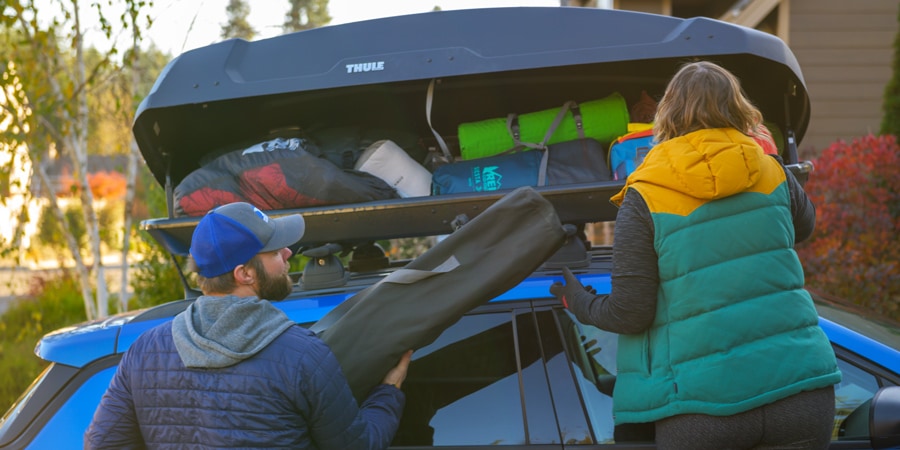
Cargo boxes provide secure, streamlined options for hauling a lot of camping gear and other cargo on top of the vehicle. Read more in our buying guide, How to Choose the Right Size Cargo Box.
Cargo roof boxes: Hard-sided cargo roof boxes are more durable, can hold odd-shaped items and can haul a lot of gear in all weather conditions. They're a lot more expensive than cargo baskets or bags and take up storage space when not on the vehicle. Many open on both sides to make loading easier. In order to use most of them, you have to have a base roof rack with crossbars.
Cargo roof bags: If you're limited on space, cargo roof bags hold a lot of regular-size gear such as luggage and fold up compact when not in use. They're also less expensive than cargo baskets or boxes but may not be as durable. Most soft-sided carriers do not need a roof rack system.
Hitch cargo boxes: Hitch cargo boxes secure on the back of the vehicle. They're great for loading large coolers or other gear that you need quick access to. However, hitch racks extend the length of your vehicle and you won't be able to put bikes in the back.
Car Racks for Skiing and Snowboarding
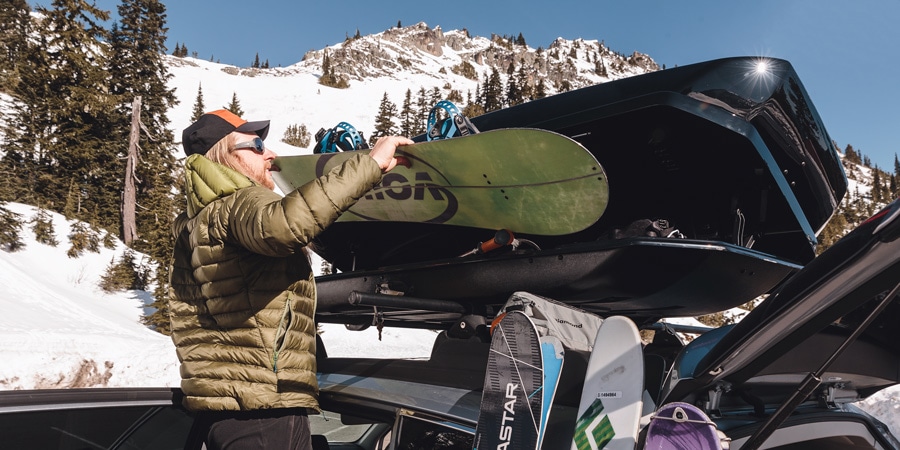
There are a number of ways you can carry your skis and snowboards.
Rooftop ski and snowboard racks: Ski and snowboard racks can fit a number of skis and boards, but they do require that you have a base roof rack (crossbars). They're secure, simple to use and less expensive than cargo boxes or hitches. Larger ones carry up to six pairs of skis or four boards.
Cargo roof boxes: Enclosed weather-proof cargo roof boxes are another option for hauling multiple skis and snowboards. Cargo boxes require a base roof rack to mount onto. They're expensive compared to the other options for carrying skis and snowboards, but they're also versatile if you plan to do other activities, like camping.
Hitch ski racks: Hanging-style bike hitch racks can be adapted to carry skis on your trailer hitch. Trailer hitch ski and snowboard racks require a hitch bike rack, so that adds to the overall cost. Many can hold multiple skis and boards, which are easier to reach in the back of the vehicle rather than from the roof. Some carry four to six pairs of skis and two to four boards.
Car Racks for Kayaks, Paddle Boards and Canoes
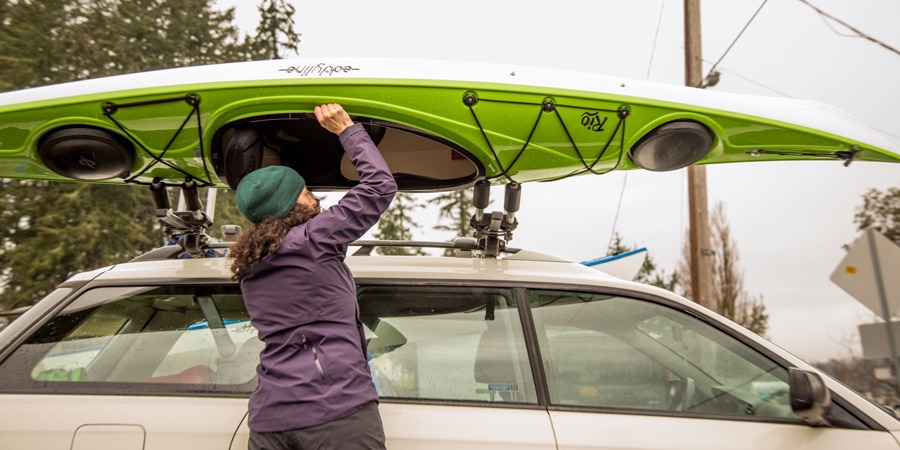
Roof racks: For many paddlers, roof racks are the most common choices to haul canoes, kayaks, surfboards and paddleboards. Many require a base roof rack (two crossbars) before you can mount specific kayak racks, paddle board racks or canoe racks.
Once you have the base roof rack, you can decide how to haul your watercraft using these options:
- J-cradles and stackers transport kayaks on their sides leaving space for multiple boats or other gear. They're good options if you have a lighter or shorter boat, a shorter car or someone to help you load your boat.
- Saddle-style carriers nestle kayaks or canoes upright, cushioning the sides of the boat. Some come with rollers to make loading easier. These racks are great for solo loading, taller vehicles or heavier boats because you can tip and push them onto the roof from the back of the vehicle.
- Lift-assist racks lower the carrier to the side of the vehicle so you can load the kayak at about waist level. Once the kayak is secured, you push the kayak and rack back up on the roof. They're easy to load but the most expensive rooftop option.
- Foam blocks: These temporary carriers are inexpensive, easy to install and often don't require a base roof rack. They're not as durable. Some foam blocks sit directly on the vehicle roof; others fit onto a rack's crossbars. Straps hold the kayak, surfboard, canoe or paddle board in place.
For more information, read our article on Transporting a Kayak or Canoe or Transporting a Paddle Board.
Truck racks: These mounts make it easy to carry boats that are too long to fit in the pickup truck bed. Utility racks, extenders or other posts let you carry boats above the truck bed.
Other Car Rack Tips
- Check your vehicle's manual before installing a roof system. Make sure you know the maximum allowable weight the roof can handle. If installing a hitch mount, verify your vehicle's tongue weight capacity. If you have a hatchback, make sure any roof rack you install will provide enough clearance for the rear hatch to open fully.
- Test-fit your bike on your trunk or hitch rack: Not every bike is a perfect fit on every trunk rack or hitch rack (or the cradles they use). It's rare, but on occasion, some bikes (particularly women's or kids' models) do not fit perfectly on some cradles, or they may require an additional top tube adapter.
- Secure the tires of bikes on trunk and hitch racks with a strap or bungee cord to prevent bikes from swaying and bumping.
- Buy load bars one size longer than what is recommended in the fit guide if you're planning to transport kayaks. This way you can fit the boats more easily and can always cut the bars if they are a bit too long.