If you’re new to skiing or snowboarding, or it’s been a minute since you hit the slopes, you might be wondering what to wear. That’s because having the right layers can mean the difference between a fun day on the mountain and a wet, cold one.
To learn the basics of staying warm and protected in winter weather, we talked to three REI snow experts: Ed Zebrowski is a product information specialist at REI headquarters who has worked for decades as a ski instructor and coach; Lisa Chandler is a senior action sports specialist based in Southern California who has been participating in snowsports since 1989; and Nicholas Allen is a senior sales specialist in San Diego who advises customers on how to gear up for snowsports across the U.S.
Below, this article breaks down:
Editor's note: We updated this article on Dec. 24, 2025, with more details and tips on how to dress for skiing and snowboarding after interviewing three experts.
How to Layer Clothing for Skiing and Snowboarding
Dressing in layers helps you stay comfortable outside since you can add and remove layers as the weather changes. “If I’m in the Pacific Northwest, I could be skiing in rain, snow and blue sky all in the same day,” says Zebrowski, who has worked at most of the major ski resorts in Washington state.
Skiing and snowboarding also combines stints of activity, like skinning uphill or skiing bumps, with less active periods, like standing in a lift line.
“Having the right set of gear makes a big difference,” says Allen. “If you’re not comfortable, you’re not going to enjoy yourself as much.”
You’ll typically want a base layer, mid layer and outer layer any time you hit the slopes. Here’s what each layer offers.
Base layer
Also known as long underwear or thermal underwear, your base layer (usually a thin top and pants) helps wick sweat away from your skin. The REI experts we spoke with love merino wool base layers for their lightweight, wicking, and odor-resistant properties. For recommendations, read our Best Base Layers for staff picks.
Mid layer
This insulating layer helps you retain body heat and protects you from the cold. On a warm day, you can remove the mid layer and stuff it in your pack or a locker at the lodge. A mid layer can be a lightweight fleece pullover, a puffy vest or a lightweight wool sweater.
Outer layer
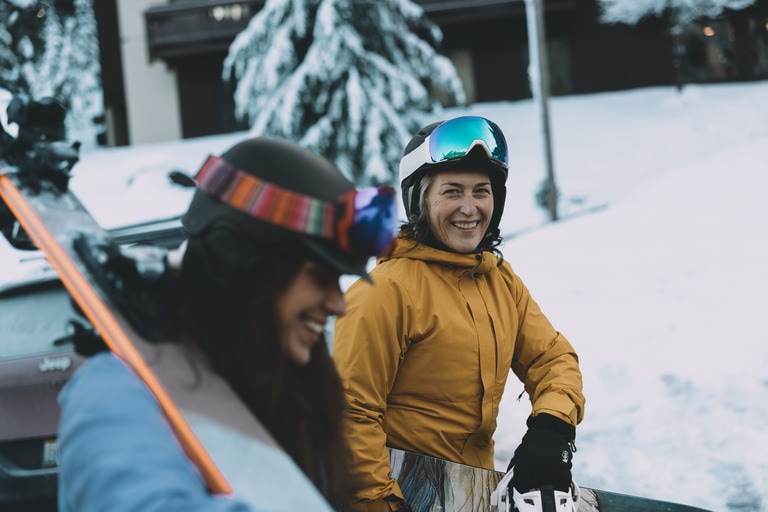
Your jacket or shell shields you from wind, rain and snow. Dedicated ski and snowboard jackets often offer the following features:
Waterproof: Most dedicated ski and snow jackets have a membrane that deflects rain and snow while allowing sweat to escape.
Powder skirt: An inner gasket that prevents snow from creeping inside during a fall and on powder days. Some jackets allow you to detach the powder skirt for comfort and weight savings on less deep days.
Insulation: This can be helpful when skiing in resorts, where you might spend up to 10-plus minutes on a cold chairlift. Backcountry skiers and splitboarders often prefer an un-insulated shell they can remove when climbing uphill.
Lots of pockets: This is helpful if you aren’t carrying a ski pack. You can use the pockets to stash your ID, snacks and handwarmers.
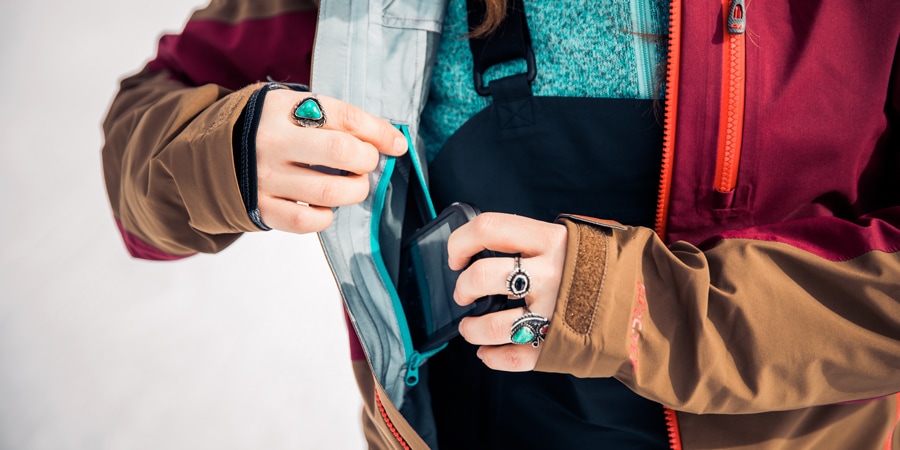
Specialized pockets: Many ski or snowboard jackets come with a ski pass pocket on the sleeve, or a pocket with a soft liner for goggles, or an extra set of lenses.
Helmet-compatible hood: Some jackets allow you to adjust the hood to fit over a helmet, or remove the hood altogether.
Zippered vents: Pit or core vents let you adjust ventilation.
Back length: The back length on jackets can vary; many are hip-length or thigh-length. Some snowboarders prefer a jacket that’s longer to protect their backside when sitting in the snow.
3-in-1 design: Jackets with this feature let you detach the outer shell from the inner insulating layer. You can ditch the inner piece on mild days, or leave the outer shell behind if the inner jacket is wind resistant and the skies are clear.
Snow Pants or Bibs
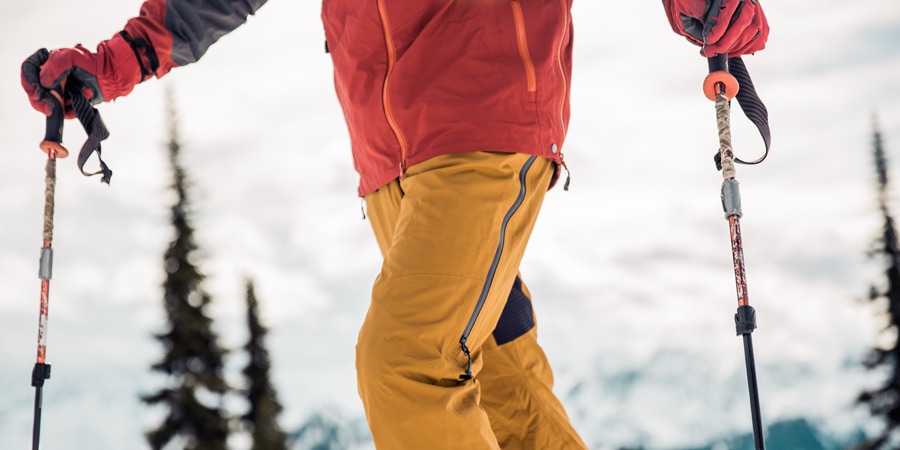
Your outer layer on the bottom also protects you from wind, rain and snow, and adds warmth if they’re insulated.
Some people prefer snow bibs because they offer torso protection and storage. Others prefer snow pants for their ease of use and familiarity. A key consideration: Some bibs have a side and/or rear zipper that lets you make a bathroom stop without much hassle. For others, you have to take off your jacket and pull down the shoulder straps.
No matter what snow pant style you choose, look for the following features:
Waterproof: "When you’re wet, you’re cold,” Allen says. This is especially true when you’re learning and spending some time on your butt in the snow.
Insulated: For extra warmth, consider snow pants that are insulated.
Snow gaiters: Built-in internal cuff gaskets that help seal out snow.
Thigh vents: These let you add and adjust ventilation when you work up a sweat.
Reinforced inner ankles: Patches to protect your pant cuffs from sharp metal edges and parking lot debris.
Read more: Snow Pants vs. Bibs: Which Are Better?
Don’t Forget Accessories
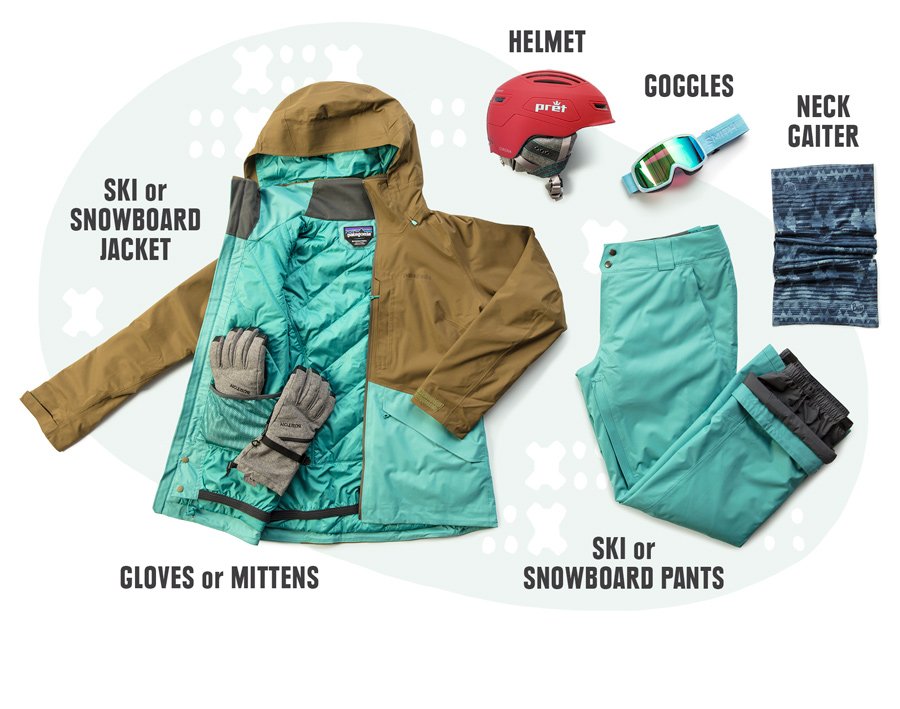
It’s important to protect your hands, head, eyes, neck and feet when you’re skiing or snowboarding, since wind and snow can cause your extremities to get cold.
Snow headwear

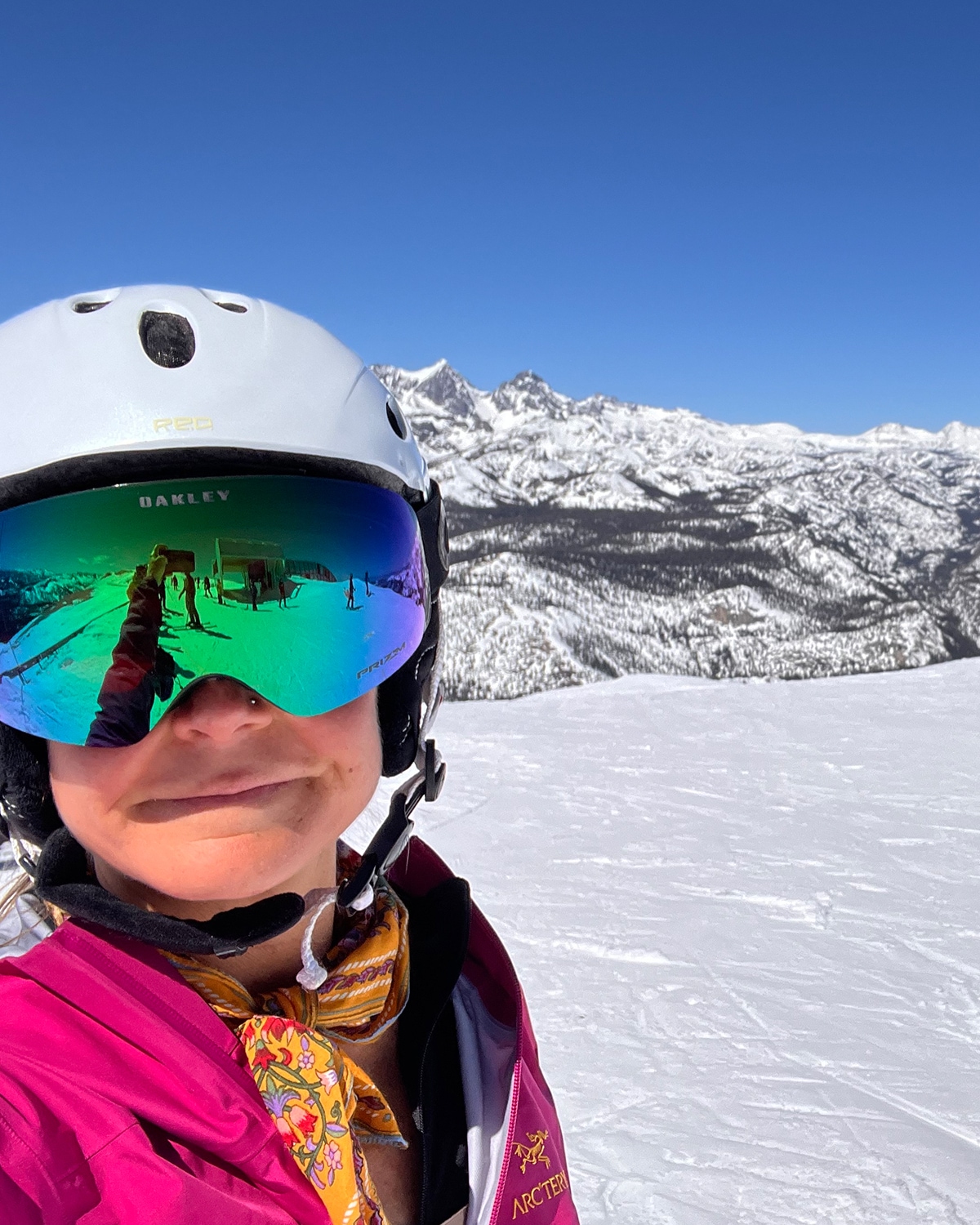
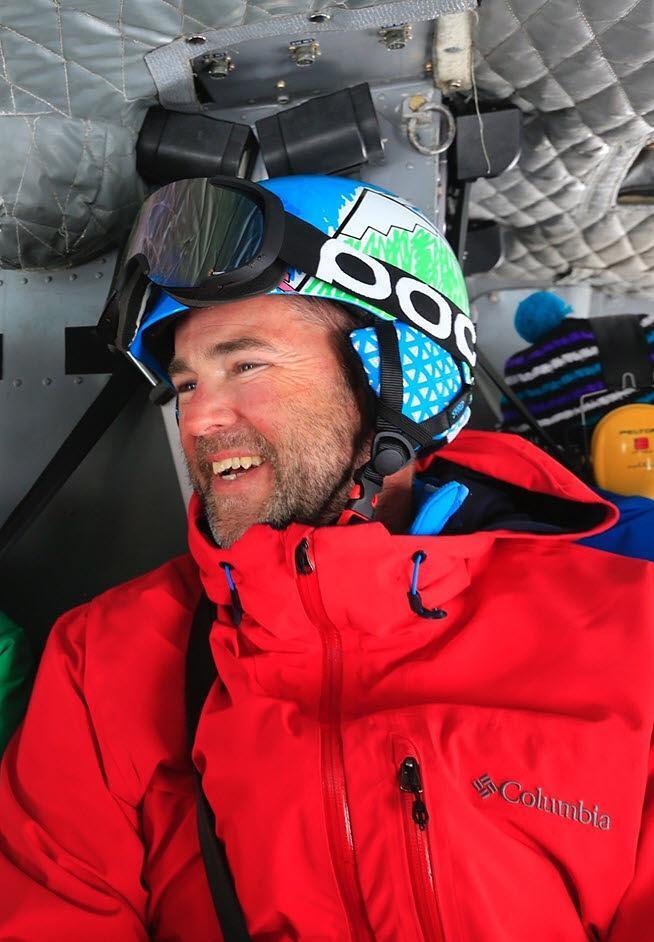
Snow helmet: A ski helmet is a nonnegotiable piece of gear, Zebrowksi says. It protects your head in the event of a crash, and keeps your head warm and dry. “You could be the best skier in the world,” he says. “We’re human, we crash. You’ve got to protect the most important part of your body.” Many ski resorts rent helmets. For our field-tested picks, read The Best Ski Helmets of 2025/26.
Ski and snowboard goggles: These protect your eyes from wind, snow and glare. Check that they work with your helmet, your face shape, and that they fit over glasses, if you wear them. You want goggles to fit without gaps. Also, make sure your goggles have the right lenses for the light conditions you’ll be riding in. Dark or mirrored lenses are often most suitable for bright, sunny days, whereas yellow, gold, copper and rose lenses are better for low-light conditions. Some come with interchangeable lenses for varying conditions. Read more on How to Choose Ski and Snowboard Googles.
Neck gaiter or balaclava: Most skiers and snowboarders carry a neck gaiter; many ride with one every time. You can pull a neck gaiter up over your nose in icy temps and a balaclava offers even greater coverage.
Other snow clothing
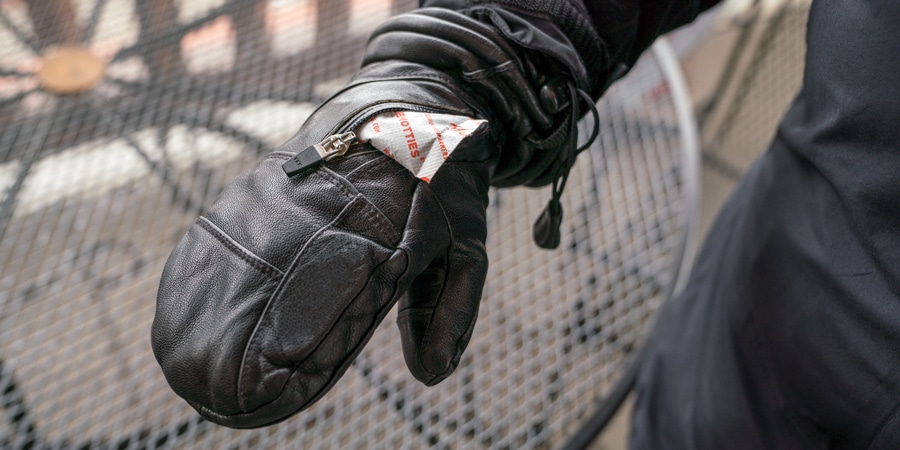
Gloves or mittens: Choose waterproof or water-resistant gloves or mittens and look for insulated ones to keep your hands warm. Generally, greater thickness equals greater warmth, and mittens tend to be warmer than gloves. Some may prefer split-finger gloves or so-called “lobster gloves” which strikes the balance between warmth and dexterity. Look for ski or snowboarding specific features, including:
- Gauntlets: Ski- or snowboard-specific gloves or mittens have long cuffs hat go up to mid-forearm to keep snow out, among other features.
- Warmer pockets: Tiny pockets sized for you to slip in a handwarmer.
- Removable liners: Some mittens have removable liners that let you use your hands without exposing your skin to the elements.
- On touch-screen compatibility: Although many liner gloves and mittens offer touch-screen compatibility, chances are you’re going to remove your mitts or gloves for maximum dexterity when using your phone.
Read more: Gloves and Mittens Buying Guide.
Ski and snowboard socks: Warm, moisture-wicking socks help prevent your feet from getting sweaty and cold. Ski and snowboard socks tend to be taller (knee-length) and thinner than hiking socks, to integrate seamlessly with your boots. Choose from different levels of cushioning.
Read more: How to Choose Ski and Snowboard Socks.
Video: What to Wear Skiing and Snowboarding
What’s the Difference Between Clothes for Riding at the Resort Versus the Backcountry?
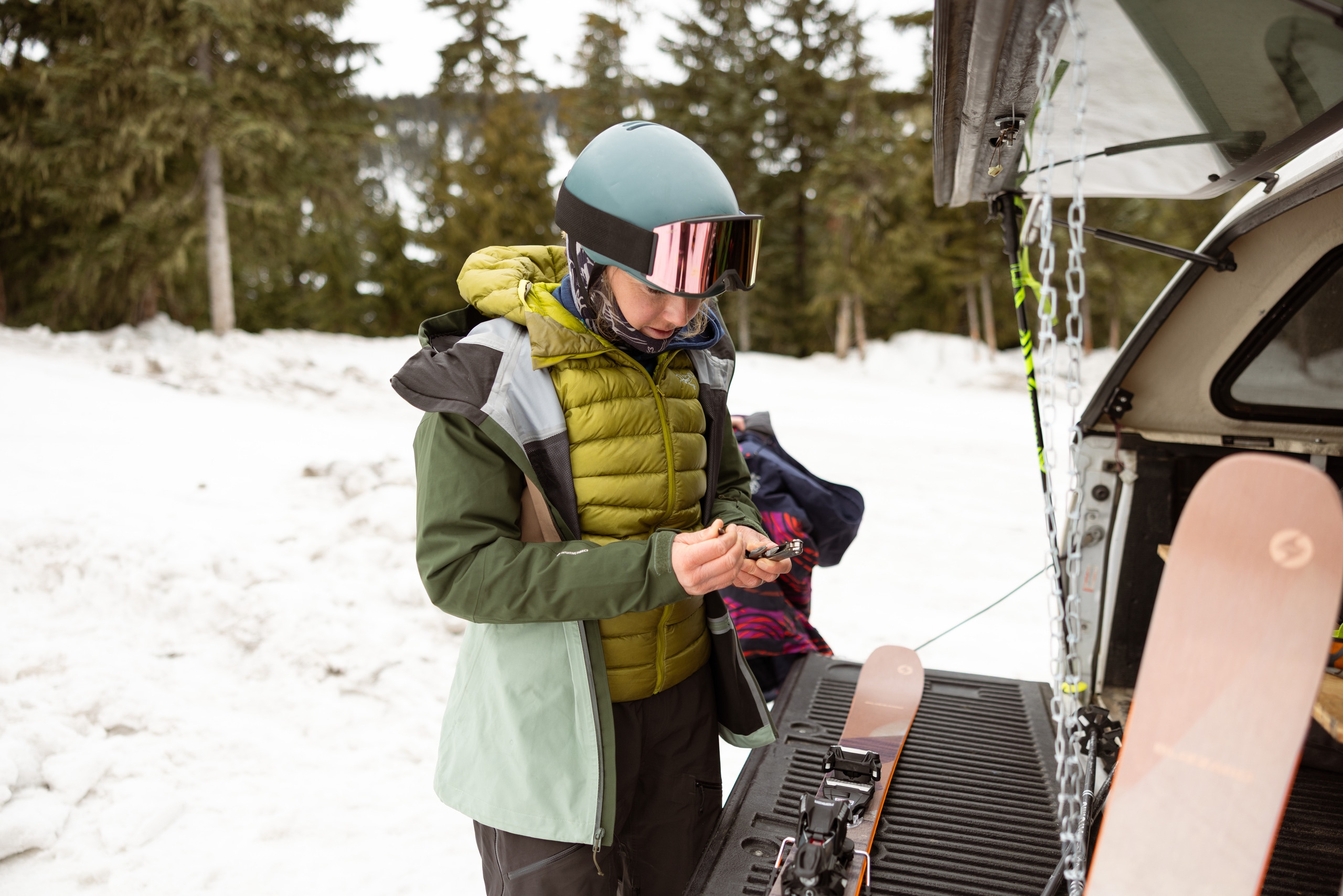
Clothing for backcountry skiing and snowboarding is similar wear at the resort, but it may be more durable and breathable and designed with features for uphill travel uphill on skis or a splitboard using climbing skins (also called touring).
A jacket for ski touring might skip a pass pocket but include zippered vents so you can dump heat when you start getting sweaty. Jackets for backcountry skiing or mountaineering sometimes also have pockets placed higher up to accommodate a pack’s hip belt. Some backcountry pants and bibs include a dedicated clip and pocket for an avalanche transceiver, a critical piece of safety gear. (Read more on How to Choose an Avalanche Transceiver.)
Buying and Dressing Tips for Skiing and Snowboarding
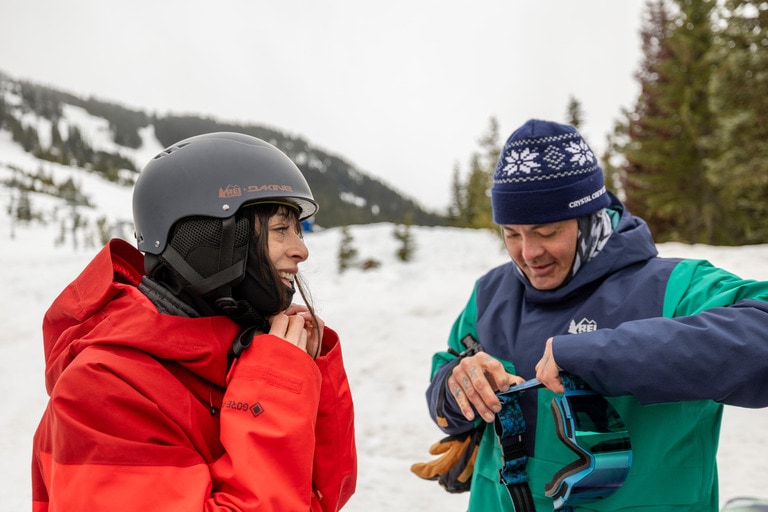
- Dress for your climate: Skiers and snowboarders in wetter areas like Pacific Northwest might want fully waterproof coverage (think GORE-TEX) and a little less insulation. Those in Rocky Mountain states, where conditions tend to be drier and colder, might need more warmth during the early season and lighter layers on sunny days.
Use what you already own: If you're on a budget, existing outdoor clothing can do in a pinch, though it will lack some specific features found on skiwear. You might already own wool socks and base layers for hiking, or a down or synthetic puffy you can repurpose into a mid layer.
Invest when it makes sense: There’s no need to splurge if you’re new to skiing and snowboarding, or if you only plan to go occasionally. Renting or borrowing gear at first is a great way to save money and figure out what you might want to invest in sometime in the future. This is especially true when it comes to skis, snowboards, poles and boots, Chandler says. “You don’t know how gear is going to perform until you use it,” she says. “Find out what you like before you buy.” Once you are ready to buy, Allen recommends investing first in a pair of ski or snowboard boots since you’ll be more comfortable and confident riding in a pair that fits.
Waterproof and synthetic is a winning combo: Choose jackets, pants, gloves and mittens that are waterproof and have synthetic insulation, a combo that ensures that damp conditions or your own sweat don't compromise warmth. The only exception? When conditions are frigid, opt for a down layer with a high fill power, since these layers tend to be both warm and packable.
Add handwarmers and footwarmers as needed: Many skiers and snowboarders pack handwarmers and footwarmers as an insurance policy for when conditions turn frigid. Both Chandler and Zebrowski like to place a footwarmer on the upper interior of their boot, above their toes. This way, the footwarmer doesn’t interfere with their toe grip and comfort in their boots.
Avoid cotton: Cotton absorbs sweat, dries slowly and loses insulation, increasing chill and blister risk. This includes T-shirts, jeans and your favorite hoodie. “Cotton doesn’t dry well,” Allen says. “You get cold and your experience can take a downward spiral.”
Don’t forgo goggles for lifestyle sunglasses: Lifestyle sunglasses offer less protection than goggles. Plus, “if you fall and your glasses shatter, the cracked lenses can hurt you,” Chandler says. If $200 seems like a lot to drop on goggles, consider borrowing a pair from a friend. Several goggles under $100 ranked high in our field tests; read more about our tested favorites in The Best Ski Goggles of 2025/26: Tested..
Wear sunscreen: Sunlight is more intense at higher altitudes, and snow glare reflects the sun and intensifies sunburn and skin damage. Slather it on exposed skin and don't forget the undersides of your chin, nose and ears.
Ski and Snowboard Clothing FAQs
Do I need a dedicated ski/snowboard jacket or can I use any rain jacket?
You can use a rain jacket for skiing and snowboarding, especially when you’re just getting started. Just be aware that, “if you fall, you don’t have a snow skirt to prevent snow from getting up your back,” Chandler says. Ski and snowboard jackets are typically made to withstand falls and brushes with debris, as well. Make sure your rain jacket is breathable and that the waterproofing still works so you don’t end up cold and wet.
How do I dress for really cold weather?
Add a down mid layer when conditions are frigid. Down does a better job of trapping heat than synthetic fibers do. Zebrowski also suggests picking a garment with an articulated fit and a high down fill power. These features create a streamlined silhouette to give you more mobility on the slopes even when everything feels a little frozen. His trick? He adds a baggy pair of fleece shorts or fleece pants between his wool base layer and snow pants or bibs on the bottom in cold temps.
Read more: Down vs. Synthetic: Which Insulation Is Right For You?
What do I wear under ski pants?
Wear a moisture-wicking base layer made from synthetic materials or merino wool under your snow pants or bibs to keep you warm and protected while riding.
Can I ski in jeans?
There’s no rule saying you can’t ski in jeans, just like there’s no rule saying you can’t ski in a swimsuit, bra or tutu. However, “wet jeans might be one of the most uncomfortable things on the planet,” Allen says. (Remember advice about wearing cotton?) Denim is heavy, stiff, gets wet easily and stays wet or freezes. If jeans are part of your closing day pond skim getup, sure. Otherwise, we don’t recommend it.
Are RECCO® Reflectors worth it?
If your clothing or gear comes with a RECCO reflector, it can help rescuers equipped with a RECCO detector to locate you after an avalanche. It’s a nice-to-have feature, but not an essential, according to the experts we spoke with. Recco reflectors are in no way a substitute for an avalanche transceiver that backcountry (or sidecountry) skiers must carry, turn on and use correctly for a similar purpose.
Learn more: Avalanche Awareness