So you layer your clothing to perfection, then head out the door for your winter activities with bare hands. Stop right there! Those paws deserve just as much consideration as the rest of your body when you’re having fun in the cold. Good handwear can make the difference between an enjoyable day out in the elements and being driven to distraction by your freezing digits.
Choosing the right pair of gloves or mittens is an art that involves knowing how much finger separation you’ll need, whether you’ll be recreating in wet conditions, and what a good fit feels like, among other factors. Options abound for every outdoor enthusiast to find their perfect handwear, whether you’re hiking in cold weather, skiing in subzero temps or heading out for a brisk winter run. In this article, we’ll help you find the right handwear for you for different activities and conditions, which features to look for and more.
Jump ahead using the links below or read on to learn more about the different decision points that go into choosing the right gloves or mittens for you.
- Why you shouldn't skip gloves or mittens
- Gloves vs. mittens: Which is right for you?
- How to get the right size and fit
- Features to consider
- Tips for keeping hands warm in extreme cold
- How to care for gloves and mittens
Editor’s note: We updated this article on November 26, 2025, to include new information, a comparison charts and updated links.
Video
Why You Need Gloves and Mittens
Our extremities, like fingers and toes, get cold easily because our bodies prioritize warming vital organs before hands and feet. Like any good base layer or mid layer, gloves and mittens hold in warmth from the minute you put them on. If you wear them before you head outside, you’re less likely to have to warm your fingers up since they won’t get as cold in the first place. Handwear also protects our hands from wind, rain, snow and, when it’s below freezing, frostbite. (It doesn’t take long to get frostnip or frostbite, and it can happen in as little as 30 minutes of exposure, depending on wind chill.)
Ultimately, wearing the right pair of gloves or mittens that not only suit your needs but fit properly, allows for more dexterity and less distraction, says Arianna Ross, a department manager at the REI store in Columbus, Ohio, who has outfitted hundreds of customers for freezing, wet winters for over five years. Someone with appropriate handwear “will be more focused on being present in the activity, versus suffering the consequences of wearing nothing at all or dealing with a glove that is too big, too snug or just not right,” she says.
Gloves vs. Mittens: Which Is Right for You?
One of the first questions to ask: Do you want gloves, mittens or a hybrid? The answer will depend on your activity, among other factors. Below we break down the pros and cons of each, and cover best uses.
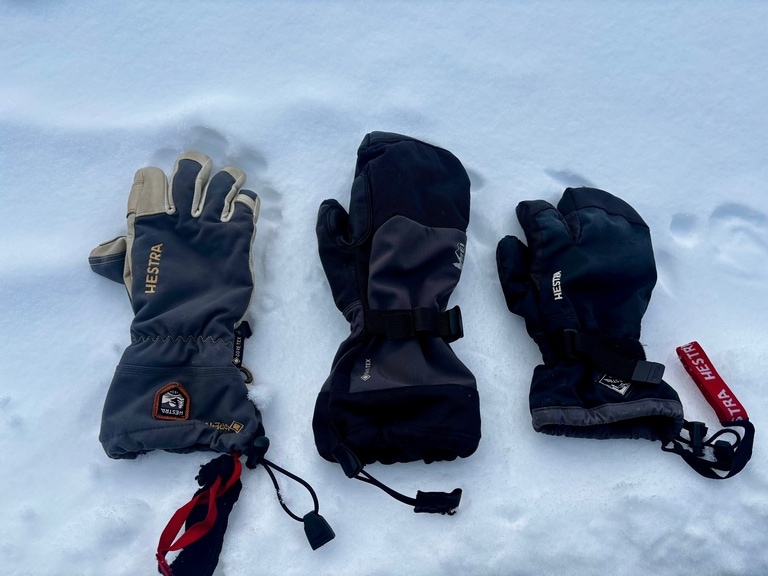
Pros and Cons of Different Handwear
Advantages | Disadvantages | Ideal for | |
|---|---|---|---|
-Offers more dexterity, grip and separate finger movement -Can be layered under a mitten for versatility | -Generally not as warm as mittens | -Activities where you need good grip or to handle gear -Examples: cross-country skiing, winter photography, resort skiing or snowboarding | |
-Warmest overall option because your fingers share warmth | -Reduced dexterity -Potential to overheat/sweat | -Activities that require less dexterity -Sledding, snowshoeing, tailgating, resort skiing and snowboarding, shoveling snow | |
Split-finger mittens | -Allows some dexterity -Warmer than gloves | -Not the warmest or best dexterity compared to mittens and gloves | -Cold activities where you need more dexterity than mittens -Some skiing and snowboarding, winter biking |

Gloves with separated fingers offer better dexterity than mittens.
- They’re ideal for activities where you need to frequently handle gear, grip ski poles or tools, adjust boot buckles or zip zippers.
- Lightweight gloves are a great choice for aerobic activities such as cross-country skiing or running, where your body is generating lots of heat.

Mittens are warmer than gloves made with the same materials because, unlike gloves, your fingers can share warmth. (Ross calls it the “buddy system.”)
- Mittens also have fewer seams and space for body heat to escape.
- They don’t offer the same finger dexterity as gloves, but they can still serve you well when you're holding ski poles, carving on a snowboard or heading out for a hike in frigid temperatures.
Split-finger mittens: Another popular option is a blend of a glove and mitten, sometimes called “lobster gloves” or “3-finger gloves.”
- A common variation separates your thumb and index finger for some dexterity while keeping the three other fingers together for warmth.
- These are great solutions if you've found gloves aren't warm enough and mittens feel too clumsy.
Convertible: These mittens switch to fingerless gloves by folding back a fabric panel covering your fingers to allow for convenient dexterity.
How to Get the Right Size and Fit
While you could get away with wearing gloves or mittens that aren’t quite the right size, a proper fit matters more than you might think. It’s key to staying warm and comfortable: Gloves and mittens that are too big can let heat escape and make it difficult to hold ski poles, operate zippers and do other tasks. When they're too small, they will restrict movement and likely leave skin exposed at your wrists. A well-fitted glove also allows for better dexterity and proper functioning for touchscreen compatibility too.
The best way to get a well-fitting glove or mitten is to try it on in person and do what Ross calls “the finger check.”
- Aim for about a 1/4 inch of space between the tip of your finger and the tip of the glove. This gap is key for trapping heat.
- Check your middle, ring and pointer fingers for the same space.
- Squeeze your hands a few times. If you feel any tightness or discomfort on the top or palm of the hand, size up.
- Note that leather gloves will stretch over time, so look for a slightly snugger fit when buying those.
How to Measure Your Hands for Gloves and Mittens
If you can’t shop in person, here are some tips to get a good fit while shopping online:
- Consult the size chart for each product since sizing varies widely among brands.
- Most gloves and mittens come in sizes from XS to XL, and some come in men’s and women’s versions. Some ski handwear, like those from Hestra and Leki, come in number sizes that generally correspond to hand circumference in inches.
- Most brands base their sizing on either hand length or circumference.
- For hand length: measure from the crease at the base of your wrist (palm side up) to the tip of your middle finger.
- For hand circumference, measure all the way around the widest part of the palm, excluding the thumb digit and joint.
Features to Consider

Insulation in Gloves and Mittens
The insulation in gloves or mittens traps heat to keep you warm. Choose the level of insulation based on how much protection your hands may need given your activity and conditions. The decision is often about the tradeoff between warmth and dexterity, since thicker insulation tends to be warmer but can be bulkier.
Two basic insulation types are commonly used: down and synthetic.
- Synthetic insulation is less expensive than down, insulates when wet and dries a lot faster, making it a good choice for recreating in damp climates. The downsides of synthetic insulation are that it offers a little less warmth for its weight, it's a bit bulkier than down and it tends not to last as long because its insulating power gets reduced each time it is compressed. Most ski and snowboard gloves use synthetic insulation.
- Down is an exceptional insulator and is prized for being light, easy to compress, long lasting and breathable. Down is more expensive than synthetic, but it maintains its loft longer than synthetic, making it a good value over time. Because down loses its ability to insulate well when it gets wet, it is not used in gloves and mittens as frequently as synthetic insulation. When it is used, it's typically protected by a waterproof shell that helps keep it dry. Down gloves and mittens are an excellent choice for skiing and snowboarding in cold, dry climates.
Do You Need Waterproof Gloves or Mittens?
Consider the amount of moisture that might be present when you’re recreating, both outside your handwear (rain and snow) and inside (sweat). Generally, the more moisture a glove or mitten keeps out, the less easily sweat can escape from inside. And dry hands are warm hands, so only go for as much waterproofing as you really need.
- Water-resistant materials have a durable water repellent coating, allowing them to shed light rain or snow while still being breathable. This makes them great for high-aerobic winter activities in decent weather, like running.
- Waterproof gloves have a barrier that keeps water from penetrating while allowing some sweat to escape, in addition to a DWR. Most gloves and mittens designed for downhill skiing and snowboarding have this waterproof-breathable barrier. Waterproof gloves and mittens are also 100% windproof, so they’re good for all inclement conditions. They are also, generally, more expensive than water-resistant versions.
Aside from wet conditions, consider whether you’ll be making a lot of contact with snow during your activity. “Are you gonna be moving around a ton and touching snow? Or are you just going to be outside and being exposed to the cold?” Ross says. If the latter, water-resistant materials are sufficient since they won’t be in contact with rain or snow long enough for moisture to saturate.
Pro tip: Even the most expensive waterproof gloves and mittens can get wet, usually from the inside out. Take care to keep snow from getting inside your gloves or mittens and try to limit sweating with them on.
Other Features to Consider
Touch-screen compatible lets you to operate your smartphone or tablet without exposing your skin to the cold and is typically found in lightweight to mid-weight gloves that offer enough dexterity to control your smartphone.
Glove leashes, or wrist cords, secure your gloves or mittens to your wrists so you won't drop them.
Goggle wipes: Many gloves designed for winter feature soft material on the thumbs specifically for wiping your goggles or your nose when it begins to drip.
Leather palms provide excellent grip and stand up to abrasion better than synthetic palms. Gloves or mittens with leather palms should be conditioned and broken in.
Removable liners are designed to be pulled out to dry more quickly; some liners can be used alone for days when you don't need the added warmth of an outer glove shell.
Long gauntlet cuffs extend over your jacket sleeves and cinch to keep snow and cold air out.
Wrist cinches snug the gloves or mittens at the wrists for a comfortable, secure fit on your hands.
Warmer pockets, often on the back of the hand, are sized to fit disposable hand warmer packets and can double as vents on warmer days.
Tips for Keeping Hands Warm in Extreme Cold

Finding the right glove or mitten goes a long way in keeping your hands warm, but just as important is knowing how to manage body heat in chilly conditions, whether a fluffy winter wonderland or a gray and sludgy bike commute.
Here are a few basic principles to know before you head out into your personal frozen tundra:
- Start warm and stay warm. Starting out cold and warming up is a lot harder. So put your gloves or mittens on before even leaving going outside.
- Warm your core. Find a good layering system for the rest of your clothing. A warm core means your body will better be able to warm your fingers and toes.
- Top up your warmth as you go. Wiggle your fingers and toes or do simple movements like arm circles to keep blood flowing to your extremities. It’s easy to forget when holding ski poles, but it’s especially important since it’s harder for blood to reach your hands in that position.
- Be vigilant. Always check on your fingers and take time to warm them up if you feel them getting cold.
- Use hand warmer packets or tuck your hands in your armpits.
- If your fingers start aching or turning red, purple or lighter than your natural skin tone, treat this as frostnip (the early stages of frostbite) and get inside as soon as you can. (Read How to Keep Your Hands Warm for more information and tips.
Do You Need Heated Gloves or Mittens?
Heated gloves and mittens keep your hands toasty with battery-powered heating systems. They typically include rechargeable lithium-ion batteries and let you adjust heat levels. Heated gloves tend to be more expensive, heavier and slightly bulkier than non-heated gloves, but those tradeoffs can be worth it if other gloves don't work for you.
Who might want heated gloves or mittens?
- People with poor circulation or conditions like Raynaud’s
- Those who frequently do light-aerobic activities (like walking) in chilly conditions or for long periods of time
- Anyone who uses disposable hand warmer packets often and want a more sustainable option.
“I categorize it more as a luxury item, like, ‘Am I going to invest in this to improve my experience walking my kids to the bus stop every morning?’” Ross says.
Bottom line: If you’re willing to pay a premium and don’t mind keeping the battery charged, heated gloves or mittens might be for you.
How to Layer Gloves and Mittens for Added Warmth
Layering a lightweight liner glove with an outer shell mitten offers versatility, customization, and sometimes better value for your money.
This flexibility makes layering a good option for people who do a variety of chilly activities. For casual recreationists who run cold, Ross recommends layering as a more cost-effective alternative to a thick, top-of-the-line insulated glove.
The main downside of layering? More gear to keep track of when you’re rushing out the door.
Tips to Layer Your Gloves
- Wear a thin mitten underneath a thicker, more windproof mitten for extra warmth. Remove a layer if your start to sweat.
- For skiing or snowboarding, consider wearing a liner glove underneath a waterproof outer mitten. That way, you can take off your mitten and still keep your hands warm while buckling boots or adjusting zippers.
- For mountaineering, you may want liner gloves, a mid layer glove and an insulated mitten when you’re not moving.
- Many liner gloves and mittens are made with antimicrobial, moisture-wicking merino wool or stretchy synthetics like polyester and spandex.
- Shell mittens are often made of waterproof or windproof materials like GORE-TEX. You can combine whatever materials you like if they comfortably fit together.
- Ross recommends making sure the liner and shell materials are both natural or both synthetic to reduce friction when wearing both at the same time.
How to Care for Gloves and Mittens
With a little TLC, your gloves or mittens should keep you warm for many seasons. Gloves made of synthetic materials or natural fibers should have a garment tag with care instructions. Most are machine-washable and can be either tumble dried or air dried.
Leather gloves and mittens benefit from wax or leather treatments, which condition and waterproof the material. At the end of each season, gently clean the leather with a damp cloth (never machine wash) and apply the leather treatment according to instructions. Removing any excess with a damp cloth and air dry.