Only those who will risk going too far can possibly find out how far one can go.
T.S. Eliot
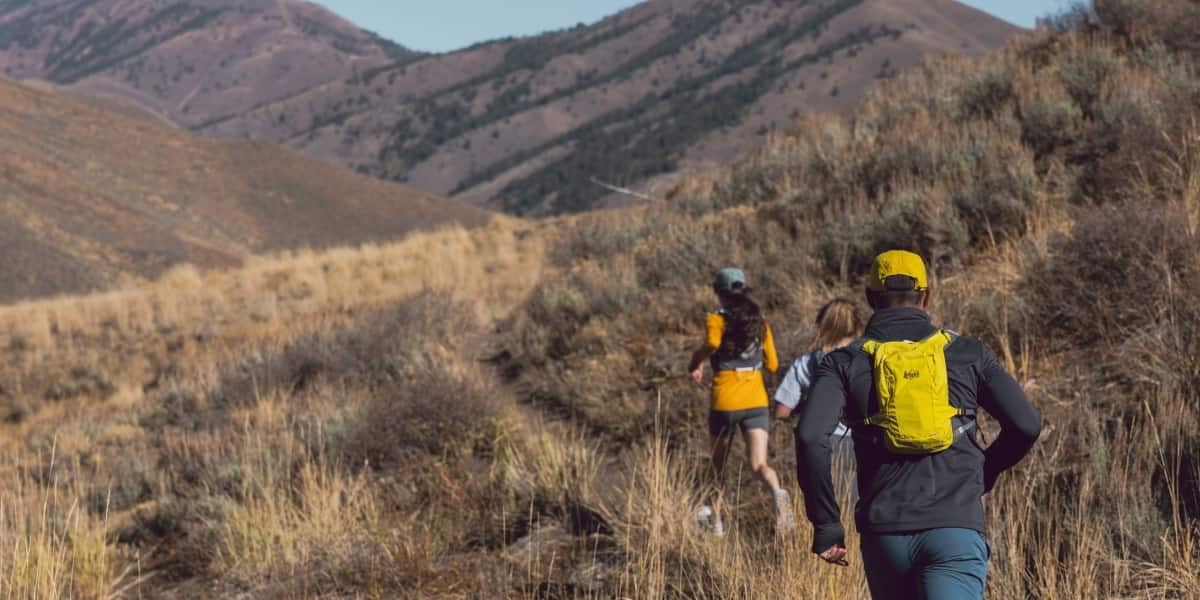
Throughout my life, the risk of distance running—of pushing myself to see how far I can go—has become a major part of my identity. What started as school races as a kid grew to 5Ks and 10Ks as a young adult. In 2014, I ran my first marathon, the Glencoe Marathon Gathering in the Scottish Highlands, with an elevation gain of 5,275 feet over 26.2 miles. That big swing of a long-distance event got me hooked.
On October 3, 2026, I’ll run my first ultramarathon. The Run to the Sea Bournemouth starts at Moors Valley Country Park and ends at Hengistbury Head, England, covering over 50 kilometers (31 miles) with an elevation gain of 308 meters (1,010 feet). This combination of distance and elevation makes it a relatively flat course, which is perfect for my first go at an ultra. Following the popular Castleman Trailway, the race’s point-to-point course follows forest trails and coastal paths. I’m looking forward to the views and seeing how I do after months of training.
Even with a flat course ahead, I’ve needed to prepare thoughtfully for this new challenge as I juggle managing my time while looking after a young family and the day-to-day requirements of being a working parent. Without risk there’s no reward, but without preparation I’m bound to suffer. I know 31 miles won’t be easy. Sometimes, thinking about the distance gets my heart racing, but I want to be able to enjoy as much of it as I can.
Below, I walk through my training plan and gear I’m relying on to help me build my mileage during workouts. If you’re training for an ultramarathon or simply considering one, hopefully these recommendations will give you some helpful ideas.
Why I’m Training for My First Ultramarathon
Read Rebecca’s first article in the series to learn why she decided to run an ultramarathon and what she hopes to accomplish.
My Training So Far
I’m following an expert-written ultramarathon training plan. To help with training, I’ve been following advice from the writer and marathon legend Hal Higdon. It’s a free plan, and I’ve used the Hal Higdon app before to train for races. I like the detailed rundowns of each workout, the pace goals and that it helps me expect how long it will take to complete the run. (As a parent to small children, it’s essential to plan my weeks out in advance. I’ve been on holiday a few times in the past when I’ve needed to schedule in a long run.) I also like that there’s a handy motivation boost, such as a congratulatory “You hit the bullseye with this workout” on the app from Hal once I’ve completed a run. Another encouraging message, “When you complete your workouts as planned, nothing can stop you,” is simple enough, but keeps me engaged for the next run.
I run four days a week and train six days. With two young girls (aged 6 and 3), a working cocker spaniel named Chase (who goes on long runs with me), chickens and all the other responsibilities of family life, it can be hard to find time to train. The four-day-a-week running schedule the Higdon plan offers—comprising shorter hill workouts and tempo runs, long runs on the weekends, and a recovery run—works well for me, allowing enough time for family, work, recovery and any surprises. I strength train two days a week, on days when I’m not running. That leaves one full recovery day. Some people prefer to strength train on workout days so they have more recovery days, but I find strength training on non-running days works better for me as I can put all of my focus on one thing I’m training at a time.
I take advantage of the mornings and evenings. To make the most of my training days during the week, I’ll either get up before the morning rush for school or wait until the girls are in bed. I love my early morning long runs. Typically, I’m out of the house by 4:30am with my dog for company. The roads are quiet, and it’s nice having that time to get a run in before the day begins properly. I have more energy, and I can run for longer. I savor my routine: following a familiar route to the beach, passing only a few people and watching the sun rise. Running so early also means I still have the day left for family time and responsibilities. The evenings are for strength training, giving me an hour to do what I need and unwind before it’s time to call it a day.
I’m using progressive overload to build fitness. Since ultra prep began, I’ve increased training days from three to four, with my longest run growing from 30 minutes to three hours. Over the last few months, I’ve started putting together my race-day playlist—there’s a lot of dance music. I find that a higher tempo keeps me going when my energy starts to wane, especially on long runs when I’m following the same route every week (there are only so many close-to-home routes you can run for three hours). I have, however, discovered some great running paths and know the best routes to take to avoid a headwind—hopefully race day doesn’t have a headwind.
What’s Fueling Me
My go-to running fuel has always been the SiS (Science in Sport) products, all of which are vegan-friendly. I’ve used these for years, finding them easy to digest with no upset stomach. Even though I’ll eat something about 30 minutes before my long runs, I struggle to eat much when I’m running, so I like that the SiS gels give me the energy I need to keep going.
Energy Gels
Gels are a distance runner’s best friend. They provide fast, easy energy to help you avoid the dreaded wall. I’ll have one SiS Isotonic Energy gel every 20 to 30 minutes of my long runs. I only use them when I’m running more than 15 miles.
In my hydration bladder, I mix in SiS Go Electrolyte powder mix, which helps me replace essential salts and minerals lost during long runs and workouts. Electrolyte replacement is essential for ultra-distance runners—drinking only plain water can lead to hyponatremia, a potentially fatal condition. I use the black current flavor and like that it’s not too sweet. Once I’ve given it a vigorous shake to help the powder to dissolve, it’s easy to drink.
Recovery Powder
For any training over 60 minutes long, I’ll follow up with SiS Rego Rapid Recovery powder drink. Rego Rapid Recovery contains 22 grams of carbohydrates and 21 grams of protein per serving. Both carbs and protein are essential for postworkout replenishment and muscle recovery, and are something I’m discovering the benefits of during my ultramarathon training. I love the strawberry flavor and find that it fills me up with what I need before I refuel with food.
On the night before a long run, I’ll carb load, treating myself and my family (sometimes not always willingly) to my homemade spaghetti bolognese. One thing I’ve learnt during my training so far is the importance of carbohydrates for distance running: They give me that added energy reserve boost I need mid-run. I’m still learning what works and what doesn’t, but I’ve noticed on a few long runs that around the midpoint, my energy levels have tapered off and it’s a case of just finishing the run rather than hoping for a good time.
For me, the best running gear is barely noticeable and fits in so well with my running style and training needs that I don’t think about it except when I forget it! Functional, durable and comfortable are the three qualities that are top of mind when I’m selecting gear for ultramarathon training.
REI Co-op Swiftland 5 Hydration Vest (Women’s and Men’s)
Photo credit: Dustin Kingman | REI Co-op
Before my ultramarathon training, I’d never worn a hydration vest, instead opting to carry a water bottle to hydrate along the way. Wearing the Swiftland 5 from REI Co-op has completely changed my perspective. I only wish I’d started wearing a hydration vest sooner.
There are three slot pockets and one zip pocket at the front, giving me plenty of space for my gels, an emergency banana and a small protein peanut butter ball (my favorite thing to eat before a long run). I can also store my phone without any issues. Inside the back zipped section, there’s a 1.5-liter bladder, which, for me, lasts for around 26 miles. I’ll have an extra water bottle that I can store at the front and some extra electrolyte powder to refill at a feed station on race day.
There is also additional storage inside the hydration vest at the back for extra energy gels and a spare layer. A rear compartment allows me to stuff a running top when it gets too warm. The fact that I’m able to wear this running vest at all is testament to how good it is. I don’t normally like carrying or wearing things that will weigh me down, but this hydration vest’s fit means there’s very little movement when it’s full of my things, and I can still run well with it.
Brooks Ghost Trail-Running Shoes (Women’s and Men’s)
Photo credit: Taylor Feist
When I’m wearing trail shoes, I need them to feel comfortable, like I’m wearing slippers. In the past, I’ve had to break in my running shoes, I can’t wear socks with them, or a part rubs against my foot, leaving me with blisters. With my Ghost trail shoes from Brooks, I haven’t had any of these problems.
Considered a hybrid shoe, it’s perfectly suited for trail and road surfaces, thanks to its Nitrogen-infused cushion and balanced support (which my heels are grateful for). Considering I encounter a mixture of trail and tarmac, I’ve found the Ghost trail suitable for my needs. The TrailTack Green 3 mm lugs deliver grip on compact surfaces while remaining comfortable on tarmac, giving me the confidence to keep on running.
These are a great pair of shoes with plenty of bounce that let me focus on my running and not on how my feet are feeling.
REI Co-op Swiftland Running Tights (Women’s and Men’s)
Photo credit: Dustin Kingman | REI Co-op
These have been my go-to running tights during the colder months. Made from nylon and spandex fabrics, they are stretchy and comfortable to wear on long, sometimes taxing runs. I also like the high waistband and the internal waist drawcord, which allow me to get the ideal fit so that the tights don’t slide down during my runs.
Other handy features of the Swiftland tights from REI Co-op: the two side pockets for storing my keys or that all-important snack, the smaller stash pockets on either side of my waist for gels, and the little compression back pocket for my phone. If you’re after comfort and a pair of running tights that feel like a second skin, you can’t go wrong with these.
Stay tuned for more of this series, Ultra Diaries, which follows Rebecca on her training journey for the Run to the Sea Bournemouth 50K ultramarathon. Read the previous installment, Why I’m Running My First Ultramarathonand comment below with your own favorite gear and tips for ultra training.