
Running has been a lifelong passion of mine. From racing short distances at school to tackling half marathons and marathons in my adult years, I’ve always loved the feeling that the activity gives me: Around the 3-mile mark, when I settle into my run, I begin to feel light on my feet and everything clicks into place.
For years, I was content to run short distances, including the 100-meter and 200-meter at school and then 5K and 10K as an adult, until I started thinking about marathons. I eventually ran my first trail marathon in 2014, the Glencoe Marathon Gathering in the Scottish Highlands, with an elevation gain of 5,275 feet over 26.2 miles. From then, I was hooked on longer distances, but I never thought I would venture farther than 26.2 miles. Ultramarathons just seemed several steps too far, and doubts would flood in, like, “You don’t have time to train” or, “You don’t need to run that far.”
Then, last year, I started to think more about ultras. I had already raced the conventional long road distances, half marathons and marathons, and running an ultramarathon felt like the ultimate challenge in my distance running journey. I love pushing myself, and when an idea takes root, I like to see it through to the end. (Distance runners are stubborn!) Another thought was that next year marks a significant birthday for me—the big 4-0—and completing a very long race sounds like a great way to celebrate the milestone. Some people would celebrate with a relaxing spa day (not that I have anything against those), and here I was thinking about signing up for an ultra.
Once the seed was planted, I began researching races that would give me a gentle introduction into my first run of over 26.2 miles. After some digging online, I found Run to the Sea Bournemouth, which starts at Moors Valley Country Park and ends at Hengistbury Head in Bournemouth, England. Following the Castleman Trailway, the point-to-point course winds through forest trails and coastal paths, and is marketed as “flat” and “beautifully scenic.” Covering over 50 kilometers (31 miles) and an elevation gain of 1,010 ft (308 meters), the race claims to be the ideal introduction to ultramarathons. Perfect! Sign me up.
Training So Far
As I write this, the race isn’t for another 10 months, on October 3, 2026—but when I’m doing something, I like to give myself the best chance of success, which means starting training early. I already have a solid running foundation, with four half marathons and five marathons under my belt, but running an ultramarathon requires more than my legs; I’ll also need mental strength to get through a number of miles that’s hard for most to fathom walking in one go, let alone running.
Another aspect I need to consider is that, with my partner, I have a young family: two girls aged 6 and 2, a working cocker spaniel named Chase (who loves running with me), four chickens to manage and all the other responsibilities that family life entails. It’s not like my life needs anything else to juggle, but now and then I get an urge to do something a bit different, and I love a challenge. When I ran the marathon in Scotland, I didn’t have children to worry about and trained six days a week. My life is a lot different now, but the essential work of ultramarathon training can still be done.
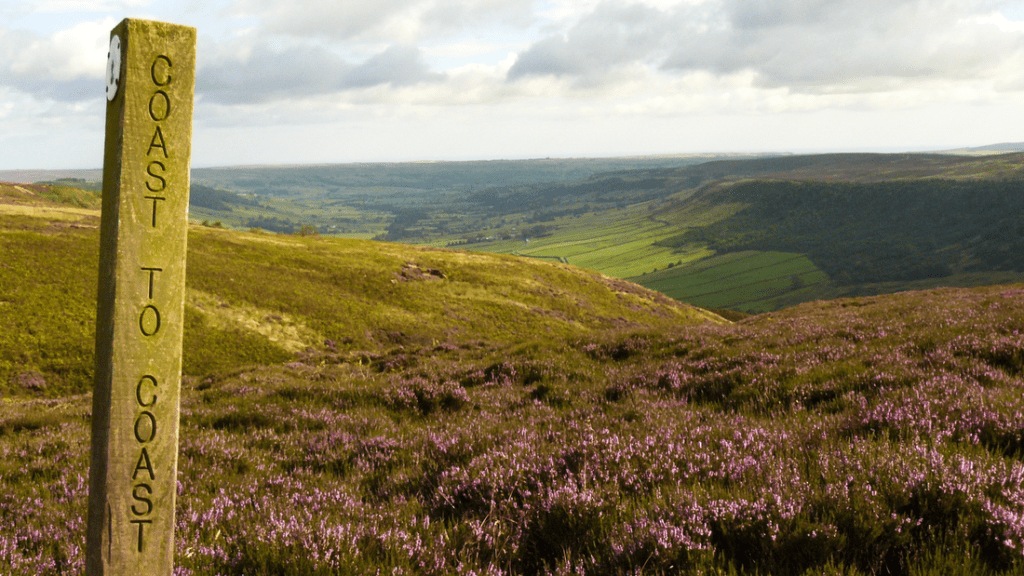
Right now, I manage to train three days a week—running between 30 and 45 minutes, with some strength training thrown in—and complete a longer run at the weekend with Chase. Here, we often take a circular route down to the beach, which is around 12 miles, while my partner watches our girls. These long runs, which will grow in length over my training cycle, take me through forest trails and on roads down to the beach. I love the freedom they provide, giving me a much-needed stretch of time to let my mind go blank instead of worrying about the next task on my internal checklist.
However, I’m finding that my biggest challenge is getting up early to go for a run before all the day’s responsibilities begin. There have been a few mornings when I’ve pressed the snooze button and said, “Not today.” Normally, I get up around 6am, before the rest of the house. But setting the alarm for a 5am run and running in the dark from start to finish is not ideal at this chilly time of the year. So I’m thankful for my weekend run, when I head out during the daylight and with more people around.
But, I’m aware of what’s coming. As I increase my training, I’ll have to fit in high mileage alongside school drop off, helping with homework, work deadlines and everything else that life throws at me. That’s daunting.

Even now, when I want to train, other priorities pop up: my eldest needs help with her homework, my youngest wants to play dress-up or is having a day where she only wants me to take care of her instead of my partner. I’m finding that I need to be flexible and seize training opportunities as they come. Nowadays, it’s no longer a case of saying that I’m going to train at set times. I’m also learning to stop feeling frustrated with myself or guilty when I miss a day of training, or when it doesn’t go as planned. Training for a long-distance event requires months of your time and patience, which eventually comes down to mere hours on the actual day. A day or two here and there missed isn’t going to ruin my progress as long as I remain consistent with training the rest of the time.
So far, rebuilding my running base has been going well. Most training plans I’ve seen suggest that I’d need around four months of consistent training to reach my goal of a 4-hour 50K ultramarathon. Other plans say you’d need at least a year if you’ve not done much training before.
Training can be so personally variable, and there are never guarantees. An unusually hot or especially rainy day could completely change my race day plan or execution. I’m hoping that my training combined with my decades of experience with road- and trail-running, will help me not only reach my time goal, but feel proud as I line up at the start this October—and triumphant as I cross the finish. We’ll just have to run and see.
Stay tuned throughout 2026 for more of this series, Ultra Diaries, which follows Rebecca on her training journey for the Run to the Sea Bournemouth 50K ultramarathon.