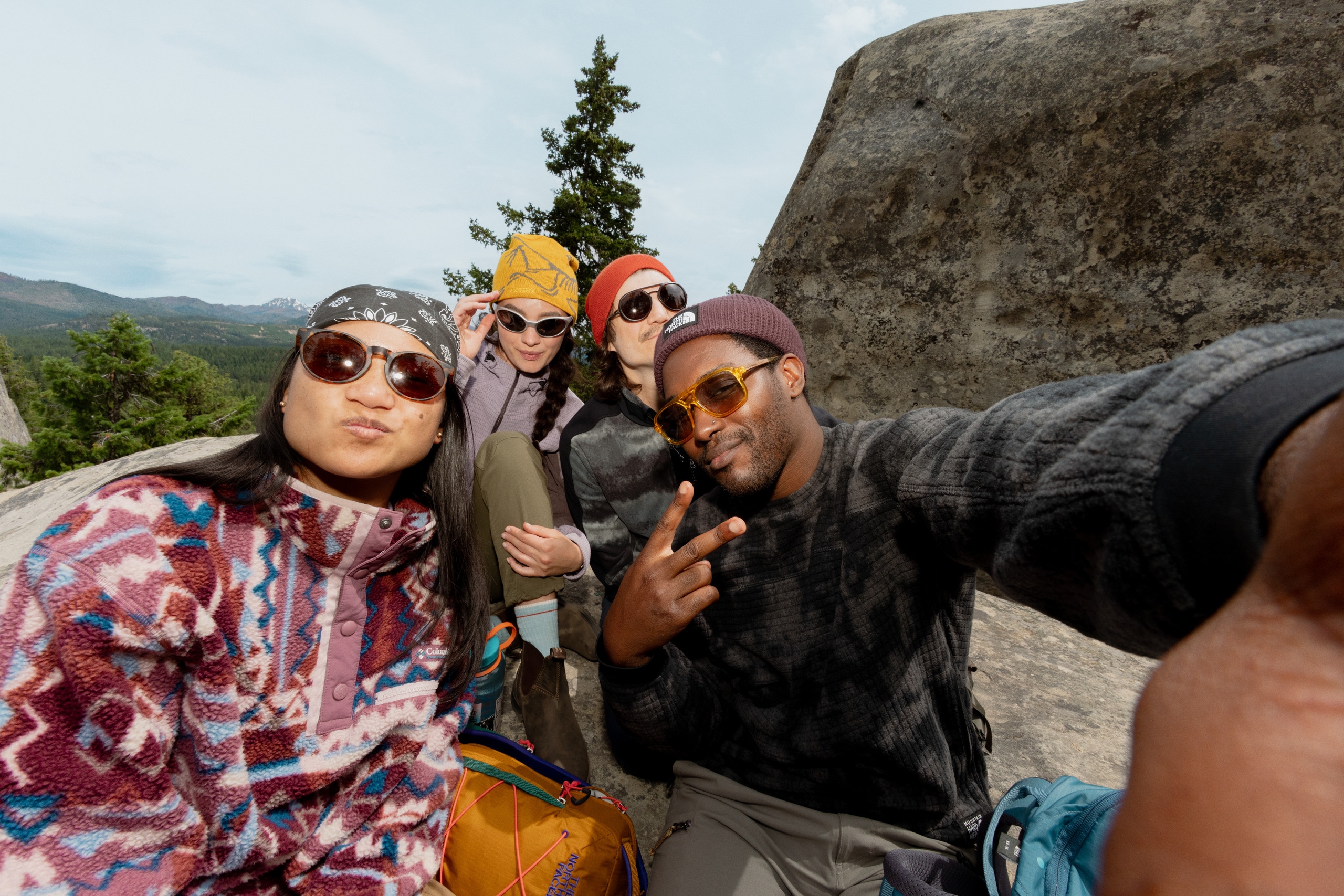
Fleece has been a favorite material among outdoor lovers for decades. But when it comes to fleece jackets, there are a lot of choices. Some belong on mountaintops, some on Main Street and others move effortlessly between the two. We’re here to help you understand the various types of fleece jackets and guide you to the option that’s right for you.
In this article, we’ll explore:
- The right fleece jacket for your outdoor activity
- Understanding fleece materials, weights and construction
- What people get wrong about fleece jackets
Fleece Jacket Basics
Fleece is a soft, knitted fabric typically made from polyester or recycled polyester. But it can also come from natural materials like wool. (Learn more about materials below).
People also use fleece interchangeably to refer to a style of clothing, like a fleece jacket or a fleece sweater. A lot of outdoor gear is made of fleece, including fleece hats, gloves and mittens, and fleece pants.
Fleece jackets trap air close to your body to keep you warm without much weight or bulk. They're also breathable, venting excess warmth and moisture to help prevent overheating.
Fleece jackets aren’t waterproof, so they are most often worn as a mid layer. However, some people use them as an outer layer for chilly days with little or no precipitation.
Use your fleece jacket to replace other types of mid layers like sweatshirts, sweaters or down jackets depending on the weather. Why? A fleece offers more insulation, range of movement and breathability than a cotton sweatshirt. It’s more durable than a cashmere sweater. And your fleece jacket retains insulating ability when wet.
Key Fleece Jacket Decisions
“There is any and every kind of fleece under the sun,” says Corey Simpson, a communications manager for Patagonia who has worked in the outdoor industry for 16 years.
To choose one, ask yourself:
- How will I use this fleece most of the time? Simpson calls this the 80/20 rule. To find the best fleece for you, consider the priorities (like breathability, warmth) for the activity for which you will be wearing the jacket 80% of the time. Odds are, the fleece will work (even if it might not be optimal) the remaining 20% of the time.
- Do I tend to run hot or cold? Someone who gets cold easily may want a heavy weight fleece versus someone who’s often hot, even for the same activity.
- What will you wear with it? Factor in what you’re wearing under or over your fleece. For example, a lighter fleece with a slimmer cut will fit better under a rain jacket, but a relaxed midweight option will fit over a T-shirt.
Quick Guide
- Lightweight fleece jacket: For high-exertion activities like running, cross-country skiing, or hiking uphill. A lightweight fleece jacket can vent heat and moisture during exertion but provides just enough warmth in cool temps.
- Midweight fleece jacket: A versatile layer (though perhaps not perfect) for a range of conditions and activities, from skiing or snowshoeing to walking your kid to the bus on a chilly morning.
- Heavyweight fleece jacket: When warmth is the priority and bulk doesn’t matter—for example if you’re relaxing around a campsite or tailgating.
The Right Fleece Jacket for Your Favorite Outdoor Activities
Use the below chart as a starting point to help you find a fleece jacket based on your activity.
Activity | Recommended Fleece Weight | What to Prioritize | Con |
|---|---|---|---|
Running, cross-country skiing and other high-output activities | Light | Breathability | A slimmer fit, grid pattern |
Hiking | Light or medium | Ratio of breathability to warmth | Durability, water-resistance |
Skiing, snowboarding and winter layering | Light or medium | Ratio of warmth to breathability | Ease of layering |
Climbing | Light or medium (or heavy if belaying) | Mobility, abrasion-resistance | Harness compatibility, water-resistance |
Travel | Medium | Versatility, packability | Style, water-resistance, pockets |
Car camping, relaxed outdoor time and everyday use | Medium or heavy | Warmth | Style; higher pile |
Find out which picks REI staff recommend in The Best Fleece Jackets: Staff Picks.
For Running, Cross-Country Skiing and Other High-Output Activities
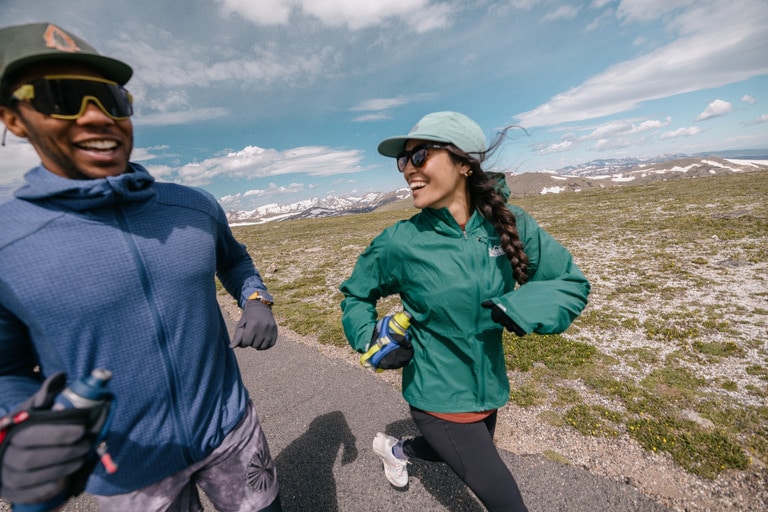
For activities that up your heart rate and make you sweat, even in cooler weather, you’ll want a lightweight fleece jacket designed to vent heat. Seek out options with a textured grid pattern that allows better airflow and wicking.
Experts we’ve interviewed suggest a slimmer-fitting fleece jacket. Rebecca Dailey, global design director for women’s outerwear and fleece at The North Face, says, “You don’t want a lot of extra fabric,” since it “could get caught when you are doing the arm swing.”
If you plan to wear the jacket as your outer layer, consider one with a durable water repellent (DWR) finish to help prevent precipitation from saturating the fabric. Thumbholes will keep hands a bit warmer. Some fleeces have an anti-odor finish—a helpful touch if you plan to wear the layer multiple days without washing.
For Hiking and Everyday Trail Use
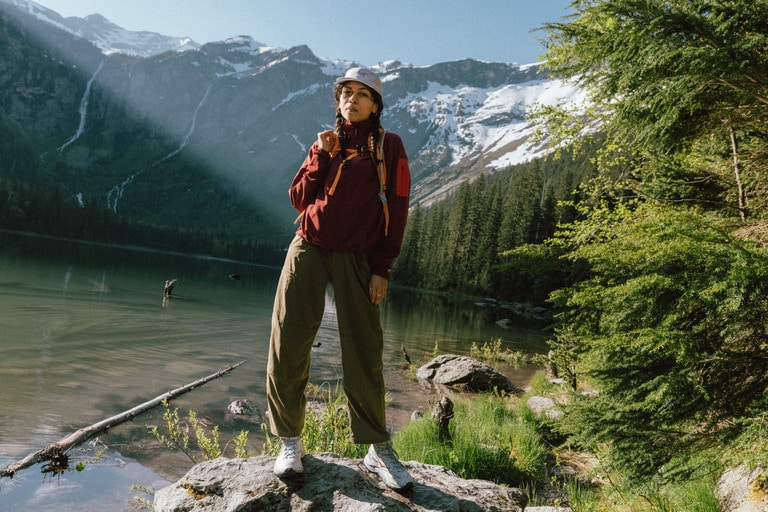
A lightweight or midweight fleece works best for hiking and other trail use. Individuals who like strenuous trails, run warm or hike in warmer weather should lean toward a lightweight fleece with breathability-enhancing features like a grid pattern or microperforations. If you’re moving at a less aggressive pace, consider a midweight fleece. A midweight option is also a good idea if you tend to run cold or plan to wear the jacket in cooler temps.
Hikers and backpackers should consider a fleece with mobility benefits like gusseted underarms, articulated patterning and 4-way stretch. You might also look for a taffeta overlay or other paneling on the shoulders, which can help the jacket stand up to the friction caused by pack straps.
Your fleece should fit comfortably over your base layer and under a wind and/or rain shell. If you plan to remove it at some point, look for one that packs down small.
For Skiing, Snowboarding and Winter Layering
A fleece jacket is a great mid layer for skiing or snowy conditions. Wear it between a base layer and the outer layer like a waterproof jacket.
Look for a breathable lightweight or midweight fleece. Go lighter if you run hot or conditions are mild; choose a midweight fleece if you run cold or it’s chilly out.
Choose a fleece with a close-fitting scuba hood if you plan to wear the hood under your helmet.
For Climbing
Choose between a lightweight and a midweight fleece jacket, depending on your personal temperature and weather conditions.
Climbing requires dynamic moves on rock, so you’ll want a fleece that fits close to your body and moves with you. Stretch and a tighter fit are essential. Cuffs that cinch close to the wrist are more likely to stay out of your way when reaching for a handhold. An abrasion-resistant option will help your climbing fleece last longer. If you’re worried about an unexpected shower, look for a durable water repellent (DWR) finish for light water-resistance. Harness compatibility is also key.
For situations where you’ll be more stationary, like top-rope belaying or hanging at the crag, prioritize a midweight or heavyweight jacket, possibly with a hood, since you’ll likely be looking for warmth.
For Travel
REI staff and brand experts alike recommend traveling with a midweight fleece jacket since they work across the broadest range of scenarios. Hand pockets are helpful for holding spare change or a room key. Also factor in packability; it’s a plus if the jacket stows in its own hand pocket. A fleece with a DWR finish can help ward off light drizzle. Finally, think about comfort and your personal style.
For Car Camping, Relaxed Outdoor Time and Everyday Use
When you need a layer for lounging in your tent or running errands around town, a mid- or heavyweight fleece jacket can provide coziness. Bulk isn’t an issue, since you can throw the layer in your duffel or the back of your car if you overheat. For around-town wear, factor in your style preferences for a boxy or cropped fit, dropped shoulder, higher-pile, pockets and/or color-blocking.
Understanding Fleece Materials, Weights and Construction
“There’s a fleece jacket out there for everybody,” says Simpson from Patagonia.
Fleece Materials
Fleece is typically made from polyester or recycled polyester, though it can also come from natural materials like wool. Both synthetic and natural fleece have benefits, so your choice may come down to personal preference, says Dailey. Some fleece jackets combine synthetic and natural materials like polyester-merino blends, polyester-hemp blends and more.
Polyester/Recycled Polyester | Both | ||
|---|---|---|---|
Key Benefits |
|
|
|
Drawbacks |
|
|
|
Shop merino wool fleece jackets
Fleece Weights
Fleece comes in three different weights, measured in grams per square meter (GSM): lightweight, midweight and heavyweight.
Grams per square meter (GSM) | Key benefits | Potential drawbacks | Product example | |
|---|---|---|---|---|
Lightweight fleece | 100–200 |
|
| |
Midweight fleece | 200–300 |
|
| |
Heavyweight fleece | 300+ |
|
|
Lightweight fleece jackets or pullovers are typically breathable and packable. Their minimal thickness and lighter weave allow air to pass through relatively easily—an attribute that’s often enhanced with an interior grid pattern. They shine in high-exertion activities like running and can pack down small, making them useful when space (either in a backpack or a carry-on) is at a premium.
Midweight fleece jackets tend to be warmer than lightweight ones, with some versions featuring taffeta overlays (perhaps on the shoulders or elbow patches) for wind resistance and durability. Like lightweight fleeces, midweight fleece jackets breathe well and are somewhat packable. They’re also versatile—some work in both technical scenarios (think backcountry skiing) and cozy, casual cabin settings.

Heavyweight fleece jackets offer more insulation and warmth for cold conditions. Compared with lightweight and midweight models, heavyweight fleeces are less breathable and bulkier. We often think of heavyweight fleece jackets as looking extra fuzzy, but they can also be tightly knit.
Fleece Construction
You might see these fleece construction terms on the product’s tag. Here’s what each one means.
Grid fleece has a grid pattern on the interior fabric. The gridded areas touch your skin to help you stay warm, explains Simpson. The channels (found between the raised sections) allow excess heat and moisture to escape.
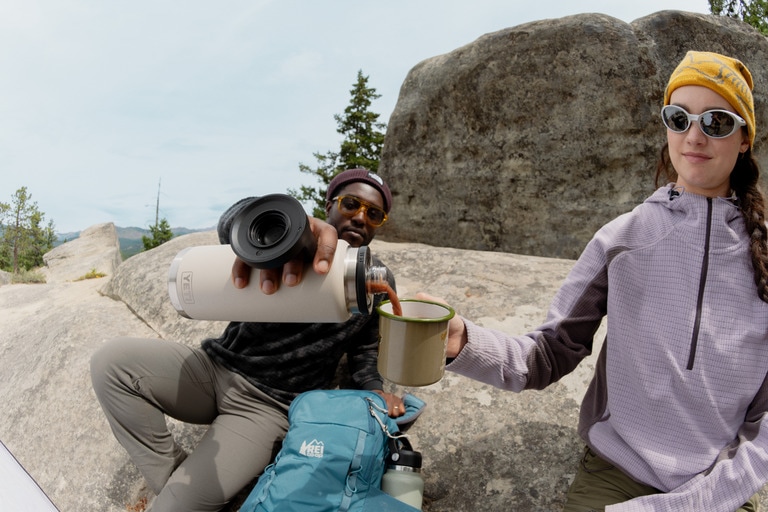
Low-pile fleece has a shorter, more closely cropped surface. It features less loft and is designed to deliver warmth without bulk, making it easier to layer.
High-pile fleece has a fluffier look like a bouclé chair. There’s more space between the fibers (i.e., more loft), which can increase insulation and softness while remaining relatively low weight. High-pile fleece typically falls into the heavyweight category.
Flat-face fleece jackets have a smooth exterior. On the interior, you’ll find the signature fleece material, often in a grid pattern.
Technical fleece is a somewhat subjective term since many fleece jackets perform well in the right setting. In general, a technical fleece is built to perform in more aerobic pursuits (and thus, prioritizes breathability) or more extreme conditions (and may have durability-enhancing and/or wind-resistant overlays).
What People Get Wrong about Fleece Jackets
Here are some of the most common misconceptions around fleece jackets.
Mistake #1: Assuming all fleece is the same
Lightweight, midweight and heavyweight fleece jackets can all be an excellent choice—or the wrong choice. Each has a different function. Select a lightweight fleece when breathability is most needed, a midweight fleece for versatility and a heavyweight fleece for warmth. “Consider your activity usage,” emphasizes Dailey from The North Face.
Mistake #2: Buying for warmth over versatility
It’s easy to look at a fleece and assume its primary function is to deliver warmth. But don’t forget fleece’s other superpower: breathability. Lightweight and midweight jackets are more likely to be warm and breathable, making them more effective for a variety of uses, from running to hiking to travel. “There’s a time and a place for a high-pile, heavyweight fleece jacket,” Dailey says, pointing to lower-exertion activities—but it may be less versatile.
Mistake #3: Expecting a fleece jacket to replace a rain jacket
Some synthetic fleece jackets use a DWR finish to add water resistance, and wool fleece jackets naturally repel water; however, fleece jackets are not waterproof. You’ll need to wear a rain shell either over your fleece jacket or instead of your fleece jacket to stay dry. “A fleece jacket is the insulator,” says Arianna Ross, a Green Vest at the REI store in Columbus, Ohio. “It’s not going to protect against rain.”
Mistake #4: Forgetting that fit should match your preferences and your activity
Fleece jackets come in a range of silhouettes. Some fit close to the body, while others are long and loose. Consider the silhouette you prefer as well as the one that’s best for your activity. Runners and climbers will want a trimmer-fitting fleece to ensure extra fabric doesn’t impede their performance. If you’re skiing and wearing the fleece jacket over other layers, you might want a slightly looser fit.
Mistake #5: Assuming recycled fleece is lower quality
Good news: Recycled polyester has the same properties and functionality as virgin polyester. By choosing a fleece jacket that’s made with recycled polyester, you’re helping to reduce waste without sacrificing performance.
Our Expertise
Rebecca Dailey serves as the global design director for women’s outerwear and fleece and youth apparel at The North Face, drawing on over 15 years of experience to craft meaningful, performance-driven products. Her passion for nature and exploration informs every design decision she makes. She lives in Denver with her family, where she enjoys the outdoor lifestyle that inspires her work.
Arianna Ross is a department manager at the REI store in Columbus, Ohio. She has over five years of experience outfitting customers for freezing Midwest winters. Ross estimates she has helped hundreds of customers find the right jackets or gloves for their outdoor adventures. When temps drop, Ross likes to get outside with her camera for winter photography and join her local Metro Parks Winter Hike Series. She often brings her dog along on hikes, prefers a hot chai over cocoa and loves sledding. She has been an REI Co-op Member since 2020.
Corey Simpson is an outdoor generalist who spends most of his time paddling and racing outrigger canoes. When he’s land-based, he is usually chasing his kids on trails and wondering why he didn’t pack more snacks. He’s been in the outdoor industry for 16 years and loves talking about gear.