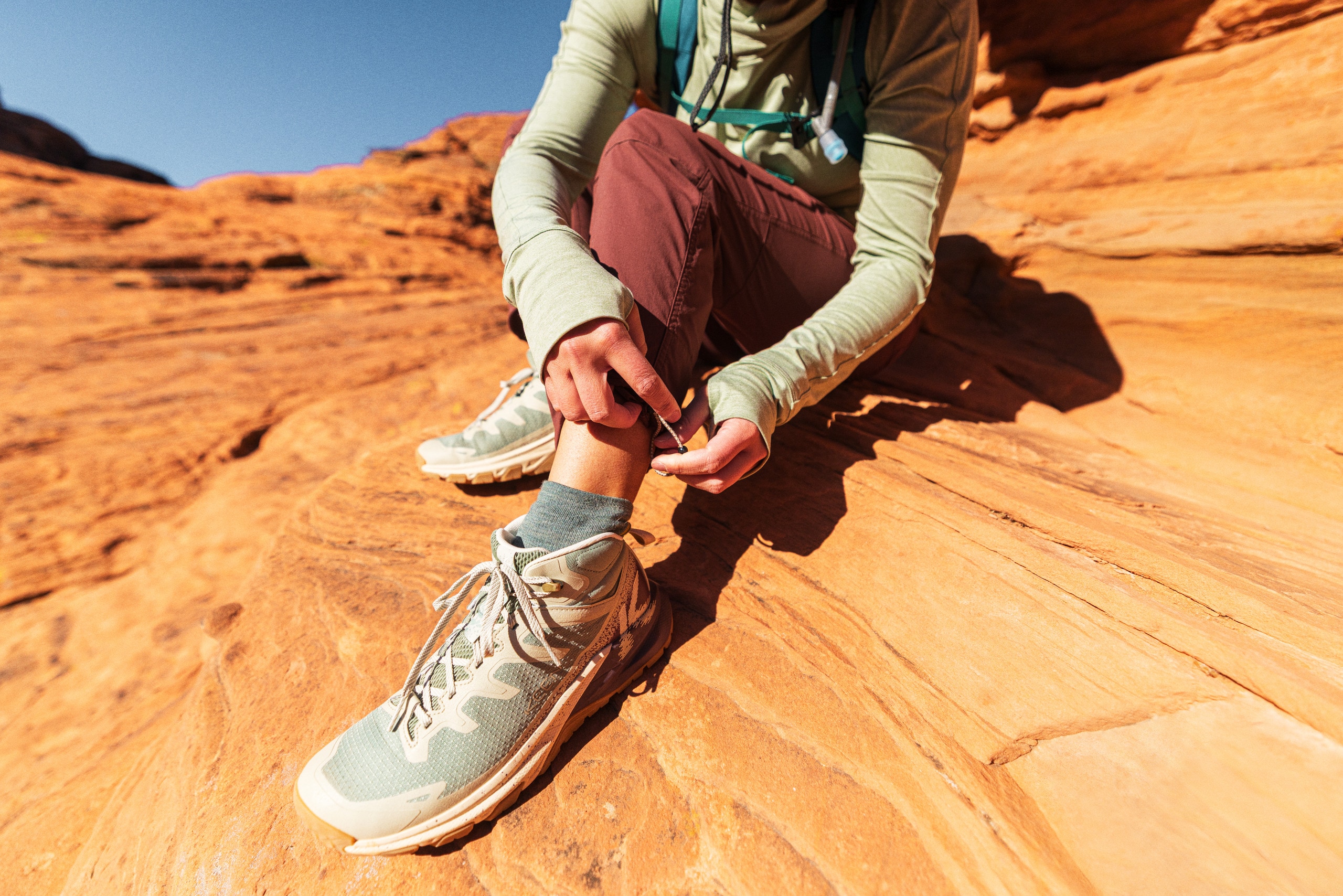
Good boots are a hiker’s best friend: They help carry the load, lead us to beautiful places, navigate us across rivers and up mountains, and are there while we make outdoor adventure memories. Choosing the best pair is like finding the right trail partner: You’ll want to make sure you are comfortable together, move in sync and are prepared to tackle whatever comes your way.
Shopping for the perfect hiking boots can be overwhelming: There are so many to choose from, each with its own complicated specifications and features. That’s why our dedicated REI Expert Advice gear testers spent months wearing and trekking in dozens of pairs over hundreds of miles to see how well they perform. We believe these 14 hiking boots strike the balance of comfort, durability, support, weight and value, putting them at the top of our list. Here, you'll find them organized by the type of terrain they're best suited for: light, moderate and rugged.
Looking for something a little lighter and lower-cut for your trail time? See our Best Hiking Shoes: Tested guide for our favorites in that category.
Test Results
For quick recommendations, check out the results of our round-robin here, or scroll down for in-depth reviews. Learn more about footwear and terrain in Buying Advice.
Light terrain
- On Cloudrock Mid Waterproof Hiking Boots – Editors' Choice Award Winner
- KEEN Hightrail Mid Waterproof Hiking Boots
- HOKA Transport Hike GTX Boots
Moderate terrain
- Merrell Moab Speed 2 Mid GTX Hiking Boots – Editors' Choice Award winner
- Topo Athletic Trailventure 3 GTX Hiking Boots
- Danner Mountain 600 Leaf GTX Hiking Boots
- Altra Lone Peak 9 Waterproof Mid Hiking Boots
Rugged terrain
Editor's note: This guide was updated on November 9, 2026, to include the Topo Athletic Trailventure 3 GTX Hiking Boots
Arc’teryx Kopec 2 Mid GTX Hiking Boots and remove out of stock items.

Light terrain


On Cloudrock Mid Waterproof Hiking Boots
Score 97
Waterproof Yes
Waterproofing Cosmo waterproof membrane
Upper 100% recycled polyester
Midsole Helion superfoam
Outsole Missiongrip rubber
Weight (pair) 1 lb. 11.4 oz. (women’s), 1 lb. 11.5 oz. (men’s)
Terrain type Light
Best for Day hiking on light terrain when comfort is key
“There's a reason people say wearing On shoes feels like walking on a cloud: These might actually be the most comfortable boots I've ever worn,” says one Minnesota tester after several weeks in the field. Proprietary CloudTec technology helps create this floating-on-the-trail sensation: Those cylindrical pods at the boots’ foundation compress vertically and horizontally as you move, absorbing impact and rebounding faster with less joint strain. A combination of plush, proprietary “superfoam” midsoles and a nylon Speedboard® plate connecting the heel and forefoot encourage forward motion and build momentum as you move.
Our Kentucky tester cites comfort as the most impressive aspect of the Cloudrocks: “From the instant I put them on, I felt comfortable in them. They stayed comfortable on hills, through creeks and just sitting in the car on the ride home.” Another tester says the Cloudrocks “ride like a sneaker,” lightweight and agile enough to become an everyday shoe.
OK, so they feel good on the foot: But can they perform? Our testers say yes: According to our Kentucky tester, the boots stood up to a variety of terrains, and she sailed through creek crossings easier than her trail crew because she felt so stable traversing the wet rocks. Another tester praised the specially formulated rubber-compound Mission Grip™ outsoles’ stickiness and the wider-set, shallower lugs that help the boots stay planted on various terrain. “I had no problem scrambling uphill, stabilizing myself on downhills or crossing ice. [The Cloudrocks] even held fast on a slick stone trail staircase down by the Mississippi River gorge,” they say.
Padded collars brace and stabilize ankles and keep out rocks and debris, though one tester opted to wear gaiters for extra protection in very deep snow. When all that snow melted, the same tester was able to see how waterproof the boots are: “We had a tremendous rainstorm that melted all the existing snow and fully flooded our backyard one day. I found myself wading through an actual pond to get to the car, a good three inches deep, and my feet were still bone dry inside the Cloudrocks.”
Testers did balk a little at the higher price point (these are the second-most expensive boots on the list), noting that they’ve been burned before by paying more for style and finding the substance lacking. One said his hesitation comes from On having relatively less experience with hiking footwear than, say, Merrell or Lowa.
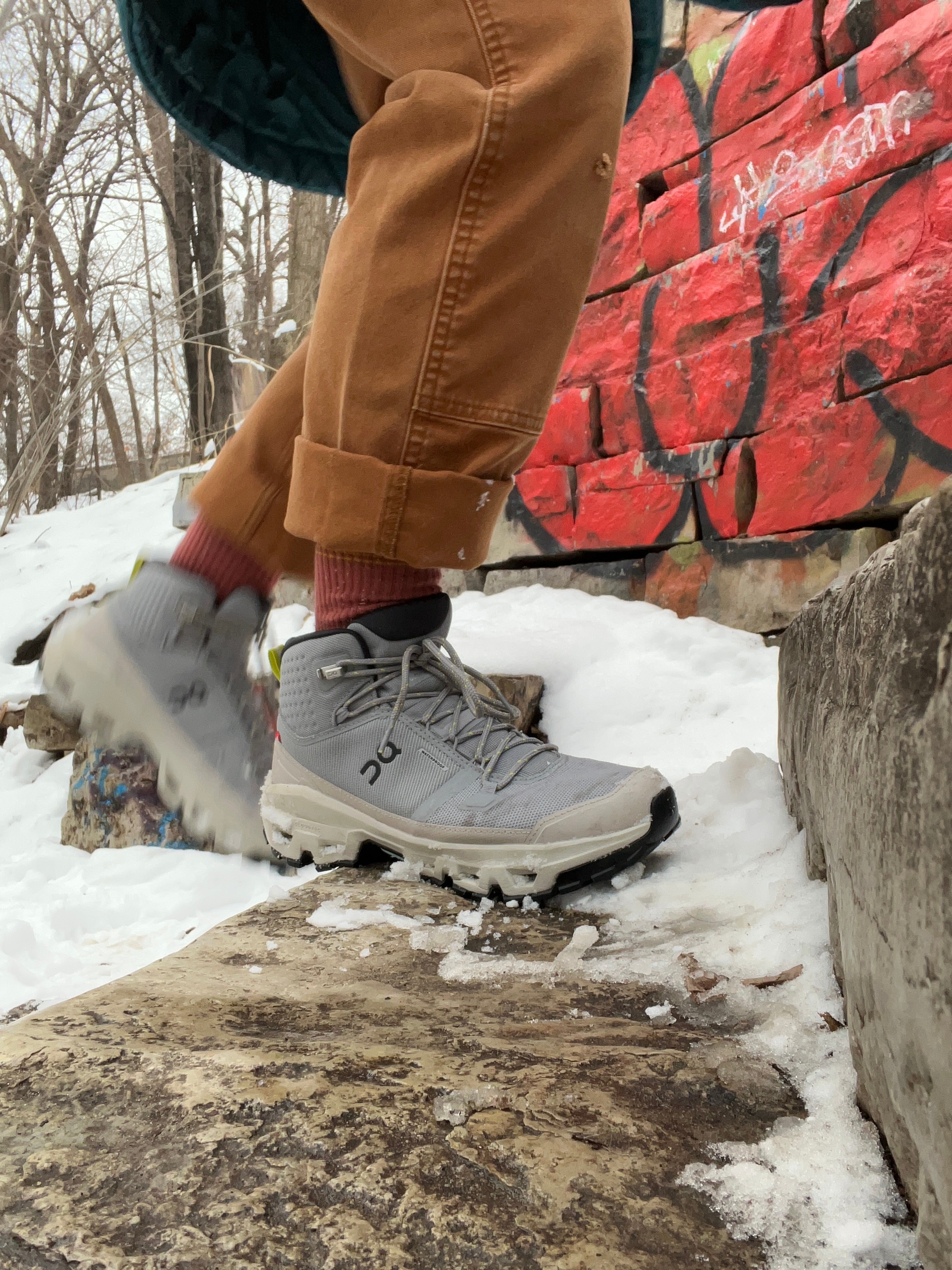
Bottom Line: For top-notch trail durability and support that wears like a sneaker, the On Cloudrock Mid Waterproof Hiking Boots deliver.
Testing Stats:
- Total distance hiked: 85 miles
- Testing states: Kentucky, Minnesota
- Best testing story: “I volunteer for an organization that helps people find their lost dogs, and sometimes I act as ground support on searches. I laced up the Cloudrocks and went out to check every stream, pond, window well and alley I could find in a 5-mile radius while on the hunt for a missing senior dog named Henry. I finished the day with a long walk around the perimeter of a snow-blanketed golf course (dogs love hiding in golf courses), where I crawled through a hole in the fence, crab-walked myself under a deck and went shoulders-deep into a culvert looking for dog tracks. By the end, I had holes in my jacket (where I got caught on said fence) and my gloves were soaked through, but my feet were dry—and I found what were likely his tracks, which gave the family hope.”


KEEN Hightrail Mid Waterproof Hiking Boots
Score 93
Waterproof Yes
Waterproofing KEEN.DRY waterproof/breathable membrane
Upper Waterproof leather/performance mesh
Midsole High-rebound foam
Outsole KEEN.ALL-TERRAIN rubber
Weight (pair) 1 lb. 11.8 oz. (women’s), 1 lb. 13.3 oz. (men’s)
Terrain type Light
Best for Day hiking in style on light to moderate terrain
Oregon-based footwear company KEEN has been beloved for its function-over-fashion hiking shoes. Sometimes, though, you want to lace up something that fits in at the coffee shop as well as at the trailhead. That’s exactly why the lightweight, versatile Hightrail Mid Waterproof hiking boots have become REI hike editor Ever Meister’s daily driver for the past two months, no matter what terrain’s underfoot. “I'm not generally one to be excessively vain, especially when I’m out in the woods, but KEEN has a bit of a reputation for being GORPcore—and that’s not my style at all,” Meister says. “These, however, are the perfect balance of comfort, ride, weight and durability—and they’re really cute. I keep getting compliments about them both on and off trail.”
While a modern profile and look-here colorways look make the Hightrail ready for the street, they’re designed to push fast and furious on outdoor terrain. Durable, weatherproof leather and mesh uppers and breathable KEEN.DRY membrane kept socks bone dry even after crossing streams and trudging through snow, epic puddles caused by a heavy winter melt one unseasonably warm December day in Minnesota, and a ripping downpour in Nashville. “I have been up to the laces in frigid standing water in these and haven’t felt the slightest bit damp,” Meister says.
Cushy, high-rebound midsole feet fly over rocks and roots, but and they’re just as supportive underfoot for long days running errands. “For being on the lighter side, these don’t feel like wimpy boots,” Meister says. “They’re fleet enough for some speed but also provide enough heft to feel protective and able to carry a load.” All-terrain rubber outsoles feature moderately deep, multidirectional lugs that can tackle light to moderately technical trails as well as slick pavement, and wraparound traction offers a stability boost.
Bottom Line: Versatile, lightweight and durable, the KEEN Hightrail Mid Waterproof Hiking Boot is designed to tackle the trail but may end up doubling as your favorite ride around town, too.
Testing Stats:
- Total distance hiked: 101 miles
- Testing states: Illinois, Minnesota, Tennessee, Wisconsin
- Best testing story: "These boots and I went on a hilly 4-mile out-and-back to a beautiful, half-frozen waterfall in Wisconsin’s Willow River State Park. Just before reaching the falls, my partner and I stopped to listen to the snowy quiet all around us in the empty park, and I immediately locked eyes with a bald eagle perched on a tree directly across the river. We stood silently, taking turns looking at the bird through binoculars, and he seemed to welcome the attention. He even seemed to watch us as we started hiking again toward the falls.”


Astral Halestorm 2.0 Boots
Score 92
Waterproof Water-resistant
Waterproofing Recycled polyurethane WeatherGuard™ wrap
Upper 77% hemp/23% recycled polyester; polyurethane WeatherGuard™
Midsole 52C closed-cell EVA foam with Top Shank; zero drop, Level Footbed from heel to ball; medium arch
Outsole True Tread rubber
Weight (pair) 1 lb. 7.2 oz.
Terrain type Light
Best for Casual day hikes, warm days on wet trails, vegan hikers who love zero-drop shoes or are looking for a non-leather hiking boot
Stylish and streetwise shoes made from waxable hemp and designed to support a more natural gait, the Halestorm 2.0 from Astral were an unexpected favorite in this round of hiking boot testing, but they earned top marks for their durability, weight, comfort and versatility.
When seeking a natural material that performs as well as many petroleum-based synthetics, hemp stands out for its breathability, durability and odor-resistance. It also has a lower carbon footprint than other boot upper materials. Astral reports that hemp needs no chemical fertilizers, herbicides or pesticides to grow and needs nearly 80% less water than cotton to produce. It's also surprisingly durable: Its long fibers resist abrasion and don’t break down over time.
“Hemp is an unusual upper material for this kind of footwear, but I’d love to see it used more as an alternative to leather or synthetics,” says REI Hike editor and zero-drop fan Ever Meister, who wore these boots daily for close to two months. “The hemp uppers here take a beating and definitely get softer and more flexible over time and wear, molding to the shape of my foot.”
On an unseasonably warm early spring hike in North Carolina’s Stone Mountain State Park, Meister found that their feet were the only part of their body that stayed sweat-free after a nearly 800-foot elevation gain, thanks to the uppers’ cooling properties.
While hemp isn’t naturally water-resistant, added polyester in the upper fabric and a wraparound poly WeatherGuard™ kept hardworking testers’ feet dry without the added bulk (or stuffiness) that waterproof membranes can add. Hemp also readily absorbs wax, making it easy to add extra protection if needed: Astral recommends applying Nikwax waterproofing when necessary. Meister wore their Halestorms through spring downpours, trickling snow melt, the watery entrance of a secluded slot canyon and even straight into the Mississippi River on a dog walk, just to see how the weather guard performed when wet: Not a drop got through to their socks.
Below deck, Astral uses its ultradurable G.15 compound rubber, which is specially formulated to stick to both wet and dry surfaces. A zero-drop footbed supports a natural gait while a wide toe box lets toes splay for stable footing. Hikers who already enjoy zero-drop footwear or prefer extra room in the forefoot may especially appreciate the fit. Its shallow, squared-off lugs are best for groomed mixed-use paths and paved surfaces. If you plan on trekking more technical terrain or deep mud, consider a boot with more angular, multidirectional lugs.
Closed-cell EVA foam midsoles add some padding underfoot while still allowing more ground contact than heavily cushioned hiking footwear, making these a great option for hikers who want to feel a little more grounded on their treks. “We stepped out onto Wolf Rock to take in the panoramic views, and I’m normally pretty cagey about heights,” Meister says of their hike at Stone Mountain. “But I felt like I’d been safely planted there. It was a nice opportunity to stop for a spell and feel connected to the granite itself.”

Bottom Line: Part hiker and part street shoe with a touch of duck boot style, the Astral Halestorm 2.0 Boot is a sleeper favorite for testers who want to tackle everything from the boulevard to dusty dirt paths and sploshy trails.
Testing Stats:
- Total distance hiked: 77 miles
- Testing locations: Minnesota, North Carolina
- Best testing story: Meister put the Halestorms’ WeatherGuard™ to the test while birding after the last snow melt. “On a late-winter/pre-spring hike in Murphy-Hanrehan Park Reserve, we spotted some of the tiniest birds' nests from last season in the marsh, I decided to gently step closer to see them better and wound up sinking up to the laces in red-brown mud almost the same color as the hemp. The weather guard mercifully kept my feet dry and clean, but the mud completely camouflaged it from the rest of the boots!”


HOKA Transport Hike GTX Boots
Score 91
Waterproof Yes
Waterproofing GORE-TEX® bootie construction
Upper 59% textile/41% synthetic
Midsole 30% sugarcane EVA
Outsole Rubber
Weight (pair) 1 lb. 9.28 oz. (women’s), 2 lbs. 13.6 oz. (men’s)
Terrain type Light
Best for Hiking on light terrain, our vegan boot pick
Weekend trail warriors seeking ultimate comfort and just a little bounce underfoot, HOKA has the hiking boot for you: the Transport Hike GTX.
Unlike the kangaroolike spring that the brand’s max-cushion shoes offer, the Transport’s balanced softness and moderately high stack height provide ample shock absorption without feeling chunky or clunky. “I've expected HOKA boots to be clunky as heck with that major cushion, but these are fast-moving, light hikers that wear more like a trail-running sneaker than a traditional hiking boot,” says REI hike editor Ever Meister. Additionally, a curved foam rocker plate under the forefoot helps create a smooth transition from heel to toe on every stride, helping fast-moving hikers eat miles for breakfast. The Transport Hike GTX’s 4-mm drop—lower than on HOKA trail run models, like the Clifton 10’s 7.2-mm drop—encourages more of a balanced midfoot strike than a heel-pounder, which can help ease tension and impact on hardworking knees.
The textile and synthetic uppers offer durability and some flex on steeper terrain, and the sleek, lower profile collar holds ankles steady. That said, Meister found that these chukka-style boots required more getting used to than they expected from a nonleather hiker. “The collars took more breaking-in than the rest of the shoe: They were stiff and dug into my skin a bit at first, and I was concerned that they wouldn't be comfortable overall,” they say. “After a few longer wears, however, they have relaxed a bit and feel snug but not constricting.” Like many HOKA shoes, the Transport boots fit on the narrower side; consider sizing up by half and breaking these in before a longer outing.
Avid hiker and REI Co-op Membership program manager Piyush Gupta took his Transport Hike GTX boots out for several long treks on rocky terrain in his New Mexico home state, and also wore them through muddy city streets during several rainy fall days: He especially appreciated the 4-mm multidirectional lugs and grippy, one-piece Vibram® Megagrip outsole, which “kept me grounded and prevented me from slipping on slippery rocks and muddy/rainy roads.” The wide-set, deep lugs also shed mud and wet sand easily, Meister noted, “which means they stay clean and grippy as you get deeper on the trail (and you don’t bring half the trail home with you).” Waterproof but breathable GORE-TEX® booties keep feet dry, both from precipitation and perspiration, and 360° reflectivity make these boots as easy to see as they are easy to wear. Other versions: HOKA Transport GTX Shoes in women’s and men’s.
Bottom Line: Trail-to-town hikers with a need for speed will love the HOKA Transport Hike GTX Boots’ lightweight versatility, waterproof protection and durable but flexible ride.
Testing Stats:
- Total distance hiked: 87 miles
- Testing locations: Minnesota, New Mexico, Tennessee
- Best testing story: Two miles in to a hike at Beaman Park, outside Nashville, our tester passed a pair of happy, chattering young friends passing binoculars back and forth and speeding down the trail to follow a bird call. Moments later, two parents approached with just the slightest hint of fear in their eyes. “Have you seen two kids on this trail lately?” they asked. Our tester pointed them in the right direction and said, “Follow the sound of the pileated woodpecker.” Later, they crossed paths with the family again—all smiles this time, taking stock of the day’s lifers.
Moderate terrain


Merrell Moab Speed 2 Mid GORE-TEX Hiking Boots
Score 96
Waterproof Yes
Waterproofing GORE-TEX® waterproof membrane
Upper Nylon ripstop/TPU
Midole FloatPro foam
Outsole Vibram TC5+ rubber
Weight (pair) 1 lb. 8.7 oz. (women’s), 1 lbs. 12.2 oz. (men’s)
Terrain type Moderate
Best for Hiking, backpacking
These boots summited Kilimanjaro. Seriously—one of our testers wore a pair of Merrell Moab Speed 2 Mids for more than 100 miles over eight days through mud, rocks, snow and rain to reach 19,340 feet above sea level. If that’s not enough to convince you they’re worthy of this list, how about this: The Moab collection of Merrell shoes and boots has been going strong since 1982 and is designed for superior comfort and durability no matter how far (or how high up) you’re taking them.
The heart of the Moab is in its outsole: a Vibram® TC5+ rubber compound specifically formulated for Merrell, with 4-millimeter traction lugs designed to slough mud and debris as you walk. Full-length rock plates shield feet from sharp stones or rocks and add stability. A heel counter keeps your foot placed properly, though our Kilimanjaro-hiking tester says descents in her Moabs were especially hard on one of her big toes “to the point that it bruised.” (To be fair, not everyone descends 6,000 feet in one day.) Designed for maximum comfort and agility, the Moabs’ cushy FloatPro™ foam midsoles and padded ankle collars hit that just-right balance of softness and structure. The tongues are gusseted to the upper to help keep rocks and dirt out of your boots, and a GORE-TEX® waterproof/breathable membrane does the same for water and weather.
Significantly, the Moab Speed 2 Mids don’t compromise on durability just because they’re lightweight: Vegan-friendly nylon ripstop and TPU uppers stood up everything testers threw at them, whether they were scaling peaks in Tanzania or tackling steep trail steps and rocky switchbacks hiking to Washington’s Bridal Veil Falls and Lake Serene. (They’re also available with leather uppers in women’s and men’s.) A synthetic heel and toe cap further protect against abrasions. “I did not know it was possible for boots this light to be as durable and heavy duty as some of the more classical mid-sized hiking boots,” says one tester who strapped on traction devices for a 9-mile trek on a frozen-solid rocky, snow-covered trail. “They did not feel that flimsy at all.” Other versions: Shop the full Moab collection.
Bottom Line: The Merrell Moab Speed 2 Mid GTX Hiking Boots offer comfort and durability for the long haul, whether you're hiking near home or scaling Kilimanjaro.
Testing Stats:
- Total distance hiked: 155 miles
- Testing locations: Minnesota, Washington, Wisconsin; Tanzania
- Best testing story: “I donated these boots after my climb to the women porters that work on Mount Kilimanjaro,” said our mountaineering tester. “There aren't many women on that mountain doing the kind of work they do, and it felt good to leave them with some quality gear. They were happy to receive these boots and stated they will use them well.”


Topo Athletic Trailventure 3 GORE-TEX Hiking Boots
Score 97
Waterproof Yes
Waterproofing GORE-TEX® Invisible Fit
Upper Recycled mesh (contains 30% recycled materials)
Midsole ZipFoam™ (EVA/TPU blend)
Outsole Vibram® Megagrip rubber
Weight (pair) 1 lb. 9.4 oz. (women’s), 1 lb. 14.6 oz (men’s)
Terrain type Moderate
Best for Fast hikers who love a low-drop feel and wider toe box
Footwear brand Topo Athletic was founded by a runner who wanted to combine the benefits of minimalist running with the cushioned support found in classic running and outdoor shoes. After more than 50 miles of testing, we think the Trailventure 3 GORE-TEX® hiking boot earns the company a PB: It’s light, supportive and great for moving quickly on the trail.
Testers especially appreciated the responsive, plush midsoles, which they say felt soft underfoot without totally erasing the feel of the ground. The full-length rock plate protected testers from sharp edges on rockier trails, and the roomy forefoot (another beloved Topo Athletic standard feature) allows toes to splay naturally, which can help with balance and cadence.
Testers appreciated the updates featured in this third Trailventure iteration. REI hike editor Ever Meister loved the lightweight GORE-TEX® membrane that kept their socks dry even in waterfall spray and crossing the rocky Mississippi River headwaters. “They might be a bit warm for the hottest days,” they say, “but for late summer and wet, early fall hikes, they were perfect.” Both Meister and gear tester Kevin P. in Idaho also loved the new lace lock system, which helped keep the fit dialed and, combined with a TUP heel counter, prevented too much foot movement inside the shoe. “I love Topo Athletic shoes, but I suffer from heel slip with a lot of different footwear—including some other Topo models—even when tying a heel lock [lace],” Kevin says. “These boots give me the great Topo Athletic comfort while solving my right foot from getting heel blisters.”
Both testers wore their Trailventure 3 GORE-TEX® boots on a variety of relatively challenging terrain, including sections of northern Minnesota’s Superior Hiking Trail and Idaho’s rugged Sawtooth Wilderness. The boots confidently ate everything these hikers threw at them: wet, dry, rocky, and rooty paths; acute uphills and leaf-littered downhill trails; waterfalls, bridges and boardwalks; and spongey, marshy ground. “The Megagrip outsoles combined with toe-splay thanks to the wide toe box has given me a lot of confidence on even pretty tough outings,” Meister says. Kevin agrees: “The design of the soles is very good. I had a lot of traction going up and downhill. I never felt like I would slip or lose my footing, even going down very steep inclines.” A new universal gaiter system also means these boots can be all-weather ready in a pinch (gaiters not included), and vegan-friendly and recycled materials help them walk a little lighter, carbon footprint–wise.
“These have been an absolute dream to wear and have become what I want to wear, even just for day-to-day use,” Kevin says. Hard to top(o) that!
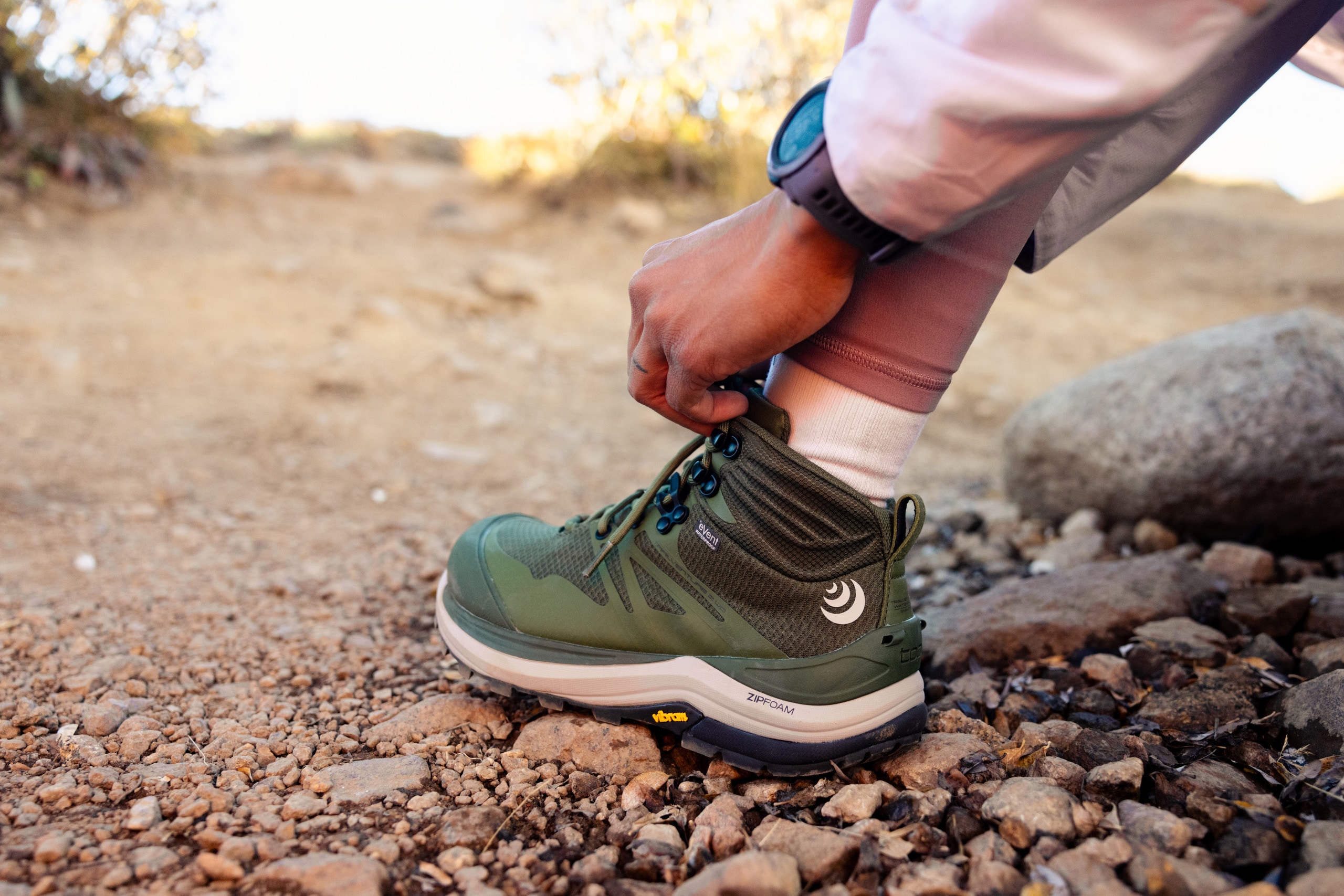
Bottom Line: When your spirt says, “Go trail running” and your legs say, “How about a hike instead?” split the difference and reach for the Topo Athletic Trailventure 3 GORE-TEX® Hiking Boots.
Testing Stats:
- Total distance hiked: 56 miles
- Testing locations: Idaho, Minnesota, Wisconsin
- Best testing story: “I was coming down a steep part of a trail when some mountain bikers were coming down behind me,” says Kevin P., whose hike briefly turned into a comedy of errors. “I tried to quickly get out of their way, but unfortunately bumped against a bitterbrush bush that some wasps were hanging out in. I only got stung once, but I managed to accidentally kick a boulder when I tried to quickly get away from them.” Thankfully, both Kevin and his Trailventures made it off the trail without too many scuffs, scrapes or stings.


Arc'teryx Kopec 2 Mid GTX Hiking Boots
Score 87
Waterproof Yes
Waterproofing GORE-TEX® Invisible Fit membrane
Upper WPN PFC-free, woven with recycled CORDURA® polyester; expanded TPU overlays; stretch-woven collar; molded rubber toe cap
Midsole Compression molded 45C EVA
Outsole Vibram® Megagrip with Litebase technology
Weight (pair) 1 lb. 9 oz. (women’s), 1 lbs. 12.15 oz. (men’s)
Terrain type Moderate
Best for Longer day hikes that flirt with more technical terrain
The Kopec 2 Mid GTX hiking boots (and low-cut hiking shoes) from Arc’teryx combine the sleek aesthetic one expects from Arc’teryx with ready-to-perform features that hold up on everyday trails and more challenging terrain.
The first thing our testers noticed when they laced up these mid-height boots is how lightweight they are. That’s courtesy of 100% nylon uppers and an innovative sole design from Vibram® that reduces shoes’ overall weight by as much as 30%. Thankfully, those weight savings don’t come with compromise on performance. Moderately deep, wider-set lugs add to multi-surface grip and easily shed mud. Andy N., who loves racking up big trail miles every week in Washington state, tested the Kopecs in rainy and muddy conditions, loose gravel, hard-packed trail, sand, mud, and steep, loose hillsides in the North Cascades. “They performed well in all of these conditions, with good traction on steep, loose sections,” he says. “Compared with the other boots in my test, the Kopec 2 provided traction that was just as good, and I would feel comfortable wearing them in wet conditions and on moderately technical terrain.”
The durable, breathable CORDURA® uppers kept pace, too, holding up against sharp rocks and plenty of uneven, muddy and downright drenched conditions. The waterproof boots dried quickly, too, as Andy found when he got caught in a soaking so intense that his boots filled with rain running off his hiking pants. (May we suggest gaiters next time?)
Midsole cushioning isn’t sacrificed for weight, either: “The cushioning in the sole is best in class,” Andy says. “It has a very comfortable, springy feel without feeling overly soft or unstable. After an 8.6-mile hike with more than 2,300 feet of elevation gain, my feet were not sore, and I continued to appreciate the cushioning.”
Andy says he would have gladly accepted a few extra grams in three key areas: more lace hooks for a bit more give around his “high-volume feet,” a slightly roomier toe box with a more symmetrical bumper, and a higher ankle collar for fuller coverage and protection. Those small changes, he says, would make the Kopec 2 Mid GTX boots his top pick.
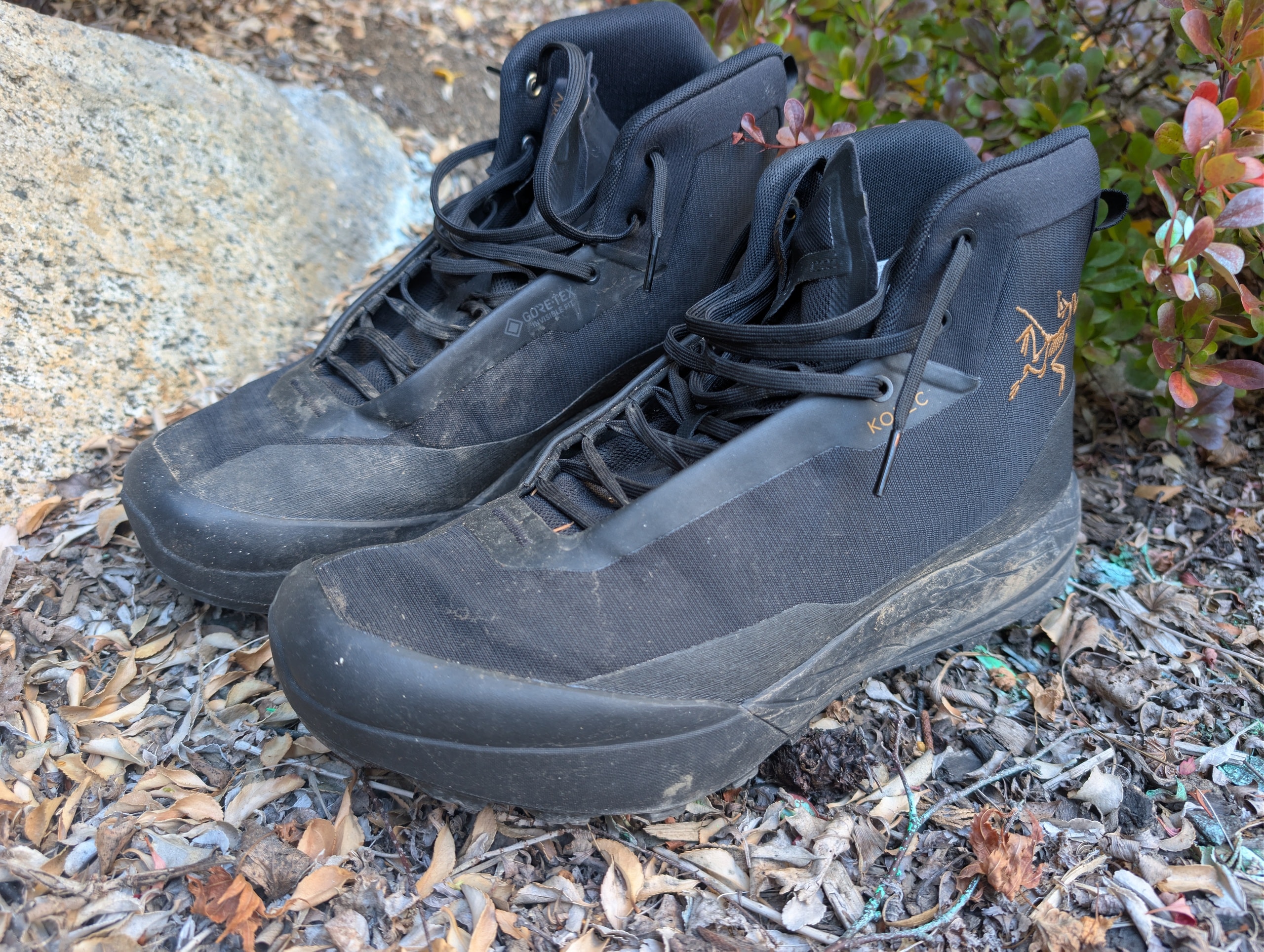
Bottom Line: Comfort, style and stability combine to make the Arc’teryx Kopec 2 Mid GTX Hiking Boots our testers’ choice for day hikes that get unexpectedly wet and wooly.
Testing Stats:
- Total distance hiked: 30 miles
- Testing locations: Washington
- Best testing story: “I had an interesting experience on an 8.6-mile loop hike,” says Seattle-based tester Andy N. “The first 3 miles were cool and dry, but about a mile before the halfway point, it started pouring. I had two choices: turn around, which would have been the shorter option, or complete the loop. I had to keep going—I couldn't leave unfinished business out. It rained for the entire rest of the hike. The trail was also overgrown, so wet brush repeatedly wiped against. By the time I finished, I was absolutely soaked. Nothing I was wearing was dry. The boots were wet inside as well, although I believe most of that water came from rain running down my legs and into the tops of the boots rather than through the waterproof membrane.”


Danner Mountain 600 Leaf GTX Hiking Boots
Score 93
Waterproof Yes
Waterproofing GORE-TEX® 2-layer waterproof/breathable laminate
Upper Full-grain leather
Midsole Vibram SPE
Outsole Vibram Fuga with Megagrip technology
Weight (pair) 2 lbs. (women's), 2 lbs. 4 oz. (men's)
Terrain type Moderate
Best for Day hikes on moderate terrain
The Mountain 600 Leaf GORE-TEX Hiking Boots from Danner are a hiker's soulmate—and beyond being sturdy, stable and stylish, they can also be resoled. In fact, they are eligible for full Recrafting services, a testament to the shoe brand's pledge to the environment. Instead of chucking your hiking boots when the soles are too worn to wear, ship them back to the factory in Portland, Oregon. There, the Danner Recrafting team will assess your pair and can slap on a fresh sole before shipping it back to you for plenty more trail time. (Other Recraft services include leather care and reworking, restitching, parts replacement and more.)
Of course, the shoe has to work well if you want to wear it for years. The Mountain 600 Leaf GTX is one of our favorites for burly traction and protection on rugged terrain. Thanks to Vibram® rubber outsoles with Megagrip (the stickiest out there), the boots held fast on gritty sandstone and slick mud. "My wife slid downhill for one of the super slippery sections, but I had enough traction that I could pull her up with me," reports one tester after a weekend hike in Colorado's Holy Cross Wilderness.
Full-grain leather isn't naturally waterproof, but thanks to a two-layer GORE-TEX®, it would take a monsoon to bust through the Mountain 600 Leaf GTX. "I flopped into an ankle-deep mud hole and my feet still stayed dry," reports our crew in Iowa. And, the Vibram® EVA midsole is soft enough for immediate comfort but still provides enough support that you won't struggle under heavy backpacks. All this durability comes with a weight penalty though; these definitely feel heavier than others on the list.

Bottom Line: Hardworking leather uppers and a cushioned ride are the secret behind the Danner Mountain 600 Leaf GORE-TEX boots, the most traditional pair of hikers on the list.
Testing Stats:
- Total distance hiked: 49 miles
- Testing states: Colorado, Iowa, Michigan
- Best testing story: One tester in Colorado admits to wearing his hiking boots as daily drivers because he loves them so much. "I've even been wearing them to work and to pick up our kid from school," he reports. "They're so comfortable out of the box."


Altra Lone Peak 9 Waterproof Mid Hiking Boots
Score 90
Waterproof Yes
Waterproofing Waterproof bootie construction
Upper Recycled polyester mesh
Midsole Altra EGO foam
Outsole MaxTrac rubber
Weight (pair) 1 lb. 11 oz. (women’s), 1 lb. 13.7 oz. (men’s)
Terrain type Moderate to rugged
Best for Hiking, backpacking and thru-hiking on moderate terrain for zero-drop fans
Even barefoot-shoe diehards need a little something extra sometimes. The zero-drop Lone Peak 9 Waterproof Mid Hiking Boots from Altra are our choice for minimalist hikers whose treks call for more underfoot support and structure.
A 5-millimeter footbed and 25-millimeter stack height and updated, lighter-weight foam midsoles offer moderate spring and cushion without compromising on the barefoot benefits: a natural gait and ground connection. Toes can splay comfortably in the generous toe box, boosting balance and traction. (Note: If you’re not already used to hiking in barefoot or zero-drop shoes, you’ll want to slowly acclimate to them. Read Minimalist/Barefoot Running Basics for more information about adjusting to zero-drop shoes.)
Molded heel cuffs cradle the Achilles and keep your foot from slipping forward in the shoe, though testers more accustomed to wearing trail runners found the extra contact points hard to get used to. One experienced thru-hiking tester from Idaho experienced abrasions on her inner ankle bones from the collar until she laced up a different way. The recycled polyester mesh uppers feature a nonfluorinated waterproof membrane, and built-in gaiter attachment loops let you add more protection from weather and debris without having a bulky strap underfoot.
Testers were also impressed by the tread on a variety of terrain: The MaxTrac™ rubber outsoles held tight to gravel, sand, leaves, rocky inclines, waterfall-wet mud and heavy snow. One tester wore them in Kentucky’s Red River Gorge and loved the “amazing grip” on trails even after a heavy rainstorm. “I found that the tread really helped me stay confident in my footing and was honestly one of the better-traction hiking boots I’ve ever worn,” she says. While they’re not the lightest boots on this list, our field testers felt like they could be fast and nimble in the Lone Peaks. “I prefer this type of boot for the hiking I do because I feel like I can accomplish more rock scrambling and technical hikes and am not weighed down by the boot itself,” one says.
Durability is a notorious weak point for previous Lone Peaks, but our testers reported being pleasantly surprised at how well the 9s held up over several weeks of hard wear. One tester says she had to have a previous pair restitched after a couple weeks, but these have “held up nicely!” Other versions: Shop the full Lone Peak collection.
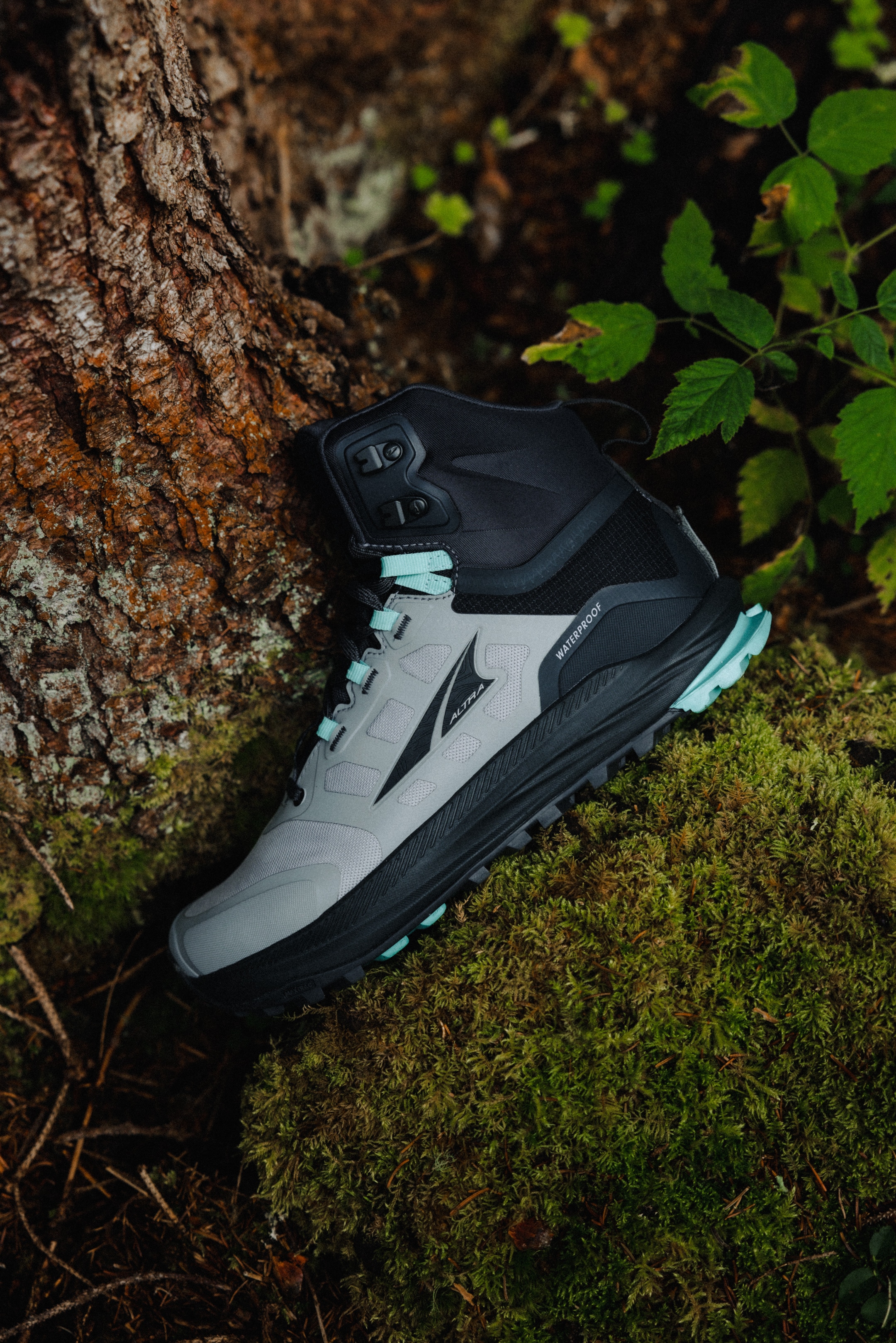
Bottom Line: The lightweight, zero-drop Altra Lone Peak 9 Waterproof Mid Hiking Boots offer barefoot-shoe lovers more support and structure on the trail.
Testing Stats:
- Total distance hiked: 46 miles
- Testing states: Idaho, Kentucky, Wyoming
- Best testing story: One Altra-loyal tester wore her previous pair of waterproof Lone Peak mid boots while trekking in the Himalayas, swapping her Lone Peak trail runners for them any time there was snow or extremely rocky moraine. After testing, she was so impressed with the latest version that she immediately bought an extra pair to have on hand.


HOKA Mafate Hike Boots
Score 90
Waterproof Water-resistant
Water resistance Hydrophobic Matryx® mesh uppers
Upper 62% textile/38% synthetic
Midsole Dual-density EVA
Outsole 100% rubber
Weight (pair) 1 lb. 6.68 oz. (women’s), 1 lb. 10.2 oz. (men’s)
Terrain type Moderate
Best for Faster, longer day hikes on light to moderate terrain
Max cushion and max style: That’s what you’re wearing to the trail when you lace up a pair of Mafate hike boots from HOKA. The modern, running-shoe-inspired silhouette can seamlessly transition from town to trail on a weekend morning or for an after-work reset, while still offering durability, water-resistance and traction you’d expect from a hiking boot.
It’s hard to beat any HOKA shoe when it comes to comfort. From stretchy, durable mesh uppers to soft-yet-supportive collar, this mid boot is made to flex with your foot like a trail-runner would, helping you move fast without rubbing, chafing or hot spots. Underfoot, the plush, responsive dual-density EVA midsoles provide a ride that’s as smooth as butter. “These are some of the most comfortable hiking boots I’ve ever worn,” said REI Co-op Member Rachel S., who has tested multiple pairs of hiking boots for the Expert Advice team over the past two years. Both Rachel S. and Jordan M. commented that their Mafates were ready to go straight out of the box, no breaking-in necessary. That said, these are not the footwear of choice if you like to feel every pebble and stick along the route: You’re more likely to float than to have the ground contact that a traditional hiking boot would offer. “They felt like walking on a cloud,” Jordan M. said.
The Mafates are on the lighter side for a boot (despite the extra cushion), which our testers appreciated. “I generally gravitate toward heavier boots since they feel more secure, but I was impressed by how secure and comfortable these felt despite being so light,” Jordan M. said. “It changed my perspective on lighter boots.” What they lack in weight they make up for in a slightly wider platform, which adds stability when you plant on the trail.
REI Co-op Member tester Jordan M. was “pleasantly surprised how well these compared to my usual boots,” considering how lightweight the Mafates are. Despite hiking on rocky, muddy trails, he didn’t slip or feel unsteady thanks to the ultragrippy, one-piece Vibram® Megagrip outsole, designed to tackle both wet and dry conditions with ease. Beefy 5-mm lugs not only grip to a variety of surfaces, but also shed mud and dirt as you move, so the trail stays outside and not, say, inside your car or house.
The one downside for our testers? These boots are water-resistant, but not fully waterproof. Their hydrophobic synthetic mesh uppers repel light moisture like a drizzle or a splash from a stream, but they will soak through in a proper rain or dunking. “I did a couple hikes that required creek crossings and as soon as the boot hit the water, I could tell my sock was wet inside,” says Rachel S. “On the flip side, they dried very fast, but I wouldn’t want to worry about my socks getting wet during cold weather.”
Bottom Line: Lightweight and ready for fast days on the trail, the Hoka Mafate Hike Boots play like a trail-running shoe but work like a burlier hiking boot.
Testing Stats:
- Total distance hiked: 36 miles
- Testing locations: Georgia; Indiana; Kentucky; Washington, D.C.
- Best testing story: Expert Advice gear tester Rachel S. went the extra mile for this gear guide: literally. She wore these boots for several weeks in Indiana, Kentucky and Georgia, hiking in pretty much every condition imaginable save for full downpours.
Rugged terrain


Lowa Renegade Evo GTX Mid Hiking Boots
Score 96
Waterproof Yes
Waterproofing GORE-TEX® waterproof/breathable membrane
Upper Nubuck leather
Midsole Double-injection DuraPU/DynaPU
Outsole Vibram Rene Trac rubber
Weight (pair) 2 lbs. 8 oz. (women’s), 2 lbs. 9.6 oz. (men’s)
Terrain type Rugged
Best for Hiking and backpacking on rugged terrain
Since 1997, the Renegade line of Lowa hiking boots has been a co-op bestseller because of its lightweight flexibility, durability and unbeatable performance under heavy loads. In other words, there’s a reason the Renegade has had an REI Co-op Editors’ Choice Award since 2021. The newly updated Renegade Evo leaves much of the classic design intact, but there are some fine-tuned features that warranted a fresh round of field testing.
Starting from the bottom, the Renegade Evos get a whole new sole: Both the mid- and outsole are renovated for a more supportive, more comfortable and grippier boot. Lowa reformulated the boot's double-injection polyurethane midsoles to be firmer while still offering superior impact absorption, and new Vibram® Rene Trac outsoles with wider, multidirectional lugs make for better sticking and stopping. (Earlier Renegades had closer-set and more uniform lugs.) “The tread design is impressive,” says one tester who wore them on a partial hike of the Continental Divide Trail. “[The boot] grips trail surfaces at the toe and rocks your foot forward into the next step, [so it's] easy to cover uneven ground without much effort.” That same tester says the Renegade Evos have great downhill traction and stay planted in snowy and icy conditions. Another tester wore hers on a steep hiking trail down Mount Si outside Seattle. “I had a firm grip all the way down. No slips! Great traction,” she shares. A PU wrap cups the heel snugly, and ankles stay put thanks to a sturdy but generously padded collar. “Boots are very stable side to side, with good ankle support while scrambling through brush and stepping onto rocks and logs. No tendency to roll over sideways,” reports a tester in New Mexico.
Nubuck leather with a GORE-TEX® waterproof/breathable membrane makes these kicks a dry fortress, and the refreshed uppers have fewer seams, meaning fewer pressure points and reduced wear. Testers loved them right out of the box on longer day hikes. The women’s version was set on a last specifically designed for the female foot for a superior fit.

Bottom Line: Take to the trail with confidence thanks to the superior tread, underfoot support and overall comfort of the Lowa Renegade Evo Hiking GTX Mid Hiking Boots.
Testing Stats:
- Total distance hiked: 50 miles
- Testing states: Colorado, New Mexico, Washington
- Best testing story: Our Washington state tester is especially invested in boots with comfortable ankle support. “A couple years ago, I developed blisters on the backs of both of my ankles thanks to a combination of ill-fitting hiking shoes and the sediment that became lodged in them. Those blisters later became severely infected, landing me in the ER. Needless to say, I really appreciate a boot that doesn't rub, and this model did not disappoint.”


Salomon X Ultra 5 Mid GORE-TEX Hiking Boots
Score 96
Waterproof Yes
Waterproofing GORE-TEX®
Upper Synthetic/textile
Midsole EnergyCell
Outsole All Terrain Contagrip rubber
Weight (pair) 1 lb. 11.4 oz. (women’s), 1 lb. 15 oz. (men’s)
Terrain type Rugged
Best for Day hiking on rugged terrain
If you’re looking for a boot that encourages you to surge, jump, ricochet and occasionally shout, “Parkour!” while on a hike, the updated X Ultra 5 Mid GORE-TEX Hiking Boot from Salomon is for you. Designed for ultimate trail agility while keeping you steady on your feet, this durable, lightweight boot is a worthy successor to the X Ultra series, which has been a best-seller since it debuted in 2012.
Their bombproof synthetic/textile uppers of woven nylon and Kevlar® faced off with rocks, branches, dirt, muddy rainforest trails, sand, ocean water and steep oceanside boulder scrambles in our tests and never looked the worse for wear. “After 25+ miles in various conditions, they’re like new,” according to one Maine-based tester who says mud washed right off and ice and snow didn’t cause any discoloration. “can’t even tell they’re not fresh out of the box.” Despite the armor-like protection, the X Ultra 5s are lightweight and flexible enough for speed.
Traction is the X Ultra 5’s other main selling point: Proprietary All-Terrain Contragrip® outsoles combine a specialized rubber compound and dialed-in lug pattern that’s ready for muddy, slippery, rocky and uneven terrain. Pronounced, angular lugs sink into soft surfaces like sand, snow and mud; their close-set design provides more sticky surface area that can handle wet and slick environments. “I wouldn’t hesitate to wear them in any terrain. Incredible grip on wet granite, the tread does a great job of shedding mud and dirt while walking,” says one tester who wore these on muddy, damp hikes through the rain forest in Puerto Rico. Our Minnesota-based tester trudged through deep snow and ice without missing a step. “My dog is a puller on walks, and when I’m wearing lesser shoes, we may as well be skijoring. With these, though, I was able to stay safely planted even over black ice and on a frozen lake.”
As for comfort, these hiking boots don’t slouch either. “What a dream to hike in,” said our rainforest-hiking tester who “did a 6-plus mile trek with a 40-pound toddler in a hiking pack.” Not only didn’t he worry about rolling an ankle, he also says the shoes helped him be nimble and “run, jump and hike for hours in comfort just out of the box.” Our Kentucky tester echoes the zero-break-in requirement: “Immediately upon putting on the shoes I felt cushioned and padded in the right spots. I have previously tried hiking boots that have blistered the back of my ankle, but these felt equally sturdy and cushioned.” Responsive EVA midsoles absorb impact even on fast-moving hikes, and while a TPU plate adds structure and durability, long-distance-lovers might notice that compression changes the ride over time. A heavily padded tongue provides cushioned protection at the ankle joint, though one tester found it a bit too bulky: “I couldn’t tie the laces tight enough at the top because the tongue is so plush,” they say. “As a result, they ended up feeling a little looser around the collar, which slowed me down a little going over more complicated obstacles.” Other versions: Shop the full X Ultra collection.

Bottom Line: The Salomon X Ultra Mid GORE-TEX Hiking Boot strikes a balance between burly protection and nimbleness for longer day hikes, fast miles on varied terrain and lighter-haul overnights.
Testing Stats:
- Total distance hiked: 164 miles
- Testing locations: California, Kentucky, Maine, Minnesota, New Hampshire, Puerto Rico
- Best testing story: “I took these to Puerto Rico, hiking in 90% humidity. I knew the GTX membrane would be hot—and it was! To counteract, I wore a thin pair of Paca hiking socks, which worked great. I was able to take off for a mid-hike river swim, which also helped. Meanwhile, in below-freezing Maine winter weather, they were also hot with a thick Smartwool sock, but it was much appreciated. And the color is super cool as well, which is always a plus.”


Salomon Quest Echo GORE-TEX Hiking Boots - Women's
Score 93
Waterproof Yes
Waterproofing GORE-TEX®
Upper Nubuck leather
Midsole EvergyCell
Outsole All Terrain Contragrip®
Weight (pair) 2 lbs. 4.7 oz.
Terrain type Rugged
Best for Multiday backpacking and hiking trips on all terrain—including the toughest
Hikers, backpackers and beginner mountaineers who want a boot that can go wherever adventure calls shouldn’t sleep on the Quest Echo GORE-TEX hikers from Salomon. These surprisingly lightweight boots ride like a trail runner with the stability, grip and toughness of a backpacking boot, and they excel across various conditions and terrain types.
Our testers should know: These boots weathered weekly mountain hikes, scrambles, scree, snow, ice and rocks. You name it, they tackled it. Washington-based REI gear tester Elizabeth P. is an ultra trail runner and wilderness rescue first responder who didn’t shy away from long, hard miles in these boots. “I was able to do some proper class 4 rock scrambling, and a significant amount of off-trail bushwhacking up and down very steep, varied terrain and had no issues with traction on the way up or the way down.” All Terrain Contagrip® is the most versatile Salomon outsole, featuring multidirectional, closer-set lugs that perform across a variety of trail types and conditions.
REI gear tester and mountaineer Rachel H. wore hers on weekly training expeditions, including an 8-hour hike on Mount Tahoma’s technical terrain, reaching elevation above 8,000 feet and encountering more snow than she expected. While she found it hard to fit crampons over the wider heel—a consideration for hikers who regularly use technical traction devices—she was surprised by how well the Quest Echoes performed, especially for their weight. “The slippery mud was never an issue and I'm not gonna lie, I was little scared about wearing these in those conditions.” She also ended up loving the rigid lateral chassis’ next-level support, as it prevents forefoot and midfoot rolling on uneven surfaces. That level of stability may be especially appealing for hikers carrying heavier packs or traveling on uneven, more technical terrain. Combined with the slip-minimizing foot -cradling system, responsive midsole, and snug nubuck leather upper and collar, she narrowly avoided an ankle roll test that a lesser shoe would have failed. Elizabeth learned the hard way, though, that you might want to consider gaiters when traveling fast on dusty or rocky terrain. “In the last outing, I did 10 miles over a mix of dry pine forest and post-holing in a snow field. This trail kicked a ton of debris and dirt into my shoes (I wasn't wearing gaiters) and the debris was trapped around my ankles which created abrasions.”
Water—and spring snowmelt above treeline—is no match for the Quest Echo’s waterproof, breathable GORE-TEX® protection, and toe caps and mudguards protect high-wear places. While they’re among the priciest boots on our list, our testers unanimously agree: These earn their place at the front of the gear closet, because you’ll reach for them again and again. Other versions: Shop the full Quest collection here.

Bottom Line: The trail-run-inspired Salomon Quest Echo GORE-TEX Hiking Boots combine backpacking-boot support with trail-runner-inspired agility, making them a top choice for rugged terrain, multiday trips and way-out-there adventures.
Testing Stats:
- Total distance hiked: 88 miles
- Testing locations: Oregon, Washington
- Best testing story: “On my last trip I encountered an early spring snake which made me scream so loud that for the next 2 miles people asked us if we had heard the woman scream and knew what happened. Good times,” says REI gear tester, ultra trail runner and mountain maven Elizabeth P. from Washington.


Oboz Bridger Mid Waterproof Hiking Boots
Score 90
Waterproof Yes
Waterproofing B-DRY waterproof/breathable membrane
Upper Waterproof nubuck leather
Midsole Dual-density EVA
Outsole Granite Peak carbon rubber
Weight (pair) 2 lbs. 0.4 oz. (women’s), 2 lbs. 6 oz. (men’s)
Terrain type Moderate to rugged
Best for Long miles on technical and rugged terrain in cooler temps
Hiking footwear brand Oboz is perhaps most beloved for its hardy Bridger backpacking boots, and the latest version features comfort-forward upgrades and better waterproofing, earning high marks from testers. “This new model feels as sturdy as the previous version of the boot I wore,” says REI Co-op gear tester Hanes M. in Minnesota. After months of wear through the muddy, unpredictable winter and spring in the North, Hanes says they look as fresh as on day one. “They also kept their form and shape throughout long hikes; laces didn't loosen and the ankle support didn't relax or waver , which is something I've experienced in other boots.”
Firm support throughout is one of the Bridger’s hallmarks, though testers shared mixed feedback based on personal preferences and trail conditions. “My heel was locked into the boot and my ankle was held in place,” says REI gear tester and adventure travel guide Brooke B in Florida. “When support through the ankle is in excess, though, it almost makes me more nervous. If I’m going to turn my ankle, I need a little bit of give. However, the stiffness of this boot would likely make them a great pair for wearing microspikes!” That added stiffness can be an advantage on icy trails, during shoulder-season hikes or when carrying a heavier pack . Nonmarking carbon rubber outsoles with multidirectional 4 mm lugs grip both wet and dry surfaces with ease, though they won’t shed mud as easily as wider-spaced lugs would.
It’s easy to expect a bomber of a boot to feel stuffy, constricting or leaden, but Hanes found these to be extremely comfortable straight out of the box. “One of the reasons why I love these boots is because they fit my wider foot better than most others I've tried. It's the first boot I've ever worn that doesn't feel like it's pinching or suffocating my foot and toes.” The moderately generous toe box lets feet splay slightly, which can boost comfort on long hikes, while supporting balance and stability. One caveat is that thicker socks can quickly eat up that extra space, making feet feel “a little trapped,” Hanes says. A thinner sock can save space and feel cooler in warm conditions. As for keeping weather out, the Bridger has various protections against wet, soppy hikes. Waterproof nubuck leather uppers are the first line of defense, supported by B-DRY waterproof/breathable membranes to keep rain at bay and allow perspiration to evaporate. Nylon mesh linings bump up that breathability while also wicking moisture, keeping feet extra happy. Other versions: The Bridger line includes lower-cut as well as higher-cut and insulated hiking footwear. Shop the full Bridger collection.
Bottom Line: The Bridger Mid Waterproof Hiking Boots combines classic Oboz reliability and traction with the latest traction and waterproofing tech for modern performance in a comfort-first fit.
Testing Stats:
- Total distance hiked: 67 miles
- Testing locations: Florida, Minnesota
- Best testing story: “These were great for standing around for prolonged periods of time watching red-breasted mergansers,” says avid birder and gear tester Hanes M. in Minnesota, who wore them for daily walks around the Twin Cities’ lakes and creek trails during spring migration’s peak.

Buying Advice
There are a few important components to consider when you're buying a boot, including—first and foremost—what type of hiking you generally do. At REI, hiking footwear is categorized by the type of terrain it's best suited for.
- Light terrain: Mostly packed (groomed dirt or gravel, pavement), lower elevation, 1–5 hour hike duration, small pack or waist pack
- Moderate terrain: Mixed surfaces from packed to technical terrain, some elevation gain or loss, daylong or multiday duration, pack under 30 pounds
- Rugged terrain: Technical and rocky or with obstacles, moderate to heavy elevation change, multiday duration, pack between 30–60 pounds
- Mountaineering: Mostly technical surfaces, very heavy elevation change, daylong or multiday duration, heavy pack
Terrain | Recommended shoe features | Boots featured in this guide |
|---|---|---|
Light |
| |
Moderate |
| |
Rugged |
| |
Mountaineering |
|
|
As you can see, you'll want to choose footwear with features that match your hiking environment. Primarily this means focusing on the boots' uppers, midsoles and outsoles.
Hiking Boot Uppers
A boot is typically constructed with synthetic or leather materials. Synthetic materials like polyester or nylon breathe well and weigh less, but they don't have the same longevity as leather. On the other hand, many backpacking boots still use leather (often nubuck) for added durability and support. Leather also tends to mold to your foot after long-term use, giving you a sort of customized boot.
In this gear guide, we recommend hiking boots with both synthetic and leather options, as well as a couple of hybrids.
The leather options are the Danner Mountain 600 Leaf, Lowa Renegade Evo GTX Mid, Oboz Bridger Mid Waterproof and Salomon Quest Echo GORE-TEX. (The Merrell Moab Speed 2 Mid GTX is also available with leather uppers.)
The synthetic options are the Altra Lone Peak 9 Waterproof, Merrell Moab Speed 2 Mid GTX, On Cloudrock Mid Waterproof, HOKA Transport Hike GTX, Salomon X Ultra 5, Topo Athletic Trailventure 3 GTX Hiking Boots, Arc'teryx Kopec 2 Mid GTX Hiking Boots and HOKA Mafate.
Two pairs of hiking boots are considered hybrid, meaning they combines leather and synthetic materials to draw the benefits from each. The hybrid option in this guide is the KEEN Hightrail Mid Waterproof.
The Astral Halestorm 2.0 features a hemp upper with a recycled polyurethane wrap.
It's important to note that the upper itself isn't what's waterproof. If a hiking boot is waterproof, it either has a socklike waterproof bootie inside or, more likely, an invisible-to-you waterproof membrane or liner beneath the upper. That additional layer can make a boot significantly less breathable (and more expensive), so it may be unnecessary if you don't hike in wet climates or plan to push your boots into winter use. The only non-waterproof boots on this list are the Astral Halestorm 2.0 and HOKA Mafate, which are water-resistant.
Hiking Boot Midsoles
Between a boot's insole and outsole is—you guessed it—a midsole. The midsole provides cushioning and support and absorbs shock. It's typically constructed of one of two materials: EVA or PU. EVA (or ethylene vinyl acetate) is a softer foam, so it feels comfy underfoot. That softness, though, means it doesn't have the same durability as a firmer material. PU (or polyurethane) tends to be less comfortable out of the box, but it provides more support and rebound under heavy loads and lasts longer over time.
This year, we reviewed boots with both EVA and PU midsoles. The boots with EVA midsoles are the Altra Lone Peak 9 Waterproof, Astral Halestorm 2.0, HOKA Transport Hike GTX, HOKA Mafate, Merrell Moab Speed 2 Mid GTX, KEEN Hightrail Mid Waterproof, Oboz Bridger Mid Waterproof, On Cloudrock Mid Waterproof, Salomon Quest Echo GORE-TEX, Salomon X Ultra 5 and Arc'teryx Kopec 2 Mid GTX Hiking Boots.
The Danner Mountain 600 Leaf features a rubberized EVA midsole, which is more durable than traditional EVA.
The option with PU midsoles is the Lowa Renegade Evo GTX Mid.
The Topo Athletic Trailventure 3 GTX Hiking Boots feature a blended midsole made from both EVA and TPU.
If a hiking boot has a shank or rock plate, that rigid piece of plastic sits underneath the midsole. These plates will make a boot stiffer, both heel to toe and side to side. A stiff boot like this tends to be best for mountainous or steep terrain, where you can save energy by not overflexing your foot. This additional layer may also be strategically placed under the ball of your foot to protect from rock bruising. The Merrell Moab Speed 2 Mid GTX and Topo Athletic Trailventure 3 GTX Hiking Boots feature a full-length rock plate.
Hiking Boot Outsoles
Whether you're hiking across streams, up scree-covered slopes or through flower-filled meadows, you want to stay on your feet. You stay on your feet thanks to your rubber outsole. Traction comes from your outsole's lugs—those oddly shaped bumps on the bottom of your boots. Deep, angular lugs (4 millimeters or more) tend to offer the best grip while shedding debris. A "heel brake" is either an extension on the back end of the outsole or an area on the heel where the lugs are more pronounced—it gives you more control when heel-stepping and reduces your chances of sliding on descents.
Softer rubber is stickier, while harder rubber has a longer life span. Climbing shoes often use the softest rubbers, but those won't hold up trail after mud-caked trail. That's why most hiking boots use a medium-sticky rubber compound.
Hiking Boot | Terrain | Hiking | Backpacking | Score (out of 100) |
|---|---|---|---|---|
Light | Yes | No | 97 | |
Moderate | Yes | No | 97 | |
Moderate | Yes | Yes | 96 | |
Rugged | Yes | Yes | 96 | |
Rugged | Yes | No | 96 | |
Moderate | Yes | No | 96 | |
Light | Yes | No | 93 | |
Rugged | Yes | Yes | 93 | |
Light | Yes | No | 92 | |
Light | Yes | No | 91 | |
Moderate | Yes | Yes | 90 | |
Moderate | Yes | No | 90 | |
Rugged | Yes | Yes | 90 | |
Moderate | Yes | No | 87 |
How We Tested

We asked more than 73 REI Co-op Members from around the country to hit the trails and to put our favorite hiking boots sold at REI through their paces. They hiked and hiked and hiked and hiked some more, tallying more than a thousand miles on their local paths and favorite backcountry routes.
REI Co-op Member, ultra trail runner and wilderness first responder Elizabeth P. in Washington wore hers above the treeline and into some late spring snow. Washington-based mountaineer and Indigenous educator Rachel H. took a pair for an 8-hour hike up Mount Tahoma, reaching 8,000 feet in crampons. REI hike editor Ever Meister personally tested nearly a dozen pairs of boots for this guide all year long, on trails in California, Georgia, North Carolina, Minnesota, Tennessee, Washington and Wisconsin.
When all was said and done, each tester graded their sample boots on a 100-point scale for comfort, durability, traction, support, weight and price. The boots featured in this guide received the highest average scores in the test.
Related reading:
- How to Choose Hiking Boots
- Hiking Boots vs. Hiking Shoes: What's the Difference?
- Hiking Boots vs. Trail Runners: The Great Debate