
“Gosh, he’s growing up so fast.”
I can’t help but think in clichés as I watch my 6-year-old pedaling up the dirt path. He sets the pace as we ride over small rocks and dodge bigger ones on the Marshall Mesa bike trail near our Boulder, Colorado, home. As the trail steepens, Charlie shifts to his easiest gear and stands on the pedals, wobbling slightly as the extra-wide tires bump over sandstone. Breathing hard at the hill’s crest, he pauses a second to turn and grin at me.
It seems like yesterday that my son was riding the same trail (though a much smoother section) on his balance bike. Soon he graduated to pedals and was riding laps (and yes, skinning his knees) in our cul-de-sac. Now, watching him race downhill on his geared 20-inch bike, I savor the moment. It will be the blink of an eye before he’ll size up again, cruising even more confidently.
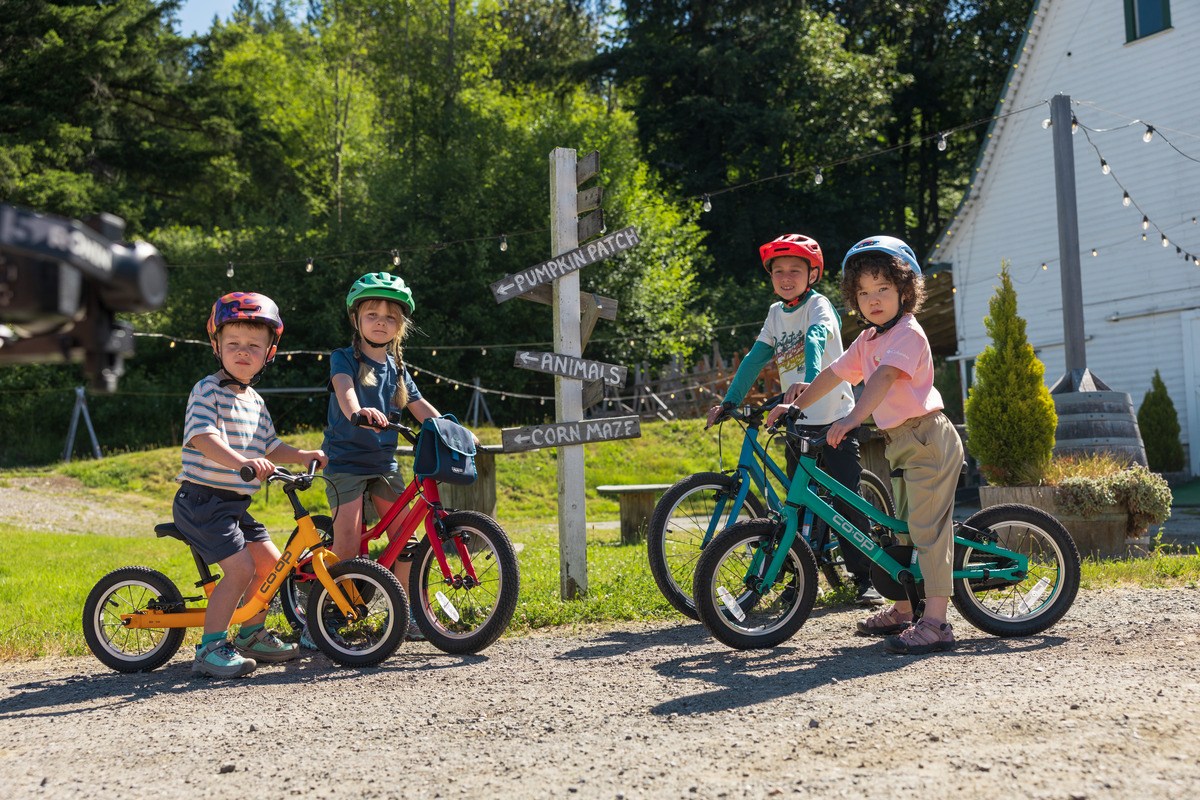
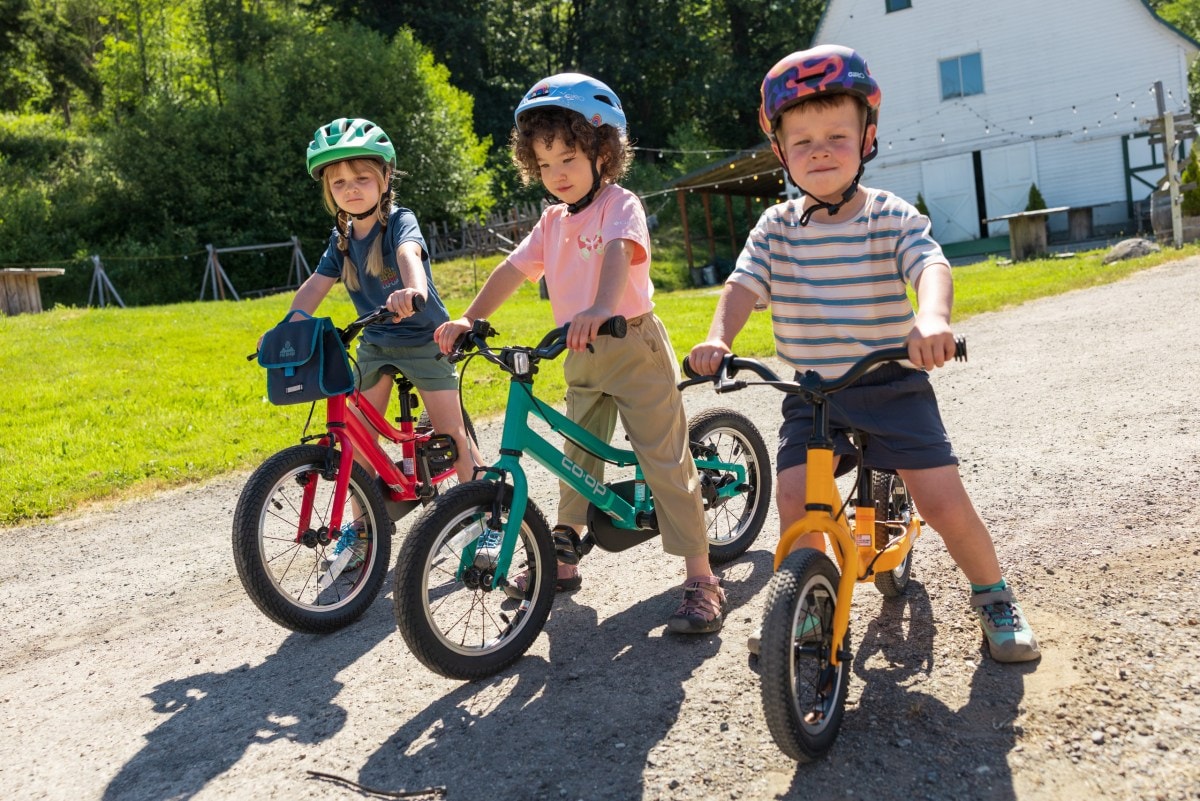
The Co-op Cycles design team had riders like Charlie (and cycling parents like me) in mind with its line of REV kids’ bikes. The collection offers bikes at every stage—from tots learning to balance or pedal to older kids ready for gears and dirt trails. Kids can size up to the next bike as they grow or gain skills.
This September, four redesigned kids’ bikes make that journey easier with features that build skills and confidence at every stage. The updated single-speed REV 12, REV 14, REV 16 and REV 20 feature handbrakes, quick-release seat posts for easy adjustments, kid-sized components, and overlapping bike sizes to ease transitions.
“If you make it easy for them to learn, it makes them want to ride the bike,” says Brian Kelly, product manager for Co-op Cycles. “And it sets them up for lifelong love of riding.”
Jump ahead to the features of the redesigned bikes.
Designing Bikes to Fit How Kids Learn to Ride
When the Co-op Cycles team initially set out to create the REV line in 2016, designers wanted to produce something much better than what mass-market bike manufacturers offer.
REI already had decades of experience building kids’ bikes for the co-op’s original Novara® bike line. Still, its bike experts researched biomechanics and teaching practices to better understand how young bodies move and how children learn. They reviewed parents’ anecdotes to learn how kids start to riding bikes, whether they use training wheels, and at what ages they begin using hand brakes and gears. Next, the team interviewed parents to better understand how they helped instill a love of riding. Through it all, the team kept in mind the joy of sharing biking with their own children.
For the latest redesign, the team factored in new research on the evolving ways kids learn to ride bikes. They surveyed nearly 2,300 co-op members to learn what features matter most when buying a bike. Several priorities emerged. Parents and caregivers want a bike that’s comfortable for their child to help build rider confidence, Kelly says. They also want a bike that’s safe, easy to use and a good value. The design team used these new insights, along with prior learnings, to update four REV bikes.
Features of the Redesigned REV Bikes
During the redesign, the team asked: What skills should kids learn at each phase of riding? And added new features to the REV 12, REV 14, REV 16 and REV 20.
Kids are learning to balance first
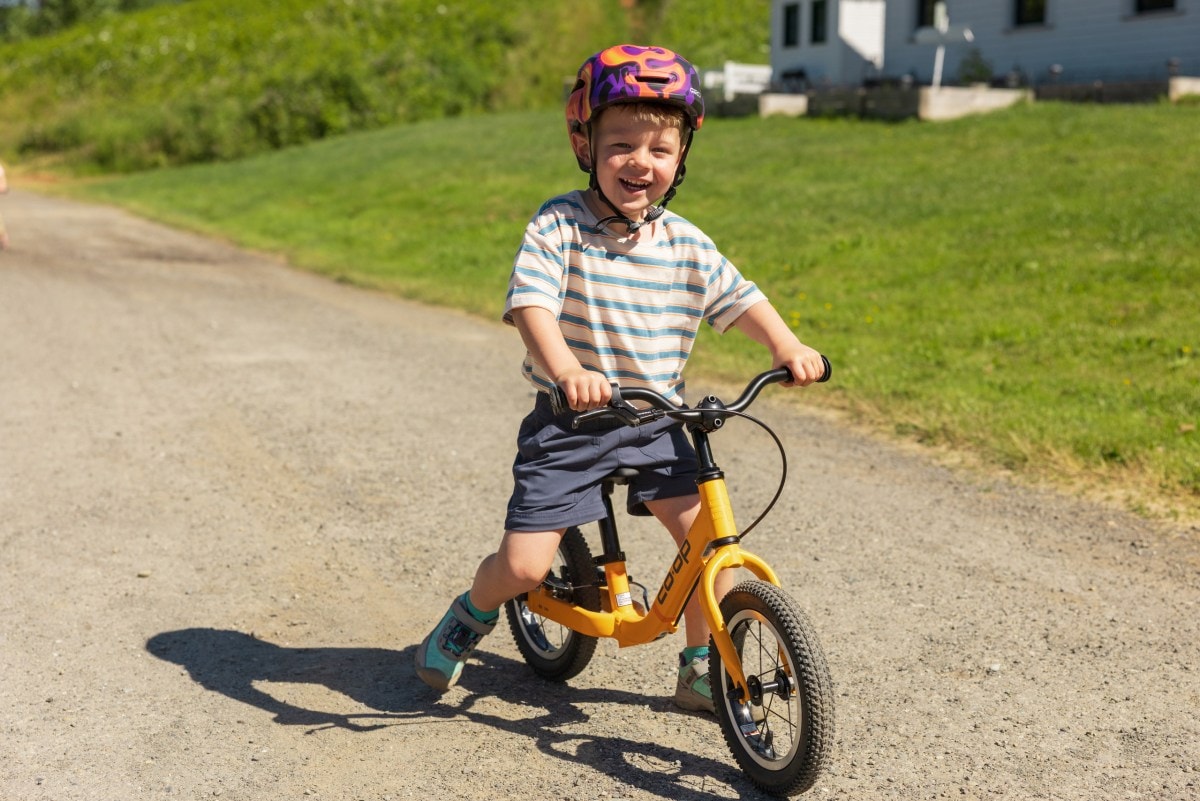
The new REV bikes don’t include training wheels, though they’re compatible with them (training wheels are sold separately). This reflects customer research showing that balance bikes are preferred for learning, Kelly says. Parents today often forgo tricycles or training wheels. Instead, many children start on balance bikes as young as age 2. Charlie learned to ride this way. He first learned to scoot the bike forward before lifting his feet to glide. Indeed, young riders are learning how to balance first and then pedal.
Handbrakes for Smaller Hands
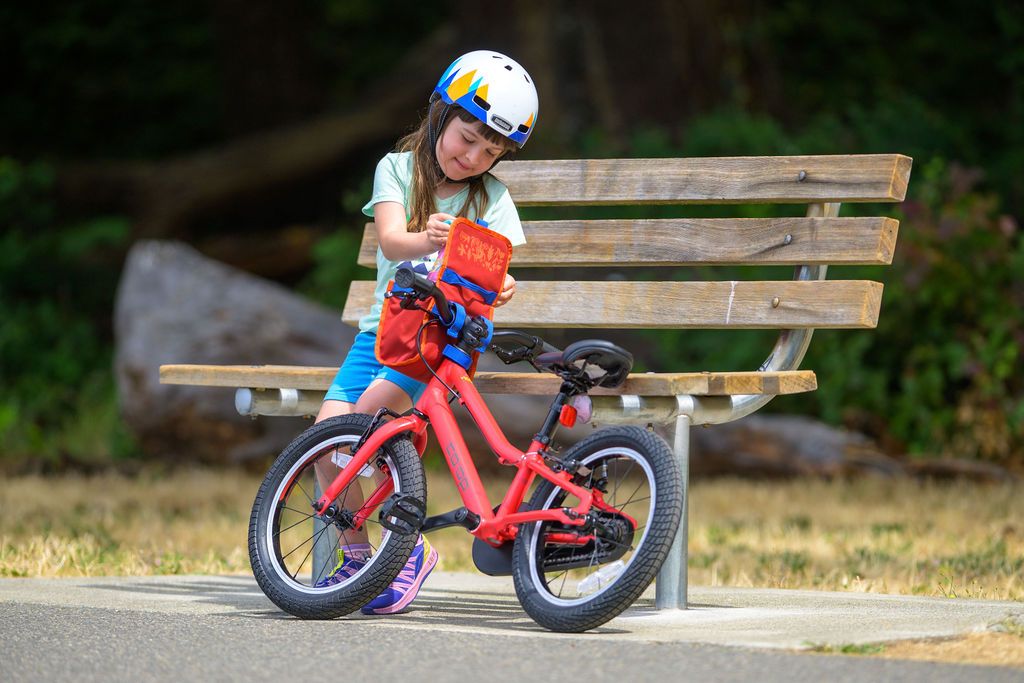
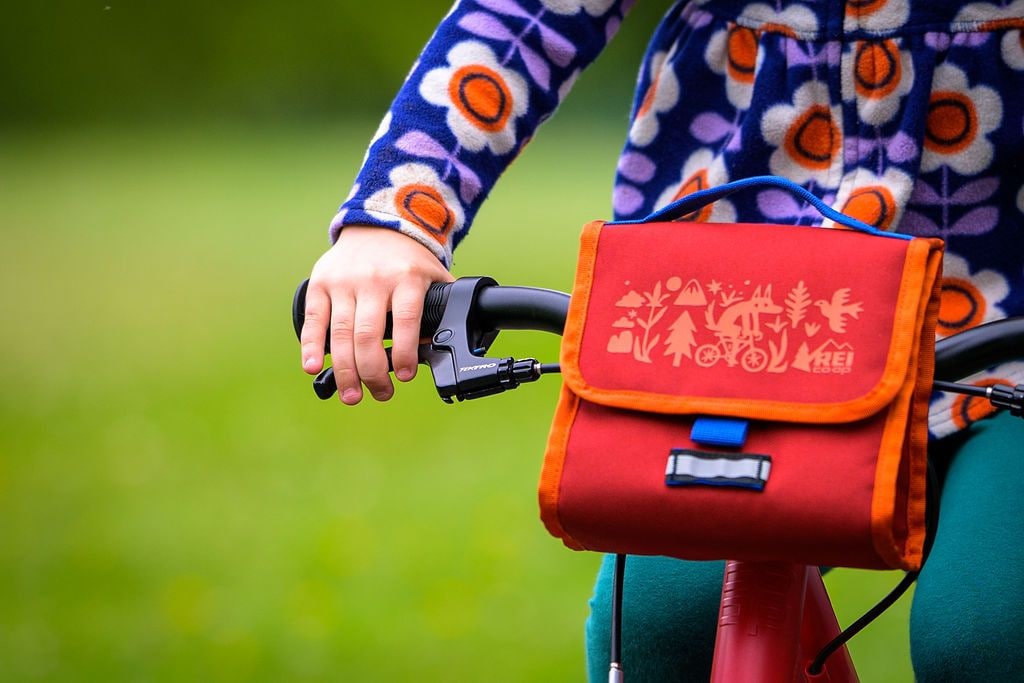
To help kids get used to handbraking—a skill needed on older kids’ and adult bikes—Co-op Cycles added a rear hand brake to all four new models to promote learning and progression. There’s even a tiny (and dare we say adorable) version on the 12-inch balance bike. While smaller kids’ bikes often come with foot (coaster) brakes, member feedback showed that they can be confusing for new riders. That’s because when young riders accidentally pedal backward, the bike stops unintentionally and the child loses momentum. “We chose to add a set of handbrakes so kids could learn how to ride with that,” early on, Kelly says.
The 14-inch, 16-inch and 20-inch single-speed bikes feature a front hand brake. The REV 14 also includes coaster brakes to meet Consumer Product Safety Commission requirements for bikes in that size category. REI customers who prefer to use only the hand brakes on the REV 14 can purchase an aftermarket replacement wheel that lets a rider rely solely on the hand brakes.
Kid-size Geometry and Components
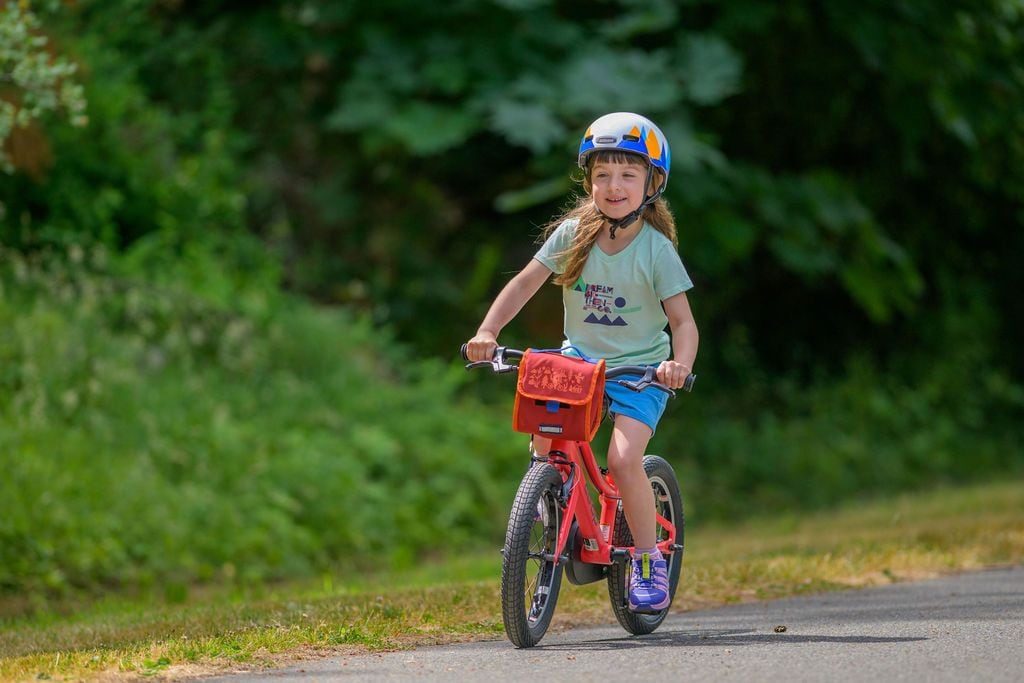
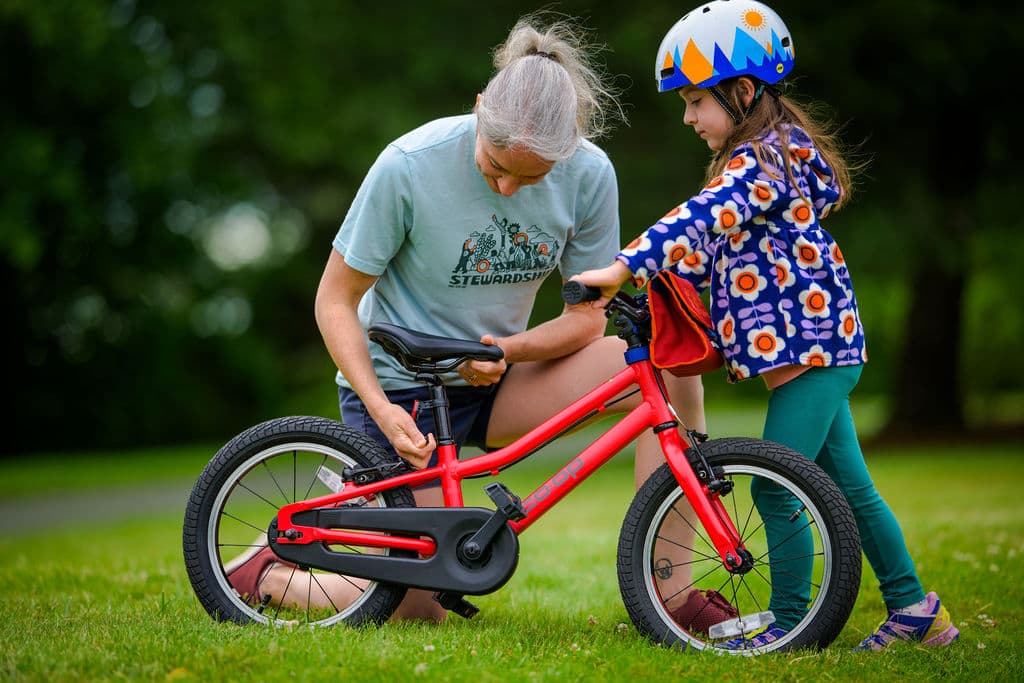
The team prioritized comfort in redesign, an effort that went far beyond adding a plush seat and soft handlebar grips. Comfort is all about bike fit, Kelly explains. And it starts with having geometry and components properly sized to the child at each learning stage.
Take the updated 12-inch balance bike. In this initial learning phase, young riders are finding their balance. To help them feel more stable, the team revised frame dimensions, namely the height and angle of the top tube. They did so using data on kids’ body sizing from REI apparel team’s database of thousands of body measurements. The resulting bike geometry allows kids to solidly plant both feet flat on the ground while seated in the saddle. As riders gain more dexterity and graduate to a larger bike with pedals, the frame dimensions graduate, too, to mimic how a more capable rider sits on their bike with only their tippy toes touching the ground.
Designers also revised bike components to better fit kids’ bodies. The seat is slightly narrower, a slimmer three-piece crank replaces the previous wider one-piece crank, and seat tubes feature a quick-release lever, making it easier to adjust the seat without tools as the child grows.
Lower Carbon Aluminum Frames
In a first for Co-op Cycles, these four REV models feature a frame, fork, bottom bracket and head tubes made with aluminum that has a carbon footprint about three times lower than the industry average (from raw materials to manufacturing), according to third-party verified carbon calculations. This is made possible because the most energy intensive stage of aluminum production draws power from a regional grid that relies predominantly on renewable sources, says REI Product Sustainability Manager Brent Kawamura.
It’s just one example of the many actions REI is taking to cut greenhouse gas (GHG) emissions roughly in half this decade as it works toward the long-term goal of achieving net-zero emissions by 2050. “By making thoughtful material choices, we can help lower our carbon footprint while continuing to create great gear for the long haul,” adds Kawamura.
Updated Sizing for Easier Transitions
Riding a bike offers a sense of freedom and joy. Purchasing a bike, on the other hand, can feel confusing. Kids’ bikes are typically sized by wheel diameter, but age, size and skill level doesn’t always map neatly to where each kid is in their learning journey. With the updated REV line, the team introduced more straightforward sizing progression with flexibility built in.
Not sure where to start in buying your kid’s bike?
Our Ultimate Guide to Buying a Kids’ Bike aims to help demystify some buying considerations
The REV 14 is a new pedal bike designed to create a more natural progression as kids grow, says Co-op Cycles designer Iyla Brukhman. This makes the transition smoother and more intuitive from the REV 12 balance bike to the REV 14 and then the REV 16.
The team also prioritized adjustability and fit. Lower frame dimensions, including a lower top tube, make it easier for smaller riders to get on and stand over the bike. Meanwhile, longer seat posts allow the fit to grow with the child. The redesign also reduced weight by up to 2 pounds per bike. “For young riders, a lighter bike is easier to maneuver on and off the bike, helps build confidence and allows kids to ride longer with less effort,” Brukhman says.
| Kids’ bike model | Bike type | Wheel size | Inseam | Height of child | Approx. age | Features included |
| REV12 | Balance bike | 12 inches | 11.5”- 17” (30-43 cm) | 2’7″-3’3″ (80-100cm) | 2-4y | – Rear hand brake – Quick-release seat post |
| REV14 | Single gear | 14 inches | 15”-20.5” (38-52 cm) | 3’0” – 3’8” (92-112 cm) | 3-5y | – Front hand brake – Rear hand brake – Coaster brakes – Full chain guard – Quick-release seat post |
| REV16 | Single gear | 16 inches | 17”-22” (43.5-56 cm) | 3’3”-4’0” (100-122 cm) | 4-8y | – Front hand brake – Rear hand brake – Full chain guard – Quick-release seat post |
| REV20 | Single gear | 20 inches | 20.5-25” (52-63.5 cm) | 3’9”-4’5” (115-135 cm) | 6-9y | – Front hand brake – Rear hand brake – Quick-release seat post |
Building Bikes That Last—and Then Keep Going
Fast-growing kids put their two-wheelers through the paces, whether on dirt trails or city streets. So, the team made a bike line that was durable enough for multiple little rippers in a pass-it-down process that reduces both cost and waste.
Prototypes undergo rigorous third-party testing to ensure they meet or exceed regulatory and voluntary standards. “Even on a little sidewalk bike, we assume that these bikes will be ridden hard, and can still be passed down to other riders,” says Karl Schumacher, development manager for Co-op Cycles. The team factored in not only rider size but also their strength in pushing pedals and gripping brakes. They also chose aluminum frames for their high strength-to-weight ratio and lower weight than steel.
“A great-value kids’ bike helps children ride with confidence today,” Kelly says, “while giving parents confidence that their investment will last, be handed down or support the next step in their riding journey.”
The team hopes each REV bike will be well-loved by the first kid who takes it home—and more after that. REI supports that long-term play with its Bike Trade-In Program, which lets co-op members buy used bikes or trade in gently used kids’ bikes to for credit toward new purchases. The program helps give each REV bike has a second, third or even fourth life, filled with brave moments, new landscapes and plenty of whoops for each new learner.
***
Back on the dirt trail at Marshall Mesa, Charlie zips along a flatter stretch with Eldorado Canyon and the iconic slabbed rocks, the Flatirons, rising in the distance. I pedal behind him, watching as he confidently navigates the ruts. I grin at Charlie, just as he grinned at me moments before. I’m thankful for the beauty in the world, for the joy my little boy brings, and for the bike that made this moment possible.
REI kids’ bike trade-in program
How do I trade in a kids’ bike? The trade-in process is simple. Bring an eligible Co-op Cycles kids’ bike into any REI store and trade it in for up to 40% of the original price in the form of an REI gift card. You must be an REI Co-op Member age 18 or older to trade in gear. You can also start a trade-in online before bringing the bike to a store by using the online product trade-in catalog to see if your bike is eligible and how much it could be worth.
Read specific terms & conditions and frequently asked questions.
Ready to get your little one off and riding? Check out our handy guides about how to choose a kids’ bike and when to upsize your kid’s bike. When you’re ready to make a purchase, our helpful Bike Finder tool will point you in the right direction. Or better yet, head to your local co-op and have your kiddo take a test ride.
Editor’s note: We updated this article on Sept. 1, 2026, with new information and photos about four redesigned bikes in the Co-op Cycles REV Kids’ Bike line.