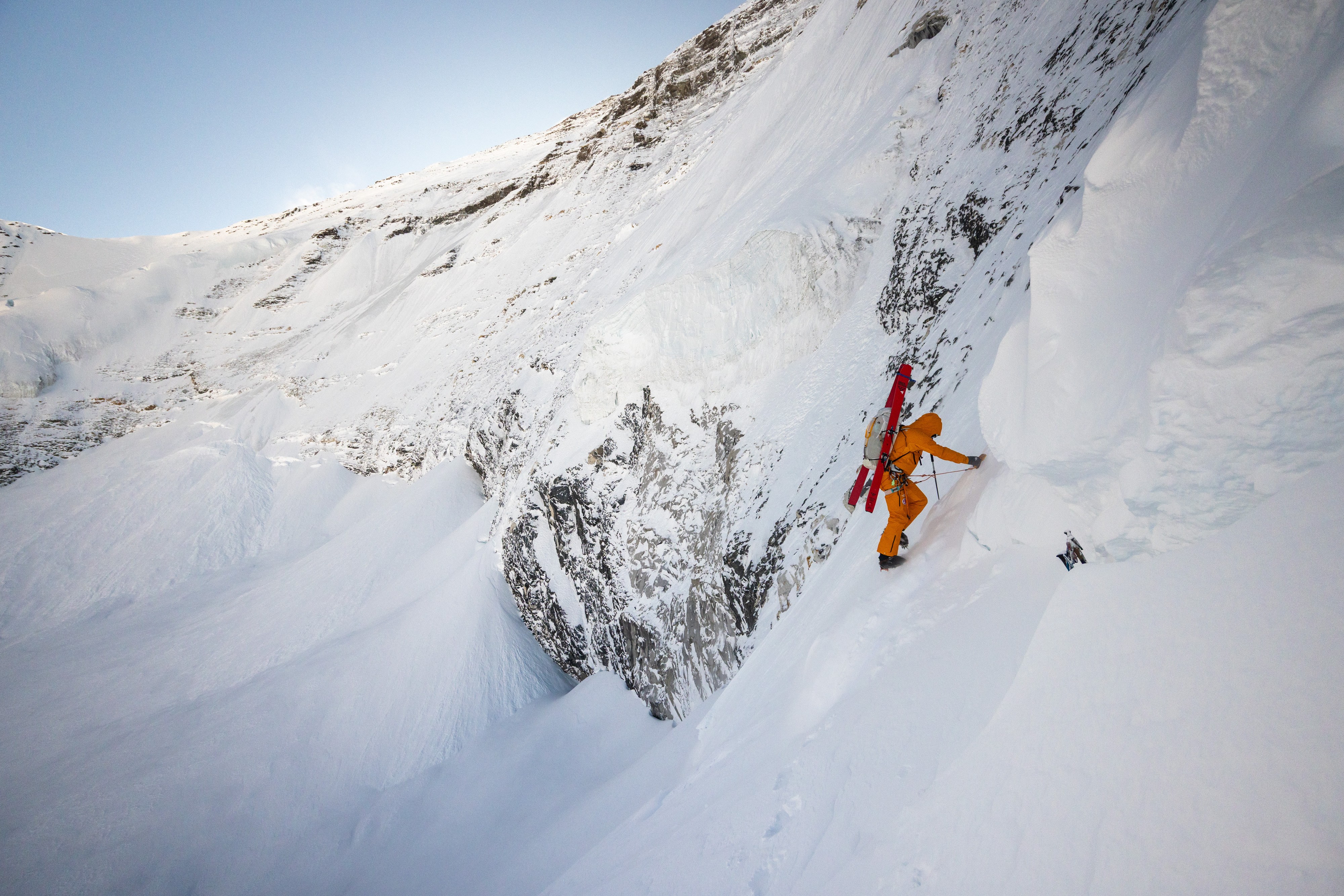
It took years for ski mountaineer Jim Morrison to prepare to ski the north face of Mount Everest via the famously treacherous Hornbein Couloir—and then only 4 hours and 5 minutes to ski it. A new film that premieres October 30 documents Morrison’s 2025 journey to Everest. “Everest: The Other Side” is directed by Academy Award-winning Jimmy Chin and Elizabeth Chai Vasarhelyi of “Free Solo” fame.
We sat down with Morrison at his home in the Lake Tahoe area in California to talk about his storied Everest expedition, what he hopes audiences take away from the film, and the gear that’s essential to his attempts.
The Long Road to the Hornbein Couloir
Morrison and his life partner, the late ski mountaineer Hilaree Nelson, dreamed for years about skiing the north face of Mount Everest. But the duo only began to make concrete plans to do so in 2018 after completing the first ski descent of the Lhotse Couloir on Lhotse, the fourth-highest mountain in the world.
“When you come home from those expeditions, people ask you, ‘What’s next?’ So, you start to ask yourself that question,” Morrison tells Uncommon Path. “We had spent so much time on Everest looking at conditions and lines on the north face. We studied how you can get in and out of there. We slowly put the parts together to make it work.”
Tom Hornbein and Willi Unsoeld first climbed the route in 1963 that would later be known as Hornbein Couloir, armed with a single photograph taken 20 miles away. In the decades since, five other teams have ascended the route. But no one had skied it. A handful of skiers and snowboarders have descended other, less technical routes off the summit of Mount Everest. Yūichirō Miura from Japan first skied a lower section of Everest in 1970. In the early 2000s, several mountaineers from around the world, including Americans Kit and Rob DesLauriers and Jimmy Chin, skied from the summit.
Nelson and Morrison hoped to be the first to descend the Hornbein Couloir on skis. They never got the chance to do it together. In 2022, Nelson and Morrison were on an expedition on Mount Manaslu, the world’s eighth-highest peak. After summiting together, they had begun their descent on skis when an avalanche swept Nelson, then 49, to her death. Morrison spent days searching for her body, which was eventually recovered. He returned home alone and brokenhearted.
“Everything fell apart after that,” Morrison says. “I couldn’t understand how or why that happened. At that point, I never wanted to climb a mountain again.”
Getting Back on His Feet
This was not the first tragedy Morrison had lived through: In 2011, his wife, Katie, was killed in a personal airplane crash alongside their two young children, Wyatt, 6, and Hannah, 5. Leaving his house afterward felt insurmountable. “My world stopped,” Morrison said afterward. “It was hard to get out of bed. But if I could look outside and see what a beautiful day it was, I could get up.”
Eventually, he made it out the front door. Then, he made it to the end of his driveway. Day by day; brick by brick, he says now.
Years later, he met Nelson on an expedition in the Himalayas. The two began climbing together and eventually decided to build a life together. After Nelson died on Mount Manaslu in 2022, grief paralyzed him again. Taking his dog for a walk felt like all he could do. But he knew Nelson wouldn’t have wanted him to give up on their dreams. “I had a lot of emotion and grief, and [held] conversations with her in my own way: ‘Should I keep trying to do this? Is it worth it? What do you think?’” he says. “I didn’t get a lot of answers,” he adds with a smile. “But I felt compelled to keep going. I had a feeling that this was what she would want me to do. And I knew this would be a way to highlight how incredible a person she was.”
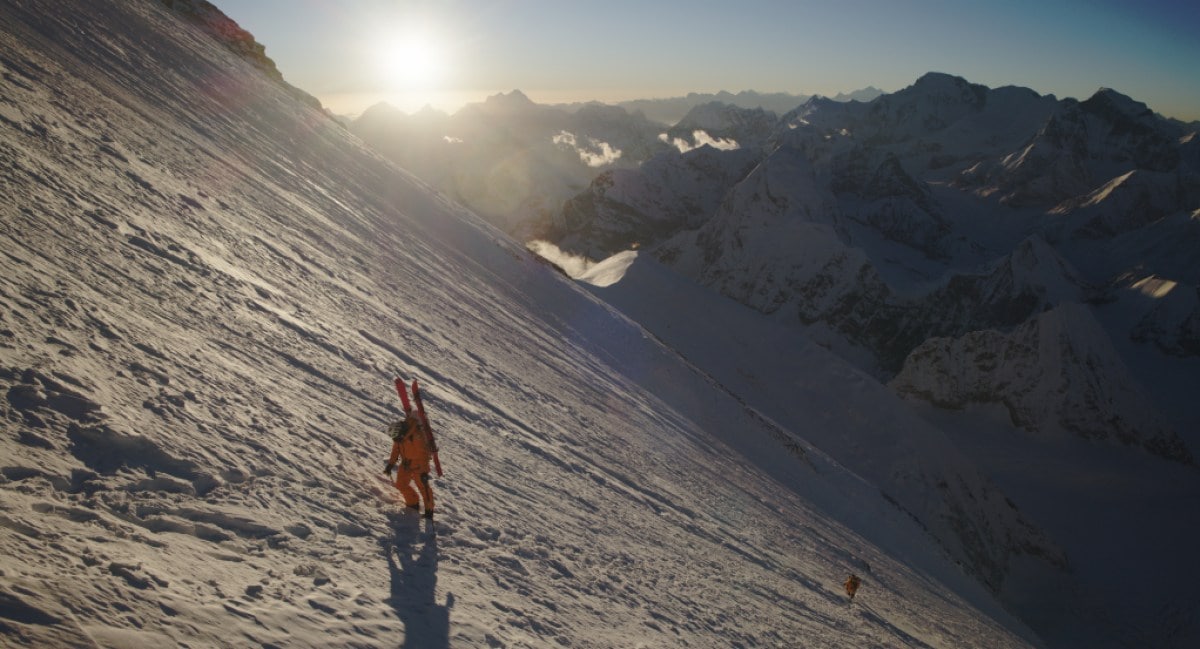
So, in 2023, he returned to the high peaks of the Himalaya. “I went to Everest with this goal of trying to finish this dream of ours,” he says. In 2023 and again in 2024, however, they couldn’t summit due to stormy weather and injuries.
In October 2025, Morrison returned for a third and final attempt. He and his team spent nearly seven weeks on Everest, battling severe weather and heavy snowfall. He spent days without leaving his tent at camps high on the mountain. “Ultimately, I surrendered to the whole thing,” he says. “It was either going to work, or it wasn’t.”
Miraculously, the weather cleared and the team finally made it to the summit at 12:45 p.m. on Oct. 15. “I had this incredible moment at the summit looking over into Nepal and at Lhotse and Makalu, mountains I’d been on with Hilaree, and felt this surreal connection,” he recalls. He spread some of her ashes, then clicked into his skis.
These were the most challenging conditions the 50-year-old skier had ever faced—a narrow, icy, 1,500-vertical-foot gully that tilted to 60 degrees in places. Knowing that his life was on the line, Morrison executed careful hop-turns. A little lower, he rappelled 650 feet over a rocky crux, then skied all the way to the bergschrund below. In total, the route descended 12,000 vertical feet to the Rongbuk Glacier.
“I had this spectacular four hours of skiing in the hardest ski conditions. I knew it was my one and only chance to be here and do this,” he says. “I was laser focused. I crossed the bergschrund and immediately felt Hilaree’s energy. I talked to her, I cried, I screamed. I celebrated that moment with her. I’d been training for that moment for years. And on this day, I looked up at the mountain, and I could feel Hilaree’s presence.”
The Film That Captures It All
The new film “Everest: The Other Side” tells the story not only of Morrison’s legendary ski descent but of the entire, heartbreaking journey to get there. Morrison hopes that people who see the film will understand that no matter how hard life gets, simply getting outside and putting one foot in front of the other can make an impact on where they are in life.
“It doesn’t need to be climbing Everest. We all have our own Everest in us,” Morrison says. “Everyone goes through loss. The mountains have clearly taken a lot from me, but they have provided me so much, too. No matter how hard your day is, no matter what you’re going through, if you go outside and take a walk, 100 percent of the time, things feel better.”
Morrison didn’t get to the top of Everest by looking at the summit. He got there by figuring out how to get to the start. “I took it one step at a time, day by day. I’ve built my life on that sentiment,” he says. “Keep going. Keep trying. No matter how hard things get, know you’re not going to get past it or fix it. But you’ll learn to accept it. To carry it with you.”
Gear Check
When it comes to choosing gear for a big Himalayan expedition, Morrison relies on gear he knows and trusts. “I’ve been doing this for so long, and I’ve tried and tested so many things,” says. On Everest, he wasn’t trying out anything new. Here’s what he brought along, and why.
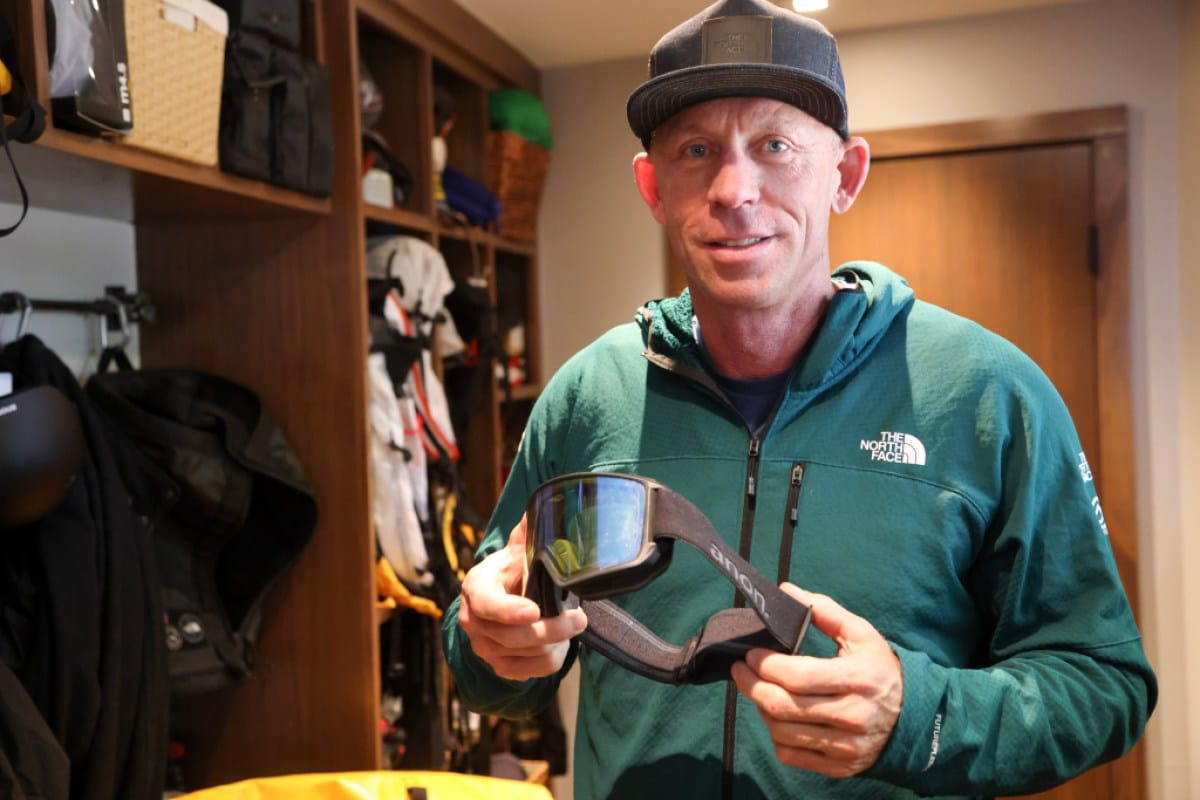
The North Face Summit Series FUTUREFLEECE Full-Zip Hoodie
Whether Morrison is climbing a 20,000-foot peak or heading to the grocery store, he’s always wearing his favorite FUTUREFLEECE hoodie. “That’s my go-to, No. 1 piece of gear,” he says. “I live in it. It doesn’t weigh much and it provides a ton of warmth.” Made with recycled materials, this slim-fitting hoodie also comes in a non-hooded version and a women’s fit.
The North Face Summit FUTURELIGHT Torre Egger Jacket
This Summit Series shell is named after a peak in South America’s Southern Patagonian Ice Field. “I always have a shell with me, no matter where I’m skiing. This one is thin and lightweight but robust,” Morrison says. Designed for alpine climbing, the Torre Egger Jacket is made from three-layer, 20-denier FUTURELIGHT™ fabric that’s waterproof, breathable and seam-sealed. It’s got a helmet-compatible hood and underarm vents for temperature control.
The North Face Summit Nuptse Down Jacket
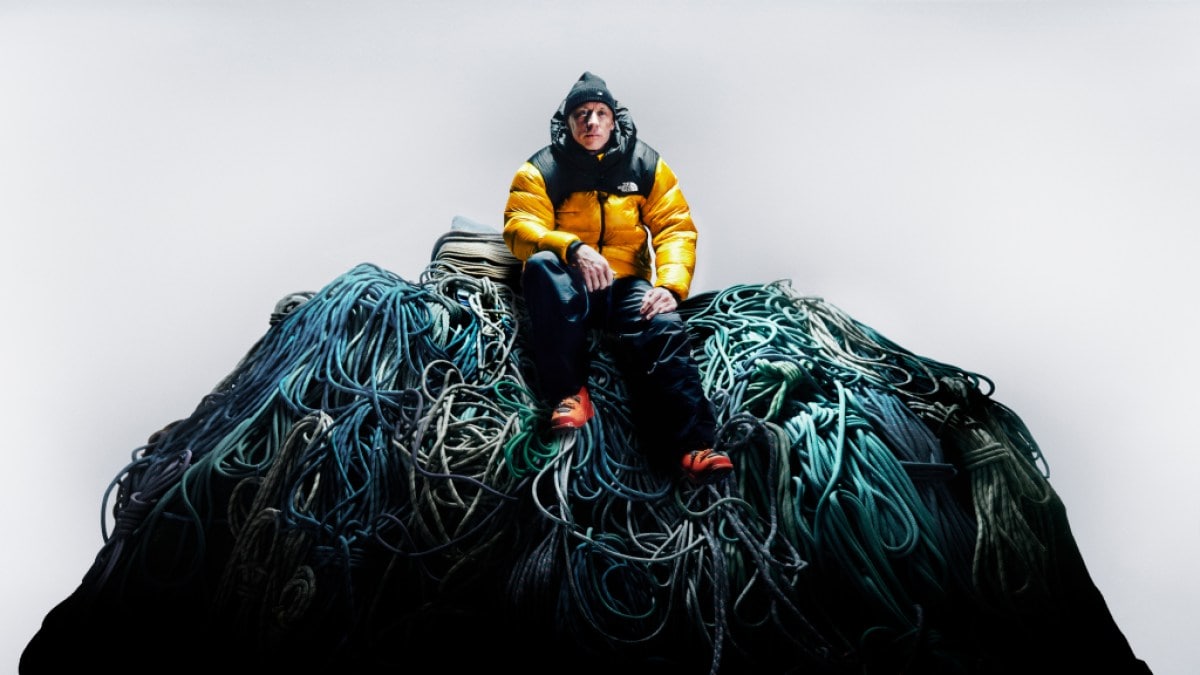
Every expedition requires a good down jacket for base camp. For Morrison, that’s the Nuptse Jacket, which is based on a heritage piece but has been revamped for the modern user. “It’s incredibly versatile,” Morrison says. “Picture a thicker, warmer down jacket, but one that’s not so big you can’t use it in normal life. It’s warm enough that you could take it on a big mountain or a wild trip.” Stuffed with 800-fill-power ProDown™, the jacket has an ultralight woven ripstop exterior for long-term durability. You can stow the hood away when not in use.
If you can’t see well while skiing high-consequence terrain, you’re in trouble. Morrison relies on his trusty Anon M5 Goggles for a wide field of vision, fog-free venting, and a flat, toric-shaped lens for max visibility and visual clarity. Morrison travels with a couple of lenses for varying weather and light conditions. “You can switch the lenses out with magnets,” he says. “It’s very easy.”
Black Crows Camox Freebird Skis
At 95mm underfoot, the Camox Freebird is a pretty wide ski to haul to the roof of the world. But Morrison chose these skis for their mix of lightweight construction and strong, stable skiability. For firm conditions and steep skiing, he wants to make sure he has a ski that’s stiff enough to handle the conditions. “A lot of skis are lighter, but they don’t ski as well,” he says. “It’s a delicate balance. I find it’s worth taking a little extra weight so you can actually shred on the way down.” The Camox Freebird’s core is made from a mix of carbon fiber and fiberglass with Titanal® reinforcement, ensuring it’s both lightweight and strong.
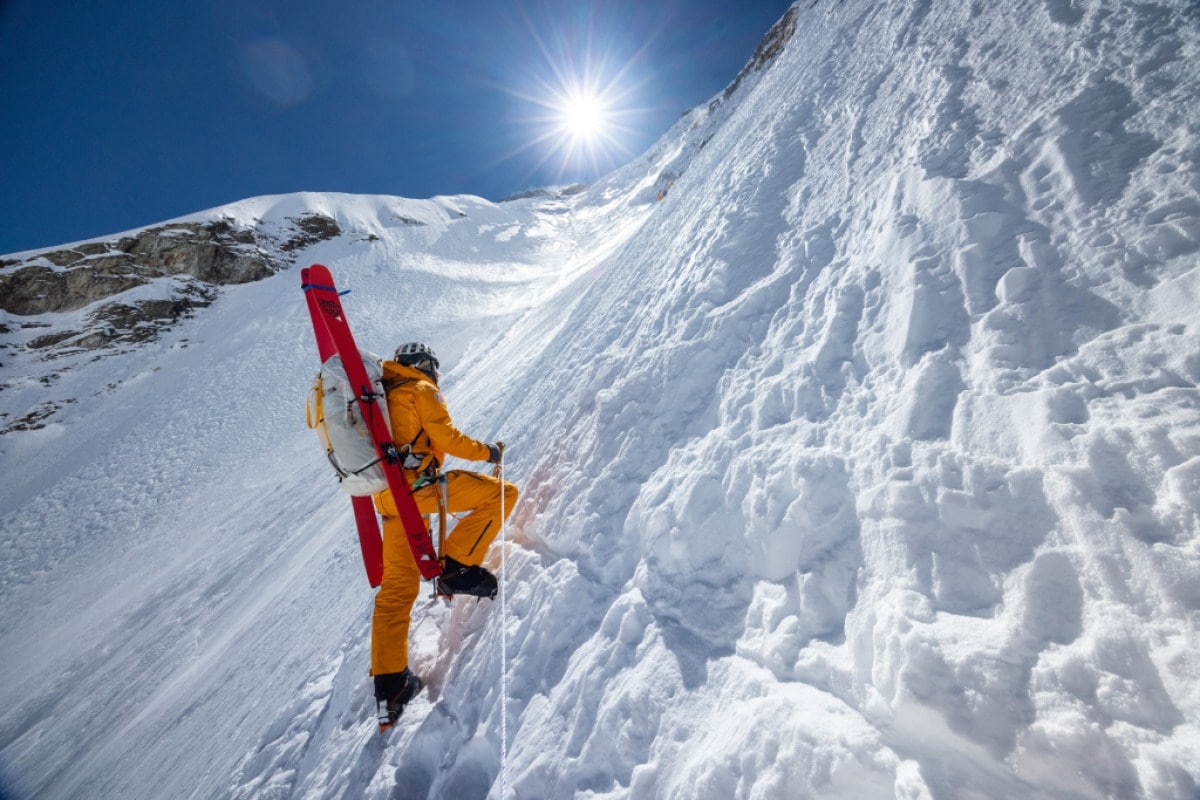
Tecnica Zero G Tour Pro Alpine Touring Ski Boots
“This is the same boot I use backcountry skiing and skiing inbounds at home in Tahoe,” Morrison says. For Everest he only added a neoprene overboot for warmth. “Everyone thought I was crazy for not bringing a lighter boot. But I skied off the summit of Everest like I ski off the summit of any mountain.” While the Tecnica’s aren’t the lightest boot on the market, Morrison didn’t want to second-guess the performance or durability of what was on his feet. Instead, he trained hard enough that he could carry any additional weight. (“And I had an incredible team who did all the work to get everything there,” he adds.) The Zero G Tour Pro boots have a wide range of motion for easy uphill movement, with Power Frame construction for a progressive flex on the way downhill.
ATK FreeRaider 15 Evo Alpine Touring Bindings
Nothing demands a binding you can trust like a steep, no-fall-zone line … like the Hornbein Couloir. “If one of my skis came off, I would die,” Morrison says. “I really had to trust the limit of what my bindings could handle.” For moments like that, he chose ATK bindings, which are lightweight yet precisely engineered to handle steep skiing.
Pomoca Tour Pro Climbing Skins
Made from a mix of mohair and nylon, Pomoca’s climbing skins are easy to use and extra grippy. Morrison used his to head uphill on snow on the lower flanks of Everest to reach Camp 1, but he also uses these skins while backcountry skiing back home. “These are what’s in my pack at all times,” he says.
The North Face Snomad 34 Snow Pack
Morrison didn’t bring his Snomad Pack up Everest, but he used the pack during all his training leading up to the expedition. “If I’m backcountry skiing on the west shore of Lake Tahoe, this is the pack I use to put my skins in, my down jacket, my shell,” he says. “It’s got a place to put your helmet and your goggles. I skin up, put those layers on, then ski down.”
The North Face Inferno 0F Sleeping Bag
The North Face Inferno collection of sleeping bags comes in a range of temperatures, from 15°F to -40° and in both long and regular lengths. “I used a 10°F sleeping bag, which I would sleep in while wearing all of my down layers when I was high on the mountain, because I had to pare everything down,” Morrison says. “At Camp 1, I had a 20°F version of the same bag.” Known for its high warmth-to-weight ratio and cinched hood, the Inferno is a packable bag with 800-fill-power ProDown.
When you’re spending days inside a tent on the side of a mountain waiting for a weather window, it’s nice to have your own coffee setup. Morrison brings his MSR Reactor Stove System everywhere he goes, from Everest to a hotel room on his way to an expedition. “Even if there’s another place to get coffee, I still make coffee in my tent,” he says. This stove and cookware system can boil water quickly in any conditions. And when it’s time to pack up, the stove and fuel canister nest snugly inside the pot.
Goal Zero Nomad 20 Solar Panel
To charge his devices—namely his phone and a small Bluetooth speaker to play music—Morrison brings a compact solar charger. “Having a small, portable solar panel is critical,” he says. The Goal Zero Nomad 20 folds easily and has a solar capacity of 20 watts, or enough to power a phone, headlamp or GPS device.