
Runners tend to categorize our outings by the terrain we cover. Road runs follow asphalt streets, concrete paths and cement sidewalks. Trail runs incorporate swaths of dirt, crushed limestone, maybe even boulder and scree fields (if you’re skyrunning).
But our actual daily runs? Odds are, if you shop at REI, you cover multiple surfaces—some smooth, some rough, perhaps a few that are downright technical. A new category of shoe ready for multi-terrain outings is here to help.
Enter: Gravel Shoes
“A lot of runners are realizing they actually are on trails, even if they didn’t think of it that way before,” says Bekah Broe, senior director of performance footwear at HOKA. For example, any time you step off the pavement and onto the desire line next to it, or the rural road underneath you unexpectedly turns to dirt, you’re effectively on a trail—or at least a trail-like surface. “Creating specific product solutions for a light off-road environment offers a new level of precision that runners are looking for.”
That new level of precision inspired a burgeoning trend in running footwear: gravel shoes. Despite the name, the category isn’t for mono-terrain routes made from small stones. Rather, gravel shoes are purpose-built to provide enough cushion for comfort on paved surfaces, sufficient grip for stability on mild trails, and the ability to effortlessly carry the user from one surface to the next and back again.
In other words, they’re designed for running environments as diverse as runners ourselves.
Gravel Is Growing: The Data
“Many runners can relate to the experience of going on a single run that varies in terrain, from roads to gravel paths or light trails,” says Brandon Crouch, merchandising manager for the gravel category at Salomon North America.
The relatability of gravel running is evident in the numbers. Market research analyst Mordor Intelligence reported that light trail-running (or gravel) shoes captured nearly 64% of the trail-running shoes market share in 2025. Sales at REI Co-op concur, demonstrating growth across light trail and all-terrain (or somewhat rugged trails) with the light trail space growing at a faster rate. Market research firms like Circana see a lot of excitement on this side of trail-running too. Footwear and accessories industry advisor Beth Goldstein expects momentum to pick up later this year and thinks runners can expect more products and innovation from top brands in the space.

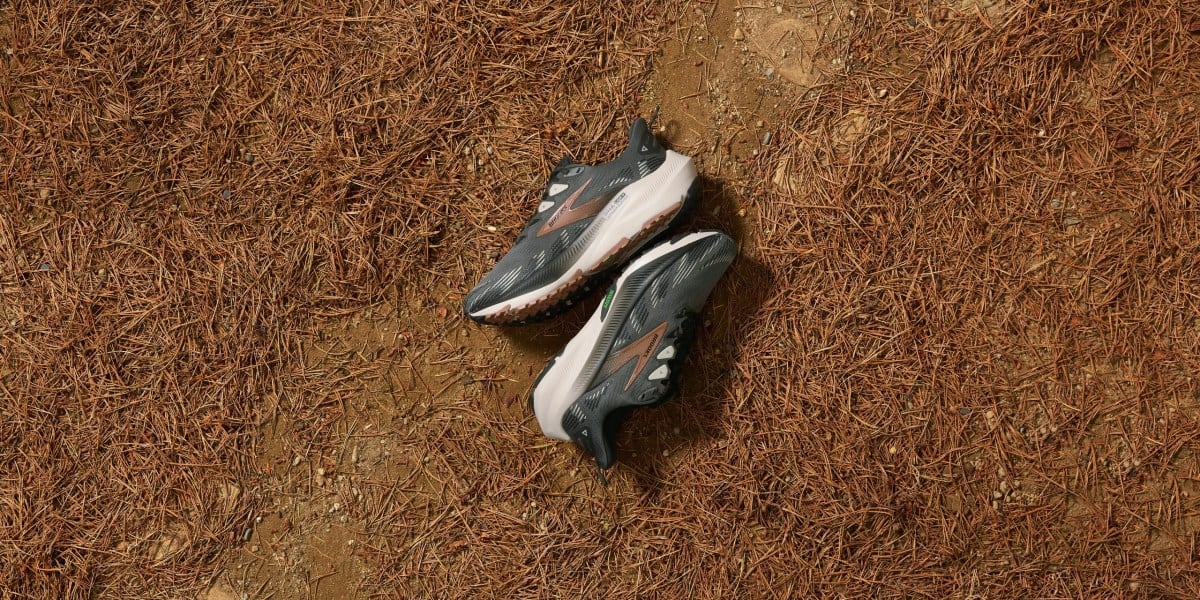
To see which brands she means, just look at the footwear wall at your local REI. HOKA delivers on gravel with its Challenger franchise and Rocket X Trail (men’s and women’s); Salomon offers the Aero Glide 4 GRVL (men’s and women’s); NNormal introduced the Cadi (men’s and women’s) this spring; and the Brooks Ghost trail-running shoes (men’s and women’s) belong here too. “More brands trying to figure out the space,” says Cole Erickson, REI category merchandise manager for trail run and recovery footwear. “There’s a lot happening, and it’s because the category is growing.”
Why Gravel?
Many experts point to gravel biking’s rise over the past two decades as carving the way for gravel running. In the two-wheeled realm, road biking’s speed-enhancing, aerodynamic geometry adopted a mountain bike’s more robust drive train and trail-ready tires. The resulting hybrid is comfortable in both worlds.
More recently, “this concept has been applied to the shoe model,” explains Connor Curley, U.S. sales and commercial manager for NNormal, “with the comfort and performance road shoe getting the confidence-inspiring outsole tread version of a big, knobby tire.” (NNormal is owned by the Spanish lifestyle footwear brand Camper, whose own logo ironically reads “Walk, Don’t Run”—this partnership perhaps symbolizing the ways in which the running industry is expanding its reach to those looking for versatility and flexibility in their footwear.)
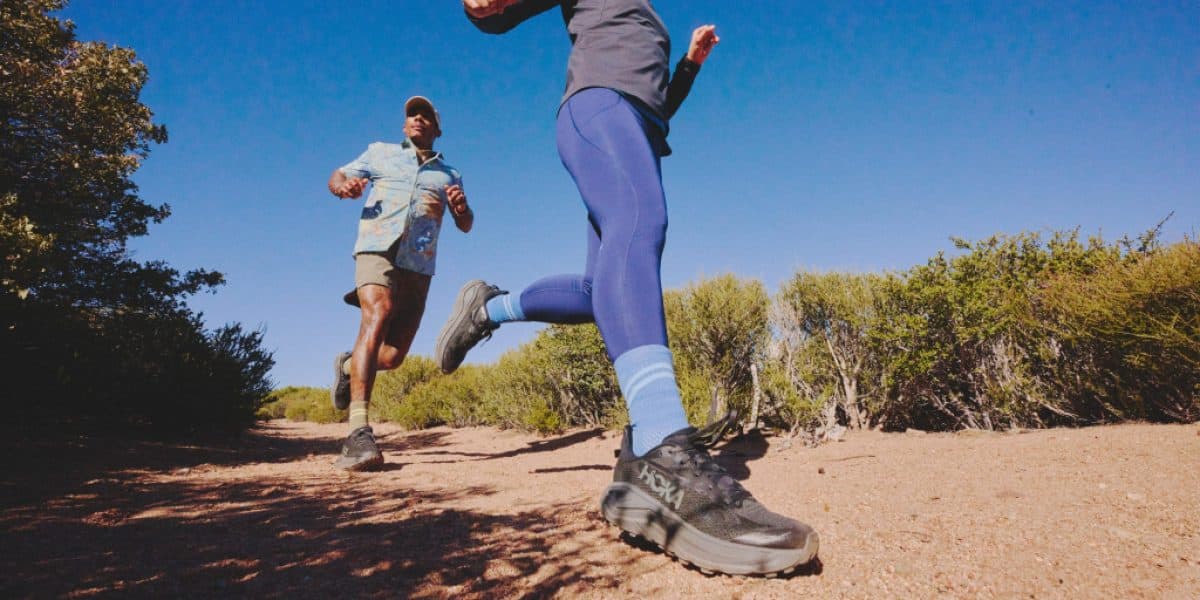
With gravel shoes, performance is still the focus. Broe adds that a trickle-down effect from more “runnable” trail races like the Western States Endurance Run and Javelina Jundred (both 100 miles) also plays a role in the rise of gravel running.
“Trail athletes like Hayden Hawks and Adam Peterman are looking for fast, often road-inspired solutions to help equip them for a specific kind of adventure,” she says. “Like these athletes, a lot of runners start their careers on the road, too. We want an experience that feels familiar, but as we start to explore other terrains, it becomes apparent that a more specialized product could really help create more confidence.”
The Hybrid Model
The concept of a shoe fit for multiple types of terrain isn’t wholly new. Hybrid running shoes date back at least to the late 2000s with options from Brooks and ASICS; Salomon came out with the Sense Ride, a versatile trail shoe with a less aggressive lug pattern, around 2017. Previously, however, these crossbreeds tended to skew heavily toward whichever category—road or trail—in which their manufacturer had the strongest foothold. Their “hybridity” usually meant an addition of grip to road shoes or a reduction in grip for trail shoes.
“Gravel running, in my mind, fits in this category of light trail that’s always existed,” Erickson says. But it’s the holistic changes to shoe design that have birthed the new subcategory. How that thought manifests depends on the gravel shoe’s logo.
Parts of a Gravel Shoe
A gravel shoe outsole, that hard rubber on the bottom, typically falls between 1 and 3 millimeters thick to offer a bit more protection (than a road shoe would) against sharp rocks; however, in varieties like the Aero Glide 4 GRVL from Salomon, the rubber is applied only in specific areas (leaving portions of the soft midsole exposed) to provide more rebound on pavement.
The outsole also features small points of raised rubber, called lugs, that offer “a little bit more bite” on varied trail surfaces, Erickson explains. The lugs are often arranged closer together than on traditional trail shoes to provide more surface area—and better footing—on roads. This shoe category doesn’t typically have a rock plate, which protects a runner’s feet on more rugged and jagged terrain.
Gravel shoe midsoles, the central foam component, tend to lean toward road shoe geometry and may incorporate super or supercritical foams for an extra efficiency boost. In the upper, the fabric layer covering the foot, a gravel shoe will often combine more breathable materials with durability-enhancing yet lightweight and flexible TPU or EVA overlays that provide “padding more than armor” in areas like the toe box subjected to abrasive dirt and rocks, Curley says.
Who Are Gravel Shoes For?
These components create a package perfect for those looking to diversify their daily mileage. Gravel runners might be trail loyalists who take roads to get to dirt. Maybe they’re pavement pounders who are “trail curious,” as Erickson calls them, keen to immerse themselves in more natural environments and avoid the danger of jogging near cars. Others might be travelers limited by space in the overhead bin, or all-weather road runners who need a touch more grip for snow- and ice-covered asphalt.
Ultimately, gravel shoe consumers prioritize versatility, Curley says. They want the option of mixing light trail into their road run. “It conceptually solves the problem of having a quiver of shoes,” he adds. “This is one shoe that can do most things well.”
Another benefit of the gravel running space: It’s relatively undefined. Thus, it comes without the potentially intimidating preconceptions someone new to running might harbor about road and trail activities. Gravel running isn’t grounded in speedwork, Zone 2 recovery days and marathon training plans, and it doesn’t demand such rugged terrain that you need to travel the world to do it.
Instead, gravel running is “more experiential than performance-based, more about exploring than structuring your workouts for a specific purpose,” Crouch says. Maybe you’re just running for mental health benefits or because a friend invited you to their low-pressure running group. “Gravel running really is this freeing space that’s about community and authenticity. The product becomes the footnote—it’s just your vehicle that allows you to do the thing.”
Gravel Is Here to Stay
Notably, experts expect gravel shoes to evolve in coming years. Salomon has already provided a peek into what’s to come with a premium gravel shoe featuring two layers of high-performance super foam and a split carbon blade that together maximize rebound and energy return. Curley expects new iterations to home in the shoe’s intended distance (short versus long) and use case (training versus racing).
Why all this specification? No two runners have the exact same needs, and having a new type of shoe ready to cater to more people is a move towards inclusivity. “Gravel shoes are solving a problem,” Erickson says. “If your main usage is light trail or gravel running or you start on a paved path and end up on a dirt or gravel path, your experience is likely going to be enhanced by having one of these shoes compared with having either an all-terrain shoe or a pure road-running shoe.” Because of that persistent need among runners of all backgrounds, gravel isn’t going away. “This is more than a trend,” says Broe. “It’s an acknowledgement by the consumer—and running industry—that trail isn’t a single surface or environment. Products serve the runner best when they acknowledge the diversity of surfaces we encounter in the outdoors.”