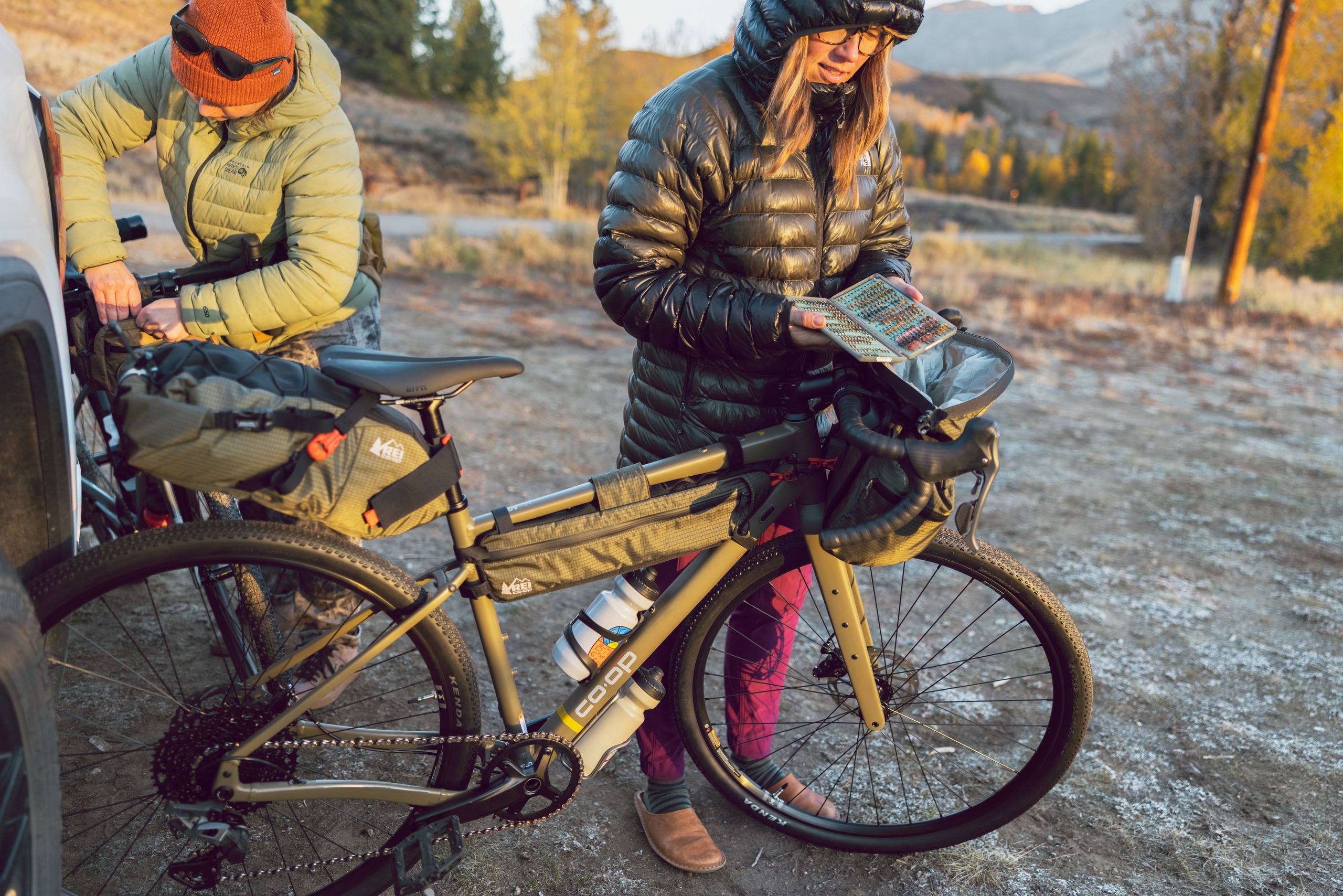
Whether you use your bike to commute, run errands or take longer trips, you'll need a way to carry essentials—from a small repair kit to full-on camping gear. A cycling backpack or messenger bag that you wear may work for daily commutes or shorter trips, but some of the best gear-carrying options are designed to fit on your bike, including cargo racks, baskets, panniers and other bike bags.
In this article, we'll walk you through the many gear-hauling options for your bike.
Learn more about bags for bikepacking in How to Choose Bikepacking Bags, and explore ways to transport your bike by car in How to Choose Bike Racks.
Shop All Panniers and On-Bike Packs
Editor's note: We updated this article on April 10, 2026, to add new photos and links.
Video: How to Choose Bikes Bags & Racks
Bike Cargo Racks
Rear Mount
A bike cargo rack provides a stable framework to hold gear on your bicycle. In good weather, items can be strapped directly to the rack without a cover. For foul weather or the ability to hold loose items together, bags such as trunk bags and panniers can be easily attached to the rear rack.
Rear racks are usually rated to carry loads between 20 and 50 pounds, which is sufficient for most uses. A few heavy-duty touring models are able to carry up to 80 pounds. These racks typically have three supports per side (others have only two).
Rear racks are designed to attach to the braze-on mounts that many bikes have. If your bike does not have braze-on mounts, you can still mount a rack using metal C clips included with the mounting hardware of most racks. These clips wrap around your bike's frame tubes and accept the lower mounting bolt.
Front Mount
A front cargo rack offers an additional mounting spot for gear. It is a secondary option after a rear rack as it adds weight to the bike's front wheel and can affect steering and balance. Front racks are popular mostly with touring cyclists who carry large volumes of gear.
There are two primary styles of front racks:
A standard rack (also called a "top mount") maximizes gear capacity as the load can be carried above the front wheel as well as hung off the sides.
A low rider rack accepts bags only on the sides but holds that weight closer to the ground for better balance.
As with rear racks, front racks are designed to attach to the braze-on mounts on your bike.
Bike Trailer for Cargo
If you have lots of gear to haul, consider a bike trailer for cargo. A trailer gives you lots of storage space for carrying heavy loads in town or on long-distance tours.
Cargo trailers typically attach to the rear hub of your bike. A trailer can be used on its own or with front and rear racks, depending on how much you need to carry. Some riders prefer the feel of having the weight off of the bike frame and therefore choose to pull a trailer rather than carry everything on front and rear racks.
Types of Bike Bags
Panniers
Best for carrying everyday essentials, extra clothes and camping gear on bike commutes, urban rides and long-distance tours.
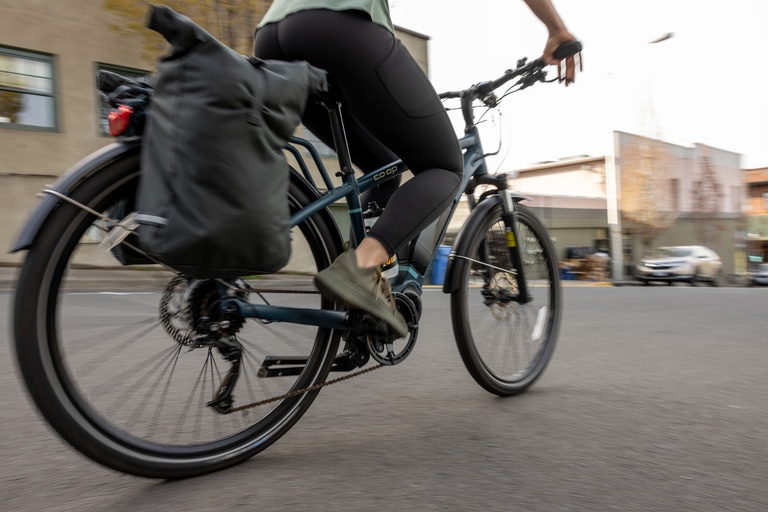
Named after the French word for baskets, panniers (pronounced PAN-ee-er) offer roomy storage, protection from weather and the ability to quickly disconnect from a rack on your bike so you can take your gear with you. Panniers are popular with commuters because they let you carry lots of gear out of the way. The bags attach to rear-mounted bike racks using a simple system of spring-loaded hooks, clips or bungee cords. They can be used singly or in pairs, and are designed specifically for front or rear racks. Small items tend to get lost in large panniers, so consider using stuff sacks to get organized.
Tip: Make sure that when you mount your panniers, there's plenty of room for your heel as you pedal. Too-large panniers (or those improperly mounted too far forward) can cause this impact and an unsafe riding situation.
Saddle Packs
Best for carrying small items like a multi-tool, spare tube, tire levers, a patch kit or an energy bar.
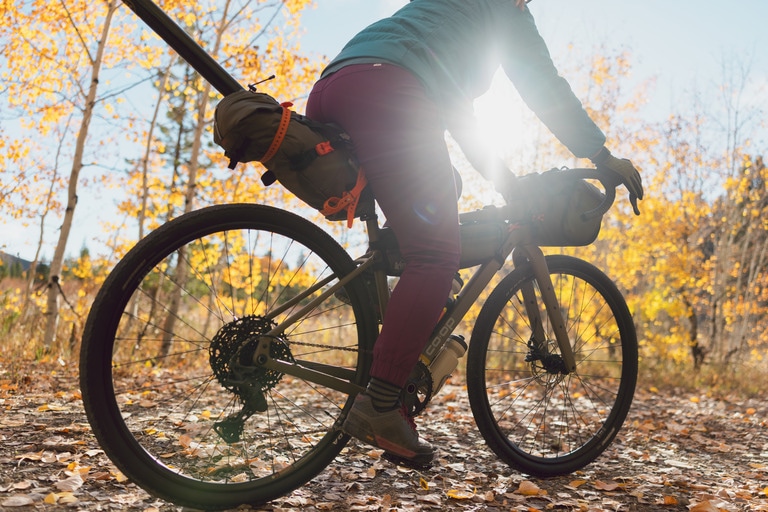
Also called a seat bag, saddle bag or underseat bag, this fits under your bicycle seat and usually attaches to the rails of the saddle itself. Larger models can carry a few extra items. Keep this mounted to your bike to ensure you never leave home without the essentials.
Handlebar Bags
Best for carrying frequently used items, such as a camera, sunscreen and snacks.
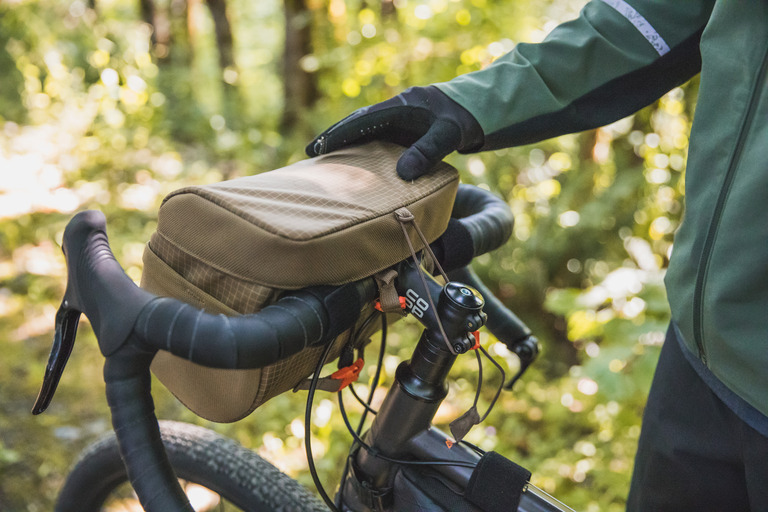
This attaches to your handlebars with clamps or straps. It offers easier access and often more room than a seat bag. Some models feature a clear plastic sleeve on top to display a map—a popular choice among touring cyclists.
Caution: Be sure the bag you choose does not affect your ability to operate the brakes or shifters on your bike, and do not overload it as extra weight carried up this high can affect balance.
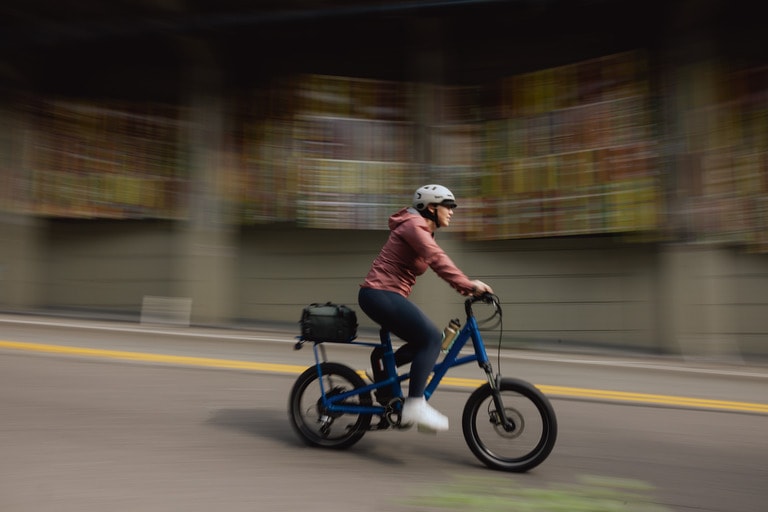
Bike Trunk Bags
Best for carrying a jacket, tools and food when you need a bag smaller than a pannier, but larger than a seat bag.
Trunk bags are smaller than panniers but larger than seat bags, making them a happy medium for carrying extra clothing, bike tools and lunch. Many have plastic sheets to reinforce the base area and retain the shape of the bag. Packing is simplified by some sort of pocket system or divided storage. Some trunks even offer integrated raincovers.
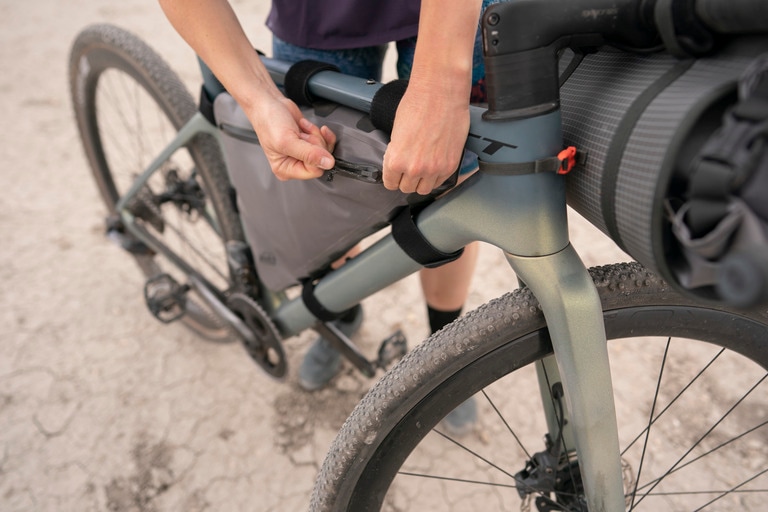
Bike Frame Bags
Best for storing food, phones and tools within easy reach.
A frame bag is designed to fit in the triangle formed by the top tube, seat tube and down tube of your bike. A frame bag is ideal for stowing heavy items to help keep your bike's center of gravity low.
Most frame bags attach to the top tube of your bike and are sized to keep food, phones, tools and other essentials within easy reach. Some frame bags take up nearly the entire triangle; others partially fill it. Larger frame bags for bikepacking and touring can hold more, including hydration reservoirs. Frame bags may prevent you from mounting bottle cages inside the triangle.
Bike Baskets
Best for carrying a range of items, including grocery bags, on fair-weather rides.
Baskets can carry loads on the front and/or back of your bicycle. Rear baskets are usually mounted on either side of the rear wheel. They can carry tall loads, as they have no lid.
Front baskets tend to be smaller than their rear-mounted cousins; they are most often hung off the handlebars or anchored to the front fork with metal stays.
Bike Bag Features
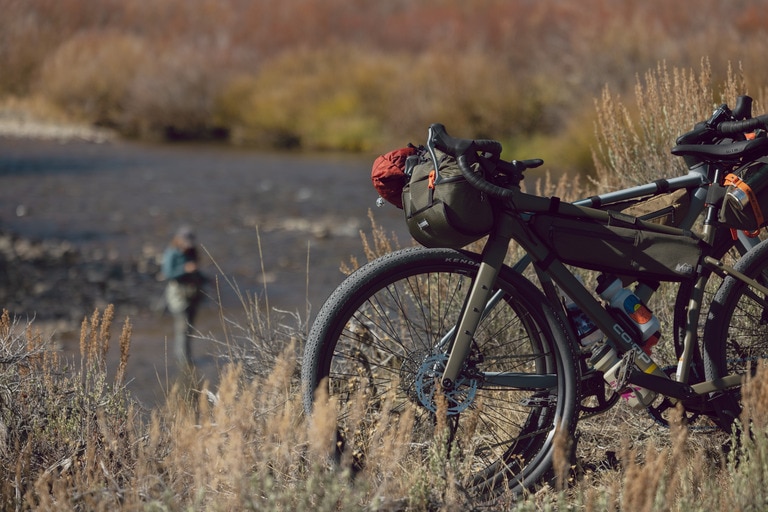
Adjustability
Some bags adjust via compression straps or expandable collars. This allows you to carry loads of varying sizes without having the unused portion of the bags flapping in the wind or the load shifting as you move on your bike.
Ease of Access
Handlebar bags are more accessible than panniers or seat bags, making them a great choice for small, frequently used items. Other characteristics to consider: How many openings are there? Zippers or flaps? Are there small pockets for organization or simply a large, undivided space?
Water Resistance
If you're an all-conditions rider who doesn't shy away from rain and road spray, look for a bag rated as "waterproof" instead of "water resistant." Waterproof bags are made from a rubberized material to keep the contents dry even in a downpour. Many feature a roll-top closure to prevent water from getting in.
Attachment Options
If you park in public areas, you'll probably want to take your gear with you. Panniers attach to racks using a simple system of spring-loaded hooks, clips or bungee cords and are easy to disconnect. For seat bags, look for one with a quick-release mounting bracket rather than a set of buckles or rip-and-stick straps.
Tip: Be sure that your bags attach securely to your bicycle. Loads that are not secured can shift during your ride unexpectedly and cause a loss of control.