
A water bottle may seem like a simple piece of gear, but our test team had plenty to say when detailing what they liked—and didn’t like—about the vessels we asked them to fill, tote, and sip from over the past year. Some gave props for sustainability or ease of cleaning. Others focused on carrying weight: The same bottle that felt light after 5 seconds in-hand sometimes grew burdensome on a quarter-mile trek.
Positive or negative, all insights were hard-won. We took these water bottles to work, nestled them onto bikes, carried them during running workouts and relied on them during backpacking trips. We also put bottles through real-world challenges, like storing insulated models in parked cars throughout sunny afternoons, and a few less deliberate trials (one user dropped his bottle off a two-story airport escalator). Here are the six water bottles, available at REI, that earned our recommendations after hours of sipping and chugging.
Test Results
Find our quick picks here or read on for the full breakdown of this season's best water bottles.
- YETI Rambler Vacuum Bottle with Chug Cap, 26 fl. oz.
- REI Co-op Nalgene Sustain Graphic Wide-Mouth Water Bottle, 32 fl. oz.
- Bivo Trio Insulated Water Bottle, 21 fl. oz
- REI Co-op Swiftland Handheld Water Bottle, 14 fl. oz.
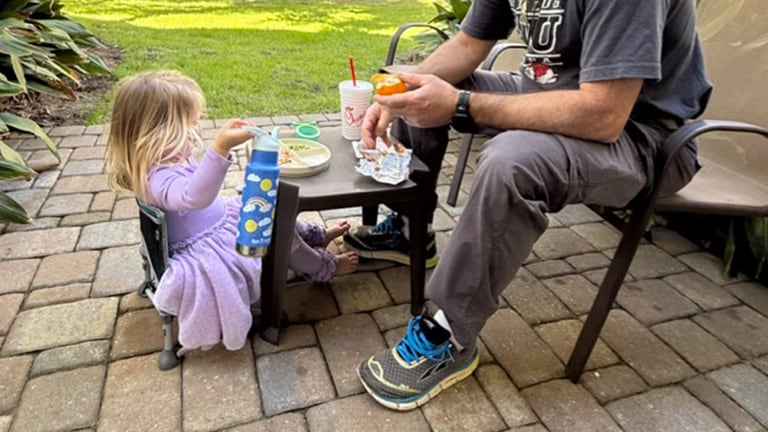
- Klean Kanteen Kids’ Insulated Water Bottle with Flip Seal Sport Cap, 12 fl. oz.
- Ocean Bottle GO Clear Water Bottle, 24 fl. Oz.
Editor’s note: This guide was updated on May 6, 2026, after a thorough round of testing. We’ve included all new water bottles.
Jump to buying advice and learn how we test.


YETI Rambler Vacuum Bottle with Chug Cap - 26 fl. oz.
Score 94
Insulated Yes
BPA free Yes
Material(s) Stainless steel
Liquid capacity 26 fl. oz.
Cap type Screw cap
Weight 1 lb. 4 oz.
Best for Camping, office use, hiking, paddling, everyday carry
YETI built its reputation on keeping stuff cold, and that’s the standout appeal of this double-walled, stainless-steel bottle. “It holds drinks at desired temps for hours,” says Kris A., our Oregon tester who took his on road trips, daily work commutes and daily use. Our Expert Advice camp editor, Sarah Grothjan, found her ideal use: "Lately, I've enjoyed loading up my water bottles with ice and water before bed. I love that this YETI bottle keeps my water cold throughout the night.”
Insulation alone isn’t what makes this bottle heavier than most (the air vacuum between sheets of steel weighs nothing but accomplishes most of the keep-cold burden). It's the chunky plastic cap and durably constructed steel that add extra heft. Still, we appreciated the resulting durability. "No dings, dents or scuffs after two weeks of toting this bottle with me on road trips, errands, neighborhood walks and more," Grothjan says. "It even survived my dishwasher, which makes cleaning this bottle so much easier." Handwashing is equally straightforward, she says, because “it has very few ridged, rubber pieces that can trap moisture and lead to mold growth.” A scrub brush can easily reach inside the wide-mouth opening.
The cap combines two screw-off lids. The lower layer features a narrow-mouth drinking spout that testers liked for limiting splash-back. “It’s very comfortable to drink from, perfect for taking quick gulps without making a mess,” says tester Kris A. The upper lid, meanwhile, seals the bottle and provides a squared-off handle for an easy three-fingered carry.
The bottle’s bulk and weight didn’t delight all of us, however. Most found the base too wide to fit into vehicles’ cupholders, and many said they wouldn’t take this on longer hikes. Gear tester Dawn F. found the volume too small for how heavy and bulky the bottle is. The lid’s two-handed operation also bothered drinkers who prefer the one-handed convenience of a flip-top spout.
Other versions: 17 fl oz version, 36 fl. ounce version
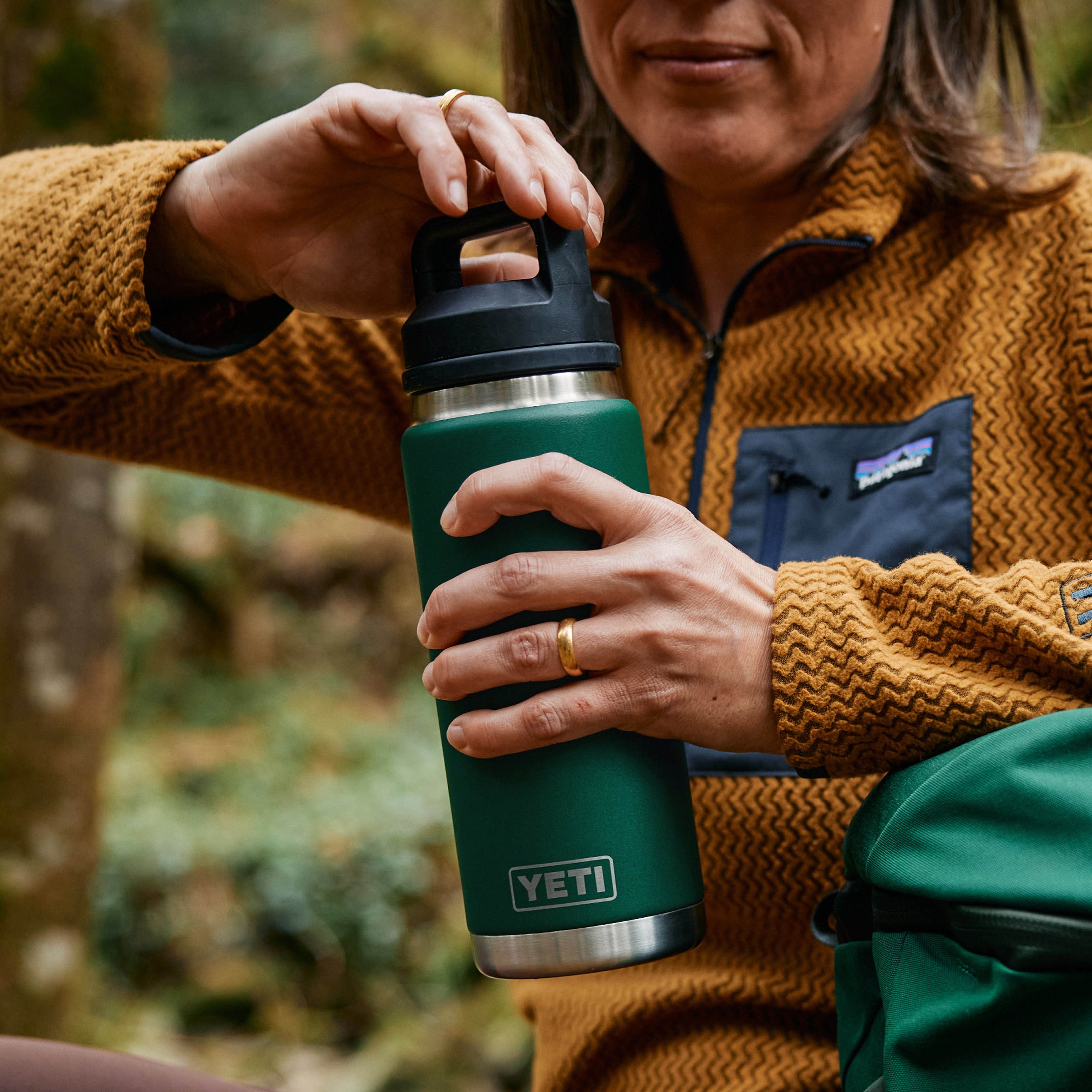
Bottom Line: When keeping drinks cold is paramount, this bottle earns top marks. Its burliness, on the other hand, can either be a bonus or a downside depending on your preferences.
Testing Stats:
- Testing hours: 117
- Testing locations: Oregon, Washington
- Best testing story: Twice during testing, Kris A. watched as this bottle fell out of the car and took off down the driveway. “It picked up speed as it rolled a good 60 feet. I thought for sure it’d be dented and likely scratched up, but when I caught up to it, the only mark I could find was the slightest dimple mark. Damn solid piece of gear!”


REI Co-op Nalgene Sustain Graphic Wide-Mouth Water Bottle - 32 fl. oz.
Score 93
Insulated No
BPA free Yes
Material(s) Tritan Renew
Liquid capacity 32 fl. oz.
Cap type Screw cap
Weight (unfilled) 6.25 oz.
Best for Backpacking, camping, office use, sticker artistry
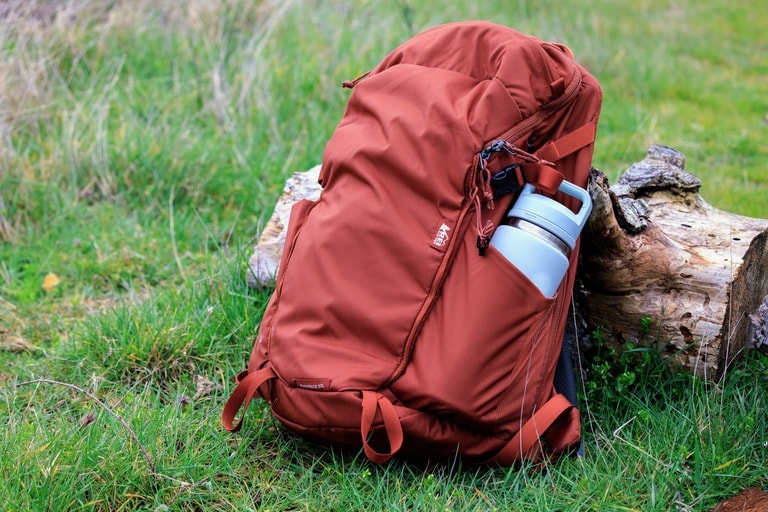
Chances are you’ve seen this bottle somewhere: Originally developed for laboratory measurement, Nalgene bottles became the OG in outdoor hydration after hikers adopted them throughout the 1970s for its lightweight durability. The original more opaque polyethylene material has since given way to the clear Tritan Renew, which is made using 50% waste plastic and is free of BPA, BPS and phthalates (scoring higher for health and sustainability than some plastics).
It’s also heat-stable, one of many features that make it a hit with hikers of all stripes. Many backpackers fill Nalgenes with boiling water and stash them at the bottom of their sleeping bags to warm their feet through the night. Winter hikers like REI employee Komilla Bhatty use the bottle in lieu of hydration bladders climbing and hiking in New Hampshire’s White Mountains because there are no narrow hoses or mouthpieces to freeze up and block water flow. Other testers freeze full bottles to serve as ice blocks in coolers. The ultra-wide, 63mm opening is another much-loved feature, particularly when camping and backpacking. “It comes in handy when you need to refill the bottle from a water filter,” says Phuong Le, an Expert Advice editor, who always takes two backpacking and also uses it as a mixing vessel for camp pancakes. Several pump-style water filters are designed to mate with the Nalgene’s wide mouth for easy, spill-free water collection.
We admired the leakproof reliability of this simple screw-top cap. And REI photo production coordinator Omar Alvarado Baez uses his Nalgene on every hike and at work. “I am cautious about ‘human mistakes’ but would trust it to be in the same bag as my camera gear while hiking,” he says. “I have never had a Nalgene bottle leak other than when I forget to fully tighten the lid.”
And like the 1970s originals, Nalgene bottles are durable. Rolled down a sandstone slab, dropped off a cliff, left to fall off the roof of a car—these scenarios and many more proved to us that the bottle’s reputation for resisting abuse is legit. Its Achilles heel is the lid’s polypropylene leash. The “only part that breaks is the plastic strap that is attached to the lid,” says Tammy T., our San Jose tester who has three and joked that they’ll probably outlive her. (Replacements cost $5.) Testers also verified (and Nalgene notes) that the bottle is dishwasher-safe. “The dishwasher heat eventually claims my stickers, but I actually love it: I keep a healthy rotation of fresh art on the bottle while the flask itself remains indestructible,” says Alvarado Baez.
Only the most weight-conscious backpackers may prefer lighter options. The bottles are not insulated, so those who want long-lasting cold drinks might prefer double wall options. Lastly, this backcountry bottle sometimes struggles to transition to suburban use: Its wide dimensions don’t typically fit into cars’ cupholders. And the extra-wide mouth is notorious for permitting splash-back during on-the-go drinking (Guyot Designs offers a fix with its silicone splashguard, $5).
Bottom Line: Lightweight durability still makes Nalgene a beloved winner, especially for backcountry use.
Testing Stats:
- Testing hours: 1,060
- Testing locations: California, New Hampshire, South Carolina, Washington and Wyoming,
- Best testing story: “I have dropped these bottles on all kinds of hard surfaces and have yet to break one,” says tester Omar Alvarado Baez. "I’m convinced that after the apocalypse, the only things left will be Keith Richards and this container.”


Bivo Trio Insulated Water Bottle - 21 fl. oz.
Score 91
Insulated Yes
BPA free Yes
Material(s) Stainless steel, silicone, polypropylene
Liquid capacity 21 fl. oz.
Cap type Push/pull
Weight 9.4 oz.
Best for Cycling, indoor fitness, road trips
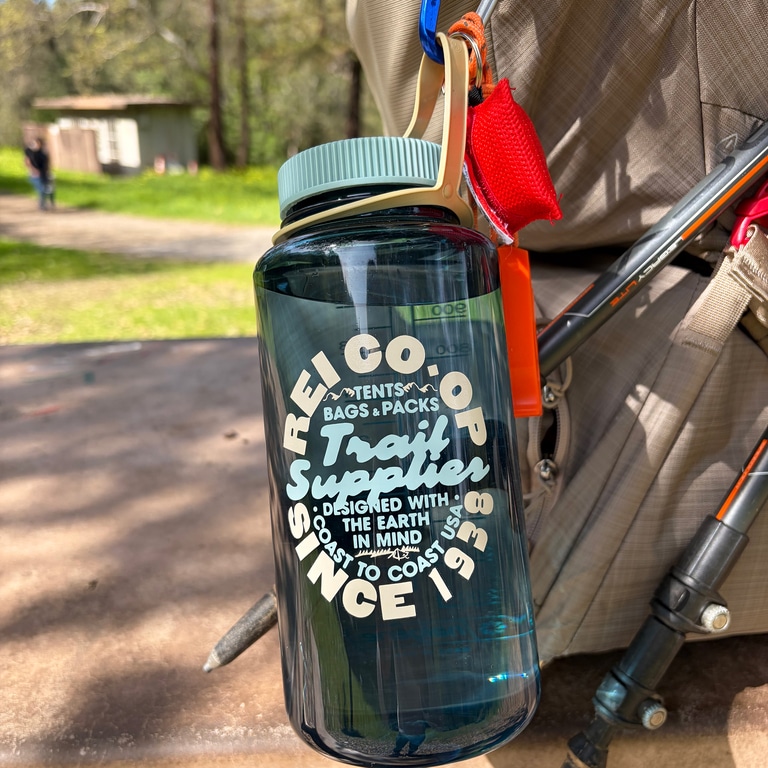
Most bike water bottles are made of uninsulated plastic. But the Bivo Trio sets itself apart from the pack with an insulated, double-walled stainless-steel construction that’s tapered so it fits in bike bottle cages. Yes, it’s slightly heavier than uninsulated plastic options, but our crew was happy to carry a few extra ounces in exchange for icy sips in any temperature. “It kept my water cold on a 5-hour ride,” says REI cycle buyer Allison Williams, adding: “This bottle has changed the game for me!” She was originally drawn to Bivo bottles to eliminate plastics from her bike rides, but says this bottle has become her “go-to for travel, road trips, running errands, and around-the-house use.”
Compared with typical plastic cycling bottles, this stainless steel one imparts no flavor so we loved the extra-clean taste of the water inside. It’s also easy to clean. (All parts are dishwasher safe.) Colored bottles feature a silicone finish that makes the bottle easy to grip with sweaty hands and helps prevent it from bouncing out of the bottle cage while riding. “I found the style and texture really easy and comfortable to hold,” says REI SEO program manager Stephanie Brown. “There’s no condensation from ice, and it’s easy to grip even during a cycle class.”
Our testers also raved about the fast flow rate on the push-pull cap. The flow is so good that our Seattle-based road cyclist Tony C. says he had to pay attention. “There’s no need to squeeze!” adds Williams. “Just tip the bottle, easily, with one hand.” Most testers noted that remembering to twist the locking mechanism effectively prevented liquid from leaking out after tossing the bottle into a gym bag. But one user experienced seepage, even when the cap was closed, after the bottle was left on its side for long periods (like under a plane seat). Another found the smaller, 17-ounce Bivo Trio to be a better fit with their smaller bike frame.
Tony, who tested Bivo’s uninsulated stainless-steel bottle the Bivo One says he was skeptical at first but now uses it as his main bike bottle. It weighs 4 ounces less than the insulated version but uses the same fast-flow cap that wowed evaluators. Both bottles earned high marks for durability; their silicone coating showed slight scuffing after a year of use, but testers unanimously reported no dents or other damage to the steel or cap. And because it fits into most vehicles’ cup holders, it proved as useful for car-commuting as it did for cycling and fitness.
Other versions: Trio Insulated- 17 fl. oz; Duo Non-insulated - 25 fl. oz.
Bottom Line: Here’s a rare, insulated option that’s light enough for cycling and sized for most bottle cages.
Testing Stats:
- Testing hours: 105
- Testing locations: New Mexico, Utah, Virginia, Washington
- Best testing story: Testers did not hesitate to put the Bivo’s insulating powers to work: “Even on hours-long rides in 90-degree temperatures, this bottle keeps my ice water crisp and cold,” says Elena K.


![Swiftland Handheld Water Bottle - 14 fl. oz. [Back view]](/media/17268d55-b1d4-4319-9933-3a38ffb5700b/?size=440)
REI Co-op Swiftland Handheld Water Bottle - 14 fl. oz.
Score 94
Insulation No
BPA free Yes
Material(s) TPU, recycled polyester
Cap type Screw cap
Weight 3 oz.
Best for Trail running, road running, circuit workouts, hiking
Treadmills may include cupholders, but trails certainly don’t—and testers who logged outdoor runs and workouts loved the comfort and convenience of this handheld water bottle from REI. Made of food-grade thermoplastic polyurethane (TPU), the soft, collapsible flask nests within a stretchy fabric sleeve made of recycled and bluesign®-approved materials. The sleeve includes a stretch mesh pocket for car keys, and two adjustable straps that snug the bottle to the back of the hand, limiting the need to grasp it tightly while running. “I was honestly surprised by how natural it felt to hold,” says tester Monica Prelle, an REI employee and ultra trail runner. “The soft mesh and straps fit my hand really well and gave me a secure grip without feeling tight. After a few minutes, I barely noticed I was carrying it, which made staying hydrated during my run really easy.”
In fact, we found that this flask encouraged our crew to drink on short runs where hydration might otherwise be skipped (since a hydration vest can feel like overkill). Tightening the hand straps keeps the bottle secure as water is emptied and the flask diminishes in volume. We also felt inspired to use this system while hiking, in lieu of looping a finger through the cap of a water bottle. “I can see myself using this while backpacking,” says Lizzy Rudge, an REI employee. “It is easy to hold and is super light.”
The cap proved easy to drink from and relatively leakproof. Our tester Kim K., a running coach in Charlotte, filled it up, laid it on its side, tossed it in a bag and experienced “no leaks.” But she found the insulation to be “middle-of-the-road.” “On long runs, it also warmed up from my hand holding it,” says Kim, who still appreciated its simplicity and light weight. We didn’t experience any durability issues, either. And handwashing is easy, thanks to a medium-wide opening on the flask that allows a sponge or bottlebrush to swab the interior.
Bottom Line: Lightweight, comfy and unobtrusive, this bottle makes it easy to sip water while running or hiking.
Testing Stats:
- Testing hours: 62
- Testing locations: North Carolina, Tennessee, Washington
- Best testing story: “On long runs leading up to my first marathon after welcoming my second little one, getting a long run in solo just hasn’t been possible, so most runs come with one hand occupied pushing a stroller and the other hand holding my hydration,” says mom and running coach Kim K. “Somewhere around mile 6 of a long run, stroller cruising, my daughter negotiating snacks like it was a boardroom meeting, and me trying to hold a steady pace on what felt like ‘slightly uphill both directions,’ this bottle became my unofficial co-pilot. I loved that I could grab a sip mid-stride without breaking the whole operation. At one point, I remember thinking: This is basically my hydration ‘third hand.’ Not exciting, not flashy, just there, making sure I didn’t fall apart somewhere between mile 7 and the promise of post-run snacks.”


Klean Kanteen Kids' Insulated Water Bottle with Flip Seal Sport Cap - 12. fl. oz.
Score 93
Insulated Yes
BPA free Yes
Material(s) Stainless steel, silicone, polypropylene
Liquid capacity 12 fl. oz.
Cap type Lid with straw
Weight 10.3 oz.
Best for Outdoor play, trips to school, family camping, road trips
Do kids need a kid-specific water bottle? Absolutely yes, our mom tester in Charlotte, North Carolina, decided after handing this bottle over to her 2 1/2-year-old. “The flip seal sport cap is easy for her small hands to operate independently, which earns big points for confidence and fewer ‘help me!’ moments,” says Kim. “It flips open smoothly, stays open while drinking, and—my favorite aspect—snaps shut with a satisfying click so even my wee one understands when it’s closed.” That tactile feedback and audible closure go a long way toward reducing accidental leaks. “When closed correctly, it stayed dry through stroller rides, car seats, and nap-time transport,” our mom tester reports. This bottle makes it easy for kids—even toddlers—to handle that responsibility on their own.
Durability also earned props. The flip-top cap remained closed throughout rough transport and games of toss, when the water bottle served as a de facto baseball and soccer ball. “It survived multiple drops onto hard floors and outdoor surfaces without dents, cracks, or loss of function,” our mom tester notes. The double-wall insulation also remained intact and effective at keeping drinks cold and warm throughout roughhousing and frequent openings.
Like other stainless-steel bottles, this one’s smooth interior doesn’t trap residues or odors, but is easy to clean by hand or in a dishwasher. Milk, flavored drinks—all washed out easily and completely, since disassembling the sport cap “doesn’t feel complicated or fussy,” says Kim. “After multiple washes, there was no lingering smell or buildup in the seal.”
The 12-ounce size is large enough to avoid the hassle of constant refills, but also light enough for a child to reasonably carry. At 8.6 inches tall, this bottle may feel a little large and unwieldy for the littlest drinkers, however. We also found that parents appreciated that its base is narrow enough to slide into cupholders when traveling by car or stroller, but some wished for a shorter design.
Bottom Line: Kids can easily operate the flip-top cap on this insulated water bottle—and parents like its durability.
Testing Stats:
- Testing hours: 12
- Testing locations: North Carolina
- Best testing story: “During a recent snowstorm, this bottle became an unexpected MVP in our cold-weather routine,” says Kim. “We filled it with room-temperature water before heading outside to play in the snow. Despite the freezing temperatures, the beverage stayed constant through our winter play. The flip cap was easy for small, mittened hands to manage without help. There were no leaks when it was tossed in the sled or tipped over in the snow. By the end of the day, it felt like this bottle was built exactly for moments like that: messy, cold adventures.”


Ocean Bottle GO Clear Water Bottle - 24 fl. oz.
Score 86
Insulated No
BPA free Yes
Material(s) Tritan Renew, stainless steel, silicone
Liquid capacity 24 fl. oz.
Cap type Lid with straw
Weight 7 oz.
Best for Travel and commuting
A straw-top bottle that fits into most vehicles’ cup-holders, the Ocean Bottle GO Clear became one of our testers’ favorite all-errands vessels and even converted a few who aren’t typically fans of a straw-mouth cap. This one combines a low-splash flip-top closure with a stainless steel straw and a silicone carry loop that’s large enough for two fingers. Unscrewing the mouthpiece reveals a narrow bottle opening; a secondary screw-top lid exposes a wide-mouth opening that easily accepts ice cubes from a refrigerator dispenser. “The ability to open the bottle from the small or wide neck was nice to be able to clean the bottle,” says Tammy T. “The flow is surprisingly fast,” adds Expert Advice editor Phuong Le, who also appreciated this bottle’s size for road trips: Just enough to stay hydrated without making too many pit stops. Its one-handed operation also makes it easy for the driver to take a sip while keeping eyes on the road. Her tip: Make sure the straw is flipped down securely, otherwise it may leak a little.
Durability is another winning feature. “I test-dropped it in my driveway and deck with no issues,” says Le. And while some users doubted the longevity of the flip-top mechanism and silicone seals, Ocean Bottle’s 10-year warranty reassured them: The company’s “repair and replacement scheme” covers manufacturing defects as well as lost or worn-out parts. The mouthpiece comes apart for deep cleaning, though we found the process fussy. “There are five different parts to clean [or load into the dishwasher] which seems like a lot,” says Tammy T.
The 24-ounce capacity proved sufficient when refills were readily available, but for longer hikes and outings, Tammy T. noted that she would choose a bigger bottle. And there’s no insulation, so people who require very cold water might want to check out insulated options like the Hydro Flask Lightweight Wide-Mouth Vacuum Water Bottle with Flex Chug Cap (which also fits into most cars’ cupholders, but doesn’t prevent splashback as well or facilitate one-handed operation).
Bottom Line: Lightweight and leakproof, this bottle’s portability and ease of operation make it ideal for car rides and quick trips between refills.
Testing Stats:
- Testing hours: 34
- Testing locations: California, Washington
- Best testing story: “The volume is smaller than what I'm used to, but I actually didn't mind it,” reports our Expert Advice editor Phuong Le. “I felt a weird sense of achievement every time I went to refill it, thinking ‘yay! another notch for drinking more water intentionally!’”
Best Water Bottles of 2026 — Quick Comparison
Stainless-steel, insulated options
Product | Best For | Dishwasher Safe | Material | Capacity | Fits Most Cupholders |
Camping, office, hiking, paddling, all-around use | Yes | Stainless steel | 26 fl. oz. | No | |
Cycling, mountain biking, indoor fitness, road trips | Yes | Stainless steel | 21 fl. oz. | Yes | |
School, outdoor play, family trips | Yes | Stainless steel | 12 fl. oz. | Yes |
Plastic, non-insulated options
Product | Best For | Dishwasher Safe | Material | Capacity | Fits Most Cupholders |
Backpacking, hiking, camping, climbing, office | Yes | Plastic (Tritan Renew) | 32 fl. oz. | No | |
Travel, commuting, gym, errands | Yes (multi-part) | Plastic (Tritan Renew) | 24 fl. oz. | Yes | |
Trail running, road running, workouts | Yes, safe for top-rack dishwasher | Plastic (TPU) | 14 fl. oz. | No |
Buying Advice for Water Bottles
First, choose your ideal capacity, which is often determined by how long you’ll go between refills. Where faucets are scarce, larger bottles that hold 32 ounces or more tend to be most practical. The REI Co-op Nalgene Sustain Graphic Wide-Mouth Water Bottle is the largest bottle among our picks, at 32 ounces, and a hiking and backpacking favorite.
Your mode of transport can also dictate the best bottle size. Bicycle frames limit the sizes that fit within the central triangle where bottles are typically stored. The Bivo Trio Insulated Water Bottle fits most bike bottle holders. Cars’ cupholders usually fit small- to medium-capacity bottles, but not always those holding a liter or more. We found the Ocean Bottle GO Clear Water Bottle fit most dependably in vehicle cupholders.
Materials matter, too. Plastic and stainless steel are the most common options, and all bottles sold at REI Co-op meet high standards for consumer safety. If keeping drinks cold (or hot) is important to you, you’ll probably go with stainless steel: This material is often available in double-walled constructions that insulate beverages effectively, while plastic bottles don’t typically include insulation. The YETI Rambler Vacuum Bottle with Chug Cap, Bivo Trio, and Klean Kanteen Kids’ Insulated Water Bottle are all insulated options. Plastic’s advantage is low carry weight. The REI Co-op Nalgene and REI Co-op Swiftland Handheld Water Bottle are good examples of this advantage.
Need a deep dive on how to choose a water bottle? Read more in our Water Bottles Buying Guide.
How We Test
Rarely do our gear-testing assignments come with such health benefits: For this gear review, 14 outdoor enthusiasts from toddler to seniors tested over 15 popular bottles by drinking water—lots of it, frequently, over several months. We took these bottles far beyond faucet-range by taking them on road trips, to camp sites, on airplanes, to backcountry vistas, to neighborhood playgrounds and much more.
We laid these bottles on their sides and watched whether they leaked, tossed them into bike bags and with photography equipment, stashed them inside mesh pockets of daypacks or clipped them onto the back of backpacks.
Then we assessed the functionality of each bottle and rated the relative enjoyment of their sipping and gulping. We issued grades on ease of use, leakiness, insulation (where applicable), features and durability. Finally, we calculated the bottles’ feedback scores to determine testers’ favorites. These winning bottles are described above, with testers’ comments.