A quality bike light is one of the most important pieces of safety equipment that cyclists need. It increases the cyclists’ visibility and allows you to see what’s in front of you while you’re pedaling across cities, trails and the suburbs. Today’s bike lights are smarter, brighter, longer-lasting and easier to mount than ever before, but there's nuance to choosing the right system for your needs. If you’re new to cycling or typically ride your bike in daylight hours, it can be challenging to know what to look for in a bike light.
My expertise: I’ve been a casual bike rider for most of my life, as well as a multidecade endurance athlete who values time outside in extreme environments. I’ve also been testing outdoor gear for more than a decade. Most recently, I’ve been using an e-bike in and around Denver's city streets, trails and suburbs.
My testing process: I tested an array of popular bike lights in predominantly urban and suburban settings including city streets, multiuse paths, roads and bike lanes, and some gravel routes. Over three months, I evaluated each light while monitoring qualities like brightness, beam quality, battery life, ease of mounting, visibility from different angles and overall value. Here’s what I learned.
Test Results
Find our quick recommendations here or read on for more in-depth breakdowns of our best bike lights. Learn more about bike lights and visibility in Buying Advice.
- Lezyne Micro Drive 800+ and Strip Drive 300+ Bike Light Set
- Garmin Varia RTL515 Rearview Radar Taillight
- NiteRider Lumina Micro 1150 Headlight and Vmax+ 180 Taillight Set
- Cygolite Velocity Pro 1600 Lumen Bicycle Headlight
- Trek Ion 200 RT/Flare RT Light Set
Editor's note: We updated this guide on October 15, 2026, converting it from a staff picks guide to a tested guide by sending a selection of our top-rated bike lights to Expert Advice contributor and gear tester Mary Beth Skylis, who took them out over the summer of 2026. Learn more about how we tested.


Lezyne Micro Drive 800+ and Strip Drive 300+ Bike Light Set
Score 93
Active battery life 2 hours on high (front), 5.5 hours on high (rear)
Max Light Output 800 lumens
Rechargeable Yes (USB-C)
Weight 135 g (front), 53 g (rear)
Water resistance IPX7
Best for Commuting, daytime use
The Micro Drive 800+ headlight and Strip Drive+ from Lezyne prioritize features that suburban cyclists actually need, like enough power to illuminate dark roads, daytime visibility, a reliable battery and a mounting system that allows you to set it and forget it. While the Micro Drive 800+ doesn’t have the brightest beam in this guide, it spreads light evenly across the road, making it more usable than some brighter lights.
The simple, intuitive and secure mounting system is one of my favorites. Its rubber strap design means both front and the rear lights can easily be fixed in place across a wide range of handlebars. This convenience shouldn’t be understated: Who wants to spend time adjusting and readjusting their lights?
The Strip Drive+ light pairs nicely with the front light by creating reliable side visibility, making you more visible at intersections and wherever else you want drivers to see you.
This set's battery performance falls right in the middle of the spectrum, giving users about two hours of light time at maximum power. While that timeframe won’t satisfy true endurance riders, its enough to accommodate most urban riders. This system's main drawback is that its lower-lumen output leaves something to be desired while traveling on completely dark roads at high speeds. For most other night riders, though, the Micro Drive 800+ and Strip Drive 300+ set easily tops this list.
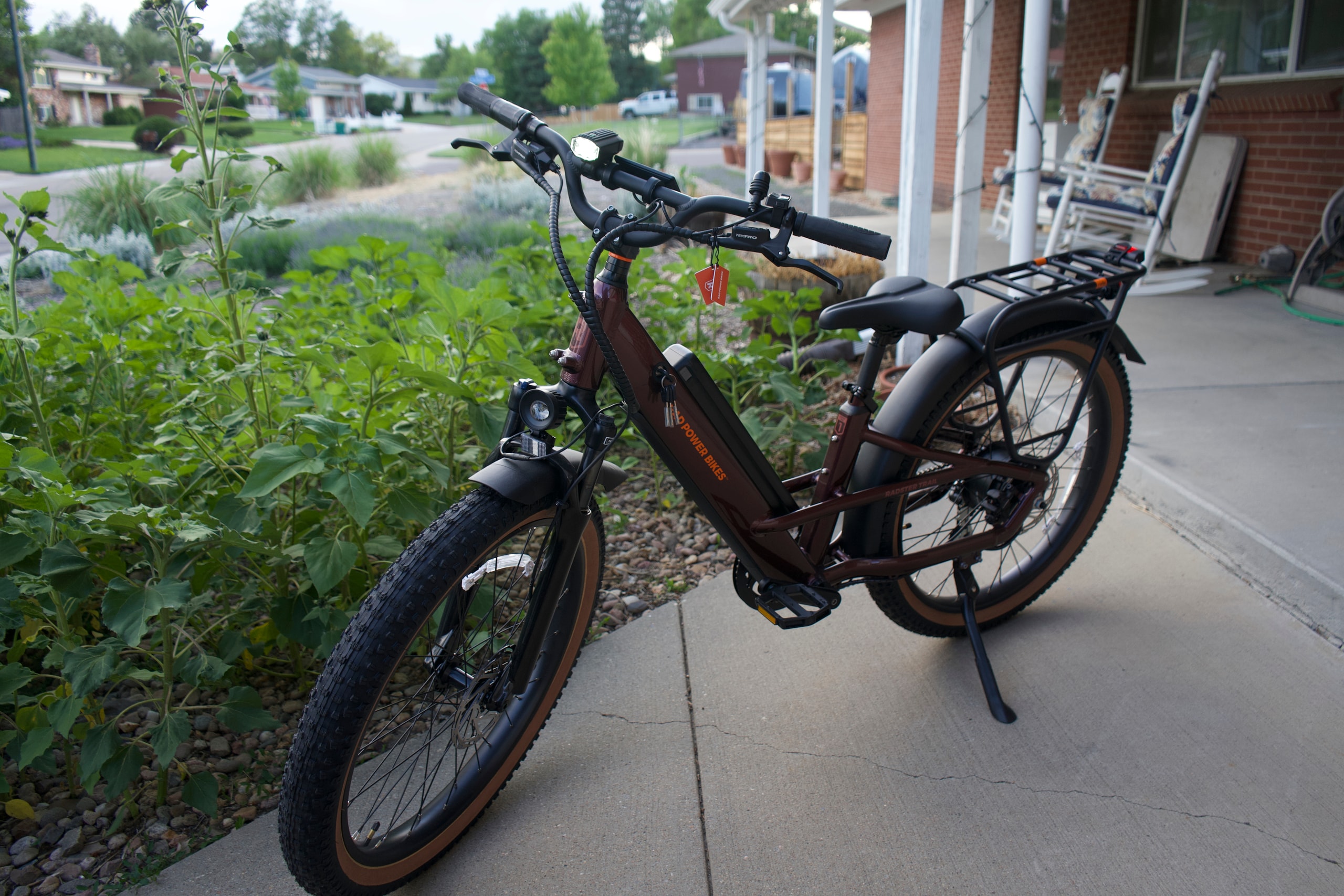
Bottom Line: Suburban riders, rejoice: The Lezyne Micro Drive 800+ and Strip Drive 300+ Bike Light Set has everything you need to navigate nighttime roads and long commutes.


Garmin Varia RTL515 Rearview Radar Taillight
Score 92
Active battery life Up to 6 hours in solid mode
Max Light Output 65 lumens
Rechargeable Yes
Weight 71 g
Water resistance IPX7
Connectivity ANT+, Bluetooth
Best for Heavy road traffic, urban riding
Easily the most unique rear light I tested on this list, the Garmin Varia RTL515 Rearview Radar Taillight is as much a situational-awareness tool as it is a light. As its name implies, this device comes with all the standard functions of a rear light, plus rear-facing radar to help you determine when vehicles are creeping up behind you. It will even warn other cyclists with compatible Garmin, Wahoo Fitness or Hammerhead bike computers, and drivers with some smartphones, about your whereabouts, which helps them detect you before they can see you.
The Varia RTL515's light is bright enough to add daytime visibility. Its 71 gram weight lands it the lightweight category. And the mounting system is straightforward and easy to adjust.
While this taillight adds visibility and vehicle detection that quickly becomes second-nature to interpret, it also comes with the highest price tag in this guide. And you don't see the full value until you pair it with a display device like a phone or bike computer on your handlebars. In areas with spotty service, the Varia RTL515 also occasionally drops the signal, which means its best used in suburban and city areas. But it’s truly irreplaceable for riders who regularly share the road with other cyclists and vehicles because of the added safety it provides.
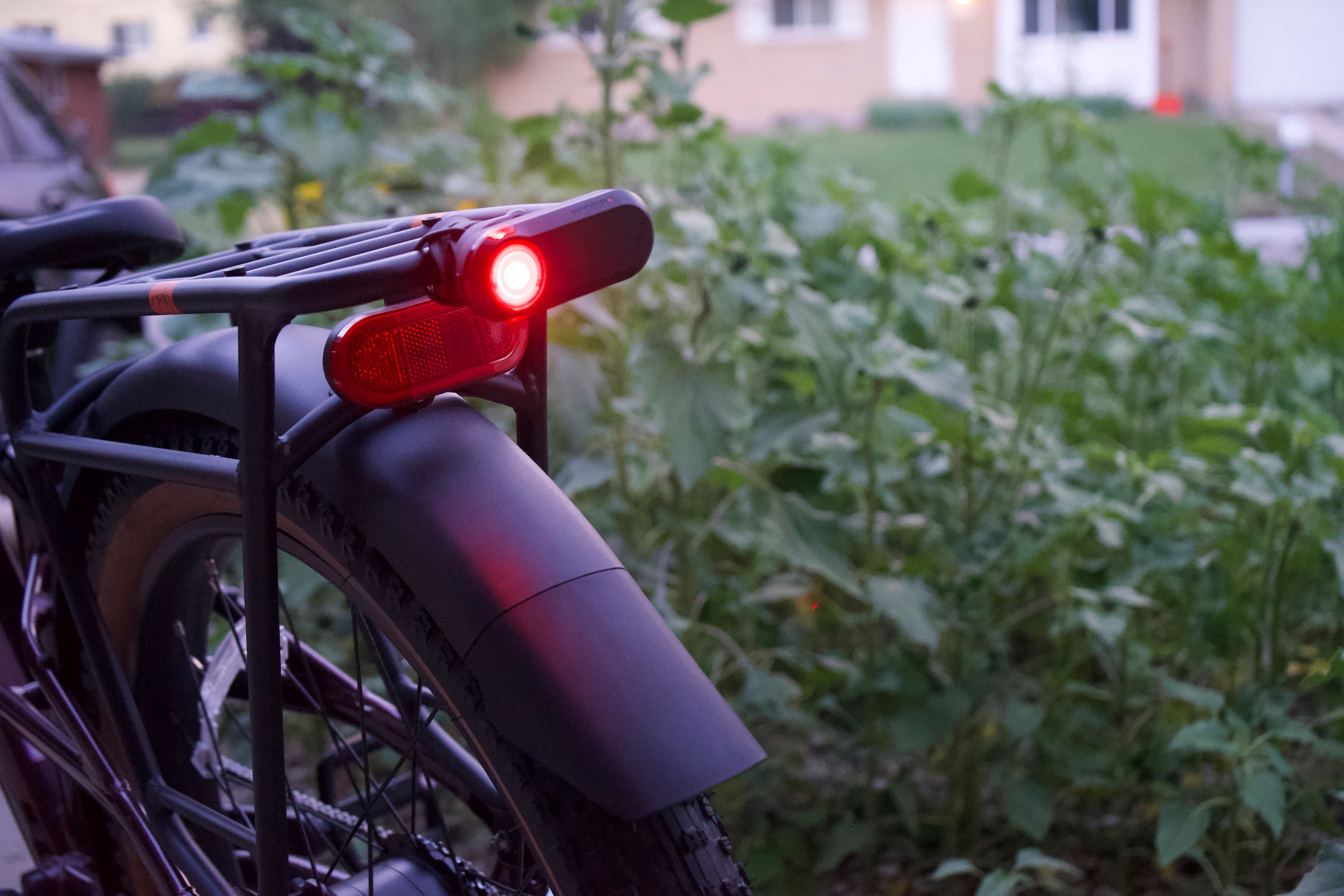
Bottom Line: The Garmin Varia RTL515 Rearview Radar Taillight is a nifty setup for those who want extra awareness and visibility on city roads, thanks to the device's connection to compatible bike computers and smartphones.


NiteRider Lumina Micro 1150 Headlight and Vmax+ 180 Taillight Set
Score 91
Active battery life 2 hours on high (front), 4.5 hours on high (rear)
Max Light Output 1150 lumens
Rechargeable Yes (USB-C)
Weight 4.59 ounces (headlight) 2.08 ounces (taillight)
Water resistance IP64
Best for Night riding
The NiteRider Lumina series has been a cyclist favorite for many years, and the Micro 1150 Headlight and Vmax+ 180 Taillight Set continues that reputation by offering a high-coverage light combo in a compact, lightweight form. The headlight, in particular, casts a beam so powerful I never worried about maintaining visibility at corners or while cycling at fast speeds. Instead, the beam pattern projected far enough to help me maintain confidence while also offering peripheral coverage to make it easier to spot obstacles like pot holes. While many high-lumen lights create a beacon that highlights a specific spot in the distance, the Lumina Micro 1150’s light spreads evenly across the road.
My main complaint was that the devices' high power settings substantially reduce their battery life, and the light strength can be overkill for daytime settings. While 1.5 to 2 hours on high is a respectable timeframe, there's room for improvement. Fortunately, the medium-power option still provides high-class visibility for longer time frames. Additionally, the interface is a little bit outdated compared to newer lights that are built to be intuitive and feature battery indicators.
The Lumina Micro 1150 set also comes with an IP64 rating, which keeps it protected from rain and some road spray. While I didn’t find myself cycling with this light in a storm, its “splashproof” rating should keep everything functional in moderate settings.
Bottom Line: If you're looking for major shine on the roads in a both wet and dry conditions, the NiteRider Lumina Micro 1150 Headlight and Vmax+ 180 Taillight Set is your guide.


Cygolite Velocity Pro 1600 Lumen Bicycle Headlight
Score 90
Active battery life 1.5 hours on high
Max Light Output 1600 lumens
Rechargable Yes (USB-C)
Weight 6.8 ounces
Water resistance IP67
Best for Low light, commuting
If brightness is your main priority, it’s tough to beat the Velocity Pro 1600 Lumen headlight from Cygolite. It delivers a consistently powerful beam that’s especially helpful on poorly lit streets and in neighborhoods, and equally supportive in pitch-black darkness. You can choose the light's intensity with its multiple power modes, which allows you to adjust the brightness in populated areas.
The screw-style mounting system isn’t my favorite structure since it takes significantly more time to adjust the light's position than a basic strap would. The Velocity Pro is noticeably bigger than many commuter lights (though it's still a manageable size) and it's priced on the higher side for this guide. Still, the headlight is a quality selection for riders who consistently have to navigate dark roads at high speeds or have lengthy nighttime commutes. And it’s one of the top contenders for commuter lights with a long beam reach.
Bottom Line: The Cygolite Velocity Pro 1600 Lumen Bicycle Headlight makes it easy to navigate dark winter commutes with multiple power modes and a long beam reach.

Trek Ion 200 RT/Flare RT Light Set
Score 88
Active battery life 1.5 hours on high (front), 4.5 hours on high (rear)
Max Light Output 200 lumens
Rechargeable Yes (micro-USB)
Weight 2.5 ounces
Water resistance IPX7
Best for Urban settings, commuting
City riders need dependable bike lights, too. The Trek Ion 200 RT/Flare RT Light Set excels in urban environments like bike lanes and streets with existing lighting. Instead of simply illuminating of dark roads, this system is really meant to add rider visibility—and does a good job of it. Both lights use flash patterns that are spotted easily even in bright sunlight.
I also appreciate these lights' compact structure. Together, the system weighs about 70 grams—or nearly the same weight as just a single Thousand Traveler light. Riders can also pair these lights with other devices to help them monitor the battery power and control the lights from afar.
This lighting system's main limitation is its output. While the 200 lumens offer enough power to enhance roadside visibility, they’re somewhat lacking from an illumination standpoint. Still, I found that using this system in traffic-heavy environments added extra assurance that I would remain visible to those around me. These lights have the lowest lumen system in this guide, and while they're a solid pick in terms of quality and structure, there are cheaper options available out there that offer similar brightness levels.
Bottom Line: If you're in an urban environment already equipped with reliable street lighting, the Trek Ion 200 RT/Flare RT Light Set is a great addition to your bike to ramp up your visibility to other riders, drivers and pedestrians.
Shop All Bike Lights
Buying Advice
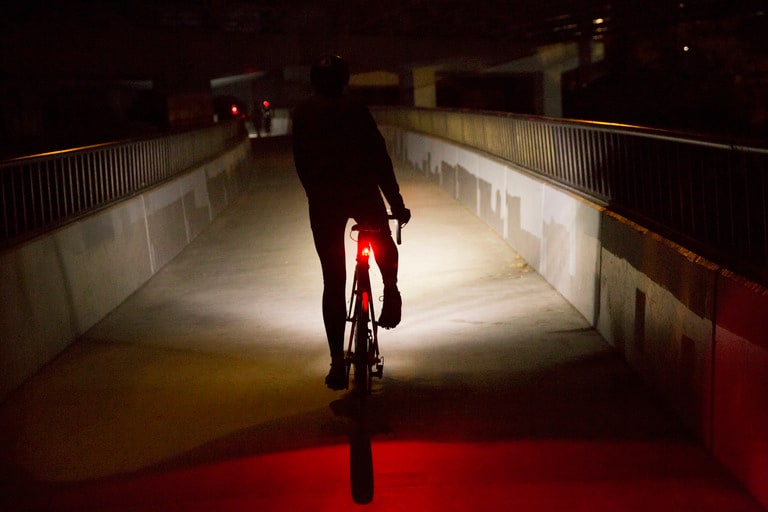
Visibility vs. Illumination
Bike lights are most often designed to either increase visibility or provide significant illumination (in some cases, they manage to do both). In situations where cyclist spend most of their time on streets with existing lighting, the light’s primary function should focus on increasing visibility. Lights like the Trek Ion 200 RT/Flare RT Light Set tend to excel in this setting.
Riders with a tendency to spend time on unlit roads and paths should prioritize a lighting system that maintains illumination to help you to detect potential hazards at a fast rate. Lights like the NiteRider Lumina Micro 1150 Headlight and Vmax+ 180 Taillight Set and Cygolite Velocity Pro 1600 Lumen Bicycle Headlight accommodate this setting effectively.
Lumens
It’s easy to assume that cyclists should always opt for the light with the highest number of lumens, but the reality is that the setting can help to determine how much brightness you truly need.
- 200–500 lumens typically support daytime visibility, urban commutes, and neighborhood riding. The Trek Ion 200 RT/Flare RT Light Set outputs 200 lumens.
- 500 to 1,000 lumens provide plenty of coverage in mixed environments. The Lezyne Micro Drive 800+ and Strip Drive 300+ Bike Light Set has 800 lumens and fits into this range.
- 1,000+ lumens are ideal for night riders that love high-speed runs and rural settings. The NiteRider Lumina Micro 1150 Headlight and Vmax+ 180 Taillight Set and Cygolite Velocity Pro 1600 Lumen Bicycle Headlight both top 1,000 lumens.
Front Light vs. Rear Light
The front bike light is designed to help you see while also increasing your visibility for oncoming traffic while the rear light increases your visibility from behind. Most cyclists find that they need both lights.
Battery Life
Bike lights can come with a wide range of battery life, with high-output options lasting as flew as 1.5 hours on full-blast and low-light options offering up to 100 hours of usage. Riders who regularly spend more than 2 hours in the dark should either carry a backup light or choose a light with lower-power settings that help them optimize their run time. All of the lights on this list are rechargeable.
Smart Features
Most cyclists can get by without an array of smart features, but riders who spend a significant amount of time in populated areas often find value in lights like the Garmin Varia RTL515 Rearview Radar Taillight because of its added safety benefits.
Weather Protection
Year-round commuters and foul-weather cyclists are more likely to need to rely on the bike lights’ weather protection. Every light on this guide comes with basic weather-resistance, but each is given an Ingress Protection (IP) rating that tells the user how much dust and water the light can handle.
Lights rated IPX7 can be fully submerged for a short period of time, and withstand downpours. Riders who regularly find themselves in significant storms or wet settings might benefit from a system with an IPX7 certification. The lights in this guide with an IPX7 rating are the Lezyne Micro Drive 800+ and Strip Drive 300+ Bike Light Set, Garmin Varia RTL515 Rearview Radar Taillight and Trek Ion 200 RT/Flare RT Light Set.
The Cygolite Velocity Pro 1600 Lumen Bicycle Headlight is rated IP67, which means that the light can withstand both dust and water.
Lights with an IP64 or IP66 come with less protection, primarily supporting the light through mild rain and road spray. The NiteRider Lumina Micro 1150 Headlight and Vmax+ 180 Taillight Set is rated IP64.
Weight and Size
Cyclists who prioritize traveling light and fast typically prefer lighting systems with a lightweight design. This style of biking light is also generally easy to leave mounted year-round, and less likely to jostle around during rough rides. Commuters may be more inclined to carry heavier lighting systems in exchange for longer run times and brightness while performance riders and road cyclists tend to favor compact systems like the Trek Ion 200 RT/Flare RT Light Set.
Light | Front or Rear | Max light output | Battery life on high | IP rating |
|---|---|---|---|---|
Both | 800 lumens | 2 hours (front), 5.5 (rear) | IPX7 | |
Rear | 65 lumens | Up to 6 hours | IPX7 | |
The NiteRider Lumina Micro 1150 Headlight and Vmax+ 180 Taillight Set | Both | 1150 lumens | 2 hours (front), 4.5 (rear) | IP64 |
Front | 1600 lumens | 1.5 hours | IP67 | |
Both | 200 lumens | 1.5 hours (front), 4.5 hours (rear) | IPX7 |
Learn more in How to Choose Bike Lights.
How We Tested
I took these lighting systems to predominantly urban environments on streets, neighborhood parks, multi-use paths and bike lanes to evaluate each one's quality over about three months. Testing took place during daylight, dusk and nighttime conditions to evaluate each light’s visibility and illumination. In addition to monitoring the light beam's quality, I also monitored the light’s flash patterns and side visibility to determine whether or not they’d help drivers see me.
Visibility and Beam Quality
While testing the front lights, I evaluated qualities like beam shape and road coverage to determine how easy it’d be to spot hazards like rocks and curbs. I monitored rear lights predominantly to determine how visible they’d be in the daylight and from the side.
Ease of Use
Bike lights come with a wide range of different mounting systems, button designs and charging ports, and the reality is some of those systems are easier to use than others. Lights that felt intuitive to use and easy to mount and remove from the list consistently earned higher marks—especially since commuters often lock bikes in public and want to easily be able to remove their lights.
Battery Performance
While most lights come with a manufacturer’s time-frame to describe runtimes, they don’t always match up with reality. I monitored battery life in real-world environments to determine whether or not the estimates were close to accurate, and also kept an eye on charging speed and battery indicators.
Mounting and Security
Bike lights that wobble or fall out of place in rough settings can quickly become useless to cyclists. So, I made sure to evaluate the mounting system on each device to determine whether or not it was likely to become dislodged on trails and rough roads.
Value
It doesn’t always make sense to invest in the light with the highest price tag. I tested each light to determine the true value based on functionality, price and longevity.