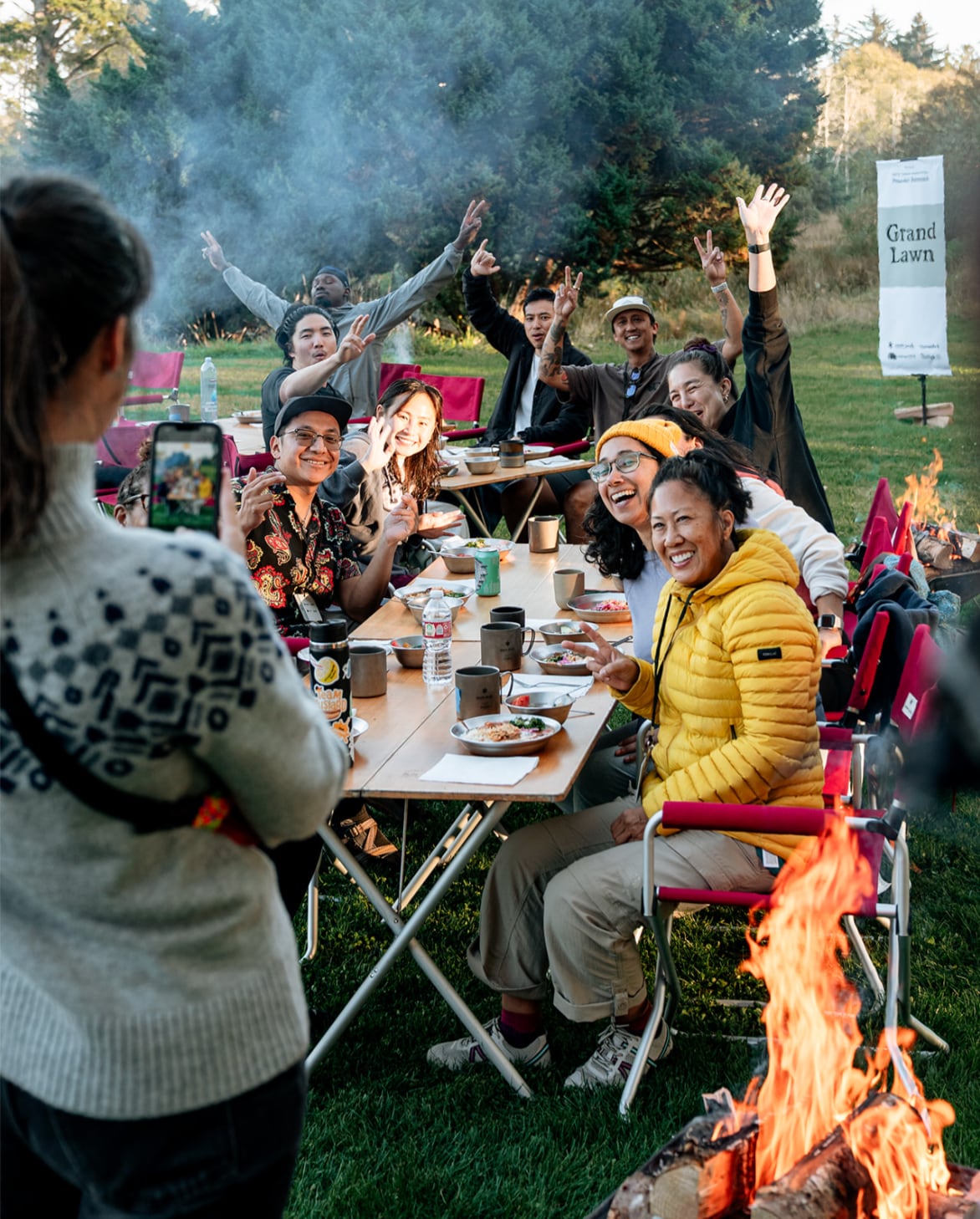
In 2020, founders of color represented only an estimated 1% of outdoor entrepreneurs. After all, starting a business is difficult enough—much less when you have to fight systemic barriers and lack access to industry contacts. As of 2026, however, that number is rising, and among the incoming wave are emerging outdoor brands led by founders of color supported by Path Ahead Ventures (PAV).
Launched in October 2021, PAV embodies the co-op’s commitment to supporting founders of color, working with roughly 30 new and growing brands each year. Path Ahead Ventures offers founders multiple pathways for growth and support, from the earliest stages of their journey to expansion into retail, wholesale full-scale operation. Selection is highly competitive, and application cycles open twice annually, in spring for Embark and fall for Ascent and Navigate—the three PAV pathways designed to meet brands where they are in their journey.
“The mission that we started with, which remains the mission today,” says Keenan Corrigan, PAV’s managing director, “is to accelerate the success of founders of color in the outdoors.” In the initiative’s first days, Susan Viscon—now chief new ventures and impact officer at REI—spoke to one hundred founders, investors and community leaders in the outdoor industry to build the program and understand how it could best make a difference. “We needed to really understand what the [founders’] needs were,” says Corrigan. “We wanted to make a commitment that was deep and intentional.”
Though the mission is the same, the initiative has evolved to include “company development programs, a peer community, events and visibility opportunities, and access to capital through grants and selective strategic equity investments,” says Corrigan. With over 130 brands led by founders of color now in the PAV community, opportunities to connect them grow every year. At the annual Founders Summit, for example, PAV community members gather for a few days of relationship-building and learning. “The community really is what makes what we’re doing so special,” Corrigan continues. “The founders bring so much knowledge and experience to the table, and you see them sharing it, opening doors and creating opportunities for each other.”
To celebrate Path Ahead Ventures’ fifth anniversary, meet five founders of color who have grown their brands through this partnership, expanded their impact in their own communities and changed the face of outdoor recreation for the better. After all, the outdoors is for everyone, and the outdoor industry should be, too.
Founders: Apply to Path Ahead Ventures
Applications are open from November 9 to December 1, 2026 for the 2027 Ascent and Navigate programs. These pathways focus on product companies looking to scale. Learn more and apply starting November 9th!
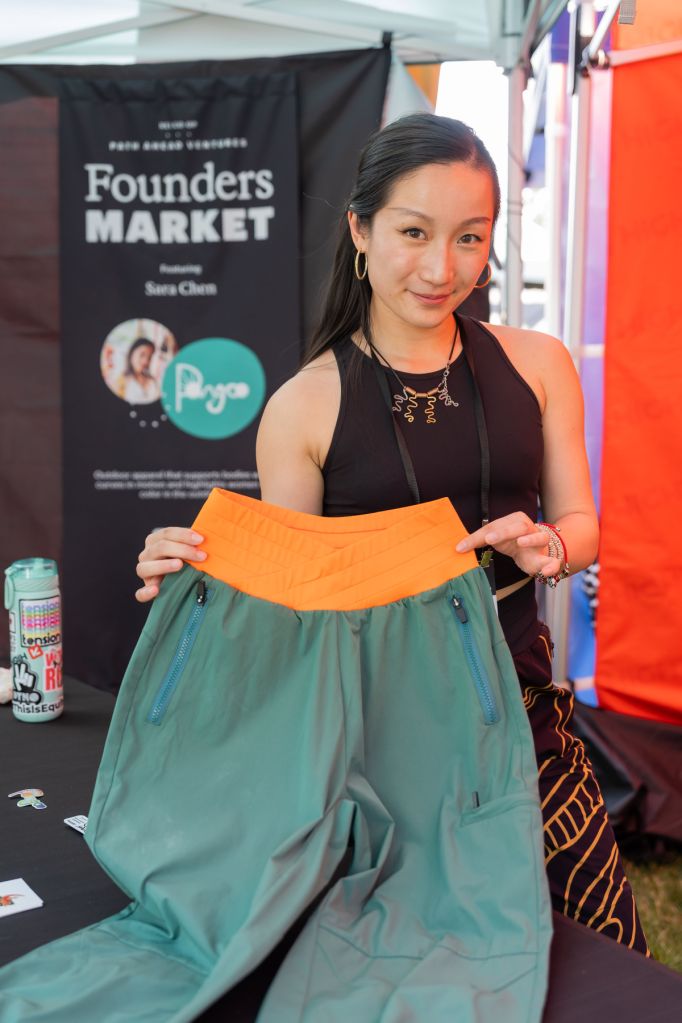
Sara Chen, Pangoo Apparel
Pangoo Apparel started in a moment of serendipity with a group gripe session at a climbing gym in Detroit. Sara Chen and a friend were commiserating about the state of women’s climbing pants: dull earth tones, cuts that never fit both hips and waist, useless pockets (if any at all). At that moment, says Chen, “Another woman walks over and says, ‘Are you guys talking about how terrible women’s climbing pants are?’” With that, Pangoo was ready to send.
Chen—who was doing product work for a streetwear startup at the time—started posting her design process online, and it resonated far and wide. Female climbers kept saying they had the exact same problems and asking when and where they could get a pair from Pangoo. “I did not anticipate the momentum we’d get,” says Chen. “The organic momentum.”
Within a year, she applied to PAV (another serendipitous moment: a friend sent her the application link) and launched Pangoo on the crowdfunding site Kickstarter. Despite having only sketches and early samples, Pangoo was accepted into the third PAV Embark cohort. Embark uplifts early-stage businesses, and was developed in partnership with Founded Outdoors. “PAV was absolutely a rocket ship for us,” says Chen. “There’s many folks in this network who are in the same category, but it’s never competition. It really is just this energy of mutual support and like, ‘How can I help you? How can you help me?’”
Pangoo moved into regular production in 2026, stocking the buttery soft, stretchy and curve-friendly Origin V2 pants. New products and accessories are in the works, but Chen is most excited about engaging with her Asian American community. “How we show up for this community is a big part of why I started this brand,” she notes. Take the name: Pangoo, the god who created the natural world in Chinese mythology, represents harmony between people and nature. Any Chinese or Asian American customers will recognize this name, she says, and—hopefully—recognize themselves in the brand.
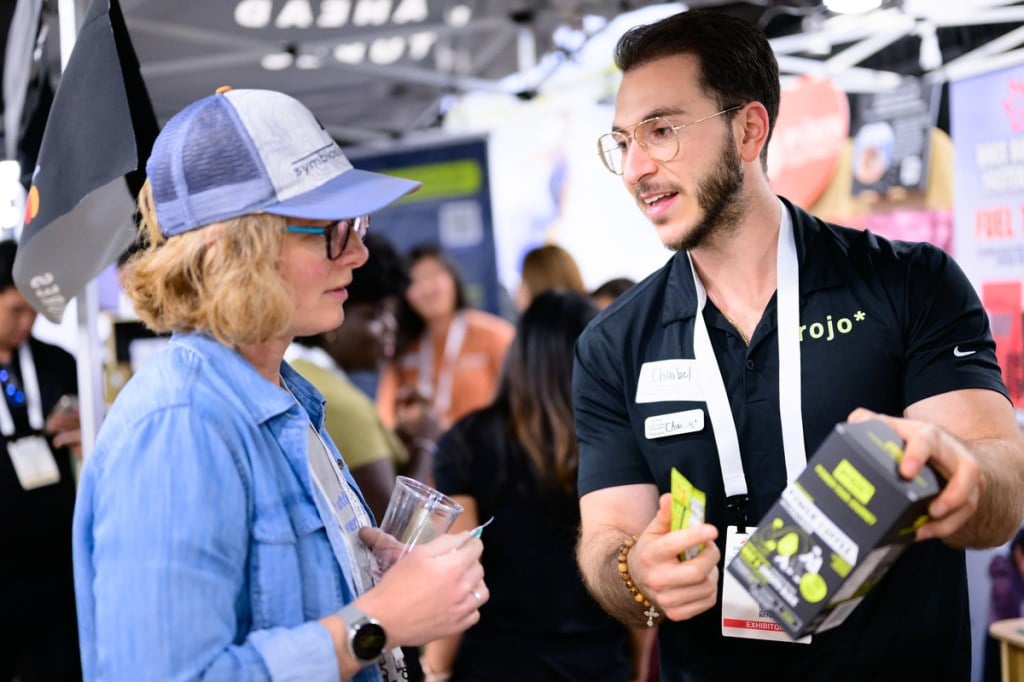
Charbel Mawad, Projo*
In 2019, Charbel Mawad learned that his then-friend Lisa Hermosillo couldn’t drink coffee without getting jittery and anxious, then crashing. For Mawad, who remembers tasting his dad’s strong black coffee in Lebanon at age 3, that wasn’t acceptable. “Coffee is deeply rooted in my culture,” he explains. “It’s part of my DNA. I had to know why this was happening to her.” Plus, he admits, he had a huge crush. “This was an opportunity to impress her.”
Mawad has a background in fitness and nutrition, so he started experimenting in his own kitchen, “whipping up formulas in a blender,” as he puts it. Diving into the research, he learned that consuming coffee alongside food can slow its absorption compared with drinking coffee on an empty stomach. He began testing combinations of coffee and protein, hoping to create a smoother coffee experience while adding nutritional benefits. It worked in more ways than one: Hermosillo found she could enjoy her coffee without the jitters and subsequent crash, Mawad’s own nutrition improved, and the two became Projo* cofounders—and a couple.
When their friends wanted the drink, Mawad and Hermosillo knew it was time to go bigger. They launched Projo* as a bottled, ready-to-drink coffee in 2019, and introduced instant coffee packets shortly after, directly marketing them toward hikers and outdoor enthusiasts. Those packets got Projo* into the Ascent cohort in 2024; within a year, it was one of four brands selected for help with building scale through the Navigate program. “I can’t say enough great things about what the PAV community and [the program] is doing for founders,” says Mawad. “They’re right there with us. We can always lean on the community as if we’re still in the accelerator.”
Now, Projo* is taking off nationwide. In 2026, the brand’s packets and cans launched at Target, with the cans in nearly every store across the United States and the packets in 900. Next up: about 130 REI stores in early 2027.
The name, for the record, is an acronym for the brand’s values: purpose, resilience, opportunity, journey and outreach. Mawad and Hermosillo take the last one seriously: They’ve supported organizations including Second Harvest Food Bank and World Central Kitchen and have also given back by offering entrepreneurship education at local high schools in Silicon Valley, where they both previously worked as special-education teachers. “Lisa and I both have this deep urge to give back—that’s actually how I convinced her to join me,” Mawad says. “We want to help people.”
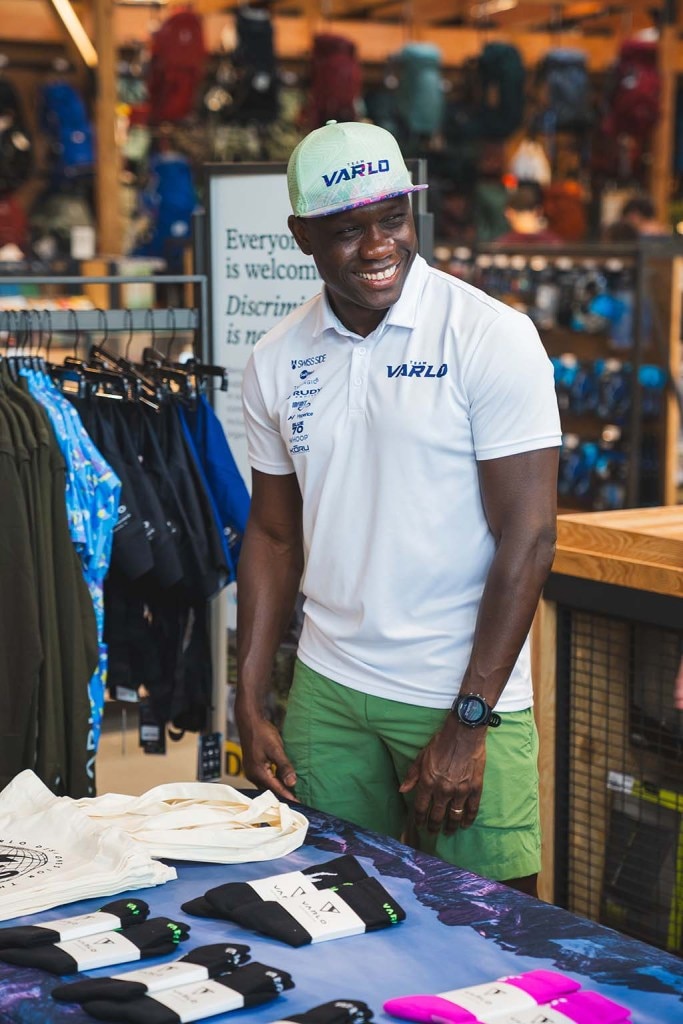
Soj Jibowu, Varlo
Soj Jibowu started Varlo, a triathlon and cycling apparel brand built for all bodies, in his basement. He heat-stamped shirts and made hangtags by hand, punching holes in cards from a local copy shop and threading faux-leather cord, all while his baby daughter crawled around the floor. He had quit his job in the medical devices space, sold a rental property to make sure his family had a savings cushion and gone all in. His wife was pregnant, and they had a 1-year-old at home. “I burned the boat,” he says. “It had to work.”
With no outdoor industry contacts, he drove to Barnes & Noble, combed through magazines for editors’ email addresses and cold-pitched them. He somehow wooed the universe: One editor wrote back, and Varlo landed a feature in Triathlete. Then, while researching the biggest outdoor retailers, Jibowu found an article about PAV. He found two REI leaders named in the article on LinkedIn and messaged them. Both replied within minutes.
Varlo didn’t get into PAV on its first try, but it was accepted the second time. When his cohort met, Jibowu told the group he was most excited about meeting other founders. “That was a gift in itself, being around other people who get what it’s like,” he says. “I learned so much.”
Since then, Varlo has moved from a windowless 800-square-foot space to more than 3,000 square feet, tripled its revenue, weathered tariffs and landed products on REI.com. But Jibowu still thinks of himself as “the basement kid,” and he’s building Varlo for everyone, whatever their background, size or shape. Triathlon, he argues, “only grows if you get new people, if you make it accessible, and if you get people feeling comfortable being themselves.”
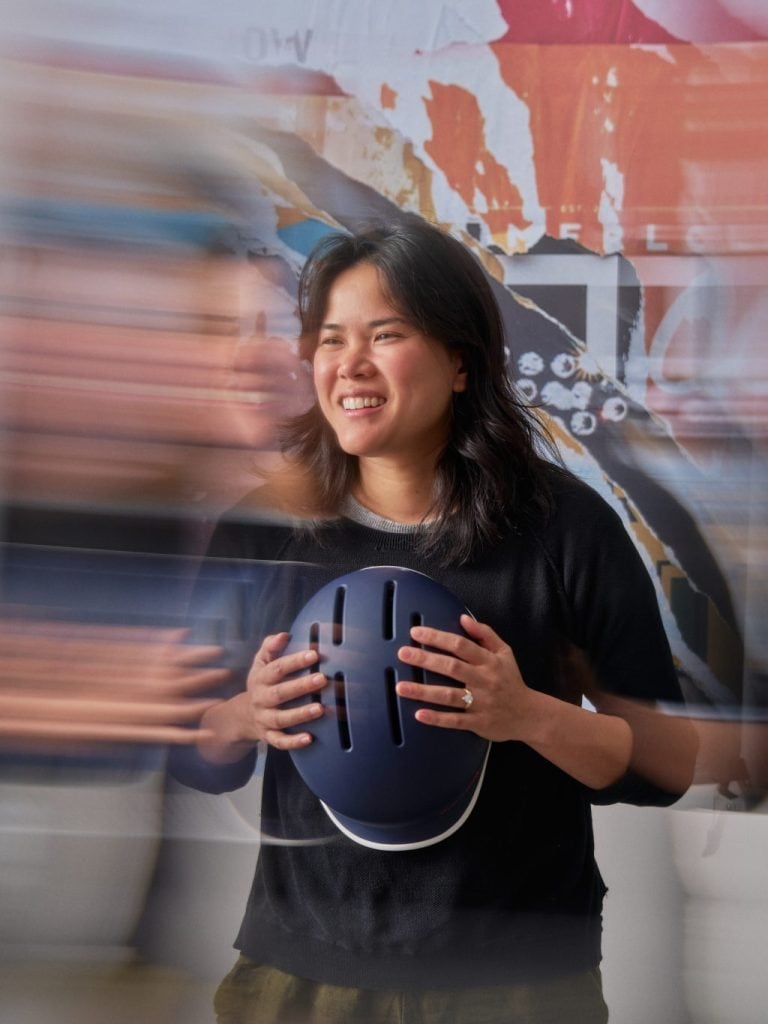
Gloria Hwang, Thousand
Gloria Hwang rode a bike for years without ever wearing a helmet. To her, helmets looked too goofy, even “sci-fi.” Then a friend and mentor died in an accident while riding around New York City without one. Hwang went shopping for a helmet she’d want to wear and came up empty. With her background in social impact and a long tenure at TOMS, she saw an opportunity: If you could design a helmet people actually wanted to wear, you could save lives. Her goal was to save 1,000 of them, and that’s where the company got its name.
Hwang helped start new projects at TOMS, but Thousand was her first business. She founded the brand in 2015 at age 27, after waffling between getting an MBA and starting a company. When she ran the numbers, she decided launching something would cost less and teach her more. “It was scary; I was doing it myself with my own money, with no backing and no experience,” she says. “But I figured I can always recover my savings account—I won’t always have the opportunity to do something big like this.”
A couple of years in, Hwang entered a pitch event for women founders, specifically because Susan Viscon was judging. Viscon announced on the spot that REI would carry Thousand in its flagship stores. Later, when Viscon was launching PAV and Thousand was raising money for the first time, REI saw an opportunity to invest. “You just don’t find this in the venture community,” Hwang says. In her view, PAV measures success by how much the businesses it backs grow, not by its own financial returns. PAV sits on Thousand’s board as an observer and brings the company new opportunities, offering ongoing support.
A decade on, Hwang takes her family on bike rides to a nearby Los Angeles creek almost every day. Thousand is growing with its customers, adding kids’ accessories and more, becoming a wider set of tools for urban travelers. The stylish helmet, Hwang says, was always “a symptom.” The real goal is to be “an entryway for more people to enter into cycling.”
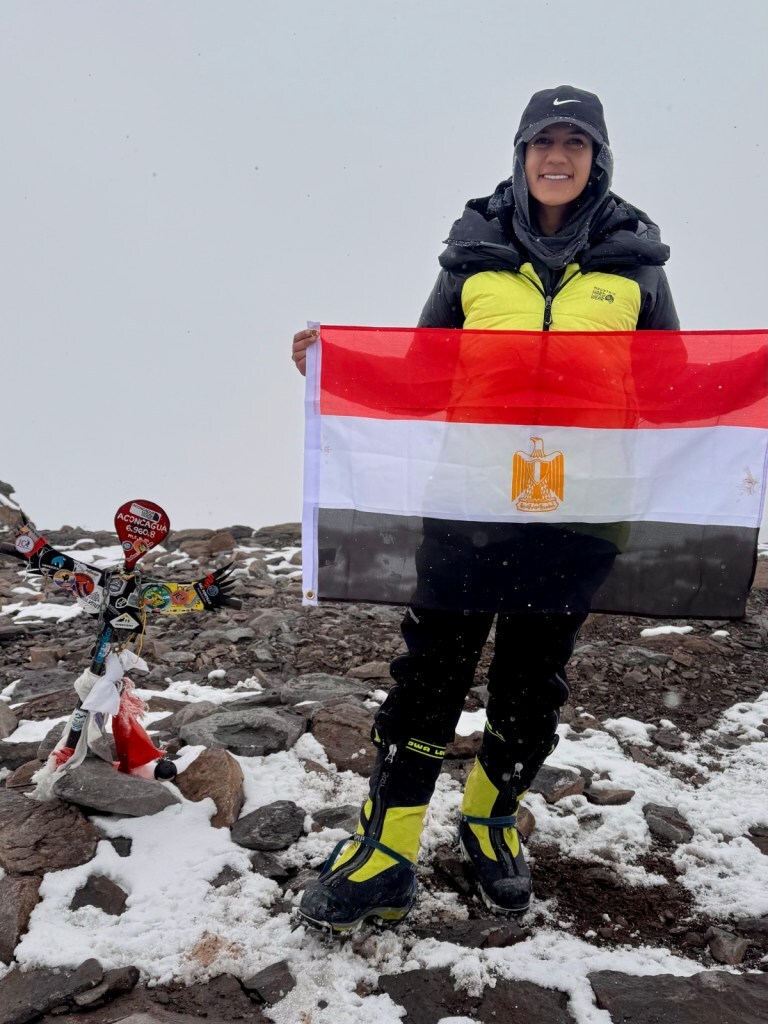
Nadah Feteih, Ma’wa Collective
Nadah Feteih calls herself an accidental entrepreneur. In 2022, the Egyptian American was laid off from her job as a software engineer, so she spent 10 months working through her travel and trekking bucket list, documenting her journey along the way on social media. As her following grew online, Muslim women started reaching out, wanting to travel with other women who looked like them. “I started a passion project and a side hustle that turned into a business,” says Feteih. “My goal was never to build a company.”
In 2023, Feteih launched Ma’wa Collective, which runs outdoor adventure trips for Muslim women. Year one, she says, felt like “assembling the train tracks as the train was running”: securing permits, training trip leaders and learning the industry from scratch. Then came another opportunity: The day before the PAV Embark application closed, a woman who had traveled with Ma’wa sent Feteih the application link. “I remember reading the page, and I was like, ‘Oh, hey, this is me,’” she says. She quickly pulled the application together and was accepted to Embark in 2024. Since then, she says, the PAV team has been an “amazing sounding board” as she builds an experiences company from the ground up.
As of 2026, more than 1,000 women have traveled with Ma’wa, and some trips draw waitlists in the hundreds. Next, Feteih plans to focus on five or six core destinations, including Iceland and Patagonia, and add more departures so more women on those waitlists actually get to go.
For Feteih, a Muslim woman who didn’t grow up hiking, access is the entire point. “There are a lot of communities that are craving, and deserve, access to the same outdoor experiences,” she says. “For folks looking to support initiatives like [Ma’wa] … even one conversation goes a long way.”