If you visit Seattle’s Lincoln Park, you just might find Alison Mariella Désir strolling around the wooded, waterfront green space in a weighted vest, her son by her side. While Désir is no stranger to intense exercise and endurance sports (she’s summited Mount Kilimanjaro), lately she’s found her stride, so to speak, in a lower-impact movement practice—walking for an hour or two a couple of times a week, when she finds the time. “You don’t have to put your body through the ringer to actually see benefits for yourself,” she says. And slowing down her pace means she can bring her kid with her, which makes it easier to find the time and easier to enjoy it once she’s out there—no matter how fast she’s going. “We’re being sold that we should optimize all the time, that we should be something different than what we are, [and] that’s really sad.”
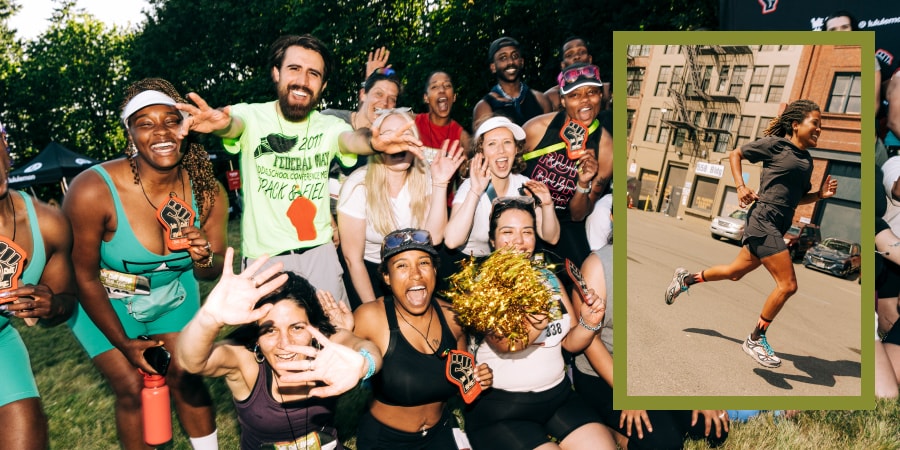
That instinct to remove barriers—to make movement more accessible and adaptable—is the thread running through everything Désir has built. In 2013, she founded Harlem Run, a New York City run collective, to give Black and brown runners—and those who felt like outsiders in the running world—a place to show up exactly as they are. Nearly a decade later, she published Running While Black, a memoir and cultural history exploring Désir’s personal relationship to running, the sport’s exclusionary racial history, and how greater inclusion in the fitness industry could serve as a model for broader social change. And last year, she founded the We Out Here Trail Festival, a trail race designed for runners from underrepresented communities. At its second annual event last month, 250 people registered and over 160 finished the race.
After more than a decade of this work, Désir thinks about movement not as performance or optimization, but as a practice of joy and longevity, as well as an opportunity for the sort of community-building that’s especially important right now.
Watch: Alison Shares Her 5 Running Essentials
Running Isn’t Therapy—But It Helps
Désir came to long-distance running as a form of mental health support. It was a lifeline during a period when she was struggling with depression. But as a trained therapist, she has always had a clear-eyed view of what running can and can’t do. “I think it’s important to have as many tools in your toolbox as you can,” she says. “Movement is one that I talk about a lot with my clients, but therapy is … a very intentional process. While running can also help you process your emotions, it’s just not the same—and they don’t have to be the same. There’s value in both.”
Désir also recognizes the limits of depending on movement as your primary form of mental healthcare, because bodies change, and as she points out, all of us will likely experience injury or disability at some point in our lives. “If you’re relying on movement as your single therapeutic process, then you’re confronted with really being devastated when that’s taken from you,” she says. “You want to have lots of different tools that can serve you across different needs, so you’re not stuck when you lose that.”
A New Relationship with the Outdoors
Five years ago, Désir left New York for Seattle, and the move reshaped her relationship with the outdoors. In New York, she says, winter often meant skipping runs due to extreme weather. In Seattle, when winter comes, people go snowboarding. “My eyes just opened to the many more ways that you can be outdoors and feel embodied through movement,” she says. “I realized that while running will always be probably the thing I love most, there are so many other ways to find joy in the outdoors.”
It also led to an unexpected opportunity to host her own local public television program Out & Back with Alison Mariella Désir presented by Cascade PBS. Now filming its fifth season, the show follows Désir as she explores communities across the Pacific Northwest and traced the deep roots that Black, Indigenous, and other people of color have in spaces that mainstream outdoor culture treats as its own. From lacrosse to cowboys to trail running, there’s a long history of historical erasure around BIPOC cultural traditions in the outdoor industry. “So many things that Black and Indigenous people have created have been co-opted and sold back to us as if they’re not for us,” she says. “Those histories are actually empowering when you go back and find out: We were there.”
Running in This Moment
If Désir is more at peace in her own movement practice than ever, she is also paying close attention to what is happening in the running world around her, and she sees an opportunity for more collective solidarity.
In Running While Black, Désir points out that running has never been a truly free act for Black Americans—that it has always involved a negotiation with public space. In the past year, that negotiation has only become more apparent. Between increased immigration enforcement, continued anti-trans legislation, and a rise in Islamophobia and xenophobia, being out in public, running, or enjoying outdoor activity, can feel especially unsafe. The rollback of DEI commitments across corporate America also means that many of the organizations and funding streams that supported inclusive running initiatives have disappeared, leaving runners from marginalized communities with fewer resources.
While these conditions have given way to a wave of resistance across the country—from neighborhood anti-ICE patrols to No Kings Day marches and mutual aid organizing, Désir says the dominant mood in running culture feels apathetic. In lieu of collective solidarity, she’s seeing an increased focus on gear drops, chasing PRs, and influencer content that treats the present moment as background noise and politics as irrelevant. “There’s a lot of fear, there’s a lot of danger—and yet there’s a lot of apathy and consumerism in running,” she says.
Part of the problem, she thinks, is that running is marketed as an individual sport, and individualism can be a powerful solvent for collective action. “Maybe … it taps into this American individualist piece that does not lead to collective action,” she says. “But what if we all banded together?”
Désir reminds us that we know this sort of collective action can work, because we’ve seen it have an impact before—just as we’ve navigated moments similar to this one before. There’s a reason what’s happening right now feels both urgent and familiar. “As a student of history and as a Black person in this country, I know that none of this is new,” she says. “History relies on our amnesia, or our feeling that we’ve already moved past this.” The antidote, she believes, lies in community-building.
Building the Culture She Wants to See
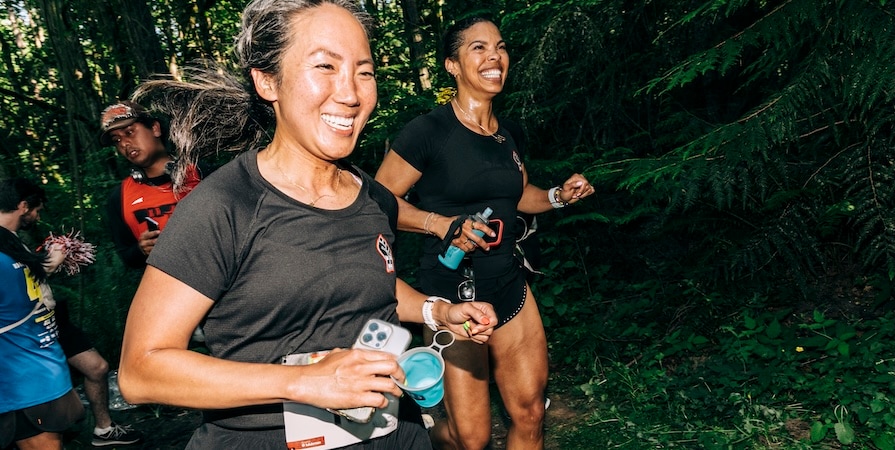
When Désir launched We Out Here Trail Festival, the goal was to open the space for first-timers with a focus on individuals from underrepresented communities. “It’s open to everyone,” she says, “but it comes with this warm invitation for folks like me.” REI was a sponsor of the race this year, which took place from June 12-14.
While Désir’s approach is a response to a dominant culture that hasn’t always served her, she sees her work as a way of expressing her joy for movement—not just her grievances about what isn’t working. “I do this because I love these spaces and I want more people to experience them,” she says. “As much as there’s critique, there’s also celebration, there’s warmth, there is a reclaiming. ‘Work’ is a verb—it’s active.”
Gear Guide
The Outfit She Bought in Three Colors
REI Co-op Swiftland Grid Running Top and REI Co-op Swiftland 5″ High-Rise Running Shorts
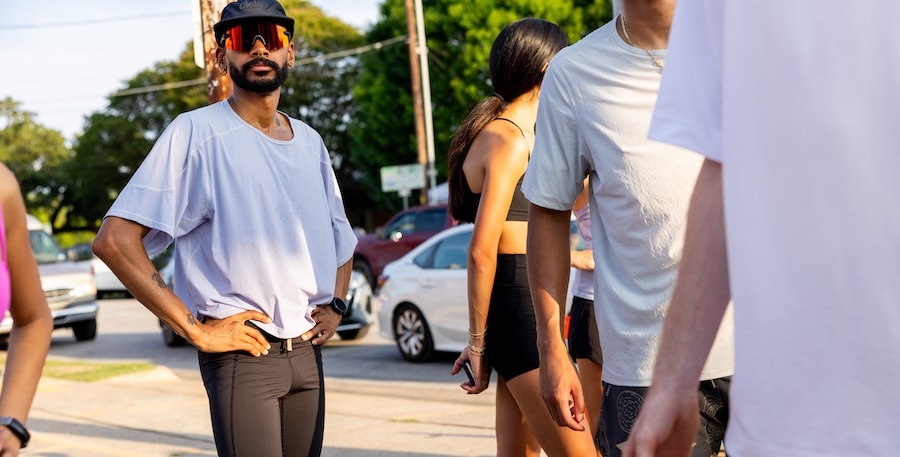
Désir tried one REI Co-op Swiftland outfit and immediately went back for two more in different colors. “I love it so much,” she says of the lightweight, moisture-wicking set. “It works. It’s cute. I need three of those.” For Seattle’s temperate spring and summer running, which aren’t too hot, but warm enough that you want something thin and breathable, she says it hits every mark.
The Jackets That Keep Her Moving Through Seattle Rain
REI Co-op Xerocloud 3L Rain Jacket and REI Co-op Swiftland Windshell Running Jacket (lightweight, packable)
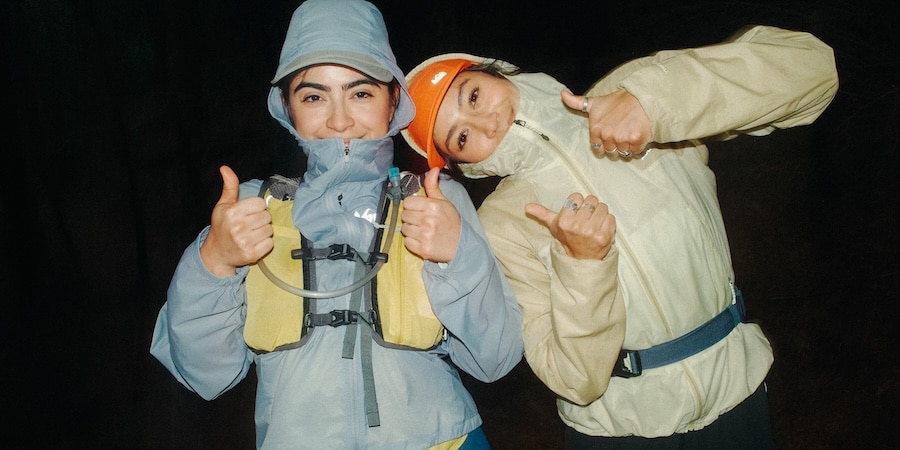
Moving to Seattle taught Désir the first rule of Pacific Northwest running: umbrellas are for tourists. “There’s a saying here: There’s no such thing as bad weather, there’s just the wrong gear,” she says. “I actually have a wide range of waterproof jackets now.” She relies on the REI Co-op Xerocloud 3L Rain Jacket for wetter days and the lighter, packable REI Co-op Swiftland Windshell Running Jacket for trail runs where conditions can shift quickly. “The weather can be one thing at the bottom of a trail and something else entirely closer to the top. Having the right jacket has been a game changer.”
The Socks She Never Knew She Needed
Balega Ultraglide No-Show Tab Socks

Désir stumbled onto Balega socks and hasn’t looked back. “I never thought that socks mattered so much,” she says, “but these socks feel so luxurious.” The Ultraglide No-Show Tab is built for high-mileage comfort, with a hand-linked toe seam, moisture-wicking Drynamix fiber, and cushioning at the heel and toe—the kind of upgrade that sounds small until the first time you put them on.
Shop the Balega Ultralight No-Show and Blister-Resist No-Show socks on REI.
The Fuel She Always Carries
GU Energy Gel (Sour Peach) and GU Roctane Energy Drink Mix
Whether she’s out for 30 minutes or two hours, Désir keeps a GU gel in her pocket. “Even when I don’t intend to be out for a long time, I always want to make sure I have something with me,” she says. Her go-to flavor is Sour Peach. For longer efforts, she pairs it with GU Roctane hydration mix (for an alternative, you can shop the GU Roctane energy gels on REI).
The Pack That First Unlocked Her Freedom
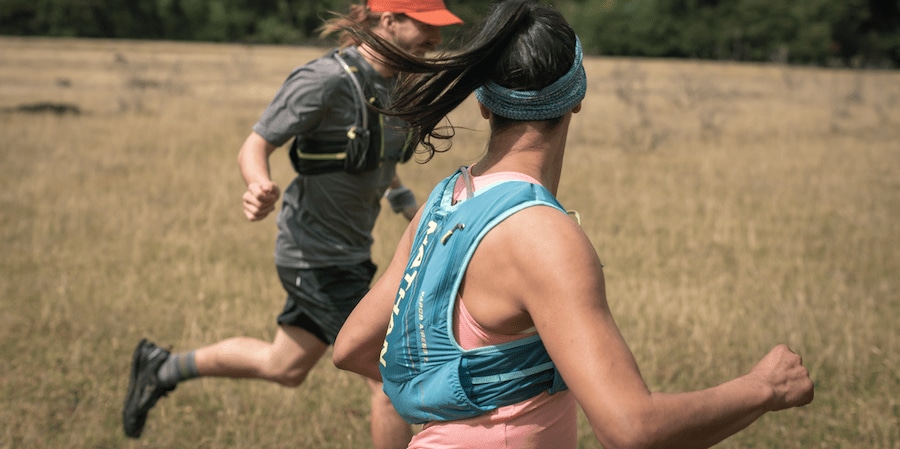
Before she discovered the freedom of being fully self-sufficient on the run, Désir was at the mercy of water fountains in New York’s Central Park. Her Nathan hydration pack changed that calculus. “Being able to have your hydration, and not hope and pray that the water fountain is on just unlocks more freedom,” she says. It was the gear revelation she still credits with expanding what felt possible on a long run.
Alison Mariella Désir is the author of Running While Black and the founder of the We Out Here Trail Festival. Follow her on Instagram @alisonmdesir.