Fitness isn't just about the amount you exercise, it's also about the intensity of that exercise. Having access to accurate biometric data is crucial to meaningful, effective workouts. A heart rate monitor (HRM) is your pacer. By giving you real-time information about your level of exertion, a HRM can help you better understand yourself as an athlete and make decisions around pacing. This is especially crucial when it comes to zone training.
We spoke with experts, including product copy editor and ultrarunner Yitka Winn, REI sr. category merchandise manager Danielle Deal, and Garmin sales manager Marcus Lewis to help us understand the factors involved in selecting the model of HRM for you. This article covers the best model of HRM. This article covers:
- Types of heart rate monitors: Heart-rate monitors use sensors located on a chest strap, an armband or your wrist.
- Chest-strap monitors are the most accurate because they measure your heart rate electronically.
- Wrist-only and armband HRMs can be more comfortable and convenient, due to placement and lower weight.
- Monitor Features: Functionality varies from model to model. We highlight key features below, including additional run dynamics, navigation, and durability.
- How to use an HRM and who should use one:
- Heart rate target zones are the critical data an HRM provides. The most accurate way to calculate yours is through a lab test, but there are also self-administered tests and formulas suited to your age and fitness goals.
- User notes highlight additional considerations, including how optical sensor readings (in wrist-only and armband monitors) may be affected by skin tone.
- Our Expertise: The experts who contributed to this article and their relevant background to shopping for heart rate monitors.
For additional help deciding whether a heart rate monitor is the right tool for you, read How to Choose a Fitness Tracker. To see our rankings for the best heart rate monitors sold at REI, check out Best Heart Rate Monitors: Tested.
Editor's note: We updated this guide on April 26, 2026, to include new information about types of heart rate monitors sold at REI, as well as about skin-tone and other user considerations.
Types of Heart Rate Monitors
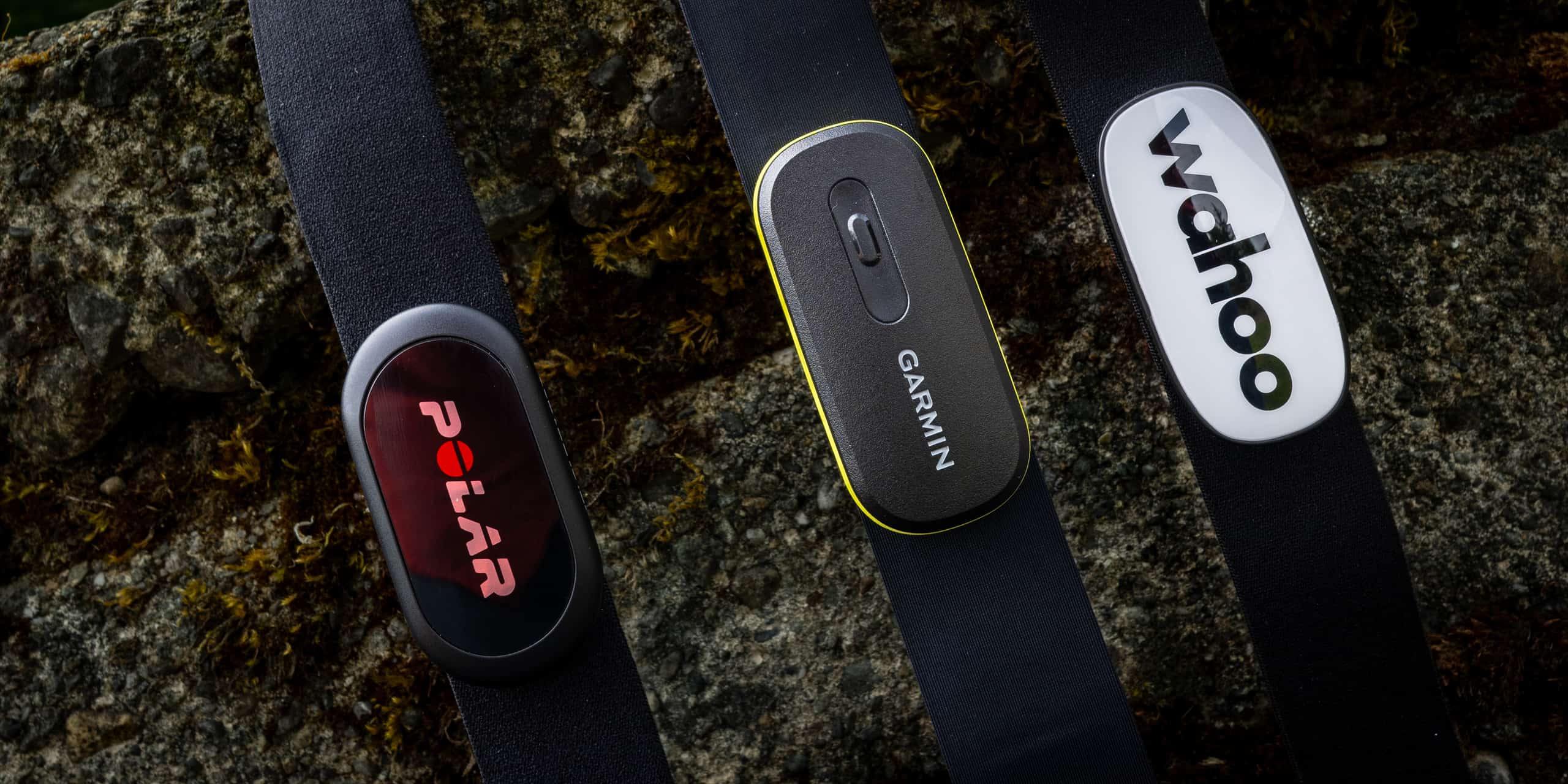
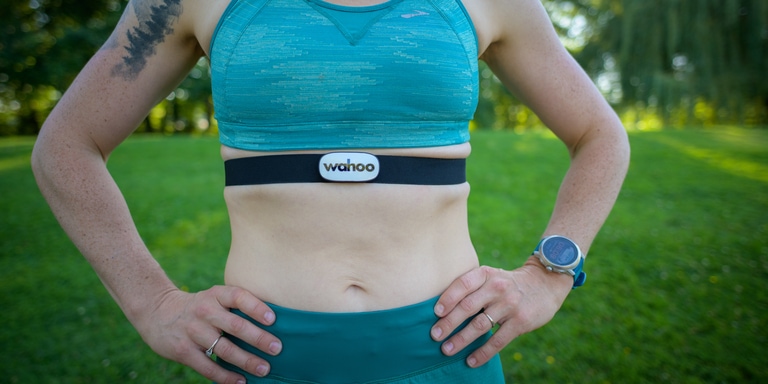
Chest-strap HRMs: A wireless sensor on a chest strap detects your pulse electronically. These are the most accurate devices. However, they do not have built-in displays and need to be paired with a receiver, e.g., your smartwatch, to show your heart rate. Once you get used to the routine of putting on the heart rate monitor chest strap and working out with it on, you’ll be good to go. . Some can also broadcast to GPS cycling computers. This gives the advantage of not having to look at your watch as you ride. It also integrates with fitness data through Strava, Garmin Connect and other fitness software platforms.
Wrist-based HRMs: An LED optical sensor built into the wrist unit's watchband or case back detects your pulse. The downside is that these models are the least accurate. For example, runners can experience “cadence lock,” which is when the HRM confuses a runner’s pace with their heart rate; swimmers will find water interferes with the sensors. These models do have their perks, however: they avoid the discomfort and additional pre-workout fuss associated with chest straps; have a built-in monitor; and can be worn 24/7 (except when charging), which helps with tracking heart rate at a more detailed level, resulting in more recovery and sleep data. Shop wrist-only HRMs.
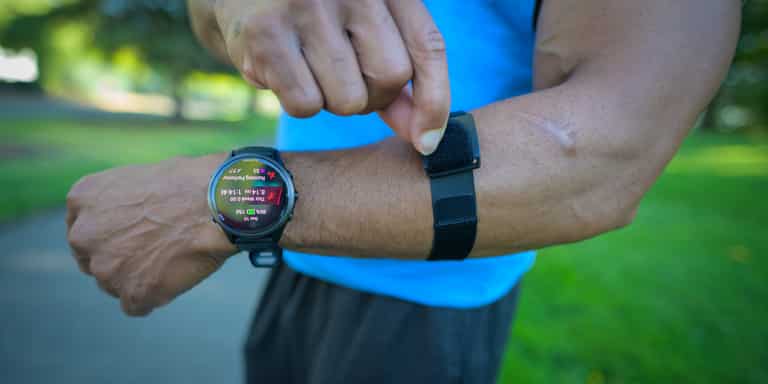
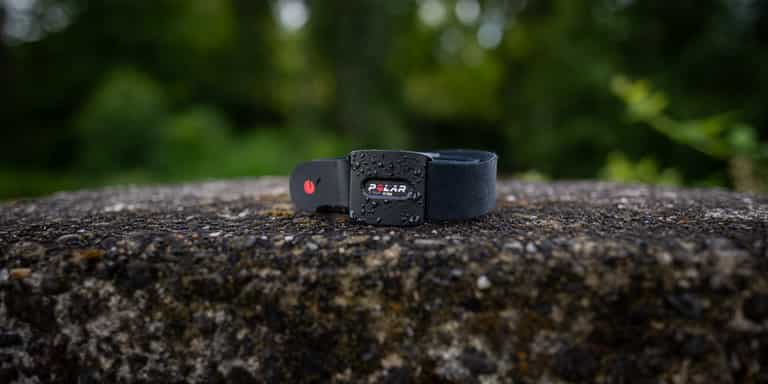
Armband HRMs: More accurate than a wrist-top model, less fussy than a chest strap, many runners leveling up their data game opt for an armband HRM, which fits snuggly on your upper arm, which is often a relief for those who wear sports bras. Like wrist-based HRMs, armband monitors use LED optical sensors to determine your heart-rate; unlike wrist-based HRMs, they do not have the issue of cadence lock, and some models are swim-friendly.
For some buyers, a wrist-only heart rate monitor is the beginning of their biometric journey. Notably, all of our top picks for best heart rate monitors of 2026 are either chest-strap or armband HRMs. We find it’s not uncommon for such novice athletes to eventually level up, adding an external device—chest-strap or armband HRM—to pair with their device to get more accurate heart-rate readings.
Heart Rate Monitor Features
Basic HRM models time your workout and give you continuous, average, high and low heart rate data, as well as the high, low and target heart rate reached during your workout.
Some armband and chest-strap models can track distance and steps. Wrist-only monitors have almost limitless bells and whistles, such as target zones, calorie counters, sleep tracking, and elevation and navigation functionality. Here are some of the features you might consider:
Battery life: When not in GPS mode, wrist-only models can last several weeks; in GPS mode, their battery life more closely resembles a rechargeable chest-strap or armband model, where the active battery life ranges between 30 and 110 hours. Non-rechargeable models, which use a user-replaceable coin-cell battery, can last up to 400 hours before you must replace the battery.
Tethering: Because they do not have a display screen, chest-strap and armband HRMs will need to be paired with a compatible device, e.g., watch, bike computer, smartphone, or stationary bike or other gym equipment. Models that offer an ANT+ data exchange will have a more reliable connection than those that are bluetooth-only.
Swim-compatibility: Many models are water resistant up to a certain depth. However, not all water-resistant models are swim-compatible, as the water can interfere with optical readings, especially on wrist-only models.
Stride data: By tracking ground contact time, a device can show a runner how evenly split their stride is. Other run dynamics include step speed loss, stride length, and vertical oscillation for those particularly invested in understanding their running economy.
Sport-specific features: These can include speed and cadence feedback for cyclists and runners or pool-lap counters and stroke recognition for swimmers.
Target zones (wrist-only models): Basic models offer up to 3 target zones; advanced models have from 3 to 6 target zones. With the capacity for multiple target zones, you can preprogram your heart rate monitor for a series of different workouts (e.g., endurance, aerobic and anaerobic variations). If your HRM offers only a single aerobic target zone, you'll need to reprogram it every time you want to change the exercise parameters.
Sport watch (wrist-only models): Heart rate monitor watch models include features such as a clock, alarm, countdown timer and calendar.
Stopwatch and lap/split times (wrist-only models): After each lap at a track or every mile on a marked-distance race course, hit the "Lap" button to see how your pace has changed throughout your workout or race (a.k.a. your "split").
Recovery heart rate mode (wrist-only models): Tracks the time it takes your heart to return to its normal, resting rate. It's a good indicator of cardiovascular fitness and especially important if your workouts include sprints or interval training.
Time in target zone (wrist-only models): Tracks the time you spend exercising within your target zone. Some zones and goals require more time than others.
Calorie counter (wrist-only models): Estimates the calories burned during exercise. This can be especially handy if your workouts are part of a weight-loss program.
Speed and distance monitor (wrist-only models): Calculates the speed and measures the distance covered in a particular workout. This is typically done via a GPS receiver for outdoor use or a foot pod for indoor use or use in an outdoor area with limited satellite reception. A foot pod uses an accelerometer to determine the length of each stride.
Fitness trainer (wrist-only models): Provides alerts for intensity levels that fall above or below your chosen training zones.
Heart Rate Target Zones
A key benefit of an HRM is that it helps you maintain the optimal heart rate target zone for your specific goal. Higher-end models inform you of this via a digital display and/or an audible tone.
The target zone is a percentage range based on your maximum heart rate (HR max). It's always best to have a stress test in a lab under a physician's supervision to determine your actual HR max, but if an official test is inaccessible to you, there are various algorithms that have been developed to calculate an HR max estimate. The classic 220 - your age formula is now considered inaccurate for older people and those assigned female at birth. A revised formula, 208 - 0.7 x your age, is better. These formulas will usually get you within 10 bpm of your actual HR max.
The American Heart Association chart below offers a broad overview of HR values for target training zones and average HR max values. For more details on calculating your personal HR max and how training zones work, read How to Train Using Heart Rate Zones.| Range of Target HR Zones(50-85% of HR Max) | Average HR Max (100%) | |
|---|---|---|
| Age | Beats/minute | Beats/minute |
| 20 | 100-170 | 200 |
| 30 | 95-162 | 190 |
| 35 | 93-157 | 185 |
| 40 | 90-153 | 180 |
| 45 | 88-149 | 175 |
| 50 | 85-145 | 170 |
| 55 | 83-140 | 165 |
| 60 | 80-136 | 160 |
| 65 | 78-132 | 155 |
| 70 | 75-128 | 150 |
Does skin tone affect the accuracy of heart rate monitors?
That wearable tech has a pattern of racial bias has been well documented in scientific literature as well as mainstream journalism. Simply put, not all heart-rate-monitor technology is designed with darker skin in mind, which means users with melanin-rich skin (as well as heavy tattooing) may get less accurate readings. Because this problem is specific to optical light sensors, only wrist and arm models of HRMs are affected; chest-strap models, with their ECG sensors, are universally accurate. However, not everyone finds chest-strap models convenient or comfortable. If you are a person with darker skin looking for an HRM model with optical light sensors, we recommend choosing an armband model over a wrist-based one. With their snugger fit, as well as limited motion while in use, armband models will be far more accurate than wrist-based ones. If your arms are heavily tattooed with dark ink, you’ll be better off avoiding optical sensors altogether, instead opting for a chest strap HRM. Our Best Heart Rate Monitors tested gear guide only features chest strap and armband monitors.
Who Should Use a Heart Rate Monitor?
Note: Before initiating any exercise program, consult a physician to design a program that is well suited for your goals and current conditioning.
Joggers and walkers: Recreational exercisers can benefit from heart rate monitors in the same way elite athletes do. By aiming for fat-burning and aerobic target zones on your HRM, you can get more out of your exercise time.
Runners: A heart rate monitor can keep you in your peak target zone on intense training days and at your aerobic base during easier sessions.
Cyclists: An HRM can track your training performance during endurance, tempo and interval rides, whether you bike on a road, trail or stationary trainer. Some models deliver more feedback via a cadence sensor or foot pod.
Triathletes: In addition to cyclist-related features, some HRMs monitor swim-related data like distance, pace, stroke type/count and number of pool lengths.
Hikers, climbers and skiers: Use a heart rate monitor to condition more effectively for a peak ascent.
Weight-loss participants: HRMs help with regular exercise and a sustainable dietary regimen. Most display calories burned during a workout; many can help target your exercise for maximum fat burning.
Injury-rehabilitation patients: Real-time feedback makes HRMs valuable for patients recovering from an injury or an illness, including a cardiac incident. Such data can help ensure that your gradual return to full strength and endurance proceeds safely and steadily.
Our Expertise
Yitka Winn is a product copy editor at REI, guidebook author, former associate editor at Trail Runner magazine and four-time winner of Cascade Crest 100.
Danielle Deal has been a buyer at REI for 10 years, and is pretty sure she has the coolest job. Currently, her merchandise focus includes nutrition, wellness and electronics.
Marcus Lewis has been a sales manager at Garmin for 11 years. To get answers to REI's questions about heart rate monitors, he consulted with some amazing teams at Garmin — from engineering and sales to public relations and marketing.
Bee Sacks is a writer based in Los Angeles. Their reportage and service journalism has appeared in Vanity Fair, Elle, The Paris Review, and Departures.