Ready to take your training to the next level? Or, looking to help rein in your effort level on your “easy” days? While heart rate isn’t a perfect proxy for effort, it’s a pretty darn good one—and wearing a heart rate monitor is one way many athletes help track progress and fine-tune their training efforts.
These days, many GPS watches and fitness trackers come with wrist-based optical heart rate sensors built in. While this is a nice feature, the accuracy level can be highly variable. Runners, for example, often experience “cadence lock”—when the watch mistakes their cadence (steps per minute) for their heart rate; this can cause the watch to report heart rate as much higher than it actually is. And for swimmers or other watersports enthusiasts, water can interfere with optical sensors, also leading to inaccurate readings.
Enter the external heart-rate sensor: an invaluable tool if you’re wanting accurate and reliable heart rate data to help guide your training.
My Expertise: I’m a lifelong runner and started using a heart rate monitor a decade ago, which has helped improve my fitness, find new joy in training and ultimately propel me to many new PRs on roads and trails alike. I also work as a product copy editor at REI, so I spend much of my working life writing about outdoor gear.
My Testing Process: For this article, I tested out a slew of external heart rate monitors sold at REI—including both chest straps (electrocardiogram, or ECG, sensors) and armbands (LED-based optical sensors)—over an eight-week period of running, rowing and swimming. I evaluated and scored each monitor based on the following factors: accuracy, general functionality, connectivity, comfort/fit, battery life, internal memory, multi-sport capability, durability and value.
Test Results
Find my quick recommendations here or read on for the full breakdown on all six heart rate monitors.
- Polar Verity Sense Optical Heart Rate Sensor (Armband + Swim Goggles Clip) - 2026 Editors' Choice Award Winner
- COROS Heart Rate Monitor (Armband)
- Wahoo Fitness TICKR FIT Optical Heart Rate Monitor (Armband)
- Wahoo Fitness TRACKR Heart Rate Monitor (Chest Strap)
- Polar H10 Heart Rate Sensor - M-XXL Strap (Chest Strap)
- Garmin HRM 600 Heart Rate Monitor (Chest Strap)
Read more about my testing process go to buying advice or see notes on the monitors featured in this guide.
Our Favorite Armband Heart Rate Monitors
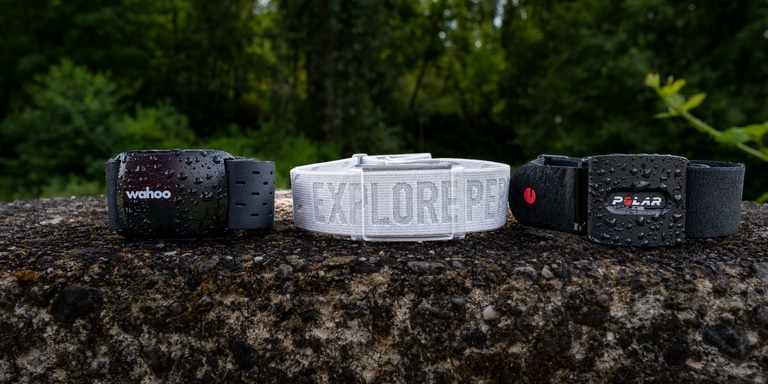


Polar Verity Sense Optical Heart Rate Sensor
Score 97
Active battery life Up to 30 hours (rechargeable)
Data exchange ANT+ and Bluetooth
Simultaneous device connections 2 for Bluetooth; no limit for ANT+
Internal memory Multiple sessions, up to 600 hours
Water-resistance rating 5 ATM (50 meters)
Swim compatible Yes
Best for Swimmers, multi-sport athletes, runners, cyclists
There is so much to love about the Polar Verity Sense Optical Heart Rate Sensor. It can be worn on your bicep, forearm or—for swimming—at your temple. It offers three different modes:
- Transmit: displays heart rate in real time on your paired device
- Record: captures heart rate data without an actively paired device
- Swim: records heart rate data underwater (with the sensor clipped onto your swim goggles strap)—as well as recording swim distance and pace in a lap pool
The Verity Sense earned high marks for accuracy, comfort, multisport versatility, rechargeable battery, internal memory (a feature only three of the six monitors reviewed here have) with up to 600 hours of training data storage—as well as the ability to handle two simultaneous Bluetooth connections. For its outstanding performance in testing, the model earned an Editors' Choice Award in 2026.
Depending on the width of your arms and whatever you find most comfortable, you can wear the armband either around your bicep or your forearm. In my testing, placement on my arm did not impact accuracy at all, as long as I ensured the band was comfortably snug on my skin. This monitor is compact and practically weightless: 5 grams for the sensor itself; 19 grams (less than an ounce) when also accounting for the strap. Even the charger it comes with is tiny, and plugs directly into any USB-A port.
Personally, I find armband monitors more comfortable to wear than chest straps—and the stretchy band the Verity Sense comes with was especially comfortable, even when worn tightly against my skin. As a bonus, the strap is machine-washable, which is somewhat unusual (most heart rate monitor straps are hand-wash only). Just remember to detach the sensor from the armband before tossing the strap in with the rest of your laundry.
The swimming goggle clip adds additional versatility, making the Verity Sense the only optical sensor in our test designed to work in water. (Not a swimmer? Neither was I, until earlier this year when a running injury sidelined me for several months and I came to appreciate my local pool.) The Verity Sense also has a gyroscope that helps it track distance and pace in swimming mode—so if you don’t already have a device that can record those metrics in the pool, this heart rate monitor has you covered. I did find the accuracy slightly less reliable in water than during my running sessions on land, particularly in registering rapid increases in heart rate. Otherwise, the device is a simple-to-use tracker for lap swimming. And its accuracy on land, when worn in its armband configuration, is impeccable. Buy here.
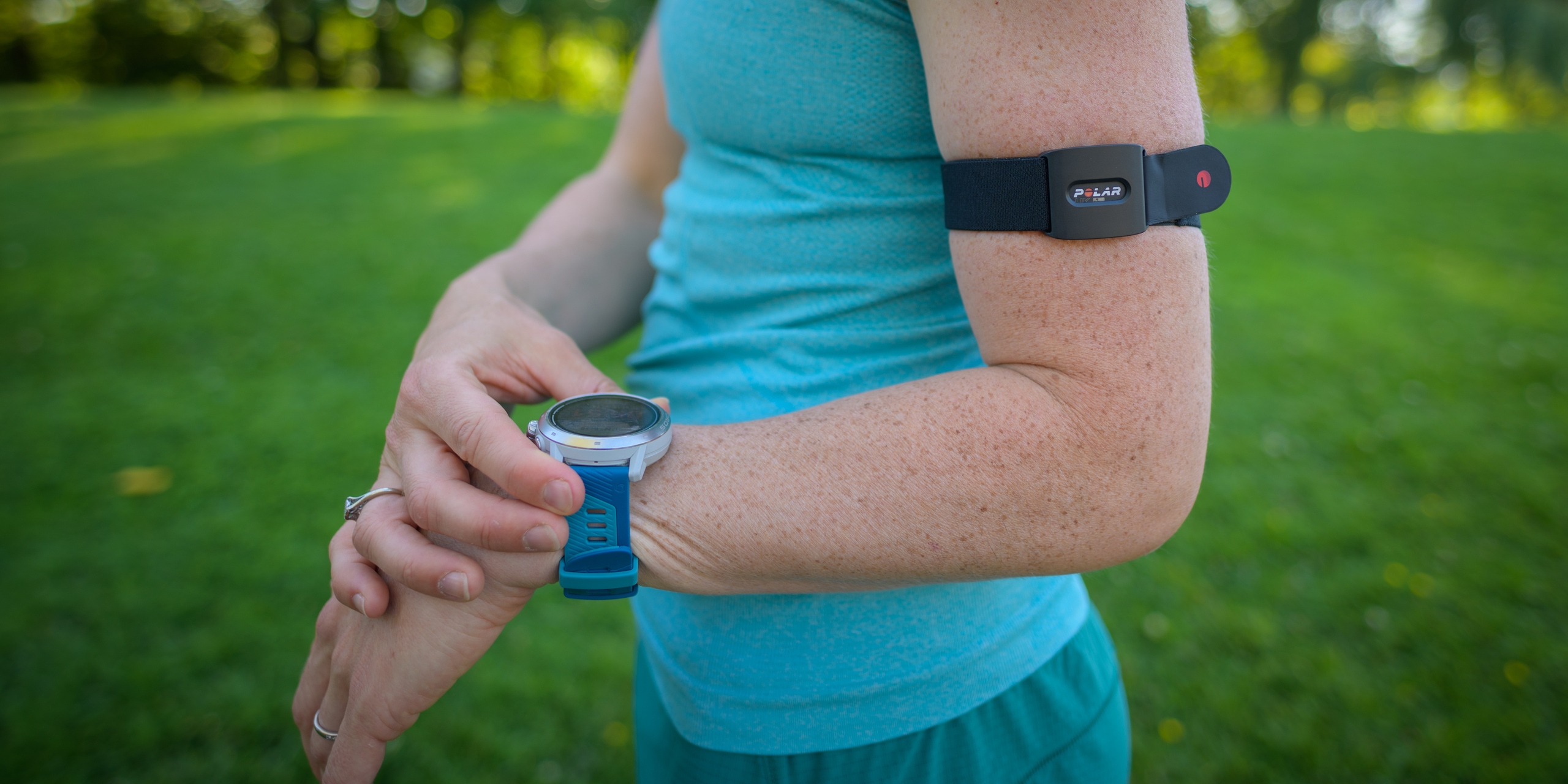
Bottom Line: The Polar Verity Sense optical sensor heart rate monitor earns top marks for comfort, ease of use and incredible versatility, with multiple wearing options. It’s compact and offers excellent functionality both in and out of the water.


COROS Heart Rate Monitor
Score 92
Active battery life Up to 38 hours (rechargeable)
Data exchange Bluetooth only
Simultaneous device connections 3
Internal memory None
Water-resistance rating 3 ATM (30 meters)
Swim-compatible No
Best for Runners, long training sessions, value
The COROS heart rate monitor doesn’t have all the bells and whistles of many of the other heart rate monitors featured here, but it makes up for all that in comfort, accuracy and, like other COROS products, an excellent battery life at a lower price than its competitors.
Designed to be worn on the upper arm, this heart rate monitor is simple, easy to use and elegant. It sports a slim profile and no flashy logos (there’s just a subtly embossed mantra: “Explore Perfection”). You don’t even need to worry about remembering to press an on/off button; the device recognizes when it’s on your arm and connects effortlessly to your paired devices, then turns itself off when your workout’s over. As someone who loves to just get out the door and go, I really appreciate the simplicity of the COROS monitor. Especially if you already own a COROS watch, adding this armband is a great way to ensure far more accurate heart rate data.
That said: A functional downside worth calling out is that, unlike other monitors reviewed in this article, the COROS monitor does not support ANT+ connections—so it may not pair with “non-smart” gym equipment like treadmills, stationary bikes or indoor rowing machines that aren’t Bluetooth-enabled. And while it does have a Bluetooth chip that can support up to three simultaneous connections, there are a number of Bluetooth-capable devices that it’s not compatible with (including some heavy hitters like Fitbit, Peloton treadmills and some older Garmin devices). The COROS website maintains a non-comprehensive list of compatible devices (such as any COROS brand watch, Apple watches, many newer Garmin watches and cycling computers) as well as known non-compatible ones.
Because this COROS monitor was my personal introduction to armbands as an alternative to chest straps, I admit I might be partial to it. It’s been my dutiful training companion on numerous workouts and trail races, so I can personally vouch for its durability over several years of heavy use. The strap comes in several color options, which show dirt and dust a little more readily than other heart rate monitors reviewed here (which all feature black straps), but the COROS strap can be washed by hand or machine. Just be sure to remove the sensor first—and if machine-washing, consider using a mesh laundry bag.
The lack of ANT+ support is part of the COROS secret sauce for above-average battery life on their suite of devices—and likely also part of what keeps their prices more competitive in the landscape of wearable tech. Buy here.
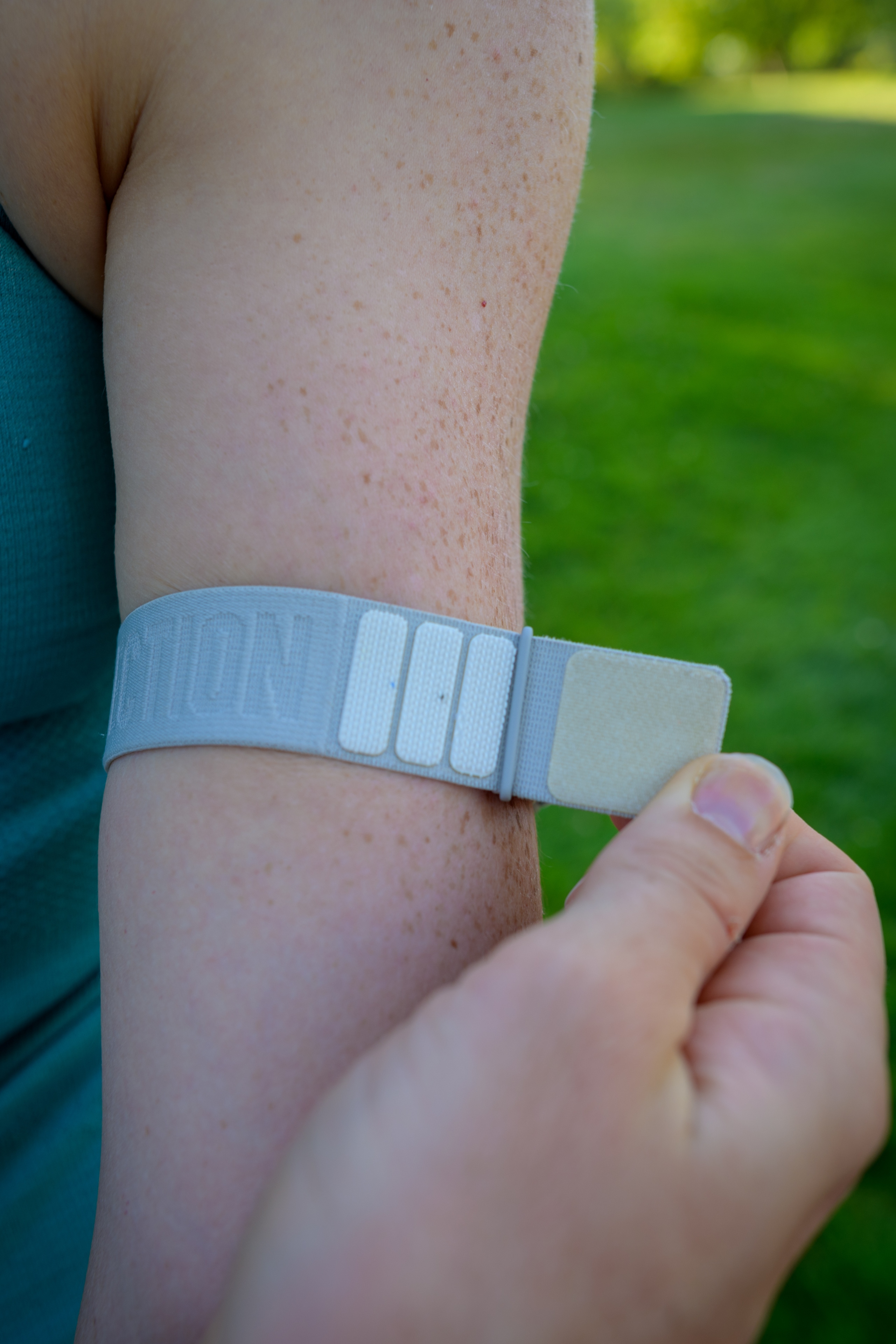
Bottom Line: The COROS heart rate monitor delivers great value for accuracy, comfort and excellent battery life. Since it is less universally compatible than other monitors, check device compatibility before deciding if it’s the best option for you.


Wahoo Fitness TICKR FIT Optical Heart Rate Monitor
Score 92
Active battery life Up to 30 hours (rechargeable)
Data exchange Bluetooth and ANT+
Simultaneous device connections 1 for Bluetooth; no limit for ANT+
Internal memory None
Water-resistant depth 1 meter
Swim-compatible No
Best for Cyclists, runners, long training sessions, adjustability
Right out of the box, the Wahoo Fitness TICKR FIT Optical Heart Rate Monitor has a nice, premium feel to it. The strap doesn’t have quite the same stretch as the COROS or Polar armbands, but its material feels supersmooth on the skin. Small perforations in the fabric help it breathe nicely (i.e., no sweat pooling under the band) and I found it so comfortable that most of the time, I forgot I was even wearing it.
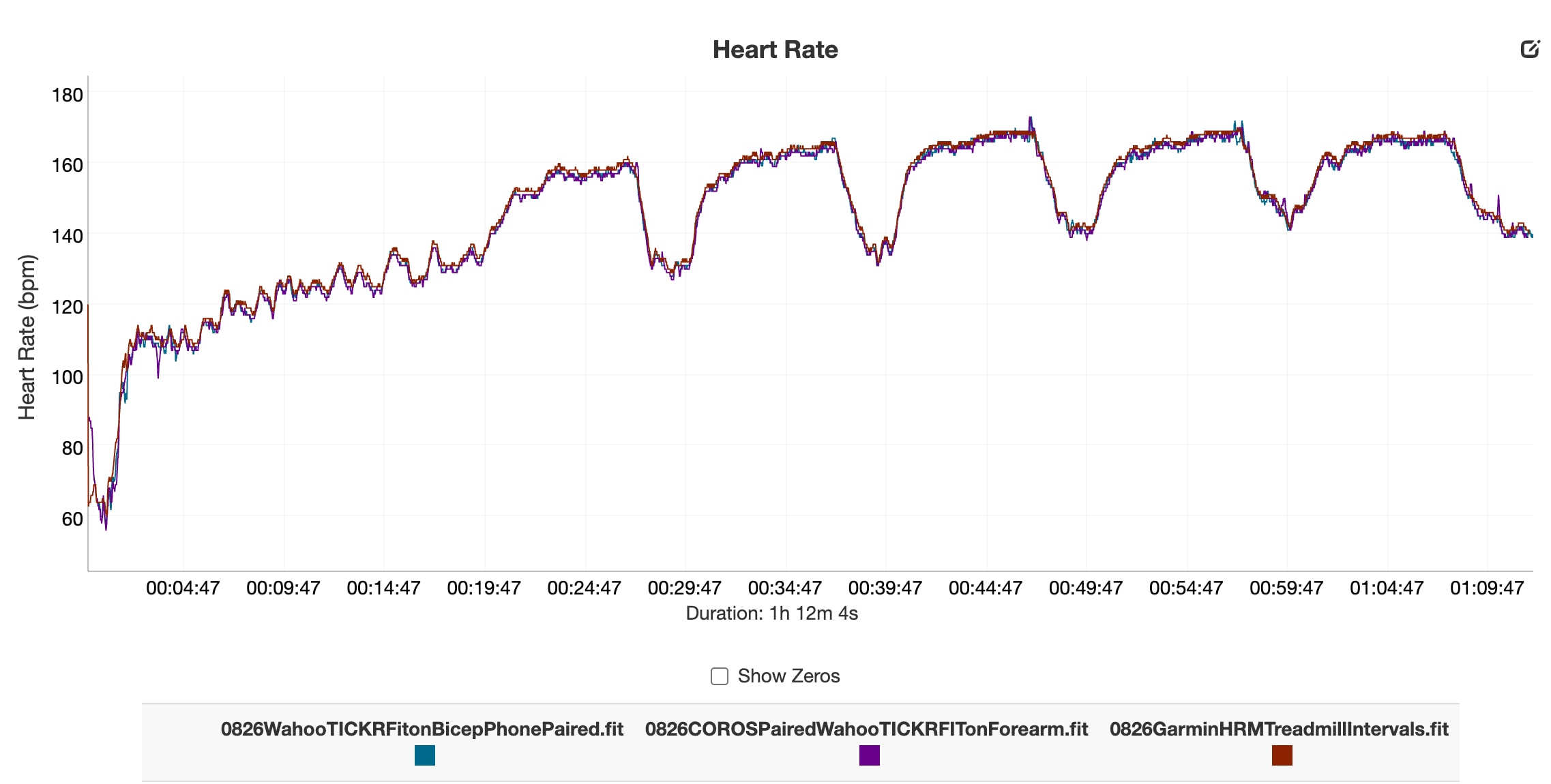
For accuracy, Wahoo recommends placing the TICKR FIT on the upper forearm, just below the elbow and with the sensor placed on either the inside or outside of the arm. However, I found that the sensor provided equally accurate readings when worn around my bicep. I tested this by wearing one TICKR FIT on my left bicep and one TICKR FIT on my right forearm during the same workout, then comparing the data sets in an overlay graph afterward.
Unlike the COROS, this monitor features an on/off button, as well as an LED light with a variety of colors to indicate pairing mode, connection status, battery and charging status, etc. Although the battery life of most sensors can be checked on a paired smart device, I do appreciate the extra visual cue on the sensor itself when the battery is running low.
Otherwise, this one isn’t quite as feature-packed as some of the others in this review. There’s no internal memory, it doesn’t support simultaneous Bluetooth connections, and while it is IPX7-rated for water resistance (i.e., it’ll survive rain and sweat), the TICKR FIT is not designed for wear while swimming. Nevertheless, bells and whistles aside, the TICKR FIT earned high marks for accuracy, comfort/fit, ease of use and dual-band (ANT+ and Bluetooth) connectivity. Another standout feature of the TICKR FIT is that it comes with two different armbands, both adjustable—a shorter one (10 inches long) and a longer one (15 inches long)—so you can use the one that fits most comfortably around your arm. Including multiple strap sizes with purchase is a nice boost for versatility, body inclusivity and—if both straps fit you comfortably, as they do for me—having backup options in case you misplace or wear one out. Buy here.
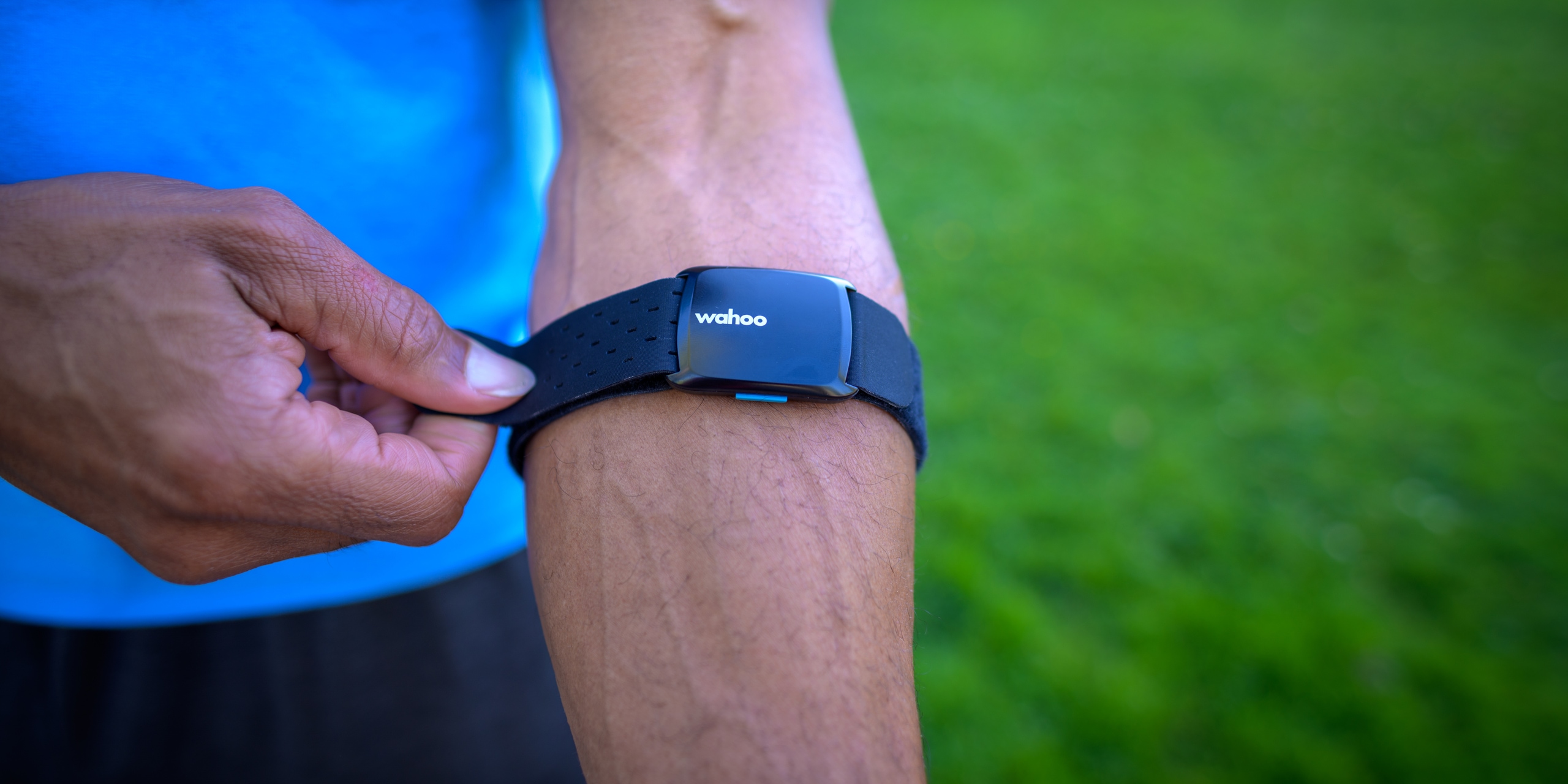
Bottom Line: The Wahoo Fitness TICKR FIT is a great all-around choice for a comfortable, accurate and rechargeable armband heart rate monitor. Despite limited features, it has a nice premium feel and comes with two adjustable straps of different lengths.
Our Favorite Chest Strap Heart Rate Monitors
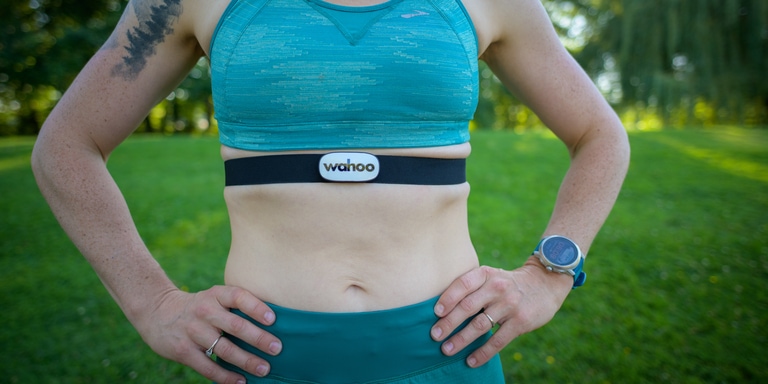


Wahoo Fitness TRACKR Heart Rate Monitor
Score 94
Active battery life 85-110 hours (rechargeable)
Data exchange Bluetooth and ANT+
Simultaneous device connections 3 for Bluetooth; no limit for ANT+
Internal memory None
Water-resistant depth 1 meter
Swim-compatible No
Best for Cyclists, runners, long training sessions
The Wahoo Fitness TRACKR Heart Rate Monitor earned high marks for its stellar battery life—the highest, by a long shot, of all the rechargeable heart rate monitors I tested. (Pro tip: If you also have Shokz headphones, the charging cable is the same. As someone who’s perpetually misplacing my charging cables, I appreciate having a backup.) The strap is made with a nice, soft material that I found very comfortable on the skin.
In addition to transmitting real-time heart rate data, the TRACKR also captures several additional metrics, which can be viewed in a compatible paired app after your workout. These include average heart rate, max heart rate and total calories. HRV (heart rate variability) can also be captured and transmitted with a compatible app, though oddly, the Wahoo app and Wahoo Fitness GPS bike computers don’t currently support HRV display and recording.
Personally, I love that the TRACKR has no on/off button, and the completely sealed casing of the sensor (due to no removable battery panel and no on/off button) gives me confidence in its durability and sweatproof design.
While the TRACKR is not designed to support swimming use, it is IPX7 rated so the unit won’t be harmed by wearing it during the swimming leg of a triathlon; it just won’t transmit or store data underwater.
Like its TICKR FIT brethren, this Wahoo Fitness monitor also has an LED with a variety of colors to indicate pairing mode, connection status, battery and charging status, etc. And although the battery life of any of the monitors reviewed here can be checked at any time on a paired smart device, I appreciate how the TICKR devices offer an extra visual cue on the sensor itself when the battery is running low. Buy here.
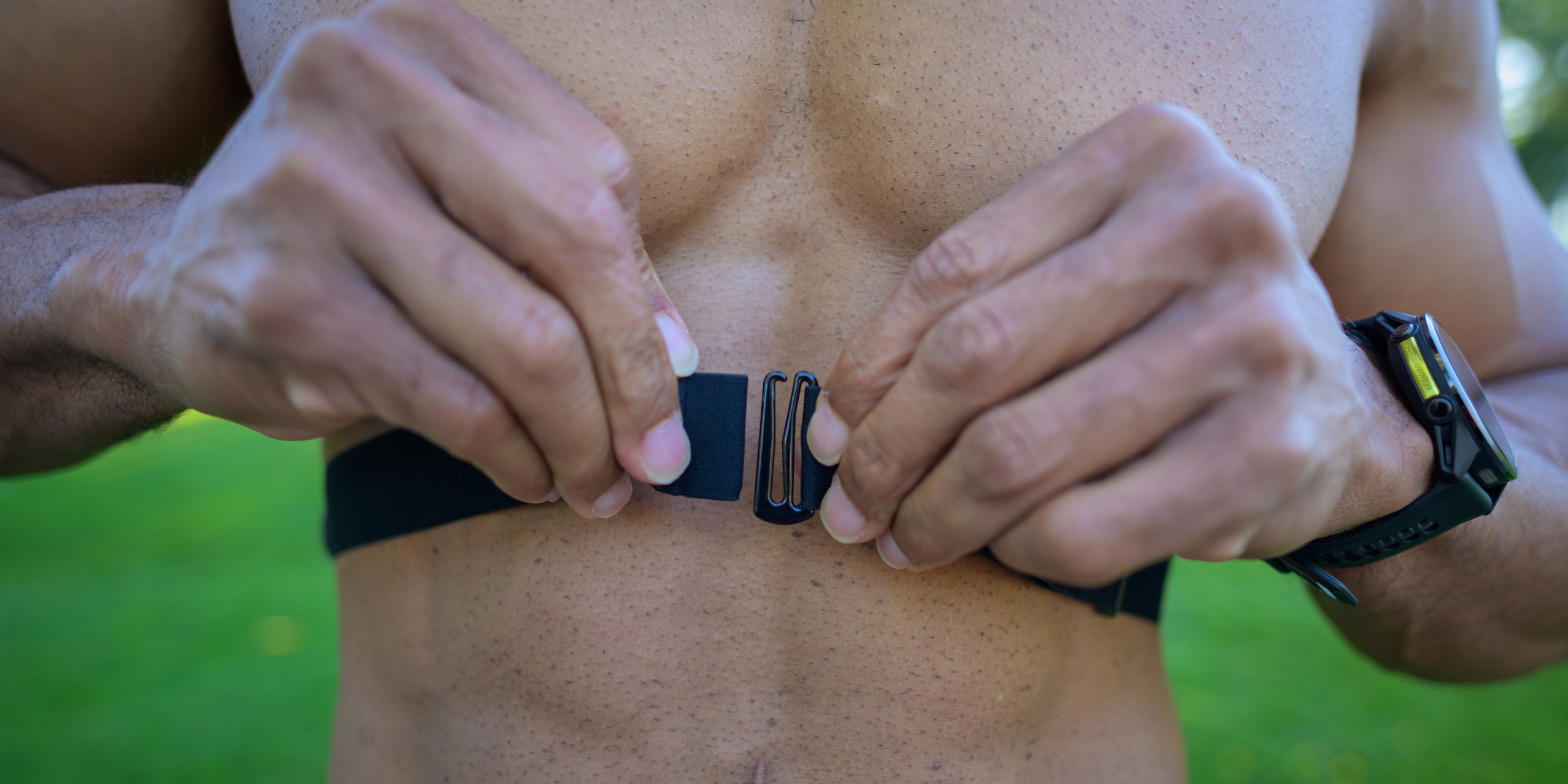
Bottom Line: The Wahoo Fitness TRACKR is my top pick for chest strap HRMs due to its excellent battery life, broad range of tracked metrics, durable design and all-around user-friendly experience.


Polar H10 Heart Rate Sensor - M-XXL Strap
Score 93
Active battery life 400 hours (nonrechargeable; user-replaceable coin-cell battery)
Data exchange ANT+, Bluetooth and GymLink
Simultaneous device connections 2 for Bluetooth; no limit for ANT+ and GymLink
Internal memory Yes (1 session up to 30 hours; requires initial pairing with Polar Beat app to start recording your workout)
Water-resistance rating 3 ATM (30 meters)
Swim compatible Yes
Best for Swimmers, multi-sport athletes, training without a watch
If you ever had to wear a heart rate monitor chest strap during gym class in school, chances are it was made by Polar. The Finnish brand was at the forefront of wearable tech in the late 1970s, and for years, they were the primary player in the heart-rate monitor space. The H10 Heart Rate Sensor is the latest and greatest version of the classic Polar chest strap, so putting it on might just give you middle school gym nostalgia.
It's long been the gold standard for accuracy, and my own experience with this strap—which goes all the way back to 2021—backs that up. It’s incredibly accurate and durable, to boot. The recording mode is a nice option if you want to forgo a watch altogether: Just download the Polar Beat app, pair the H10 sensor and select “Save HR with sensor” before starting your activity. (Polar has a second app—Polar Flow—which is the recommended app for use with the Polar Verity Sense armband monitor. But for initiating recording mode on the H10 chest strap monitor, Polar recommends using their Polar Beat app. Your data will still sync automatically to Polar Flow if you use that app as well.)
Of all the monitors reviewed here, the H10 is the only one that isn’t rechargeable. While personally I’d prefer a rechargeable strap, it’s hard to complain when the active battery life on the H10 is a whopping 400 hours; I’ve only had to replace the battery on mine twice in a few years of regular use. Is it annoying to try to find a spare coin-cell battery lying around my house? Yes. But for every time I’ve had to run out to the store to buy a battery, I can also think of a dozen times I couldn’t find the right charging cord for one of my rechargeable devices. So as far as convenience goes, it might be a tossup.
Polar makes the strap in three different sizes—though as of this writing, REI only carries the middle size, M-XXL, which adjusts to fit torso sizes 26.4-37.4 inches. The little silicone dots on the inside of the strap—a feature unique to the Polar chest-strap monitor—do a nice job holding it in place. Even when sweating heavily, I experienced no strap slippage and overall found the strap very comfortable to wear, even for longer workouts. I also appreciate that I can wear the Polar H10 in the pool and have access to my heart-rate data post-swim (in the Polar app). In water, the ECG sensor on this chest strap is simply more reliable than the optical sensor on my smartwatch. The Polar H10 has a water resistance rating of 3 ATM (30 meters) compared to the Polar Verity Sense and Garmin HRM 600 at 5 ATM (50 meters).
The H10 will also support GymLink (5 kHz) wireless connections—and unlike Bluetooth and ANT+, GymLink can transmit data underwater. It's an older data-exchange protocol so you won’t see it on modern watches, but if you happen to have an older Polar watch and you want to see your heart-rate transmitted in real time on your watch while you’re underwater, you may just be in luck. (To test this, I tracked down an old Polar FT7 watch on eBay to test out the GymLink connection underwater with my Polar H10 strap. It worked!) Buy here.
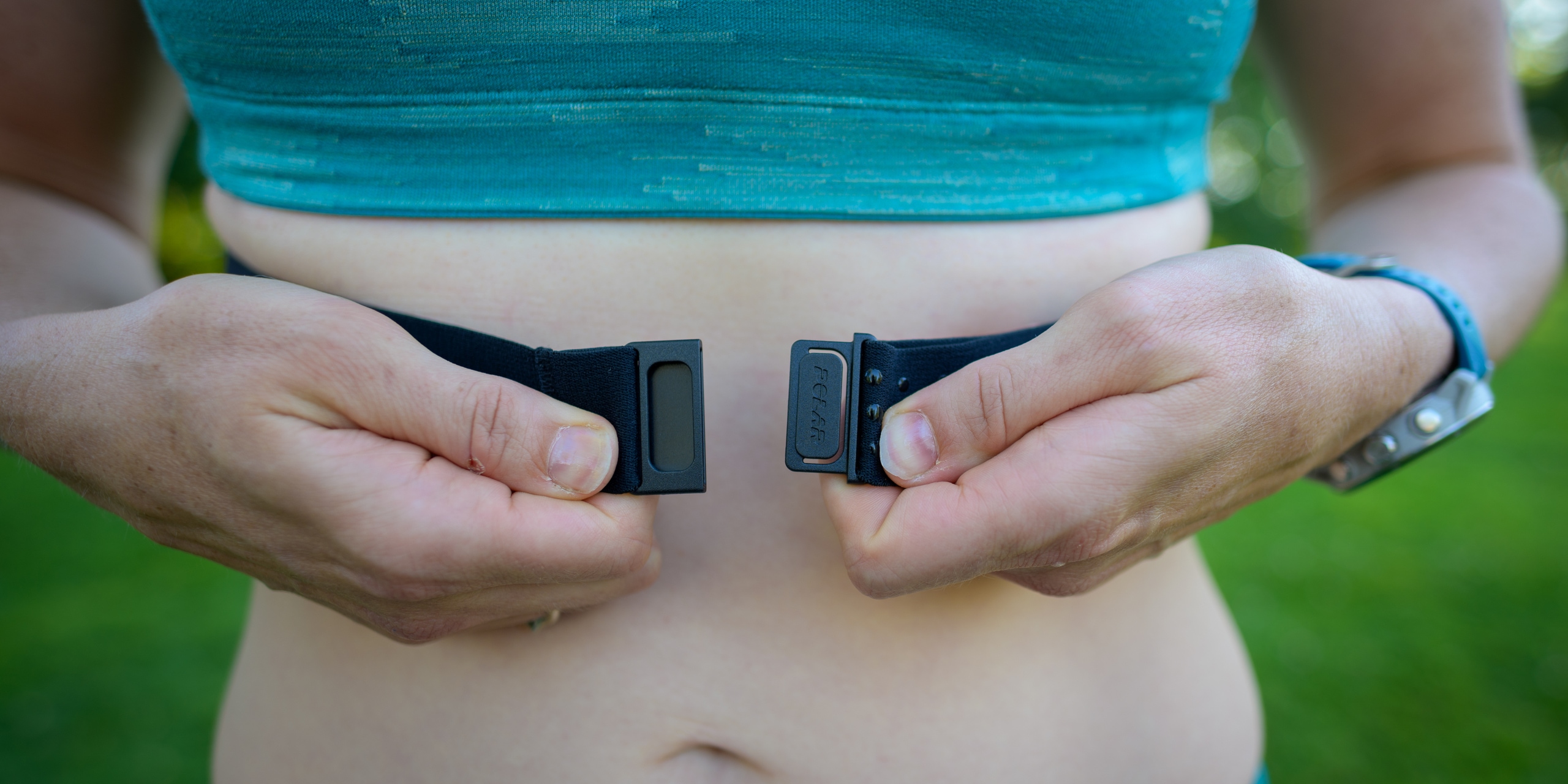
Bottom Line: The Polar H10 chest strap HRM is highly accurate, versatile and multi-sport–capable. It has more than four times the battery life of any other monitor reviewed here, with the tradeoff that it’s also the only one that’s not rechargeable.


![HRM 600 Heart Rate Monitor [Activity watch not included]](/media/6062b83e-7f77-43ab-9f27-64a4833d3c8a/?size=440)
Garmin HRM 600 Heart Rate Monitor
Score 90
Active battery life Up to 60 hours
Data exchange Bluetooth and ANT+
Simultaneous device connections 3 for Bluetooth; no limit for ANT+
Internal memory Yes (up to 24 hours)
Water-resistance rating 5 ATM (50 meters)
Swim compatible Yes
Best for Garmin Forerunner 970 GPS watch users, advanced runners and triathletes
Of all the monitors I tested, the Garmin HRM 600 Heart Rate Monitor is the newest, having debuted in May 2025. As such, it boasts a premium and cutting-edge feature set. It has everything we’d expect from a higher-end heart rate monitor—it's rechargeable, has an excellent battery life, supports dual-band connectivity with both Bluetooth and ANT+ (including simultaneous device connections), and features a recording mode for swimming and on-land workouts alike—as well as more advanced functionality, too.
Runners, in particular, will appreciate the HRM 600’s bevy of run-specific features. When paired with a compatible smartwatch, it has the ability to track advanced running dynamics like vertical oscillation, ground contact time and balance. If you pair it with a Garmin Forerunner 970 GPS watch, the HRM 600 can also measure “step speed loss” to help you determine exactly how much you slow down when your foot hits the ground. For the average runner, advanced metrics like these may not feel necessary—but for those seeking to fine-tune their training, this heart rate monitor can deliver an unmatched wealth of data.
For those who routinely run on treadmills or indoor tracks, the HRM 600 can measure pace and distance in these contexts to a far more accurate degree than a smartwatch can on its own. Garmin maintains lists on their own site of compatible Garmin watches for each of these advanced feature sets.
The HRM 600 is a match made in heaven with the Forerunner 970, as this watch fully unlocks the monitor’s capabilities. I also tested the HRM 600 with a couple of older watches:
- My COROS Apex Pro 2 watch (circa 2022; ) is not ANT+ capable, but I could still pair it with the HRM 600 via Bluetooth for heart rate data—but it couldn’t transmit advanced running dynamics without that ANT+ connection.
- My Garmin Forerunner 245 (circa 2019) paired just fine via ANT+ with the HRM 600, but wouldn’t pair successfully via Bluetooth. Over an ANT+ connection, it was able to track all advanced running dynamics (vertical oscillation, ground contact time and balance) that the HRM 600 can measure, with the exception of step speed loss (currently only available on the Forerunner 970).
For swimmers and triathletes, it’s hard to beat the functionality here, too, as long as you have a compatible Garmin watch to pair it with. While heart rate data won’t be transmitted in real time underwater, HRM 600 can record and seamlessly add it to your Garmin workout for review after the fact—leading to a more holistic portrait of your swim workout than is possible with the swim-friendly Polar monitors.
The HRM 600 is available in two different adjustable strap sizes (XS-S and M-XL) to accommodate a variety of body types. The strap is made with a supersmooth, premium-feeling material that’s very comfortable on the skin. Like the Polar and COROS monitors, the strap is machine washable. Just remember to remove the sensor before tossing the strap in the washing machine. Unfortunately, I did find the HRM 600 lacking in durability, as one of the two sensor connection snaps broke during my testing period. It’s necessary to unsnap the sensor from the strap in order to charge it—and the snaps are quite strong, so force is needed to pull them apart. The monitor still worked fine even with one busted sensor connection point, but it was nevertheless disappointing to experience this issue. When I asked Garmin about it, they replied, “We are aware of the issue in some instances and have implemented a design change. Our warranty would apply to anyone that has this experience.” Buy here.
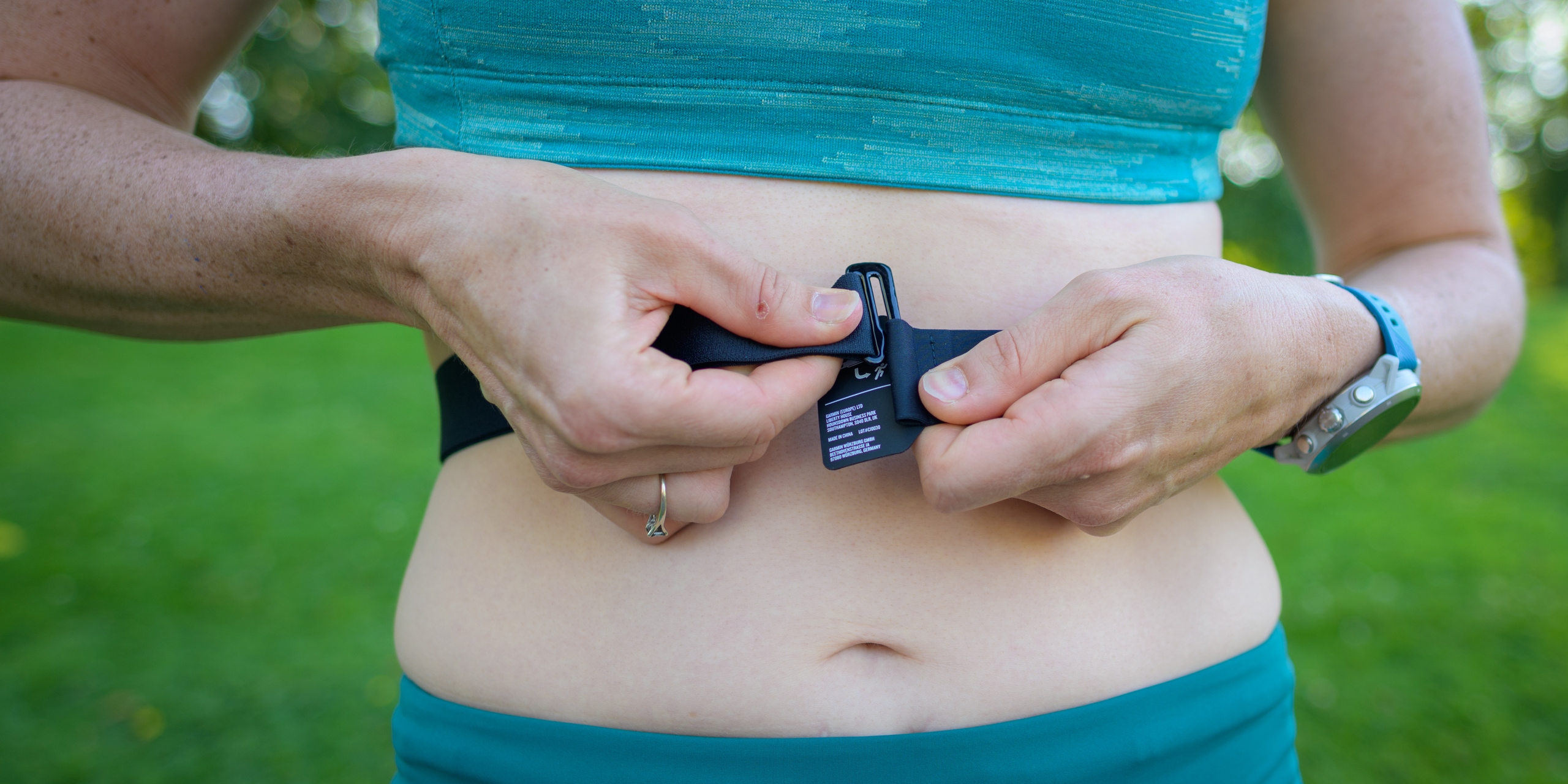
Bottom Line: The Garmin HRM 600 is ideal for data-driven athletes, especially runners, swimmers and multi-sport athletes. Unlock its full functionality by pairing it with a compatible Garmin smartwatch like the Forerunner 970.
Buying Advice
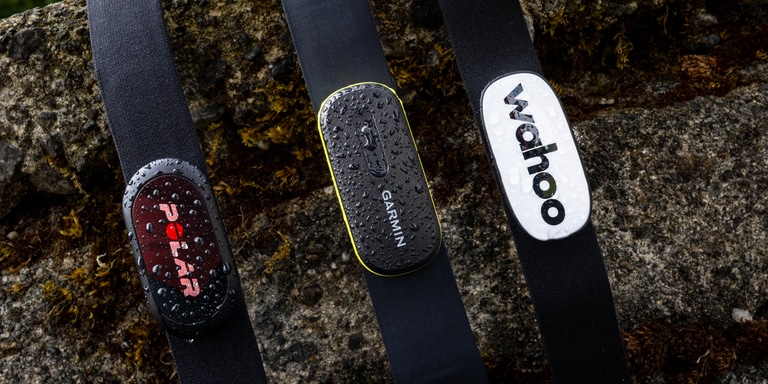
Accuracy is the most important factor in a heart rate monitor. Without that, it won’t be a useful measurement device. All six monitors proved highly capable in that department. (If they weren’t, REI wouldn’t sell them!) That said, there are several important steps you should take to ensure accurate readings:
- Fit: Wear the strap comfortably snug to minimize movement between the sensor and your skin.
- Position: Ensure sensor has full contact with bare skin; do not place monitors over clothing, swimsuits or even—for the optical sensors in armband monitors—tattoos.
- Lubrication: For chest straps, wet the sensor panels (on the inside of the strap) with water or conductive electrode gel before you start your workout
With accuracy concerns out of the way, let’s look at several of the other key factors to consider when choosing a heart rate monitor:
Sensor Type/Wearing Location
Currently, there are two main types of heart rate sensors used in fitness electronics:
- Electrocardiogram (ECG) sensor: Your classic heart rate monitor chest strap, which measures electrical signals generated by the beating of your heart
- Optical sensor: Used on wrist-based and armband heart rate monitors, an optical sensor shines LED lights into your skin and measures how much is reflected back in order to determine your pulse.
Some people find chest straps perfectly comfortable and discreet. If you already wear a sports bra, you may not even notice the addition of another band right below your bra line. But if the chest-strap life is not for you, know that there are alternatives. An arm-based optical monitor can be just as accurate as a chest strap—both types offering significant improvements in accuracy over any watch’s wrist-based optical sensor.
Some manufacturers concede that their optical sensors may not work as well for people with dark skin or those with tattoos on the part of the body where the sensor has contact with the skin. Unfortunately, limited studies have been done exploring the effects of melanin content and skin pigmentation on optical sensor accuracy—and the results have not been conclusive one way or another. But if you have darker skin and experience issues with optical sensors, you may have more success with a chest strap monitor.
Connectivity and Device Compatibility
Another important factor is device compatibility. Since all of these heart rate monitors require pairing with another device to view your heart rate data, you want to ensure that the monitor you purchase is compatible.
Currently, there are two primary methods of wireless data exchange in heart rate monitors:
- ANT+ (an “open” connection type with low power consumption that allows a monitor to broadcast data to any number of ANT+ compatible devices within transmission range)
- Bluetooth (a faster, more secure one-to-one connection type that requires direct pairing of the monitor to a compatible device within transmission range)
Many heart rate monitors are compatible with both, but functionality may differ based on the connection type used. As mentioned earlier in this article, not all Bluetooth-capable smart devices will successfully pair with a heart rate monitor. Some support pairing with smartphones via Bluetooth, but not with external sensors like heart rate monitors.
So before you make a purchasing decision, be sure to check the device specifications on both the heart rate monitor and any specific devices (phones, watches, gym equipment, TVs, etc.) you want to be able to pair it with.
And if you have multiple devices you want to be able to pair your monitor with at once, pay attention to how many simultaneous device connections a monitor will support. (There is never any limit on ANT+ connections. Bluetooth will typically be between one and three.)
Internal Memory
Many heart rate monitors do not have built-in memory. Those that do allow you to record your heart rate data without having the monitor actively paired to another device during your training session. In those cases, you’ll still need to upload the data to a compatible app to view it after the fact. Depending on the monitor, you may also need to connect to its smartphone app beforehand to initiate recording of a new session.
Internal memory is a great feature if you don’t wear a watch—either out of personal preference, or if you play sports that don’t permit one. It’s also an important factor for swimmers, since neither Bluetooth nor ANT+ can reliably transmit data underwater.
For more comprehensive buying advice, see Heart Rate Monitors Buying Guide | How to Choose.
Notes on the Heart Rate Monitors in this Guide
Display: All six of the heart rate monitors featured in this guide require pairing with a compatible watch, bike computer, smartphone or gym equipment (treadmill, stationary bike, indoor rowing machine, etc.) to view your heart rate—either in real time, or when reviewing training data after your workout is over. That is to say, none of these monitors has a display screen.
Compatibility: While all these monitors play especially nice with smartwatches from the same brand, they can connect to devices from other brands, too, provided they’re ANT+ and/or Bluetooth compatible and accept pairing with external sensors. (Some devices are Bluetooth-compatible but only support pairing via Bluetooth to phones, not accessories like heart rate monitors.) Double-check compatibility details between your preferred device(s) and a monitor before making a purchase decision.
In a few cases, where noted in this article, functionality may differ slightly based on the device it’s paired with—but for the most part, the beauty of these heart rate monitors is that they’re cross-compatible with many different types of devices, as well as a wide variety of third-party fitness-tracking apps.
Accuracy: Generally speaking, all six of these monitors were excellent for accuracy, particularly when compared to wrist-based optical heart rate tracking. I did sometimes experience a 1-2 second lag in data on the armband monitors compared to the chest straps, but the difference was so minor in most cases that I considered it negligible.
Swimming: Several of these monitors are considered swim-friendly. It’s worth noting that none will be able to transmit real-time heart rate to your watch due to ANT+ and Bluetooth limitations underwater—but they can capably record your heart rate data underwater for viewing later in a compatible app.
How We Test
I requested product samples for an 8-week testing window. During that time, I tested each monitor out during a variety of activities, both indoors and out. For context, I run 3-4 days a week (on roads, trails and treadmills alike), swim laps 3-4 days a week, and even got into rowing on Seattle’s Lake Washington this past summer (hello, 4:30 a.m. alarm clock for team practice at sunrise!)—so these monitors got put to the test a lot this year.
I tested them during easy workouts, tempo efforts and higher-intensity interval sets. Speed intervals are especially useful in evaluating accuracy and lag time since the heart rate rises quickly at the beginning of an interval and falls dramatically after the end of one.
I had several watches from both Garmin and COROS to test pairing with various monitors via both Bluetooth and ANT+ connections, and also tested out direct connections to various gym equipment (via ANT+) and smartphones (via Bluetooth, with tracking in each respective monitor’s corresponding app, e.g., Garmin Connect, COROS Training Hub, Polar Flow, Polar Beat and Wahoo).
I tested each monitor on its own and also wore multiple monitors simultaneously with one another (e.g., one chest strap, an armband on either arm, all tracking the same workout on the same person) to assess accuracy, lag time, susceptibility to data aberrations, etc. Finally, I used the DC Rainmaker Analyzer to create overlay graphs of the heart rate data to help make these assessments. See below for the comparison graphs.
For monitors with internal memory, I also made sure to test out this functionality independently to evaluate the ease of use for recording mode when not actively paired to a watch during the workout. Finally, I reviewed existing customer reviews on REI.com to incorporate feedback from our co-op member and customer community.
Ultimately, I assigned scores (on a scale of 100) based on the following factors:
- Accuracy
- General Functionality (feature set, metrics tracked, ease of use, etc.)
- Connectivity (ANT+ and Bluetooth protocols, simultaneous device connections, transmission range)
- Comfort/Fit (subjective to body type and personal preference for a chest strap vs. an armband)
- Battery Life (rechargeability, average active battery life)
- Internal Memory (does the HRM have a recording mode, and if so, how user-friendly is it)
- Multisport Capability (primarily addressing which monitors are swim-friendly and which are not)
- Durability (hard to evaluate well in the two months of product testing, but obviously it’s a concern I didn’t want to ignore altogether)
- Value (measuring general performance against the price point of the HRM)
Any monitor receiving a rating of 90 or higher earned a spot in this roundup of the best heart rate monitors of 2025. The Polar Verity Sense Optical Heart Rate Sensor scored the highest in all categories, earning it an Editors' Choice Award in 2026.
Heart Rate Monitor Comparison Graphs
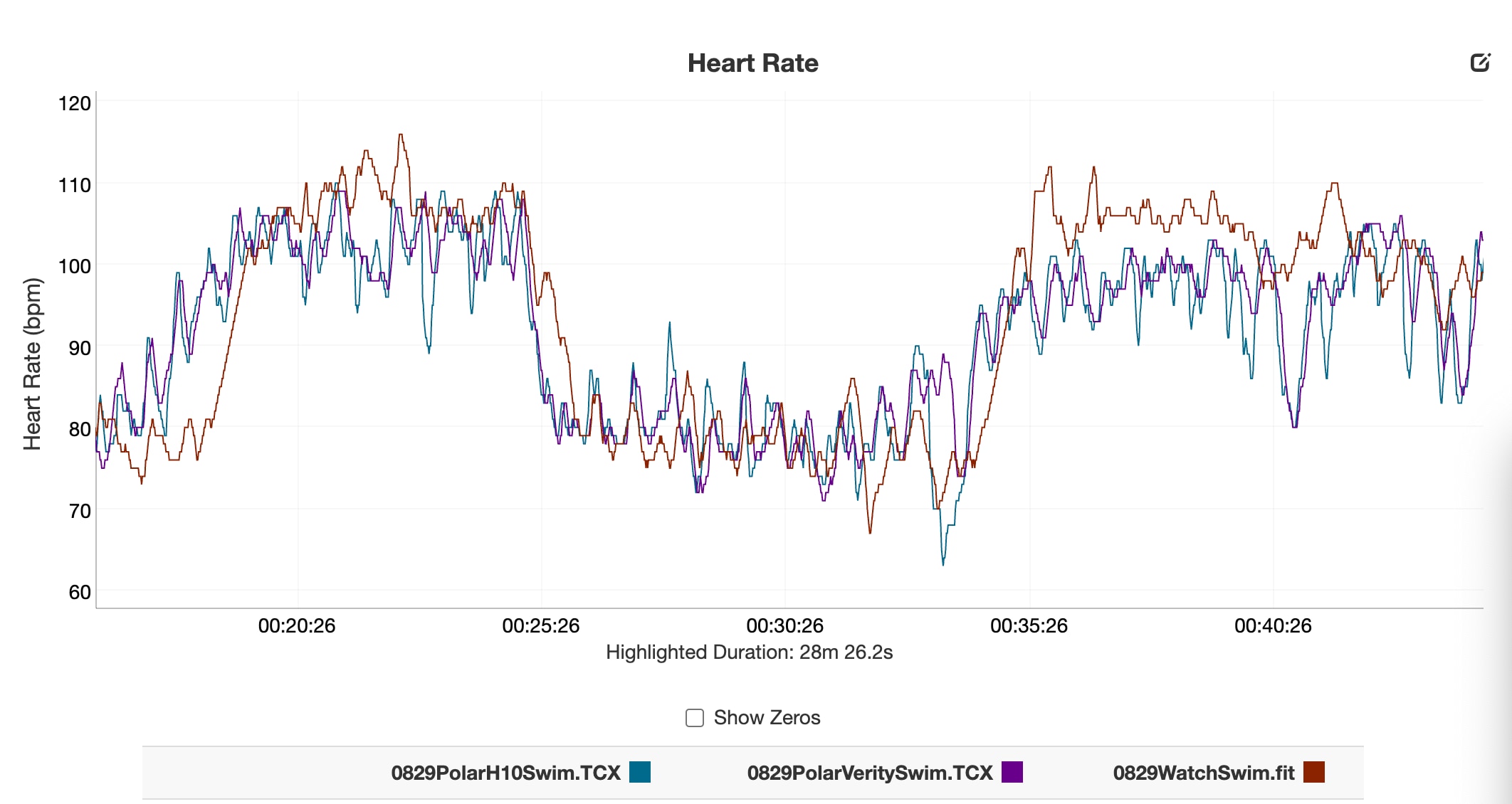
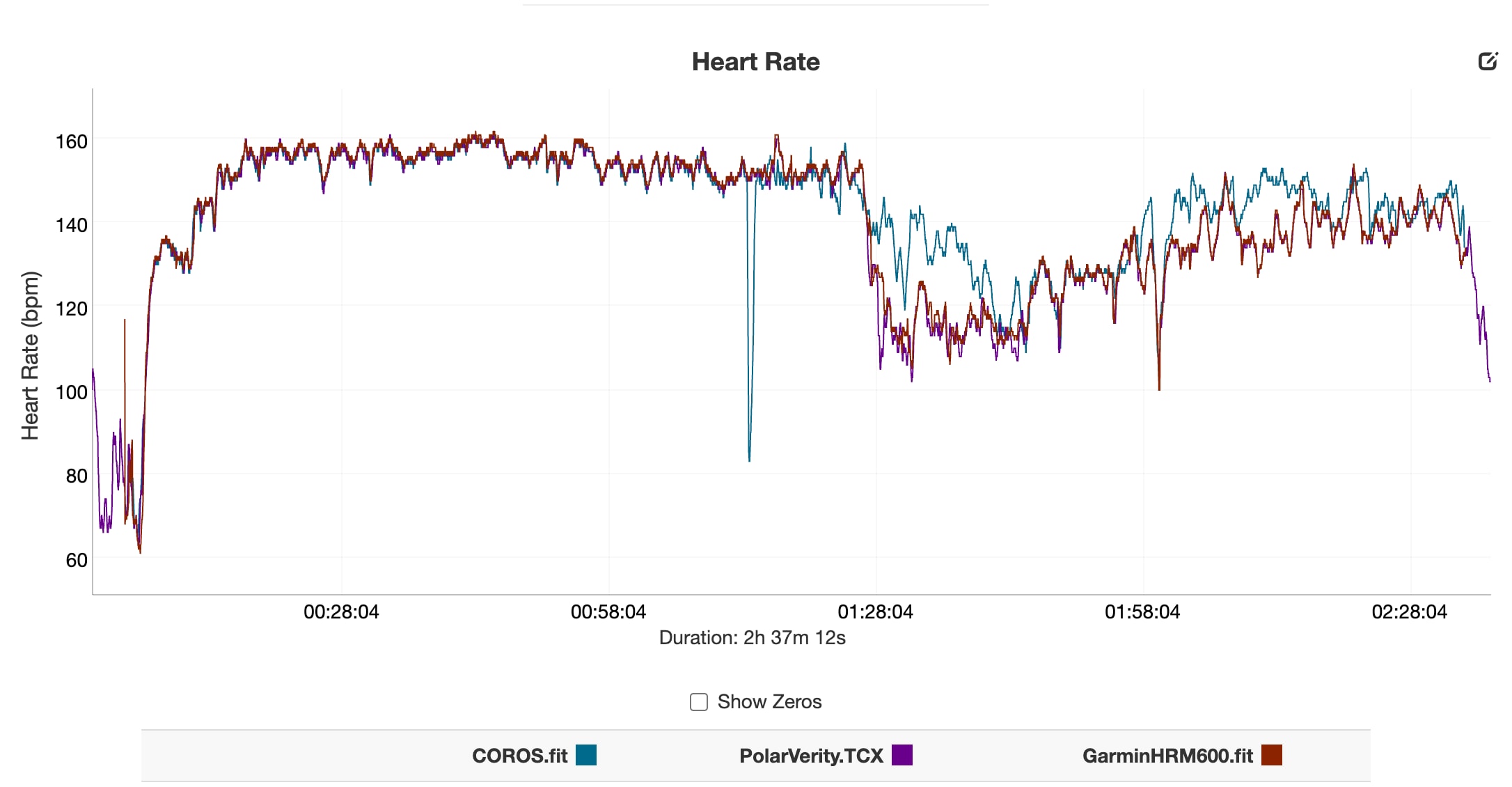
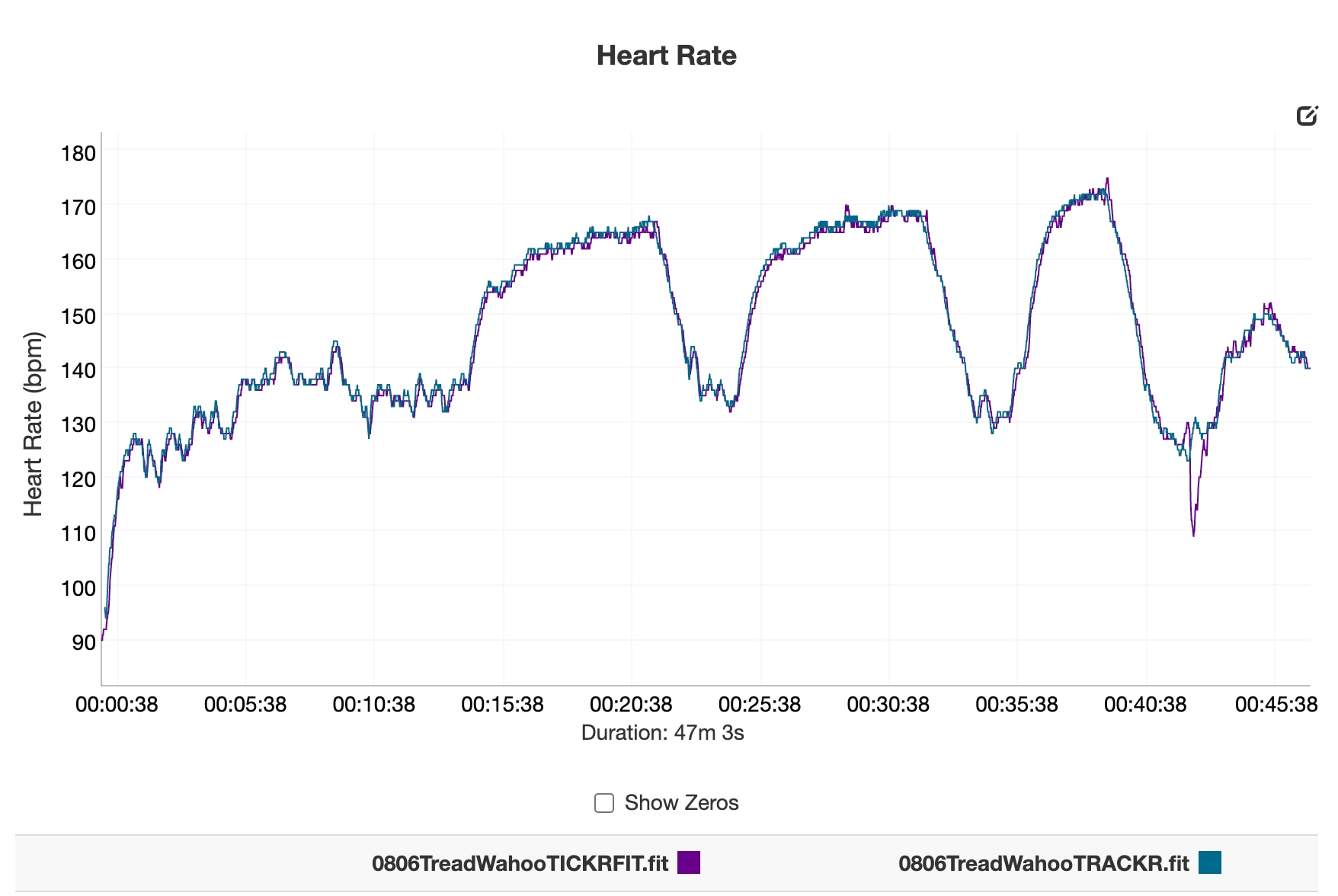
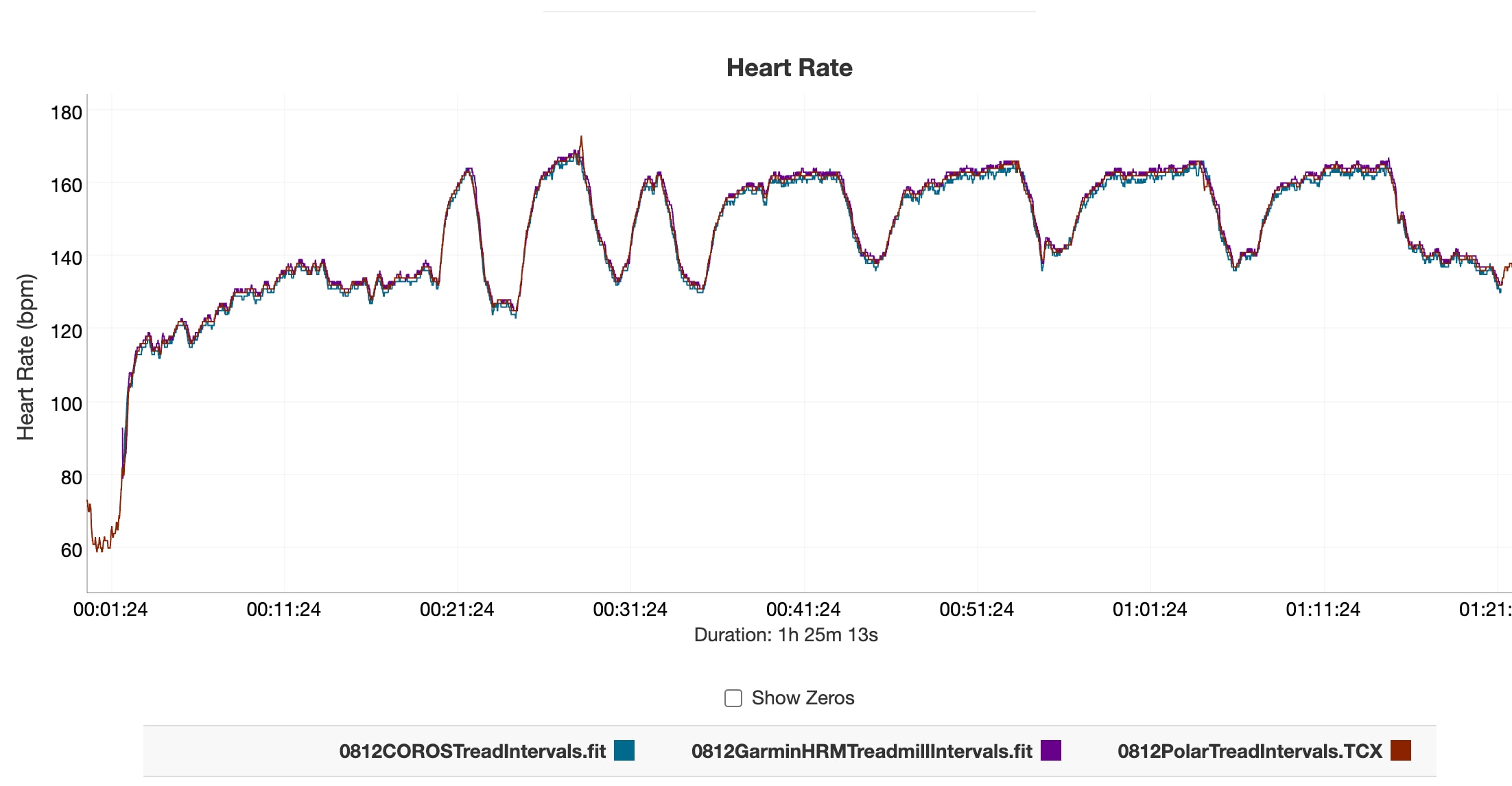
Summary of findings: The chest-strap and armband monitors in this guide display close to identical results, indicating a comparable level of accuracy (see graphs 1-3). The one wrist-based monitor I tested, the COROS Apex Pro 2 watch, diverted significantly in results, indicating lesser accuracy compared to chest-strap and armband monitors (graph 1). Armband monitors seem to show identical accuracy whether worn on the bicep or forearm (graph 4). And heart rate readings appeared to be less accurate under water than on land (graph 5). Read on to see the graphs and read more detailed explanations of my findings.
- Comparing three different types of heart rate monitors on a mountainous trail run: COROS Heart Rate Monitor (armband, optical sensor), COROS Apex 2 Pro (wrist based, optical sensor), Polar Verity Sense Optical Heart Rate Sensor (armband, optical sensor) and Garmin HRM 600 (chest strap, pulse).
2. Comparing two different types of monitors from the same brand on a treadmill run: Wahoo TICKR FIT Optical Heart Rate Monitor (armband, optical) and Wahoo Fitness TRACKR Heart Rate Monitor (chest strap, pulse).
3. Comparing two armband monitors with a chest-strap monitor on a treadmill interval workout: COROS Heart Rate Monitor (armband, optical), Garmin HRM 600 (chest strap, pulse) and Polar Verity Sense Optical Heart Rate Sensor (armband, optical).
4. Comparing the same monitor worn in different positions on the arm with a chest-strap monitor: Wahoo Fitness TICKR FIT Optical Heart Rate Monitor (armband, optical) and Garmin HRM 600 (chest strap, pulse).
5. Comparing heart rate data accuracy between devices in the pool: Polar H10 Heart Rate Sensor (chest strap, pulse), Polar Verity Sense Optical Heart Rate Sensor (armband, optical) and unidentified smartwatch (wrist-based, optical).