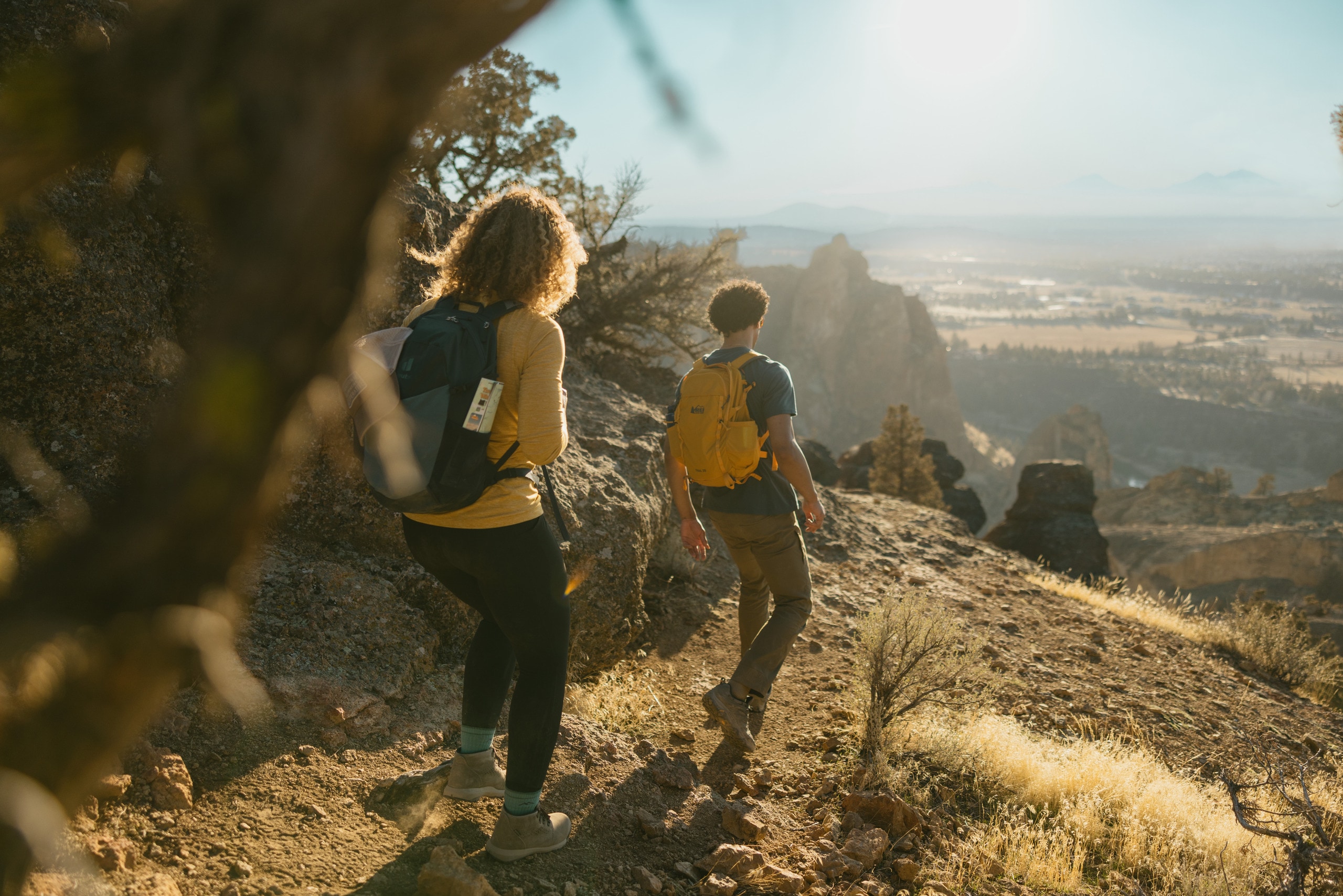
No matter the activity they pursue, humans often need to carry a few things besides the clothes on our back. It’s always been that way—just consider ancient Egyptians’ use of baskets and 5,300-year-old Ötzi the Iceman’s rudimentary backpack. “What our bags hold today may differ from those carried by our ancestors of centuries ago,” says Chase Schofield, a daypack designer with Gregory. “But the desire to carry little pieces of safety and comfort with us into the unknown hasn’t.”
It’s not just what’s in our bags that’s evolved; our carryall options have diversified, too. With hundreds of daypack choices on REI.com alone, it can be tricky to know which is the best for you.
At first glance, all daypacks may look similar, but they actually have many functional differences. In this guide, we’ll explain what a daypack is and how to know what an “ideal pack” looks like for you. Then, we’ll guide you through the following questions to help you figure out which daypack is best for your needs.
We’ll explore the following questions to help you decide on the right pack:
- What activities will I be using the daypack for?
- What do I plan to carry in my daypack?
- What daypack will be most comfortable on my body?
- What are my personal preferences?
Video: How to Choose a Day Hiking Pack
What is a daypack?
A daypack is any backpack designed for multi-hour, rather than multiday, activities. Most experts point to packs ready to carry 40 liters, or roughly 30 pounds, of equipment or less as falling into the daypack category. (Packs that carry 50 liters may also be considered daypacks, but are more common for overnights).
At its most basic, a daypack is the same as any other backpack: just a wearable container with shoulder straps. “Everything else,” says Ash Higgs, lead specialist for consumer services at Osprey, pointing to the zippered entry point, chest strap, hipbelt, organization pockets and more, “is where you start to get a little bit more on your fancy side.”
While choosing the best daypack for your needs can be tricky, Schofield says, you’ll no doubt know it when you find it. “The best setup,” he adds “is when you forget you’ve got it on.”
Planning your first multiday excursion? Read Backpacking for Beginners and check out this Backpacking Checklist.
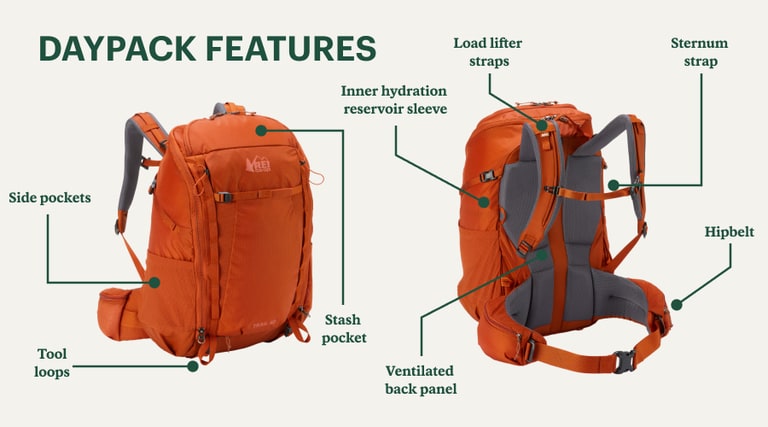
Learn more about these features below.
Choosing a Daypack
Consider Your Activity
Our experts agree that choosing a daypack begins with identifying how you plan to use it. It’s also vital to factor in how long you’ll spend on the activity in one session and your expected “mission,” says Derick Noffsinger, design director of technical softgoods at Black Diamond. “A run could quickly turn into a ridge scramble in the snow or a quick ski tour could turn into an ‘epic’ when you’re walking in 10 miles and skiing a couple runs,” he adds. “This analysis of the ‘mission’ could point you in so many directions [when it comes to the right pack].”
Some daypack characteristics will overlap, so having these key use cases in mind will help narrow the field more quickly. “Not every bag is going to fit every need,” Higgs adds, “but you can at least have one bag that might fit these three needs over here.”
Daypacks may be designed for a specific activity. While daypacks are all made to comfortably carry gear, the type of gear and what “comfort” means while carrying it can depend greatly on the type of adventure. A daypack designed to hold gels and water without bouncing during a trail run will be much different from one ready to haul your Ten Essentials (and probably some nonessentials too) up a 14,000-foot peak. Learn more about the key features for activity-specific packs.
That’s not to say you need to have a different pack for every activity. “The person should ask themselves, ‘What do I do 75% of the time?’ Buy the best pack for that,” says Tom Mason, general manager of SSO Outdoor USA, parent company of Deuter and Ortovox. “The remaining 25% of the time the pack will be OK.”
- Duration: How long do you typically adventure? Think about what gear is absolutely necessary for that time. You can probably get away with a smaller daypack (10 to 20 liters) if you’ll mostly set out on sub-two-hour jaunts. But if you tend to embark on 10-hour treks, make sure there’s ample space for all of the food, water, layers and equipment to ensure your safety. (Jump below for more information about daypack capacity.)
- Weather: Both the season and the overall climate wherever you’re adventuring will impact the temperatures and conditions you’re likely to encounter. That will affect what gear—and how much of it—you’ll need the pack to carry.
- Mission: Maybe you don’t often think about your approach to time outdoors, but you’ll want to when choosing a daypack. Are you going outside for physical fitness or emotional wellness? Will you need breathable fabrics for speed-focused and/or heart-pumping endeavors (think trail-running, or backcountry skiing’s uphills)? Or are you more of a bird-spotting, stop-and-smell-the columbine kind of hiker who wants extra pockets for their watercolors and sketch pad?
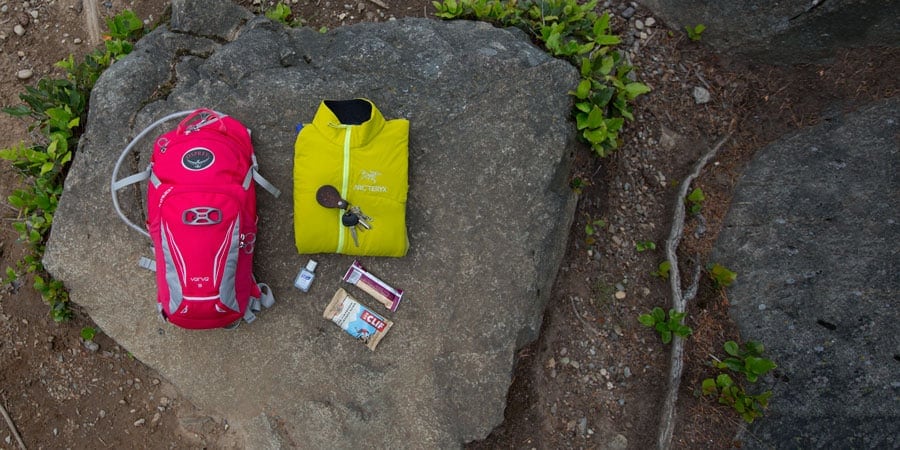 | 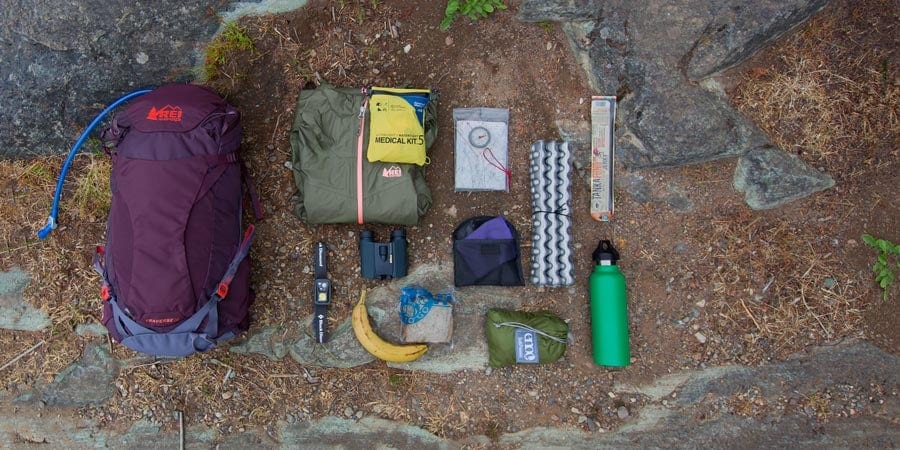 |
Photo credit: Braden Van Dragt
Capacity Factors
Generally speaking, daypacks range from around 5 to 40 liters. To decide which size is best, experts often recommend thinking about the most gear you might need the pack to carry and working backward. “I always point to their list,” Schofield says. “What's going to go in this pack? If you’re choosing an adventure for the day, what kind of experience are you looking to have?”
Remember though, that a bigger pack isn’t necessarily better, because it may lead to overpacking. “Sometimes more space equals, ‘I can carry more things,’ which makes the pack heavier,” says Higgs. Conversely, using a large pack that’s largely empty will feel awkward and floppy. “An appropriately sized bag that has the appropriate amount of things is going to feel a lot more stable and secure.” No matter what size pack you choose, remember to factor in space for the Ten Essentials, on every adventure.
Here’s a basic guide for the different sizes of daypacks.
Size | Characteristics and use cases |
|---|---|
10 liters or smaller |
|
| |
| |
|
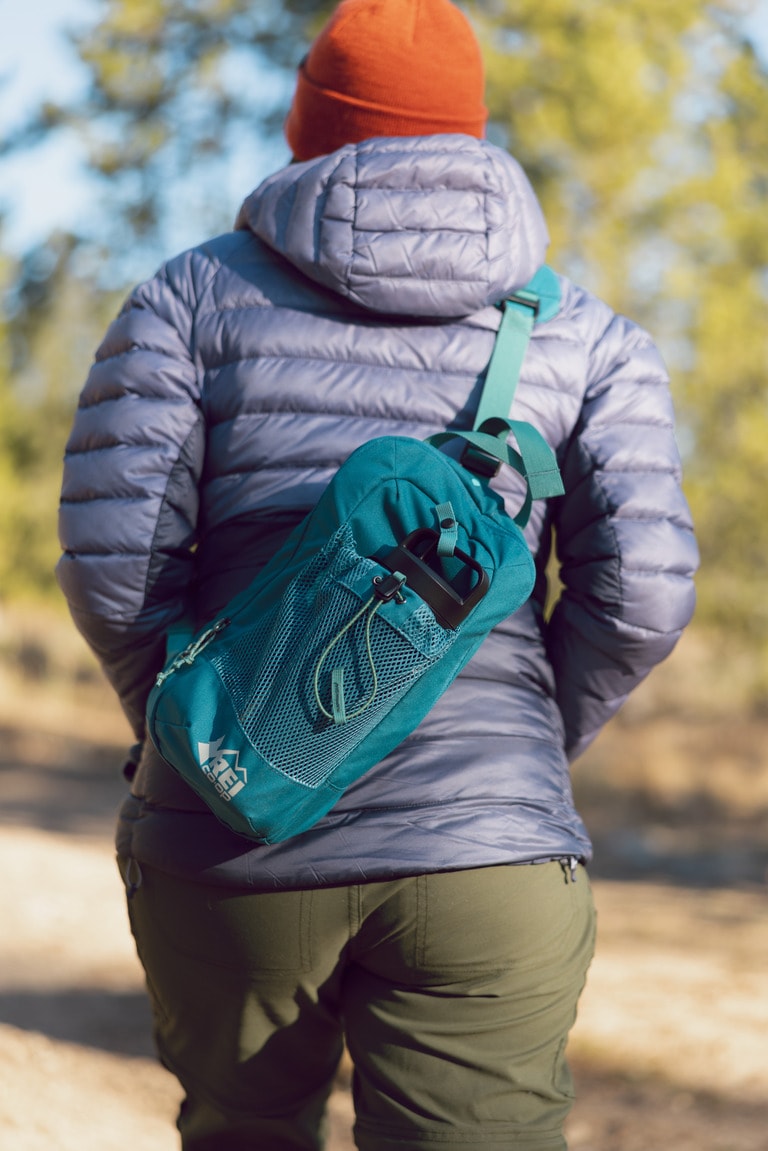
Water: The Always Essential
Since water is a must-carry item for any pursuit, think about your sipping strategy. If you’re a diehard Nalgene, YETI or Hydro Flask user, look for exterior water bottle pockets that provide quick access on the go. Nearly all daypacks also have an internal "reservoir compatible" sleeve that you can slip a hydration reservoir into (reservoirs are often sold separately). Daypacks that include a reservoir will typically be labeled as a "hydration pack."
Organization
Daypacks have countless ways to keep your gear and supplies organized, but only you know your own packing habits. Having fewer compartments makes it easy to throw gear inside but may make it more difficult to find needed items, especially if they’re small. On the flipside, having too many storage spots may make it equally difficult to remember where to look.
Here are some of the storage features to consider when shopping for a daypack.
- External pockets: These are perfect for items you will want to grab either quickly (like a camera to get the perfect shot) or frequently (like your water bottle). They are often on the pack’s back, sides, shoulder straps and hipbelt. They also add more space to the overall pack since external pockets are often omitted from the liter count. However, external pockets may offer less protection against moisture, and items inside are more likely to be jostled or bumped as the pack is picked up and set down. You also risk losing an item if it falls out, especially if you accidentally leave a pocket unzipped.
- Internal pockets: These are likely to offer more protection from the elements and will be jostled less, especially if they’re within the main compartment. Their hidden nature also provides a bit more security for valuables like car keys and laptops. As a drawback, they can take longer to access.
- Compartmentalization: If you’re using your daypack for work or travel, separate compartments can be nice to have for different needs, notes Higgs, who has spent more than 3,000 days guiding professionally in the backcountry. Individuals who use their daypack for trail work, environmental research, or search and rescue services may want the ability to stow personal gear away from professional gear. Travelers may appreciate having different compartments for clean and dirty clothes.
Get the Right Fit
Just as wearing the wrong size clothes is uncomfortable, so is wearing the wrong size daypack. “A good-fitting bag can make or break your adventure,” Higgs says. “And the heavier the load, the more important the fit.”
Even if you don’t know how to make adjustments to the torso and load-lifter straps, add some weight to the daypack in question (about 10 pounds will do), put the pack on, tweak the shoulder straps to your body and ask yourself these basic questions, Schofield recommends.
- Does it feel like it fits me?
Do I feel like I’m swimming in it?
Does it feel like it’s made for somebody that's far smaller than me?
Once you have a basic feel for the pack and know that it’s a reasonable option, you can make further adjustments. “That first impression is important,” Schofield continues, “but it should be paired with the context of how a pack ‘should’ feel. Expert guidance—or even experienced guidance—is very helpful in establishing this context.” Learn more with How to Size and Fit a Backpack, or visit your local REI store for in-person help finding a daypack that fits.
Here’s a quick overview of some daypack characteristics that impact fit.
Daypack attribute | What it is |
|---|---|
| |
| |
|
Key Backpack Fit Adjustments
Torso length (not your overall height) and hip size are the most important fit factors. If you're in an REI store, you can try on several packs to find one that's comfortable. If you're unable to visit a store, enlist a friend to help you find your torso and hip size.
Torso length: Some packs are available in multiple sizes to fit a range of torso lengths. The ranges vary by manufacturer and by gender. Check the product specs for any pack on REI.com for sizing details.
While trying packs on, position the hipbelt so the top edge is about one finger width above the top of your hips, then look at how the shoulder straps land on your back and shoulders. If there is a gap at the top of your shoulders, the pack is likely too long for your torso. If the straps wrap more than a few inches down your back before they connect to the pack, the pack might be too short.
Some packs feature an adjustable torso that lets you fine-tune the fit. If you've struggled to find the right fit with other packs, consider one with an adjustable torso. This is also a good idea if you'll be sharing the pack with someone or you're buying a pack for your child who isn't done growing.
Hip size: Hipbelts on daypacks usually accommodate a wide range of hip sizes, from the mid-20 inches to the mid-40 inches. Brands like Osprey and Gregory offer hipbelts in extended sizes too. (See How to Choose Plus Size Outdoor Gear and Apparel for additional tips.) When trying a daypack on, just make sure you can get the hipbelt loose enough or snug enough to fit comfortably around your hips.
A hipbelt starts to make an appreciable difference in the quality of your experience once the pack weighs more than 15 pounds. “You're much more stable [because] the bag itself stays much closer to your center of gravity,” Schofield says. “You have the ability to distribute that load, [moving] some of it off of your shoulders and onto your hips where you’re structurally much more stable.”
Women-specific backpacks: Torso dimensions are generally shorter and gear capacity slightly smaller on these packs than on men's or unisex packs. Hipbelts are often shorter and thinner, angled differently and feature more padding; shoulder straps are designed for a narrower frame. Sternum straps may also fall in a slightly different place on the body to account for chest size. Because women's packs have smaller frames, they often work well for young hikers as well as shorter folks or those with narrow shoulders, too.
Additional Backpack Fit Adjustments
When carrying heavier loads, a sternum strap and load lifter straps can improve how stable the daypack feels on your back and how comfortable the load is to carry. “The bigger the bag, the more weight you carry, the more size specific fit you want,” Higgs says. “As the bag gets bigger, as the bag gets heavier, you want more comfort.” That comfort is likely to come, at least in part, through additional adjustments.
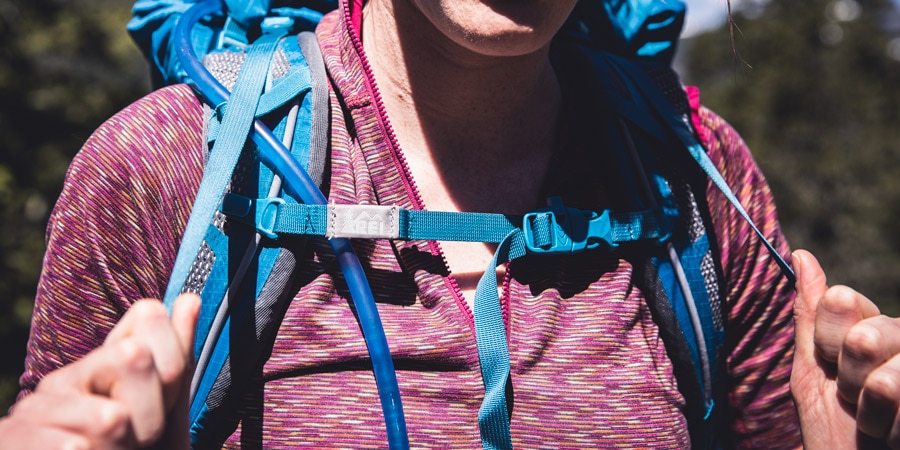
Sternum strap: This mid-chest strap found on most packs allows you to connect your shoulder straps, which can boost your stability. It can be useful to do so when traveling on uneven terrain where an awkward move could cause your pack to shift to one side and throw you off-balance. REI camp and backpack editor Sarah Grothjan adds a pro tip: “Unclasp your sternum and hipbelt (and loosen your shoulder straps) when crossing deep and/or fast water. This rule applies even if you're off balance in a rocky riverbed. If the water is deep enough, it's safer to unclasp straps that could trap you underwater should you fall. I also unclasp my hipbelt and sternum strap if I'm crossing over water on a log in case I take a tumble.”
Load lifter straps: Some larger daypacks include load lifter straps. These are stitched into the top of the shoulder straps, and they connect to the top of the pack frame. Ideally, they will form a 45° angle between your shoulder straps and the pack. When kept snug (but not too tight), they can help prevent the upper portion of the pack from pulling away from your body, which would cause the pack to sag on your lumbar region.
Adjust On the Go
At the store, you’ll choose the best-sized daypack based on your torso and hip size. But don’t be afraid to further dial in the fit once it’s fully loaded and you’re out adventuring. The definition of your “exact-right fit” might change throughout the day. “As you're moving, things settle and shift and change,” Schofield says. “It's okay to fine tune these things … so that you don't end up with hot spots, wear points and soreness.”
Personal Preferences
You’ve factored in what you need to have in a daypack. Now it’s time to think about your specific preferences.
Cost
Daypack prices at the co-op typically range from around $40 to $300, increasing with the pack’s size, durability and the number of bells and whistles it offers. Investing in a quality pack will probably come with a steeper price tag, but it’s far less likely that you’ll need to replace it later–and if you do, many pack manufacturers offer a warranty of some kind. “This isn’t just a bag for tomorrow,” Higgs says. “We want you to have a bag that’s going to last you a lifetime. And we’d rather have it right the first time.”
If cost is an issue, look for high-quality used options in-store with Re/Supply, available to REI Co-op Members at select REI stores.
Entry Point
If you’ll need quick access to certain items, make sure there’s an exterior storage solution in which to hold them. Things like water bottles, cameras/cell phones, SPF lip balm and sunscreen can be nice to have readily rather than having to dig through your pack to find them.
- Top: The majority of daypacks are a top-loading design. The items you don't need until the end of the day go deep inside. Some top-loaders offer a "floating" (extendable) top lid that allows you to overstuff the pack a bit. Others use a roll top design, where an extra-long flap of fabric rolls into itself. “This provides a more weatherproof seal,” Schofield says, “because water has a hard time working against those folds to find its way in.”
- Front: Packs with front access (sometimes called panel access) offer a main storage compartment accessed via a U-shape zipper. Fully opened, one panel falls away like a flap. This makes it easy to load and rummage through when you're searching for something. They're good for light hiking and travel.
- Bottom: Some daypacks include bottom access to the interior in addition to a top or front opening. This can be handy for accessing gear or clothing at the bottom of your pack without having to take everything out first.
- Side: A side access point is an option on a handful of daypacks. This is typically in addition to top or front access. Like bottom access, it makes getting to gear and clothing inside your pack easier.
Framing
Some daypacks, especially those used to carry heavier loads, feature an internal frame to provide an extra boost of support.
- Internal frame daypacks: An internal aluminum or fiberglass frame helps support the weight you're carrying and keeps your center of gravity low. Some packs include plastic framesheets that add lightweight structure. Others have aluminum rods to support the load. The more substantial the frame, the more weight the pack can typically handle.
Frameless daypacks: Frameless packs tend to be lightweight and compact, and they do an excellent job of adapting to the shape of your back. They can also be handy to stash into a larger pack when traveling. However, their suppleness typically doesn't support weight as well as an internal frame, making frameless packs best for lighter loads.
Shoulder Straps
- Padded shoulder straps mean greater comfort, especially when carrying heavier loads. However, these straps will be less breathable and increase the pack’s weight.
- Lightweight shoulder straps prioritize breathability for activities like trail running where you’re moving at a faster pace. They may be less comfortable, however, if carrying heavy loads.
- Shoulder strap width tends to be a product of fit (e.g., in a gender-specific daypack) or load-carrying capability (e.g., extra foam for more comfort), Schofield says.
Additional Features
Suspended mesh back panel: Some packs have a ventilated back panel made of mesh that's constructed so the pack rides along a few inches away from your back. This allows a steady flow of air to combat the sweaty-back syndrome that you tend to get when a pack sits directly against your back.
Raincover: If you expect rain on your trip, this is a good item to carry. Some packs include them in a small, dedicated pocket; others are available to buy separately.
Sleeping bag compartment: A handful of larger daypacks have zippered access to a sleeping bag compartment at the bottom of the pack. Ultralight backpackers may fill this spot with a sleeping bag, but for day use it can hold other light, compressible gear that you'd like to reach easily.
Activity-Specific Daypacks
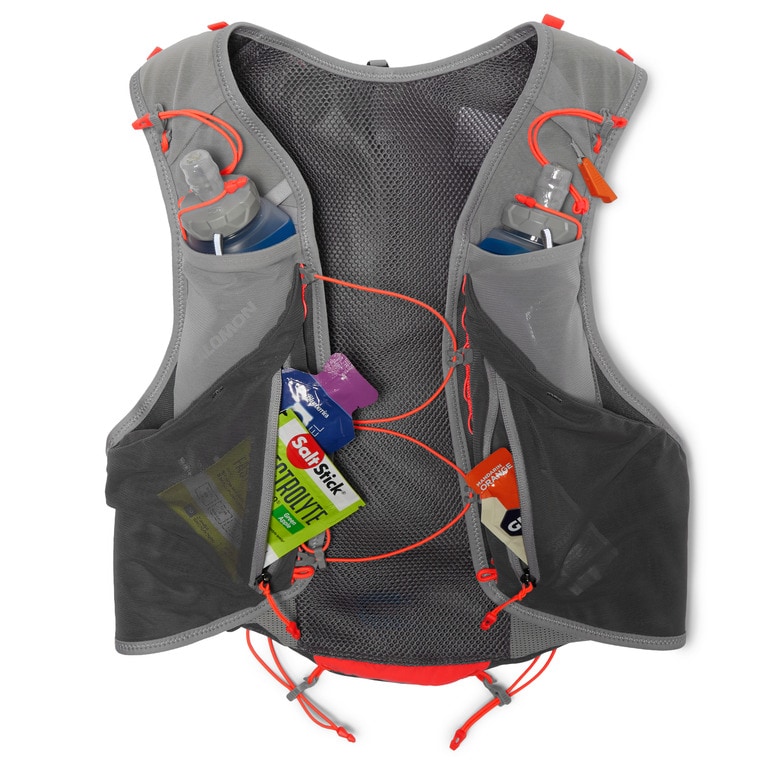
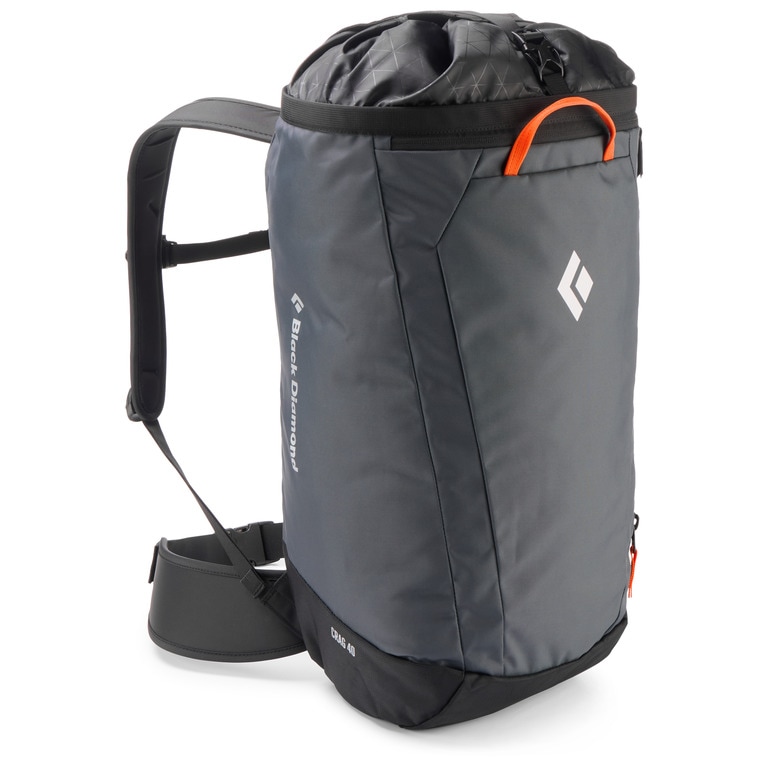
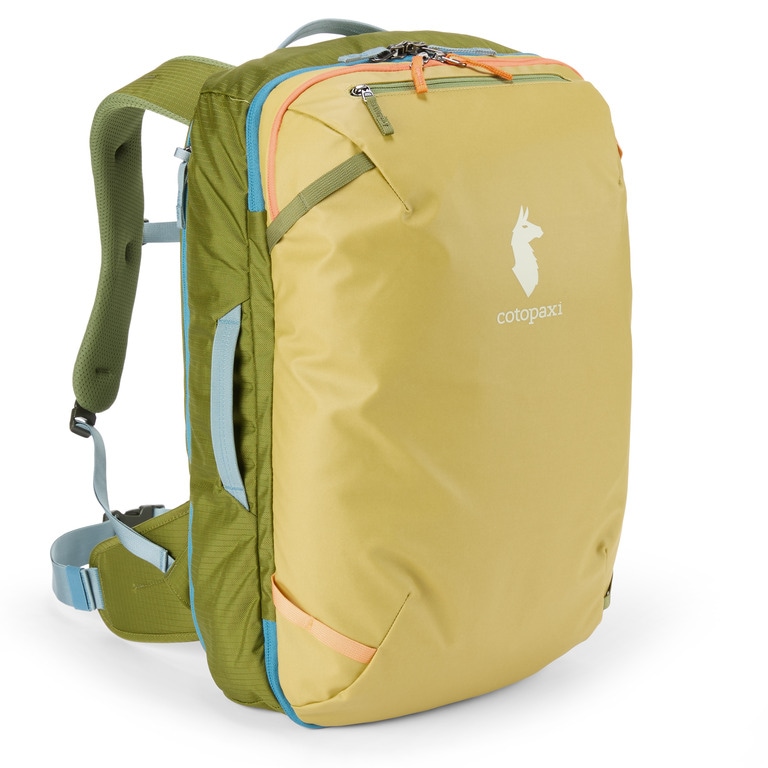
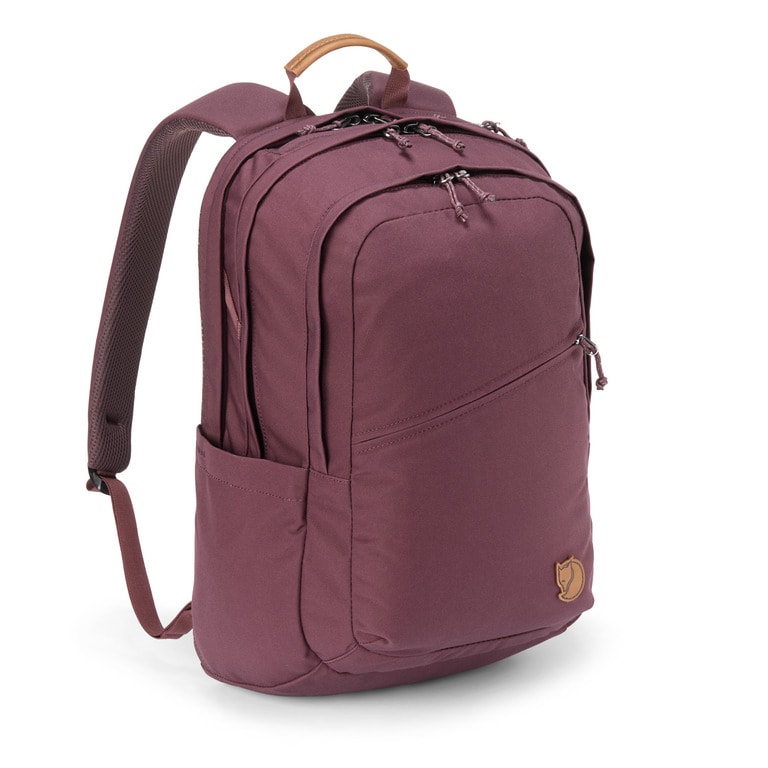
A quick way to narrow your search for a daypack is to look for one that's designed for the activity you’ll use it for, whether you're climbing, hiking, cycling or something else. If you need a quiver-of-one daypack ready for a range of adventures, look for an option built to last and just big enough for any activity you do currently or might pursue in the future. An option with lash-down points (e.g., accessory loops) will offer additional versatility. “They may be designed for one thing,” Higgs says of these loops, “but they can be used for anything!” You can use them to attach a bear bell, string wet clothes to dry or wrangle your climbing ropes, for example.
Here are the main activities that daypacks are built for and some of the features you'll find on them.
Pack type | Defining characteristics | Bells and whistles | Example |
|---|---|---|---|
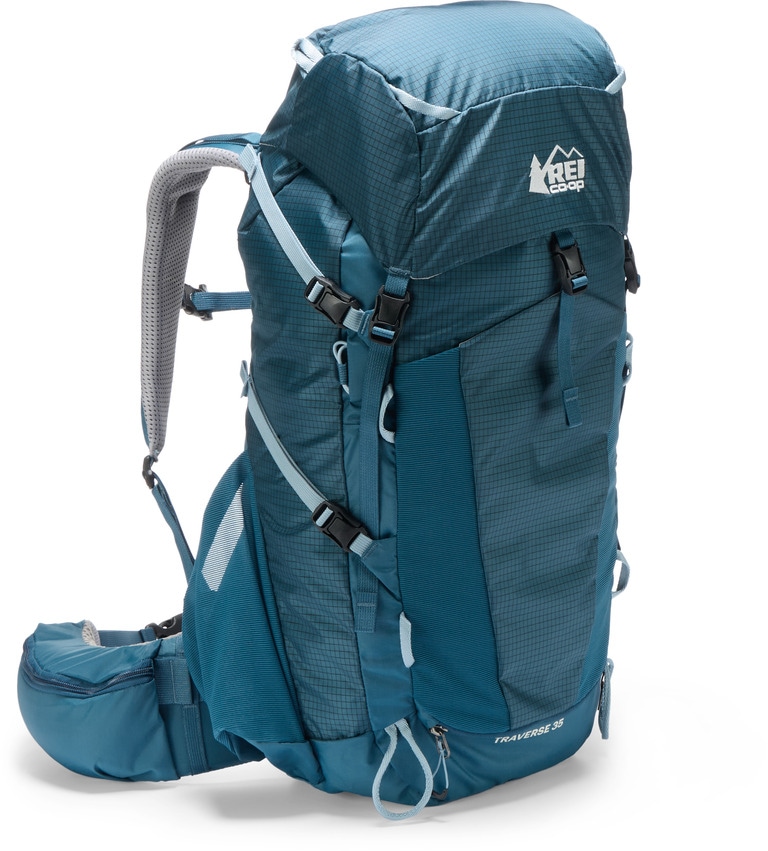
10–40 liters |
|
|  |
1–10 liters |
|
|  |
15–55 liters |
|
|  |
20–60 liters |
|
|  |
15–40 liters |
|  | |
5–25 liters |
Road bikers often use jersey pockets rather than a daypack |
| 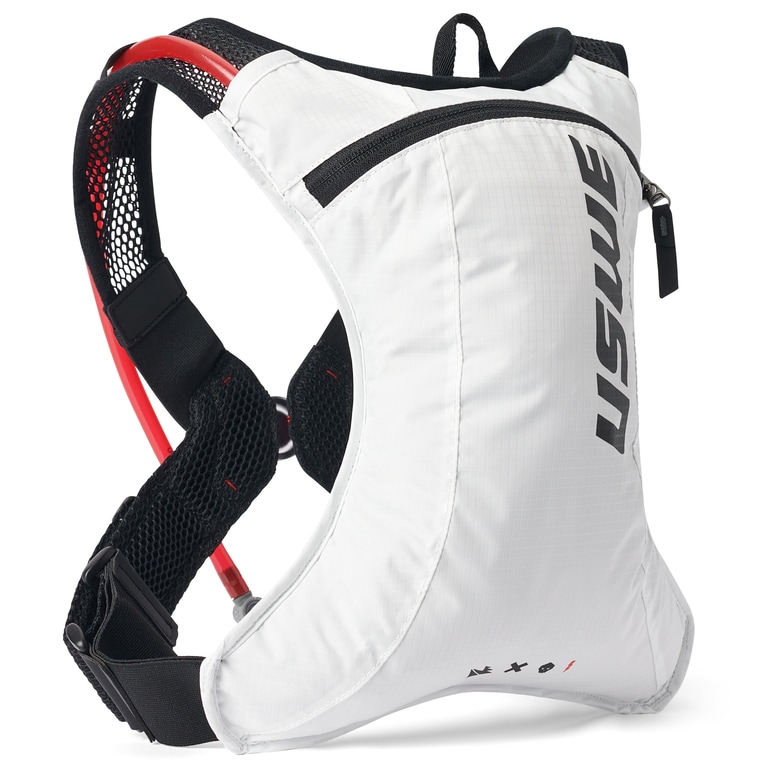 |
Ski and snowboard packs 15–45 liters | Lift-Accessed and Backcountry
Backcountry
|
| 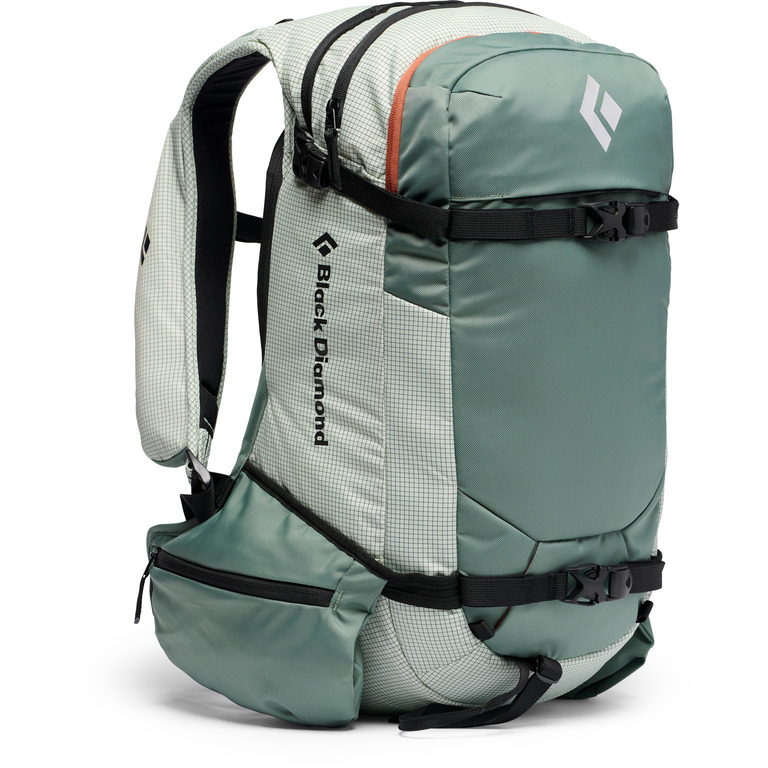 |
Photography packs 15–50 liters |
| 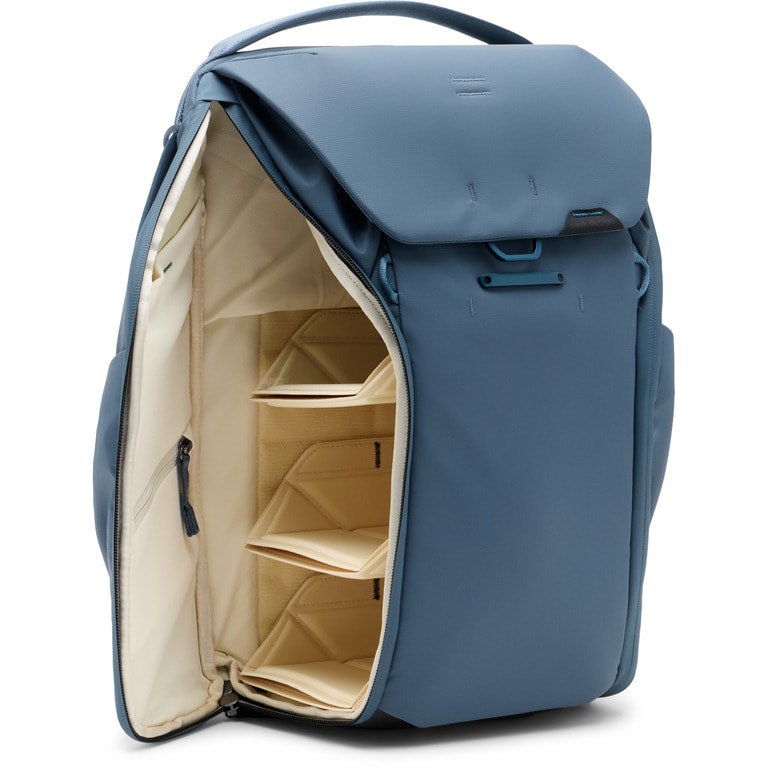 | |
5–10 liters (plus space for the child) |
|
| 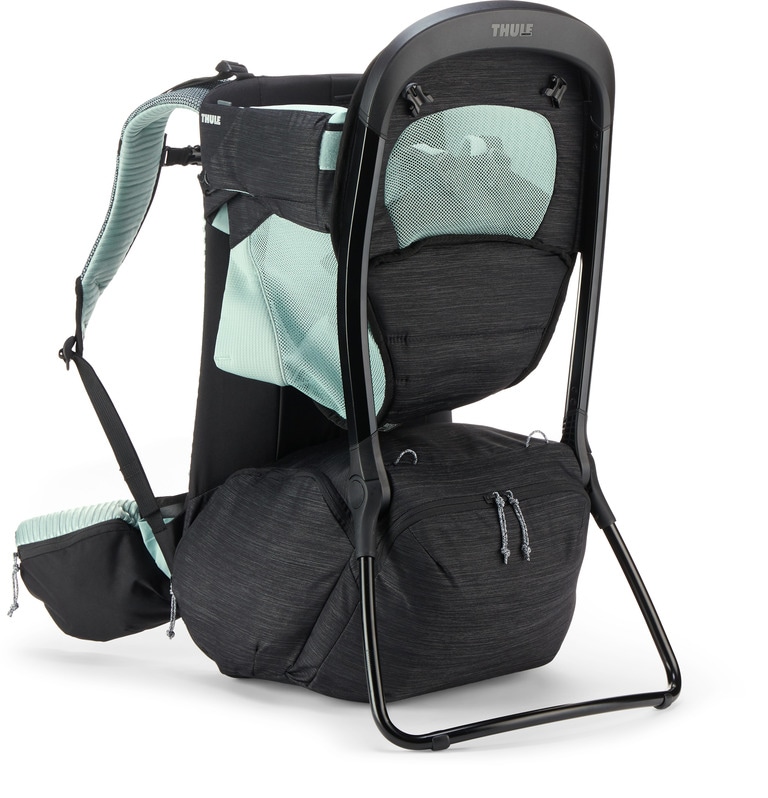 |
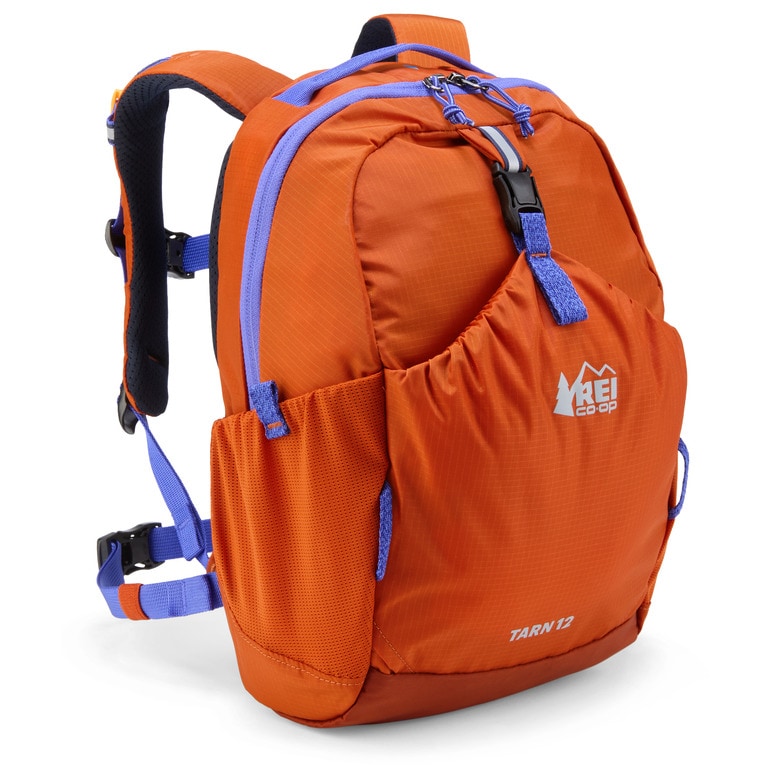
5–20 liters |
|
|  |
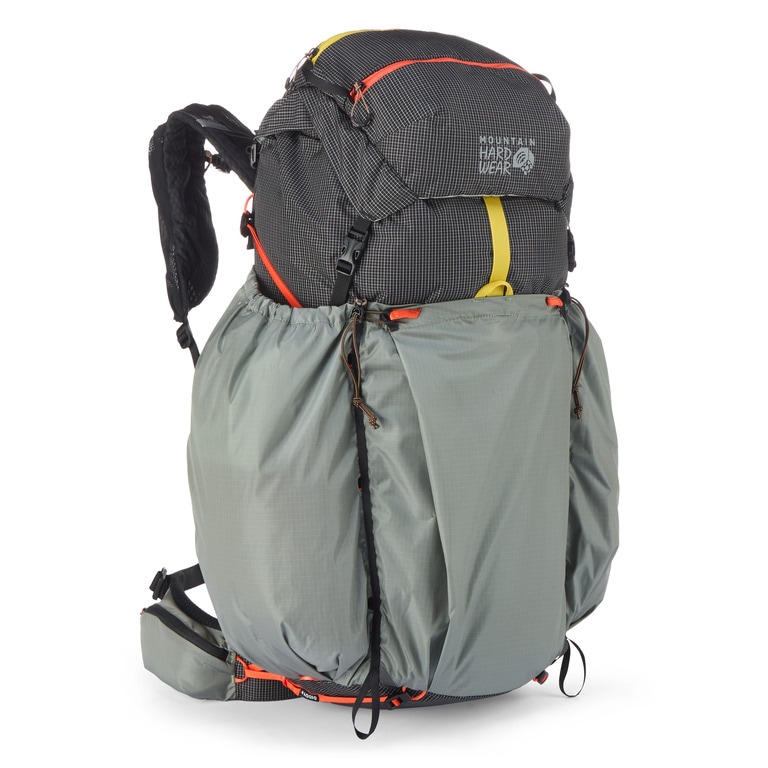
Backpacking packs 40–70 liters |
|
|  |