
Welcome to Ask an Outsider. We are here to answer your most pressing questions about enjoying time outside, like whether you can hike in jeans or how to reconcile different trail goals with a partner. Our advice givers are experts from both inside and outside REI Co-op who draw from their own experience and knowledge to help inform yours.
This time, we explore the question: Is urban hiking actually hiking?
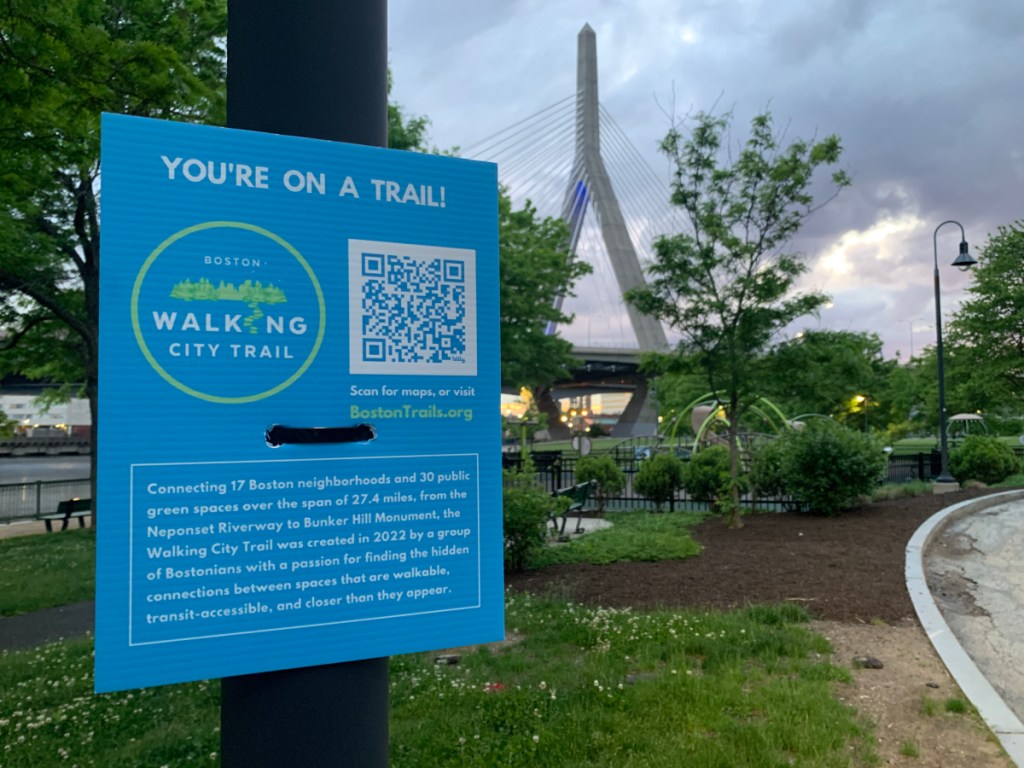
We asked Miles Howard, an urban thru-hiking advocate and REI Co-op Member since 2010, to weigh in. A writer, REI Co-op Member and the founder of Boston’s Walking City Trail, Howard has spent years exploring how city landscapes can offer the same sense of discovery, challenge and connection as traditional trails. He’s even written a how-to guide to building your own urban trail.
Read on for his perspective.
Want to submit a question?
Send it to expertadvice@rei.com. Include your name and the year you became an REI Co-op Member. Letters may be edited.
Dear Outsider,
One of my favorite things about living in a city is being able to explore so many neighborhoods and parks on foot. When we get nice weekend weather, I’ll load up my backpack with snacks and extra clothing, choose a local landmark like a historic monument or my favorite pho restaurant, and spend the better part of the day hiking there via green spaces, sidewalks, stairways, bridges, you name it. It’s a great workout, and full of surprises.
But whenever I talk about my urban adventures with friends who hike in the backcountry, they get a little snooty that I call them “hikes.” They say I’m “just walking.” I feel like this is dismissive and gatekeeper-y, but maybe I’m missing something. Is there a substantive difference between walking and going for a hike?
Signed, Morgan Z., REI Co-op Member since 2018
Dear Morgan,
As a fellow urban hiker, I’ve found myself asking the same question after hitting trails in rural Vermont and New Hampshire and catching up with friends who can’t conceive of the city as a hiking destination. But I can see where they’re coming from.
Historically, “hiking” has been considered a more vigorous kind of off-road foot travel, usually in backcountry settings and on rocky, rooty trails. These days, though, more people are warming up to the beauty and oddities of the cityscape, which a nice crosstown ramble can illuminate. Just look at the success of new urban trails like the Chicago Outerbelt and Boston’s Walking City Trail. In practice, the line between walking and hiking isn’t fixed. It is shaped by how and why you move through a place.
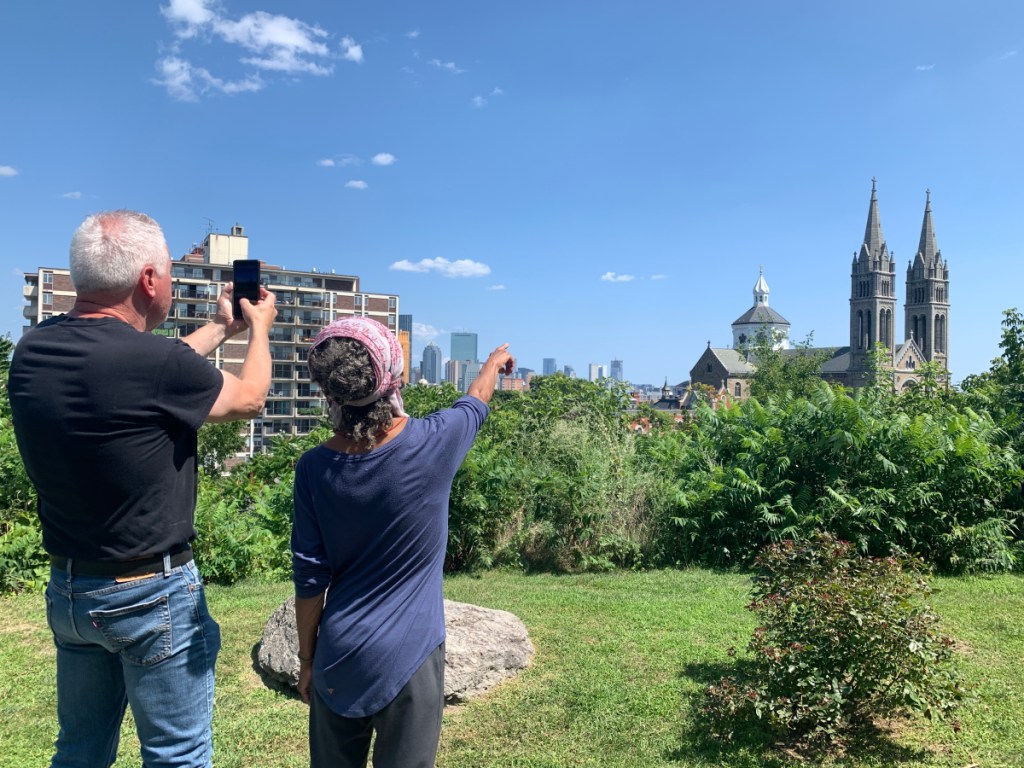
I decided to dig into your question with another city explorer: Darren Josey, creator of the Great Malden Outdoors, a municipal program that offers no-cost to low-cost hiking, biking, fishing and rock climbing opportunities in the Boston suburb of Malden.
Sense of Place or State of Mind
“If there’s a peak involved, I think ‘hiking,’” Josey says. Josey’s early experiences with backcountry travel led to a career in the outdoor gear sector. He spent two and a half years at the equipment manufacturer NEMO and later founded First Seed Sown, a sales and marketing agency that supports BIPOC-owned businesses in the outdoor industry. (He’s also a core advisor for the REI Co-op Path Ahead Ventures program.) Now, helming a city program that helps Malden’s diverse communities find ways to recreate outside, Josey is revisiting his own idea of what “hiking” looks like.
“There are a couple of trails in the woods by my house that people with backcountry experience would associate more with walking,” Josey says. “But if you have mobility challenges or if you haven’t been on many dirt walking trails, the trails may feel closer to hiking.” Whether a new outdoor challenge takes you along a footpath through dense tamarack groves and glacial boulders, or a paved walkway meandering past a tidal salt marsh on the edge of town, there’s something intentional about setting off either way.
So, yes, while “hiking” has been defined in more rigorous terms, like trudging uphill or scrambling over obstacles, who defines what “rigorous” is? Does hiking have to include struggle?
More often, it comes down to intention. It is the choice to spend time outdoors in a way that engages your body, your attention and your surroundings. We can think of a hike as a conscious decision to push ourselves outside and enjoy some quality time with the sticks, stones and streams.
Finally, let’s consider how exposure to the elements can break down that walking-versus-hiking divide.
The Hiking Baseline
In August 2025, I traveled to Texas to visit an old friend I worked with in the Appalachian Mountain Club’s White Mountain huts. No longer able to run ridgelines together, we decided to explore one of Dallas–Fort Worth’s newer urban trails: the 9.3-mile paved (and largely unshaded) path called the Northaven Trail. A forecasted high of 103°F forced us to begin walking before dawn. We wore UV-resistant sun hoodies, wielded sun umbrellas and carried liters of water in our packs. Were there great woodlands and hilltops within sight at any point? Nope. Were we wearing lightweight sneakers instead of our burlier hiking boots? You bet.
But the exposure of our cross-city expedition felt much more like hiking. We had to map out our logistics and gear more deliberatively than for an everyday stroll. Not doing so would have put us in danger, just as it’s never a good idea to head into a national forest without a backpack containing a trail map, headlamp and the other Ten Essentials. That’s another useful distinction. Hiking often involves some level of exposure to weather or distance that requires preparation. To hike is to accept those variables and to pack accordingly. Josey considers that level of intention different from walking’s more casual nature.
“A place that you might consider walking territory most of the year can become hiking territory when you need gear to get through it,” Josey says. For example, while he might traverse the rocky dirt paths in the Middlesex Fells in a pair of Vans, seasonal conditions might force a different approach. “We’ve had a lot of ice in the Boston area this winter, and I sometimes found myself putting on MICROspikes and using trekking poles because several of our local walking venues had become treacherous. I felt like I was getting the sort of hiking experience you’d have in the mountains because I was relying on that gear.”
Find Your Path
But here’s the most crucial thing to remember, Morgan: Ultimately, we define our hiking and walking practices as we reflect on foot journeys that felt more meditative, and ones that left us wild-haired and wheezy.
So, while your friends may think of hiking as something that happens only on backcountry trails, your approach fits within a broader, evolving definition of what a hike can be. You plan a route, pack gear and set out with intention. The next time your friends push back, invite them along. Let them experience the route, the rhythm and the surprises found moving through a city on foot. They may come away with a new perspective on what counts as a hike.
Happy trails!