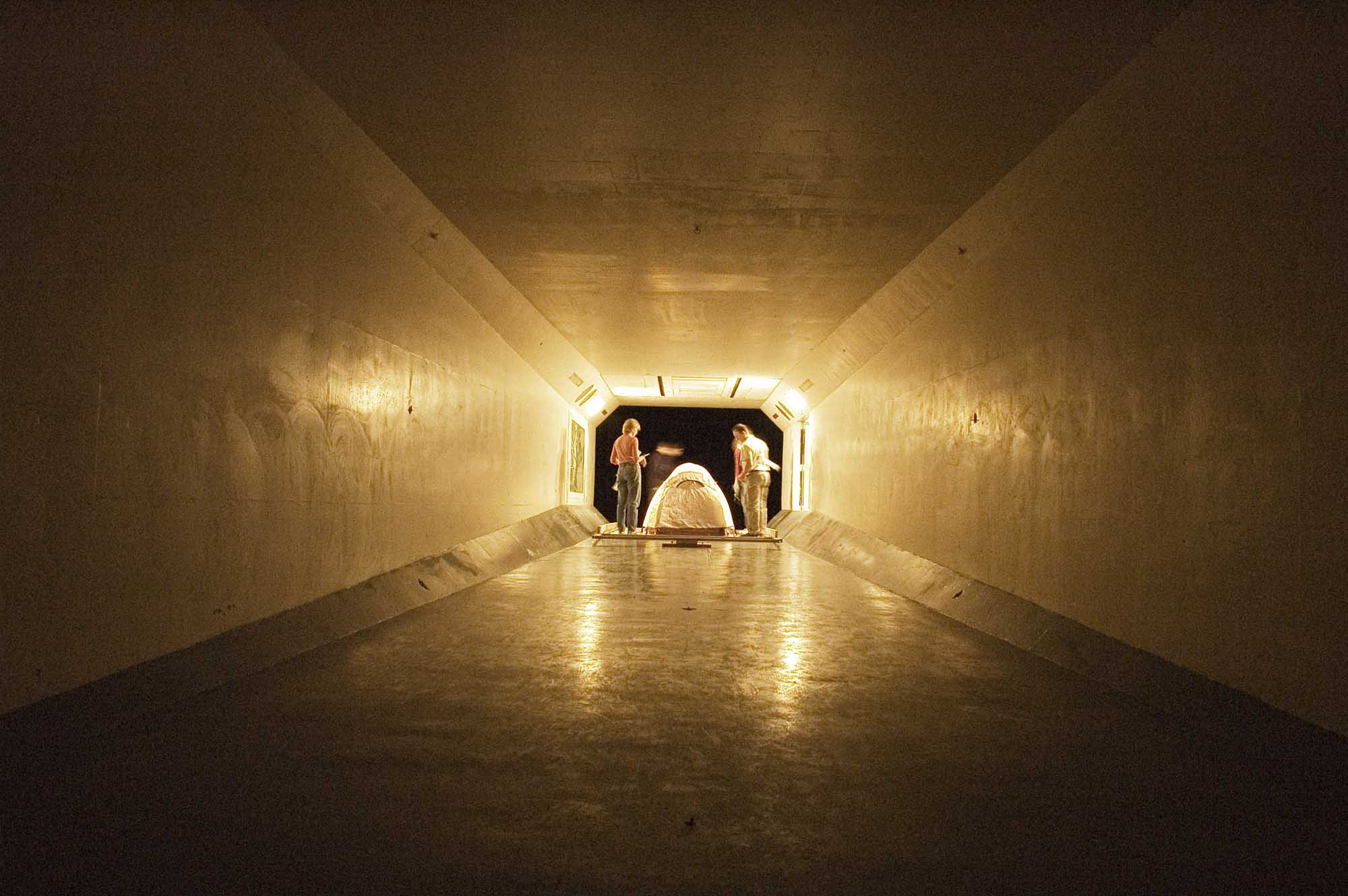
If you’ve ever wondered how REI Co-op tests gear performance on new and updated product, the answer is: rigorously.
At the center of that work is the Magnusson Lab, an on-site facility established in 1971 and named for former Boeing engineer Cal Magnusson, who founded the co-op’s quality control department. Inside the “Mag Lab,” REI Co-op brand gear and apparel undergo a battery of tests designed to simulate the repetitive stress and environmental conditions that outdoor gear faces in real use. “Cal and the lab have developed many firsts for the industry, starting with the ice axe handle tests in the early ’70s all the way through modern-day developments, like how we consistently measure the capacity of bags,” says REI historian Will Dunn.
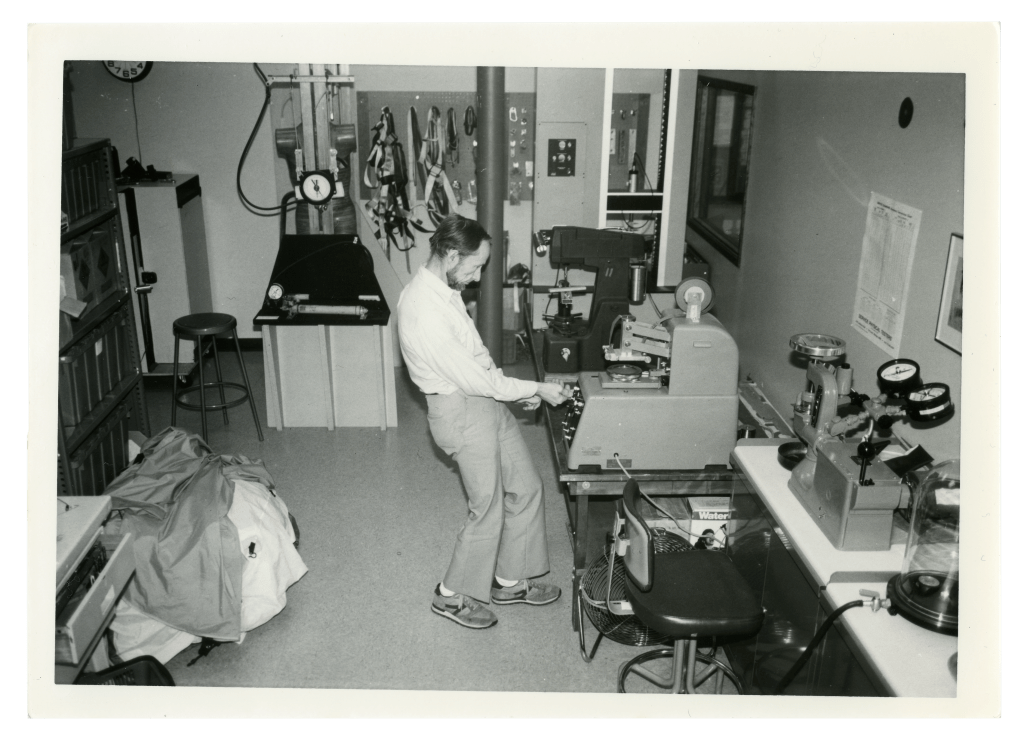
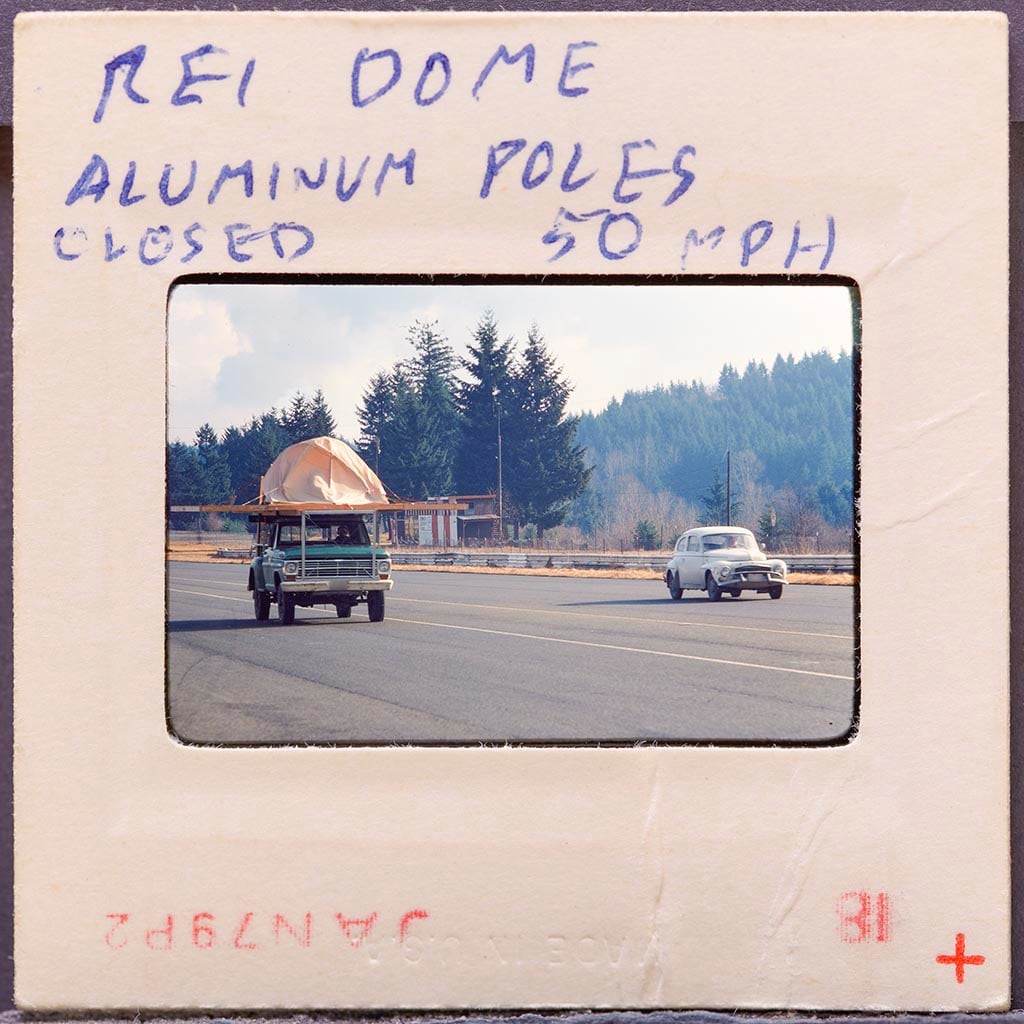
That testing has taken many forms over the years. Early methods included attaching tents to pickup truck beds and driving at high speeds to assess wind resistance. Another method involved using a hand-built fiberglass “human” to evaluate sleeping bag temperature ratings. By the 1980s, REI Co-op Members could even request “a free transcript of insulation test results as they apply to specific garments,” simply by sending in a self-addressed, stamped envelope, an early example of the co-op’s commitment to sharing product performance data directly with customers. This systematic approach to testing replaced decades of anecdotal evidence and secondhand information from outside manufacturers, and it quickly set a high standard for evaluating gear performance.
Today, the Mag Lab continues to support product development through controlled, repeatable testing, though the tents don’t hit the highway like they used to. Instead, Mag Lab technicians may repeatedly expose poles to salt water for weeks to assess durability against stress and corrosion. A backpacking chair endures fatigue testing by repeatedly dropping a weighted bag onto the seat; this helps technicians understand how use over time affects things like assembly and fabric durability, as well as when and how the product may fail. There’s also a thermal testing manikin, called “Mani,” who trials down jackets and sleeping bags like those in the Magma collection in a climate-controlled chamber.
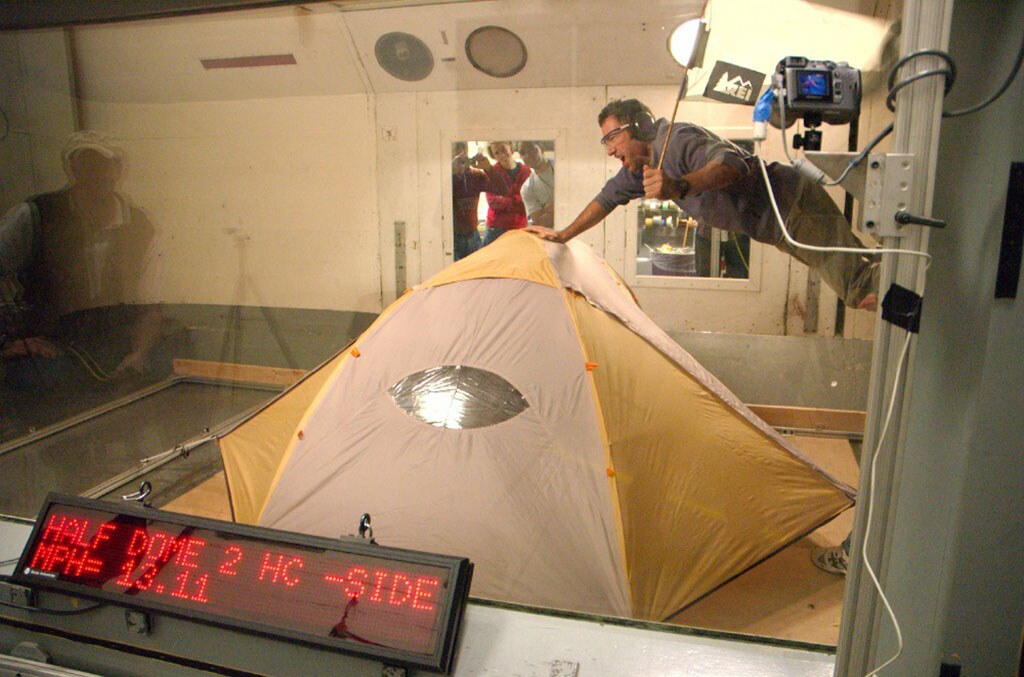
Rather than simply being a last step before products hit REI shelves, the Mag Lab and product design teams are trusted collaborators. “Especially if it’s a new idea, new design that we’re trying, we actually work really closely with [REI Co-op brand designers], to validate the performance,” says Diana Wyman, a senior test engineer. “If it’s something that’s supposed to be warmer, cooler, bigger, better than the last one, we’ll do comparisons. So, we do work closely with both materials design and product design for new products.”
In a recent vertical wicking analysis of the Swiftland collection, for example, technicians place one end of a long strip of fabric in water, and track how far the moisture has traveled in the course of 10 minutes. “We want to see the water move as far as possible because that’s what’s going to happen with perspiration in use,” Wyman says. “We want to see it spread so it can dry quickly and provide additional cooling benefits and not be cold or clammy.”
Wyman says “sometimes, you have to get really creative” when designing tests in-house, though some pieces and materials are sent out for third-party analysis. “We really don’t know until we get into a project how much testing it’s going to involve.”
In 2025 alone, the Mag Lab ran more than 250 evaluations, Wyman says. “We’re typically doing at least two or three trials of everything to make sure we’re seeing an accurate number.” That means you can feel confident about the specifications you see on every REI Co-op product, from waterproof jackets to inflatable sleeping pads to your favorite camp chair, and beyond.