You could choose a water bottle based on looks alone, but visual appeal is no guarantee of reliability or performance. Variations in materials, cap design, capacity and features all affect how your bottle functions in day-to-day use, whatever that looks like for you. Some shoppers want their drink bottle to fit into a car’s cupholder or a bike’s bottle cage. Others need it to be leakproof for travel.
This guide lays out the considerations that shoppers face when choosing a water bottle for particular sports or for everyday hydration. We spoke with Sarah Hatridge, water bottle buyer for REI Co-op, to break down the most important factors when looking for the right water bottle.
Jump ahead to specific sections using the links below, or read on to learn about different types of water bottle construction and how to choose the right one.
How to Choose Between Metal or Plastic

Metal options include stainless steel and, less commonly, titanium.
Plastic water bottles are often made of Tritan (a copolyester, or what most clear Nalgene bottles are made of), high-density polyethylene (HDPE, which usually looks more opaque) and polyethylene (many squeezable sports bottles). All plastic drink vessels sold at REI Co-op are BPA-free. (More on that below.)
Plastic is lighter, but metal is better at insulating. “Plastic water bottles are lighter on average than metal designs,” says Sarah Hatridge, water bottle buyer for REI Co-op, but most aren’t insulated so they don’t keep drinks cold. For hot beverages, Hatridge says, “avoid plastic and stick with stainless steel.” Metal bottles also tend to cost more than plastic, but they’re more readily recyclable.
Both metal and plastic offer durability advantages, though they differ by material. Some plastic water bottles will shatter from hard impacts, especially in cold temperatures. Metal bottles won’t shatter, but they’re easily dented when dropped. Not only can dents make your metal bottle look battered, but they can also compromise its stability by turning the bottle’s formerly smooth bottom into a rumpled, tippy surface.
Plastic bottles and metal ones are equally good at resisting lingering flavors. As long as they’re thoroughly washed between uses, they won’t hold onto residual flavors from hydration tablets, herbal tea or other flavored drinks.
Insulated or Not?
Insulated water bottles keep both hot drinks hot and cold drinks cold. “And they don’t sweat, which I personally like,” says Sarah Hatridge, water bottle buyer for REI Co-op. And because they don’t sweat—in other words, they don’t accumulate condensation on the exterior–they stay dry to the touch, while uninsulated metal and plastic bottles may collect moisture when ambient temperatures are warmer than the drink inside. For these advantages, insulated bottles usually cost more than uninsulated ones.
- Metal insulated bottles: Most insulated bottles are made of double-walled stainless steel. The insulating power comes from vacuum construction: Lacking air molecules, the space between the metal layers prevents energy transfer via both convection and conduction, two forms of heat migration. So even though that vacuum space is thin, it’s very effective at preserving the temperatures of the beverages inside.
- Plastic insulated bottles: While most insulated bottles are made of metal, a few are plastic. Using double-walled construction with insulation sandwiched between, some plastic water bottles (particularly ones made for cycling) can claim to keep drinks cold for longer than standard bottles.
How to Find the Best Cap for Your Needs
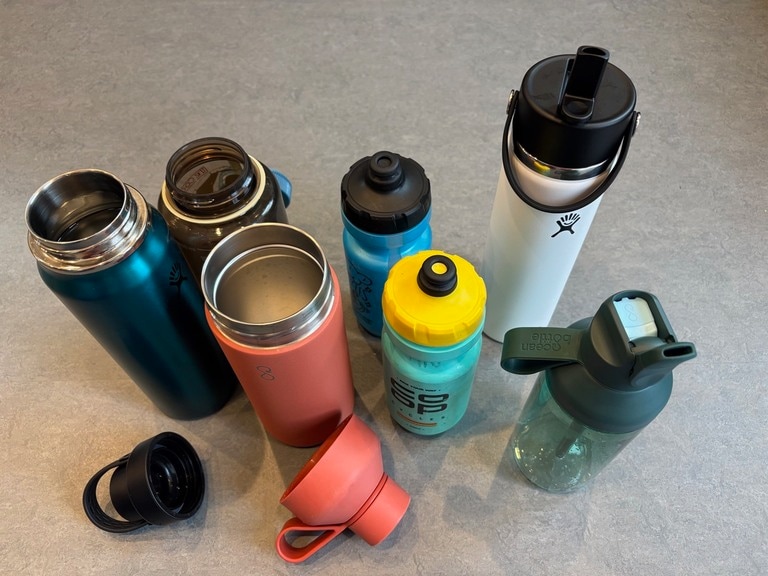
Lid and cap designs influence flow rate, cleaning ease and more. When choosing a cap style, consider both the bottle opening and the cap style.
Bottle opening
- Wide opening: Make it easy to add ice cubes to bottles with large fill zones. They’re also easy to clean, because the wide opening makes it possible to reach the bottom corners that may collect residues from flavored drinks. The downside is splash: If you don’t control the bottle’s angle, you can get soaked with overflow.
- Narrow opening: These imitate a soda bottle opening and allow for a fast flow with less splash back. They combine the simplicity of a single-body water bottle (usually uninsulated metal or plastic) with a less spill-prone opening, but they are a little more awkward to clean unless the mouthpiece unscrews from a broader wide-mouth opening. The latter category includes insulated models and bottles described as having a chug cap.
Cap style
- Screw cap: This simple, threaded lid is durable, leak-resistant when properly capped, and easier to clean with fewer parts.
- Lid with straw: Designed to reduce splash back while drinking during bumpy travels or while walking. Many feature a flip-top mouthpiece that folds flat to stop the flow (many of these options are leakproof), and a few include a protective cap over the drink spout that keeps it clean between sips. But because these caps have more small parts, they’re harder to clean and less than ideal for sugary drinks or flavored beverages. Only sip cold or room-temperature drinks through a straw to avoid burning yourself.
- Push/pull caps: Commonly found on bike water bottles and some kids' water bottles, these caps allow for hands-free operation: Just use your lips or teeth to tug on the topper and release the flow.
How to Determine Your Ideal Bottle Capacity
When it comes to hydration, it might seem like bigger is better—until your vessel becomes too heavy to comfortably carry or too large to fit into cup holders or backpacks’ bottle sleeves. That’s why it’s good to consider not just how much you want to drink, but how often you’ll encounter refill opportunities.
Bottles that hold 36 to 50 ounces of liquid are ideal for daylong outings, while smaller, 6- to 20-ounce bottles are better for short commutes between fill-ups. In general, says Hatridge, smaller bottles are gaining in popularity: Whereas 32 or 36 ounces used to have wider appeal, shoppers are now gravitating toward bottles holding 24-ounces or less.
Other Water Bottle Features

Fits in a cupholder: Many bottles claim to fit into car cup holders, but it pays to double-check the dimensions of your vehicle’s drink storage or the size of your backpack’s bottle sleeve. Differences here will make your bottle far less convenient to use day-to-day.
Collapsible water bottles: When storage space is limited, consider collapsible bottles that fold flat when empty. These are great for maximizing space in your backpack or carry-on luggage; some even fit into a jacket pocket (making them handy for refilling at ski resorts’ water stations).
Cap variability: Some bottles work with swappable caps, allowing you to vary your mouthpiece and features. For example, you might use a sipping lid for coffee, but opt for straw cap for gym workouts. A few caps actually build multiple options into one convertible design like a straw plus an open spout.
Splash-proof accessories: If you like wide-mouth bottles but want to reduce the chance of unwanted splash backs, consider an accessory such as the Guyot Designs Splashguard. It nests inside the bottle’s opening to create a smaller mouthpiece.
Leakproof designs: Not all bottles are leakproof. If avoiding unexpected spills is important, consult the claims made by each bottle and cap. “Screw-top closures are the most secure,” says Hatrick, “especially on airplanes, where changes in air pressure can loosen seals on otherwise reliable lids that use flip-top or similar designs.”
Mouthpiece caps: If you plan to use your bottle in conspicuously dirty or dusty locations—think hiking trails or construction sites—you might want a lid that includes a cap over the mouthpiece to keep it clean.
The Best Bottles for Different Activities

Most water bottles are versatile enough to perform across a variety of situations: The same bottle that you use on car trips can accompany you to the gym or on a hike, occupy the drink holster on your spin bike, quench your thirst at the pickleball or tennis courts, and hang out beside your blanket at the beach. (Read our picks for the best water bottles).
But some sports call for specialized bottles.
Running water bottles: Runners, for example, often find standard water bottles to be too heavy and cumbersome to hold during runs and increase sloshing around, which can be particularly irritating. They typically prefer smaller-capacity bottles that may feature a hand strap (to make it easier to grasp the bottle while pumping your arms) or use collapsible construction that conforms to a running vest or shorts pocket.
Bike water bottles: Cyclists need bottles with an exterior that’s grippy enough to sit snugly in a bike’s bottle cage (smooth metal bottles often get bounced out). Most cyclists prefer plastic bottles for this reason, but there are many bike-friendly stainless steel options, which can be a good idea for longer rides where you might want to insulate your liquids.
Filter water bottles for backpacking or travel: These include built-in filters that remove contaminants. These are popular with backcountry hikers and global travelers who want a reusable bottle that lets them refill from taps and other water sources that may contain illness-causing bacteria and parasites. Water bottle purifiers go one step further than water filters by combating viruses, which are too tiny for most filters to effectively catch.
Health and Sustainability Factors
Regardless of whether they’re made of metal or plastic, drink vessels sold at REI Co-op meet stringent measures for consumer safety.
All bottles sold at REI Co-op cannot intentionally be manufactured with, and are tested for, the industrial chemical Bisphenol A (BPA) and other potentially health-harming substances, such as phthalates. More study is needed to assess whether plastic bottles (even ones that are BPA-free) release chemicals or microplastics into the water they contain when they’re scratched or exposed to heat. If you have concerns about plastics’ untested qualities, you might feel better about drinking from metal bottles.
Food-grade stainless steel is free of BPA and related contaminants, and it doesn’t alter drinks’ flavor or collect off odors. Its standout durability (despite the potential for dents, steel bottles enjoy a long life span) and recyclability up steel’s sustainability scores.
Manufacturing matters. Bottles that are produced by Climate Label Certified brands minimize and offset carbon emissions. (Read more about the Climate Label or explore certified products or brands). Bottles made by B Corp brands also prioritize both environmental and social accountability. And bottles made from postconsumer recycled materials (including both steel and plastic) reduce the product’s environmental cost.
How to Clean and Store Your Water Bottle
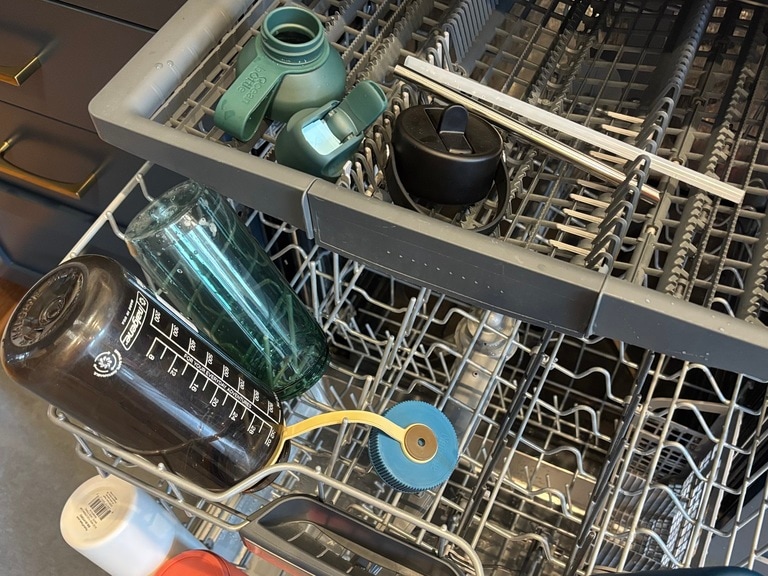
Be sure to check manufacturers’ instructions about care and cleaning. Many stainless steel and plastic water bottles are dishwasher-safe; some brands may recommend using the top rack of your dishwasher for some parts. You can also hand wash the bottle with water and a mild soap and air dry it completely before storage. Bottles that are lined with delicate coatings (such as the Purist bottles’ silicon dioxide lining that inhibits mold and odors) must not be scrubbed.
If you can, disassemble lid parts for more thorough cleaning, especially if you’ve used them with flavored drinks. And if your bottle calls for a deep clean? Learn more expert advice on how to rehabilitate an icky water bottle.