What comes to mind when you hear the phrase "camp cooking?" For many, it's pouring boiling water into a store-bought pouch of freeze-dried food or cranking open a can of beans while skewering a few hot dogs over the fire.
Neither is bad, of course, but leveling up your camp kitchen game can pay off deliciously.
"I think a lot of people are scared of camp cooking," says Claude Matkin, a department manager at the REI store in Prescott, AZ. Drawing from an extensive background in the restaurant industry, Matkin has taught a variety of classes over the years on topics like foraging, camp coffee and gourmet cooking. "It's no different than at home—you can either get a frozen pizza or you can try to make your own dough," he says. "What you invest in it is what you're going to get out of it."
Want to make the most of your camping experience? Here are our tips for creating a top-notch camp kitchen.
Skip ahead for quick recommendations or continue reading for more information.
Choosing Your Kitchen Gear
While you can craft a rustic setup with nothing more than a tin can and a campfire, a fully stocked camp kitchen will offer infinite options come mealtime. Here's what to consider when creating yours.
Camp Kitchen Essentials
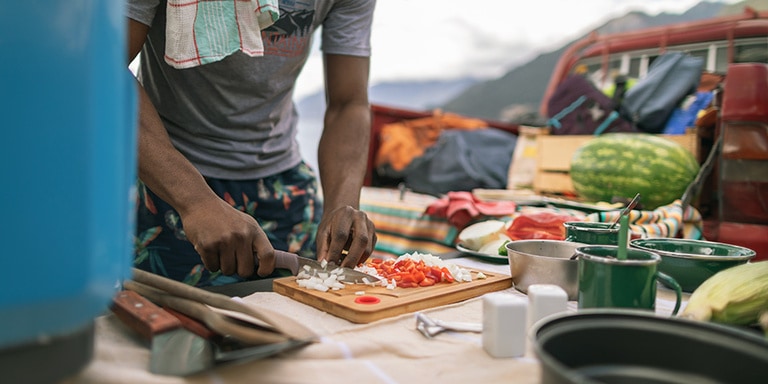
Building out a camp kitchen doesn't mean you have to buy brand-new everything. You can repurpose items you already own, borrow gear from a friend (you prep the food, they bring the cookware) or purchase items secondhand. You can also acquire these items over time as you learn what you want and need from your kitchen setup.
- Tableware: Disposable dishes might cut cleanup time in half, but the low-effort option creates a lot of unnecessary waste. Invest instead in reusable versions that you can also use for picnics, beach days and parties. Buy tableware item by item or purchase a mess kit that includes multiple essentials like cups, bowls, plates and cutlery.
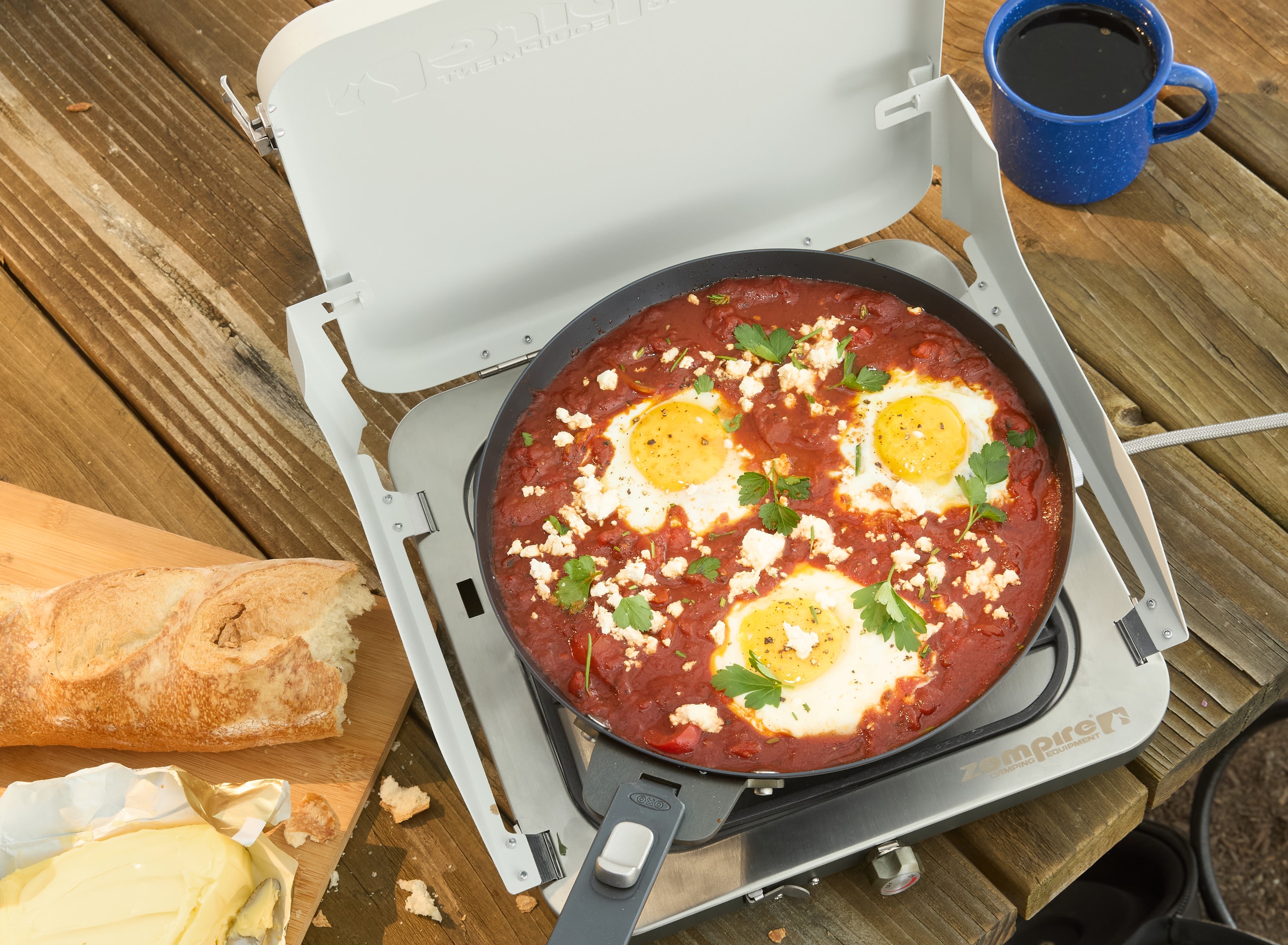
- Cookware: Far from the easy-to-dent aluminum pots and pans of yore, today's outdoor cookware is built to last and made with heat-distribution technology and dishwasher-friendly materials. While you can spring for a robust set that includes multiple pans, pots and more, you can start with just a large skillet and sizeable pot (large enough to boil at least six cups of water) with a lid. If you enjoy cooking over an open flame, opt instead for a cast iron Dutch oven, which has a greater capacity and more depth than a classic frying pan. Don't forget a pot holder to protect your paws. (Related reading: How to Choose Camping Cookware)
- Stove: Even if the allure of campfire cooking is strong, adding a stove to the mix brings versatility and convenience to your kitchen setup. While one-burners work well for small-scale meal prep and backpacking, a two-burner stove is a better option for car campers who want to prep multiple dishes at once (especially important for group meals). Look for one with a windscreen to help protect the flame from gusts. This will improve fuel efficiency and reduce cook time. Many modern stoves have an ignition button, but Matkin recommends carrying matches or a lighter as backup.
- Utensils: Consider what you use most at home. Chances are, you'll need many of the same items when cooking in nature. A good chopping knife (and cutting board) is necessary, and you might also want a whisk, peeler, stirring spoon, spatula, tongs, corkscrew, can opener, measuring spoons and measuring cup.
- Cleanup: "I tell everybody that you want to [pack] everything including the kitchen sink," says Matkin. He means this quite literally—a camp "sink" can be anything from a plastic tub to a large bucket to an actual portable sink (opt for a collapsible one to save space). These are handy not just for soaking and washing dishes but also gathering water and toting your supplies. Other cleanup supplies include biodegradable soap, garbage or recycling bags, a dish scraper, sponge, dish towels and cheesecloth or pantyhose to strain scraps from gray water.
Bonus Items
Beyond the basics, consider what nice-to-have items will elevate your cooking and dining experience.
- Coffee & tea maker: While instant coffee has come a long way, so have camp coffee makers and tea kettles. These lightweight, compact options make it easy to brew a delicious cup at camp.
- Accessories: Turn a grubby picnic table into something a little more special by adding accessories like a tablecloth (with clips to keep it secure), fairy lights, solar lanterns and sit pads.
- Extra prep space: Not all campsites have picnic tables. Ensure you have enough space to prep and serve meals by bringing a portable table for your stove, ingredients and cookware.
Prepping at Home
Even when you're outside, you probably don't want to spend your entire evening in the kitchen. To avoid this, prep as much as you can at home.
Here are some tips for getting ahead:
- Create a camp kitchen checklist and consult it before packing.
- Create a portable gear organization system using storage bins, crates or totes labeled with the items they contain.
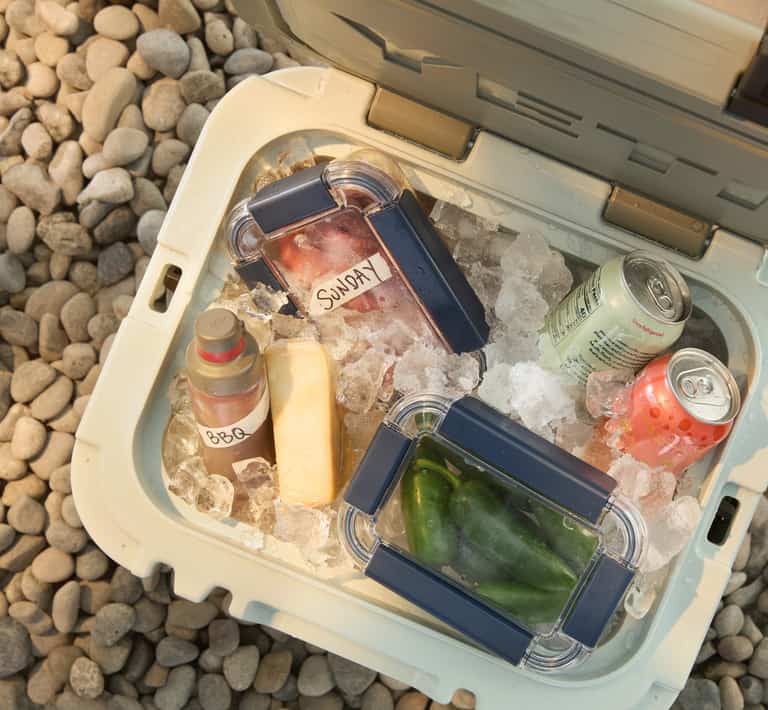
- Write down, print out or snap photos of ingredient lists and recipe directions, labeling each with the date and meal (for instance, "Saturday Breakfast").
- Pre-chop your ingredients and store them in reusable containers labeled with the contents.
- Similarly, premix and label dry ingredients instead of toting bulky boxes and bags.
Setting Up Your Kitchen at Camp
Let someone else set up the tents and get the campfire going—it's time to cook!
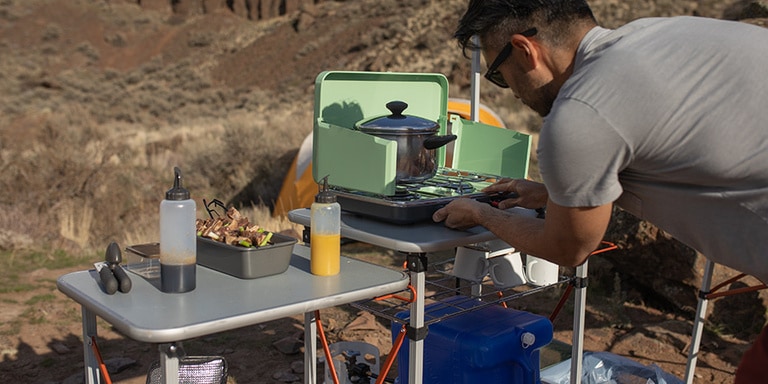
Get Organized
- Set up a wash station with running water (a jug with a spigot works wonders; use a bungee cord to lash it to the picnic table), biodegradable soap and a hand towel.
- Create an area with separate containers for garbage, compost and recycling.
- Consult your recipe and lay out all ingredients, cookware and utensils needed before you begin.
- If you're handy and want to really impress your fellow campers, consider building a camp kitchen chuck box that will serve as an all-in-one kitchen on the go.
Clean Up
While it's best to tidy up as you go, you'll need to wash dishes at some point after your meal. This tried-and-true method utilizes three "sinks," or, more likely, three buckets or bins:
Step 1: Fill a container with hot water and biodegradable soap. Use it to soak and scrub your dishes.
Step 2: Rinse dishes in the same container of hot water.
Step 3: Do a final rinse in another container filled with cool water.
Step 4: Towel- or air-dry dishes.
Leave No Trace
Dirty dishwater disposal is where things get tricky: While it's tempting to dump it all onto the ground, this isn't recommended practice. Food scraps left in the water can attract animals, who will then claw at the ground in hunt of a tasty meal and potentially destroying grass and other foliage in the process. Instead, Matkin uses a piece of cheesecloth or pantyhose to filter out scraps, which he packs out or throws in the garbage. To dispose of the remaining gray water, he recommends dispersing it as widely as possible, so that it doesn't puddle up in a single spot. (Many established campgrounds may also have designated areas for washing dishes).
Store Wisely
Speaking of animal attractants, it's important to research food storage regulations wherever you plan to camp. Some places require that you bring a bear canister. Others provide bear-proof lockers.
Getting Creative
Here are a few ideas for elevating your camp meals.
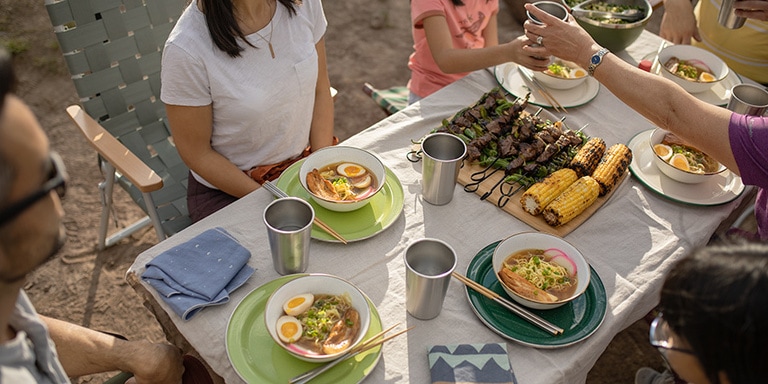
Seek Inspiration
"I always want people to try different foods," says Matkin. "But I always tell them to make sure they're not trying something for the first time in the woods." Carve out some time before your next trip to test a few recipes at home. Thumb through a couple of outdoor cookbooks, visit websites like Dirty Gourmet and Fresh Off the Grid or start right here with REI's collection of drool-worthy, camp-friendly recipes, including creative dishes like spinach goat cheese frittata and seafood risotto that go way beyond typical tent-side fare.
Ramp Up Your Flavor
"Spice is life," says Matkin. While he's partial to anything that adds heat to a dish (especially when the weather's cold), shaking a few homemade or store-bought spice blends into portable containers or mixing up a couple sauces and marinades in squeeze bottles can elevate even the most basic camp food. One of Matkin's favorite things to cart along on a trip is a container of coconut water, which adds a slight tropical sweetness—plus electrolytes and energy-boosting sugars—to anything from breakfast granola to Thai curry.
Indulge Your Sweet Tooth
Sure, planning out three square meals is important, but let's not forget dessert. S'mores are a classic, and for the ultimate upgrade Matkin recommends grabbing a pair of camp roasting forks that rotate for even heat distribution on your 'mallows. But why not go a step above and try out one of Matkin's favorite desserts from his childhood: campfire apple crisp. Create a small packet from a piece of foil and fill it with a mixture of chopped apple, granola, cinnamon and butter, then chuck the whole thing in the fire for 15 to 20 minutes. "It's toasty and warm and it's actually got real fruit in it, so it's not going to be full of sugar," says Matkin. "It's still one of my favorite things to this day."