A life of outdoor adventure can come with a counterweight: lots of bulky gear. Backpacks, tents, skis and camp chairs stack up fast when you’re packing for a family vacation, a long road trip with friends or a short ski weekend. By adding a cargo box, basket or bag to your vehicle, you'll gain extra storage space and keep your gear protected, so you can take everything you need without having to fill the inside of your car to the max.
But how do you find the right cargo box for you? The process can be a confusing one but in this article, we’ll help you consider your main storage options, and find the right size that fits your vehicle and hauling needs.
Read on to learn more or jump ahead using the links below:
- Reasons to get a cargo box
- Roof vs. hitch: Which box is right for you?
- What size cargo box do you need?
- How many passengers?
- What gear will you haul?
- Consider dimensions
- Make sure the cargo box fits your car
- Hatch clearance
- Bar spread
- Additional features
- Baskets or bags: Alternatives to cargo boxes
- Common mistakes to avoid
If you’re looking for a car rack to haul a bike, kayak, skis or snowboard, consult our guide on How to Choose a Car Rack.
Shop Cargo Boxes, Baskets and Bags
Editor's Note: This article was updated April 29, 2026, with new information about the pros and cons of roof vs. hitch boxes, a comparison chart, and more buying advice.
Reasons to Get a Cargo Box
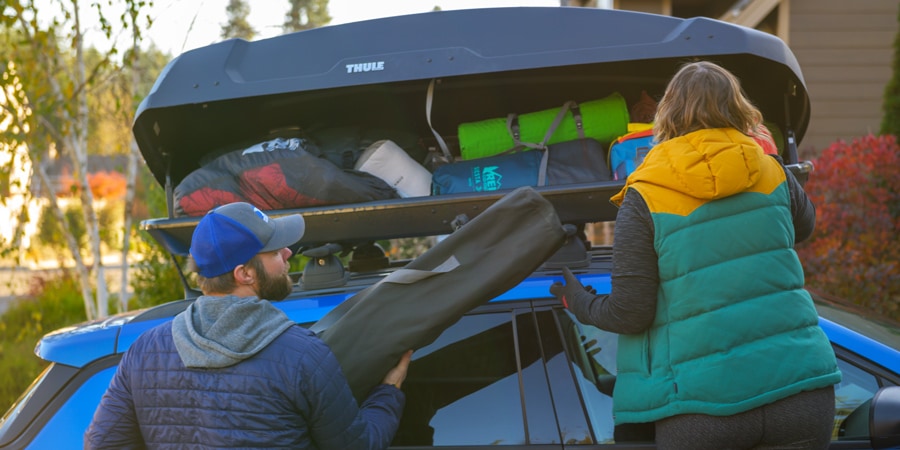
Cargo boxes and other alternatives offer a host of benefits, including freeing up space inside your car or SUV for kids, passengers and pets. They can:
- Add extra storage instantly: Cargo boxes increase storage capacity by 9 cubic feet to 21 cubic feet (or 260 to 600 liters). This is often a more economical option than, say, upgrading from a mid-size to a full-size vehicle. Cargo boxes are also relatively easy to move from one car to another.
- Improve safety and comfort: Storing gear on the roof or hitch keeps the driver’s line of sight clear and protects passengers if objects go flying. It’s also more comfortable than cramming gear inside the car.
- Transport odd-shaped gear: Cargo boxes can hold gear of various shapes and sizes. You can haul other items, too, like gardening tools, fishing rods, canopy tents, portable play pens or strollers, and beyond.
- Keep dirty or wet gear separate: Soggy tents, soaked backpacks or dripping skis after an adventure? Save your crew from having to endure a foggy and stinky ride home.
- Lock up gear: Hard-shell boxes have locking capability and are harder to break into than their plastic exterior might imply.
- Offer versatility: They store a range of different gear not just one type. If you're looking for activity-specific storage, consider ski and snowboard racks, bike racks, kayak racks and fishing rod holders.
Roof vs. hitch: Which box is right for you?
Once you’ve decided that a cargo box is the right solution for you, decide where on your vehicle to store it. Your main choices are either on the roof or in the rear (hitch) of your car.
Quick decision guide
- Choose a roof box if you want to haul a lot of gear securely, need to haul longer gear like skis or odd-shaped loose items, want to keep your rear hatch/truck accessible, and don’t mind lifting gear overhead.
- Choose a hitch box if you want the easier loading at waist height, have a vehicle with a high roof, are concerned about EV or mileage range, or you don’t have or don’t want to install a roof rack system.
- Choose a roof basket or bag if budget or home-storage is the priority and you don't mind trading off on security or weather protection.
Roof vs. Hitch Cargo Boxes Comparison Chart
Pros |
|
|
Cons |
|
|
Cargo Roof Boxes
These hard-shell plastic boxes mount to a roof rack system on the top of your car on roof rack crossbars and keep gear protected from the elements, out of sight and secured. They hold loose, odd-size gear in an enclosed system, but they generate wind resistance and noise during travel. They're a lot more expensive than cargo baskets or bags and take up storage space when not on your car.
Pros
- Easy access to items in the trunk and leaves your hitch free to add a bike rack
- Variety of roof box sizes and styles
- Can store loose and odd-shaped gear like folded strollers and camp chairs
- Able to hold longer items like fishing rods or skis
- Can move between vehicles but may require two people
Cons
- Requires a roof rack system (crossbars) to mount onto, which adds to the cost
- Requires loading/unloading from a higher position
- Less aerodynamic and may decrease gas mileage
- Vehicle + box height may limit garage/parking access
- Priciest cargo-hauling option
- Take up storage space when not on the vehicle
Key buying considerations
- Does your vehicle already come with roof rack crossbars, or will you need to get those installed? Depending on your vehicle and whether your vehicle has factory rails or crossbars, expect to pay $400 to $680 in additional costs. The price could go higher if you opt for a roof platform instead.
Major brands offer fit guides to help you decide which cargo box and roof rack system you need. Consult the Thule Fit Guide or the Yakima Fit Guide to find out which product is compatible with your vehicle's make and model.
- Check the recommended maximum roof load for your vehicle (often in your owner’s manual).
- Subtract the weight of the cargo box and other rack accessories from your vehicle's maximum load.
- Example: If your vehicle's maximum weight load is 165 pounds and your roof box weighs 50 pounds, your crossbars weigh 9 pounds and your towers/feet weigh 5 pounds, then you can put up to 101 pounds in the roof box.
Hitch Cargo Boxes
Hitch boxes, also known as hitch cargo carriers, attach to your vehicle’s rear trailer hitch. Most models are fixed in place, which means accessing the rear of your vehicle will likely be more cumbersome. You can avoid that hassle by buying a flexible base that can tilt down or swing away from the vehicle, such as the Yakima EXO SwingBase.
Pros
- Easier to load/unload because it’s at waist height
- Leaves car roof free for specialized racks to haul kayaks or skis
- More aerodynamic because the box sits behind the car, which may lead to better mileage than a roof box
- Easier to load larger, heavier items
Cons
- Can pick up more dust, get dirtier due since they’re positioned closer to road
- More constraints on where you can drive/park due to vehicle + box length
- They extend the length of your vehicle, and you won’t be able to transport bikes in the back
- The size of your trailer hitch may limit the size of the box you get, so check your vehicle’s owner manual before making a purchase
Key buying considerations
- Does your vehicle already have a receiver trailer hitch? Or will you need to get one installed? It’s an additional cost to consider.
- Check that a trailer hitch can be installed on your car. For example, most sedans can take the standard 1.25-inch trailer hitch, but some may not accommodate a 2-inch hitch.
What size cargo box do you need?
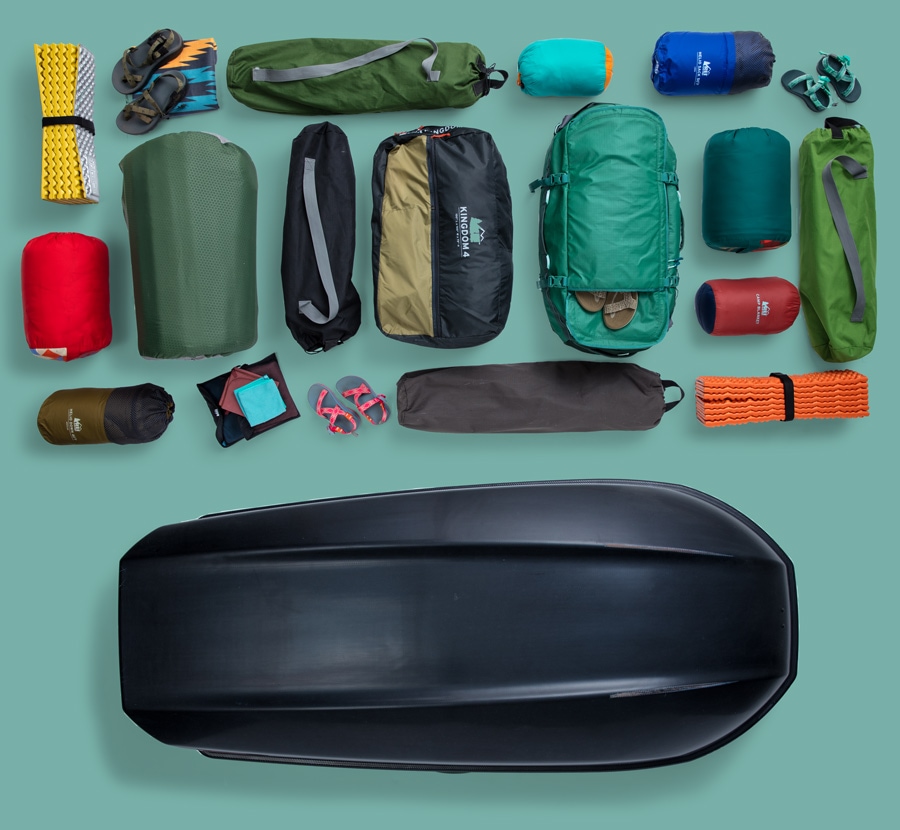
If you’ve decided on a cargo box as your best solution, the next step is to figure out what size you need. Cargo boxes come in many different heights, lengths and widths. Your average trip length may be a factor in how much space is needed—after all, if you’re away longer, you may need more gear. However, the key considerations for deciding the right size box for your needs will come down to who and what you will be hauling, as well as the vehicle hauling it.
How many passengers?
Number of people | 2 | 3 | 4 | 5 |
Gear capacity | 12 cu. ft. / 20,736 cu. in. / 340 liters | 15 cu. ft. / 25,920 cu. in. / 425 liters | 18 cu. ft. / 31,104 cu. in. / 510 liters | 21 cu. ft. / 36,288 cu. in. / 595 liters |
The number of passengers in your vehicle will have a significant impact on how much gear you’ll be carrying and how much interior space you’ll have to carry it. If you typically head out on solo or two-person adventures, a smaller box may be enough since you’ll likely have room in your trunk or back of the car to store additional gear. Meanwhile, the more people in your vehicle, the more stuff you’ll be carrying. If you’re a family of five or have a large dog or two, you might decide, “I’m going to need a bigger box.”
What type of gear will you haul?
Next, think about the type of gear you plan to carry and match the box to your gear.
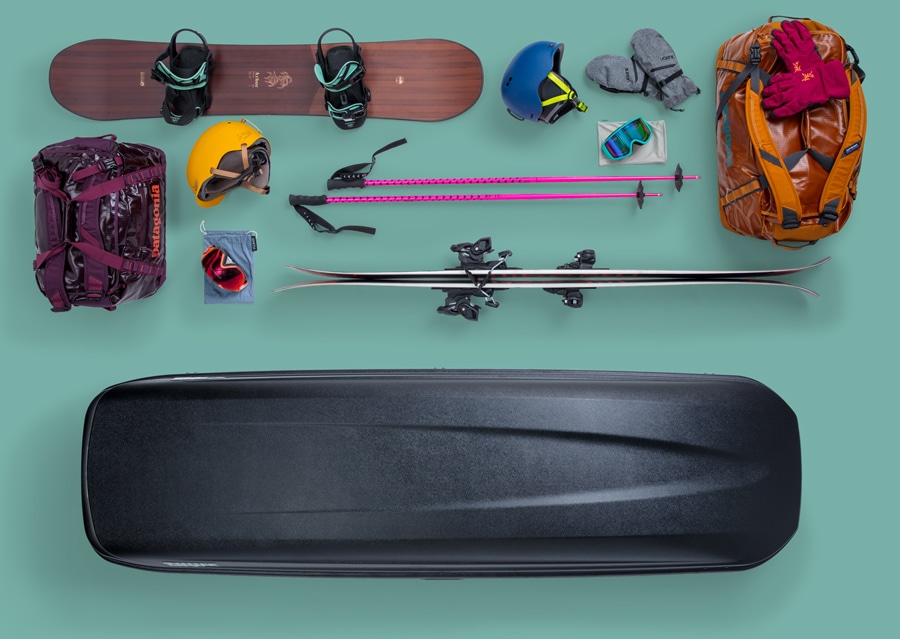
“It's a matter of what you are going to be hauling the majority of the time,” says Darcy Olson, REI buyer for the car racks/mobility category. “If you're hauling skis, you need a longer, skinnier box, whereas if you're hauling stuff that's bulkier, you can get a bigger one.”
Ask yourself, “Will the box primarily provide storage for snowsports equipment, camping gear, beach toys or perhaps all the above? Are the items you plan to haul squishy and malleable or rigid and unforgiving? Will you be hauling lots of gear or just a little?” Answers to these questions will guide you toward the rough dimensions you’re likely to need in your cargo box.
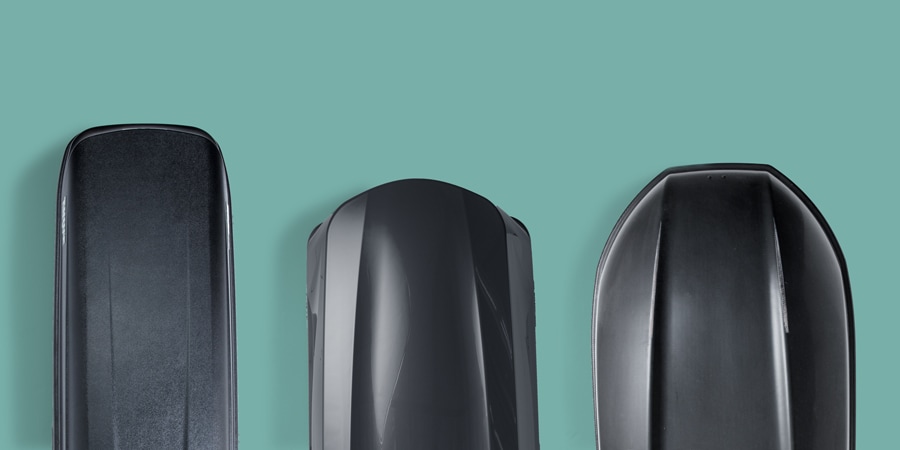
Manufacturers combine the length, width and height of cargo boxes in different ways to achieve different results.
Consider Dimensions
Cargo boxes come in different lengths, widths and shapes. Luke Shellen, an action goods retail specialist at the REI store in San Diego, typically asks customers what kind of car they have. "Your vehicle will limit the size of the box," says Shellen, has helped over 100 customers find the right cargo box for them. "That’s why it’s important to get those measurements down and make sure they line up with the box you want or ordered.”
Length
Most cargo boxes are 6 feet or longer. If you ski or have long gear, pick a box that is longer vs. wider. A 6-foot-long box will fit a pair of 180cm (5 ft. 10 in.) skis and most items of that length just fine. If you never plan to carry lengthy items, a box length between 4 to 6 feet will work just fine for you.
Width
A wider roof box provides more storage than a narrow one (assuming the other dimensions are similar but also may leave you without any space on your rack's crossbars for things like a rooftop bike rack or kayak rack. Pick a narrower box if want to store other gear on your roof alongside the roof box. The widest rooftop boxes are about 36 inches.
Height
Increasing height is another clear way to grow the capacity. But taller boxes may prevent you from driving certain places, like into your home garage, public parking garage and drive-through restaurants. If you have a tall vehicle already, pay attention to how much height a cargo box will add and whether that will limit where you can go. "Do you have a place to store it when it’s off the vehicle, and if you don’t, where are you parking the car?" asks Shellen. And of course, adding height will also almost always reduce gas mileage/EV range.
Gear capacity
The length, width and height combine to equal the overall gear capacity of a roof box. Most people don't have a specific number of feet, inches or liters in mind that they need, but the gear capacity spec is still handy for an apples-to-apples comparison of just how much different boxes can hold.
Pro Tip: Bigger boxes aren’t always better. Not only do they cost more and have a greater impact fuel efficiency, but they’re also noisier atop your vehicle. Additionally, a bigger box will be more cumbersome to switch between vehicles and will take up more space if you opt to store it off the vehicle.
Weight
Cargo boxes often have a maximum weight capacity about 150 to 165 pounds. (Check with the box manufacturer for the exact weight limits.) As a result, bulky yet lightweight items (think tents, sleeping bags, camp chairs) are great to toss into a cargo box. On the other hand, exceptionally heavy items that exceed your roof and cargo box’s maximum capacity (more on this below), say a fully stocked cooler should be stored inside your vehicle.
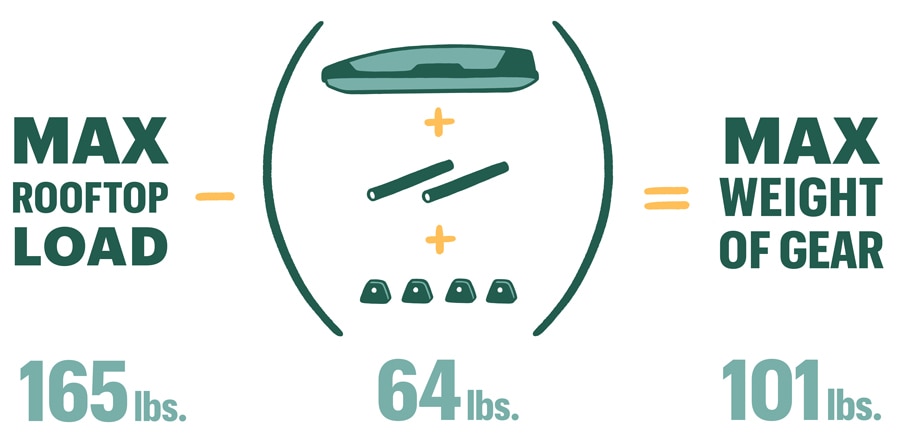
Here’s an at-a-glance guide to interior vs. exterior gear storage.
To accurately figure out how much weight you can put in a box, do the following:
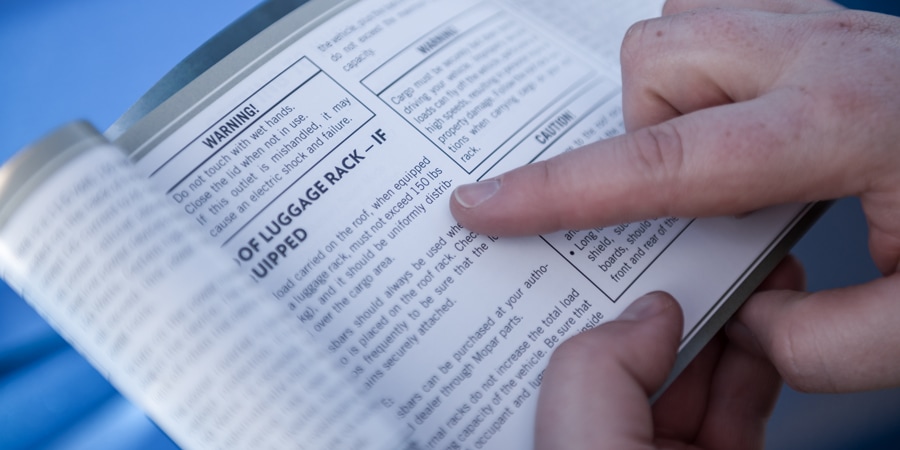
- Check the recommended maximum load for your vehicle—you should be able to find this info in the owner's manual.
- Subtract the weight of the box and any other rack accessories you might also be using (like bike racks or kayak racks) from your vehicle's maximum load.
- If you're using aftermarket crossbars and towers/feet on your vehicle, such as those made by Yakima and Thule, then you also need to subtract that weight.
Example: If your vehicle's maximum weight capacity is 165 pounds and your roof box weighs 50 pounds, your crossbars weigh 9 pounds and your towers/feet weigh 5 pounds, then you can put up to 101 pounds in the roof box.
Store These Items Inside the Vehicle | Store These Items Outside the Vehicle |
|
|
Make sure the cargo box fits your car
Before you click "buy" you need to be sure the box fits on your car. This means checking hatch clearance and thinking about how the box will look on your vehicle.
Hatch clearance refers to the ability to fully open your trunk without bumping into the cargo box. This factor is especially important if you plan to put a roof box on top of a hatchback or SUV with a rear door. The reason: A cargo box that doesn't allow appropriate hatch clearance can prevent you from opening that door all the way.
Some cargo box brands offer fit guides (Thule Fit Guide or the Yakima Fit Guide) based on your vehicle and preferred cargo box. Or visit your preferred retailer to test the rack on your vehicle or take measurements yourself. "We now it can be a very confusing process," says Shellen. "If you need help, come into the (REI) store."
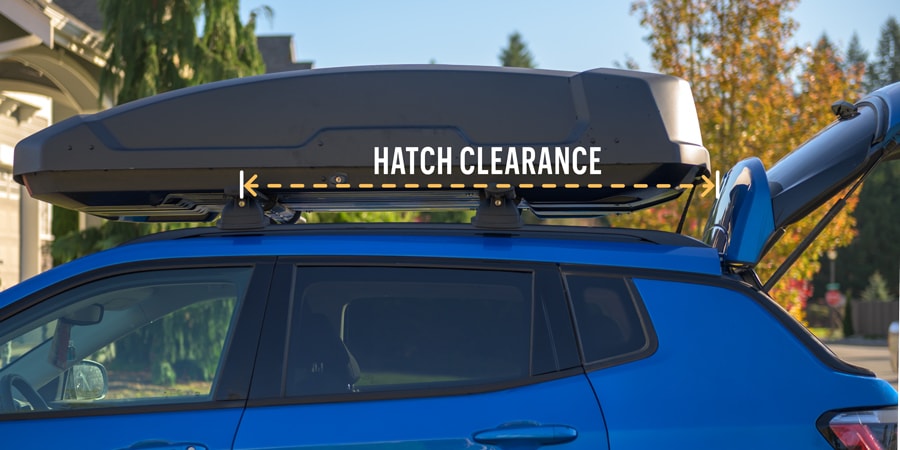
Calculate your hatch clearance
- Open the back hatch/trunk door fully.
- Measure from the center of your vehicle's front crossbar to the open back hatch at the level of your crossbars.
- Look up the hatch clearance measurement on the brand’s website.
- Compare that measurement to hatch clearance information on manufacturer websites. If your measurement is more than the clearance number listed for a particular roof box, then that roof box will fit. For example, if you measured 60 inches and the roof box requires a minimum clearance of 57 inches, then you're good to go.
Check the bar spread
- Refer to the roof box’s user manual to ensure the maximum bar spread—the distance between cross bars—is the right size. Many cross bars can be adjusted.
- If needed, you can move the front crossbar forward to gain more clearance. (Note: Some crossbars are not adjustable.) Always follow manufacturer guidelines.
Baskets or bags: Alternatives to hard-sided cargo boxes
While cargo roof and hitches are your main choices, there are other affordable solutions to consider.
Cargo roof baskets
A cargo roof basket is an affordable option if you need to carry bulky items that can’t neatly fit inside a contained cargo box, like camp chairs, coolers, water jugs and more. You can also fit duffel bags and cargo cases. Of course, this option won’t protect your gear from the elements and may require an additional net system to ensure gear stays put.
Cargo roof bags
Brands like Rightline Gear make soft-sided duffels and other cargo carriers designed to fit a vehicle regardless of whether it has a roof rack. These are more affordable options than hard-sided boxes and can be folded and stored when not in use. Many are waterproof and durable, but their dimensions may limit the type of gear you can store in them.
Additional features to consider
You’re almost ready to commit to your best box. But before hitting “buy,” think about:
- Box opening: Most cargo boxes can be opened from both sides (dual side). Others open from the rear or the driver side.
One-handed opening: The ability to open and close your cargo box with one hand can prevent fumbling larger items like skis and/or getting off-balance and falling, especially when accessing a roof cargo box.
- On-vehicle storage: If you plan to leave the box on your vehicle for the long-term and will be parking in limited space (e.g., a garage with a low ceiling), think about the additional height (for a roof box) or length (for a hitch box) and whether it will fit your space.
- Security: Most cargo boxes can be locked, in addition to being secured to the car. Also, their opaque exterior prevents a potential thief from knowing if they will find the box full or empty. Lastly, most boxes are made from Acrylonitrile Butadiene Styrene (ABS) plastic, which is lightweight yet durable and therefore quite difficult to break into, Thule’s Stevens notes.
- Warranty: Some cargo box manufacturers add on a guarantee/warranty of their own. offers a 100% satisfaction guarantee, with a few exceptions, on all its products.
- Water and dust: Cargo boxes effectively keep dirt and moisture out, making them a suitable place for storing things like tents, sleeping bags and clothes. But they are not designed to be completely dustproof or waterproof, so items that are extremely fragile or sensitive to dirt and moisture should be kept elsewhere.
Common mistakes to avoid
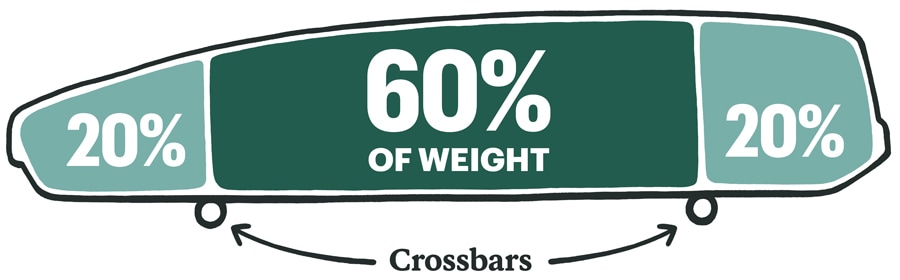
Not properly distributing the weight in the box.
A good rule is to put about 60% of the weight you're carrying in the middle of the box so it's between the crossbars on your roof rack. The remaining 40% can be split evenly between the front and back.
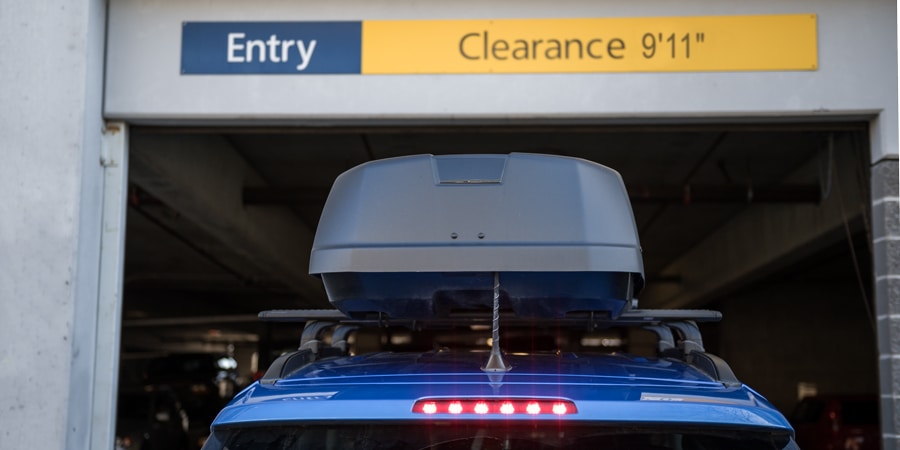
Forgetting you have a cargo box on your roof
People damage roof boxes, bikes and other equipment stowed on top of vehicles by driving into garages, restaurant drive-throughs and other low-clearance structures more often than you might think. The first step in avoiding this is remembering you have stuff up there—with the cargo box and other gear out of sight on your roof, it is really easy to forget. There's no sure way to prevent this, but perhaps a sticky note on your dashboard or garage door opener can serve as a good reminder. Some people like to put an object, like an orange cone, in front of their garage door when they leave home so that when they return they will have to stop and get out of the car to move the object, thereby noticing what's on their roof. This works especially well for things like bikes and boats that aren't always on your car and therefore are even easier to forget about.
Forgetting the height of your vehicle with the cargo box
Another important step in avoiding collisions with low-clearance structures is knowing the height of your vehicle with the cargo box and whatever else you have up there. That way when you see a sign indicating the height of a structure you'll know whether you can fit. Use a tape measure to figure it out and jot the number down so you don't forget.
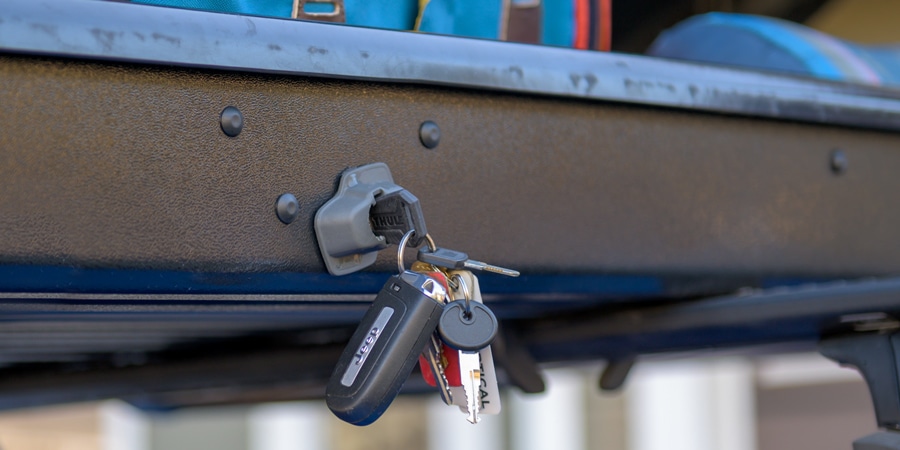
Forgetting to close your cargo box
This may sound like a no-brainer but believe us when we tell you that people have driven off with their box still open. Pro-tip: By design, a key for a cargo box typically can't be removed from the lock when the box is unlocked. So, if you always keep your key for your cargo box on the same keyring as the key for your car, it's unlikely you'll drive off with the box open.
Not securing the cargo box before your drive away
It's always a good idea to check the box's connection points to the roof rack to make sure nothing has loosened up with time.
Not storing your cargo box in a cool, dry place
Some people like to take their cargo box off their vehicle when they know they won't use the box for a while. If you want to do this, make sure to put it in a cool, dry place and never in direct sunlight or where temperatures can get extremely hot or cold. Also, don't store the box on its side or end—doing so can damage the box. Storing the box on its base is a good approach. If you do this, put a couple 2x4s under the box to lift it enough so the mounting hardware won't be resting on the floor. Another option is to suspend the box—some box manufacturers sell suspension kits.
Pro tip: In case you lose your keys
Luke Shellen, a retail specialist in action sports at the REI store in San Diego, says his No. 1 tip for customers who buy a cargo box is to take a photo of the unique key code.
"I make customers take a picture of that number in front of me. One, if they ever lose that key, we have a master set. We can unlock it for them and we can get their stuff out. They can also go on Yakima or Thule’s website and order replacement."