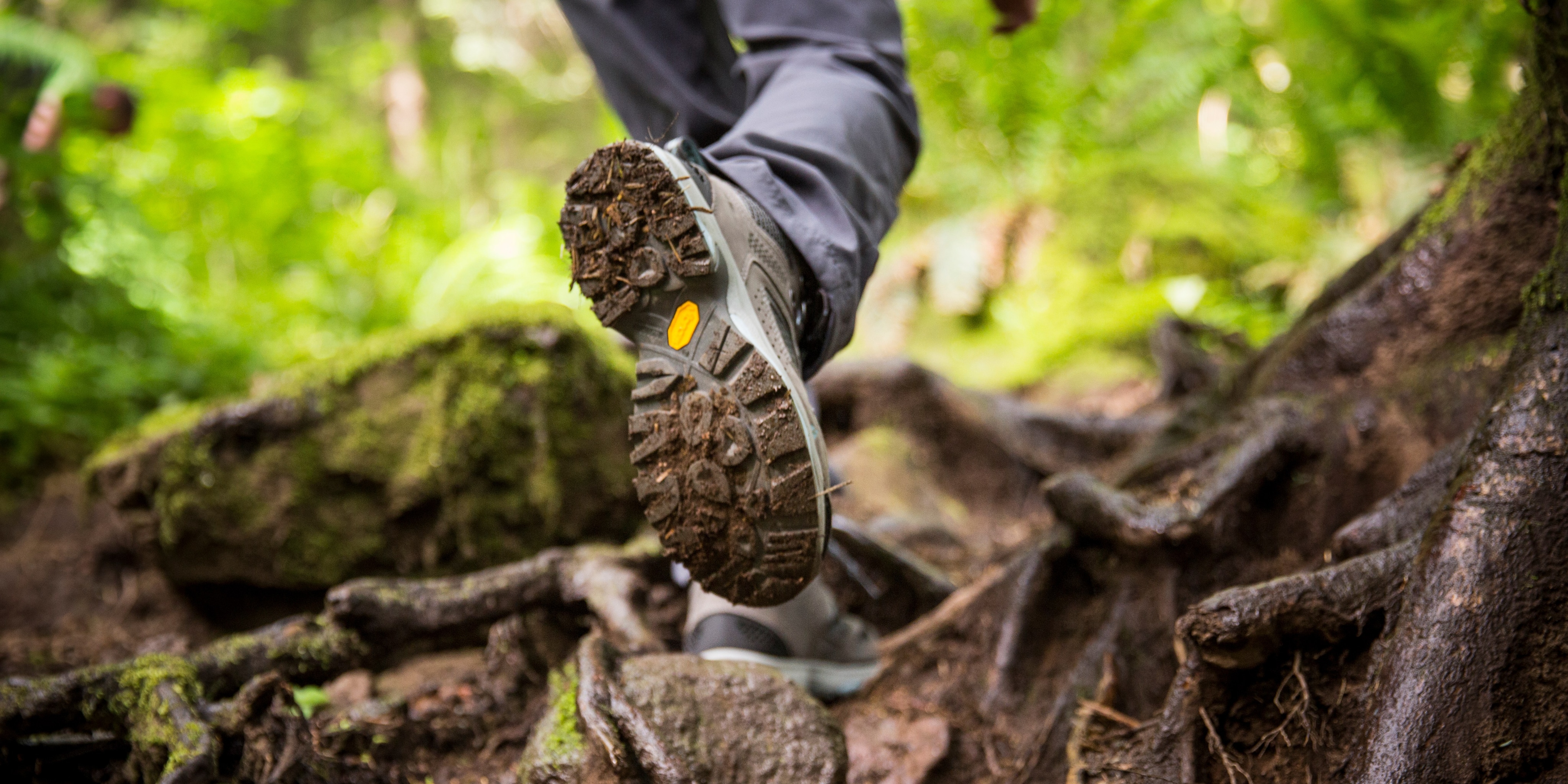
On a cold, rain-soaked day last May, I joined a group of intrepid hikers to cover all 41 miles of the Appalachian Trail that run through Maryland. We all came well prepared for the elements—high-quality rain jackets, wool socks, gloves, and poles—and I’d say most of us got the clothing right. As the day progressed, however, I became the only hiker in our group remaining upright.
As a dedicated trail runner, I do my share of balance exercises, and that additional stability certainly helped keep me from falling. But I also put a good deal of stock in what I had on my feet for the hike: a pair of trail runners with a Vibram® Megagrip outsoles.
Like my hiking companions, I sometimes slipped, fell, and hit the ground when out on trails prior to discovering Megagrip. This held true especially when climbing or descending the wet slabs of the Adirondack Mountain High Peaks. It was maybe fall number three on a descent a couple years back that made me reconsider my footwear. A friend turned me on to Megagrip, and I’ve never looked back.
I’m not alone in my dedication to the high-performance rubber compound from Vibram, one of several in its lineup, which includes the Arctic Grip and the ECOSTEP. For the past several years, it has been the sole of choice for thru-hikers on both the Appalachian Trail and Pacific Coast Trail, gracing the bottoms of both the Topo Athletic Traverse and the Altra Lone Peak 9+. In muddy, rocky, and most especially on wet rocks and slabs, Megagrip stands out. Here’s how the outsoles rose to prominence in trail running footwear and what makes them so good for your maintaining your footing on trail.
A Storied History
For people generally aware of active footwear offerings, the name Vibram conjures up the off-and-on popular FiveFingers, one of the first minimalist shoes to hit the market about 15 years ago. Featuring a grippy sole and a natural profile designed for outdoor movement, FiveFingers caught fire during the “barefoot” running surge of the early 2010s.
While that trend ceded popularity to the cushy, maximalist shoes so popular today, FiveFingers is making a comeback. This time, they’re surging in the gym and on the feet of pro athletes like LeBron James, who are looking to activate their foot muscles with increased ground contact and an expanded range of toe movement. FiveFingers has largely left behind their barefoot running image, now also appealing to gorpcore-inspired fashionistas who rock the shoe as lifestyle footwear, with dupes popping up as a result. Still, a small percentage of “natural” runners still turn to them, as do a larger segment of watersports enthusiasts.
FiveFingers may have put Vibram on the cultural map, but the company’s origins are steeped in the climbing and outdoors world. Vitale Bramani, an Italian mountain climber who grew up in the Alps, is at the heart of the Vibram story. After suffering the loss of several climbing partners to frostbite and exposure on an Italian peak back in 1935, Bramani set out to create a better, grippier sole.
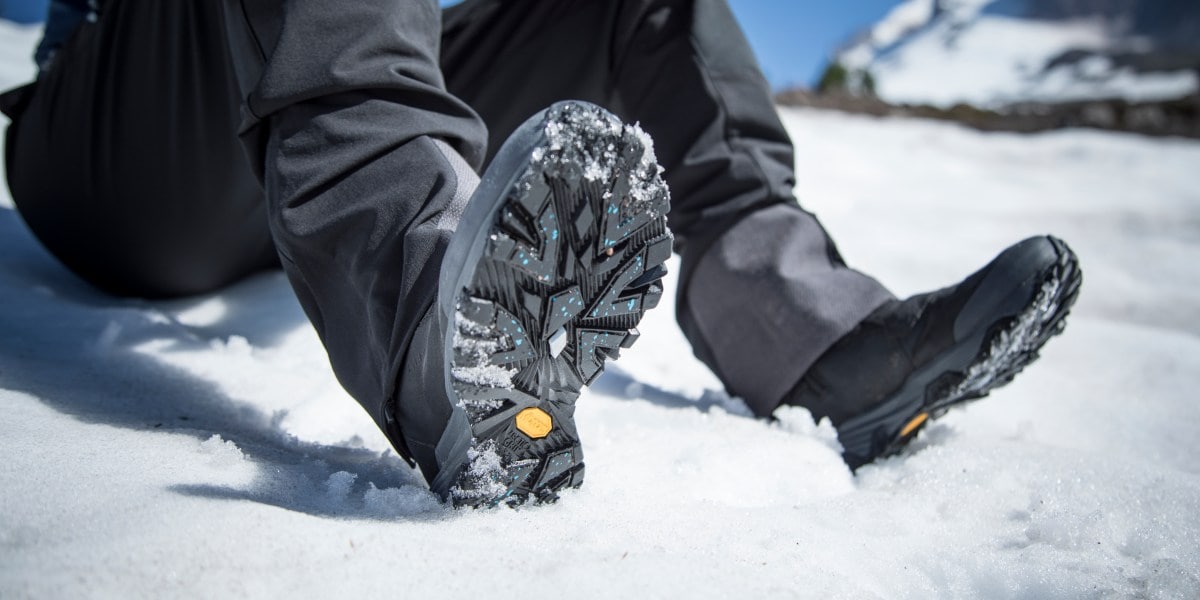
“Back then, it was customary to hike in heavy leather boots on the approach, then change into climbing shoes, which had a felt bottom,” says Lawrence Anastasi, strategic account executive at Vibram. “The climbing shoes weren’t just slick on an icy surface, but uninsulated, too.”
Bramani set about creating a better shoe. Partnering with a local tire company, he designed a new rubber sole with its own unique tread pattern. The mountaineer turned inventor created his first sole, dubbing it the Carramato, and launched the company in 1937. (“Vibram” is a con of his first and last name.) Bramani continued tinkering, creating subsequent soles for hiking, climbing and approaching. Eventually, he created what many consider to be the first modern mountaineering boot sole.
Bramani patented the designs in 1938, and in 1954, an Italian team reached the peak of K2 in Vibram soles. Jim Whittaker, the first full-time REI Co-op employee and the first North American to summit Everest, did so wearing boots with Vibram soles. He signed an endorsement contract with the company in 1975, and Vibram was suddenly on the map on a global scale.
Entering the Modern Era with Megagrip
Megagrip’s secret sauce is its slow rebound quality, according to Anastasi. “It’s a formulation that slowly deforms when body weight presses down into it,” he says. “The rubber squeezes and nests into the micro topography of the rock. It’s slow enough that it stays in and creates a mechanical grip.”
The sole’s slow grip is so good that it holds even on wet rock—the characteristic I most appreciate when descending slick mountains. Where doesn’t it hold up? Polished surfaces like ceramic or marble—something that most outdoorsy types aren’t concerned with, but Vibram ensures that its partner brands understand that distinction.
The Vibram legacy of ingenuity lives on . According to Anastasi, the brand continues to improve its soles with three performance pillars guiding the way: grip, traction and durability. “By the early 2000s, we had developed an excellent rock-climbing rubber,” he explains. “We had a reputation as a good all-around compound.” But Vibram still sought to make its soles even grippier, leading to the birth of its XS Grip sole in 2006. In designing that sticky sole, designers still faced a trade off in durability, a common issue of most rock-climbing shoes.
In 2013, Vibram launched Megagrip. The unlock, says Anastasi, was a new compound that provided the grip of XS, but with added durability for usage in trail running, hiking, approach, and overall higher mileage expectations. “It provided a unique balance of grip and durability previously not on the market,” says Anastasi. “It’s the grippiest sole available for real-world durability.”
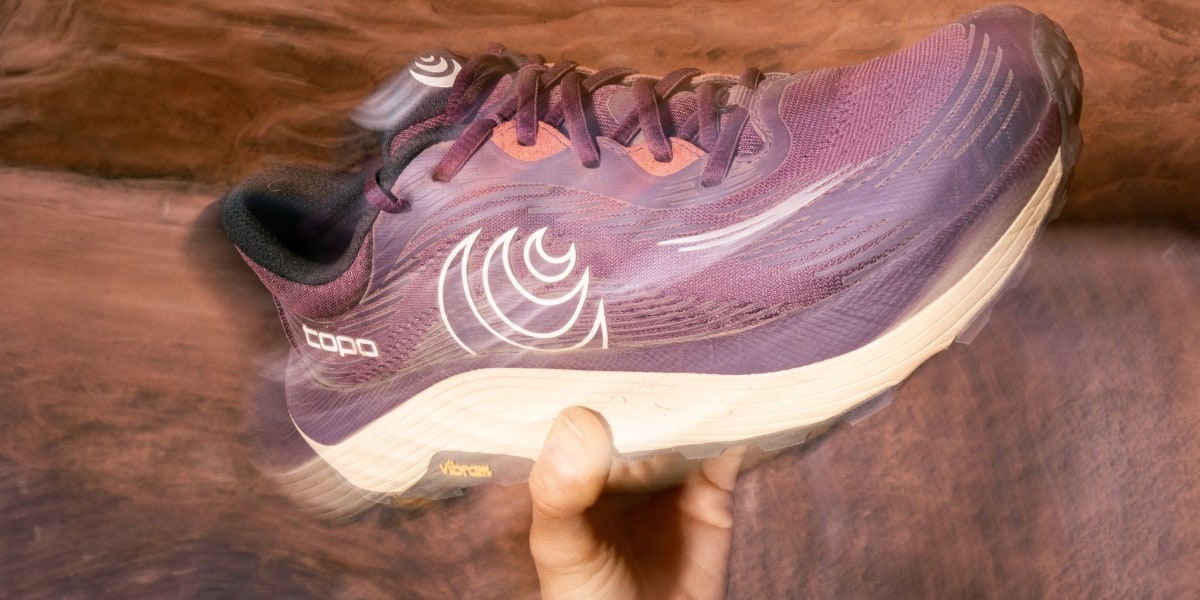
While Megagrip aficionados like me will talk about the soles until we’re blue in the face, their popularity was a slow burn. “We’re happy with how it unfolded, but it was very much at a grassroots level,” says Anastasi.
Vibram launched the sole at peak FiveFingers popularity, which is where it was focusing its marketing efforts at the time. “Without much publicity, Megagrip had to drive its growth through performance,” Anastasi explains.
Vibram showed up in Chamonix, France, to prove Megagrip’s unique qualities at the 2016 Ultra Trail du Mont Blanc, a 104-mile trail race that circumnavigates Europe’s tallest peak. “We took a stack of soles and made them bright green so that they stood out,” says Anastasi. “We offered them to the athletes and sent them into the mountains for the race.”
That marketing scheme proved a huge success, with the runners coming back to Vibram with effusive praise. “They wanted to maximize safety, and the soles gave them confidence, especially when descending,” says Anastasi. “The next year we had elite athletes asking for the soles, which influenced many brands to partner with us.”
Today, Vibram pairs Megagrip with more than a dozen trail- running brands in the United States, and even more globally. Most approach shoes—like Scarpa, the North Face, and La Sportiva– feature the outsole, and on some hiking shoes and boots, as well. Among the earliest adopters include fly fishing brand Simms, which also bought into the sole for its wading boots, as did cycling brand Shimano for their mountain biking shoes. Trail running has now surpassed those markets as the largest category featuring the sole.
Into the Masses
While Megagrip grew its popularity in the trail-running ranks, partnering with REI for a special shoe display and promotion in 2018 helped Vibram grow its reputation in the general hiking population too. “The idea was to identify the shoes with Megagrip and create interest,” Anastasi says. “After, we had several shoe brands come to us asking for the soles as a result.”
Chicago-area REI sales associate Kimmie Hamilton can attest to Megagrip’s popularity for today’s athletes. As both an avid trail runner and hiker, as a Green Vest, Hamilton often recommends the outsoles to customers. “My experienced customers will come in asking for it,” she says. “But when less-experienced customers tell me they’re headed on a vacation where they’ll face wet conditions, I steer them to Megagrip.”
Hamilton has been with REI for more than four years and has witnessed the outsoles’ demand growth, along with the expansion of brands using it. “Many brands are gravitating to it, or have a model that features it today,” she says. “I understand it. When I’m hiking or trail running, I need something with grip so that I don’t have to fear slipping.”
The current Vibram tagline is “confidence with every step,” and I can’t think of a better description for the Megagrip. While I am well on my way to climbing all 46 High Peaks in New York, I will always be something of a nervous scrambler and descender, especially on wet surfaces. Megagrip has changed the game for me in that regard. Just ask my friends, who slipped and slid their way on the AT back in May—I haven’t stopped babbling about Megagrip since.