When my husband, son and I walked up to the ranger’s desk, the chipper young woman in her profession’s signature khaki grinned back at us. “How can I help?” she asked.
I told her we’d like a campsite. “Well, you’ll have your pick,” she said.
That’s what we were banking on when we pulled through the entrance of Curt Gowdy State Park in Wyoming at about 5:30pm on a Saturday in February. Typically, their 179 campsites and cabins are booked months in advance, but that night temperatures were supposed to hover near freezing. “Don’t worry,” the ranger said as she pointed to an area on her park map. “The wind dies down around dusk, but just in case, these campsites tend to be more sheltered.”
Maybe we misunderstood her directions to the less blustery options, or maybe this was just winter at about 6,800 feet, but the gusts showed no signs of abating even as we reached our spot. Fortunately (we’d come to find out), we had brought along a reliable shelter in which to hide out from the wind: the REI Co-op Westward 4 Tent. The description for the four-person shelter promised to provide dependable protection in a spacious package. We were incredibly grateful that it did.
The next morning, while my husband made our coffee, a man and his dog wandered past our setup. He mentioned that he spent the night in his camper van farther into the park. Then he noticed our tent. “Wait,” he said. “Is that where you slept last night?”
“Yep,” I said, smiling at the Westward 4. “And we got a pretty darn good night’s sleep.”
That night in the wind wasn’t an outlier. Another test run (though in much milder conditions), plus a few additional setups for the sake of analysis, have me convinced that the Westward is a worthy car-camping companion.
Read on for my full review of the tent or jump ahead to learn about specific features:
- Setup and teardown
- Space and weight
- Ventilation and weather protection
- Storage
- Other considerations
- Bottom line
Meet the Gear Tester
Tester | Years camping | Testing locations | Testing duration | High temperature | Low temperature |
|---|---|---|---|---|---|
Courtney Holden | 30 | Curt Gowdy State Park in Cheyenne, Wyoming and Fall River State Park in Toronto, Kansas | 2 nights + additional backyard setup | 80°F | 30°F |
Who is this tent for?
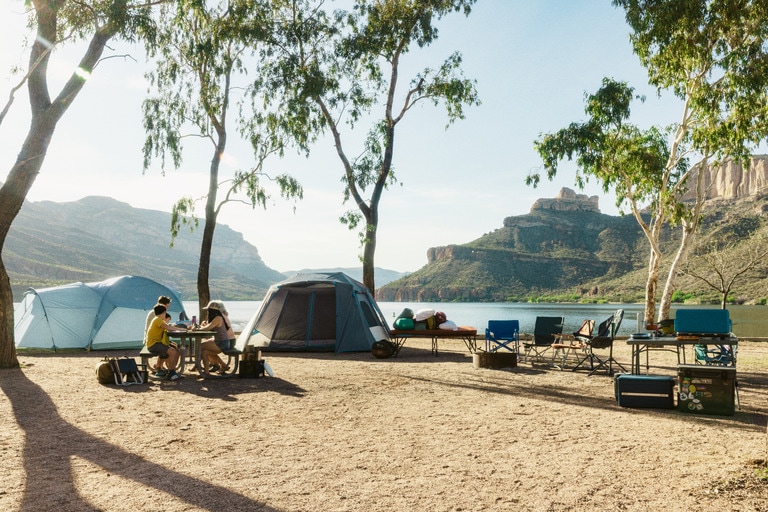
Spacious and thoughtfully designed, but far from over-engineered, the Westward 4 is perfect for people who car camp with a small group and want a low-frills (but not no-frills) space to sleep. Its generous, 69-inch peak height allows for ample movement within, and a large vestibule provides considerable storage for packs or bins. Organization lovers: You’ll dig the nine different storage slots, plus the pass-through-style cord port to neatly allow exterior power into the tent. Those in the market for a reliable, easy-to-use tent for dry-ish conditions: Welcome home.
Pros | Cons | Best for |
|---|---|---|
Intuitive setup | Rainfly doesn’t fully cover rear door, which may allow moisture in conditions with slanting rain | 3-season car camping |
Nine interior and exterior pockets help you stay organized | Weight is manageable for walking a short distance from your car but isn’t made for backpacking | Groups of two to four, depending on how much room you want to sprawl |
Tall enough for shorter campers to stand and taller campers to sit or kneel upright | Footprint is sold separately | Fair-weather conditions |
Sturdy, aluminum poles hold up in high winds | ||
Zippered cord port for charging convenience |
Other versions:
Setup and Teardown
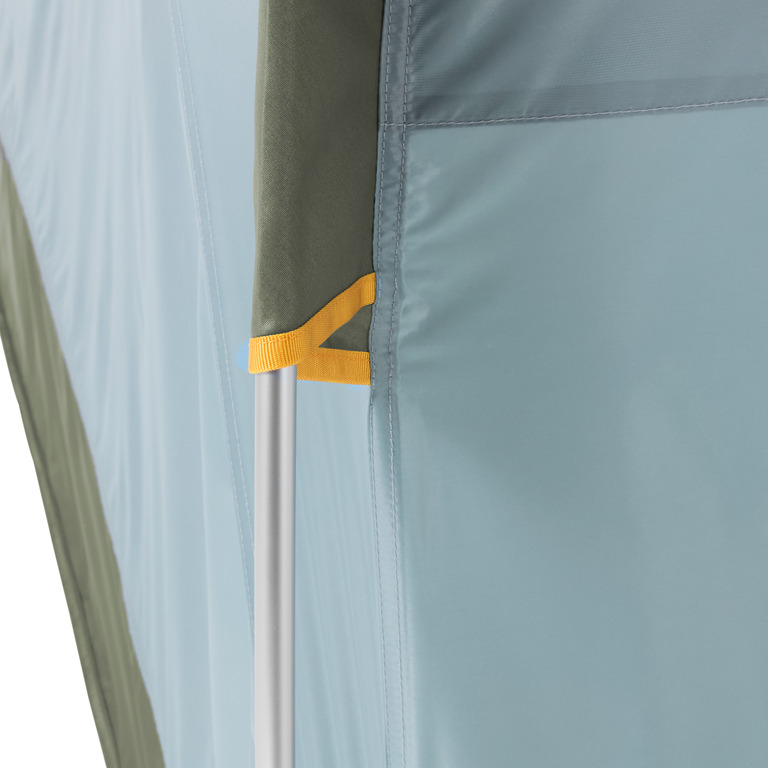
The Westward 4 makes setup simple, something I was especially grateful for on our excursion in the windy West. Even a non-engineer (ahem, me) could see which two poles (of four total) to use with the tent body thanks to the visual setup cues: Gold-colored pole ends match gold-colored webbing at the base of the tent. I slid these two primary poles through two fabric tunnels, crisscrossing them at the tent’s apex. With a bit of finagling, the pole ends slotted cleanly into their respective grommets. I then extended a third pole over the front door to hold the fabric of the tent body taught. With the guidance of these thoughtful touches, and with my husband adding an extra set of hands, I was able to get the Westward tent body standing in mere minutes despite the gusts.
Just like putting a fitted sheet on a queen-size bed, attaching a rainfly can require some guesswork–or luck–to get it right the first time. Not so with the Westward 4. Like the tent body, the fly has color-coded attachment points (gold buckles and webbing for the tent’s front, black buckles and webbing for the rear) to help campers orient themselves. The easy-to-grab plastic buckles that serve as these attachment points aren’t the lightest possible option (other brands use tiny dongles or smaller buckles), but there’s little risk of operator error. The tent’s fourth pole pulls the fly out and over the back door. Combined, these small details helped my husband and me position and secure the rainfly in just a couple minutes, allowing us to take cover from the wind quickly. Notably, it did take two people to wrestle the rainfly when the wind was strong.
Taking down the tent is as straightforward as putting it up. Once the stakes and poles are in their stash sacks and the fly is folded (even sloppily) within the tent body, the whole kit slides effortlessly into the generously wide-mouthed storage bag.
Space and Weight
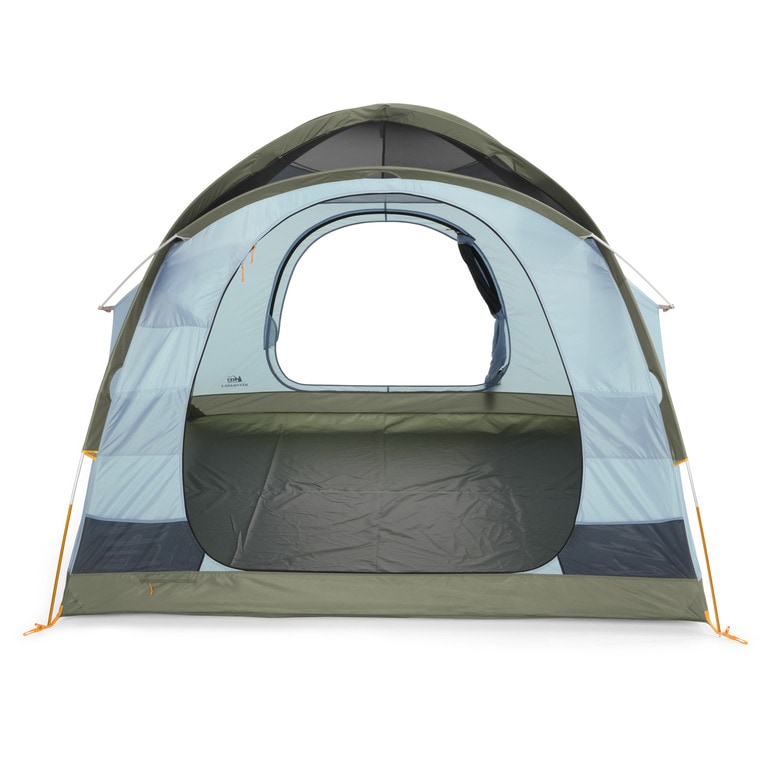
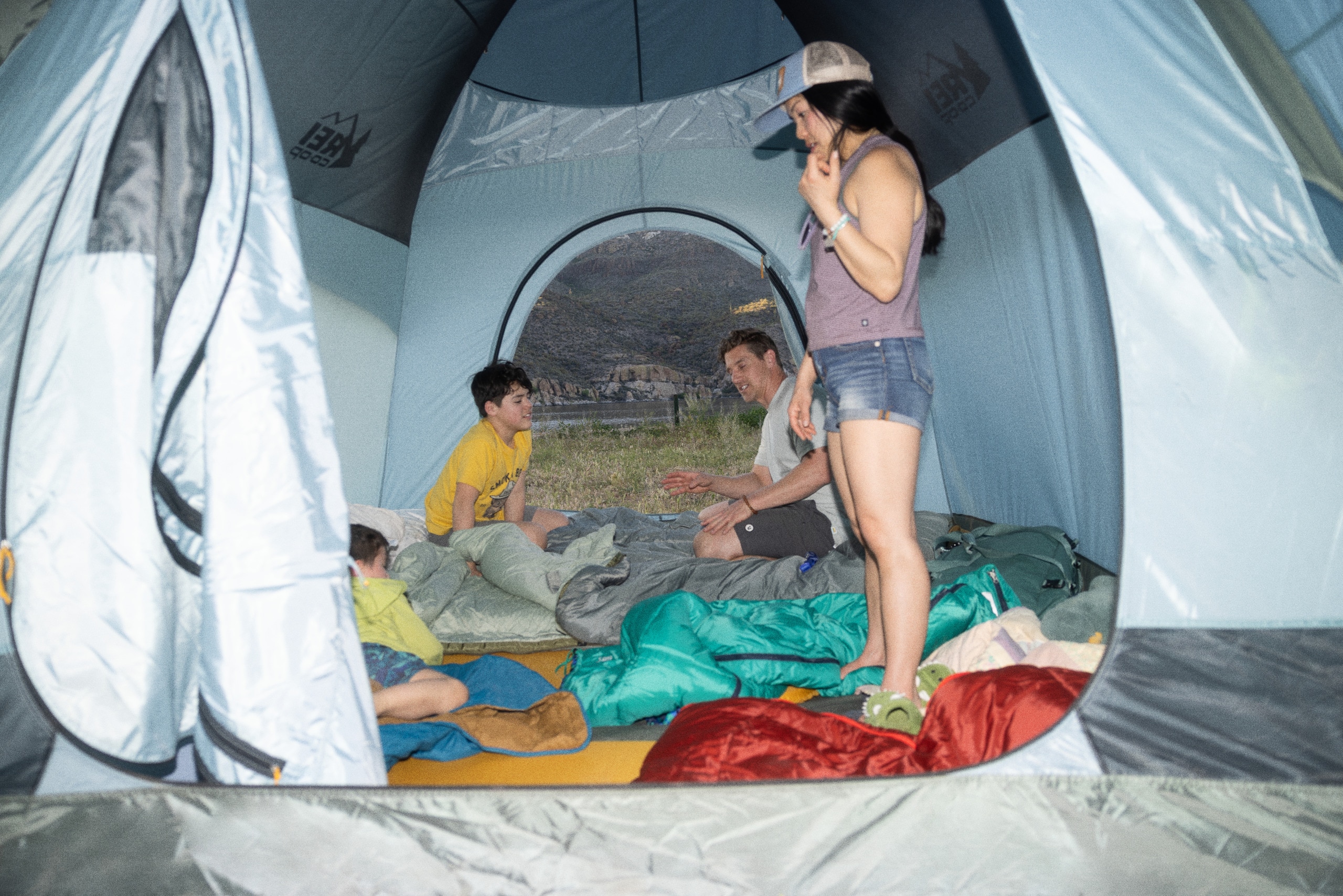
With 68 square feet of interior space, plus another 20.27 square feet in the vestibule, the Westward is downright spacious. We easily fit our two Exped MegaMats (one double and one single) next to each other, and there was still ample room on all sides between our cushy sleeping area and the tent walls. Four people on standard sleep systems would be cozy without feeling cramped. Those who need even more space should check out the six-person version.
Thanks to a 69-inch peak height, anyone under 5 feet 7 inches can stand up in the tent’s center to change clothes; anyone in the 5-foot-5 range like me can stand up and change clothes pretty much anywhere in the tent, while taller campers can easily sit and kneel—no hunching over necessary. The covered front vestibule provides additional space for gear storage or kicking back in a camp chair in the shade. While some tents this tall get wobbly when the wind picks up, the Westward didn’t cave or bend—even in Wyoming’s 30-mph gusts.
With this much girth, the Westward 4 is designed for vehicle-assisted camping, not backpacking. At 15 lbs. 6.9 oz., it reaches a solid middle ground in this department. It’s painless to carry the 50 feet from the car to the flattest spot on your campsite, but I wouldn’t want to haul it much farther.
Ventilation and Weather Protection
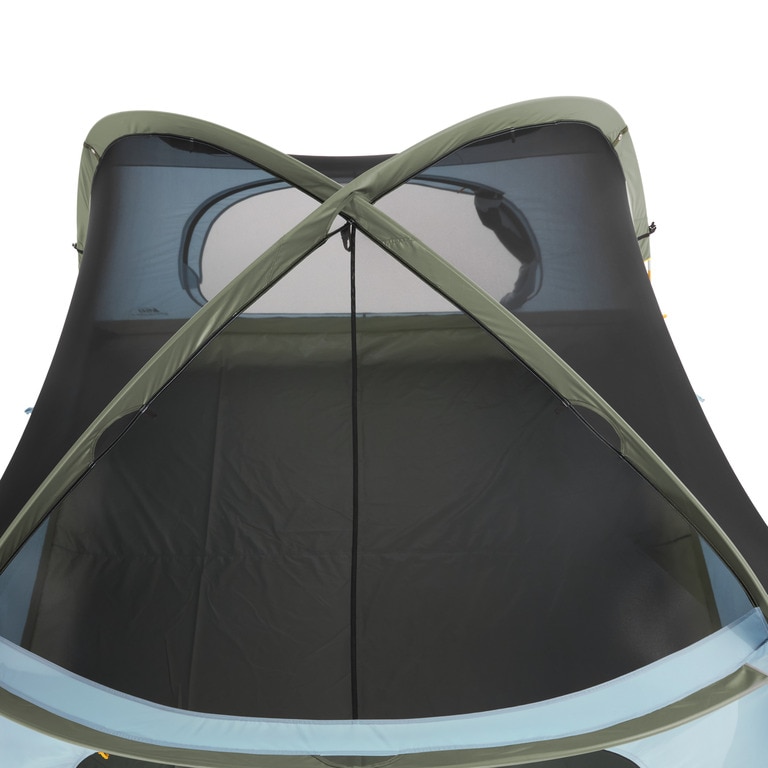
Spending a childhood riding shotgun in a Pontiac Firebird Trans-Am with the T-tops off has made me a windows-down kind of gal—which is to say I love feeling the breeze on my skin, whether it’s in my car, my house or my tent. And the Westward’s ventilation options made me a happy camper. On our second overnight in the Westward, the wind was calm and temps ranged from the high 60s to low 80s. We debated leaving the rainfly off entirely, but when another family chose a campsite nearby, we opted to put it on for a little privacy. Instead, we boosted ventilation by rolling up the vestibule awning. We also unzipped the internal window coverings to boost ventilation through the bugproof mesh paneling. Wrapped in our 30-degree bags that night, we appreciated the airflow.
I didn’t test this shelter in rainy conditions, but I do trust that the generous front door and vestibule, which are covered by a rainfly that extends down to the ground, would keep us dry. Sealed seams in both the tent body and the fly help keep moisture out, and a durable water repellent (DWR) coating made without PFAS lets water bead up and run down the tent rather than soak through the fabric. The rear door, however, only has an awning extending about 18 inches from the tent body. Anyone camping in slanting rain might end up a bit damp.
Storage
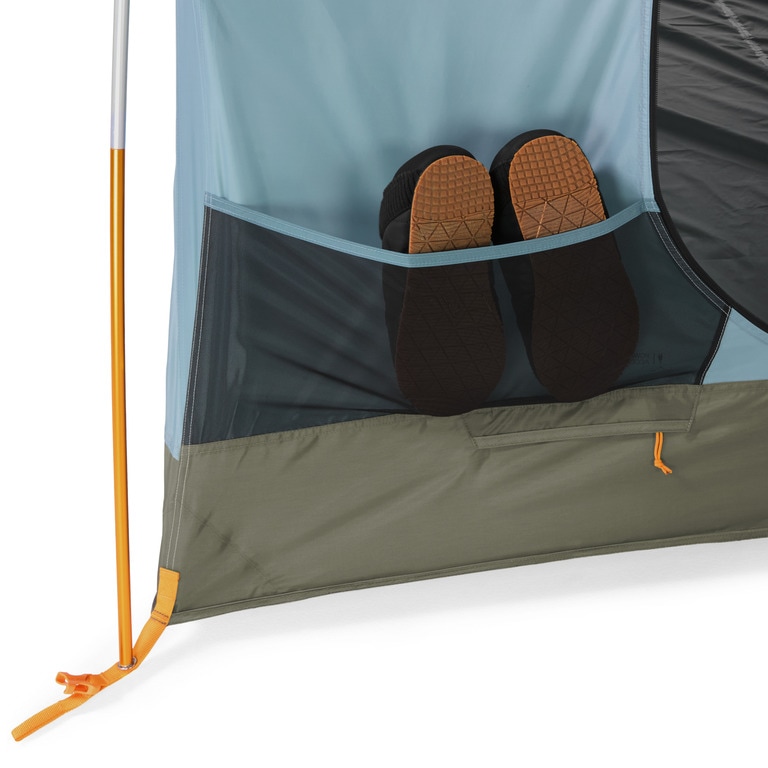
Maybe I’ve been indoctrinated by decluttering trends, or maybe I just appreciate knowing where my headlamp is when nature calls at 3am, but I am a huge fan of interior storage in tents. Here, the Westward 4 is a dream. The tent’s rear wall features three spacious slip pockets—one on the left side and two on the right—perfect for housing your book or phone. Two of these pockets are low enough that they’re accessible from a reclined position, making them the perfect place to leave my headlamp; my husband used his receptacle to safely store his glasses. Four additional slip pockets, all side by side, are found inside at roughly standing height above the front door. They’re a great place to stash stuff sacks as well as spare layers, or in our case, to hold Wez the Stuffie while we situated our bedding. Have wet clothes you’d rather keep outside your living space and out of the rain? Leave them in the two rainfly-protected pockets on the exterior of the tent body.
There’s also a handy buckle-closure gear loop in the Westward’s peak, ready to air-dry damp layers or hold an inflatable lantern. Those who camp with a power station like the Goal Zero Yeti 500 and need to run a cord from the station into their tent will no doubt appreciate the PowerPass cord port. You can maximize interior space by storing the power station outside the tent or in the vestibule and running the cord through the opening. We also used it for delivering keys and a book from outside to inside without inviting biting bunkmates to our party.
Other Features
Here are a few other small touches I loved when testing the Westward tent—plus one consideration for budget-conscious campers.
Two doors: Decades after the REI Co-op Half Dome introduced the “two vestibules, two doors and two vents for two people” system, we take tents with dual openings for granted. But it’s still worth mentioning that the Westward 4 offers two different entry/egress options so that campers don’t have to trip over each other during late-night bathroom breaks.
Zipper pulls: The Westward attaches easy-to-grab, bright-yellow fabric pulls to the zippers. This is a small touch but one I was grateful for when trying to find my way out of the tent in the middle of the night.
Value: At $449, the Westward is pricier than many other four-person tents designed for car camping. Its feature set isn’t that much different from them either. But with 68 square feet of interior space, it is more spacious than similar-capacity tents. For its size, it’s also surprisingly sturdy in blustery conditions.
Aesthetics: I’ll admit, after a visit last year to Taliesin West in Scottsdale, Arizona, I now fully embrace architect Frank Lloyd Wright’s adage that a building should harmonize with its surroundings. Thus, I always appreciate when my tent looks at home in nature. With a juniper blue rainfly, olive-colored base fabric and hints of sunshine gold, the Westward 4 does just that.
Bottom Line
Like a friend who's always prepared with a spare granola bar or an extra spork, the Westward 4 is a reliable if low-frills camping companion. Any one or two of its standout features—including a streamlined setup, spacious interior, two doors and ample pockets—can be found in other similar-capacity tents, but the Westward has all of them in a single, camp-worthy package. Car campers setting out in rainy conditions should probably look for an option with a full rainfly, but small groups weathering the occasional blustery day can enjoy a great night in the backcountry with the REI Co-op Westward 4 Tent.


REI Co-op Westward 4 Tent
Seasons 3-season
Sleeping Capacity 4-person
Floor Dimensions 100 x 97 inches
Peak Height 69 inches