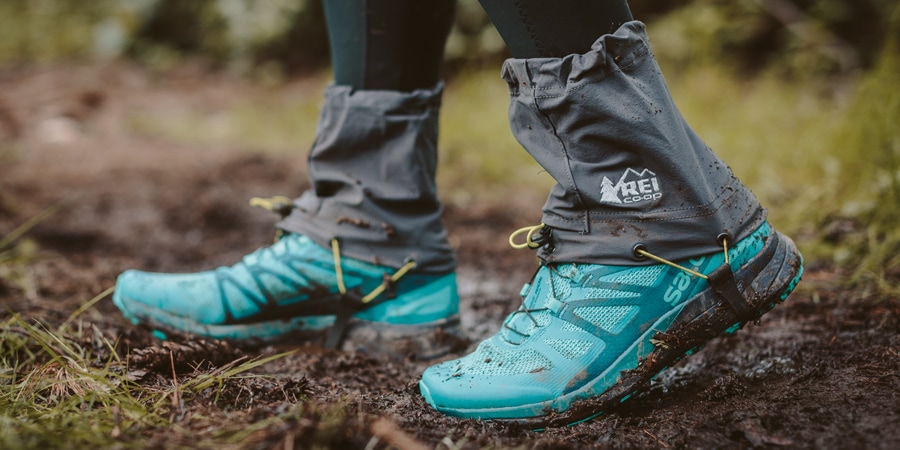
Snow, water, dirt and pebbles have a way of sneaking into all kinds of footwear—even waterproof varieties. One easy way to prevent seepage is to put on some gaiters, protective panels of fabric that act as an additional seal around the top of a trail-runner or boot. “Gaiters are meant to bridge that gap between your footwear and lower leg,” says Derick Noffsinger, a veteran technical soft goods designer at Black Diamond. “Their job is simple: Keep stuff out.”
In this guide, you’ll learn valuable tips for selecting and caring for the best-for-you pair of gaiters. We’ll cover:
- What to consider when buying gaiters
- The three basic types of gaiters and their features
- How to wear gaiters
- How to care for your gaiters
What to consider when buying gaiters

Experts recommend asking yourself the following questions when deciding what gaiters are best for your needs.
What am I trying to keep out of my footwear? Think about whether you need the gaiters to defend against wet conditions like snow and dew-covered grass, or if you’ll be dealing with sand, pebbles and dirt that work their way into shoes in wet or dry conditions.
What footwear will I be using? Your footwear can help determine which (if any) type of gaiters you might wear. A gaiter is only effective if it creates a tight seal above the top of your shoe or boot, says Barrett Willet, design manager of accessories and innovation at Outdoor Research. If the interface between the gaiter and your footwear is loose, then debris or snow can work itself under the gaiter and inside the shoe or boot. But remember: Gaiters are not waders. Gaiters can help prevent rain and snow from dripping down into your shoe, but if you fully submerge your foot, water will find its way under the gaiter and into your shoe.
How much coverage do I actually need? Gaiters range in height from securing at the top of the calf to gripping just above the ankle. Taller gaiters will keep more out of your shoes but are also more cumbersome and, because they cover more of your leg, warmer. Shorter gaiters may be more comfortable, but they will offer less protection. When thinking about coverage, Willet recommends factoring in your most common use case as well as the worst possible conditions you might encounter.
Which key features should I prioritize? Gaiters are made from three primary types of material, which offer varying levels of waterproofness, durability and breathability.
- Durable water repellent (DWR)–coated polyester, which is also often used to make rain jackets, offers best-in-class waterproof performance and breathability, but is less durable than other fabrics.
- High-denier woven nylon coated with DWR excels at waterproofness and durability but doesn’t offer much breathability.
- Standard nylon is durable and breathable but does not protect against prolonged exposure to snow or rain.
Material | Benefits | Drawbacks |
|---|---|---|
DWR-coated polyester |
|
|
High-denier woven nylon |
|
|
Standard nylon |
|
|
The three basic types of gaiters
Check out this table to find basic characteristics for the three key types of gaiters. Then find more detailed explanations below.
Feature | Alpine and Mountaineering Gaiters | Hiking Gaiters | Running and Thru-Hiking Gaiters |
|---|---|---|---|
Typical height | Top of calf | Over the ankle to top of calf | Over the ankle |
Breathability | Low to mid-range | Mid-range | High |
Level of water resistance | Waterproof | Water-resistant or waterproof | Water-resistant or minimal/none |
Durability | High | High to mid-level | Mid-level to no |
Instep strap | Yes | Yes | No |
Use Cases
All gaiters have the same basic purpose: to keep stuff out of your boots. But the best type of gaiters for you depends on the kinds of trips you have planned and the weather and trail conditions you expect.
The main uses/types of gaiters, in order from most-to-least extreme environments, include:
- Mountaineering and other alpine adventures: Gaiters for mountaineering provide heavy-duty protection and some added insulation for extended trips in harsh conditions. Most feature a waterproof, breathable fabric for protection against rain and snow. In addition to mountaineering, these gaiters are frequently used for ice climbing, cross-country skiing and snowshoeing.
- Hiking: Gaiters for hiking are typically lightweight and breathable, and offer basic protection against rocks, grit and light rain while on mild-weather excursions. Some are fully waterproof. Hiking gaiters are often used for everything from short day hikes to multiday backpacking trips.
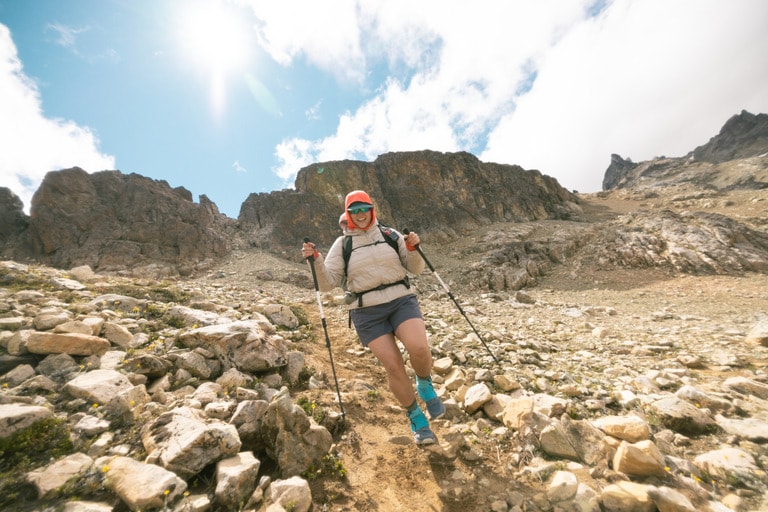
- Trail running: Gaiters for people moving fast on the trail are usually very lightweight with a snugger fit. Their main purpose is to keep debris out of your shoes, and they aren’t typically waterproof. “Think of it more like a gasket,” Willet says. “You don’t need a lot of coverage. You just need to seal that top edge of the shoe, so you want it lightweight; you want it breathable; you want it flexible.” Some ultralight hikers and thru-hikers who wear trail-running shoes will use these gaiters, too.
As you narrow your focus, remember there’s overlap among the different types. For example, mountaineering gaiters can be used for hiking, and in some cases may be appropriate for where you're going and what the conditions are. Also, the uses of gaiters are not limited to hiking, mountaineering and trail running. If you have a need for keeping water, snow and/or debris out of your boots, find gaiters that offer the level of protection you need.
Gaiter Height

The appropriate gaiter height depends mostly on how much protection you need. Generally, for use in snow or when you're heading off trail, you'll want a taller gaiter for more coverage. Shorter gaiters are good for trail running and light hiking. It's worth noting that taller gaiters are generally hotter than shorter ones because they restrict airflow more—keep this in mind as you think about what conditions you're likely to use gaiters in.
Here are the three primary options for gaiter heights:
- Over-the-ankle: These low gaiters are primarily designed for trail-running or summertime hiking where the goal is to keep pebbles and other trail debris out of your shoes and boots.
- Mid-calf: These gaiters are usually about 8-to-12-inches tall. These are best for less-than-extreme conditions when you just need to keep trail debris and rain out of your boots.
- Knee: These are typically around 15-to-18-inches tall and are designed for rugged conditions such as hiking through deep snow and wet brush or in bad weather.
Gaiter Features
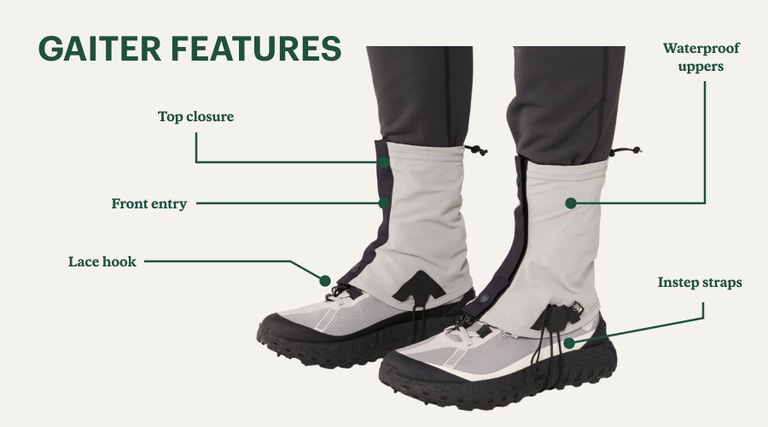
Waterproof: Gaiters for mountaineering and snowsports are typically made with a waterproof, often breathable material to keep moisture from snow out of your boots. If you'll be tromping through wet or snowy conditions, look for waterproof gaiters.
Insect repellent: Occasionally, you'll find gaiters that are treated with an insect repellent to help keep mosquitoes, ticks and other biting insects away. This can be helpful for hiking and backpacking in areas known to be buggy.
Abrasion-resistant fabric: Some gaiters include rugged abrasion-resistant nylon on the lower portion. The material is designed to withstand the abrasion of ice, rocks and the occasional nick from crampon points–but it can tear if you’re not careful. “Reinforced panels help protect against incidental crampon strikes,” Noffsinger says, but “a gaiter is sacrificial protection, not armor.”
Soft-shell fabric: Soft-shell fabric offers flexibility and stretch as well as excellent weather protection.
Coated nylon: Basic gaiters are very light and are usually made with polyurethane-coated nylon. If a short day hike or fast-packing through talus, sand or wet brush is on your agenda, this type of fabric will work just fine.
Entry system: Gaiters for hiking and mountaineering are usually opened and secured by long strips of hook-and-loop fastener down the fronts of the gaiters.
Top closures: Basic gaiters are typically cinched with toggles and elasticized drawcords; some models feature a dedicated top strap with cam buckle.
Instep straps: These secure the lower edge of your gaiters around your boots' insteps. Basic gaiters come with simple lace straps. Premium gaiters feature beefier leather/synthetic straps for extra durability. Some brands, including Outdoor Research, offer replaceable instep straps.
Lace hooks: Offered on some styles, these let you attach your boot laces to your gaiters for added security.
How to Wear Gaiters
Gaiter Sizing
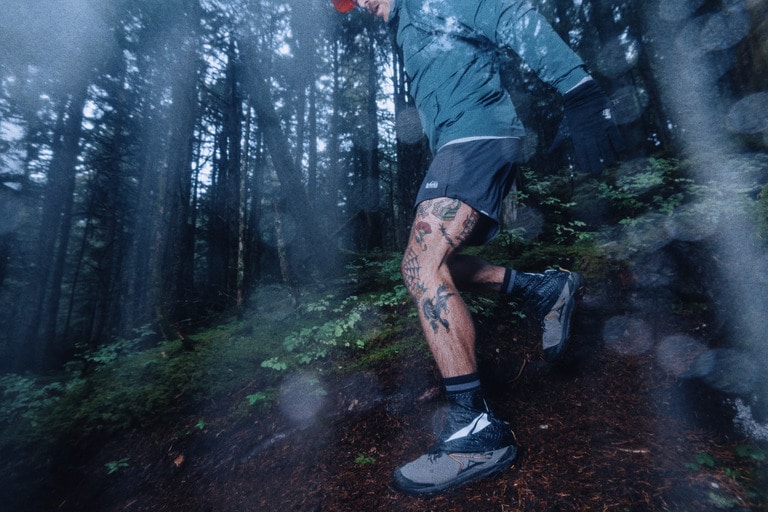
Getting the right size gaiters is important. When gaiters don't fit well, they can let water, snow and debris into your footwear and they can be uncomfortable to wear. Fortunately, getting the right size is straightforward: Just check the manufacturer’s chart found in the product description on REI.com.
While there is no universal sizing in gaiters, most styles come in sizes that are aligned with boot/shoe sizes. For example, gaiters from the REI Co-op are sized like this:
Small Gaiter Size | Medium Gaiter Size | Large Gaiter Size | Extra Large Gaiter Size | |
|---|---|---|---|---|
U.S. Men's Shoe Size | 5–7 | 6–9 | 8–11 | 10–13 |
U.S. Women's Shoe Size | 6.5–8.5 | 7.5–10.5 | 9.5–10.5+ |
Your primary goal when sizing gaiters is to achieve the best possible seal around your boots/shoes. Ideally, they also fit comfortably snug around your legs and calves. When trying gaiters on, do so with the boots or shoes you plan to wear them with.
Hiking and mountaineering gaiters should fit snugly around your ankles and/or legs, as well as your boots. There shouldn't be obvious loose areas or openings for moisture to get in. If you have larger calves, you can use the hook-and-loop entry system to adjust the fit—you don't need to overlap the hook-and-loop fastener all the way. Generally, a half-inch of overlap is sufficient. Really large boots, like mountaineering boots or snowboard boots, may require you to size up.
Running gaiters should be snug but not uncomfortable, and they should stay securely attached to your shoes without riding up. When trying them on, look closely at how they’re designed to attach to your shoes. Some have hook-and-loop patches that connect to your shoes at the heels (provided your shoes also have hook-and-loop patches on them). Others have instep straps like hiking/mountaineering gaiters. When you put them on, pay attention to how the gaiters feel around your ankles and lower shins to determine whether they will rub and cause discomfort.
How to Put Gaiters On
Gaiters aren't particularly complicated. That said, we've seen them put on every which way. “We can use an ill-fitting jacket and it will still protect us in the rain,” Willet says, “but with gaiters, you need to dedicate the time to make sure that they fit. The performance depends entirely on a really good fit.”
So, whether you're getting ready for a hike or going to a store to try gaiters, follow these steps for wearing them correctly. (Note: These instructions are for most styles of hiking/mountaineering gaiters. Not all gaiters have the same features and, therefore, may not follow these steps exactly.)
- Get your shoes ready: “Ensure your laces are tied and ready to go,” says Hillary Hursh, product manager at Altra, “before putting on the gaiter.”
- Remember that there’s a left and right. Most gaiters are designed to have extra straps, buckles and/or closures on the lateral (or outside) of the foot rather than the medial (or inside) of the foot to reduce wear and tear. Look for handy “left” and “right” labels too.
- Position the gaiters so the hook-and-loop closures are in front: As you step into the gaiters, the fabric should wrap around behind your legs and the openings should be in front.
- Place the instep strap buckles to the outside: Put the gaiters on so that the buckles on the instep straps are to the outside of your feet. If you place them on the inside, you may accidentally kick the buckles while walking. Also, make sure the instep straps run through the instep areas of your boots or shoes.
- Adjust the instep straps: On some gaiters, particularly those with internal instep straps, you need to adjust the instep straps to the appropriate length first before completely putting the gaiters on. Gaiters with external instep straps can be adjusted after they are on and you have closed the hook-and-loop fasteners in step 7 . Either way, the goal is to snug the straps up so that the bottoms of the gaiters make a nice tight seal around your boots or shoes. If you're using the same footwear with your gaiters every time, you should only have to adjust the instep straps once.
- Engage the lace hooks: On gaiters that have lace hooks, try to hook the laces as far down on your boots as you can reasonably reach. On bigger boots, like those for mountaineering, you probably won't be able to reach all the way to the laces closest to the toes.
- Close the hook-and-loop closures: Secure the long strips of hook-and-loop fastener that run down the fronts of the gaiters together. If you have difficulty finding gaiters that fit your calves, look for gaiters offered in “wide” sizes.
- Snug the top closures: You don't need to overtighten the straps at the tops of the gaiters. Just snug them up so the gaiters won't slip down your legs. Overtightening will be uncomfortable.
- Secure other closures: Some gaiters have snaps or other styles of closures at the top and/or bottom to keep the gaiters from loosening up. Secure these before heading out.
Tip: In a downpour, try wearing your gaiters underneath your rain pants to create a shingled effect that effectively sheds rain. If you wear your gaiters over your pants, rain can run down your pants, underneath the gaiters and into your boots.
How to Take Care of Your Gaiters
Like any piece of outdoor equipment, your gaiters are an investment. Here’s how to ensure they go the distance for years to come.
Clean and inspect them after use. When you find mud, salt or grime on your gaiters, spot clean them like you would a backpack. Pay special attention to rinsing around zippers, hook-and-loop closures, buckles and, says Noffsinger from Black Diamond, the instep strap: “It tends to be the highest-wear point for obvious reasons.” Some gaiters are machine washable, but be sure to carefully read the label. “Do not put them in the dryer as they will lose their elasticity over time when dried with high heat,” Hursh says. “Let them air dry.”
Keep gaiters in a cool, dry place when not in use. Like your other outdoor gear, “don’t pack your gaiters away wet,” Willet from Outdoor Research says. “That’s a surefire way to get mold to grow, which can be harmful to the waterproof coatings and laminates.”
Re-waterproof as needed. DWR coatings on gaiters, just like those on your rain jacket or snow pants, break down over time as they encounter oils and dirt. Consider using a waterproof treatment either once a season or when the face fabric begins consistently wetting out.
Our Expertise
Hillary Hursh is a product manager at Altra Running, where she oversees the full product creation lifecycle for the brand's global road running and lifestyle assortments, driving market share and awareness expansion. She brings over a decade of experience in footwear and apparel product management, having previously served as a product manager at Reebok, where she led custom footwear lifecycle management.
Derick Noffsinger is a climber, skier and runner living in Salt Lake City. He has been working at Black Diamond since 2011 as a technical soft goods designer.
Barrett Willet is the design manager for innovation at Outdoor Research. He has extensive experience designing technical performance apparel, accessories and gear for outdoor recreation. His work focuses on creating purposeful, innovative solutions informed by the needs of athletes and built for performance in demanding environments.