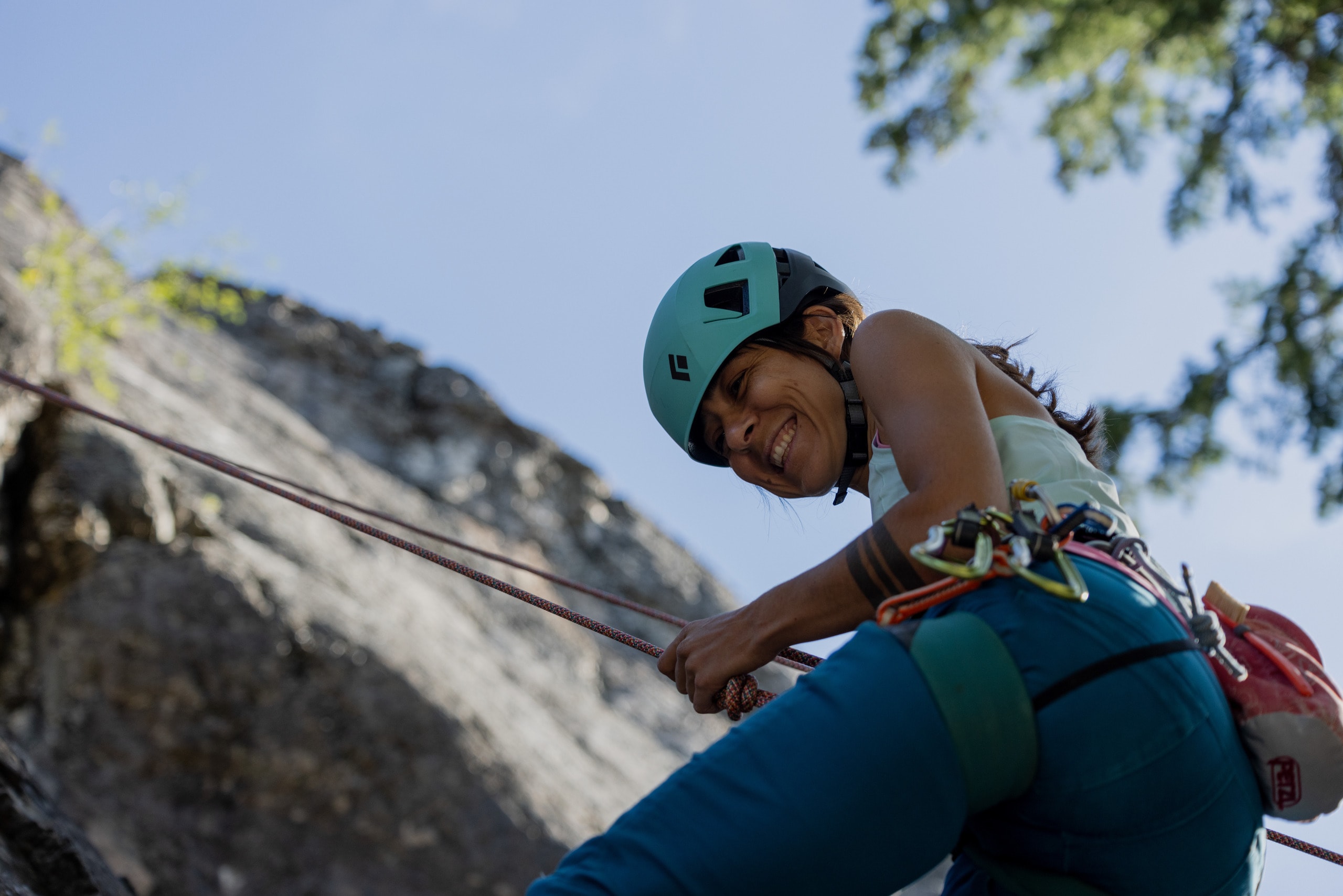
Climbing helmets are designed to protect your head against falling rocks or accidentally dropped climbing hardware, during falls if you flip or bump into the rock wall, or when you're climbing and hit your head on an overhang.
All climbing helmets must meet industry standards for impact protection. They're designed and tested specifically for climbing—with the standard for overhead protection being greater than the side-protection standard. A few climbing helmets may also be rated for mountaineering or mountain biking,
Getting the right helmet involves three main considerations:
- Climbing helmet types
- Choose a climbing helmet based on the type of climbing you do
- Measure your head to get the right fit
Climbing Helmet Type
Climbing helmets come in two main types. Helmet makers use different terms for each type of helmet, so focus instead on telltale construction details like shell hardness, foam thickness and number of vents.
Hard Shell Helmets
This type of durable, traditional lid features an extra-hard outer shell, typically ABS plastic, that's paired with a strap suspension system and a thin foam liner. Other terms for these helmets are suspension helmets and hybrid helmets. This type of helmet offers these advantages:
- Low price point
- Durable
- Long lifespan
Foam Shell Helmets
This lightweight style features a thick layer of impact-absorbing polystyrene or polypropylene foam covered by a thin polycarbonate shell. Impact forces are dissipated via deformation. This type of helmet offers these advantages:
- Lightweight
- Excellent ventilation
- Higher price point
Choosing Helmets by Climbing Type
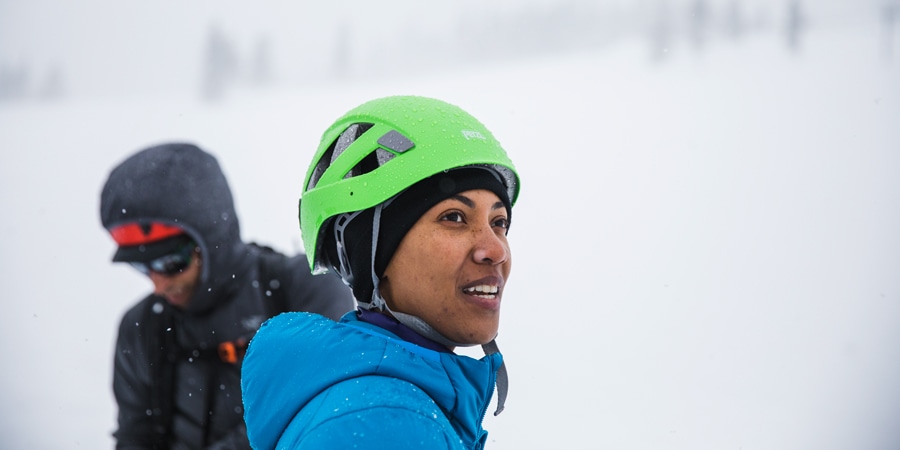
Mountaineering and multi-pitch trad climbing: When you're hauling a lot of gear and wearing a helmet for long periods of time, low weight and ample ventilation are important. So consider a shelled foam helmet.
Also, choose a bright helmet color for mountaineering. Whiteout conditions are always a possibility and you want your team members to be able to spot you.
Ice climbing: Because you'll be vulnerable to a lot of falling debris, look for a shelled-foam model with minimal ventilation area. You don't need much cooling, or want a lot of openings to let in whatever might rain down on you.
Warm-weather sport climbing: Look at shelled foam models with the greatest number of vents.
Cool-weather and single-pitch sport climbing: Because you can take the helmet off while waiting your turn to climb or belay, you can choose to trade the comfort of a shelled foam model for the durability and affordability of a hardshell.
Belaying: Protection from rockfall and dropped gear is a concern, so it's important that you also wear a helmet while belaying. No special helmet is required: Simply wear the lid you brought for climbing.
Indoor climbing: Gym rules and liability waivers will dictate whether a helmet is required. Because rockfall isn't a concern, though, a cool, lightweight shelled foam helmet is the logical choice if you're required to wear one.
Additional Climbing Helmet Considerations
Almost all helmets have headlamp clips now, so it's less of a consideration. If you plan on long climbs with predawn starts or post-sundown finishes, these clips are essential.
Climbing Helmet Fit
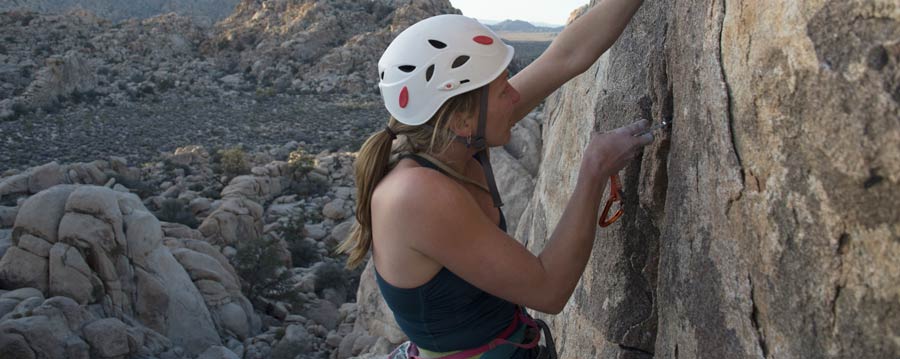
Even when friends or reviewers suggest that one helmet is the best, it won't be right for you if it doesn't fit correctly. If you can't get a good fit with your chosen helmet, you need to try another model. The best way to assess fit is to try on different helmets in a climbing specialty store.
Measure your head circumference
- Helmets are commonly sized small, medium, large or extra-large or by centimeters. Brands will list head circumferences (in inches or centimeters) in helmet product specs.
- To find your head circumference, measure the largest part of your head. Wrap a tape measure around your head just above your ears and about 1" above the eyebrows. Use that number to find the right size helmet.
Check for a secure fit
- Place the helmet squarely on your head, with the front rim straight across your forehead.
- Adjust the fit and then shake your head from side to side and tilt your head slightly back. The helmet should remain snug and not move.
- Buckle the chin strap. There should be no slack in the chin strap. The front and rear straps should form a "Y" around each of your ears.
Check the ease of adjustment
Play with the adjustment system to see how intuitive you find it and how easy it is to fine-tune the fit.
Ease of adjustability is key for cold conditions because you need to readjust fit to accommodate a skullcap underneath the helmet.
Climbing Helmet Lifespan
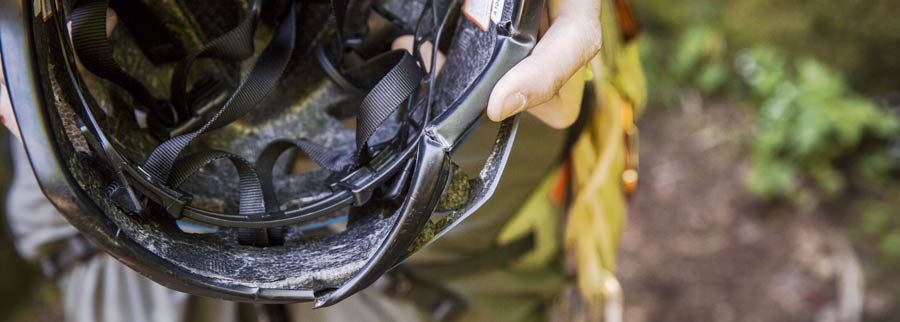
Retire any helmet that's dented, cracked or damaged—including the straps. Even in the absence of visible damage, retire yours after any incident where you think to yourself, "I would have been seriously messed up if not for my helmet."
Do these checks before every climbing trip:
- Is the outer shell free of any noticeable damage? Minor dings are OK; major dents are not.
- Are the buckle and other hardware in good working order?
- Is the webbing in good shape and free from frays and tears?
- Is the foam casing secure inside the helmet's shell?
If the answer to any of these questions is "no," then get a new helmet. In addition, you should stow your helmet inside a climbing bag to protect it from banging against hard surfaces, which makes it vulnerable to chipping and cracking.
Even if it's never impacted, retire a helmet within 10 years. The sun's UV rays slowly degrade materials, so if you climb frequently, cut this lifespan time in half.
Your safety is your responsibility. No article or video can replace proper instruction and experience. Make sure you practice proper techniques and safety guidelines before you climb.