Your trusty sleeping bag is likely one of the most important (and priciest) pieces of gear in your backpacking setup. And it makes sense, given all you're asking of it. For instance, it has to be light and compressible enough to carry over long miles, it should provide the right amount of warmth for chilly nights and allow ventilation on warmer ones. Choosing one can feel overwhelming: You have to decide on the best temperature rating for your sleep preferences and the time of year you like to adventure. You also need to choose between down and synthetic insulation, weighing factors like cost, weight and compressibility.
To simplify the task, we asked our trusted gear testers to sample top-rated and newly released sleep sacks on backpacking trips across the country, from California's coastal trails to New York's forested ones. Read on for our tests' top picks available at REI Co-op.
Tested Results
Find quick recommendations below or scroll down for in-depth reviews.
- Rab Neutrino 32 Sleeping Bag [score: 90/100]
- Rab Mythic 20 Sleeping Bag [score: 85/100]
- Big Agnes Fly Creek UL Zip Quilt [score: 85/100]
- REI Co-op Radiant 20 Sleeping Bag [score: 84/100]
Jump to Buying Advice or How We Test.
Editor’s note: We transitioned this guide from a staff picks to a tested guide in August 2026 after asking REI Co-op Member testers and staff testers to sample top-rated and newly released sleeping bags. They provided real-life feedback about each, and we included the top-scoring ones on this list. Learn more in How We Test.
Sleeping Bag | Temperature Rating | Insulation | Best for | Score |
|---|---|---|---|---|
32 degrees (F) | Down | Ultralight backpackers, tall backpackers | 90 | |
20 degrees (F) | 900-fill-power European goose down | Ultralight backpackers, side sleepers | 85 | |
50 degrees (F) | Down | Summer backpacking, ultralight backpacking, adventurers who prioritize versatility | 85 | |
19 degrees (F) | Down/synthetic blend | People who want one bag for camping and backpacking, sleepers who toss and turn | 84 |


Rab Neutrino 32 Sleeping Bag
Score 90
Temperature rating 32°F
Insulation Down
Weight 1 lb. 8.6 oz. (regular), 1 lb. 10.7 oz. (long)
Best for Ultralight backpackers, tall backpackers
You know your gear is ultralight when your campmate thinks your long-size sleeping bag is too tiny to be, well, a sleeping bag. That's exactly what happened to Gerard V., our 6-foot-3 Expert Advice gear tester who comfortably sampled the featherlight Neutrino 32 from Rab on a three-night backpacking trip near Leavenworth, Washington.
"When I took the bag (in its compression sack) out of my backpack, they asked what it was. I said, 'That's my sleeping bag.' Friend response: 'No way, it's so small!' Way to go Rab!" Gerard says, adding that the bag packs down to about the size of a 32-ounce Nalgene water bottle.
Gerard says the long version, which is nearly 79 inches long, fit his vertical frame well, though it was a touch snug at the shoulders and around his legs. The footbox, though, was plenty roomy for his size-13 feet.
The sleep sack uses down fill and a tapered mummy shape to keep it ultra packable and ultralight (the regular size weighs a scant 1 pound 8.6 ounces) while also maintaining warmth down to about 32 degrees Fahrenheit. Baffles across the bag's body keep insulation in place to prevent cold spots, and separate sidewall baffles help prevent warm air from escaping. A fitted hood with a drawcord provides additional warmth and comfort—and backpackers can stuff it with clothes to create pillow-like cushion.
Gear tester Karsten O. sampled this bag on a 30°F night in Mojave, California, and says he stayed warm with the help of extra layering. The bag is rated to keep warm sleepers comfortable down to 28°F and cold sleepers comfortable down to 41°F. (Learn more: Understanding Sleeping Bag Temperature Ratings)
Both Karsten and Gerard say they had no concerns with durability. The Rab Neutrino features a tightly woven, durable nylon ripstop across the bottom and a lighter 20-denier recycled nylon fabric on the bag's belly. This intentional fabric design helps maximize durability in high-wear areas without adding much weight.
"I'm not an 'ounce counter,'" says Gerard. "But I loved having a very light [bag] in my pack for the elevation that I was doing on my backpacking trip."
Bottom Line: The ultralight Rab Neutrino 32 Sleeping Bag withstand long miles, cold nights and small packs thanks to a durable, compressible design and 800-fill-power European goose down.
Testing Stats:
- Testing locations: California, Washington
- Best testing story: “This bag packs down to about the size of Nalgene bottle and just disappeared into my backpack. When I saw the stuff/compression sack it comes with, I thought that there is no way this bag is going in there. I was happily proven wrong,” says Gerard


Rab Mythic 20 Sleeping Bag
Score 85
Temperature rating 20°F
Insulation Type 900-fill-power European goose down
Weight 1 lb. 8.7 oz. (regular), 1 lb. 10.8 oz. (long)
Best for Ultralight backpackers, side sleepers
Ultralight and warm enough for cool conditions or cold sleepers, the Mythic 20 Sleeping Bag from Rab balances weight and function without sacrificing comfort.
This 20°F-rated cocoon’s tapered shape widens above the waist to provide freedom to move or side sleep, which testers like George O. loved. It’s filled with 900-fill-power goose down and lined with heat-reflective material to keep sleepers warm without adding much weight or bulk.
Another win for side sleepers is a sidewall baffle that helps keep insulation in place, preventing cold spots even as you rotate throughout the night. Dual zips—one for the bag’s top half and one for the bottom—and a drawcord hood allow backpackers to vent or seal the sleep sack to fine-tune its temp.
“The bag provided ample warmth during my camping trip where temps had dropped below freezing into the mid 20s to low 30s,” says George. “The hood helped keep my head nice and warm.”
Even with these stay-warm features, the bag weighs a scant 1 pound, 8.7 ounces for the regular size—on the lighter end of other 20°F-rated ultralight bags sold at REI. “Good warmth-to-weight ratio,” as Karsten O., our California tester, succinctly puts it.
While testers generally praised the bag’s durability, George found it challenging to zip it without catching the fabric. He also notes that the bottom pull tab frequently detached from the zipper teeth because it doesn't have a stopper—an intentional choice by Rab to allow the option of a wider opening.
Even so, our testers found this to be a premium ultralight option. “Overall, I was very impressed with the warmth and general quality and the build of the sleeping bag,” George says. “Improving the zipper mechanism would make this bag a strong contender for a must-have lightweight sleeping bag.”
Bottom Line: Ultralight doesn’t have to mean ultra-cramped, and side-sleeping backpackers can log a restful night’s sleep with the Rab Mythic 20 Sleeping Bag.
Testing Stats:
- Testing states: California, Washington
- Best testing story: “At nighttime, I was trying to zip up the bag and kept using the bottom zipper to ‘close' the bag,” says George. “As I would pull the zipper up, the bag would unzip! This baffled me for a while until I realized that there was a ‘top' zipper that I needed to use to close the bag. The bottom zipper was there to help provide some breathability as needed. D’oh!”


![Fly Creek UL Zip Quilt [Sleeping pad not included]](/media/d50bc5a9-efab-4321-a4eb-7dc18aa651d1/?size=440)
Big Agnes Fly Creek UL Zip Quilt
Score 85
Temperature rating 50 degrees (F)
Insulation Down
Weight 15 oz. (regular), 1 lb. 1 oz. (long)
Best for Summer backpacking, ultralight backpacking, adventurers who prioritize versatility
A compact quilt makes for a smaller pack, a lighter load and, according to our testers, a bunch of really happy backpackers.
Our ultralighters raved about the ultra-packable Fly Creek UL Zip Quilt from Big Agnes, which tester Jacob T. says packed down to “absolutely nothing” (or more precisely, around a pound and slightly larger than a Nalgene bottle) during his trip along parts of New York’s Finger Lakes Trail To save even more room, two testers say they unstuffed the quilt from its sack and stowed it loosely at the bottom of their pack filling in space among other gear. The quilt’s down fill and streamlined design—there’s minimal stitching and no hood—keep it both light and compressible. And while lightweight materials can be more susceptible to wear and tear, this quilt proves otherwise, with testers saying the sleep sack held up well. “The materials feel comparable to [other] ultralight quilts, and the stitching is as good or better than average,” says tester and thru-hike triple crowner Matt O. “I would trust this quilt on a long-distance hike.”
Another beloved feature is the quilt’s versatility. On warmer nights, backpackers can unzip it to use it like a blanket; on cooler evenings, or for backpackers who sleep cold, the quilt can zip up like a bag by tucking the bottom fabric to create a footbox. The 50°F-rated bag is meant for warm nights or warm sleepers, though one backpacker stayed comfortable even when temps dropped into the 20s. It can also be used as an added layer on camping trips.
The Fly Creek kept gear testers comfortable all night. The ripstop nylon lining is soft to the touch, and the 850-fill-power down provides cozy warmth—though Jacob says the light fabric can feel sticky if you’re sweaty. Matt, who is 6-foot-3-inches tall and used the long version of the bag, says the fit when zipped felt a tad snug for his height despite its 78-inch length. Still, he says the quilt is “plenty comfortable and comparable to other ultralight summer quilts.”
Bottom Line: Best for ultralight backpackers adventuring in warmer months, the Big Agnes Fly Creek UL Zip Quilt is light and packable enough for long hauls without sacrificing comfort.
Testing Stats:
- Testing locations: Colorado, Oregon, New York
- Best testing story: REI gear tester Matt O. brought the Fly Creek quilt to Colorado on a chilly April trip. “Since both nights were below the design range of this quilt, I wanted to take advantage and see how long I could sleep with a summer quilt in the low 20s/teens,” he says. “To my surprise, I fell asleep for about three hours before waking up a little cold. The quilt did a great job protecting me from drafts and keeping me warm.”


REI Co-op Radiant 20 Sleeping Bag
Score 84
Temperature rating 19 degrees (F)
Insulation Down/synthetic blend
Weight 2 lbs. 7 oz. (short), 2 lbs. 4.5 oz. (short narrow), 2 lbs. 9 oz. (short wide), 2 lbs. 8 oz. (medium narrow), 2 lbs. 11 oz. (medium), 2 lbs. 12 oz. (medium wide), 2 lbs. 8 oz. (long narrow), 2 lbs. 14 oz. (long), 3 lbs. (long wide)
Best for People who want one bag for camping and backpacking, sleepers who toss and turn
Light enough for backpacking and cozy enough for camping, the Radiant 20 Sleeping Bag from REI Co-op is a hit among adventurists who want a single sleep sack for multiple activities.
Thanks to the bag’s forgiving, semifitted construction, testers report they could toss and turn comfortably without feeling restricted. The roominess doesn’t add too much extra weight, either. A blend of synthetic and down insulation keeps the Radiant lighter and more compressible than a bag with only synthetic fill (each size weighs 3 pounds or less) so that it’s comfortable to both carry and rest in, according to our testers who took it backpacking and camping.
“I tend to roll around when I sleep, and the medium-wide [size] had enough room to not feel twisty inside,” Wisconsin-based tester Jay H. says.
Lizzy R., who tested the bag backpacking in Washington’s Olympic National Park, says the light bag made all the difference on her backpacking trip with friends.
“It is not the lightest sleeping bag that I have had, but it is very light for what it is! I backpack with friends who share all of their supplies since they are married, but I go alone, so I have to carry all of my own stuff,” she says. “Having a light bag is a game changer!”
The 19°F-rated bag also kept testers warm on 35°F and 40°F nights that felt even chillier due to rain and wind. Jay says he slept comfortably in shorts. “I felt warm shortly after getting in the sleeping bag,” he says. “I camped when it was 40°F out, but the rain from earlier made everything feel chilly.”
All that warmth is thanks to the 600-fill-power-down throughout the Radiant’s body, synthetic insulation in the footbox and a durable water repellent (DWR) finish made without PFAS to help moisture bead off on wet days. Additionally, a draft tube helps prevent warm air from escaping the bag, and a draft collar and face muffler provide extra insulation on super chilly nights.
This sleep sack won’t be a go-to for ounce-counting trekkers, but for the adventurist who wants an option that shines in both the backcountry and at the campsite, the Radiant 20 is a solid choice. It comes in nine sizes.
Bottom Line: Backpackers who camp (or campers who backpack) can rejoice in a bag that is light and comfortable enough for both with the REI Co-op Radiant 20 Sleeping Bag.
Testing Stats:
- Testing locations: Washington, Wisconsin
- Best testing story: “The Radiant sleeping bag is portable, comfortable with all of the available sizes and still small enough to go backpack later this fall,” says gear tester Jay H.
Shop All Backpacking Sleeping Bags
Buying Advice for Backpacking Sleeping Bags
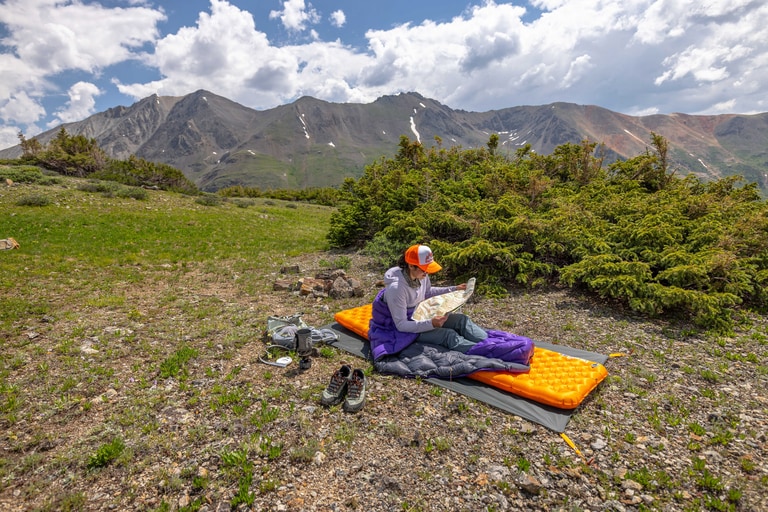
For backpacking, you want the lightest, most packable bag that will deliver a cozy night's sleep while still fitting into your budget. Not surprisingly, the lighter and warmer the bag, the more it will cost. Read How to Choose Sleeping Bags for Backpacking for a deep dive into the subject. Below are some of that article's primary tips about choosing a backpacking bag:
Temperature Rating
Insulation in a bag is key to how warm it will be, but factors like how snug it fits also matter. (Generally, roomier bags are harder for your body to keep warm.) Thankfully, you don't have to contemplate that complexity because sleeping bag ratings do it for you.
Look for a bag that will keep you warm at a temperature that's slightly lower than the lowest nighttime temperature you might possibly encounter on your trips. Many people err on the side of getting extra warmth, too, because they always have the option to shed layers or to unzip their bag in milder conditions.
Type of Insulation
Down or synthetic? Synthetic insulations offer solid performance at lower cost than down. Some bags, like the REI Co-op Radiant 20, include a blend of synthetic and down insulation to balance warmth and affordability.
In comparison with synthetic insulations or blends, though, bags that use only down will almost always be warmer for their weight, lighter and more compressible. They can also cost substantially more. A limitation of down is that dampness can degrade its insulating ability. However, many premium down fills have a water-resistant treatment to mitigate that problem. Most sleeping bags on this list—including the Rab Neutrino 32, Rab Mythic 20 and Big Agnes Fly Creek UL Zip Quilt—use only down insulation. Both the Rab Neutrino 32 and Rab Mythic 20 have water-resistant down.
A higher fill-power rating indicates a down grade that offers more warmth for less weight. The three down-only bags on this list have a fill-power rating between 800 and 900 for superior packability and warmth.
Weight
Insulation is the big factor in weight, but materials and shape (read: roominess) also matter. Especially important for backpackers, weight is related to compressibility. Generally, lighter bags stuff down smaller for packing, too. How much should a sleeping bag weigh? When you compare weights, make sure you compare bags with the same temperature rating. Also make sure you compare bags designed for the same gender—see our not-so-fun fact about ratings standards and women's bag weights, below.
Temperature Ratings Explained
Being able to compare one brand's 20°F bag against another's used to be a problem because outdoor brands tested them differently. Decades of work to standardize those ratings thankfully means that nearly all brands play by the same rules now, though those rules are complicated. Read Understanding Sleeping Bag Temperature Ratings for an in-depth explanation. Below are the highlights:
An "ISO" or "EN" temperature rating indicates the test standard used. Either rating requires rigorous standardized testing, and the two standards are roughly comparable. So, as long as you see one of those acronyms on a temperature rating, a bag can be reliably compared with any other ISO- or EN-rated bag.
Note that while these test standards can be applied to most backpacking bags, certain types of bags are not covered. Sleeping bags without hoods, quilts (Big Agnes Fly Creek UL Zip Quilt) are all assigned temperature ratings by independent tests performed by the brands that make them.
Bags are assigned two temperature ratings: comfort and limit ratings. Comfort rating is the lowest temperature at which the bag will keep the average cold sleeper comfortable and is generally the temperature assigned to women-specific bags. Lower-limit rating is the lowest temperature at which the bag will keep a warm sleeper comfortable and is generally the temperature assigned to men's or unisex bags. If a temperature rating omits the term "comfort" or "limit," then it's likely a brand's estimate, not an ISO or EN test result.
Not-so-fun fact: Women's (cold sleepers') bags that use the warmer "comfort rating" as their standard will inevitably be heavier than the equivalent men's (warm sleeper's) bags. It simply requires more of a given insulation to achieve more warmth. The rating standards aren't intended to give women bag buyers a weight penalty, but the net result is that that's exactly what happens for most bags. Because of this fact, many people will choose to buy the men's version of a bag.
Know, too, that data gathered over the years about the "average male" and "average female" metabolism informs current sleeping bag ratings. The industry is moving toward a less binary view of warmth ratings and sizing. In this gear guide, you'll find a range of gender-neutral sleeping bags offered by brands like REI Co-op.
A temperature rating is not a guarantee of warmth. Standardized ratings are super important because you can reliably compare bags from different brands. But metabolisms vary greatly from person to person, as do variables like humidity, wind, type of shelter, ground conditions, clothing and personal preferences.
Sleep Systems
One big factor in your warmth level is the sleeping pad you pair with your sleeping bag. Your pad/bag combo is your sleep system, which gives a more accurate picture of how warm you'll sleep.
If you use a less-insulated pad at colder temps, your sleeping bag might not live up to its temperature rating. To learn more about pad warmth ratings and get a look at how bags and pads work in tandem to keep you warm, read How to Choose a Sleeping Pad.
How to Choose a Backpacking Sleeping Bag
How We Test
We sent out top-selling and recently launched sleeping bags to REI Co-op Member testers and staffers across the country and asked them to rate them based on comfort, weight, warmth, packed size and durability. They schlepped their sleep sacks up Colorado 14ers, across lush trails in the Pacific Northwest and into California's coastal forests—all in the name of finding the best lightweight (or ultralightweight) bags for backpacking. The four on this list were their overall favorites.