Welcome to Ask an Outsider. We are here to answer your most pressing questions about enjoying time outside, like whether you have to be outdorky to be outdoorsy, whether you should bury or pack out your poop, or how to reconcile a different risk tolerance with a partner. Our advice givers are experts from both inside and outside REI Co-op who draw from their own experience and knowledge to help inform yours.
We gave Miles Howard, an urban thru-hiking advocate and REI Co-op Member since 2010, a long leash to try to answer a question about free-roaming dogs in public outdoor spaces. As the founder of Boston’s 149-mile Walking City Trails network, Howard has shared his fair share of trails with wagging tails, and he just wants everyone to have a paws-itive experience outside.
Want to submit a question?
Send it to expertadvice@rei.com with the subject line “Ask an Outsider.” Include your name and the year you became an REI Co-op Member. Letters may be edited.
Dear Outsider,
I really like to go hiking in this large regional park near me, which has 500 acres of forest, 12 miles of hiking and mountain-biking trails, and access to the Mississippi River. In the spring, I’m there three or four mornings each week, and at least half the time (often more), I’m approached by an off-leash dog while I’m on the trail. Often, their owner is out of sight and far behind. Yes, there’s a leash law in the county, though there isn’t park staff around to consistently enforce it: The code states that pets must be on a leash no more than six feet long at all times, except within designated dog park areas.
I love dogs, but it can feel pretty scary to encounter one alone when I’m not expecting it! Is there some kind of basic etiquette for letting their dogs off leash on shared use trails, or am I being a canine killjoy?
Signed,
Jamie B., REI Co-op Member since 2024
Dear Jamie,
Reading your message helped my nerves stop jangling after a trail run where I crossed paths with an agitated, off-leash Dalmatian—just when I was starting to descend a rather steep and eroded slope. Maybe it didn’t like the looks of my blue spandex tights. It’s impossible to know.
We’ll get back to that part soon, but in all seriousness, your question reflects something I’ve noticed over 10+ years as a hiking guidebook author and trail planner. Leash laws, which exist in many parks for various reasons including preserving open space, protecting wildlife, limiting allergic exposure, and reducing scary situations for both humans and dogs, are almost never enforced. This leaves the rules open to disregard by dog owners and, thus, you have the opposite of basic etiquette: an open debate which can inspire fierce arguments.
If there’s ever going to be any self-enforced standards, it has to begin with a grassroots case for why leashes can benefit everyone involved. To that end, I called up Marie Wulfram, a Washington state pet photographer with a background in veterinary medicine who spends enough time outdoors with dogs to understand the discussion’s nuance.
The Case for Leashing Up Your Pup
The thing to remember with any dog—no matter their training or disposition—is that you can never know how it might respond to creatures or objects encountered in the field. So, leashing can keep your furry best friend safe too. “You could be walking on a trail where other people have thrown trash, or through an area with plants that might smell intriguing,” Wulfram says, explaining why she always keeps her outdoor photo subjects on leash. “Either of these things can be dangerous for a pooch to ingest, which they might do if they get out of sight and they don’t respond to calls to come back.” (And, remember, whatever goes in must come out: If you lose sight of your dog it’s harder to pick up and properly dispose of their waste.)
Leashing can also prevent your pet becoming scared by unfamiliar encounters: Even a normally friendly pup might become frightened of a new person. What looks like a trekking pole or an extra-large backpack to us might be threatening or scary to a canine, for example. And any pup (friendly or skittish) might be an unwanted visitor to people who are allergic or afraid of dogs.
“I have a special-needs child who likes dogs from a distance, but finds them terrifying when they get closer,” Wulfram notes. “There have been times when an unleashed dog has come right up to us and the owner has insisted, ‘He’s friendly,’ even as they see my son climbing up my side.”
Wildlife encounters are another potential danger for off-leash dogs, whether due to direct attack or a disruption that causes a ripple effect. Just this summer, for example, a woman was attacked by a mama bear in Salmon Arm, British Columbia, after her off-leash dog treed a cub on a trail. And what happens if something happens to you and you can’t get your pup back because you’re injured or immobilized?
Several of the Leave No Trace principles can be read as sound reasons to control pets at all times in an effort to avoid these types of incidents: Respect wildlife, be considerate of other visitors and properly dispose of waste. Some land managers, including the National Park Service, take environmental protection seriously enough that they prohibit pets except service animals on trails, leashed or unleashed. Because just as unpredictable as an unleashed dog’s behavior is how a hiker or a wild animal might feel about the dog itself.
The Ground Realities of Leashing
Given all of this, why are the rules so often ignored at parks where visitors are asked to keep their dogs on leashes? And why isn’t leashing the default approach at parks with no such explicit rules?
Having logged miles with several friends’ dogs in the field—sometimes even holding their lead myself!—I concede that leashing is counterintuitive for many hounds and their humans. The outdoors is a smorgasbord of curious sights, sounds and smells that can leave a pup begging to explore, and reining in that urge to roam can be physically and emotionally taxing for a dog owner. Last fall, after three hours cooped up in my Honda Fit, a friend and I decided to let her collie, Toby, off leash as we climbed to Table Rock in New Hampshire’s Great North Woods. Both of us had encountered plenty of off-leash pups on the trails in the region before, and given their modest visitor traffic and Toby’s prior experience, allowing the dog to roam freely for a little while didn’t seem too risky. But we agreed the leash would come out before we hit the ledgy summit.
Our decision paid off, yielding a cozy night of tent camping with a sated and serene pooch. However, checking the Table Rock State Park website before returning to the Great North Woods years later, I realized we had unwittingly violated the park’s rules, which state that dogs must be kept on a leash of 6 feet or less. We had assumed too much, leaning on the precedent of seeing unleashed dogs on local trails and neglecting to look up the actual park regulations. I suppose that those visitors, like us, had wanted to create more satisfying outdoor experiences for their dogs. Still, those rules were in place for a reason—several reasons, as we’ve already discussed. And how many hikers would put the leashes back on at the summit of Table Rock? Cliffy and steep areas are especially hazardous for dogs, who can’t tell when they’re about to step over the edge into nothingness. Between 2019 and 2024, nearly 250 dogs were reported stuck or lost on San Francisco’s coastal cliffs, requiring rescue (and causing owners unnecessary panic).
“A lot of people I’ve spoken with about dogs and leashes seem to have the idea that the leash is inhibiting their dog’s joy,” Wulfram says. “And I get it. But at the same time, if you’re taking your dog on a hike, even if they’re on a leash, you’re already expanding that dog’s enjoyment of life.”
Negotiating the Landscape
Is there room for both ideas in a basic etiquette for off-leash dogs? Yes, leashes minimize risks for pets, humans and wildlife, and yes, being off leash can be good for a dog’s mental and physical health. It’s a lot to process, but I think it’s possible. Here’s how.
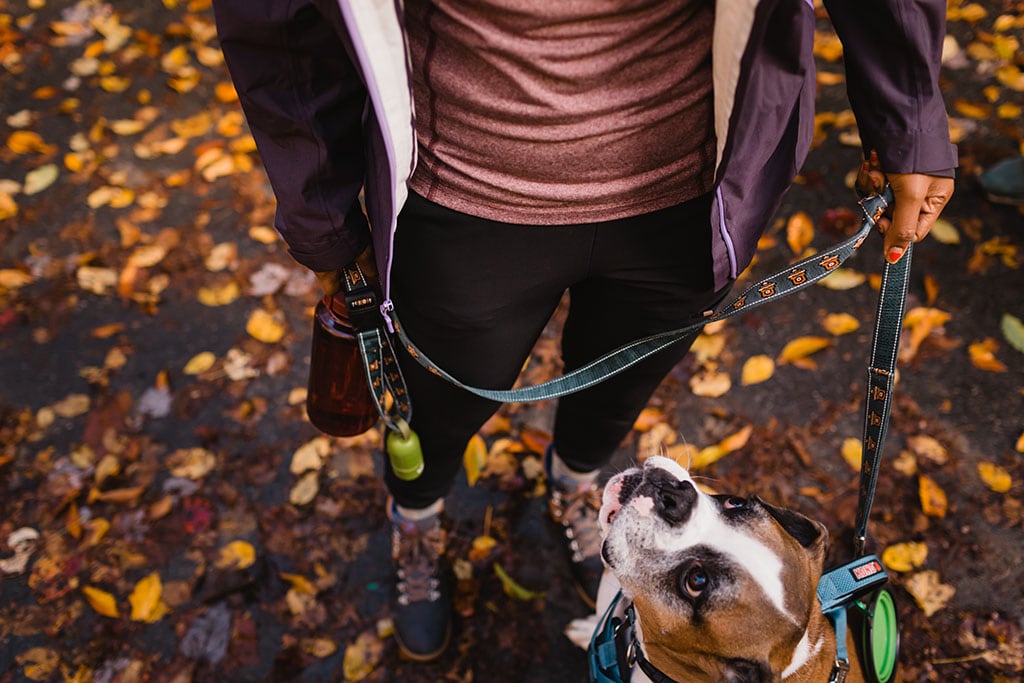
- Always respect the leash policy. Places that have one aren’t appropriate venues for letting a dog roam free, irrespective of how well you think they’ve been trained. The policy is there for a reason whether you know it or not.
- “Please leash your dog.” If you run into an unleashed pooch in one of these places, you are within your right to ask the owner to contain it. How you ask is important—aggression begets aggression—and giving the benefit of the doubt can go a long way. A simple “Excuse me, will you please leash your dog?” might be more effective than angry scolding. Consider walking away if you receive a rude or dismissive response. But underscoring park rules politely and firmly can be a teachable moment for some pet owners.
- Find a better off-leash park. If you want trails, hills, valleys and creeks for your dog to explore, find an off-leash dog park near you that has more natural features. While some parks are just fenced-in grass fields, others prioritize pooch enrichment while keeping the area safe and enclosed. Cherry Creek State Park Dog Off-Leash Area in Aurora, Colorado, is a great example: It’s a fully fenced, 107-acre area with access to Cherry Creek. Battle Creek Regional Off-Leash Dog Park just outside St. Paul, Minnesota, features 35 fenced-in acres of woods, trails, rolling hills and ponds for pups to explore.
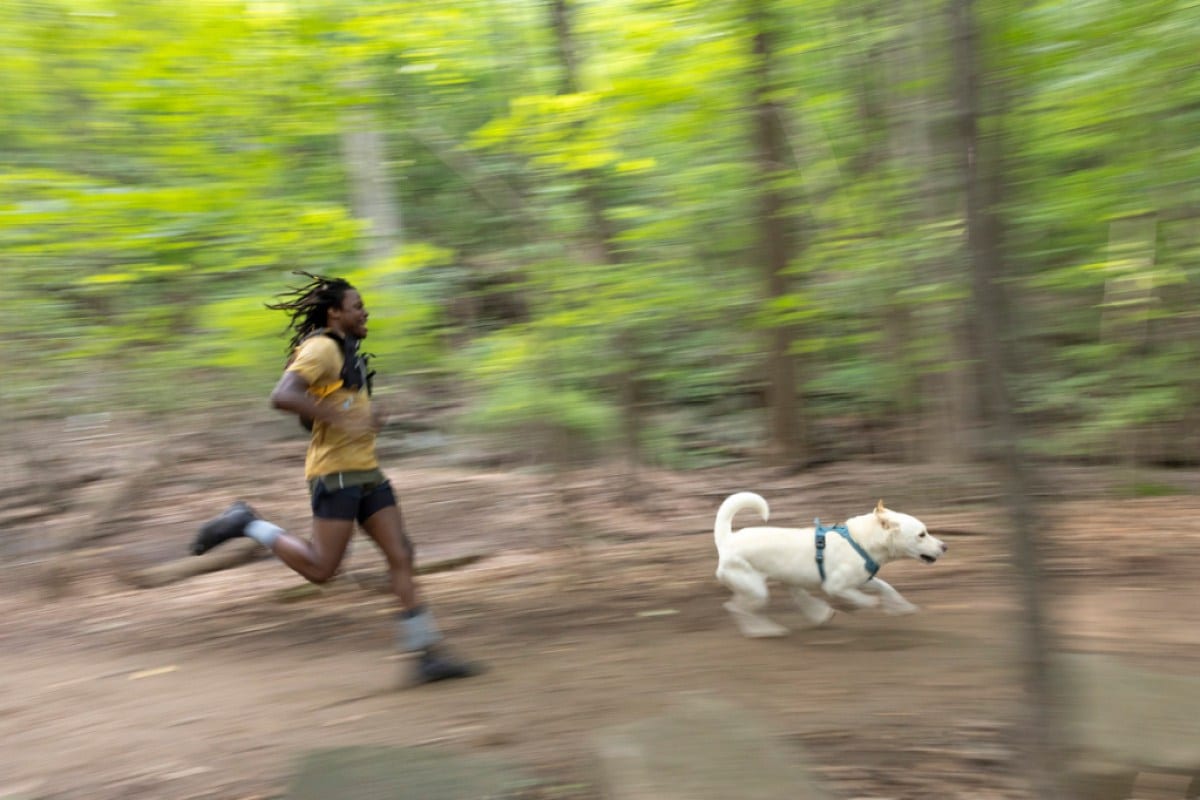
- If you walk your dog off leash in a park with no local or state leash laws, know you may still need to put your dog on a lead at a moment’s notice. This also goes for places where the policies have been brushed off for so long that upholding them will be a lonely battle. Dog owners visiting these venues should understand that off-leash time might need to end suddenly, depending on what their pet gets into. Etiquette dictates that other hikers’ comfort and safety come before your dog’s enjoyment and freedom.
- Those of us who are dogless can afford some grace in more nuanced situations. When there’s room for interpretation about what’s responsible and safe regarding leashing in a park or on the trail, it might be worthwhile to assume positive intent rather than react with immediate criticism or judgment. This might be harder when there’s fear involved, but all hikes come with some degree of risk. You can call out, “Whose dog is this?” if you see a dog without a human on the trail, or, “Recall your dog, please” to let other hikers know you aren’t comfortable engaging with the animal.
All this is to say, Jamie, that the regional park where you spend your mornings might be a place where negotiating the terrain means bracing for encounters like these. Maybe you’ll remind a dog owner that there are leash rules in place there for good reason. Or perhaps you’ll recognize that the trail you’ve been poking around could also be a place where a dog owner might reasonably decide to allow Fido some time to roam unencumbered.
Either way, if we’re going to reach a consensus about leashing dogs, perhaps we must recognize we all have a role to play in creating—and maintaining—outdoor etiquette. Your park is as good a place as any to test the waters. Happy tails—er, trails!