The Basics of Snowboard Bindings
When matched to your board, boots and ride style, snowboard bindings transfer energy and respond to your body's shifts for precise control. Choose bindings based on your riding style, ability level, board/boots compatibility and comfort.
In this article, we'll cover:
- Different types of snowboard bindings
- Matching your binding flex to your riding style and ability
- Making sure your snowboard and bindings are compatible
- Fit tips
Types of Snowboard Bindings
Strap Bindings
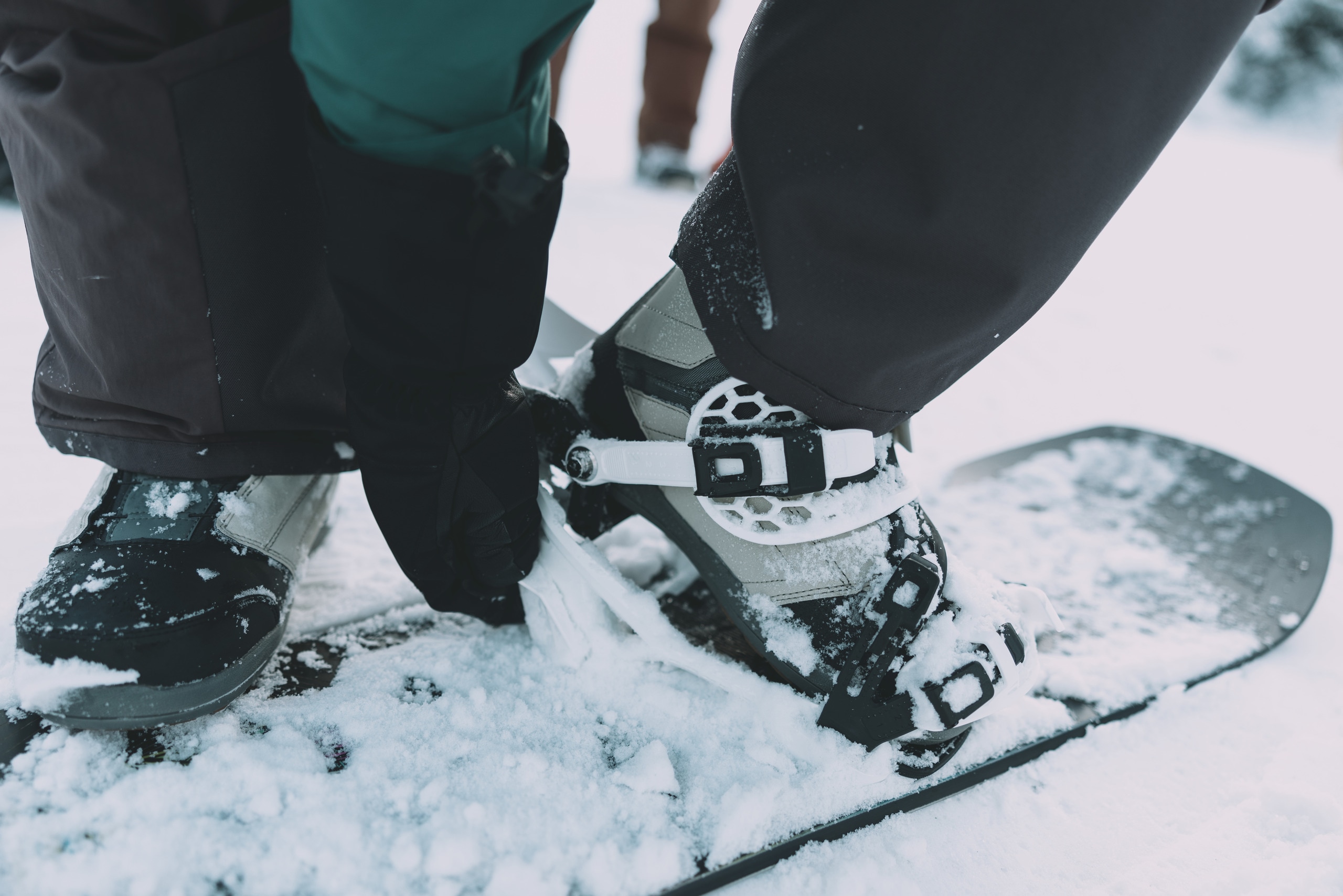
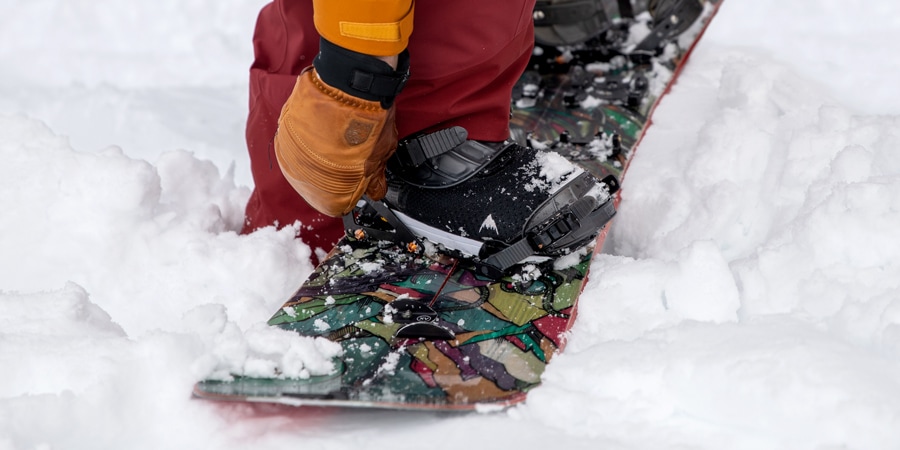
The most common type of snowboard bindings, strap bindings feature toe and ankle straps that ratchet down to secure your boots in place. Strap bindings feature multiple adjustment options to fine-tune fit and they work with a wide range of boots and riding styles. On the downside, buckling and unbuckling the straps may be cumbersome and time-consuming, especially when wearing gloves or in cold conditions. Choose strap bindings if you want a tried-and-true, adjustable options that works for most riding.
Step-in Bindings
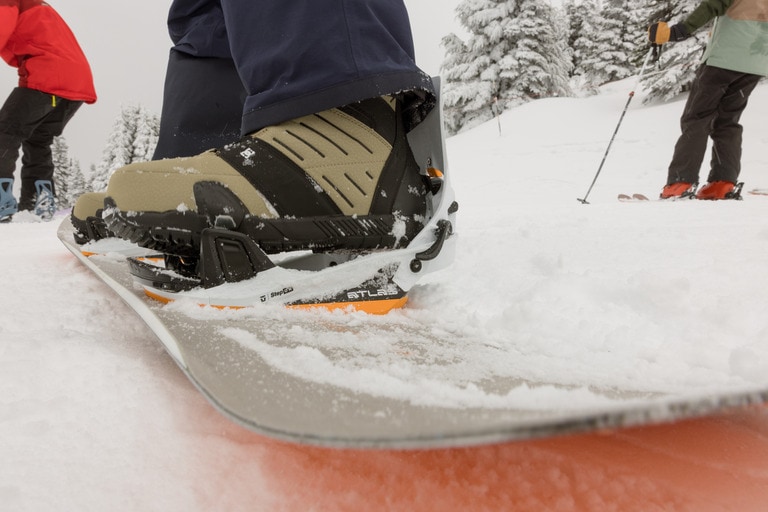
Unlike strap bindings, step-in bindings don't rely on toe and ankle straps to keep your boots attached to the snowboard. Instead, step-in bindings like the Burton Step On system use a locking mechanism (like toe and heel cleats) to connect your boots to the board so you can click in quickly and ride. These bindings are designed to save time, energy and strap-induced frustration on the slopes. One downside, however, is that they require compatible boots. Step On snowboard boots, for example, work together with Step On bindings. (Related reading: What are Step-in Bindings?)
Splitboard Bindings
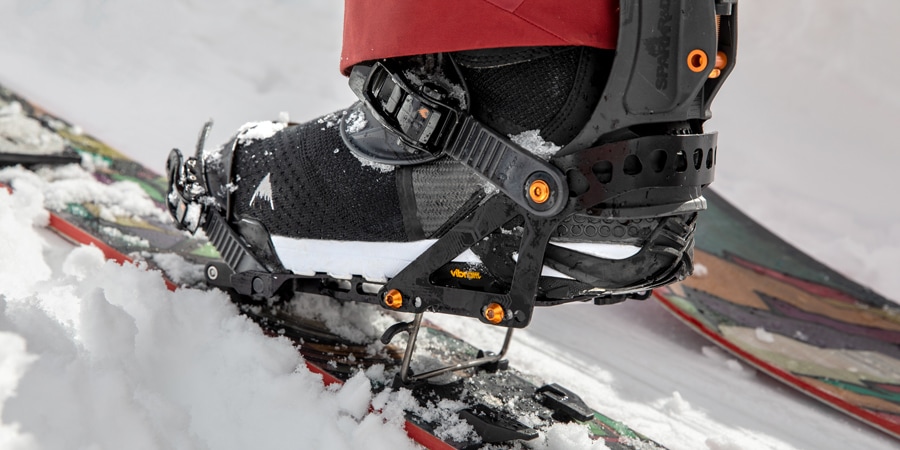
These bindings are designed to work with splitboards for backcountry riding. There are two main types of splitboard bindings to consider: soft-boot bindings and hard-boot bindings. Soft-boot bindings are what most splitboarders use; they look and perform a lot like regular snowboard bindings. Hard-boot bindings are much more of a niche setup; they do away with highbacks and straps in favor of a design that works with plastic alpine touring ski boots rather than snowboard boots. (Related reading: How to Choose Splitboard Bindings)
Rear-entry Bindings
These bindings look similar to strap bindings, but have reclining highbacks that allow quick and easy in-and-out boot access, which is preferred by many casual riders. These bindings stabilize your feet with a yoke system that applies uniform pressure across the forefoot. They are often heavier than strap bindings, and performance-focused riders feel they reduce board control. Rear-entry bindings are generally suitable for both soft and firm-flexing boots.
Binding Flex Level
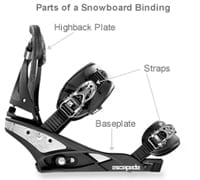
The flex of your snowboard bindings should be appropriate to your ability level and the terrain you ride. It should also match the flex in your boots.
Soft flex: Playful and forgiving, softer bindings are ideal for beginners and freestyle riders.
Medium flex: Offers a balance of comfort and control.
Stiff flex: Stable and responsive; great for speed, carving and aggressive riding. Advanced riders and freeriders typically prefer bindings with tall, stiff highbacks for precise control at high speeds, in deep powder and on steep terrain.
Your choice of snowboard bindings can be narrowed based on the following riding styles:
All-mountain: Best for any terrain, including groomed runs, powder, park and pipe. Flex levels of bindings vary based on your skill level and preferred terrain. Most riders choose soft to medium flex, while racers choose stiff flex.
Freestyle: Best for jumps, spins, tricks and park features such as half-pipe, rails and boxes. Freestyle bindings typically offer soft flex for greater turning ease and maneuverability.
Freeride and Splitboard: Best for unmarked backcountry and sidecountry terrain. Bindings are stiffer for greater control.
Snowboard Binding / Board Compatibility
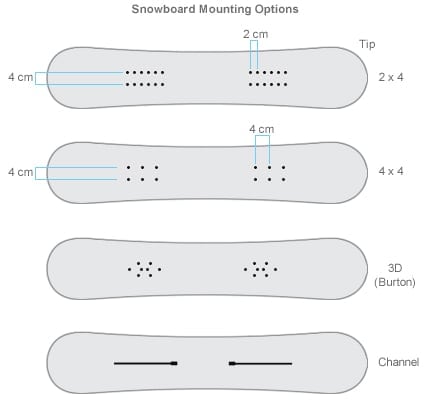
Binding baseplates feature bolts or discs that attach to a snowboard's binding interface and adjust to attain your preferred stance on the board. Make sure the baseplates are compatible with the interface on your chosen snowboard.
Most bolt patterns are 2x4 or 4x4. Some Burton boards have a diamond-shaped, "3D" bolt pattern found only on its boards. Burton also has a line of boards featuring The Channel system which works with any Burton binding and some bindings from other major brands.
Snowboard Binding Fit Tips
Snowboard bindings must accommodate your boot size. A compatible binding will grip a boot snugly and securely, but without forcing the boot into position or pinching it into place. Bindings should allow your boots to flex, without letting them wobble or shift.
Binding straps should not dangle excessively when tightened. Look for different bindings if the strap ends are overly long when the bindings are cinched to your boot