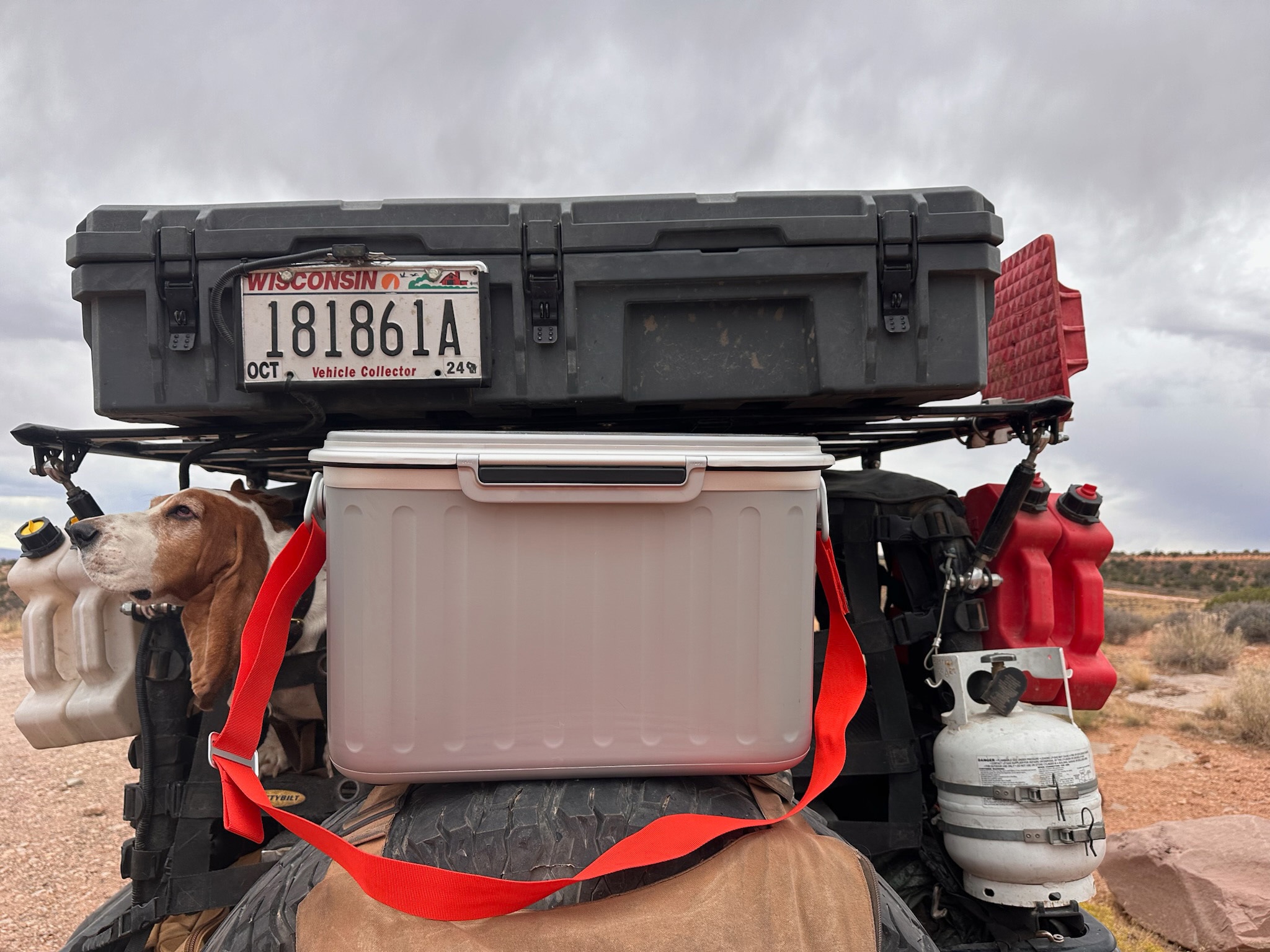
Bouncing up the 4x4 road on the outskirts of Frisco, Colorado, I craned my neck to peer behind me. Yep, our 23-liter Oyster Tempo Cooler was still upright on the floor, tucked behind my bucket seat. I unhinged the lid to see how the contents had fared over the two-hour trip and instantly felt assured by the chilly blast of cold air against my hand. Once at camp, I hopped out of the car, slung the Tempo’s cherry-red strap over my shoulder and carried it to the patch of dirt that would serve as our camp kitchen all weekend. Gear testing was underway.
I was skeptical this cooler would live up to its promises: compact, durable, lightweight and high-performing. Sure, it looks sleek and weighs just over 12 pounds, but would a cooler with walls just under an inch thick keep everything inside sufficiently cold?
After testing the Tempo for a month, I’m a believer. So is my husband—who teaches heat transfer and thermodynamics at the University of Colorado, Boulder—and two professional chef friends who assessed the Tempo after a cookout at camp.
Here’s why we’re all impressed.
Meet the Gear Tester
Tester | Years camping | Testing period | Testing location | Cooler contents | Longest distance hauled |
|---|---|---|---|---|---|
Courtney Holden | 30 | 200+ hours over the course of almost a month | Colorado | Deli meat, soft cheese, canned and bottled beverages, fresh veggies, ice cream and more | About two city blocks (or about 100 yards) |
Who is this cooler for?
This lightweight, compact cooler is a just-right size for a small family car camping for one night or a solo adventurer camping multiple nights. My family brought the Tempo on countless outings over several weeks in September. We kept milk, carrots and fizzy waters in the cooler for multiple days on two separate camping trips in the Colorado Rockies.
We also used it to keep snacks and drinks cold during sporting events and grocery runs. However, if you’re packing food for a large crew or camping with friends over a long weekend, you’ll want to opt for a larger-capacity cooler.
Pros | Cons | Best for |
|---|---|---|
Keeps items cold with two medium-size ice packs instead of the standard 2:1 ice-to-chilled-items ratio | Not large enough for hauling loads for multiple people over multiple nights | Short car-camping trips |
Compact enough for a single person to carry | Can become heavy for one person if loaded with beverages | Day outings, like beach hangouts, picnics, sporting events and grocery runs |
Easy to clean and store at home, thanks to its compact size | Pricey | Campers short on storage space in their vehicle or at home |
Lid opens from both sides (or can be removed entirely) | Not bear-resistant | |
Sleek silver exterior | Aluminum surface dents easily |
Thermal Performance
What sets the Tempo apart is its ability to maintain colder interior temperatures for longer than other hard-sided coolers, thanks to an Oyster-developed insulation system that relies on aluminum’s low air permeability. Where many hard-sided coolers sandwich polyurethane foam between two plastic walls, the brand’s patented thermal technology creates a vacuum-tight seal between two sheets of stretched aluminum.
I was impressed by the Tempo’s cooling capabilities in action. On the way to dinner at our friends’ home, we swung by the store to grab some bevies and then popped them into the Tempo along with two Oyster ice packs. Though the cans and bottles had started at room temperature, they were already cool enough to enjoy when we arrived, 10 minutes later. On a separate occasion, I moved six cans, a couple kombucha bottles and a bag of carrots from the refrigerator to the Tempo cooler but didn’t add ice or the ice packs. Twelve hours later, I found everything still cold (not just chilled, but downright cold) to the touch.
The Oyster Tempo Cooler Bundle comes with the cooler, a red carrying strap and two ice packs, which are about an inch thick and nest like puzzle pieces in the bottom of the cooler. The cooler's actual refrigeration time depends on many factors, including whether you use one or both ice packs and how warm it is outside. You can use Oyster’s cooler “comparinator” to get a cold-holding estimate.
Weight and Size Breakdown
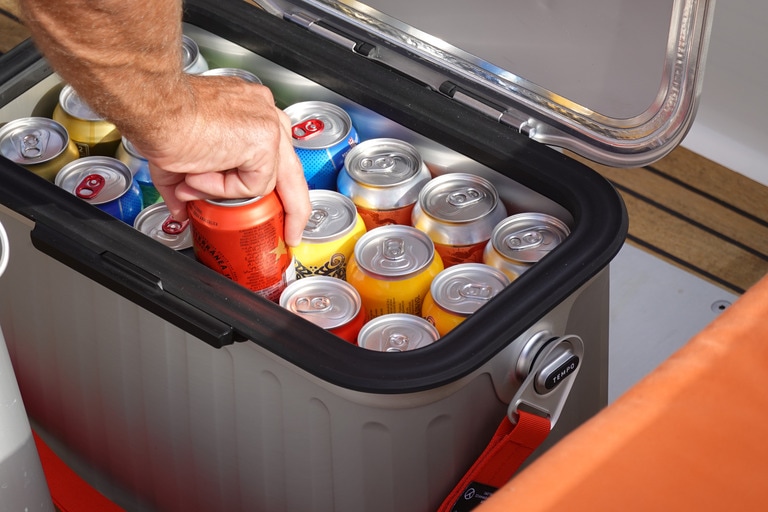
The compact, light design is another benefit of this cooler’s thermal technology. The Tempo’s walls don’t have to be as thick to achieve the same stay-cool power. Thinner walls make for a lighter cooler with more space to stash drinks and snacks. The Tempo also requires only two cooler packs, so users don’t have to save room for ice.
I tested it for myself and was able to stash 36 cans along with the two included ice packs. The cans remained cold to the touch for a whopping three days. And while the full cooler was heavy, I could manage toting it from the car to a campsite on my own. In this scenario, I found that I liked the nylon carrying option more than the aluminum handle because I could sling it on my shoulder and grab a couple bags of chips in one hand and my kiddo’s baseball mitt in the other. That said, those who like a stiffer handle can easily tag in the aluminum arm. Swapping one for the other took me 25.12 seconds on my second try (yes, I clocked it). The bundle on REI.com includes only the nylon strap; the aluminum handle is sold separately.
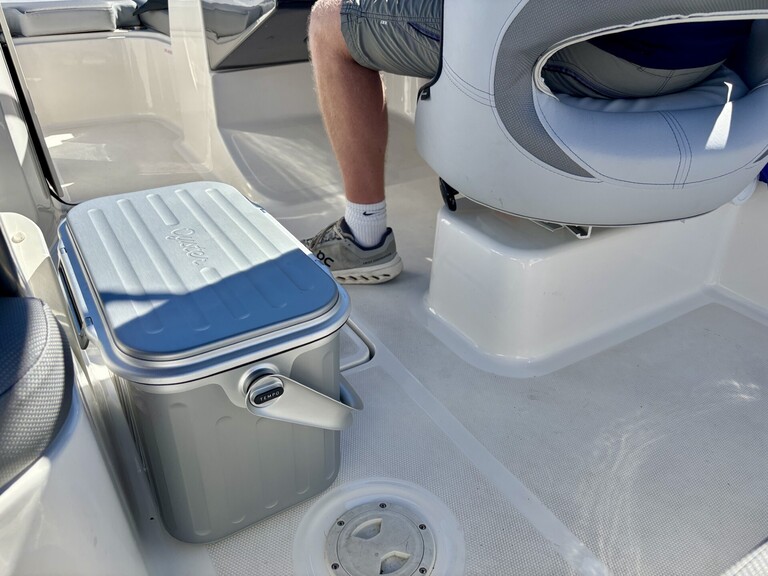
Another benefit to the smaller cooler: It takes up less space, whether I’m fitting it behind a seat in my Prius for a grocery run or wedging it into my gear-stuffed garage for storage.
Other Cooler Features
Performance and size aren’t the only upsides of the Tempo.
Dual open: How many times have you found yourself having to thoughtfully set down a heavy cooler (often coordinating with your co-carrier) to ensure the opening faces outward? Oyster removed that issue by adding a second hinge to allow access from either side. The lid can also be fully removed.
Easy to clean: The Tempo is a breeze to clean. Simply remove the lid and wash (it’s small enough to fit in many kitchen sinks). I found it easy to add soapy water and scrub away the campsite grit. Afterward, I closed one side of the lid completely and propped open the other side using the latch to create a one-inch air vent. I live in Colorado’s famously arid environment, but it took less than 20 minutes for the interior to dry.
Long life: The Tempo is designed to be taken apart without tools, allowing you to replace broken or worn-out parts and keep the cooler in commission for as long as possible.
No ice needed: No more soggy burger buns or last-minute grocery runs for fresh ice. The two included ice packs can keep your camp fare cold for hours.
Potential Drawbacks
It’s hard to find many downsides to the Tempo, but here are some limitations to consider depending on how you plan to use it.
Price: The Tempo is a premium cooler, and its price tag reflects that. If you want a cooler that holds a lot without being too bulky—say, you need to fit enough food for a meal and snacks at camp but are short on storage space—then this is a great option. Likewise, if you’re willing to spend more for the convenience of an ice-less cooler that refrigerates food for hours, the Tempo is a solid choice.
Size: I found the cooler sufficient to hold enough milk, meat, cheese and a six-pack of fizzy waters for a weekend camping trip for my family of three. If you’re looking to keep enough food for a bigger crowd or longer trip, however, you should consider a larger-capacity alternative like the YETI Tundra 65 Cooler or the Dometic CFX5 75 Dual-Zone Powered Cooler.
Draining: The Tempo doesn’t require added ice, but if you want or need to boost thermal performance, you certainly could do so. Still, note that the Tempo doesn’t have a drain spout for emptying melted ice. You’ll need to pick up the cooler to dump out the water.
Dings: Aluminum will inevitably acquire dings and dents. After a month of testing, my cooler has a handful of scratches around the body and a noticeable nick in the lid. I like that these scars show character, but you should consider yourself warned: The Tempo’s modern silver exterior will weather more noticeably than plastic coolers.
Bears: Svalbard, Norway, might be known for polar bears, but Norway-based Oyster has not taken steps to make the Tempo bear-resistant. If you plan to camp in grizzly country, take your Yeti Tundra 65, 45 or 35 instead.
Bottom Line
After hours of testing over multiple days, I found the Oyster Tempo to be a small-yet-mighty addition to the hard-sided cooler scene. It’s a breeze to open, easy to haul and was incredibly effective at keeping my perishables cold for more than 20 hours. Plus, it holds far more than you’d expect for its size. When you go camping, the world is your oyster. Now your camp cooler can be one, too.


Oyster Tempo Cooler Bundle
Gear capacity 23 liters
Material(s) Wrought and cast aluminum; fumed silica; foamed EVA; nylon
Dimensions 20.1 x 12.6 x 11.8 inches
Weight 12 lbs. 4.8 oz.