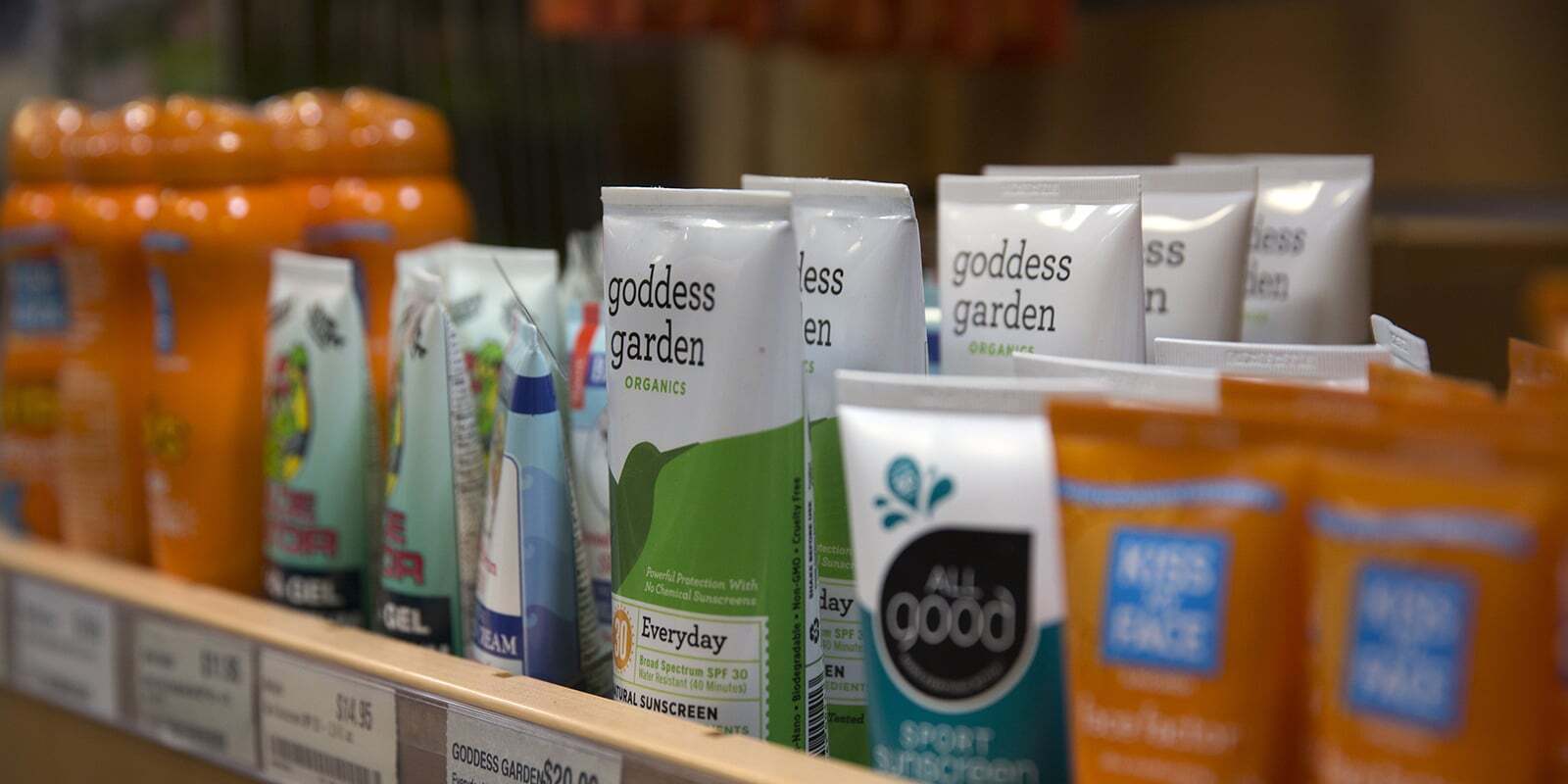
Sunscreen is a vital part of outdoor adventure year-round. Fortunately, whether you’re kayaking, camping, hiking or skiing, it’s easy to be proactive about protecting your skin. Here’s how to choose the right kind of sunscreen, when and how to apply it, and what ingredients to look for so you can adventure with confidence and peace of mind.
This article will cover:
Note: Clothing with UPF-rated fabric protects skin more effectively than any sunscreen. So, your best strategy is to cover as much as possible with protective clothing and to save sunscreen for the remaining areas of exposed skin. Read Sun Protection Clothing: How to Choose for more details.
Types of Sunscreen
First things first: There are a plethora of options when it comes to sun protection, including types of sunscreen.
Cream or lotion: Packaged in a squeeze tube or similar, you’ll need to rub these onto or into your skin to achieve full protection. This is the most commonly found type.
Solid: Often in stick form, solid sunscreens allow you to swipe on sun protection relatively mess-free (but may still require some rubbing in). They’re easy to travel with as they aren’t subject to TSA liquid maximums and are less likely to spill or explode in your luggage.
Spray: These come in an aerosolized can or spritz bottle for quick and easy application. They’re as effective as other options, but achieving full coverage requires extra care. A quick spritz won’t offer adequate protection.
Sport: Typically, sunscreen labeled this way is designed to be water-resistant for use during high-output activities like running, hiking, playing team sports or other sweaty pursuits. See more about water-resistant sunscreen.
Broad Spectrum
Broad-spectrum sunscreens protect skin from both UVA and UVB wavelengths; sunscreens that aren’t broad spectrum only protect against UVB radiation.
UVA radiation is more prevalent, is generally associated with aging effects (think dark spots, wrinkles) and is just as strong through glass, clouds and fog. Some SPF cosmetics don’t offer broad-spectrum protection.
UVB is primarily associated with sunburn and mainly affects the top layers of your skin. It can be blocked by glass and, to some degree, clouds.
Both types of ultraviolet radiation have been shown to cause redness, photodamage and skin cancer. Additionally, you can experience the aging effects of the sun without experiencing sunburn. For the best protection—especially for long days recreating outdoors—experts recommend broad-spectrum sunscreen.
Sunscreen Ingredients
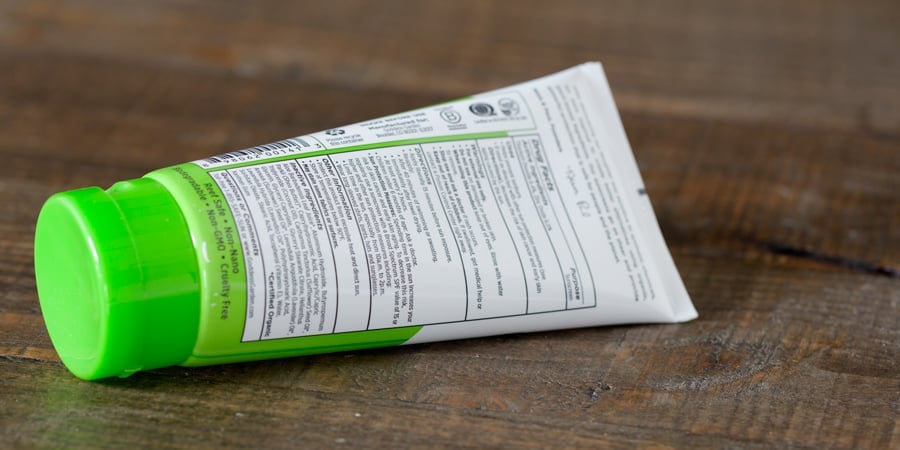
There are two main types of sunscreen ingredient profiles available: mineral (also called physical) and chemical (also called organic). Mineral and chemical ingredients are sometimes found in combination in sunscreens. Here is a breakdown of each, including some common ingredients.
Mineral sunscreens create a physical barrier that reflects the sun’s rays. These will often look white when you apply them. These are typically made of:
Titanium dioxide
Zinc oxide
Chemical sunscreens absorb UV rays to protect your skin from sun damage. These soak into your skin and are transparent.
Avobenzone
Butyloctyl Salicylate
Cinoxate
Dioxybenzone
Ensulizole
Homosalate
Octinoxate
Oxybenzone
Are there any sunscreen ingredients to avoid?
Can sunscreen be bad for you? Many are concerned about potentially harmful ingredients, but some experts look at the bottom line: “Sunscreen saves lives,” says Elizabeth Buzney, MD, assistant professor of dermatology at Harvard Medical School at Brigham and Women’s Hospital and a member of the Skin Cancer Foundation’s photobiology committee. Dr. Bunzey says any sunscreen is better than none when considering human health. That’s because while sunscreens of all types are proven to save lives from skin cancer, there’s no evidence that chemical ingredients are harmful to adults.
Indeed, Dr. Buzney says, while studies using lab rats indicate chemical ingredients are potential endocrine disruptors, human studies haven’t shown negative effects from using chemical sunscreens in the amounts required for proper application. That said, according to the FDA, more testing is needed to determine their long-term safety.
Nanoparticles have gotten bad press in the last few years, specifically with regards to zinc and titanium dioxide. These smaller particles allow sunscreens to go on smoother and with less white cast, but there remains some question whether they can be absorbed through the skin. If you’re concerned, look for the term “non-nano” on the label, but know that FDA regulation of these particles is still evolving and remains incomplete.
While safe for human use, some chemical ingredients have been shown to damage coral reefs and ocean life—though sunscreen isn’t the main contributor. Octinoxate and oxybenzone, for example, are highly effective against UVB rays and widely used in sunscreens, but they have been implicated in harming coral-reef ecosystems worldwide. Certain nations and the state of Hawaii have banned sunscreens containing these ingredients. The terms “reef safe” and “reef friendly” are used to identify sunscreens that do not contain these chemicals, but "reef safe" is not an FDA-approved term or certification; be sure to check the ingredients listed on the label. Learn more in our guide What Is Reef-Safe Sunscreen?
Sunscreen type | Pros | Cons | Best for |
|---|---|---|---|
Mineral |
|
| Sensitive skin |
Chemical |
| Easy, invisible application |
Understanding Sunscreen Ratings and Descriptions
SPF stands for Sun Protection Factor, and the higher the number, the stronger the protection from sunburn. According to the Skin Cancer Foundation, the SPF rating (usually between 15–100) measures two important things:
How much ultraviolet (UV) radiation it takes to redden your skin through generously, evenly applied sunscreen.
How long your sunburn is delayed compared with the damage inflicted by UV rays on unprotected skin. For example, your sunburn will take 15 times longer to begin if you’re wearing properly applied SPF 15 sunscreen.
As the SPF number increases, protection from sunburn does, too. The amount of UV protection as SPF increases isn’t an even progression—SPF 100 only blocks 6% more UV than SPF 15—but there are benefits to the added defense depending on environment and a person’s history of skin cancer. Some things to keep in mind when selecting what SPF rating you want:
- SPF 15 is the minimum rating dermatologists recommend for any sun exposure.
- Nothing blocks 100% of UVB rays. Sunscreen with an SPF 100 rating blocks 1% more UVB rays than an SPF 50 sunscreen.
- SPF ratings don't tell you how long you can wait before reapplying. Though protection time is a factor in SPF testing, the Federal Food and Drug Administration (FDA), which regulates sunscreens, recommends that you reapply any sunscreen every two hours, regardless of its SPF rating.
Here’s the approximate percentage of harmful rays each SPF level blocks, and when to use them:
SPF | Percentage of UV blocked | Best for |
|---|---|---|
15 | 93% | Everyday use when spending most of your time indoors |
30 | 97% | Everyday use when spending some time outdoors |
50 | 98% | Outdoor activities and extended time outside |
100 | 99% | Individuals with a high risk or history of skin cancer |
Skin Type and Sunscreen Protection
While lighter-pigmented skin is more prone to developing skin cancer, those with darker skin tones are at risk too, even if it is at a lower rate. So, when choosing and applying sunscreen, you’ll want to consider your skin shade, how easily you burn, and other concerns like pigmentation and sun-related aging.
Here is a breakdown of skin type and the maximum amount of time one can be unprotected from the sun before beginning to burn, according to the National Institute of Health.
Skin type | Characteristics | Max. sun exposure before burning without sunscreen |
|---|---|---|
I |
| 10 minutes |
II |
| 20 minutes |
III |
| 30 minutes |
IV |
| 50 minutes |
V |
| More than 60 minutes |
VI |
| More than 60 minutes |

How and When to Apply Sunscreen
Experts say applying sunscreen properly is even more important than the sunscreen you choose: An SPF 50 sunscreen applied haphazardly provides much less protection than an SPF 30 (or SPF 15) sunscreen applied conscientiously. Dr. Buzney and the Skin Cancer Foundation recommend applying the equivalent of a shot glass (roughly 1 to 1.5 ounces) full of sunscreen, especially if you’re wearing clothing that reveals extra skin, like a swimsuit or shorts and a T-shirt. That much sunscreen is harder to measure when using a solid or spray applicator, but apply a thicker layer than you think you need on all exposed skin.
The FDA recommends applying sunscreen every day at least 15 minutes before going outside. Reapply every two hours, and always reapply after swimming or toweling off even if it hasn’t been two hours yet. Don’t forget those sensitive (and easily forgotten) areas: The nose, ears, backs of hands and neck tend to get more sun exposure than other parts of your body.
Sunscreen and infants: Use only shade to protect kids under 6 months of age because their skin can easily absorb sunscreen.
Water and Sweat Resistance
If you’re swimming or working hard enough to sweat, opt for a water-resistant sunscreen. These are specifically tested for efficacy over 40 or 80 minutes in the water: The packaging will state the duration. Because no sunscreen lasts indefinitely when you're swimming or sweating, the FDA bans the use of "waterproof" or "sweatproof" on product labels. Reapply sunscreen after swimming, sweating heavily or toweling off, and try not to get wet immediately after applying it or you'll risk washing it off your skin.
Can you use expired sunscreen?
Sunscreen is usually effective for about three years from purchase, then the protection begins to wane, says Dr. Buzney. Check the packaging for an expiration date, and if there isn’t one, write the purchase date on the container in permanent marker.
Dr. Buzney says if your lotion or cream starts to separate, it has likely lost some efficacy. To prolong a tube’s life, store it in a cool place. Unfortunately, that means the bottle you keep in your hot car all summer probably isn’t offering you much protection: Some sunscreens, especially chemical ones, can break down very quickly in hot environments.
If you’re camping or headed to the beach, consider storing your sunscreen in a cooler or in a bag in a shaded area.
Should you wear sunscreen every day?
Applying sunscreen daily is good practice, especially if you plan to be outdoors when the UV index is above 3. (Many weather apps will include UV conditions.) It’s critical to apply sunscreen when spending daytime hours outside, especially between 11:00am to 4:00pm, when the sun is strongest.
Remember that the sun is stronger at higher elevation, and in tropical and polar regions, so apply and reapply carefully if you live or are adventuring in these areas.
Use special caution to wear sunscreen when taking certain medications: Sun sensitivity is increased by drugs such as acne treatments, antihistamines, antibiotics, anti-inflammatories and herbal supplements. Double-check all medications for cautions about sun exposure.
Total UV Protection

Conscientious UV protection requires a multifaceted approach. To ensure you're as protected as possible:
- Wear clothing with UPF-rated fabrics.
- Liberally apply sunscreen to all exposed areas of skin.
- Wear sunglasses that offer 100% UV-ray protection.
- Seek shade whenever possible.
- Monitor—and limit—the amount of time you expose yourself to UV radiation, especially during peak daylight hours—roughly from 9am to 3pm.
- Remember that filtered sun can still damage your skin, so protect yourself on cloudy days, too.
Risks from exposure to UV rays greatly increase when any of the following factors come into play:
- You have a pale skin tone. If you have dark skin, though, don't assume you can skip sunscreen, because your skin can still suffer UV damage, though it won't be as easy to detect.
- You're putting it on your child. Kids have thinner, more sensitive skin. Damage at an early age can also increase their risk of more serious problems later in life.
- You're taking certain medications: Sun sensitivity is increased by drugs such as acne treatments, antihistamines, antibiotics, anti-inflammatories and herbal supplements. Double-check all medications for cautions about the sun.
- It's summer time. Light is more intense in summer than it is in winter.
- You'll be where there's water or snow. You can also get burned purely by reflective light, so you should wear sunscreen even when you'll be in full shade and on (or near) water or snow.
- You're in a high Ultraviolet Index (UVI) area: The UVI is a rating scale—0-2 (low) to 11+ (extreme)—which indicates the daily amount of UV rays reaching the Earth's surface in a given location. The U.S. Environmental Protection Agency (EPA) offers UVI forecasts by ZIP code.
- You're applying sunscreen to vulnerable areas. The nose, ears and backs of hands and neck tend to get more sun exposure than other areas of your body.