Coolers have become so much more than a basic icebox. Options now include soft-sided totes, heavy-duty insulated vaults, wheeled coolers and even e-powered models that forgo ice altogether. What makes a cooler “good” depends on how and where you’ll use it.
Heavy duty hard-sided coolers excel at extra-tough assignments, such as weeklong rafting trips. Backpack and wheeled coolers emphasize portability, a boon when you need to haul chilled items over significant distances. For shorter outings, like an afternoon BBQ, soft-sided coolers are both easy of carry and provide enough insulation.
Wherever you use it, a cooler is key to providing home-like comfort in the outdoors. Here’s how to choose your ideal chiller.
In this article, we’ll cover:
Types of Coolers: Hard-sides vs. Soft-sided vs. Electric Coolers
- How Do I Keep My Cooler Colder Longer?
Which Cooler Is Right for You?
Your Needs | Recommended Option |
Afternoon picnic, BBQ or day at the beach | |
Hauling drinks and lunch on a long hike or walk | |
Weekend car camping | |
Moving heavy loads across parking lots, campgrounds or beaches | Wheeled hard-sided cooler |
Weeklong rafting, hunting or basecamp trips | Heavy-duty rotomolded cooler |
Road trips or overlanding with vehicle power |
How Long Do You Need to Keep Things Cold?
How long will you need to keep stuff cold? That’s the starting point when shopping for a cooler, says longtime REI Green Vest Peter Harvey, who’s helped people choose camping equipment for 18 years.
For day trips: According to Harvey, many affordable options will get the job done if you plan to load and unload your cooler within the same day.
For weekend or multiday trips: If you need to keep items chilled over multiple days—and if you won’t have the option of replenishing ice or freezer blocks along the way—consider premium coolers that offer category-leading insulating power, he explains.
Many factors affect ice retention
With all coolers, however, you won’t find hard data on precisely how long each model will keep contents chilly. “It’s an impossible question to answer,” says Steve Jackson, a Green Vest at REI Re/Supply in Happy Valley, Oregon. That’s because several factors affect a cooler’s performance. The starting temperature of the contents impacts stay-cool time, along with the ambient temperature and whether the lid is kept closed or frequently opened. Some coolers need to be pre-chilled for maximum performance. Such variables explain why “manufacturers won’t promise duration,” says Jackson. Instead, shoppers need to evaluate materials and construction when choosing the best model for their needs.
What Type of Cooler Do You Need?
Hard-sided coolers
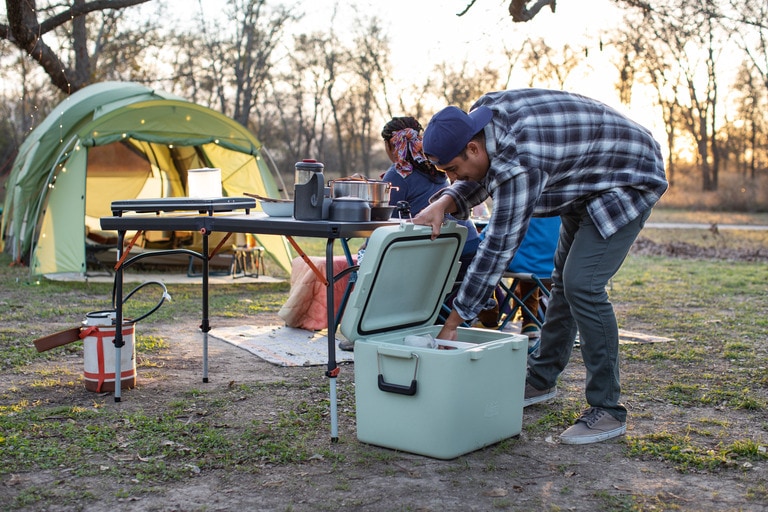
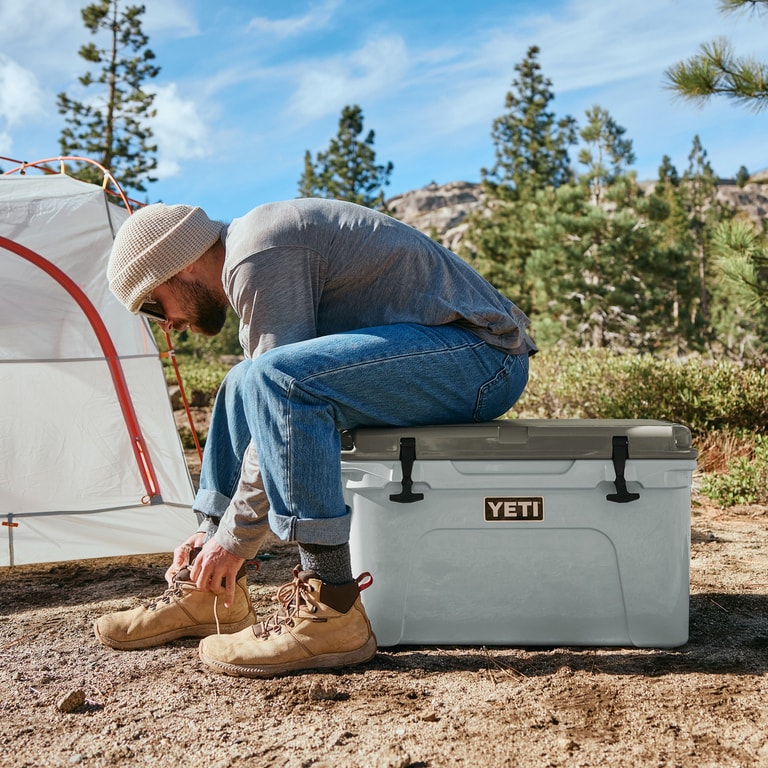
Hard-sided coolers are built for keeping food and drinks cold for days—not hours. Thick insulated walls and a tight-sealing lid deliver top-tier ice retention and a rugged shell that doubles as a seat, making them ideal for car campers, boaters and tailgaters. The tradeoff is weight, bulk and price, so they’re best when you’re driving to your destination rather than carrying gear in.
For decades, coolers used very similar materials and construction. The now-iconic designs that many of us grew up with all placed a rigid plastic shell around a thin, half-inch to one-inch layer of Styrofoam. The hinges and clamp (if there was one) were made of lightweight plastic, and the overall setup wasn’t ultra-durable. After years of UV exposure, the plastics grew brittle and cracked. “But they worked fine for an afternoon or, depending on the amount of ice, for an overnight camping trip,” says Harvey.
Traditional hard-sided coolers
That’s why many coolers sold today still use this tried-and-true design. Sometimes, newer foam insulations replace the Styrofoam of yesteryear, but the basic plastic-foam-plastic sandwich remains the same. These coolers are relatively lightweight—making them easy to haul from the car to the campsite picnic table—and affordable.
Heavy-duty rotomolded coolers
In 2006, two avid anglers launched the YETI cooler with a different build. Insulation is pressure-injected as a hot liquid into a one-piece, roto-molded plastic shell, forcing out all the air and cooling to become a solid, chill-trapping fortress. Beefy weather-stripping around the edge creates a cold-trapping seal akin to the one on kitchen freezers. The hinge is a continuous aluminum beam that runs along the length of the cooler.
Other brands now offer comparable constructions, and the benefits include boosted durability and improved insulation performance. Adventure guides, for example, use these coolers to preserve perishables for five days or more without replenishing ice along the way. The trade-off is weight: Even empty, these coolers are so heavy that the largest sizes may require two people to move them. For the longest-lasting keep-cool performance, these coolers must be thoroughly prechilled.
Vacuum-insulated coolers
A third construction, favored by Oyster, uses the same double-wall vacuum insulation that’s popular in beverage containers. Its aluminum sides contain an airless space that’s fantastic at maintaining temperature. Additionally, the walls of vacuum-insulated coolers are much thinner than injected-insulation styles, giving them more interior capacity. Read our gear review on the Oyster Tempo Cooler.
Soft-sided coolers
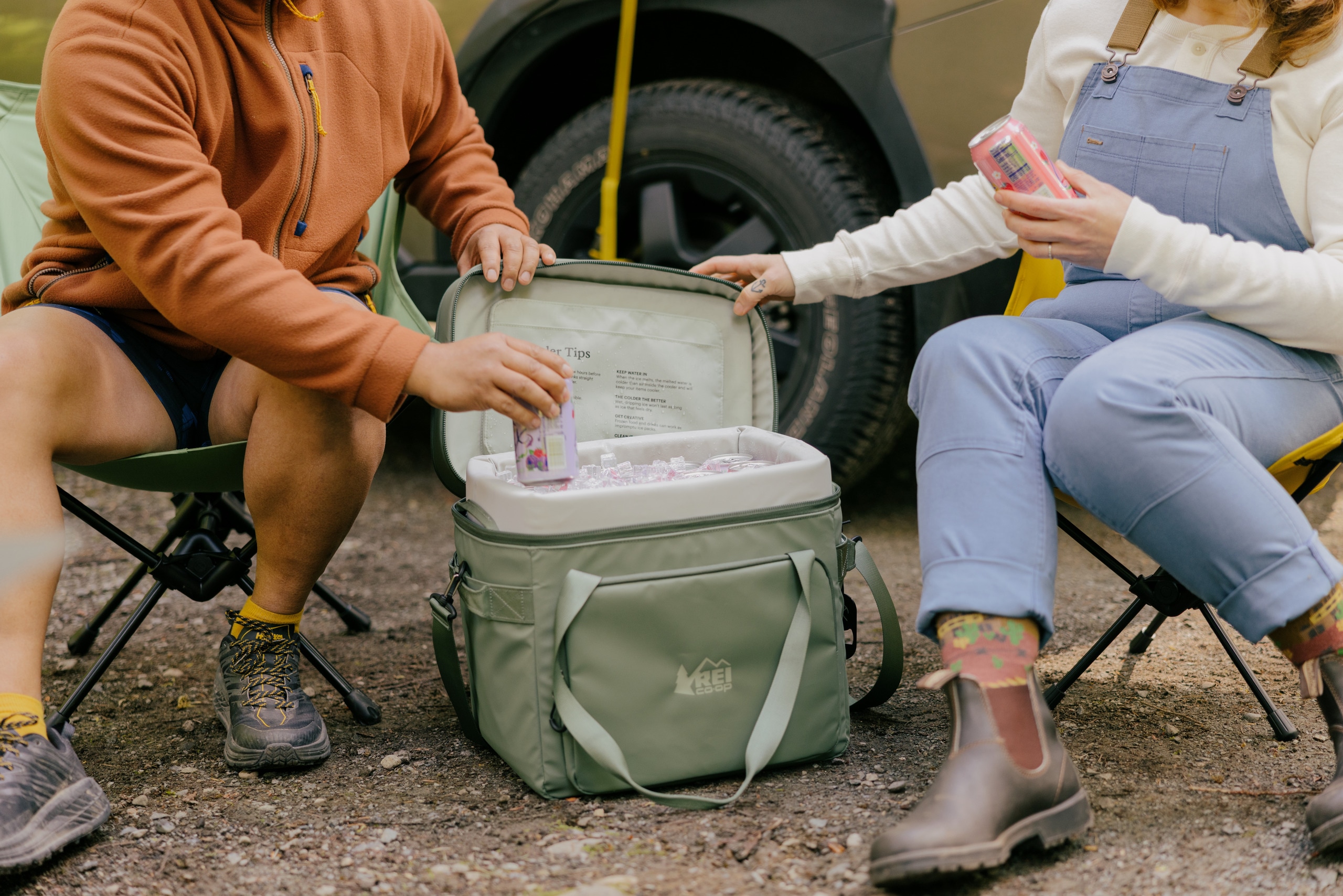
Lightweight and portable, soft-sided coolers place flexible foam insulation (which is more porous and thus bendier than the stiffer foam in hard-sided models) between layers of sturdy fabric, like polyester. Soft-sided options come in various shapes, from cubes to tote bags to backpacks.
But, says Harvey, “They don’t equal the insulation performance of hard-sided coolers.” In part, that’s because the seals and lids on soft-sided coolers vary in their ability to lock in cold air. One exception is the waterproof seals on YETI’s Hopper coolers (though, because they’re airtight, they can’t safely contain dry ice). The pliable walls of soft-sided coolers also lack the insulation power of hard-sided ones, making them best for single-day adventures, like road trips and picnics.
Backpack coolers
Backpack coolers let you carry food and drinks on your back, freeing up your hands for other gear like picnic chairs and blankets. They’re ideal for concerts, picnics and other outings where you’ll walk a distance and don’t want to haul a hard-sided cooler.
Powered Coolers
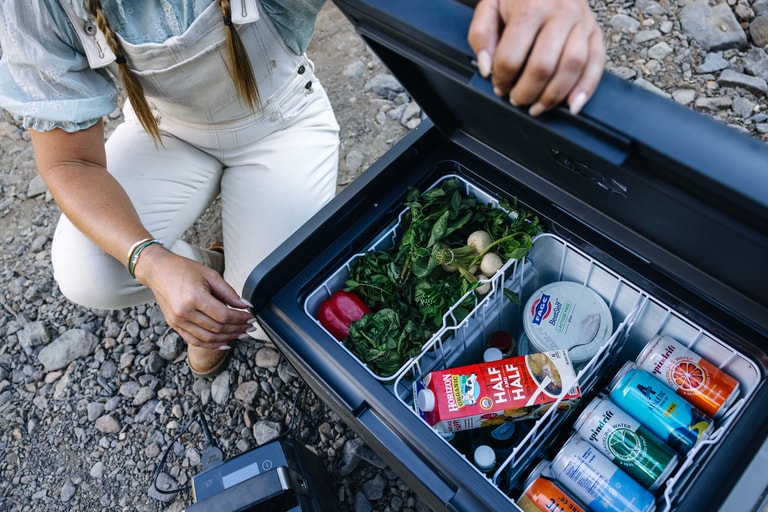
Electric coolers work just like kitchen refrigerators, only smaller. They’re portable enough for use in cars, truck campers, camper vans, or even the yard (plugging one into an outlet eliminates the need to buy bags of ice on the day of your cookout). In vehicles, electricity generated by the running engine powers the cooler and keeps contents cold without ice or freezer blocks. This leaves more interior space for drinks, food and other chillables. Another bonus: Nothing gets soaked by melting ice.
Most powered coolers are made of polyurethane or stainless steel, and use similar insulation as standard hard-sided coolers. While some can draw power from solar panels or power stations, others can’t. This means they need a continuous electricity source to keep contents cold. “For a week in Baja with the vehicle’s engine turned off, powered coolers won’t work without a lot of support,” says Harvey. Road-trippers should consider the duration of their stops (will the car stay parked for a weekend of camping?) and whether they can transfer the cooler’s items to a refrigerator during hotel overnights.
“Without power, it’s still an insulated box, so things inside will stay cool for a while,” says Harvey. Just how long depends on factors such as how often the cooler is opened and how cold things were before power loss. “You can add ice to help things along for a little while, but just remember that powered coolers don’t have drains for melted ice, so cleanup will be more involved.”
Cooler Capacity
When choosing a traditional ice-chilled cooler, consider how much space ice will take up, how much to food or drinks you're packing and how many people you're packing for. That equation often depends on how long you want to keep items chilled: Longer durations demand more ice.
Consider the number of people
Estimate how many people the cooler will support and what’s likely to go inside. Epicures who travel with bulky boxes of salad greens, bell peppers and T-bone steaks will want more capacity than campers who eat shelf-stable canned chili or boxed macaroni and cheese.
“For four people traveling with perishable food, 65 liters is a common choice,” says Harvey. A duo might prefer 45 liters. Coolers smaller than that are best suited for beverages only, picnic use, or road trip snacks. Large-group trip leaders might need vaults measuring 100 liters or more.
Know the interior capacity
Interior capacity varies by construction, says Harvey. A YETI Tundra 65 only provides 45 liters of interior storage, but the thinner-walled Igloo MaxCold Latitude 54-Quart Cooler offers 51 quarts of interior storage.
Because powered coolers dedicate all the interior space to chillables—not to ice or freezer blocks—you may be able to choose a smaller capacity. A 40-liter electric cooler could handle food and beverages for four people, whereas the same group might prefer 65 liters in an ice-chilled design.
Cooler Features
Coolers offer a range of convenience and portability features, and some details even improve security.
Clasps and Hinges
The tighter the lid, the less cold air you’ll lose (meaning contents stay chilled longer). If duration is important, look for insulating gaskets around the edges and clasps that seal tight. But if you’d rather open the cooler one-handed while holding gear in the other, look for a single quick-flip clasp.
Some coolers use versatile closures that allow them to be opened from either side. This feature is especially handy for overlanding or other road trips, when gear packed around the cooler blocks the standard opening.
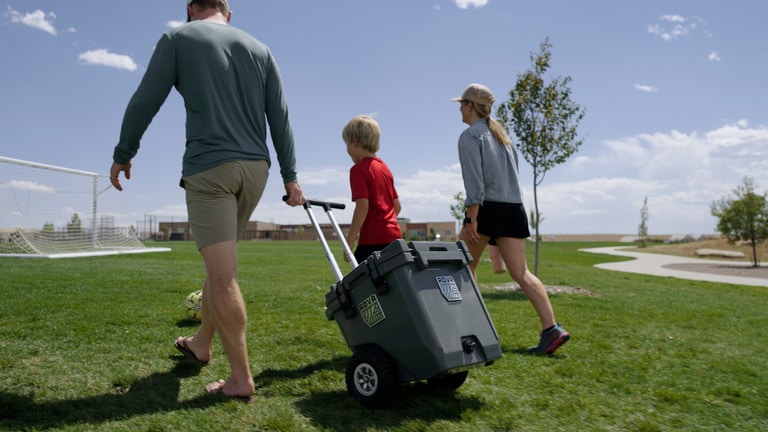
Wheels
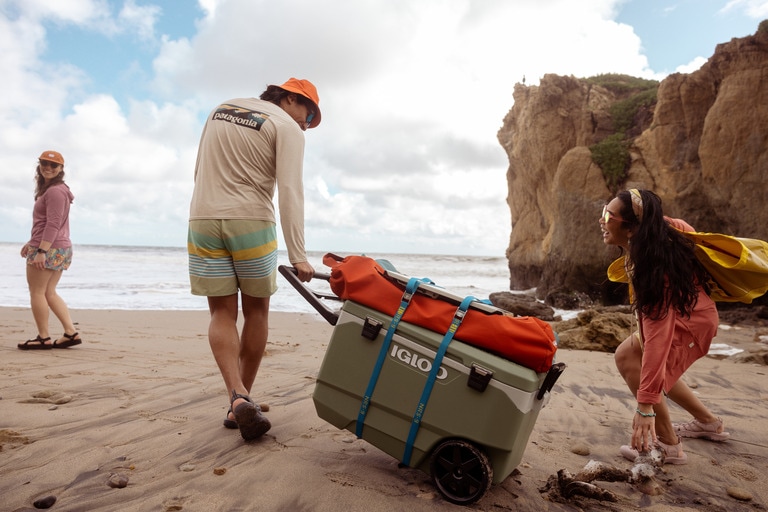
Wheels make any long commute easier, but they are especially game-changing when you have to relocate a heavy, solid-walled cooler. Pulling your cooler beats farmer-carrying it any day.
Most cooler wheels are made of solid plastic, but a few are inflatable for better traction on beach sand and other soft surfaces. Telescoping handles (like the ones on carry-on luggage) collapse when not in use. Just watch for capacity trade-offs: Some cooler designs sacrifice interior capacity for a handle and wheels.
Interior Organization
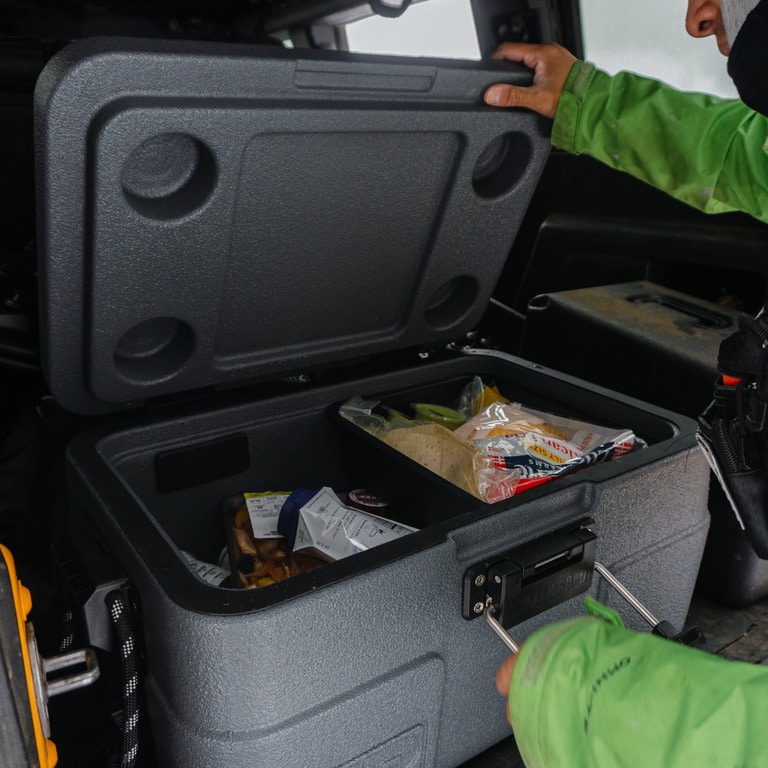
Stacking baskets and bins keep food organized by temperature needs. Meats should ride at the bottom of the cooler, where temps are lowest and their juices don't contaminate other foods. Vegetables belong in an upper-level basket where they’ll stay dry and not too cold.
Drains and Plugs
Drains make it easy to remove melted ice from the cooler, and tethered plugs are hard to lose.
Security and Bear-Resistant Coolers
Anchor points on lids or handles let you secure the cooler to your vehicle or picnic table with a locking cable. Some coolers also get a nod for being bear-resistant. The Interagency Grizzly Bear Committee certifies coolers and other products as bear-resistant food containers if they meet certain criteria and are properly padlocked.
Lid features
Some cooler lids feature indentations that secure a can or mug. Others double as cutting boards or measuring tools—handy when you’re sizing up your catch.
Flotation
Yes, a few coolers promise to float when dunked.
Electric Cooler Features
Some powered coolers create two separate temperature zones. This means you can freeze some items while using the rest of the space for unfrozen food and beverages.
How Do I Keep My Cooler Colder Longer?
Smart use of your cooler can wring extra performance out of any construction. We asked Peter Harvey for tips to extend insulation.
Q: Should I drain the water out of the cooler as it melts?
A: No. That melted ice is colder than the interior air, so preserving it will keep the remaining ice frozen longer.
Q: Should I avoid overfilling your cooler with food and beverage?
A: No. Air draws a lot of cold from your food and drinks. Whenever possible, fill that empty space with gear, or use newspaper or chunks of foam to displace the warmer air.
Q: Should I pre-chill your cooler?
A: Yes. All coolers benefit from pre-chilling, but solid-walled premium coolers require it to deliver on their multi-day promise. Sacrifice a bag of ice pre-trip to get those thick walls properly cold.
Q: Does it matter how often I open the lid?
A: Yes. Every time you open the cooler, you introduce a blast of warm air that accelerates the melting of your ice (or the warming of your freezer block).
Q: How much ice should I use?
A: If you want to keep things cold for a few days, estimate two parts ice to one part everything else.
Q: Should I keep the cooler out of the sun?
A: 100 percent yes.