It used to be that you only saw approach shoes on or near actual climbs. Today, you'll spot them—or their lookalikes—almost everywhere: on subway platforms, in coffee shop lines, in fashion editorial and more. Luxury houses, lifestyle labels, even skate brands have all borrowed the technical vocabulary that defines the category—the chunky sole, the wraparound rand, the toe cap—and used it to make shoes that look the part but don’t quite do the job.
That's one reason we made this guide. Designed to get climbers to, from and—on occasion—even through their climbs, approach shoes combine aspects of hiking, climbing and trail running shoes. Some are designed to provide support while hopping heavy loads through talus, while others enable fast-and-light travel through technical terrain. Another subsection still provides support on long walks to the crag and trusted grip on the steep climber’s trails that often lead there. The category, in other words, is capacious.
Every detail that gives an approach shoe its distinctive look exists because it serves a purpose on real terrain: the grippy outsole for traction on slabs, the wraparound rubber rand for surviving scree and talus, the long laces and tension loops for creating a lockdown fit, and the stubby reinforced toe cap for wedging into cracks. More than a style statement, they’re a genuinely useful piece of equipment. They add real comfort on hikes and inspire confidence the moment your route steepens into a climb.
We tested approach shoes available at the REI Co-op against real conditions, not the runway. These are shoes built for rugged mountain terrain, but also happen to look completely at home on a city sidewalk: proof that quality design looks good wherever you take it. Among our selections, you’ll find shoes proven to meet a variety of needs, from getting you to the crag in comfort to navigating seriously technical terrain. You may even find a pair you’ll want to wear on the climb and not just to it.
For quick recommendations, check out the results of our field tests here, or scroll down for in-depth reviews.
Test Results
- La Sportiva TX4 EVO Approach Shoes
- Scarpa Rapid XT Approach Shoes
- The North Face Verto Approach Shoes
- adidas Five Ten Guide Tennie Approach Shoes
- Scarpa Crux 2 Approach Shoes
Jump to Buying Advice or How We Test.
Editor's note: We updated this article on Sept. 22, 2026, with The North Face Verto and the Scarpa Crux 2 Approach Shoes after another round of field testing.


La Sportiva TX4 EVO Approach Shoes
Score 96
Upper Nubuck leather
Footwear closure Lace-up
Weight (pair) 1 lb. 8 oz. (women’s), 1 lb. 12 oz. (men’s)
Best for Technical approaches, scrambling and easy multi-pitch climbing
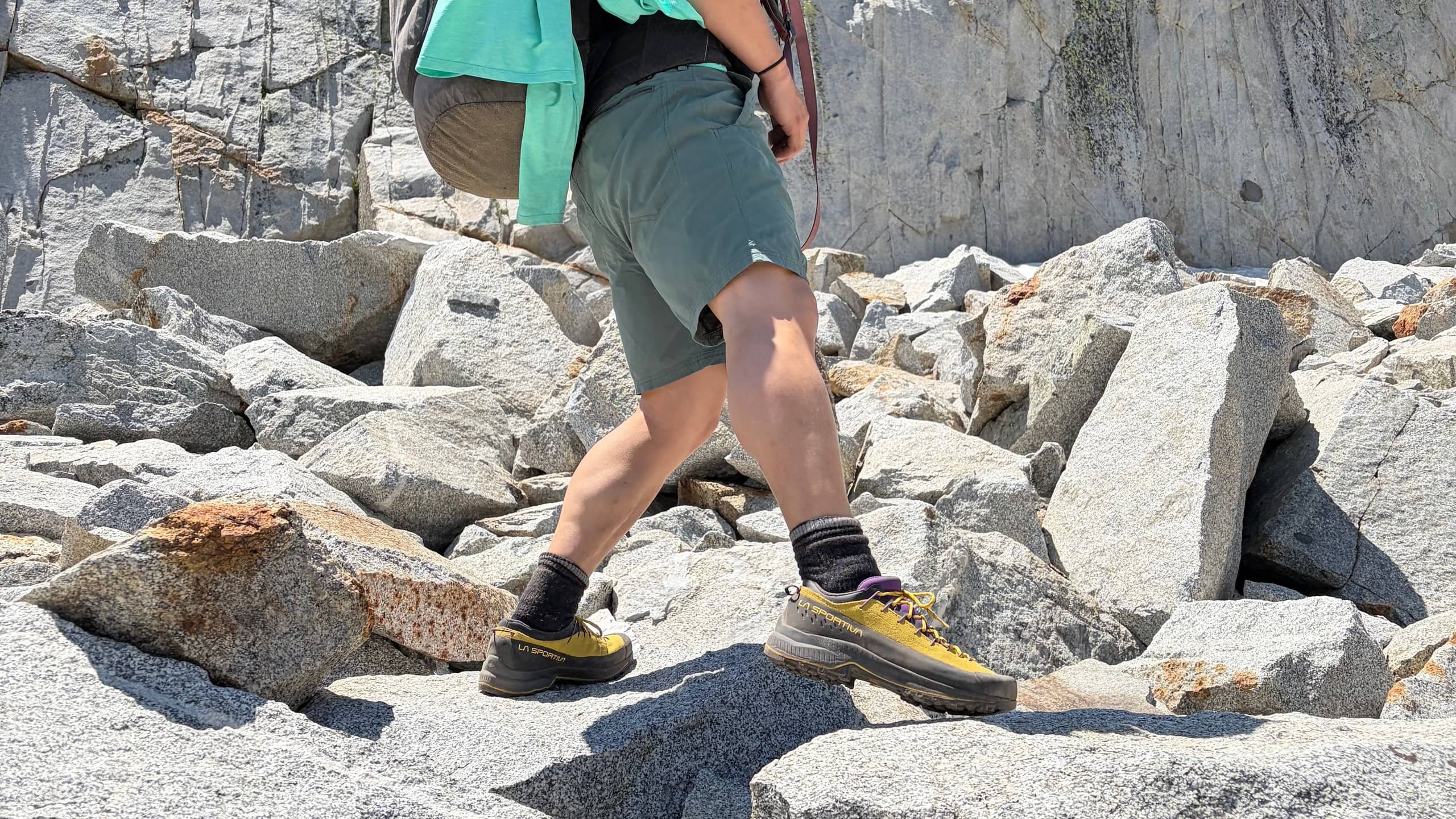
A longtime favorite for blending comfort with performance and a rugged build, the TX4 EVO from La Sportiva is hard to beat—and after three testers put it through everything from multi-pitch granite to loose Cascades scree, it's easy to see why.
Start with the grip. The Vibram® Megagrip outsole is one of the stickiest compounds our testers have tried. Thanks to the TX4s, one tester, Katherine P., walked up a 5.8 multi-pitch slab in the North Cascades with no rock shoes at all, then trail-ran the descent without a second thought. Another, testing on granite in Yosemite and Mammoth, put it more bluntly: "I felt like I could walk straight up Lembert Dome," says Damon Y., adding “never had traction issues on steep, loose dirt trails.” This is a shoe that inspires capability.
Then there's the fit. While some reviewers complain that the latest version of the TX4 EVO suffers a narrower last than previous versions, our three testers didn’t experience any hot spots or pinch points. Testers logged full days of scrambling and stayed comfortable well past the point where a narrower shoe would have caused blisters or other complaints. “No break in, no blisters at all,” says Katherine. “My high-ish arches felt well supported.” The low-top shoe fit well out of the box for Damon, but he noted that “they are low, so they do not have significant ankle support.” Still, the shoe includes a TPU shank beneath the sole that keeps the foot stable and protected, even under a heavily loaded pack. This feature also enables precise edging once you start climbing.
Another bonus: Recycled materials run throughout the build, and the whole thing sits on a resole-ready platform, so you can refresh them like climbing shoes if you wear through the rubber.
Lastly, there's the look. In recent years, the comfort, versatility and strong styling of this model have made it an iykyk choice among urbanites, so you shouldn’t be surprised if you see some TX4s on the streets of Brooklyn as well. This is a shoe whose performance credentials have transcended the climbing world to become a streetwear statement.
🥾 Tester Field Note: "They're slightly heavier than my other approach shoes (older TX3's) which was a worry at first, but I soon forgot about it as they felt so nimble on the feet, and the additional support gained is well worth it," —Katherine P., Washington state member-tester.
Bottom Line: Confidence-inspiring grip and a resoleable, all-day-comfortable build make the TX4 EVO our pick for climbers and hikers who want one shoe that does it all.
Testing Stats:
- Total Distance Hiked: 58 miles
- Testing Locations: Yosemite National Park and Mammoth in California; North Cascades, Washington state; and Squamish, British Columbia
- Best Testing Story: “During my traverse of the Sisters Range in Northwest Washington, I was following some climber friends up a scramble until it became, well, a climb! A place where a fall would be fatal. I had to convince them to put me on a makeshift belay for a particularly exposed section, which I ascended carefully and with no small amount of fear. It was worth it, though: atop that pitch we crossed a glacier, and I saw a moulin—a mysterious drain hole in a glacier—for the first time!”


Scarpa Rapid XT Approach Shoes
Score 88
Upper 1.8mm suede with full-perimeter TPU rand
Midsole 2-density EVA with TPU insert
Outsole Vibram Agility XT Megagrip
Weight (Pair) 1 lb. 12.2 oz. (men's), 1 lb. 7.2 oz. (women's)
Best for Long approaches, scrambling, and terrain serious enough to call for a climbing shoe
The Scarpa Rapid XT is fast becoming one of our favorite approach shoes. It's genuinely comfortable right out of the box, capable on both trail and rock, and comes stocked with all of the features that take an approach shoe from good to great.
The comfort case starts with the fit. Scarpa built this shoe with an ergonomic shape and a wider toe box, which lets your feet relax and do their job. Toes get to splay rather than scrunch, and testers logged full days on gravel trails, low fifth-class scrambling in Squamish, alpine ice fields and overnight trips in the Cascades without a single blister to show for it. Underneath, Scarpa's Agility XT sole pairs a dual-density EVA midsole with a TPU insert through the medial arch, which provides solid support and protection even under heavy loads. More flexible in the forefoot than the shank-stiffened options in this guide, these shoes allow for a natural gait even as they eat up steep terrain.
A reinforced leather upper and full PU round out this shoe’s specs, and the overall on-foot impression is reliable, stable and confidence-inspiring—the kind of shoe that disappears on your foot and lets you focus completely on the climb.
When conditions get tough, that comfort doesn’t get in the way of capability. On the ascent, our testers found these shoes held their own on everything from Class 4 scrambling to moderate alpine climbing, meaning they can handle whatever an entire day in the mountains might bring. One tester, Liz P., ended up wearing these shoes for 27 hours straight on an epic, 20-mile trip that required an unexpected overnight stay on the West Ridge of Mount Stuart in Washington state. Just a few miles into that excursion, she swapped out her typically comfy boots for these shoes and found them “instantly comfortable, super cushy and noticeably lightweight. I didn't take them off again for any part of the trip over the next 24 hours.” While descending on loose trail, one tester preferred the Rapid XT's grip to that of the TX4 EVO, crediting the chevron-shaped lugs for extra bite. A raised heel added extra grip and helped testers put on the brakes when going downhill, too.
That capability has limits, though. The same flexibility that makes the Rapid XT an exceptionally capable hiker also makes it harder to edge on thin foot holds than the stiffer TX4 or Konseal—a tradeoff worth considering if your path leads to technical face climbing. Testers told a similar story regarding this shoe’s lacing. The simpler, more conventional lace design of the Rapid XT can't quite match the precise hold of the TX4, at least for low- and mid-volume feet. That said, this shoe may fit like a slipper for those with wider or higher-volume feet.In all, this is a shoe worth trusting on the longest, toughest days—just see our tester's story below
🥾 Tester Field Note: "I never felt unstable in these shoes, even when wearing microspikes and kicking steps into a vertical snowfield," says Liz P., Washington state member-tester, adding: "They could replace rock shoes on many low-grade climbs and can accommodate any scrambling needed in addition to the approach hiking itself."
Bottom Line: A trustworthy balance of all-day comfort and technical capability makes the Rapid XT a can’t-go-wrong pick for long, unpredictable days in the mountains.


The North Face Verto Approach Shoes
Score 82
Upper Suede with medial and lateral molded-rubber rands and a reinforced scratch-rubber toe cap
Midsole Internal midfoot stability shank and a ¾-length ESS rock plate
Outsole Vibram® Megagrip with 3.5mm lugs
Weight (Pair) 1 lb. 11 oz. (unisex sizing)
Best for Short, technical approaches and rough terrain
The North Face worked closely with its athlete team to develop the Verto—and it shows. Built to endure rugged climbing expeditions, these shoes impressed our testers with their solid build and outstanding traction as they scrambled their way to climbs in Washington, California and British Columbia.
Like the test-leading TX4s, the Verto sports a full-length Vibram® Megagrip outsole contoured with a raised heel for improved downhill traction. To optimize grip across a variety of terrain, the outsole pairs a smooth forefoot climbing zone with 3.5mm chevron-shaped lugs along the midfoot and heel. The result is a platform that inspired real trust on the rock for our testers. “They stuck SO well to granite,” remarked Kristina V., who took them on multi-pitch climbs with rocky approaches in Squamish, B.C.; Mazama, Washington; and Lake Tahoe, California. “I was able to walk up and down granite slabs without worrying about slipping or falling." Tester Damon Y. found the same results on rock and dirt in Marin County, California.
That sturdy outsole comes with a spine: an internal midfoot shank and a three-quarter-length rock plate make the Verto quite rigid underfoot, which boosted its edging capabilities and earned it strong marks for support and protection. "I've broken and sprained ankles before in trail runners," Kristina says. "Definitely feel so much more solid in these approach shoes."
The tradeoff for all of this vertical capability is flexibility, or a lack of it. Both testers found that the Verto can feel clunky underfoot, and neither would choose it for a trip involving extended hiking. (One drew the line at about 5 miles.) That protective build, with its padded suede upper, wraparound rands and extended toe cap, may feel comforting or a bit excessive depending on personal preference. "It's a bulkier shoe with thicker padding, so it makes them feel heavier than they are," says Damon. In actuality, the Verto comes in about an ounce under the TX4 EVO.
Tester Field Note: "I exclusively used these for approaches and would recommend that," says Kristina V.
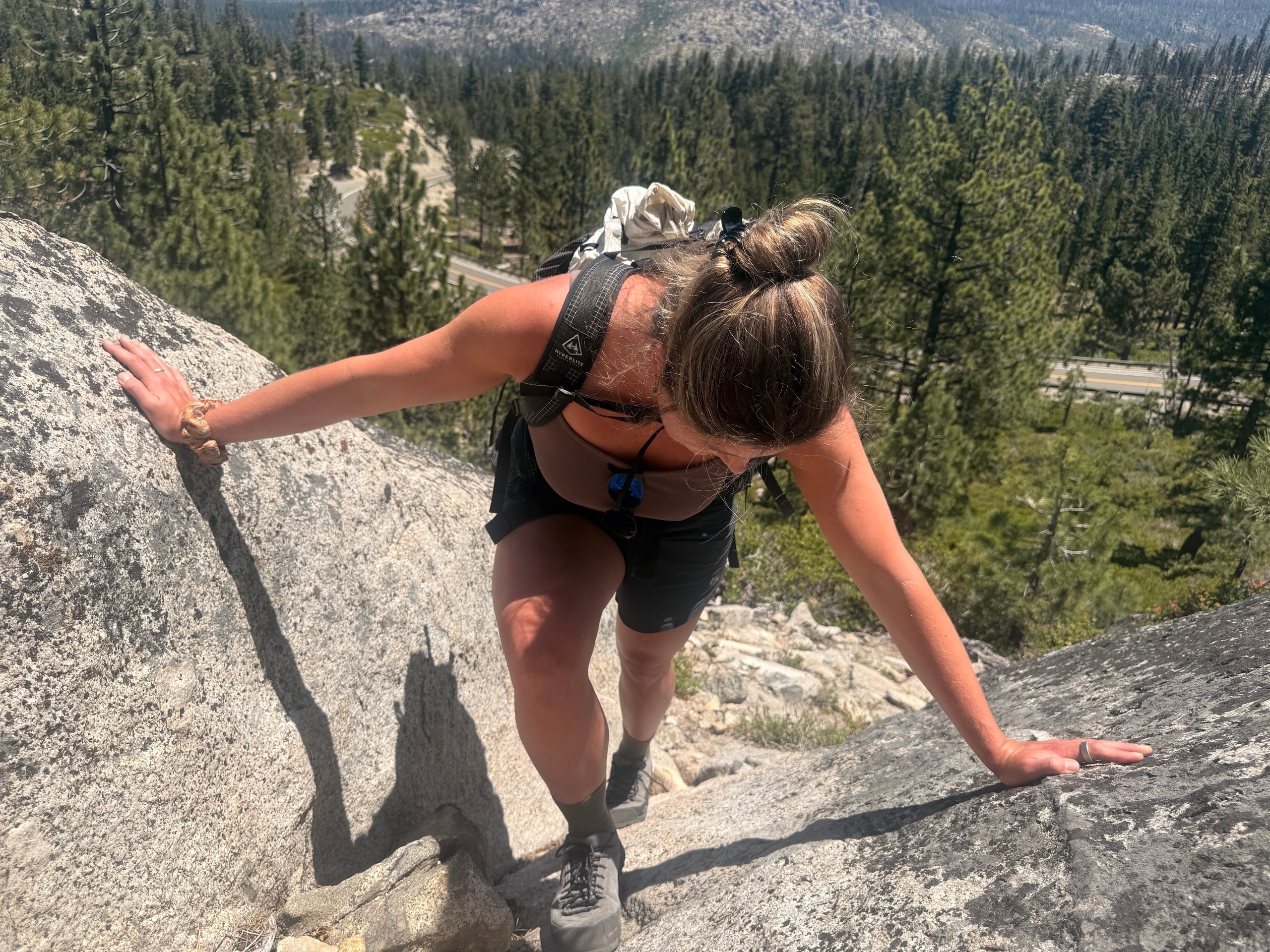
Bottom Line: Rigid, grippy and confidence-inspiring on steep rock, the Verto is for climbers who prioritize support and underfoot precision over hikeability.
Testing Stats:
- Total Distance Hiked: 25 miles
- Testing Locations: Lake Tahoe and San Francisco, California; Mazama, Washington; and Squamish, B.C.
- Best Testing Story: “The grey color of the shoe makes it easy to wear in a variety of situations. I wore them around town a lot and felt like it fit in well… These shoes feel like skate shoes and people thought I was a skateboarder.”


adidas Five Ten Guide Tennie Approach Shoes
Score 80
Best for Lightweight approaches, easy scrambling where ankle or arch support isn't a priority, hanging around town or campsite
Every category needs an original, and this is it for approach shoes: The inaugural Five Tennie more or less invented the genre in 1986. Today’s adidas Five Ten Guide Tennie carries on that legacy while remaining a classic. Reintroduced by the brand last year, this latest version leans into that heritage rather than running from it. Modernized with hexagonal cutouts for ventilation and a rubber heel sling for better hold, it retains all of the performance-focused DNA and easy-wearing style that made the original a cult favorite.
Beyond the appeals of history and nostalgia, the Guide Tennie still performs both on trail and off. On testy approaches near Golden and Fort Collins, Colorado, tester Grace M. found the grip held up on terrain that would’ve defeated lesser shoes: "On very loose dirt, where basically no shoes can grip well, I was very surprised that these did not slide." Another tester put his pair through two laps up a Class 4 scramble in Washington's Twin Sisters Range and found a similarly confidence-inspiring level of stickiness: "The grip was so good that my foot got a bit stuck when I sunk it into a particularly secure foot jam!” he noted.
One flag for climbers seeking high levels of support: This may not be your shoe. Unlike other models in this guide, this one lacks a midsole shank. This means that the Guide Tennie is the lightest and most flexible shoe we tested, but also that it lacks some of the protection and support offered by other models like the La Sportiva TX4 EVO and Scarpa Rapid XT. "As someone with a flatter foot, these shoes definitely would need an insert added to them since the sole is super flat," says tester Kat S., who also recommended wearing longer socks to prevent the shoe from rubbing against her ankle bone. The Guide Tennie is comfortable out of the box and excellent for smearing on slabs, but could result in foot fatigue on longer or more technical days. That isn’t a dealbreaker if your approaches are on the shorter side, but you may want to look elsewhere if you plan to log serious miles under serious loads.
🥾 Tester Field Note: "I trusted these immensely and was extremely grateful for their traction on my approach to Waka Beach," a popular crag near Port Angeles, Washington, says Kat S.
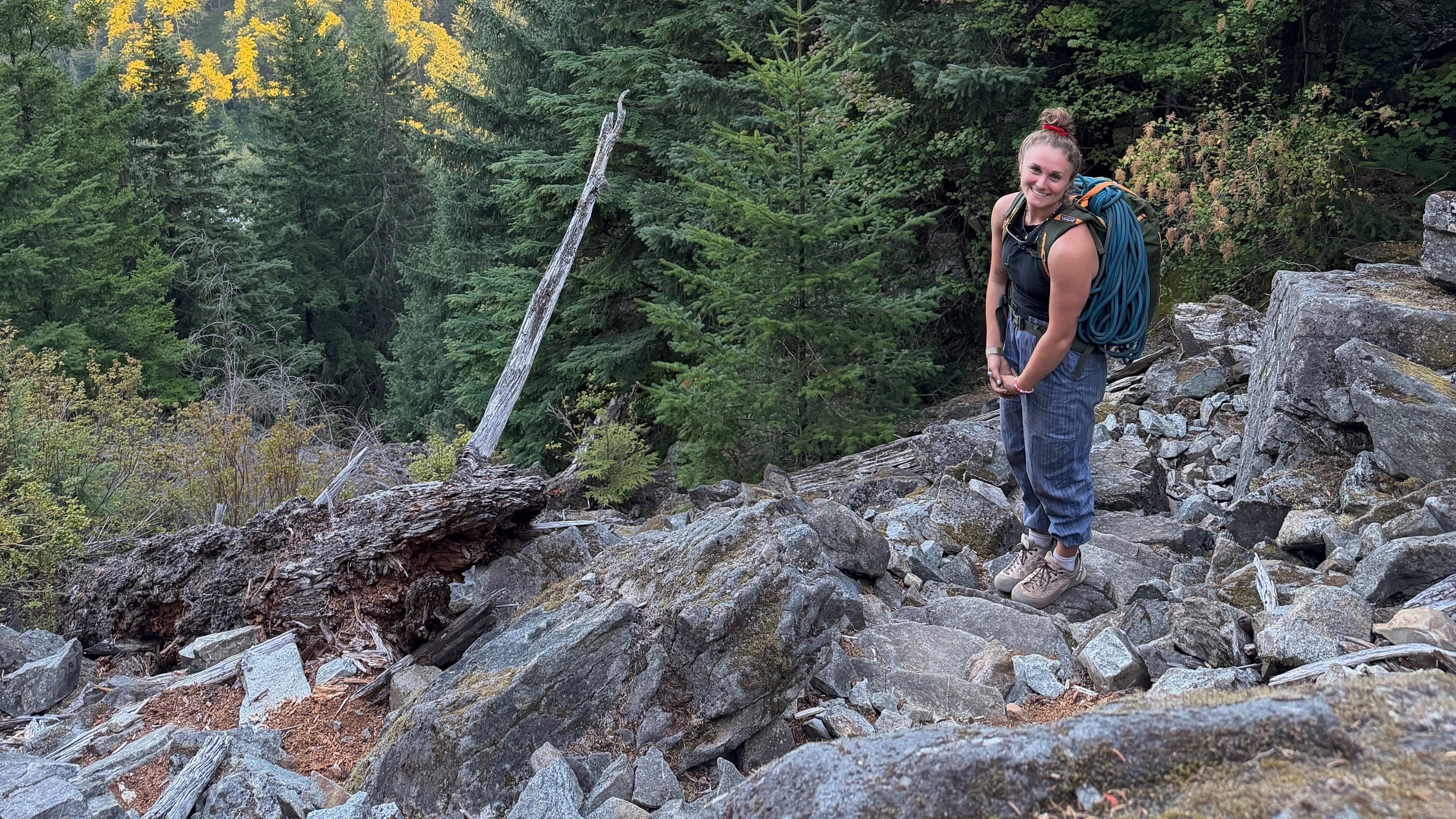
Bottom Line: The lightest, most affordable shoe in the guide, the Guide Tennie rewards short approaches and slab-smearing, though longer days may leave feet wanting more ankle or arch support.
Testing Stats:
- Total distance hiked: 41 miles
- Testing locations: Front Range, Colorado; North Cascades, Washington; Squamish, British Columbia
- Best testing story: "While I was heading home from my climbing and camping trip, where I solely wore these shoes, we stopped to fish for a little bit. Across the creek, coming off of the lake where we were fishing, were three bull moose! I had only previously seen a moose in Rocky Mountain National Park in Colorado, so seeing them 50 yards away was very exciting! And the approach shoes worked great for me to scramble up a steep trail to get a better view.”


Scarpa Crux 2 Approach Shoes
Score 80
Upper 1.8mm suede + polyester mesh + rubber toe cap
Midsole EVA
Outsole Vibram® Vertical Approach Megagrip
Weight (Pair) 1 lb. 12.6 oz (men’s), 1 lb. 6.6 oz (women’s)
Best for Mellow approaches, long walk-ins and climbers who don't need to climb in their approach shoes
The least expensive shoe in this guide is also the one that most surprised our testers. Three of them took the Scarpa Crux 2 across loose scree slopes, blocky boulder fields and smooth granite slabs, and each came back with the same first impression: For a shoe that looks this casual, it's tough.
Perhaps that shouldn't surprise us. The Crux 2 is the latest evolution of a longtime Scarpa bestseller, and the appeal has always been its lack of fuss. If you’ve ever been to an outdoor crag, you’ve probably seen a middle-aged climber wearing these shoes—that’s because, year after year, they’ve proven themselves to be a no-nonsense, quality buy.
Compared to other shoes in this guide, the Crux 2 sports a relatively simple build. The suede upper and rubber toe cap offer moderate protection up top, while a dual-density EVA foam midsole and Vibram® Megagrip outsole provide a smooth ride down low. Aside from a couple pieces of webbing that help with heel lock, there’s no complicated construction here: just a classic, simple-looking shoe.
That simplicity pays off on the walk. On paper, the Crux 2 is a touch heavier than the rest of the shoes on this list, but no tester noticed. "Extremely lightweight for the grip and traction they offer," says tester Liz P. "They do not take up any mental space for weight on my foot," adds tester Ronnie W. We credit this impression to an easy-wearing upper and a flexible, rounded outsole that propels you down the trail.
These shoes shined on outings with mellow or moderate approaches, but edged toward their limit on trips requiring technical climbing or steep descending. Testers noted that the all-foam midsole can’t match the edging ability of the shank-supported styles in this guide, and the tread pattern struggled to hold its grip on loose surfaces. “I found the shallow, rounded lugs less willing to bite than I'd expect from a dedicated technical shoe. They edge better than the Five Ten Guide Tennie, but the TX4 EVO and Rapid XT are more capable once things get vertical,” noted one tester.
Nobody reported blisters, hot spots or heel slip—the randless sides are comfortable to lace tight, even over bony feet—but testers found the shoe notably firm underfoot. “After a long day and 7,500 feet of descending, I could definitely feel the lack of cushioning," one tester wrote. Another was comfortable for the first 5 miles and well past her limit by mile 20. Testers also noted that the Crux 2 offers no meaningful arch support, but that there’s plenty of room for an aftermarket insole.
Durability, though, is where these shoes truly earned their spot. "I had expected the exposed foam midsole to get chewed up, but only the slightest marks are visible," wrote one tester after traversing a boulder field full of sharp, barely weathered rock. "The outsole shows no sign of wear, and the suede upper also appears to be sturdy." Another tester covered 17.5 miles of off-trail scree and reported them "still like new," apart from the dust.
Tester Field Note: “These were very comfortable out of the box and got more comfortable as my foot molded its form,” says tester Ronnie W.
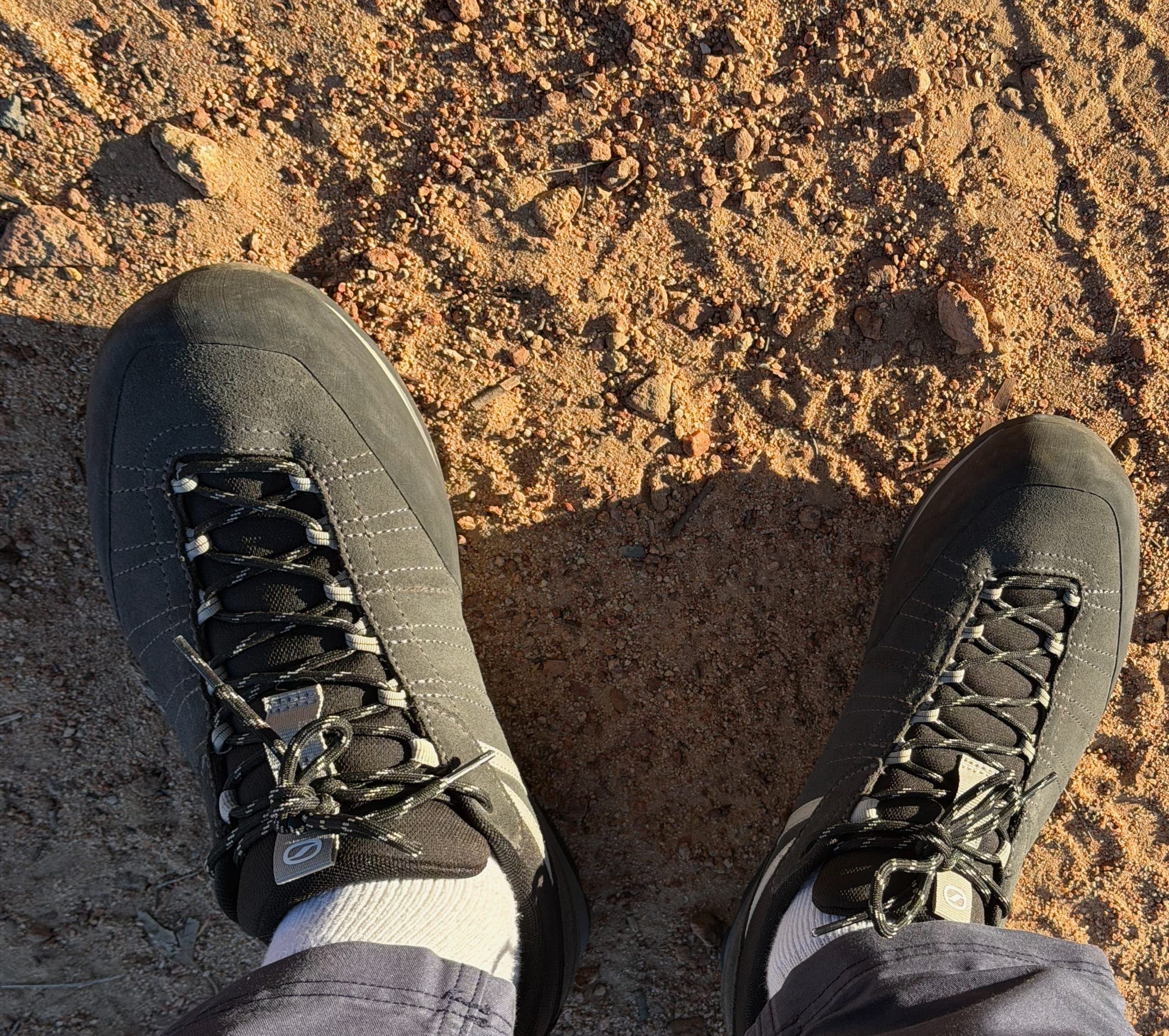
Bottom Line: Tough, easy-wearing and the best-priced shoe in the guide, the Crux 2 is a smart buy for approaches where you're walking more than you're climbing.
Testing Stats:
- Total Distance Hiked: 46 miles
- Testing locations: Alpine Lakes Wilderness and North Cascades National Park, Washington; Southern California; and Squamish, British Columbia
- Best Testing Story: "I wore these on a search-and-rescue mission for a hiker who was eight days overdue. We were working with two search dogs and a handler, traveling light and covering as much backcountry as fast as we could, on trail and off. Seventeen and a half miles later, the hiker was found alive and unharmed."
Approach Shoes: Buying Advice
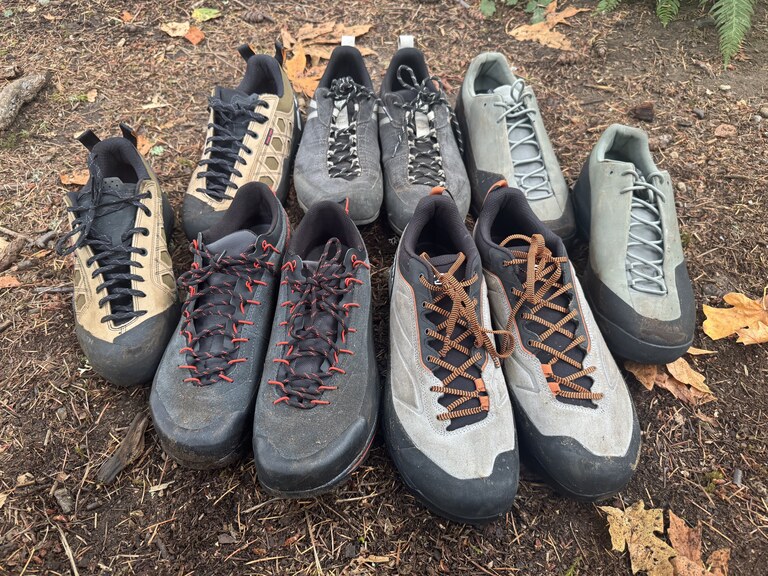
As a category, approach shoes are as varied as the approaches they're designed for. Sometimes, a trip to the base of a climb involves a short walk along a well-built trail. Other times, it requires hours—or days—of traversing terrain with no trail at all.
In general, approach shoes are designed for tackling rugged terrain on the approach to a climbing route, but that doesn't mean there isn't variation within the category. Approach shoes borrow design inspiration and technical features from climbing shoes, hiking boots and even trail runners to enable particular mountain objectives. Some prioritize protection and technical ability; others prioritize comfort, weight or ease of wear.
Consider terrain and activity
When choosing a pair for yourself, consider first the type of terrain you hope to tackle. If you plan to spend a lot of time in boulder fields, talus or even on actual rock climbs, look for a stiff midsole shank to support your foot. A full-wrap rand—the band of rubber that circles the base of the shoe—keeps it protected. (The La Sportiva TX4 EVO and Scarpa Rapid XT fit the bill.) If shorter approaches or mellower terrain is on your docket, features like that aren't necessary. Something lighter and more flexible like the adidas FiveTen Guide Tennie may serve you better.
Find your fit
Next, and perhaps most important, is fit. Nothing predicted our testers' satisfaction better than the way their test shoes actually felt on foot. An approach shoe needs to be comfortable on the trail and secure on the climb. If it’s not, you may turn around before it’s even finished doing its job. Pay attention to brand guidelines and our notes on width, toebox volume and lace hold. Think realistically about how those factors will interact with your foot. Testers with wide and/or high-volume feet particularly loved the Rapid XT, for example, whereas the Konseal held more appeal for those with a narrower profile. If you have an especially big or exposed objective in mind, we recommend trying on your shoes in person before committing to a pair.
Other factors to consider
Material matters, but we recommend prioritizing the durability of leather and suede over the breathability of mesh—unless you live in a particularly hot climate. Weight can also be a factor, but a few extra ounces are usually the price of the rand and shank that distinguish approach from hiking shoes. Decide what works best for your needs.
Finally, don't discount the smaller details that give this category its distinctive look, because those details are doing real work, too. Full-length lacing distributes pressure across the whole foot rather than just the instep, allowing you to tune your fit to maximize hold. A heel block can increase grip on steep downhills and also adds a handsome dimension to the outsole. And, at the end of the day, a stiff, reinforced toe cap (like those on the La Sportiva TX4 EVO and Scarpa Rapid XT) can mean the difference between a blue toenail and an unscathed one. None of these features are added for looks alone, but it's no coincidence that they also add style: purpose-built details tend to carry that intentionality wherever you wear them.
How We Test
No lab, no treadmill and no controlled conditions were used in the creation of this guide. We sent each approach shoe, available at REI, out to member-testers over three months this summer and fall to evaluate them across hundreds of miles and thousands of feet of elevation gain. Our testers tackled low fifth-class climbing in British Columbia’s Coast Mountains and Washington’s Cascade ranges, hiked approach trails in Yosemite National Park and Squamish, and styled themselves out—climber-style—for birthday parties, campsite hangs and trips around town. Testing included plenty of hiking as well as multi-day alpine missions, technical scrambling, roped climbing and even an unplanned alpine bivy (more on that later).
Throughout the process, we collected both quantitative and qualitative feedback. Testers rated the shoes on a 1–10 scale across five categories—durability, traction, comfort, support and weight—and we averaged those scores to land on the 100-point rating below. However, because a single score tells you little about why a shoe worked or didn't, we supplemented these ratings with experiences and observations taken directly from the field. The result is an honest, holistic assessment of the strengths and weaknesses of each shoe.