
If you're considering a new bike seat (more properly known as a bike saddle), it's likely because the one you're currently riding on is uncomfortable. Comfort is a common issue, especially among new cyclists, and one solution is to get a new saddle that's better suited to the type of riding you do and your body mechanics.
Choosing a new saddle can be a daunting task, though. There are lots of options and comfort is often very subjective, which means the saddle that works for your friend won't necessarily work for you.
This article will help you understand how things like bike seat materials, cushioning, design and size, as well as the type of riding you do, can influence your choice of bike seat. If you're headed to a bike shop, see if you can test ride a seat to check the comfort. Many stores will have something comparable that you can try, even if they don't have the exact one you want to test. While you're riding, vary your position, ride quickly and more slowly and hit some bumps.
Consider the Type of Riding You Do
Bike seats are frequently placed into one of these five categories:
Recreational cycling: If you sit upright while pedaling a cruiser, urban or commuter bike and prefer short rides, try a saddle designed for recreational cycling. The saddles are often wide with plush padding and/or springs, and sometimes sport a short nose.
Road cycling: Are you racing or clocking significant road miles? Road cycling saddles tend to be long and narrow and have minimal padding for the best power transfer while pedaling.
Mountain biking: On mountain trails, you alternately stand up on the pedals, perch way back (sometimes just hovering over or even off your saddle) or crouch down in a tucked position. Because of these varied positions, you'll want a mountain-specific saddle with padding for your sit bones, a durable cover and a streamlined shape that will aid your movement.
Bike touring: For long-distance riding, you'll want a saddle that falls between a road and mountain saddle. Saddles for bike touring typically provide cushioning for your sit bones and a fairly long, narrow nose.
Bike commuting: A lot like saddles for road cycling and bike touring, saddles that are good for commuting have some padding, but generally not too much. Bike commuters who ride rain or shine may want to consider the weather resistance of the cover materials.
Decide What Type of Cushioning You Want
There are two broad categories for bike saddles: performance saddles which have minimal cushioning and cushioning saddles which tend to be plush.
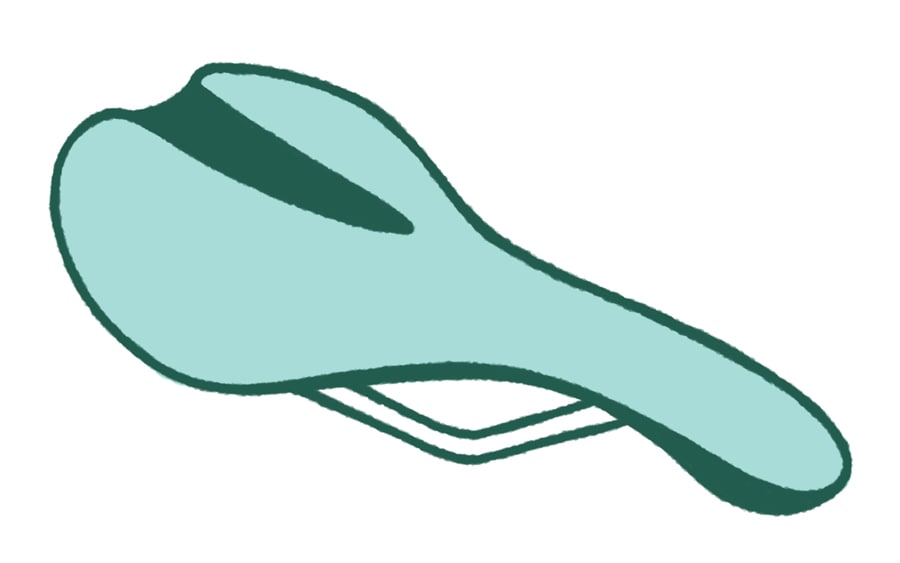
Performance saddles are typically long and narrow and have minimal padding to create maximum power transfer and minimal chafing while pedaling. They are commonly found on road bikes, mountain bikes and touring bikes.

Cushioning saddles tend to be wide with plush padding and/or springs to absorb bumps in the road. They often have a short nose. They are typically found on bikes designed for recreational cycling and cruising.
Don't assume that more cushion is always better. In some cases, too much cushion can cause discomfort and pressure as your body sinks into the saddle.
The two most common types of cushioning are gel and foam.
- Gel cushioning molds to your body and provides the plushest comfort. Most recreational riders prefer this for its superior comfort on casual rides. Its downside is that gel tends to get compacted more quickly than foam.
- Foam cushioning offers a pliable feel that springs back to shape. Road riders favor foam as it provides more support than gel while still delivering comfort. For longer rides, riders over 200 lbs. or riders with well-conditioned sit bones, firmer foam is preferred as it doesn't compact as quickly as softer foam or gel.
- No cushioning: Some bike saddles have zero cushioning. These saddles often have leather or cotton covers. Although a no-cushioning saddle may be uncomfortable for some riders when it is brand new, it will break in with frequent riding and eventually mold to your weight and shape. Some riders say that the "custom fit" you can get from leather or cotton saddles makes them more comfortable despite them not having any cushioning. Another plus of saddles with no cushioning is that they tend to stay cooler—a definite advantage on long, hot rides. Choose this option if a saddle with cushioning hasn't worked well for you and if you're drawn to the classic look of a leather or cotton saddle.
- A saddle pad is an optional add-on that can be placed over any saddle for additional cushioning. Though plush and comfortable, its padding is not as contained as is a saddle that's already padded, so it may migrate where you don't need or want it. This is not an issue for recreational rides, but it could be for fast rides or for longer distances. If that's your riding style, a pair of padded bike shorts or underwear may be a better investment.
Consider Whether You Want a Center Cutout
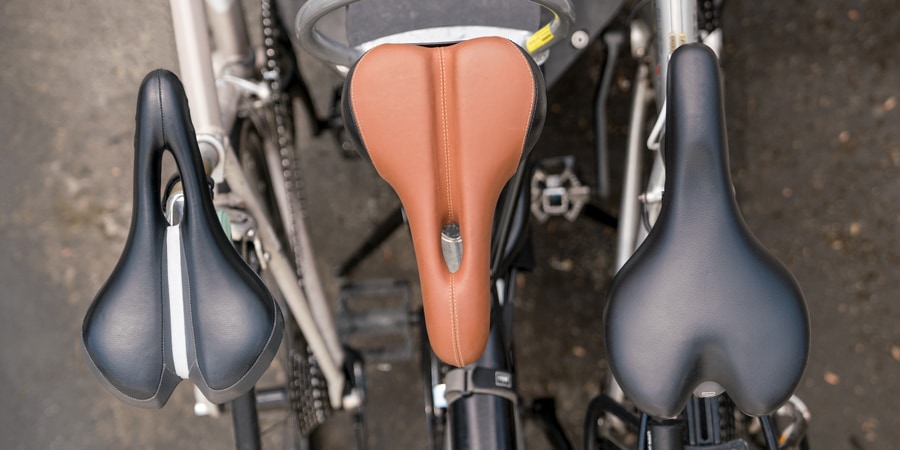
Many bicycle seats are built to protect your perineum—the area between the sit bones, through which traverse a plethora of nerves and arteries. These saddles reduce or eliminate the material in the middle of the saddle, both relieving pressure on the perineum and providing airflow and comfort during long rides.
Because everyone's anatomy is different, some riders find great relief with a perineal cutout; others use a saddle that either has a small indentation in the saddle or no accommodation at all. This kind of pressure-relieving design benefits most men and women but is truly a personal preference.
Hard-to-fit riders might even want to consider a split seat: side-by-side cushions on a noseless saddle. REI generally does not carry this type of specialty saddle.
Decide Which Saddle Materials You Prefer
Saddles are made with a variety of materials that can affect things like weight, flex, break-in time, weatherproofness and cost. The two main parts of a saddle to pay attention to are the cover and the rails.
Saddle Covers
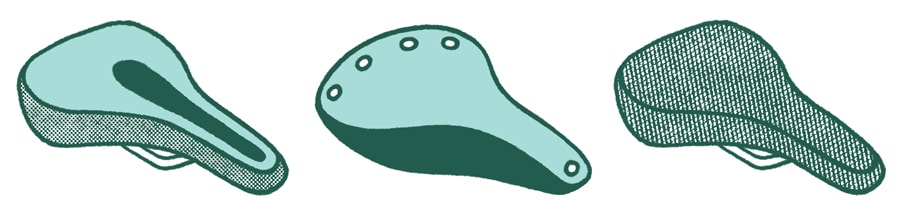
Synthetic: Most saddles are made entirely of synthetic materials, from the molded shell to the foam or gel padding and saddle cover. They are lightweight and low maintenance, and require no break-in time, making them a popular choice for most riders.
Leather: Some saddles substitute a thin leather covering for a synthetic one but are otherwise very similar in materials used. Other leather saddles, however, are made solely from a leather cover that's stretched and suspended between the rails of a metal frame. After a break-in period of about 200 miles, the leather molds to your weight and shape. Like an old baseball glove or a trusty pair of leather hiking boots, the initial period of use may include some discomfort, but the end result "fits like a glove." One downside of leather is that it is not waterproof, which means you may need to treat it with a leather conditioner on occasion. This can protect against moisture and against drying of the leather through UV exposure. Note: Check the manufacturer's care instructions before using a conditioner or waterproofer on a leather saddle, as some manufacturers recommend against it. Read one REI member's ode to his leather saddle.
Cotton: A handful of saddles feature cotton as the cover material. Cotton covers are designed to stretch and move just a little while you ride, offering excellent comfort and control while pedaling. Another plus is that cotton requires a much shorter break-in period than leather.
Saddle Rails
The rails on a bike saddle are the connection points to the bike. Most saddles have two parallel rails that run from the nose of the saddle to the back of the saddle. A bike seatpost clamps to the rails. Differences in rail material affect things like cost, weight, strength and flexibility.
- Steel: Steel is strong and reliable, but quite heavy, so if weight is a concern, consider other options. Most saddles REI sells have steel rails.
- Alloy: Alloys, like chromoly, are used in rails for their strength. They tend to be lighter than steel.
- Titanium: Titanium is very light and strong, and it does a good job of absorbing vibrations, but it's expensive.
- Carbon: Like titanium, carbon has a very low weight and can be designed to absorb some vibrations, but it's generally only available on very expensive saddles.
Get the Right Bike Saddle Size
Bike saddles come in different sizes to accommodate different body types. Finding a bike saddle that is the right size for your body mostly has to do with the width of the saddle and how well it supports your ischial tuberosities (sit bones). Generally, you want a saddle that's wide enough for good support, but not so wide that it causes rubbing and chafing.
Note that men's and women's saddles are designed to accommodate differences in hip width and ischial tuberosity (sit bones) location based on "typical" gendered body types. Regardless of whether a saddle says it's for men or women, choose the option that fits your body the best.
A saddle's width is measured from edge to edge across the top of the saddle at the widest point and you can find this dimension by looking in the "Technical specs" section on REI.com product pages. But figuring out the exact width to purchase can be a little tricky. While it is possible to measure the width of your sit bones and use that number to roughly find what width saddle will work, nothing beats sitting on a saddle and seeing how it feels. So, if you don't already know what width saddle you want, we recommend stopping in at your local bike shop and trying a few out. If you bring your bike, the shop may even let you put the saddle on your ride and take it for a spin.
Generally, you want a saddle that's wide enough for good support, but not so wide that it causes rubbing and chafing.
Make Sure Your Saddle Is Properly Adjusted
Before you buy a new saddle, consider whether your current saddle simply needs an adjustment. (Or, when you get your new one, avoid introducing unnecessary problems).
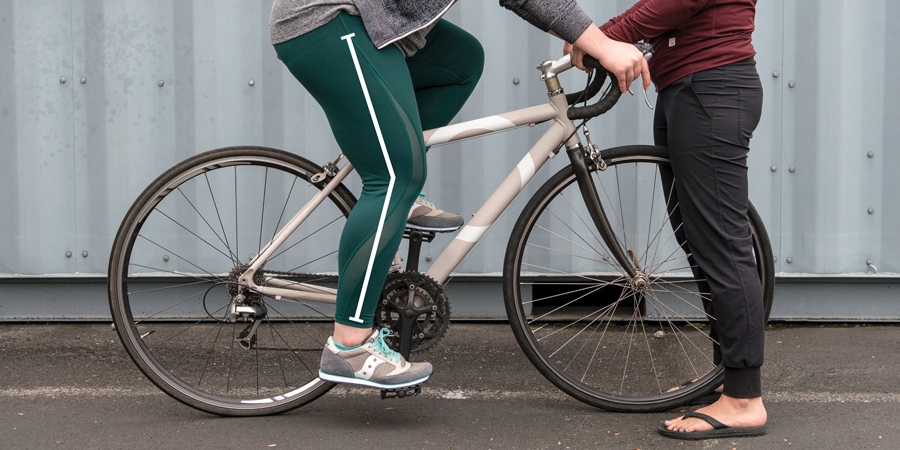
Saddle height: If your saddle is too high, it can cause you to shift your weight from side to side, which often results in irritation to your sensitive perineal area. For road bikes and hybrid bikes, the right saddle height will result in your leg having just a slight bend (roughly 80-90 % of full extension) when your foot is at the bottom of the pedal stroke. To check this, have a friend hold your bike upright while you hop on the saddle and position the pedals. Mountain bikers may choose this position for flat, smooth trails, but if there are obstacles in the way or long descents, then a lower position is often preferred. An adjustable seatpost that allows you to make quick adjustments with the press of button can be a good investment for mountain biking.
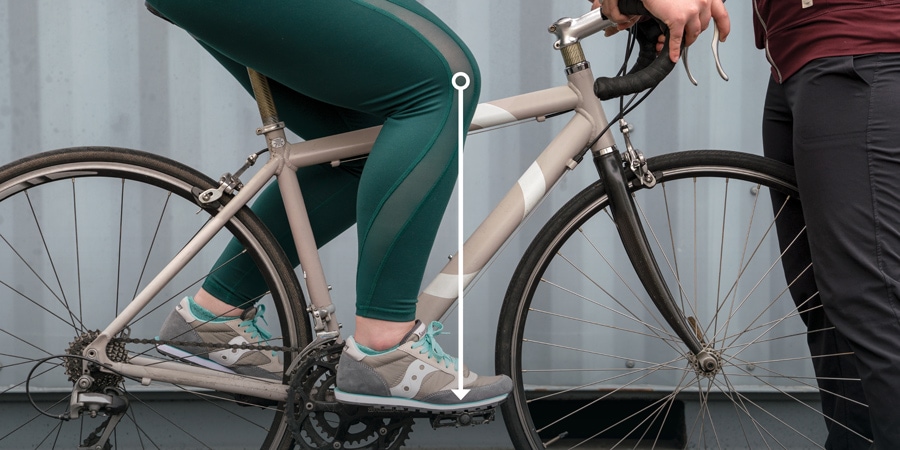
Saddle fore/aft position: When your right foot is at the 3 o'clock position of the pedal stroke, your knee should be aligned over your forefoot. If your knee is too far forward or back, then you need to adjust the fore/aft position. Simply loosen the saddle binder bolt at the top of your seatpost and underneath your saddle and slide the saddle forward or backward as needed.
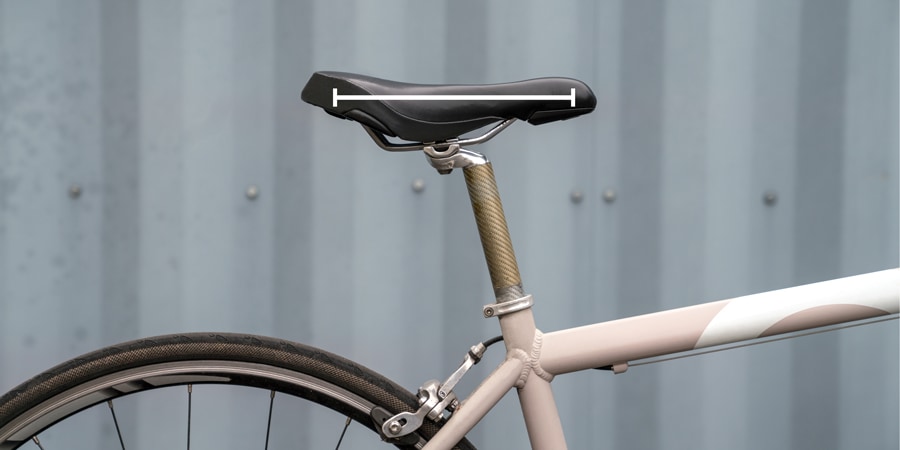
Saddle tilt: In most cases, it best to position your saddles so it's parallel to the ground. To make saddle tilt adjustments, simply loosen the saddle binder bolt and adjust as needed.
Learn more about adjusting the saddle, and other bike-fit tips, in our article, Bike Fitting Basics.
Tips to Improve Your Comfort in the Saddle
Even with the right saddle, lots of bumps or long days in the saddle can lead to perineum compression. So, finding the most comfortable bike seat may require you to adjust your riding style. Here are some things you can try:
- Stand up briefly on your pedals every 10 minutes or so.
- Stand slightly over bumps, using your legs as shock absorbers.
- Get a full-suspension bike (best for mountain biking) or a suspension seatpost (found on some recreational and commuting bikes).
- Wear padded bike shorts. They can help minimize friction, wick moisture and cushion bumps.