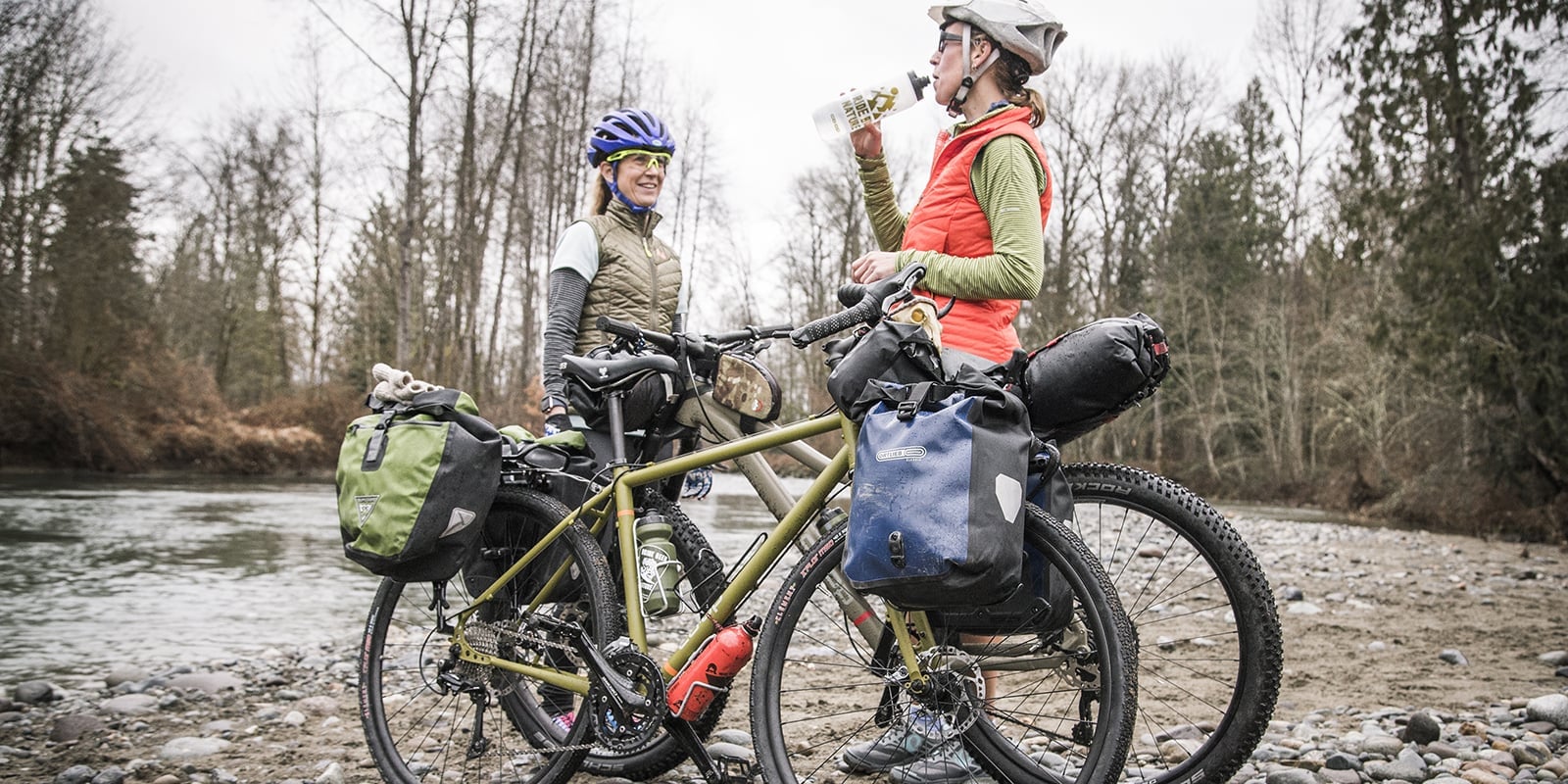
Considering your first bicycle tour? Bicycle touring can be as simple as a weekend jaunt or as monumental as an around-the-world adventure. Either approach offers a healthy and rewarding way to explore.
To take your dream into reality, you need a plan. This article helps you take the first step of considering what type of bicycle tour is right for you. Talk to the bike pros, too, at your local REI for helpful tips.
Decide on a Type of Tour
Your bike tour plans depend on a variety of factors:
- how much planning you do
- what gear you want to bring
- how much effort you're willing to expend
- how much money you can spend
- the time you have available to tour
There are several types of touring. Each has its pros and cons.
Credit Card Touring
On "credit card tours," cyclists carry basic cycling gear and clothing, then pay for things like meals, supplies and overnight accommodations as they travel.
- Positives: low hassle; unencumbered touring with the comfort of showers and warm beds.
- Negatives: expensive; limited to available accommodations; organization can be challenging; less gear to handle injuries, breakdowns or sudden storms.
Self-Supported Touring
You carry all of the gear and clothing you need with you on your bicycle. While you may make occasional stops for food and basic supplies, you're prepared to handle everything from foul weather to sleeping outdoors.
- Positives: lots of freedom; least expensive way to travel.
- Negatives: requires more gear and effort.
Vehicle-Supported Touring
These tours let you store most of your equipment and supplies in a support vehicle that travels with you as you ride.
- Positives: bring more gear without having to carry it; travel farther; greater margin for error or bad luck.
- Negatives: must find someone who will drive; more expensive; support vehicle may not always be able to go where you want.
Organized Tours
These are planned, organized and run by commercial outfitters. Some outfitters offer full-service affairs where every detail is addressed. Others are basic services that provide route planning and accommodation assistance only.
- Positives: low hassle; convenient; great for the novice tourers; meet new people in a social setting.
- Negatives: pre-packaged adventure; you don't choose your partners; can be relatively expensive.
Decide on the Group Size
Small Groups
Small cycling groups (2 to 6 people) are easier to plan, organize and manage than large groups, especially if you're a novice. They are also safer than touring alone, since your fellow riders are around to help with breakdowns, injuries and route-finding.
Large Groups
Larger touring groups (more than 6 people) can also be a lot of fun, but they are more challenging to organize. Beginners should spend some time touring with experienced cyclists or with organized tours before planning a large tour on your own.
Solo Trips
Half- or full-day rides can be a great way for novice touring cyclists to practice basic touring skills and get accustomed to self-sufficiency on the road. With this experience, you can then try an overnight solo tour to help you better decide what style of bike tourist you want to become.
If you choose to go with a group, keep these points in mind:
- Interests: Determine the kinds of terrain your group wants to tackle. This includes the scenery, side trips, activities and attractions.
- Physical abilities: A cycling group is only as strong as its weakest rider. Know the partners' limitations so you can plan an appropriate route.
- Cycling skills: Consider your companions' willingness to ride in traffic or bad weather. For overnight-camping tours, know their camping experience, their route-finding skills and tolerance for adversity.
Additional Factors to Consider
Group size and the type of tour you're planning are just the beginning of your decision-making process. Keep the following in mind when planning your route and shopping for gear:
Proximity to Civilization
The closer your route is to towns (and bike shops), the easier it is to get help if needed. Plan your first tour close to home or other developed area.
Mileage
Your expected daily mileage greatly affects the kind of tour you have. More mileage means less time to check out the scenery or go sightseeing, especially if you have designated a stopover point to reach that day.
Terrain
Bike touring can be enjoyed on most any type of terrain. Novices, however, should stick to relatively level routes at first.
Traffic
Car and truck traffic can make some routes uncomfortable or dangerous. To reduce potential problems, plan routes on secondary roads. On unpaved trails, make sure beforehand that bicycles are allowed access. Check also if such trails are heavily used by hikers, pack animals or off-road vehicles.
Road Hazards
When route planning, do your best to avoid narrow tunnels and bridges, busy stretches of road, construction zones and similar hazards.
Overnight Accommodations
For a multiday tour, you may want a route that includes a variety of overnight options. Consider your group's expectations, their camping experience, their gear and their budget. Should you be looking for a campground or a bed and breakfast?
Timing
Timing can be everything. Certain times of year (e.g., holidays, summer months) are busier than others for securing accommodations, just as certain times of the day (e.g., rush hour) are for traffic.
Wind and Weather
Sunny, cool weather is usually ideal for bike touring. Headwinds, however, can turn and enjoyable ride into a long slog, as can rain or extreme heat or cold. Research in advance the typical weather patterns for your destinations.