Having the right type of luggage, travel backpack or duffel bag for your travels can make packing up and hopping on a plane or hitting the road easier and less stressful. But with so many styles to choose from, deciding which one is right for you can be a challenge. This article breaks down the different types of luggage and offers advice on choosing the right size, weight and level of durability. It also goes over features like wheels, laptop compartments and carry-on compatibility.
Types of Luggage, Duffel Bags and Travel Packs
There are three broad categories of luggage: wheeled luggage, travel packs and travel duffel bags. When deciding which one is right for you, it can be helpful to think about things like where you're going, how you're getting there and what you plan to do when you get there.
Wheeled Luggage
The obvious advantage of luggage, packs and bags with wheels is how easy they are to transport through the airport and down smooth streets and sidewalks. There are three types of wheeled luggage: rolling luggage, wheeled duffels and rolling backpacks.
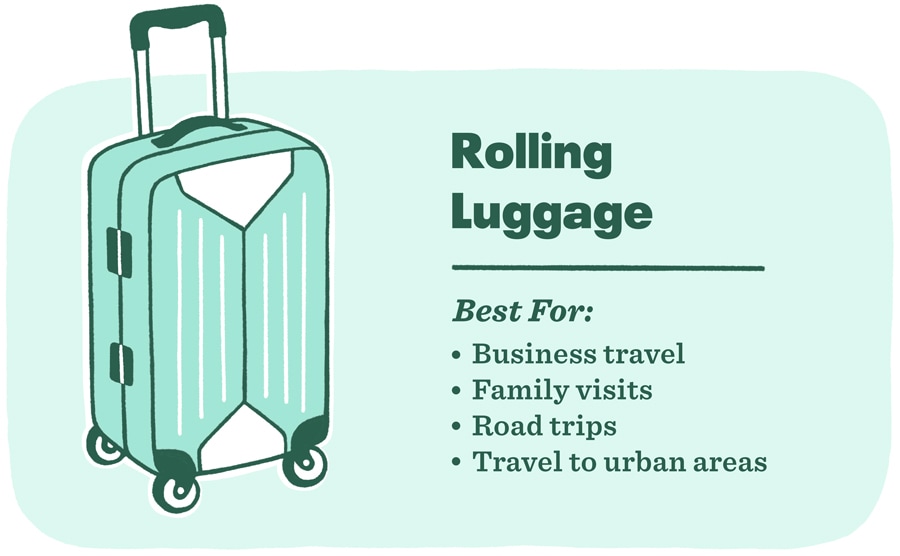
Rolling luggage: Designed for traditional travelers, rolling luggage is what you see most people pulling behind them at an airport. They come in a range of sizes and typically feature sturdy construction made to handle the rigors of luggage transport systems. They are idea for business travel, family visits, road trips and travel to urban areas.
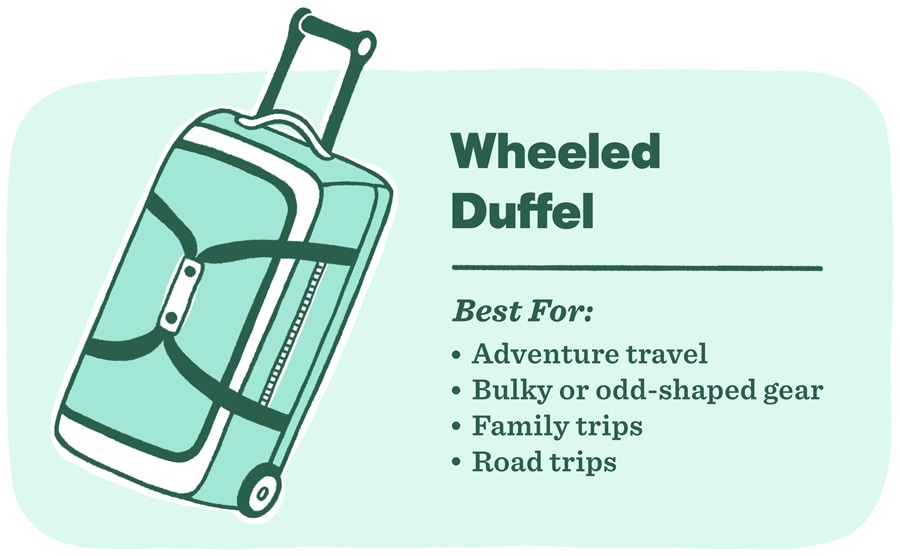
Wheeled duffels: Nothing swallows up gear like a duffel bag, and one with wheels is a good choice for multisport travelers. If your adventures frequently require gear of widely varying sizes and shapes, a rolling duffel is a smart way to corral it all. For light packers, a carry-on wheeled duffel offers less space but allows you to forgo the time and expense of checking a bag. Wheeled duffels are a good choice for adventure travel requiring bulky or odd-shaped gear, family trips and road trips. To learn more about duffel options, read about travel duffels below.
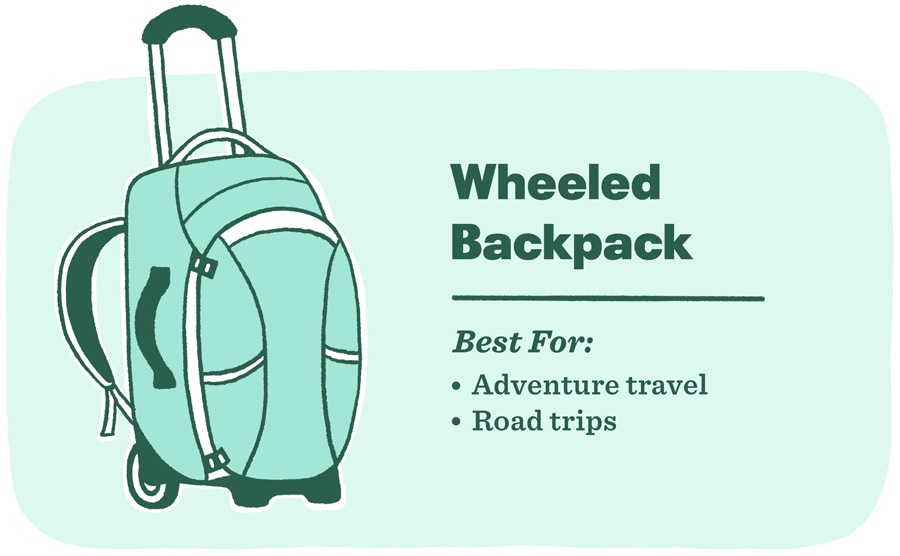
Wheeled backpacks: Popular with adventure travelers, these combine the convenience of wheeled luggage with the mobility of a backpack. You can transport lots of gear with a simple pull of the extendable handle. Facing heavy foot traffic or a long flight of stairs? Strap on the shoulder straps and hip belt for hands-free carrying convenience. Wheeled backpacks are typically best for adventure travel and road trips. To learn more about backpacks, see the travel packs section below.
Travel Duffel Bags
These range from basic duffels that you throw over a shoulder to wheeled duffels with extendable handles (to learn about wheeled duffels, see the Wheeled Luggage section of this article.) The primary advantage of duffels over other options is their simple design. They're easy to use and generally feature one large space for packing your gear and clothing. Of course, this could be a disadvantage if you're the super-organized type who needs separate pockets and compartments to stay sane. (One way to stay organized in a duffel is to pack your things in travel cubes or stuff sacks.)
Duffel bags are available in many sizes, from compact carry-on bags that have a capacity of 20-30 liters and will hold a weekend's worth of clothes on up to massive duffels that hold 100 liters or more for adventures that require tons of gear.
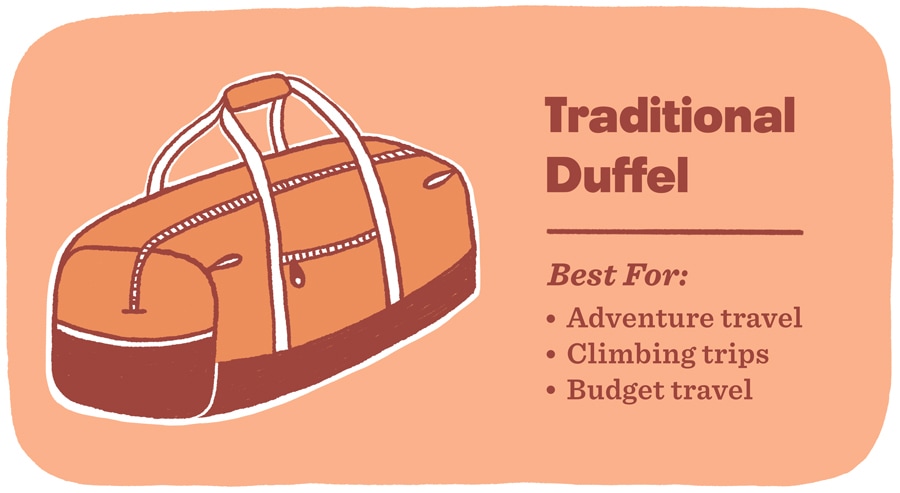
Travel duffel bags that don't have wheels might seem old-fashioned given how easy wheels can make transport. But, for adventures to remote places with bumpy, unpaved streets, wheels will be more trouble than they are worth, and they will add several pounds to the overall weight of the bag. Not only are traditional duffels lighter, they are also more pliable than those that have wheels, making them easier to stuff in the backs of cars, load onto roof racks or strap to a pack animal. These duffels are also easier to store (no rigid parts, so they fold up smaller) and typically less expensive. They are a great option for climbers, adventure travelers and people on a budget who need to haul a lot of gear.
Travel Packs
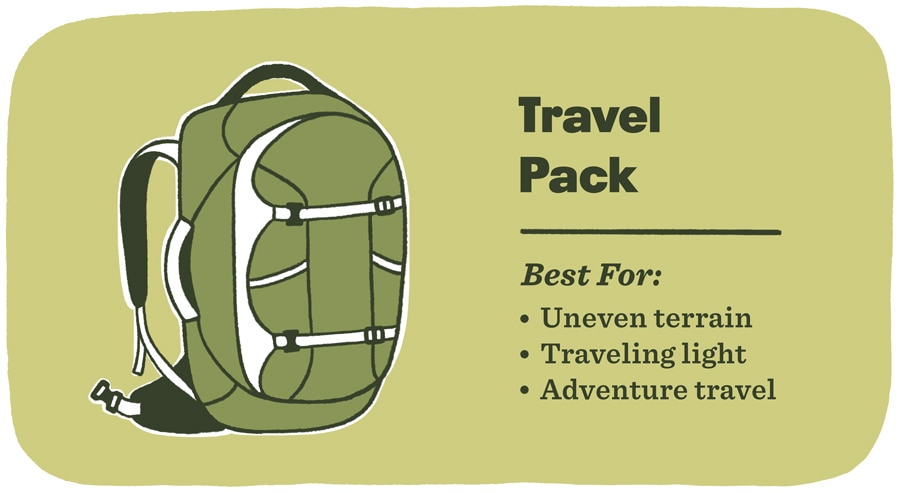
These travel-friendly backpacks excel where wheeled luggage cannot: on gravel, cobblestone streets, stairs and other uneven terrain. Travel packs are like other backpacks in terms of how you wear them and the support they provide, but they have travel-specific features, such as organization pockets, hideaway hipbelts and shoulder straps, and built-in security features, like lockable zippers. They are ideal for travelers who want to be very mobile and are OK with carrying everything on their backs (though some travel backpacks also come with wheels). Read our article, The Best Travel Backpacks, for staff recommendations.
How to Determine the Right Size Luggage, Pack or Bag
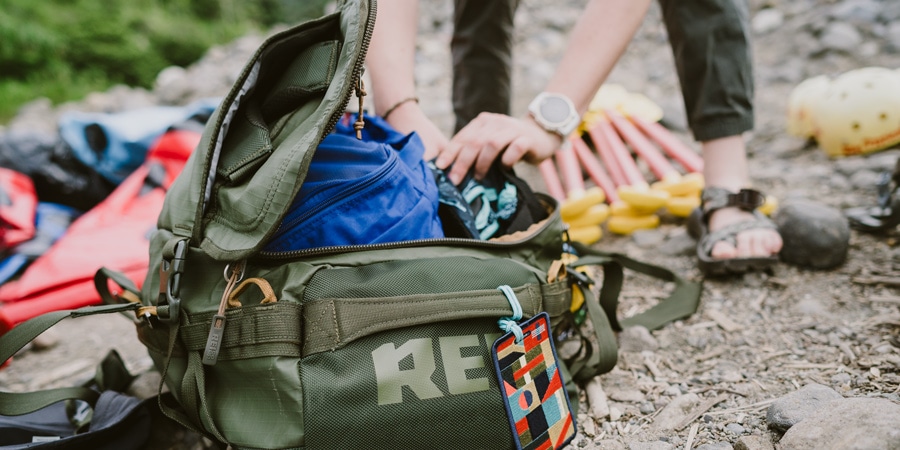
The right size luggage, bag or pack depends on things like trip length, type of trip and your packing habits. Buying a bag that's larger than you need may seem like a good idea, but we recommend against this because you'll be tempted to fill up any extra space you have.
Here are some things to consider when determining what size bag to get:
Consider the length and type of trip you're taking. Are you going on a serious adventure that requires tents, sleeping bags, stoves, climbing gear and more? If so, you're going to need a large bag (or several) to haul all that. But, if you're going on a simple weekend getaway that requires a couple changes of clothes and toiletries, then a compact bag will work just fine.
Here are some approximate guidelines to give you a sense of luggage and duffel sizes (by volume in liters) and how much they can accommodate:
- Weekend trips (30-50 liters): In general, luggage that has a capacity of about 50 liters or less is sufficient for a weekend trip. There are lots of carry-on duffels, packs and bags in this size range to choose from.
- Multiday trips (50-75 liters): For a trip that lasts one to two weeks, many people jump up to a bag in this range.
- Extended trips (75 liters-100+ liters): For big expeditions, travelers typically need several large bags that can hold 75 liters or more each. (Keep in mind, of course, that the larger the bag, the heavier it is to haul. Multiple smaller bags might be easier to transport.
Are you a minimalist packer or do you bring along lots of extras? Some people can get by with a compact carry-on bag for a trip that lasts weeks, while others need to check a bag for a weekend getaway. Packing light has its advantages, like making it easy to maneuver in crowded places and avoiding checked baggage fees; to learn how to pack light, see our article, Tips for Traveling Light.
Remember carry-on restrictions if you don't plan to check your bags. Many airline travelers strive to pack everything into a carry-on bag to avoid the expense and hassle of checking a bag. If this is your goal, then pay close attention to luggage dimensions. Most airlines allow carry-on bags no larger than 45 linear inches when adding the length, width and height. For instance, a bag that's 22 inches x 14 inches x 9 inches totals 45 inches. Rules can change, and often vary by airline, so be sure to check with your airline about size limits (or other baggage regulations) before departure.
Consider Weight, Materials and Durability When Choosing Luggage
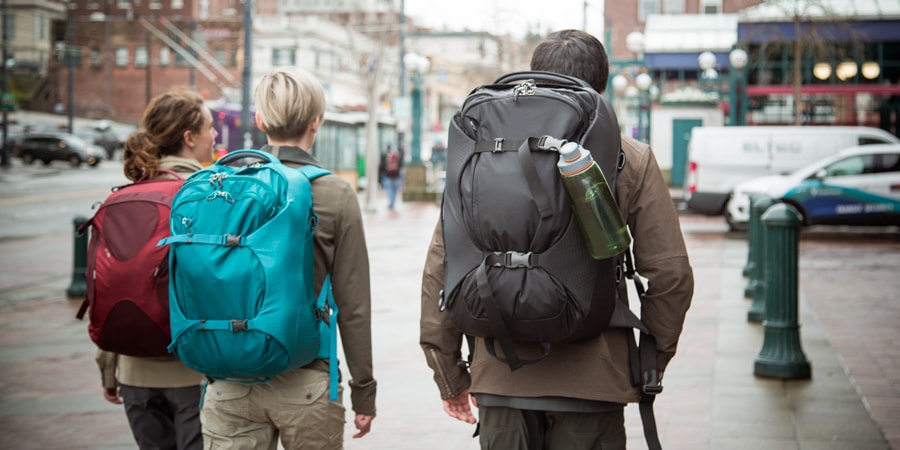
Whether you're lifting a bag into an overhead compartment on an airplane or carrying it up a flight of stairs, a heavy piece of luggage makes travel harder. And, with most airlines charging fees for bags that weigh more than 50 pounds, it's in your best interest to keep your bags light.
The weight of the bag alone can come into play if you're approaching the 50-pound limit or you just want to keep your bags as light as possible.
You can compare the weights of bags by looking in the "Technical specs" section of REI product pages. As you do, here are some things to know:
- A heavy bag may not be a top concern if your travel takes you from the airport to a hotel with smooth surfaces for rolling. But if you'll be lifting and carrying bags a lot, then lighter is better.
- Bags with wheels are heavier (usually by about 5 pounds or more) than comparable-sized unwheeled bags, so think about if wheels are right for your trip. On a trip that involves lots of travel over rough surfaces and on trails, you'll spend a lot of time carrying your bags, so it might be best to forgo wheels. A duffel or travel pack without wheels can be easier to carry, shove into tight spaces and lash onto roof racks and pack animals.
Considerations for Durability
From rough baggage handlers to bumpy travel on rugged roads, your luggage, and the items inside, can take a beating. Thinking about the durability of luggage, packs and bags means looking at the materials used to make each piece as well as assessing things like how sturdy zippers, wheels and handles are. Assessing these things is tough to do online, but checking product reviews can be a good way to get a sense for how well these parts hold up. If you're shopping in store, you can wiggle the wheels and handles and operate the zippers to make sure they seem sturdy. Note that a bag with recessed wheels offers a bit more protection against damage. Here are some additional thoughts when choosing the materials of your luggage:
If the protection of items inside your bag is your highest priority, consider hard-sided luggage. These are often made from lightweight, impact-resistant plastics. Luggage made from aluminum provides excellent protection, but they are heavy and expensive.
If you want to stuff your bag into tight spaces, go with soft-sided luggage. High-denier fabrics can be quite durable, and soft-sided luggage has the benefit of being more pliable than hard-sided luggage (think about stuffing it in overhead bins on airplanes or the trunk of a car).
If you need a waterproof bag, and you've decided a duffel is the right choice, the ones that have high-denier ripstop fabrics coated in a thermoplastic urethane are the best option for durability and water resistance. There are some fully waterproof duffels; if this is a requirement for you, expect to spend more. An alternative is to pack your things in plastic garbage bags and then put those inside a water-resistant duffel.
Choose Features That You Want Your Luggage to Have
You'll find an array of features when you start comparing luggage, packs and bags. Here are some of the top things to look for:
Wheeled luggage and packs: If you're set on buying luggage with wheels, the main thing to think about is whether you want two wheels or four. (Rolling duffels and backpacks typically only have two wheels, so this applies primarily to rolling luggage.)
- Two wheels: The two-wheel design is very common. It allows you to pull your luggage behind you or push it in front of you, but you cannot move it side to side. The wheels are typically recessed into the bag a bit, which takes up some internal packing space but protects the wheels from impacts. Two-wheeled bags tend to handle rough streets and curbs better than four-wheelers.
- Four wheels: The big advantage to having four wheels is mobility. You can move these pieces in any direction and wheel them along behind you, in front of you or at your side. They're also great for wheeling down a narrow airplane aisle. Be warned, though—if you park a four-wheeled piece of luggage on an incline, it will likely roll away.
Carry-on size: A bag that's marked as carry-on on REI.com meets the common size guidelines that airlines enforce. But, rules change and can vary based on airline, so always check with your airline before heading out.
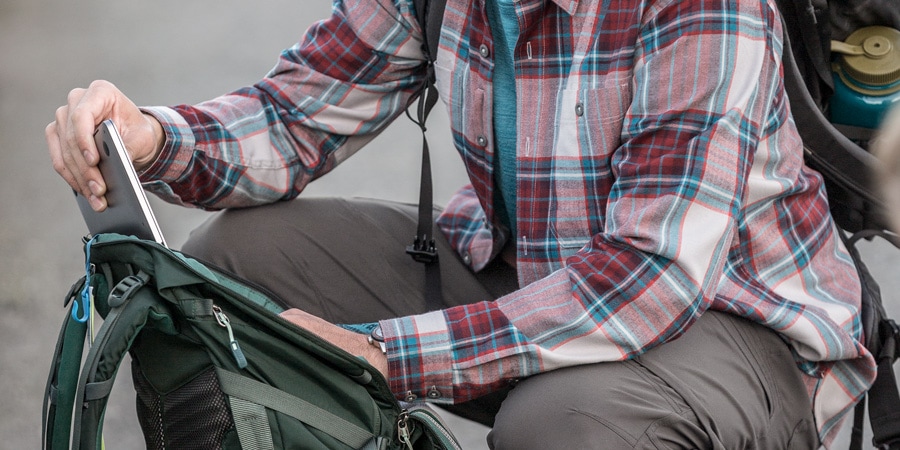
Laptop compartment: If you're traveling with your laptop, a dedicated compartment that will pad and protect the device during transport is handy.
iPad/tablet compartment: A specific spot for storing an iPad or other tablet is a nice feature if you regularly take your gadget along (and helps protect your tech).
Checkpoint friendly: A "checkpoint friendly" bag is one that has a designated laptop-only compartment that can unfold and lay flat on the X-ray belt when passing through airport security checkpoints. This allows you to leave the laptop in your bag while giving TSA agents a clear view of the computer for proper screening. (That said, many TSA agents will still ask you to remove your laptop regardless.)
Organizer pockets: Built-in organizer pockets make it easy to store frequently used items—like a pen, your passport and keys—in a convenient place.
Removable daypack: Most frequently found on travel packs, a removable daypack can be nice to have for taking excursions once you've reached your destination. You can leave your larger pack behind and use the daypack to carry snacks, water and other essentials.
Backpack straps: If you want to be able to carry a duffel bag on your back, look for one that has dedicated backpack straps. This feature makes hauling a heavy load up stairs or down a trail much easier.
Packable: This mostly pertains to duffel bags and means that the bag can stuff into its own pocket. This is nice for compact storage when the duffel is not in use.