
You can ride a bike in just about any shoes, but anyone who rides regularly can benefit from shoes designed specifically for cycling. Compared with typical athletic shoes, bike shoes are designed with stiffer soles for more efficient energy transfer as you pedal. The type of riding you do will guide your choice, whether road cycling, mountain biking, or commuting and running errands around town.
Cycling shoes are usually paired with a compatible pedal to hold your feet securely on the bicycle. Many bike shoes have 2-hole or 3-hole cleats that you clip into clipless pedals, allowing you to pedal more efficiently with each stroke. (For more information about bike pedals, see our article on How to Choose and Use Bike Pedals).
In this article, we'll explain the differences in types of bike shoes and help you understand the factors you should consider when shopping. Here's a quick overview:
- Road cycling shoes: Cyclists who want the maximum pedaling efficiency may want road cycling shoes, which have the stiffest soles and use three-hole protruding cleats that connect shoes to clipless pedals. They have little tread so aren't designed for extended walking.
- Mountain bike shoes: Mountain bike shoes typically have grippy soles for added traction on rugged trails. There are two types: shoes that clip into clipless pedals have two-hole cleats that are recessed into the sole, making walking easier; and shoes that work with flat pedals have a sticky rubber sole but no cleats.
- City biking shoes: These resemble sneakers and are a good option for recreational riders or commuters who want some of the features of bike shoes (such as a stiff sole or that attach to pedals) but prefer more comfortable, stylish kicks. Casual bike shoes that work with clipless pedals have cleats that are recessed into the sole, making walking easier.
- Bike shoe fit: Choose shoes that fit properly and are comfortable from the get-go. Your arch should be snug and supported and your heel should not slide up and down.
- Bike shoe features: Key features of bike shoes include different closure styles, including dials, laces, hook-and-loop straps and notched cam straps with buckles.
For help finding the right bike shoe, visit an REI store near you by using our store locator. You can also contact REI via live chat, a phone call, or an email through our Help Center.
REI also offers a range of gently used cycling and other gear.
Quick Comparison of Bike Shoe Styles
| |||
Shoe outsole | Smooth (no tread) | Grippy bottom for added traction | Smooth rubber outsole, resemble sneakers |
Shoe sole | Very stiff | Stiff | Soft |
Cleat style | Protrudes from sole | Recessed into sole | Recessed into sole |
Pedal style | Typically 3-hole (Look, Time or SPD-SL styles) | Flat or clipless (if clipless, typically 2-hole design by SPD, crankbrothers, Time styles) | Flat or clipless (if clipless, typically 2-hole design by SPD, crankbrothers, Time styles) |
Road Cycling Shoes
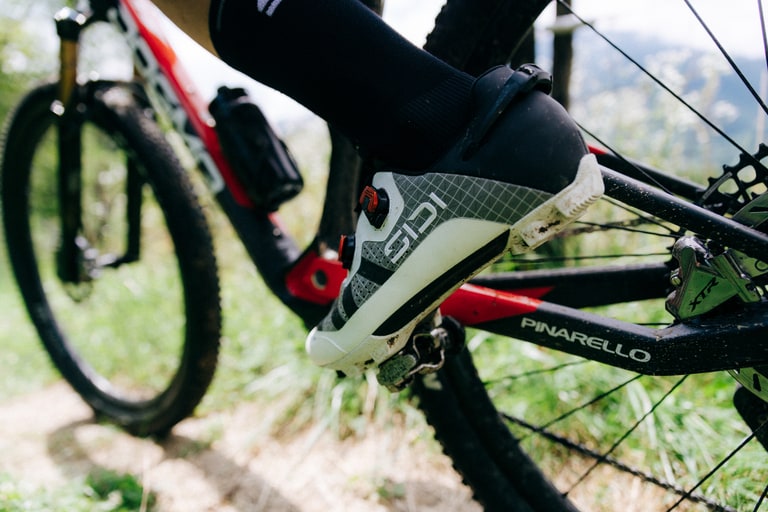
Road cycling shoes offer lightweight construction, smooth outsoles and good ventilation. They're distinguished by their exceptionally stiff soles to facilitate power transfer to your pedals so they're a good bet for those looking for maximum performance.
Road bike shoes are not designed for extended walking due to their lack of traction on the sole, their inability to flex and, typically, cleats that protrude from the soles (and sound like tap shoes when walking).
Road cycling shoes use a clipless pedal-shoe combination where cleats at the bottom of the shoe attach securely to the pedals. (The name "clipless" is confusing since you actually clip into the pedals, but it's a throwback to when they were named years ago to distinguish them from another kind called toe-clips). A clipless pedal-shoe system allows greater performance and efficiency since you transfer power while pulling up and pushing down on pedals.
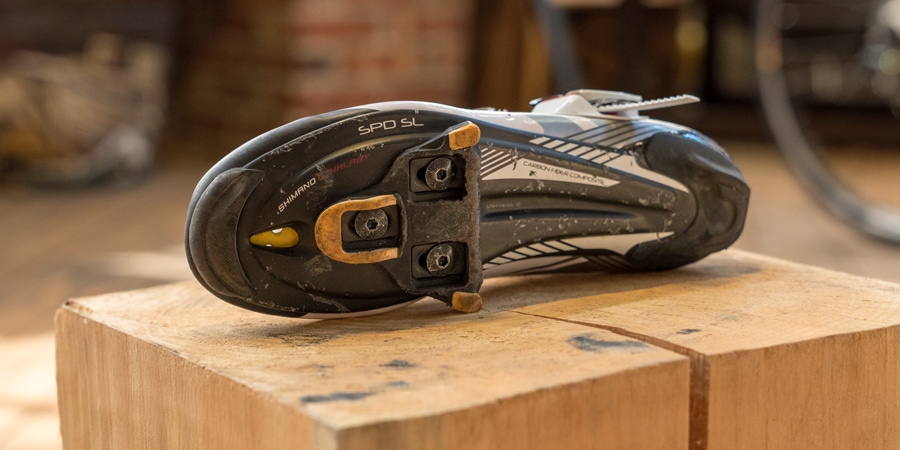
Pedal compatibility:
- 3-hole cleat: Road bike shoes typically have three holes drilled into the sole that accept cleats and pedals from manufacturers Look, Time and Shimano (SPD-SL). A 3-hole cleat system offers the most stability and energy transfer while riding. The large cleat is able to spread the force being applied to the pedal over a wide area. This reduces pressure on the connection points and allows a secure connection when you're pedaling hard.
- 2-hole cleat: Some road shoes use a 2-hole (in addition to a 3-hole cleat system) that pairs with pedals from manufacturers Shimano (SPD), crankbrothers or Time. You'll want to match the shoes up with a compatible pedal.
When shopping, consider the type of road cycling you'll be doing:
- For maximum pedal power and efficiency, road cyclists who care about performance may opt for the stiffest soles and lightest shoes. Materials such as carbon fiber decrease weight and increase sole rigidity for faster performance but they're also the most expensive.
- If you spend a lot of time getting on and off a bike such as commuting or bike touring, you may consider a two-cleat mountain bike shoe or city cycling shoe to walking around easier.
Mountain Bike Shoes
Mountain bikers have a choice between flat or clipless styles. Determine the type of riding you do, whether you spend a lot of time off the bike and other factors to help narrow your choice.
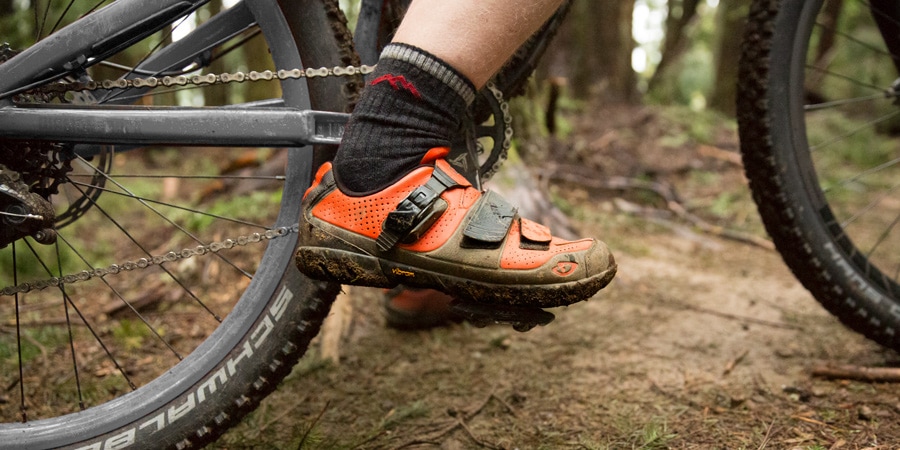
Clipless shoes (use cleats): Clipless mountain bike shoes use a two-bolt cleat system (SPD, crankbrothers or Time styles). Unlike road cycling shoes, cleats on mountain bike shoes are typically recessed into the soles making it easier to walk on trails or elsewhere. They're ideal for cross-country, distance or nontechnical riding. Some road cyclists, however, may prefer to use mountain bike shoes for comfort and walkability.
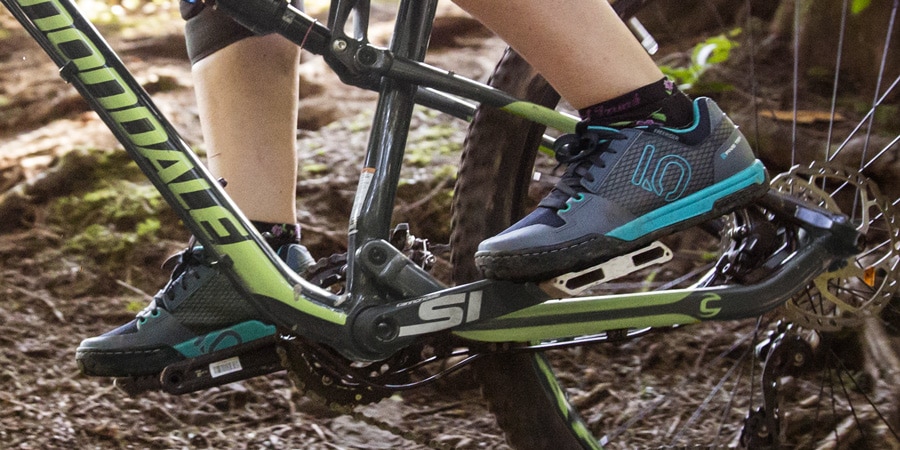
Flat (platform): These bike shoes don't have cleats and fit on flat, wider platform pedals. Their grippy rubber outsoles are designed for better traction and to "stick" to pedals. Because you don't clip in or out, it's easy to step on and off the bike, which is convenient when riding trails. They're a good choice for casual riding, trail riding or more technical riding.
Pedal compatibility: Clipless mountain bike shoes use the 2-hole cleat system that accepts pedals by manufacturers Shimano (SPD), crankbrothers, Look or Time. Again, you'll want to match shoes up with a compatible pedal.
Features: As you move up in price, you get features such as stiffer soles, lighter weight, enhanced foot and/or ankle protection, waterproof liners and additional hook-and-loop straps or a buckle-and-ratchet-type strap for an improved fit and foot security. Some shoes also offer removable toe spikes for traction in soft, loose dirt.
City Cycling Shoes
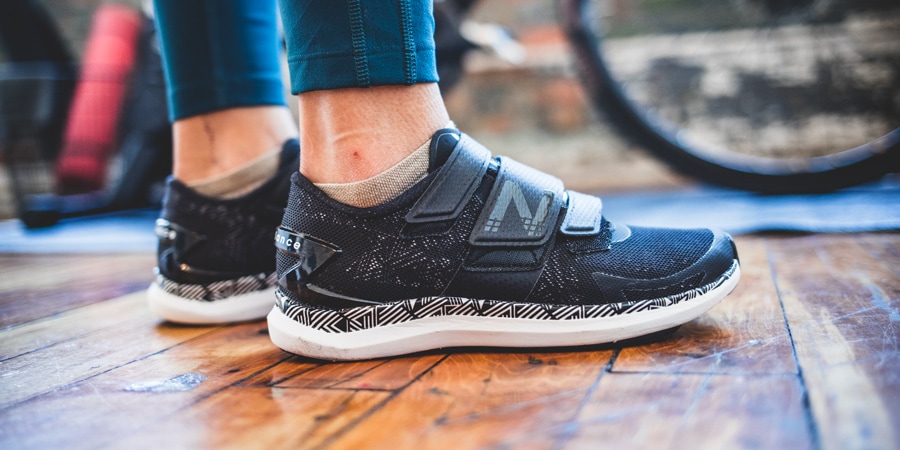
Casual bike shoes resemble typical sneakers and are great for urban cycling, recreational cycling and indoor cycling classes. A hybrid between cycling footwear and casual footwear, casual bike shoes offer compatibility with clipless pedal systems, but they have rubber outsoles and recessed cleats to allow easy walking. They're not as stiff as road or mountain biking shoes so you may lose a bit of pedal power efficiency. But they're definitely more stylish and comfortable to walk in, so are a good option if you want to bike and hang out at the café, restaurant or elsewhere.
Pedal compatibility: Like mountain bike shoes, casual cycling shoes use a 2-hole cleat system or are the flat style with no cleats.
How Bike Shoes Should Fit
- Choose bike shoes that fit comfortably from the start. (Due to their stiff soles, shoes that are not comfortable initially have little chance to break in and become so later.)
- All shoes should allow your toes enough room to wiggle slightly.
- Your arch should be snug and supported.
- Your heel should not slide up and down.
Note: When trying on bike shoes, you may feel some slippage in your heel when you walk. This is due to stiffness of the soles, which is designed to support your foot in a stable position while cycling. If you feel that a poor fit is causing the slippage, try a smaller size or a different shoe model.
Bike shoes are sold in either U.S. or European sizing depending on the manufacturer. Euro size conversion can vary by manufacturer; on REI.com product pages, click on the "Size Chart" icon for the correct conversion info.
Bike Shoe Features and Accessories
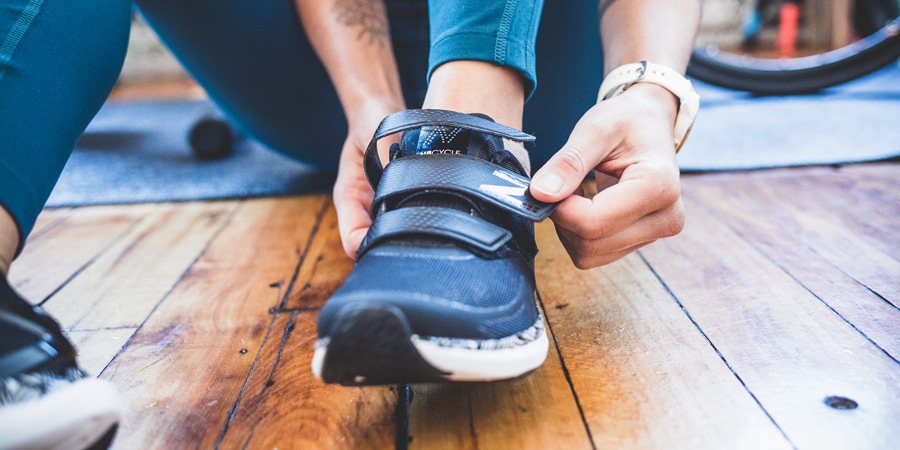
Cycling shoes come with one of several types of shoe closures:
- Lace-ups offer the most customizable fit and comfort. They can, however, get wet and dirty in inclement conditions. When using a shoe with laces, be sure that the ends are short enough or are tucked away to prevent them from getting caught in a chain without a guard.
- Straps offer quick closure and remain usable in muddy, wet conditions. Straps stretch less than laces and are more likely to stay on securely. Most cycling shoes have either two or three straps; the more straps, the more you can adjust the fit.
- Dial lace shoes such as Boa have a dial system that tightens a system of cable laces. You typically turn a knob to adjust the fit. The dials have a quick-release system to undo the laces.
- Single-pull lace makes it easy to tighten and adjust fit with a single toggle for easy on and easy off.
Bike shoe covers: When the weather turns cold or wet, it helps to slip a pair of shoe covers over your cycling shoes. These booties are usually made of neoprene or a rubberized laminate to provide insulation and water resistance. Soles feature cutaways to accommodate cleats or lugged soles. Shoe covers are for riding only; take them off when walking since the soles are not designed for that.
Toe covers: To take the edge off of a slightly chilly ride, consider toe covers. These offer a less bulky option to shoe covers and provide your feet with welcome warmth.
How to Take Care of Your Bike Shoes
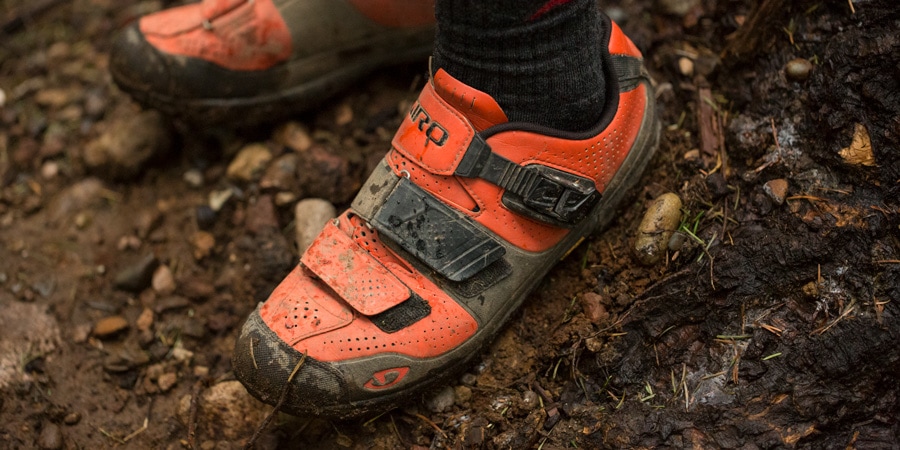
How to clean your bike shoes: Shoes should be kept clean by wiping them off with a towel or rag when soiled. For stubborn dirt, use a brush combined with warm water and a dab of soap.
How to dry your bike shoes: Make sure to thoroughly dry your wet shoes. Do the best you can with a towel first, then remove the footbeds so they can dry separately.
The most efficient way to dry wet shoes is to use a boot dryer. This uses a warm, gentle airflow to dry your shoes in a couple of hours. Another method is to pack the shoes with newspaper. Let them sit overnight and remove the newspaper in the morning after it has absorbed the residual moisture from your shoes. Depending on the amount of wetness, you may choose to replace the paper after a few hours to speed up the process.
When to replace your cleats: Regularly check your cleats for wear and follow your manufacturer's recommendations. Generally, you should replace your cleats if they become difficult to release or it starts to release with little effort or inadvertently. Change your cleats if you find you're having issues clipping out that you didn't have before. Visit one of REI's Bike Shops to get help from a qualified bike mechanic.
How to find replacement cleats: Cleats match the pedals, so just be sure to know which pedal you have before you go cleat shopping. There is often only one choice of replacement cleat for your pedal. If you're unsure how to identify your pedal, bring your shoes to REI or take a picture of the pedal and cleat and a bike specialist will be able to help you.