Bike maintenance is a wide-ranging topic, so in this article we start with the basics: a pre-ride inspection, securing bolts, and cleaning and lubricating key components.
Also, don't overlook regular maintenance by a bike mechanic. If you ride regularly, bring your bike in for twice-yearly tune-ups to ensure that complex, hard-to-evaluate components such as spokes, bearing surfaces, derailleurs and cables are inspected and serviced regularly. These bike parts should always be serviced and adjusted by experienced mechanics.
Every REI store has a full-service bike shop with fully certified and highly trained technicians to help you maintain your bike. And REI Co-op Members enjoy 20% off bike shop services.
Find an REI Bike Shop near you
Inspecting Your Bike
The best defense against loose components is a routine inspection before every ride. This will help you catch potential problems before they develop into safety hazards. Most pre-ride inspection adjustments can be made with a simple bike multitool.
Video: Pre-ride Inspection
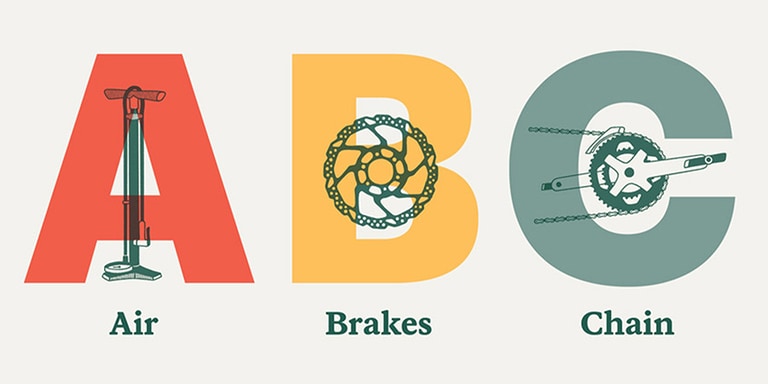
The ABC Bike Check: Air, Brakes, Chain
Download a PDF copy of the Bike ABC Quick Check list.
Before every ride, be sure to check the "ABC's" to make your ride safer and help your bike last longer.
- A is for Air: Properly inflated tires helps prevent flats. With the palm of you hands, push down on the top of the tire to check that they're aired-up and ready to go. It should feel firm. If you're unsure, attach a bike pump to check the pressure. You can find the recommended tire pressure (PSI) on the sidewall of the tire. While you're checking the air, take the opportunity to ensure your quick-release levers and thru axles (if you have them) are properly tightened as well.
- B is for Brakes: Squeeze your front and rear brake levers to make sure that the brakes engage properly and smoothly; they shouldn't pull all the way to the grips. Test the braking action on the front and rear brakes independently to make sure they're gripping well. Also inspect your brake pads for signs of wear.
- C is for Chain: Look at your chain and all the gears. Grab a pedal and start turning it backwards to make sure the chain runs smoothly through the cassette and derailleur; lubricate the chain if necessary (read how to clean and lube your chain below). Also, grab each of the crank arms and try to give them a wiggle to check that they're not loose.
Video: How Much Air Should You Put in Your Bike Tire?
Securing Bike Bolts
Bicycles are held together by dozens of nuts and bolts. Maintaining a "tight ship" is important because loose (or improperly tightened) bike parts can lead to serious wear and tear, cause poor performance and create a safety hazard.
When tightening bike bolts, consult your owner's manual for proper torque specs. Over-tightening can lead to component damage or failure.
Cleaning and Lubricating Your Bike
A regular schedule of maintenance (monthly, weekly or more often depending on your type of riding) is important. If you spend a lot of time riding in wet, muddy conditions, or if you ride hard, fast and often, plan to clean your bike more frequently.
Keeping your bike parts properly cleaned and lubricated is crucial for good performance. Lubrication protects moving parts from excessive wear caused by friction, prevents them from "freezing up," and helps keep rust and corrosion at bay.
Be careful, though. Over-lubricating can lead to poor performance and component damage (excess lubricant will attract dirt and other abrasive particles). As a general rule, excess lube should always be carefully wiped away before the bicycle is ridden.
Tip: When lubricating a number of parts at once, remember the order in which you apply the lubricants. Wiping off excess lube in the same order will give the lubricants time to soak in.
Basic Supplies
These simple items address most cleaning and lubing tasks:
Clean rags: Keep plenty of these on hand for grease, oil and wax-related tasks and for general cleaning and drying.
Brushes: Have several sizes and shapes to get into hard-to-reach places to remove the grime that rinsing alone can't get. Old toothbrushes work great.
Water: When used carefully, water can be a handy tool, but be careful here. Water, especially when coming from a high-pressure hose can cause damage to sensitive bearing systems throughout your bike.
Soap / general cleaner: Use diluted dishwashing soap or preformulated bike wash cleaner for frame cleaning.
Degreaser: A bike-specific degreaser (avoid kerosene or turpentine) will clean up gummy parts like your bike chain. Choose a solvent that is easy on the environment (and you). Dispose of all solvents properly.
Chain lubricant: Properly lubricating your chain helps extend the life of your drivetrain. Always apply bicycle-specific lube oil to a clean chain.
There are two types of lube: wet or dry. Wet lube is best to use when you'll be riding in wet conditions. It strongly adheres to the drivetrain and is less likely to rinse off in rain. That said, dirt and grit will also stick to it, so be sure to wipe off excess lube. Dry lube excels in a dry environment. Dirt and grit stick less to dry lube, but dry lube does rinse off easily if you find yourself riding in the rain.
Bike repair stand: This will allow you to position the bike at a comfortable height while you're working on it. It will also allow you to turn the pedals or remove the wheels so you can clean all the moving and hard-to-reach parts.
What to Clean and How
Most dirty bike components can be cleaned by wiping them carefully with a damp (or dry) rag. Other components require occasional brushing, scrubbing and relubrication.
Your drivetrain (front chain rings, rear cassette, rear derailleur and chain) deserves the most frequent attention, so watch our video for some useful instruction.
Video: Cleaning Your Drivetrain
The chain: Your chain is your bike's most "at risk" lubricated part. Clean and lube it frequently to slow the rate of chain wear.
To clean chains that don't have too much built-up grime, simply use a rag and degreaser. For really dirty chains, you may want to use a chain cleaning device which is more thorough and a lot less messy.
After the degreaser has dried, apply drops of lube slowly onto to the chain, getting some on each link. Let the lube dry, then wipe off any excess lubricant so it doesn't attract more dirt.
In general, lubricate your chain whenever it squeaks or appears "dry." Lubing after wet rides will help keep your chain from rusting.
Front chain rings and rear cassette: Scrub the surfaces with a brush and degreaser while turning the pedals. If there's a lot of built-up grime, use rags to wipe away any remaining dirt and "floss" between the gears.
Brake and derailleur levers: Apply a drop or two of lube to the lever pivots and the barrel adjusters periodically to keep them functioning properly.
Brake and derailleur cables: Check them frequently (especially in wet conditions) and re-lubricate occasionally so that they can effectively translate your commands to the component groups.
Brake and derailleur assemblies: These consist of a number of small moving parts. Keep an eye on their arms, wheels and pulleys so they don't bind up or become rigid. Apply lubricant to the pivot points.
Shop Bike Lubricants and Cleaners