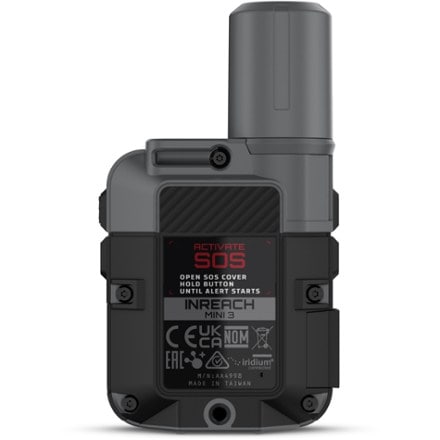
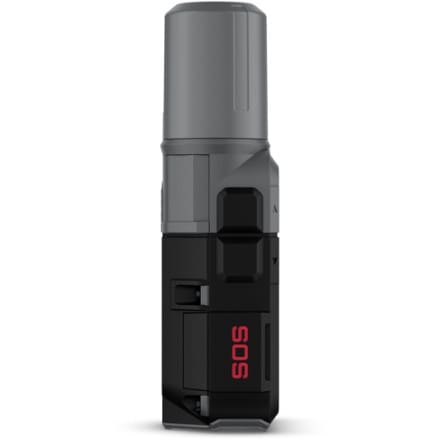
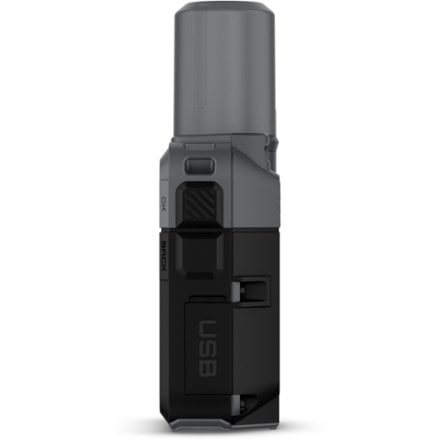
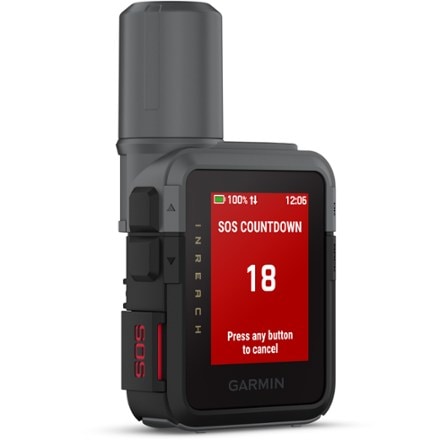
This item is currently sold out or unavailable online.
Or, may we suggest shopping for similar items:
This page is provided for reference to historical product information.
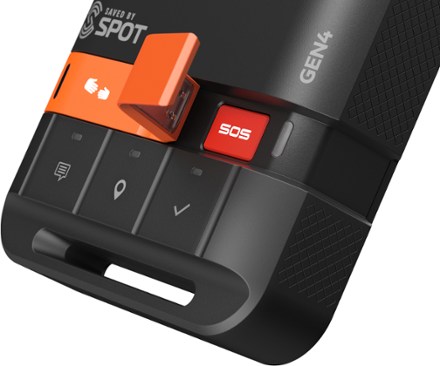
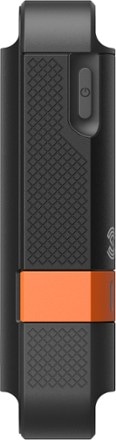
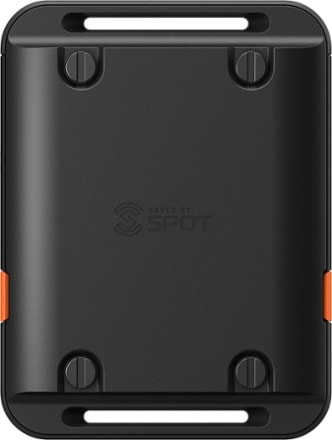
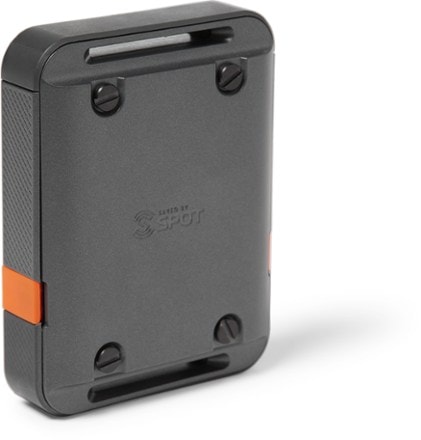
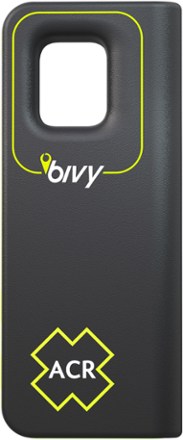
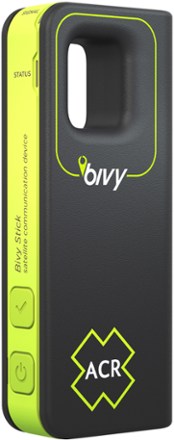
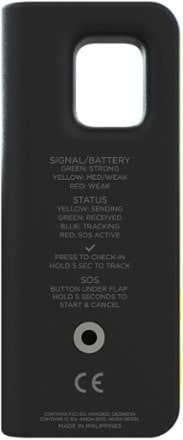
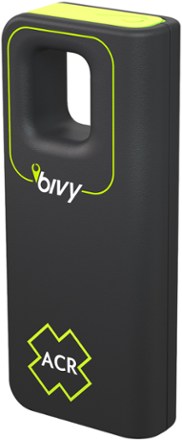
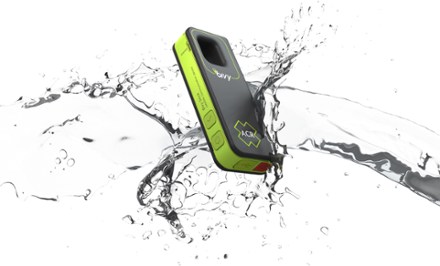
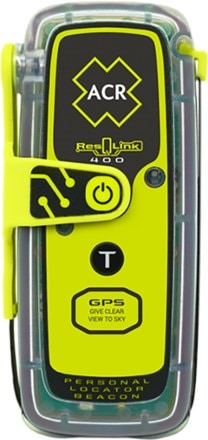
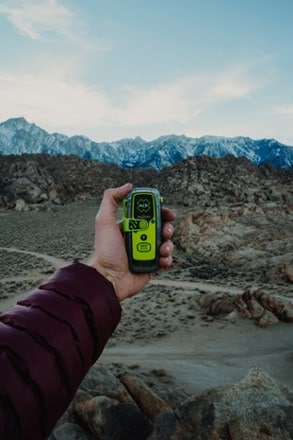
This personal locator beacon has been pre-programmed with the US country code. If your country of residence is outside the Unites States, you will need to have the beacon reprogrammed by a local dealer or service center, which may involve additional cost. This beacon cannot be registered in Australia or New Zealand.
Please Note: This item contains a lithium battery and cannot be shipped to APO, FPO, U.S. Territories, international destinations or Hawaii, and are only available for in-store pickup in Alaska.
Imported.
Item 791972
| Specification |
| |||||||||||
|---|---|---|---|---|---|---|---|---|---|---|---|---|
| Best use |
| |||||||||||
| GPS/Satellite detectable | ||||||||||||
| Activation | ||||||||||||
| Location accuracy | ||||||||||||
| Water-resistance | ||||||||||||
| Waterproof | ||||||||||||
| Batteries | ||||||||||||
| Material(s) | ||||||||||||
| Dimensions | ||||||||||||
| Weight | ||||||||||||
| Certification |
REVIEW SNAPSHOT®
by PowerReviewsPros
Cons
Best Uses
Reviewed by 9 customers
Sort by
Displaying reviews 1-9
Pros
Cons
Best Uses
Comments about McMurdo Fast Find 210 Personal Locator Beacon with GPS:
Its very hard to recommend a product when you havent used it, and in this case you dont want to have to use it. However, I like the compactness, and that it is registered with NOAA. I work in the aviation industry and its the same registration process that is used on aircraft ELT's. I bought this for my daughter who does alot of solo hiking. Just make sure whatever one you buy it transmitts on 406 MHz, do not buy a 121.5 frequency - as of 2009 it is no longer monitored by satellites.
Pros
Cons
Best Uses
Comments about McMurdo Fast Find 210 Personal Locator Beacon with GPS:
I bought one unit in January so that the 5 yr battery wouldn't need replacement until winter time, however the unit already had 6 months off the battery life (and would need to be replaced in June when I needed the unit). I took it back and bought another 6 months later when the next sale came right before a trip ... but that battery is one year old (I think I received the same unit). I may try again ... I don't understand why I can't get a unit with < 4 months off the battery ...Otherwise, looks like a great lightweight unit. It costs $100 + shipping to replace the battery. McMurdo suggested I buy their 'Max G' if I was concerned about downtime and cost as you can replace that battery yourself and it costs half as much. The max G unit costs about twice as much.

Pros
Cons
Best Uses
Comments about McMurdo Fast Find 210 Personal Locator Beacon with GPS:
I have lived in Colorado for nearly a year and as my solo hikes get longer and more isolated, it becomes progressively more dangerous. Without cell reception and fellow hikers around, I decided to buy this device in case of a medical emergency or getting hopelessly lost.
The reason I decided to get this instead of the cheaper SPOT is simple. You pay once and the battery lasts 5 years, plus you are depending on NOAA satellites instead of some private company that may or may not have coverage. There are also no monthly or annual fees.
I really like the fact that you could go anywhere in the world with this device and have a way to contact SAR if you become injured while hiking. You could take this device hiking, skiing, flying in an airplane, and even driving. There are many deaths that could be prevented by having one of these emergency beacons.
In conclusion, I think this device is great. It is about the size of a cell phone and lightweight, so you can just toss it in your pack and forget about it unless you need it. If you are going into the wilderness, seriously consider buying one of these!
Pros
Cons
Best Uses
Comments about McMurdo Fast Find 210 Personal Locator Beacon with GPS:
Do not compare this with a SPOT. I see a lot of people thinking this is the same thing, it's not. This is a locating beacon that uses SARSAT(think of this as a dedicated satellite system for search and rescue around the world). SPOT uses Globalstar, which is not dedicated to search and rescue. SPOT is the flat-landers false sense of security in thinking they can go anywhere and be saved, great marketing by SPOT btw. Think of SPOT as a way to keep in touch via msging instead of voice(digital channel leaching from Globalstars satellite phone system) out in the woods with the side affect being that it knows where you are as long as you aren't laying mangled under a blade of grass that might obstruct the signal. Chances are, we won't find you:) If you want to be found, get a REAL LOCATOR BEACON that transmits on SARSAT (406Mhz) and not a SPOT that is a glorified Satellite Phone(literally) that isn't even capable of hearing your loved ones voice as you slowly drift away.
Pros
Cons
Best Uses
Comments about McMurdo Fast Find 210 Personal Locator Beacon with GPS:
I received one of these as a Christmas gift last year after my parents watched events unfold on TV during the latest Mount Hood debacle last winter (they live in Portalnd).
I didn't really know what to think of the PLB since I don't like to relly on technology to get me out of a bind, and my worst nightmare is having to get rescued by Search and Rescue (I know a lot of people that are in Search and Rescue, so I'd never here the end of it... )
As a bit of an afterthought while packing for a recent trp, my wife tossed it in her pack and and took it with her on a multi-day backcountry ski traverse in a remote mountain range. I'm not going to get into specifics of the incident, but the PLB came in handy for them and dramatically shortened the time that the SAR helicopter was in the air looking for them.
I'll now revise my thinking / opinions of PLB's and I will now take it with me when I'm really going off the beaten path on multi-day trips in the backcountry.
Pros
Cons
Best Uses
Comments about McMurdo Fast Find 210 Personal Locator Beacon with GPS:
As a solo hiker, it was difficult for me to convince my wife that there is nothing to worry about, because that's a bold faced lie! There are things to worry about and they can happen anytime, anyplace, to anybody.
Three situations from the news come to mind... 3 EXPERIENCED climbers dead on Mt. Hood during the X-mas holidays. A camera shows that they were having a great time, but one is known dead, and the other two are assumed to be. Sounded like avalanche to me. One of them, for sure, would have survived if they had had a PLB.
A contracted military plane crash in the mountains of Afghanistan... one of the soldiers survived the crash long enough to smoke cigarettes and urinate several times... he finally froze to death because no one had a clue where the plane went down.
And who can forget the rock climber who finally had to amputate his own arm with a pocketknife?
I hope to never use my PLB, but anyone can fall and break a leg, or worse, especially when carrying a 50lb. pack, and anyone can get lost. This PLB does not make me act like a fool, or use any less care crossing creeks and rivers. It does give me some degree of confidence that if something happens, I won't have to die, or spend a week waiting for someone to happen along and find me. I do all of my gear shopping at REI, because I know that they test the products and I have faith in our Co-Op to market good products. As far as I'm concerned, a PLB that works most of the time is useless, and everyone knows which one I'm referring to, so saving $150 ain't worth it. The McMurdo has no annual subscriber's fees to worry about either. I was very impressed with the registration process, which convinced me that NOAA is serious and nobody is fooling around here. I need to know that when I need it, it will work.
My wife fusses and fumes about my trips into the mountains 100% less now that she knows that I can get help if I need it, so it's well worth the expense if for no other reason than it gets me out and in the woods without leaving a mad and worried woman at home. Thanks REI and McMurdo. Also, thanks to the folks who decided to do so much homework and write the reviews. The reviews convinced me that this product is the solution to getting my wife off my back and getting me into the mountains! I believe that should I ever get into serious trouble, this will get me out of it.
Pros
Cons
Best Uses
Comments about McMurdo Fast Find 210 Personal Locator Beacon with GPS:
I selected this product to supplement a SPOT that I carry on every trip when I trek into the remote High Desert of southern Nevada to photograph Desert Bighorn Sheep. I do this three to four times a week, 52 weeks a year -- for 11 years now. NOAA registration was easy. My complaint is that three months had ticked off the battery exchange date when I received it. I have used SPOT since November 2007 (it works 99% of the time -- and I want 100%), but because I get into such remote situations I felt I needed another PLB and the small size of the Fast Find was attractive -- now I carry BOTH a 210 and a SPOT.
Pros
Cons
Best Uses
Comments about McMurdo Fast Find 210 Personal Locator Beacon with GPS:
This is a awesome product! It looks very easy to use. (I hope I never have to use it) Before I go out I push the test button to make sure it is working. The battery has a shelf life of a whole 5 years. On my old 121.5 ELT-PLB I only had a 2 year shelf life for the battery. This is great.
Pros
Cons
Best Uses
Comments about McMurdo Fast Find 210 Personal Locator Beacon with GPS:
Ok, so for those of you who might benefit from a consumer's own extended research on this hot new little PLB made in England, here's some insights to help you decide to go for it or not. I just ordered mine from REI and will post add'l info as I gain experience. For now, here's the scoop:1. Waterproofness: I contacted the manufacturer in England about this subject, here's their reply: "Water proof rating,(submersion)We consider two test criteria, 10m (30ft) for 5 minutes.And also a 1m (3ft) for 1 hour.And our experience tells us that surface type water effects (splashingaround / rain )don't present any issue be it for one hour or eventhroughout the full 24 hour minimum run time of the beacon.A PLB is not designed to operate when floating in the water. It isrequired to raise the body of the PLB to keep the antenna clear of anywave wash and pointing to the greater sky area. Typically placing thePLB high up on the front of a PFD meets this criteria and attaching inusing a short cord is a good idea to prevent loss." [@], June 2009) Note that this PLB will sink, but a lanyard can fix that, which I would want anyway on a boat that could flip me, and anything loose, out and away from me. The company is just now (June 09) shipping out a flotation bag, presumably for those situations where it would not be lanyard-attached. We could buy a flotation bag for a cell phone which should work too. 2. Durability: [...] Their opinion is that it is surprisingly a stout little unit that should hold up well. Time will tell. I imagine it could use a little TLC given it's size, maybe a padded case for example. 3. Intelligent Design: Here, for me, it shines. The designers seem to have listened to all the complaints about the Spot locater and fixed them with their 210 unit. Th 210 user manual is downloadable from: [@]brief, you can: self test both it's transmission and GPS functions; cancel a mistaken start up within 50 sec.; monitor it's successful transmissions; activate an SOS stobe light; has a 5 year lithium battery, but must send it in to be replaced (which to me is ok as it will be checked out stem to stern); is a true GPS unit to give SAR people accuracy to find you (to me, a must); is not an EPIRB (which are usually attached & registered to boats, not people, fine with me as long as durability holds up); transmits two frequencies to help SAR home in on you; you register it to yourself via the NOAA Beacon registration system that ties into the international SAR network, no annual fees, subscription etc. zip, nada.Cons: Cap comes completely off, is not attached, be careful not to lose it in the process of activation. Battery is good for "24hrs", I would love it to last 48 hrs like some EPIRB units, but this could be no big deal in most circumstances of rescue that are not way out at sea. A floatable container would be nice, and will, my guess, be the G2 model. There you have it, for now. Will ck in later after some experience in Alaska next month, cheers & happy survival, Bob aka SalmonFanatic.
Displaying reviews 1-9
How are we doing? Give us feedback on this page.
REI Anniversary Sale May 17–27. Plus, members SAVE 20% on 1 full-price item with coupon code ANNV13. Details