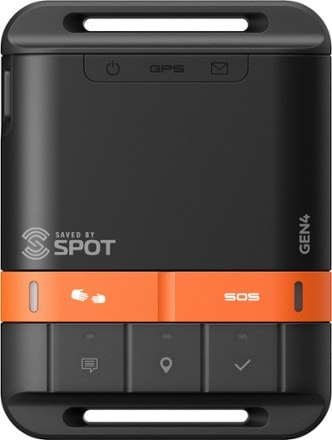
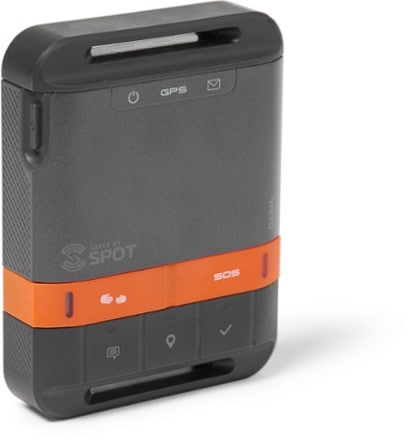
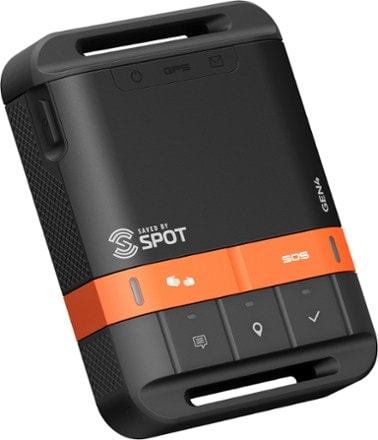
Imported.
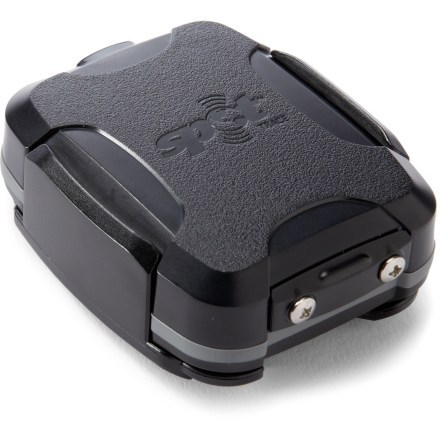
Item 766529
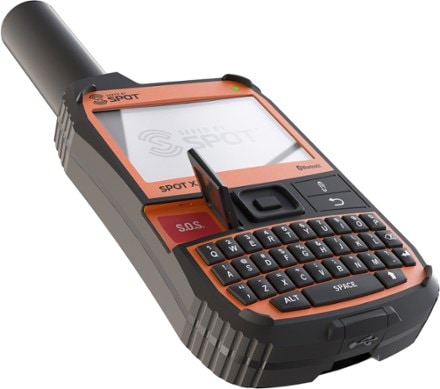
Specification | Description |
| Activation | Manual |
| Weight | 7.25 ounces |
| Battery operational life | 1 year |
| Dimensions | 4.25 x 2.75 x 1.5 inches |
| Suggested use | Inland use |
| Water-resistance | 3.3 feet |
| Battery type | 2 AA lithium |
REVIEW SNAPSHOT®
by PowerReviewsPros
Cons
Best Uses
Reviewed by 97 customers
Sort by
Pros
Cons
Best Uses
Comments about SPOT Satellite Personal Messenger:
Save your money for a real 406MHz beacon! You'll spend just as much once you add the cost of the annual subscriptions and extra services!
As someone with Coast Guard Search and Rescue experience who is very familiar with SPOT, (also an AT and PCT alum) I wanted to add my review from the perspective of someone who has responded to distress beacons. I am a fan of any device that enhances safety, and I first learned about SPOT with an open mind.
However, I have since found many reasons to dissuade mariners and others from using the device. I can't stress strongly enough the need to go with a 406 MHz beacon, such as an EPIRB / ELT / or PLB as the distress-alerting device of choice. As a reference, I'll point to SPOT's own web site.
Unfortunately, it is full of half-truths and other misleading information.
Below, I've included a transcript of their online video about its "Alert 911" function.
A point-by-point discussion/rebuttal:
Claim: "Every year, emergency authorities conduct 50,000 rescue missions. Many of these people are not found in time. Now there's a way to make sure that they are: the SPOT messenger is the first and only product that combines GPS technology with Satellite-based communication..."
Response: FALSE! Such technology has been available for many years: SARSAT-based 406 MHz EPIRBs / ELTs / PLBs. When synced with a GPS, they embed and transmit their coordinates to a satellite, giving the Coast Guard (and for inland positions, the Air Force) an immediate "E" (electronic) solution where they can send boats / aircraft / search teams.
Claim: "Whether you are snowmobiling, hiking or sailing, it is your personal connection to loved ones and emergency authorities, with the simple push of a button, from virtually anywhere, worldwide..."
Response: Not always true. You CANNOT depend on it! In Seattle, the Coast Guard had a case in September where a boater's loved ones hadn't received their scheduled "I'm OK" update from the vessel as expected. Suddenly it became a case of an overdue vessel. Turns out the boater had hit the button on the device, but the message was not transmitted. The CG called SPOT and learned that the company was having difficulty receiving transmissions from multiple vessels. Of course neither the sender nor their recipients was notified of this. CG units from Seattle to California were involved in this case. Something similar could happen inland.
Claim: "Over 50% of the US does not have cell phone coverage. With SPOT you're covered..."
Response: Um, not always (see above). Also, with any 406 MHz beacon, you're covered, as well. Without the yearly fee and extra fees for bells and whistles.
Claim: "Today, SPOT is saving lives all over the world." (Provides several anecdotes.)
Response: Certainly it has played an important role in certain cases. But show me one where SPOT worked and a 406 MHz EPIRB / ELT / PLB would not have.
Claim: (Case study - the Bertsches) So the wife receives an email stating plainly "This is an emergency. Please send help." Followed by a lat/long.
Response: So this is not to be confused with the message sent when you hit the "HELP" button, which reads: "This is an HELP message. Please find my location in this message below and send for help ASAP." Confusing?
Claim: The wife then says she received a SPOT message saying "I am OK." and was very relieved.
Response: What if she had been away from her computer this whole time? Had she seriously not yet been contacted by authorities? In the case of a 406 MHz alert, the Rescue Coordination Center that receives the alert puts a live person on the phone with the family member / emergency contact as part of prosecuting the case.
Claim: "If your loved one is going into the outdoors, you need SPOT..."
Response: No you don't. It's a false sense of security.
While SPOT's a neat tekkie tool for tracking someone's location in the wilderness or at sea, it should NOT replace a 406 EPIRB / ELT / PLB for emergencies.
It also lacks the 121.5 MHz homing signal that all 406s have, with homing equipment already installed on all Coast Guard aircraft. CG boats, civilian air and ground SAR and civil air patrol assets also have this equipment. The CG also has 406 MHz direction-finding equipment installed on many of its aircraft, as well, which can lock in on a signal from over 100 miles away. SPOT has no such advantage, as responding agencies have no way to detect its signal with their aircraft, boats, or ground teams.
SPOT's business model is clearly based on the continued profits generated by its subscription services, and is aligned with the GEOS company, which is in this business for profit (nothing wrong with that).
Contrast that with SARSAT (406 MHz) beacons, which exist to execute the federal mission of inland and maritime SAR. While beacon manufacturers like ACR and McMurdo look to make a profit, they have to adhere to strict federal (and international) standards to market their devices as SARSAT EPIRBS / ELTs / PLBs. The government (NASA / NOAA) funds and maintains the satellites (which are being significantly upgraded again in the next decade), and the Air Force and Coast Guard executes all SAR in the US and our territorial waters (and often beyond).
Another advantage of SARSAT (406 MHz) beacons - NOAA tracks all false alarms, follows up on their causes, and works directly with their manufacturers to minimize their reoccurrence.
And one additional reason the video on SPOT's site leaves me scratching my head: it uses footage of Coast Guard assets that were retired before SPOT was even on the market (44' motor lifeboat / CG HH-65A helicopter [illustrating a case off of AUSTRALIA, and the CG now uses C models with a different paint job]).
My one-star review is specific to its use as a distress beacon. As a fun way to track a friend or loved one via google maps, it's a neat gadget (so long as folks know not to panic if you miss a check-in, since their technology is unreliable). Just make sure you carry a 406 in case you get in real trouble.
Pros
Cons
Best Uses
Comments about SPOT Satellite Personal Messenger:
HOW TO USE THE SPOT CORRECTLY:
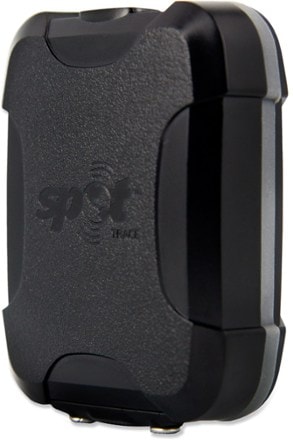
Perhaps it is not obvious on the SPOT website or in the booklet packed with the device, but SPOT MUST BE LYING ON ITS BACK WITH THE LABEL UP, IN ORDER TO HAVE MAXIMUM CONTACT WITH THE GPS SATELLITES AND THE COMMUNICATIONS SATELLITES.
People standing around the unit, hooking it on your belt or placing it next to a boulder may also block the line of site electronic signal.
GPS receivers, for best results, must be standing up straight with the the users hand clear of the top and at the lower part of the unit and with no people hovering over and around it in order to see what is going on.
To re-state it, SPOT is best at connecting with the GPS satellites and to the Communications satellites when it is comfortable lying on its back with the label up. The antenna needs to see the entire sky and not just half or less off to one side. This is kind of explained in the booklet packed with the unit. I have checked this information with SPOT Customer Service and I have heard this explained by a SPOT distributor. Clip the SPOT to the top of your summer day pack or take a rest and give it too, a chance to get comfortable on its back on a rock.
My wife and I are Federally licensed General Class Ham Radio Operators and we have studied the way "antennas" work. They are directional, and that is why the GPS and the SPOT must be oriented correctly. This is not a design fault. I agree with some that the SPOT User Guide should be more clear. I agree that the nice big belt clip should be removed by the operator. Place the SPOT in the top pocket of your day pack (yes, on top of the extra hat, gloves and ClifBars). Or turn it on when you stop for lunch, camp or a 15 minute break.
Some folks expressed concern because their Spot did not connect well to the sattelites. I will bet their SPOTS were clipped on belt or pack and not HAPPY.
One person described how he got a good contact when he laid the SPOT (flat) on the hood of his car. Another described how his balky unit was oriented: . . ."keep spot upright . . . "
Personally, I am a happy well oriented user.
THE BASIC IMPROVEMENT OF SPOT OVER LAND PLBs:
An important improvement of SPOT over PLBs is its ability to "real-life test" the communication system where the user actually hikes, hunts, sleds, climbs and wanders. If the user programmed message "Hello, I am exactly here and I am having fun" gets through, so will the message "911 Rescue Services are on the way, but don't worry Honey".
The traditional PLB can be tested for sending out a signal. It cannot be tested for whether the signal has actually been received.
--trad_guy
Pros
Cons
Best Uses
Comments about SPOT Satellite Personal Messenger:
I used this product not for safety, but primarily to share my trip progress while traveling via motorcycle. I got it originally to show one of my trips to Alaska, and journeys back and forth across the US. But I lost it on the road a couple weeks ago. I just got off the phone with the SPOT folks and made sure that my unit has been de-activated following my loss of it back east in Boston. Last thing I want is to get charged for a 911 call for help.
But while I had the tech/rep on the line, he asked me if there were any other issues. I some him some general problems I'd been having:
The tracking feature doesn't work. Ever.
The "OK" button works, but only until late morning, and stops working in the early evening around 5:30 PM (yeah, I know, Banker's Hours, huh?)
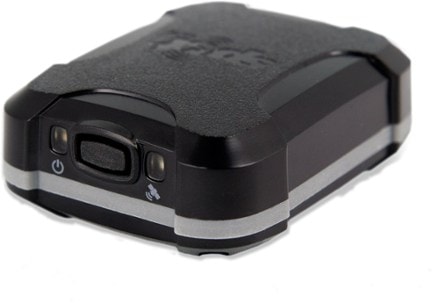
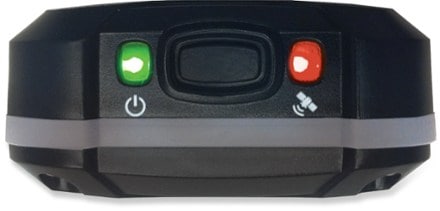
I'd know when it DID work, because I'd see the confirmation that an "OK" message has been sent, because the unit would only flash the left-hand On/Off button following several minutes of dual, simultaneous blinking by both the "On" and the "OK" buttons. It's mindlessly simple.
But no sooner than the words were coming out of my mouth, "Mr. Helper" was cutting me off, explaining that I had done something incorrectly.
But I'd ask him, if I was doing it incorrectly how can you explain that I'd have "OK" messages correctly sent several times a day, but not at night. He claimed that I must have had it too close to my GPS, it needed to be at least 12" away.
I told him that my Zumo GPS is at the front of the bike, and the SPOT is tethered on the top of my tail bag a good 3 or 4 feet away. Well, I must have it covered up and in the bag. No sir, it's tethered on TOP of the bag. Then he'd go through explaining how I needed to turn it on, and obviously I didn't activate the "OK" button correctly. Sir, I told him, it's as easy as push the button and let it go, the lights blink simultaneously for several minutes until the signal is sent out then only the "On" button blinks. But if I do that, and the alternating OK/On button pattern is shown, and I turn off the unit and try again, what else should I have done? Well, you must have been in a place with limited view of the sky, he told me. No sir, it's in the open, face up, on top of my tail bag, and I'm in the middle of the US Interstate. But he kept insisting that I still must just be using it incorrectly.
So I started doubting myself.
Until I checked REI's customer reviews of the unit and see that I'm not alone in this frustration.
I doubt that I'll buy one of these again. And I've got to be their target demograhic, outdoors most of the time either with a backpack on and in the boonies, or on a motorcycle and out in BFE.
Too bad.
Pros
Cons
Best Uses
Comments about SPOT Satellite Personal Messenger:
I was very excited to purchase a device that would help my family follow my progress as I rode a motorcycle from Wisconsin to Argentina. My first tests of the unit, in Wisconsin, were perfect. For the first three days of my ride, my unit worked perfectly. But from Central Mexico to Argentina, it was completely unreliable. Less than 50% of tracks and OK messages went through in Mexico, Guatemala, El Salvador, Honduras, Costa Rica, Panama, Colombia, Ecuador, Peru, Chile, and Argentina. When I contacted SPOT customer service, they said my unit was defective... but how could I send it back, from Central America? When I returned from my trip, I tested it again, and in Wisconsin, it worked perfectly. It's impossible to know, from the field, if the tracking and OK messages actually go through.
I purchased all the available upgrades, including the "extraction insurance."
The biggest problems are poor statelite reception; an inability to know, from the field, if your messages are going through; poor battery life; hard-to-push buttons; ignorant customer service; a poorly designed website; and ambiguity regarding post-subscription 911 transmittal. The belt-clip is some kind of bad joke. There are so many loopholes in the "extraction insurance" that it's worthless.
I also carried a garmin GPS and an ACR Personal Locator Beacon (purchased from REI), and a rented Iridium satelite phone. The GPS and the Sat phone always worked. When I needed help, I used the SAT phone, and called in my GPS coordinates.
SPOT is not worth carrying if you might need to be rescued. It is certainly not worth relying on.
Pros
Cons
Best Uses
Comments about SPOT Satellite Personal Messenger:
On the plus side, Spot GPS has several nice features--it's splashproof to watertight, light weight, and uses 2 AA Lithium batteries (user replaceable). Ir has a variety of functions, from alerting to rescue, and more functions than the ACR MicrOFix or its waterproof brother the ResQFix, which are initially three to four times more expensive than the Spot GPS unit.
On the minus side, you pay a yearly service fee for the Spot GPS features that runs between $100 and $159, whereas the ACR and similar Personal Locator Beacons (PLB) units have no activation or annual service charge EVER.
Most importantly, you need to determine why you are buying a GPS locator beacon. If it's to dazzle your camping buddies or your techie friends at home (watching on a computer via the SPOT GPS on-line tracking feature), then this might be just right for you. But despite all your planning and conditioning are you willing to bet your life on this unit? In my case NO! The ACR and many other PLBs use the COSPAS-SARSAT satellite family, run by the U. S. and other governments, not private industry as with the satellite system supporting SPOT GPS. When you activate an ACR or similar PLB, a U. S. Air Force ground station (staffed by highly trained, incredibly dedicated personnel) receives and processes the message and routes it to the nearest Search And Rescue (SAR) facility within 3 to 15 minutes world wide. The ACR units also contain a standard 121.5 MHz transmit frequency for SAR homing to help find you fast. The Spot GPS unit does NOT contain this SAR homing transmitter, which adds time and risk to your rescue.
Don't get me wrong, SPOT GPS has some nice features beyond tracking and it's roughly half the weight and size of the ACR MicrOFix or ResQFix. The ACR and other PLBs, however, do NOT have any activation or service fees--you register the unit with its unique beacon digital identifier string on the U. S. government 406 MHz Beacon Registration Database System web site. That's it--the unit is ready to use and there is no activation or service cost EVER.
Granted, the Lithium AA batteries used by SPOT GPS run about $2 each when bought in bulk and have a long shelf life. The high capacity Lithim battery in the ACR units has a 5 year service life and an 11 year storage life and is not user replaceable (to maintain the waterproof seals). If you intend on keeping the SPOT GPS and ACR units for many years then the total SPOT GPS cost begins to approach the ACR MicrOFix or ResQFix cost. If you only plan on keeping it for a year or two, then the SPOT GPS is cheaper.
If I had enough money I'd buy both types of units. But in a life threatening situation the ACR MicrOFix or ResQFix PLB wins "hands down." Granted, one of the first rules of being an adventurer is to never get yourself in a situation of requiring a rescue. However, I'm just not willing to bet my life on the SPOT GPS unit.
Pros
Cons
Best Uses
Comments about SPOT Satellite Personal Messenger:
I bought this after I saw an ad for it. I snowshoe, hike, and mountain bike in the Colorado Rockies and felt this would be a good way to let my family know where I am at since they live back East. I often go alone on my day trips to the high country and although I have other safety/survival equipment with me and training I felt this would be a good device to have because of the 911 feature.Although it takes a little getting use to, you have to hold it up at head/shoulder level until the message light lights up solid for a few seconds, this device works very well. I've been in remote areas and the longest its taken is maybe 5 minutes to get a message out.Make sure your family/friends check their spam box after you send the first test message since some email providers will think its spam.The changes to the SPOT website are really nice, and their customer service over the phone was helpful.The [$] dollar yearly fee may seems steep, but compare it to how much you pay for a cellphone each month that most likely won't work in the wilderness and the fact that SPOT can save your life or get you out of trouble is well worth the cost. Its nice to have the piece of mind this item provides, but being smart and prepared are more important. Don't take chances just because you have this or any device.
Pros
Cons
Best Uses
Comments about SPOT Satellite Personal Messenger:
SPOT communicates exactly as advertised PROVIDED you follow their instructions and place the unit out in an open area and give it 20 minutes to uplink. Then >as advertised< you have a 99%, or better, probability of successfully sending a single message within 20 minutes. In my case I have tested my SPOT probably 30 times and it has worked 100% of the time. You must give this unit 20 minutes in a wide open area for it to work as specified. In a panic 911 situation someone not familiar with the unit should know to turn it ON before pushing the 911 button.
Pros
Cons
Best Uses
Comments about SPOT Satellite Personal Messenger:
So far, I have sent around 70 messages with 100% success. This includes messages sent at the bottom of deep canyons, in mountainous areas and in thick woods. I'm not sure why there are reviews where people had such a hard time getting messages out. Simply set it logo-up press the button, and leave it for twenty minutes. It usually sends the location several minutes after the button is pressed. The coordinates are extremely accurate. I do not use the tracking feature, so I can't speak to how well that works.
Pros
Cons
Best Uses
Comments about SPOT Satellite Personal Messenger:
I bought my SPOT Messenger right after the product came out & have been very happy with it. I use it for backpacking, kayaking, sailing, off-road & general travel/roadtrips, including very mountainous or heavily forested terrain.
I was surprised there were any negative reviews. I agree with other reviewers that these users were probably trying to use SPOT on their belt. Please note that some of the older complaints on the website are no longer valid as its been updated. If used correctly, I have found that the messages are always successfully transmitted. Every message type has built-in redundancy.
REDUNDANCY:
OK: Sent 3x in 20 minutes--NOTE: If you don't leave it for 20 minutes you lose the redundancy!
HELP & 9-1-1: Both message types are transmitted every 5 minutes.
TRACK: Sends 1 message every 10 minutes. NOTE: The 10 minute intervals IS the redundancy--every message DOES NOT go through. I've had 70% to 80% tracking transmission rates. I'm sure I could get this higher by where I position my SPOT, but frankly, this is good enough for me.
USAGE TIPS:
1) YOU MUST READ THE INSTRUCTIONS! ESPECIALLY THE SPOT WEBSITE TRAINING VIDEOS.
2) Use the belt clip only for transporting in between uses -- if you put it on your belt while in use, your own body CAN block the satellite signal.
3) It works best laid flat with the LOGO side up. For backpacking, I'll clip it to my shoulder strap or top of my back (high so the body doesn't block the unit).
4) You must wait 20 minutes before going from 'OK' to any other function.
5)'OK' and 'Track' are on the same button. You can only use one at a time. If you want to go to 'Track' before the 20 minutes for OK is complete, turn the unit off, then on & then activate the track mode.
This is a great product--learn how to use it properly and you will love it. I can highly recommend this product.
Pros
Cons
Best Uses
Comments about SPOT Satellite Personal Messenger:
I am a coastal kayaker with more than 10 years of open ocean experience and a recreational backpacker living in Southern CA.
Recently, I needed to use the 911 feature while participating in a kayaking/rowing regatta. After paddling for almost 6 hours in head winds from 15 - 20+ mph and currents up to 1.5 - 2.5 mph, I was hit by an isolated and breaking off shore wave (rogue) of approximately 10 feet in height. When I came up seperated from my boat with little chance of recovering it, I had my SPOT, VHF, and 120 db mouth-powered horn physically attached to my lifejacket and wetsuit. I was NOT able to trigger the SPOT 911 feature from the water following contact with the wave.
In defense of the unit, in non-emergency situations on and off the water it has been FLAWLESS and highly ACCURATE.
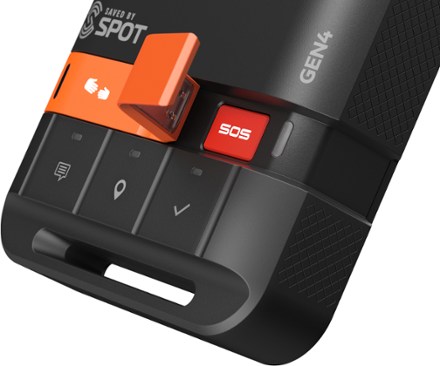
I had the SPOT in a waterproof softcase like the one I use for my VHF AND I WAS WEARING THIN Hydroskin GLOVES. Both of these last two factors contributed to my inability to trigger the RECESSED 911 BUTTON from the water. Condensation inside the waterproof soft case also made it difficult to see the LEDs.
YOU NEED TO PUSH THE 911 BUTTON VERY FIRMLY COMPARED TO THE OTHER BUTTONS AND WATCH UNTIL THE GREEN LED BEGINS BLINKING.
Other contributing factors included having my bell rung from the breaking wave, fatique from the conditions, and cold fingers. These conditions, however, are when you may need a personal rescue device most. It is my belief that this is a fine device overall, but it has its practical limitations. After some consultation with the SPOT folks and some more personal testing of the unit, I am confident that the device would function correctly if I needed to use the 911 feature in a marine environment again.
THIS IS AN FINE RECREATIONAL SAFETY DEVICE BUT IT IS NOT A REPLACEMENT FOR A TRUE EPIRB. AT LEAST IT ISN'T UNTIL THE 911 FEATURE IS EASIER TO TRIGGER AND/OR THE INDICATIONS OF ITS SENDING A 911 CALL ARE MORE CLEAR TO THE EMERGENCY USER.
BTW The SPOT folks were great to work with and very helpful. The Mission Bay Lifeguard and the San Diego Coast Guard were also pretty terrific. Less than 30 min from my VHF call, I was safe boat and all with renewed appreciation for having more than one emergency signal device.
How are we doing? Give us feedback on this page.
Shopping Cart
Find REI on:
Facebook
Twitter
YouTube
MySpace
Flickr