How to Choose Hiking Boots and Shoes

Heavy-duty and built for rugged terrain, the women's Asolo TPS 520 GV EVO hiking boots offer waterproof/breathable protection plus superior traction and stability over rugged terrain.
 Earn 2x card rewards
 Instead of 5%, earn 10% in card rewards† on REI purchases—even sale items—with your REI Co-op® Mastercard® Sep 18–28. Terms apply. Learn more
Imported.
View all Asolo Women's Backpacking Boots| Best Use | Backpacking |
|---|---|
| Footwear Height | Over-the-ankle |
| Footwear Closure | Lace-up |
| Waterproof | Yes |
| Type of Waterproofing | GORE-TEX waterproof/breathable lining |
| Upper | Full-grain leather |
| Lining | GORE-TEX membrane/nylon |
| Midsole | Dual-density molded polyurethane |
| Support | Asoflex |
| Outsole | Vibram rubber |
| Can Be Resoled | Yes |
| Weight (Pair) | 3 lbs. 10.4 oz. |
| Gender | Women's |
Adding a review will require a valid email for verification
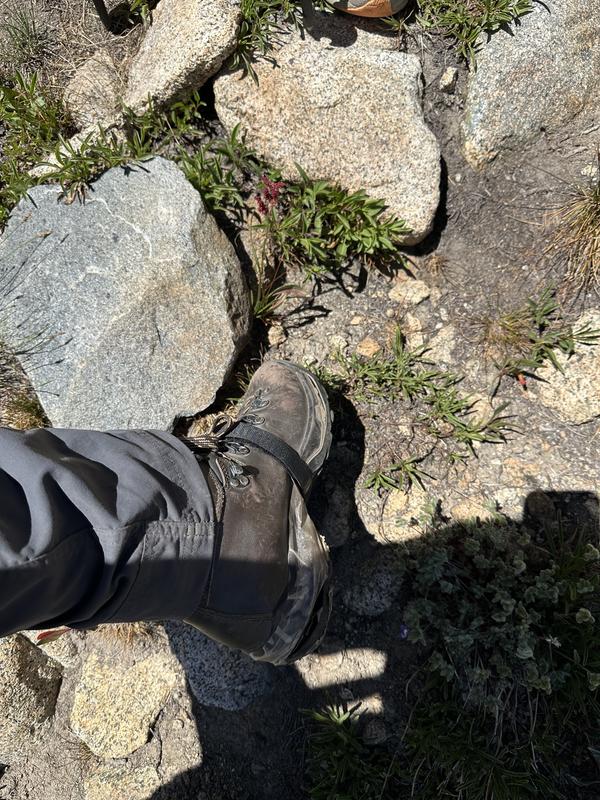
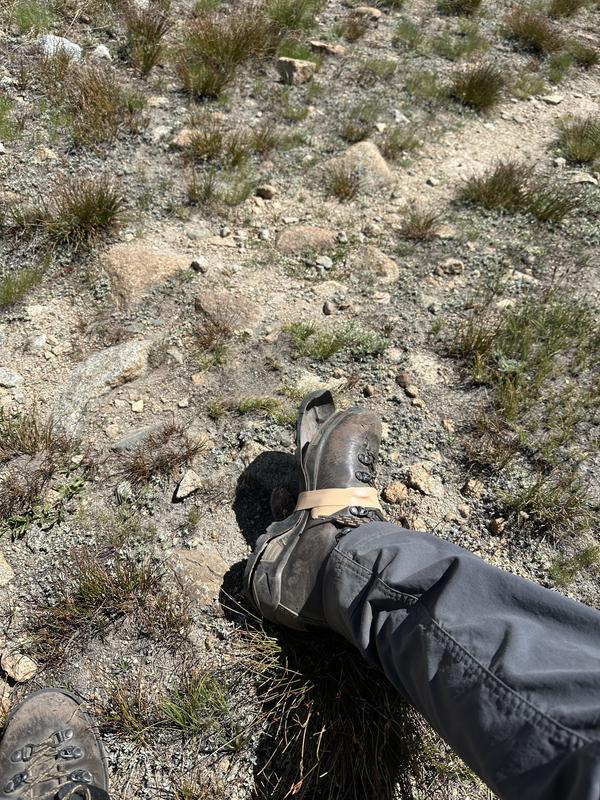
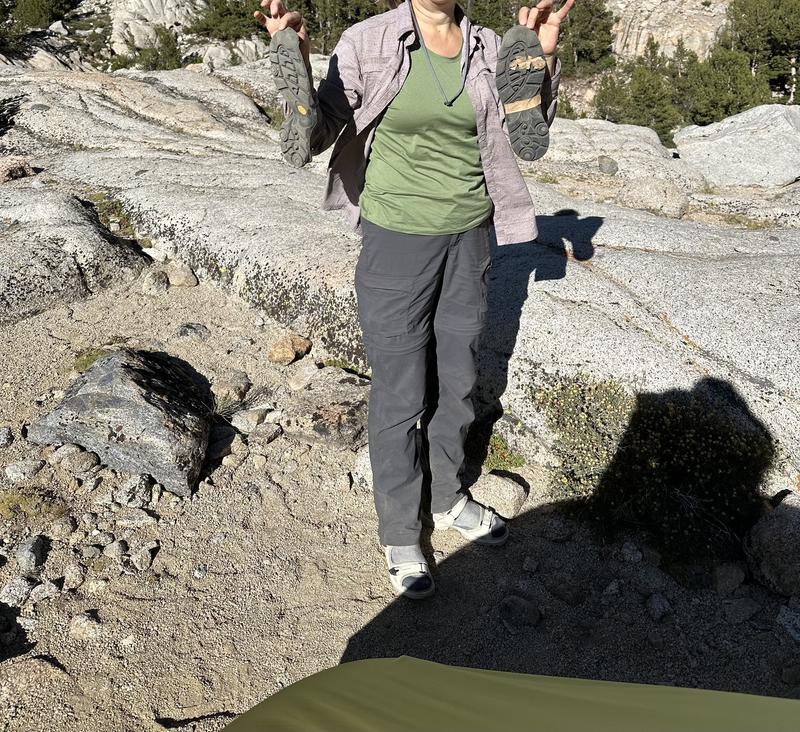
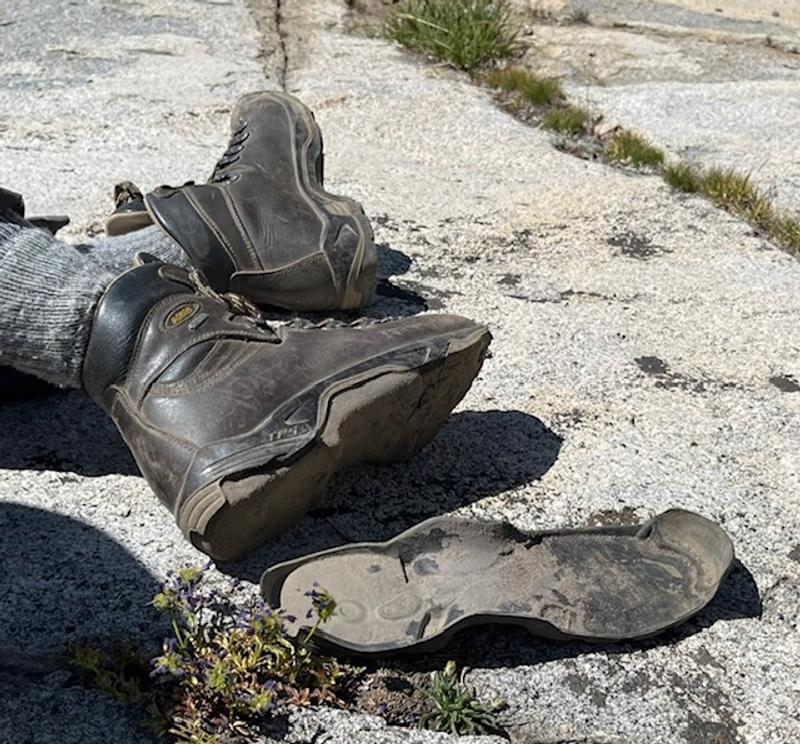
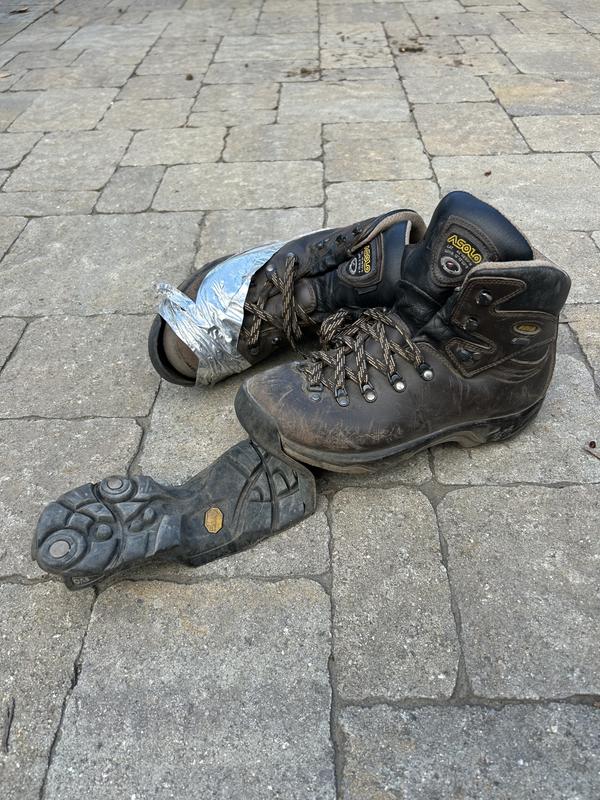
I can’t believe I had the exact same experience as the previous reviewer — and in the exact same place and time: Piute Pass, just two weeks ago! I bought my boots almost exactly eight years ago, in June 2017. They’ve been with me on many happy trails — comfortable, sturdy, and reliable. I wore them a few times each year and truly thought they’d last forever. But on this recent backpacking trip, the soles just disintegrated. First one boot, then the other — only about half an hour apart — forcing us to cut the trip short. It was as if the glue had simply “expired.” Please, inspect your boots thoroughly before heading out, even the ones you’ve always trusted. This could be life-threatening if it happens in remote terrain far from help. I hope the company takes this seriously and makes changes to prevent it in the future.
I purchased the previous version of this boot: TPS 520 Evo but you may find my experience pertinent. The problem is that I’m too old. The very few pair of high-quality hiking boots that I’ve owned over the decades did not fall apart. The Vibram would gradually wear down, the leather upper might eventually crack, the lace ends might fray, but the sole would NEVER detach from the boot. The glue would hold. So I did not know that the current generation of boots in which the Vibram sole seems to be glued to a layer of foam (what could go wrong?) will simply self-destruct at any moment and with no notice. For the record, I purchased these boots 8 years ago, but they sat in the closet for four years due to hip and knee issues. They looked like they were in fine condition, sturdy and comfortable. Heading to Piute Pass for five days of hiking, the right sole detached by the fourth mile. The left boot, which still looked good, fell apart on the hike out. Is today’s hiker supposed to buy a new pair of boots every year and pitch last year’s into the landfill (for eternity)? How secure can a hiker feel on, say, a 60-mile loop trip? I hope that my old German-made boots are still in the garage, but I doubt it.
I owned a pair of these boots for 10 years, 4 years worth of daily cross-country hiking (I had a surveying job). The sole of the boot did start separating from the body, but I worked these boots *hard*. I couldn't even estimate how many miles I put on these boots. While working, I could literally stand in a stream and not get wet feet (the only person of my five-person crew to boast dry feet at the end of that day). I love these boots so much I sought out a second pair, and they are just as lovely and wonderful as the first pair.
I had a pair of these boots about 10 years ago and they fell apart on me 10 miles into the backcountry. Luckily I had just enough duct tape to get me back. I wrote Asolo about it and they were no help so I swore to never buy Asolo ever again. Just keeping this word out that there's a good chance your asolo boots will completely fall apart on you in exactly the wrong moment
Another review said they were to narrow. I’m 5’3” and normally wear 7 or 7 1/2, depending on the maker. In boots I tend to go 1/2 size bigger. I am 60 and my feet have widened some. i was hesitant to order the 7 1/2, but the 8 was not available. I put on the 7 1/2 and it was so comfortable. It fits more like an 8 to me which i was happy about. I want to put on thicker socks with these boots. It didn’t feel narrow but possibly because i had more toe room? I’m not an expert in writing, so I hope this will help someone in making a decision regarding the size. I will say they are quite stunning and the color is really close to the picture. I couldn’t find many reviews on this boot so I went to the Asolo website. These boots are from Italy. Also you get a 2 year warranty. Here is what others said on the Asolo website: conjointe. olokaandrea - 9 luglio 2024 My prior pair served me well for at least 10 years but much use the soles just started to fall apart. I was SO GLAD that this boot was still available. Looking forward to another decade of hiking in a boot that gives me confidence on any terrain. verolozo - 9 febbraio 2021 Excellent service and super smooth transaction. I got the boots so fast (4 days) that I could not believe it. They came from Italy and I?m in Canada. I love the boots already. They are very comfortable and of excellent quality and it shows. Not to forget that they look good (this part is also important for me). Thank you Asolo! jamesaglennon - 16 dicembre 2020 Very reliable and comfortable boots, a must have for any hill walkers richard - 5 agosto 2019 Great boot, fits well on narrow foot and beautifully made
First of all, you sent the wrong size. I ordered size 6 and you sent an 8 (Asolo boots). Secondly, how can the last day to return be May 16 when I just received the boots today? To be clear, the product isn't of poor quality, your service is.



Buy a lifetime $30 membership and make a $50 purchase by Nov 12, 2026.*
$40
10% Reward*
on this and every eligible full-price item*
+
$30
Bonus Card*
valid for 30 days after joining*
=
$70
Value