Consider Signing Up for a Class or a Tour
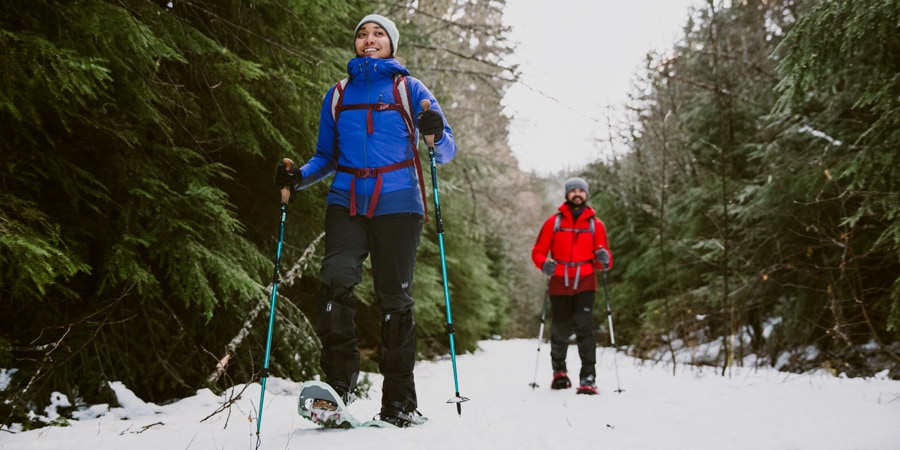
Even though it's a simple activity that you can do on your own, going with an instructor or a guide on your first snowshoe sojourn will make things even easier.
Buy or Rent Suitable Snowshoes
Wet, compact snow is best handled by smaller snowshoes (with less flotation) than you need in powder snow, which requires larger snowshoes (with more flotation). A snowshoe's "recommended load" refers to your weight plus the weight of your gear. Not sure? Buy or rent the smallest snowshoes that will support your load. You can also read How to Choose Snowshoes to learn more. Many REI Co-op stores rent snowshoes and can help you get the right pair for your weight, the terrain and snow conditions.
Carry a Larger Pack than Usual
The extra clothing and gear you need for a winter day trip can equal as much as you'd take for a summer overnighter. A pack with an outer pocket is handy for carrying a snow shovel or for your snowshoes should you need to carry them in places.
Use Poles
Poles help with balance and make crossing slopes easier. You can use snowshoe poles, ski poles or trekking poles. When using trekking poles, replace the standard baskets with larger snow baskets to improve performance in deep snow.
Bring a Repair Kit
Wrap some duct tape around one of your snowshoe poles to secure broken binding straps or patch puncture holes. Carry a few plastic tie wraps (used for securing cables) or bailing wire to attach decking back to the frame.
Warm Up Your Muscles
Walking on snowshoes requires that you take longer steps than normal, especially uphill. You also walk with your feet much wider apart than normal. Lightly stretching your hamstrings (muscles on the backs of the thighs) and hip flexors (muscles in front of the hips that lift the legs) will help your flexibility for snowshoeing.
Follow Backcountry Safety Practices
It's a sad fact that most avalanche victims inadvertently triggered the snow slide that buried them. Take classes in avalanche safety and read our series of articles on Avalanche Basics before heading out to the mountains. Have every person in your party carry and know how to use an avalanche transceiver, probe and a shovel.
Drink Plenty of Fluids
Just like on summer trips, you need to stay hydrated when you're active. To keep hydration systems flowing, use an insulated tube or fill the reservoir with warm water. Fill an insulated bottle with hot cocoa, tea or soup, too, because they're great pick-me-ups in cold, wet conditions.
Take Turns Breaking in Fresh Snow
This lets everyone in the group share the extra work. As soon as the leader is tired, he or she takes a break by moving to the back of the group. Then the next person in line kicks steps for a while, and so on. This is especially useful on steep slopes so that no one becomes exhausted.
Use Hand Warmers and Foot Warmers
Hand warmers and foot warmers are small chemical packets work wonders for keeping your digits happy. You can also put them next to your camera or flashlight in cold weather to keep them working.
Carry an Extra Shirt and Socks
Change your base-layer top at the turnaround point of your day trip. Having a dry top will help warm you up for the return trip. And change your socks immediately any time they happen to get wet.
Practice Good Etiquette
Avoid snowshoeing in the groomed ski tracks used by cross-country skiers.
Remember: Safety is your responsibility. No internet article or video can replace proper instruction and experience—this article is intended solely as supplemental information. Be sure you're practiced in proper techniques and safety requirements before you engage in any outdoors activity.