How to Choose a Water Treatment System

Bio

Hiker Treating Water

In urban settings, finding clean drinking water is a cinch: Just turn a tap or grab a bottle and drink up. Treating water in the backcountry is not quite that convenient, though the process is getting simpler and speedier.

After discussing water filters and other treatment options at length with many of my water-guzzling pals at REI, some names repeatedly came up in the conversations. Among them:

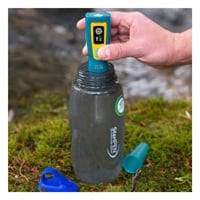
  • The family of ultraviolet light devices from SteriPEN — fast action, no pumping.
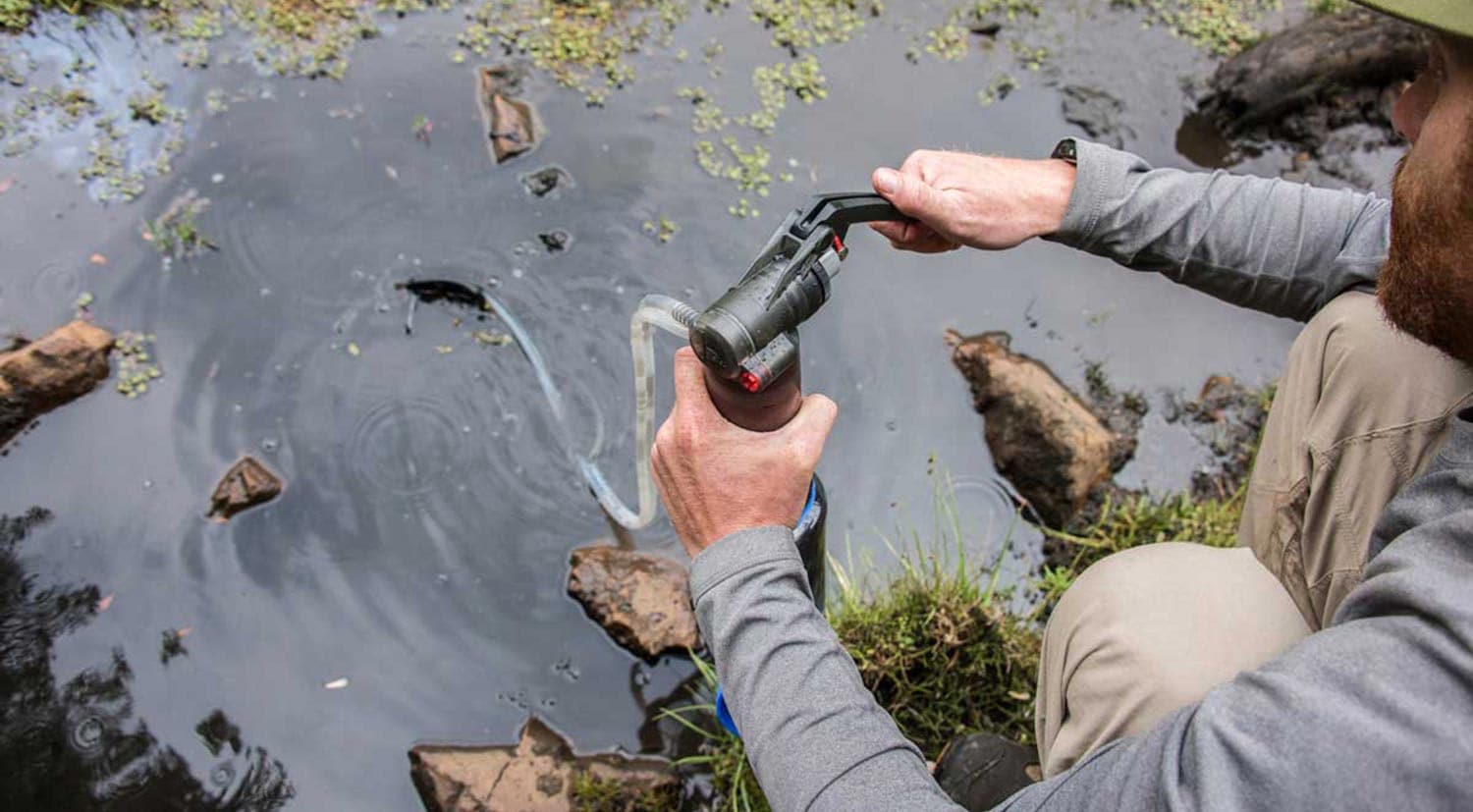
  • A new-generation pump filter, the MSR HyperFlow — water almost gushes into the bottle on each stroke.
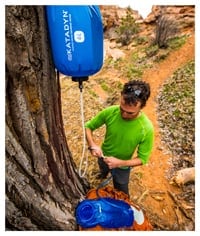
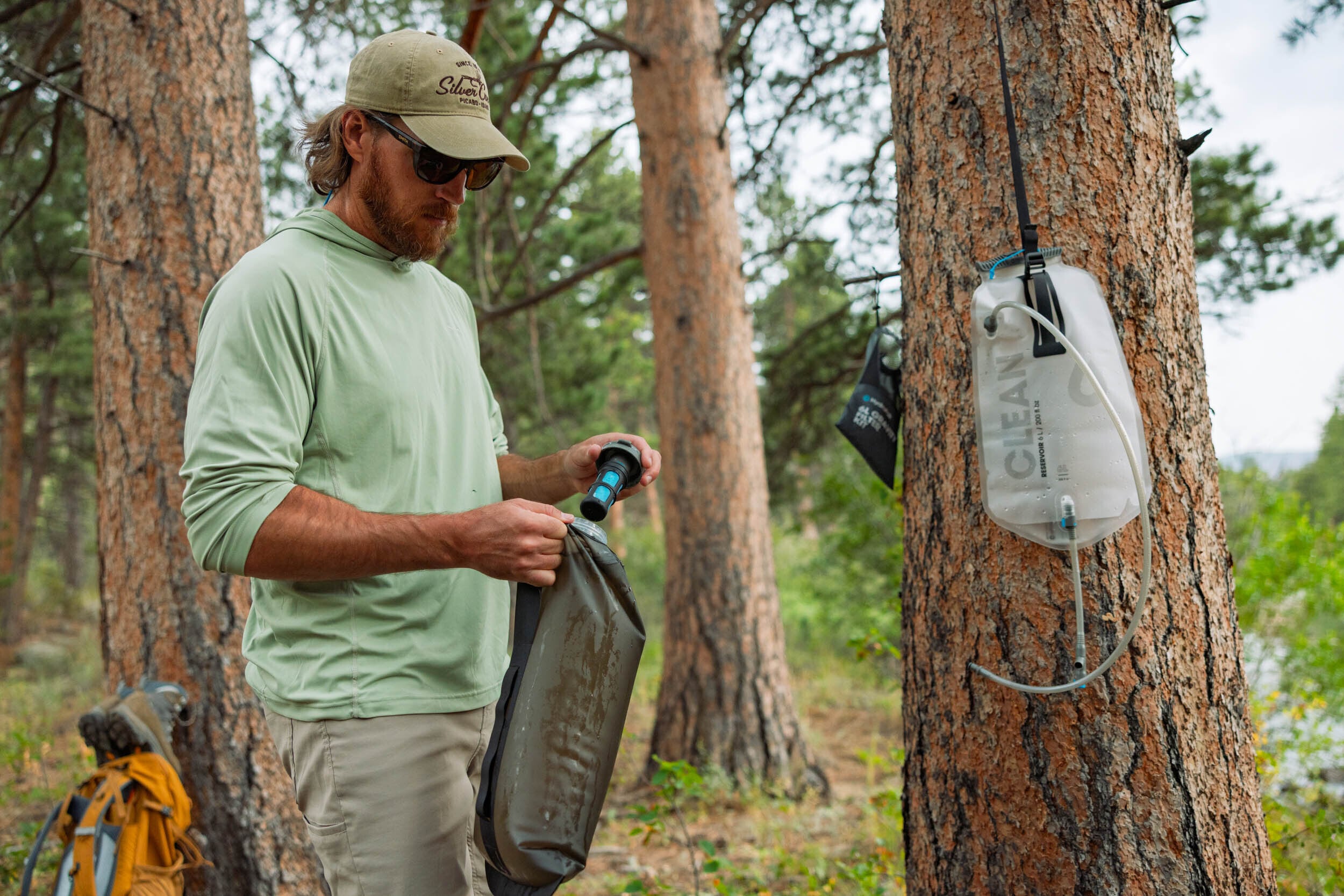
  • Gravity filters — a speedy model such as the MSR AutoFlow quickly and almost effortlessly cleans water. It's a slacker's dream.
  • The Katadyn Vario — water moves through quickly in the "Faster Flow" mode and offers a replaceable carbon core to enhance taste. Another long-time pump-model fave: the First Need XL. It qualifies as a purifier.
  • Chlorine dioxide tablets — for ultralight treks or for use as a backup.

Is Water Treatment Necessary?

Q: Do I even need to treat water in wilderness areas?

Hiker Walking Along Creek

A: Regardless of how pure water may look, any water source on the planet could be tainted with microscopic waterborne pathogens —invisible-to-the-eye, disease-causing pests that, if ingested, could cause all sorts of tumult in your tummy. Severe diarrhea, cramps, vomiting and fever are the symptoms. Serious infections can last for weeks.

Recent research, though, suggests that wilderness water at higher elevations is much cleaner than previously believed. Some experts argue that treating backcountry water is often a waste of effort and that the blame for intestinal infections is more often traceable to preexisting conditions and lax sanitation, particularly unwashed hands.

Q: What's in wilderness water that can affect me?

A: Three groups of waterborne critters are most commonly linked to water-related illness:

  • Protozoan cysts (Cryptosporidium parvum, Giardia lamblia). Tiny (1 to 300 microns; 1 micron = one-millionth of a meter).
  • Bacteria (Escherichia coli, or E. coli, Salmonella, Campylobacter jejuni, Yersinia entercolitica, Leptospira interrogans and many others). Very tiny (0.1 to 10 microns).
  • Viruses (hepatitis A, rotavirus, enterovirus, norovirus, Norwalk virus). Exceptionally tiny (0.005 to 0.1 micron). Viruses are rarely found in North American wilderness waters. Only purifiers (not filters) eliminate viruses.

For a more detailed look at these pathogens, please view our companion article "Water: What Are the Risks?"

Q: How do they get in the water?

A: Protozoa (parasites) and viruses are present in surface water that has become contaminated by animal or human waste, principally feces. (That's polite talk for poop.) Bacteria, including many beneficial bacteria, naturally occur in water. Because water keeps their membranes moist, bacteria thrive in water. Water contaminated by fecal material often results in a population of harmful bacteria such as E. coli. When soap is introduced to water, it creates a supply of nutrients of that can sustain pathogens or cause algae blooms. Soap residue generated by careless humans is a growing problem in backcountry water.

Q: Are these bugs everywhere?

A: Potentially, yes. Yet studies conducted in California's Sierra Nevada since 1998 suggest that many remote waterways and springs in less-traveled, high-elevation backcountry regions are rarely contaminated.

Q: How can a person know if a water source is tainted?

A: Unless you are a scientist with testing materials, it's guesswork. Over time, though, experienced wilderness travelers can learn to make reasonably educated evaluations. Yet even the savviest outdoor explorer will choose to carry some method of water treatment for the inevitable situations where water is viewed with suspicion. Thus REI recommends always carrying some method of water treatment when exploring the backcountry.

Choosing a Water Treatment System

Q: What kinds of treatment methods are available?

A: Several:

  • Boiling
  • Pump filters and purifiers
  • No-pump (gravity-dependent) filters and purifiers
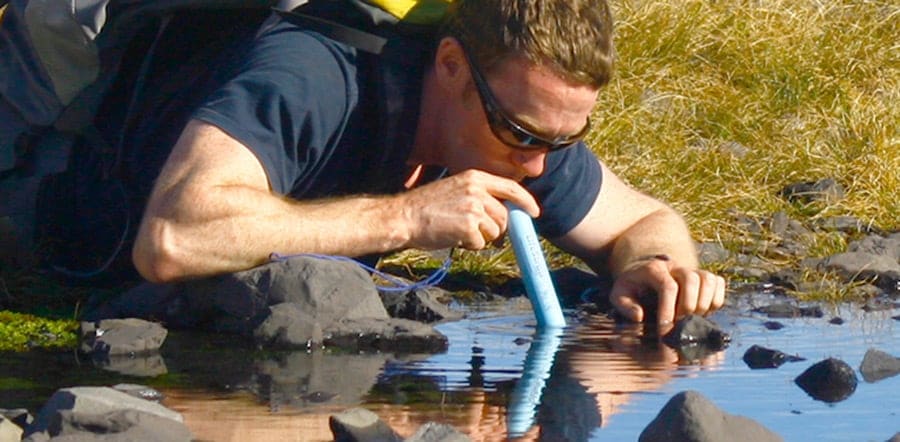
  • Squeeze bottles (with in-line filtering "straws")
  • Mixed oxidant solution pen
  • Ultraviolet light pen, or wand
  • Chemicals (aka halogens)

Q: Which is best?

Hiker Filtering Water

A: It's open to debate. Ultimately it's a subjective decision based on personal preferences. Most outdoor people have an opinion on what they think works best, and some of the favorites that several of my REI colleagues and I have used are mentioned at the beginning of this article. But those are just some of the good choices available at REI.

Here are the key criteria for evaluating water-treatment methods:

  • Effectiveness
  • Speed (or, for filters and purifiers, output or flow rate)
  • Weight
  • Size
  • Pore size (of the filtering "medium" — which manufacturers may call a cartridge, membrane, labyrinth, element or matrix — housed inside a filter)
  • Convenience/ease of use
  • Maintenance (field cleanable)
  • Longevity/durability
  • Impact on taste
  • Cost

Historically, pump filters have been a popular choice among hikers and backpackers. Ultraviolet (UV) light devices, meanwhile, have gained a following in the short time they have been available. Ultralight devotees often prefer the low weight and low bulk of chemical treatments.

Based on our collective experience, here is our view of how the various methods stack up:

OVERVIEW Filters/
purifiers
Gravity filters Squeeze bottles UV light Mixed oxidant Halogens
Speed 3-4 3-4 2 4 4 1-2
Weight 2-3 2-3 2 4 4 5
Size 2-3 2-3 2 3 4 5
Pore size 5 5 4 NA NA NA
Convenience 3 4 5 4 4 5
Ease of use 2-3 5 3 5 4 5
Maintenance 3* 4 2 5 5 NA
Longevity 4 4 2 4 4 3
Durability 3 4 3 3 4 3
Quality of taste 5 (F), 3 (P) 5 5 (F), 3 (P) 5 2-3 1-2
Cost $60-$220 $65-$80 $35-$50 $79-$149 $140 $6.50+

5 = Excellent, 4 = Very good, 3 = Good, 2 = Fair, 1 = Poor; NA = Not applicable.

* Some filters are not cleanable.

Note: What's the difference between a filter and a purifier? Purifiers meet an Environmental Protection Agency standard for eliminating viruses as well as bacteria and protozoa. But the risk of viral contamination in North American wilderness waters is believed to be low, so filters are considered quite sufficient for backcountry use in the U.S. and Canada. Purifiers are often recommended for international travel. See our companion article on water treatment for international travel.

Not surprisingly, just one pump-style purifier, the First Need family of devices, remains in circulation at REI. First Need uses a proprietary "structured matrix" that somehow snags protozoa, bacteria and viruses within its electrochemically charged labyrinth. No chemicals are used, so the water’s taste is not impacted. The MSR Sweetwater Purifier System, meanwhile, involves pump filtering then the addition of a chlorine solution to the water.

In the sections below, we evaluate how various treatment methods perform point by point.

Effectiveness

Method Protozoa Bacteria Viruses Process
Boiling Water is boiled for at least 1 minute.
Filter   Water is strained through an internal element (also called a cartridge or a "filtering media"), either by pumping, gravity or squeeze bottle. Squeeze bottles use a straw-like inline filter.
Purifer Same as a filter; one purifier system requires water to interact with a chemical, involving extra wait time before the water is drinkable.
Ultraviolet light Water is exposed to UV light; exposure time: roughly 90 seconds per 32 fl. oz.
Mixed oxidant Water is exposed to an electrically activated salt-based solution.
Chlorine dioxide * Tablets are dissolved in water.
Iodine * √** Tablets, crystals or tincture are dissolved in water. Important: Pregnant women and people diagnosed with a thyroid condition should avoid iodine.

* Requires wait time of 15+ minutes.
** Not effective against Cryptosporidium.

Note: To view and compare most of the specifications listed above, click the Specs tab on product information pages at REI.com. Specs can also be found on printed Product Information Guides, available at REI stores.

Speed (Output or Flow Rate)

Boiling: Poor

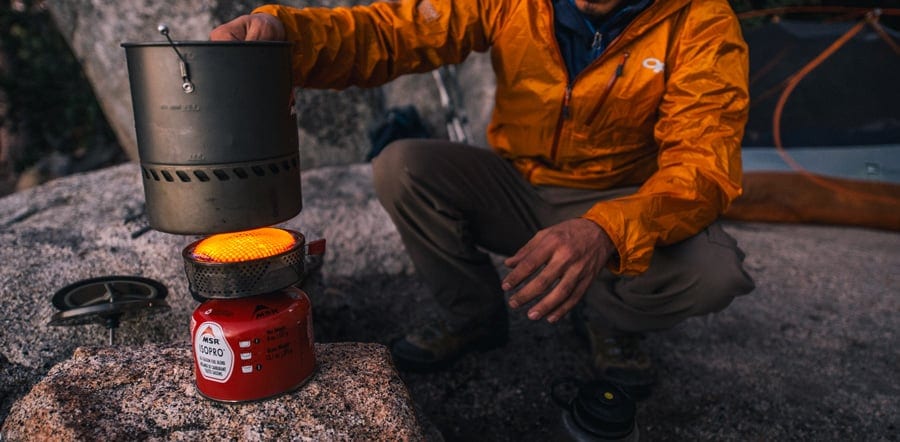
Requires setup time, more time to bring water to a boil, then more time for the water to cool. As such, boiling is usually best reserved for cooking, emergencies or a last resort.

Filters/purifiers: Good to very good

Filters or purifiers that promise an output (or flow rate) of greater than 1 liter per minute are pretty speedy. Some new models can exceed 2 liters per minute and are the fastest pump-style devices now available. In general, the larger the surface area of the filtering medium, the faster the flow.

Gravity filters: Good to very good

Flow rate depends on the type of filtering media being used. Estimates range from 0.5 to 1.5 liters (or more) per minute.

Squeeze bottles: Fair

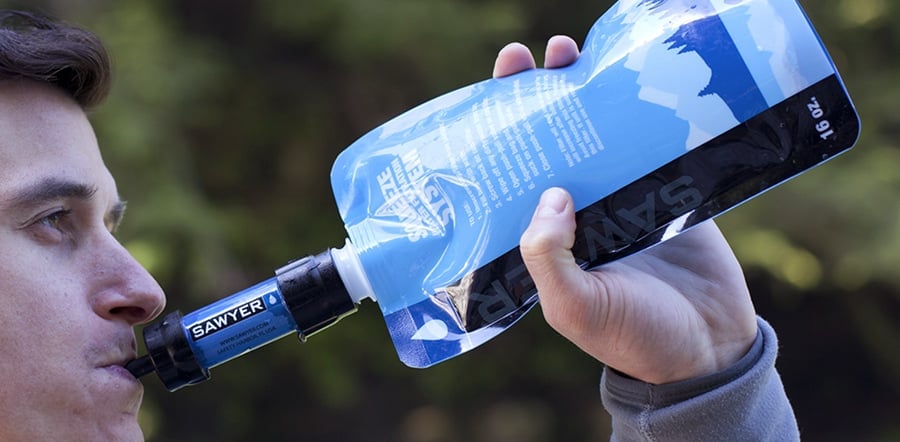
Equipped with filtration or purification straws, they offer dip-and-drink swiftness but deliver water in thin streams. You get fast action, but a small quantity.

Electronic devices: Poor to fair

Iodine, chlorine dioxide and some purifiers require some wait time before the water is drinkable. The time ranges from 15 minutes to 4 hours, depending on the temperature and/or murkiness of the water. The colder the water, the longer the wait. Cryptosporidium , likely due to its hard shell, has shown a high resistance to halogens. If rangers or land managers indicate that Cryptosporidium is a major concern in the area where you plan to explore, consider choosing a different treatment method.

Note: Output figures for filters and purifiers (liters per minute) are estimates provided by manufacturers. One liter (33.8 fluid ounces) per minute is a commonly cited flow rate, though sometimes people find the 1 liter/1 minute ratio to be an optimistic calculation. Our online specs also include a "strokes per liter" estimate, indicating the kind of pumping action you can anticipate with individual pump devices. Realize that your results may vary.

Tip: With a pump device, when the flow becomes slow, take action: Clean or backwash your device to optimize its output.

Our advice: For the quickest operation, consider pump (mechanical) devices with high output numbers or check out an ultraviolet light wand.

Weight and Size

Filters/purifiers: Fair to good

These mechanical devices typically range between 6 and 20 inches in length, 2 to 4 inches in diameter and 8 to 16 ounces in weight.

Gravity filters: Fair to good

When dry, they weigh between 11 and 17 ounces. The water bags lie flat when empty; their hoses and filtering media are the only components that create bulk which, rolled with the empty bags, occupy about the same amount of space as a standard filter.

Squeeze bottles: Fair

Bottles are around 12 inches high, less than 4 inches in diameter and weigh less than 9 ounces when empty.

Electronic devices: Good to very good

The SteriPEN (using an ultraviolet lamp) is about 2 inches wide, 6 to 8 inches high (depending on the model) and between 9 and 16 ounces in weight. The MSR MIOX mixed-oxidant device measures 7 inches by 1 inch and weighs a touch less than 4 ounces.

Halogens: Excellent

Carried in small bottles or paper sleeves, chemicals such as iodine or chlorine dioxide weigh just ounces and occupy minimal space.

Our advice: Chemical treatments are the supreme choice for keeping weight and bulk low. The tradeoffs? Delays before you drink (due to required contact time with the water) and an impact on taste and odor. Some new-generation mechanical devices (MSR HyperFlow, SteriPEN) weigh 10 ounces or less and store quite compactly.

Pore Size

Filters/purifiers: Excellent

Pump devices use filtering media, such as a ceramic cartridge, to physically strain disease-causing agents from the water.

To the eye, these media look solid but they're actually porous, containing countless microscopic holes (pores). These holes allow the media to act as a sieve and achieve what is technically called "size exclusion."

The "absolute" pore size of the filtering media used in filters carried at REI ranges between 0.2 and 0.4 microns—considered quite adequate for use in North American wilderness areas. Protozoa and most bacteria are 0.5 microns or larger. (Note: Absolute pore size refers to the largest pore in a porous membrane or surface. When water filter discussions get technical, absolute pore size is more relevant to consumers than "nominal" pore size—an arcane, subjective rating related to pore size and the percentage of material that passes through them.)

As water is forced through the pores, pathogens smash into the surface of the media, separating them from the water that reaches your water container. Take that, you rotten little gut-twisters.

Filters cannot strain away viruses, however. Viruses are exceptionally small (0.005 to 0.1 microns). A device (or system) designated as a purifier is needed if viruses are a concern. (Viral contamination in North American wilderness waters, as stated earlier, is generally considered low.)

To be marketed as a purifier, any device or chemical treatment must meet or exceed the U.S. Environmental Protection Agency (EPA) Guide Standard and Protocol for Testing Microbiological Water Purifiers. EPA-registered products must destroy 99.9999% of bacteria, 99.99% or viruses and 99.9% of protozoa.

Independent labs, not the EPA, conduct such testing. The EPA does not approve or endorse filtration devices or purifiers; it simply provides registration numbers. Treatment methods that use chemicals for disinfection must be EPA-registered because the microbe-killing chemicals technically act as a pesticide.

Gravity filters: Excellent

They use the same filtering media as select pump filters.

Squeeze bottles: Very good to excellent

Same as filters/purifiers. Katadyn offers a purifier-grade set of bottles called Exstream. (The XR model is larger.) Inside each bottle is what the company calls a Virustat cartridge. When the bottle is squeezed, water is pushed through the cartridge, receiving a rapid-fire, 3-stage treatment. It passes through:

  • a filter (using pleated glassfiber with 1 micron pores, which captures any protozoa or bacteria sheathed in exoskeletons)
  • tiny beads (a little larger than sand) of iodinated resin, which deactivates any tiny, fragile bacteria or viruses
  • carbon granules intended to remove odors, tastes, and chemicals.

The end result, which exits out a straw-like tube in a narrow stream, is purified water, according to its EPA registration. Note: The Katadyn Micro squeeze bottle lacks iodine beads and is considered simply a filter.

Electronic devices: Not applicable

Halogens: Not applicable

Our advice: Don't sweat pore size unless you are traveling internationally or expecting to treat water sources near urbanized areas, farmlands or grazing areas. (If you are, ask local rangers for their advice on a suitable treatment strategy. For such areas you may want to consider a purifier, chemical treatments or plan to boil.)

Pore size was a hot topic in the 1970s and '80s, when water filters first became widely available and not every model met the much-discussed "0.2" threshold of reliability. Today, filter-makers whose products are available at REI rigorously test their products and offer pore sizes of 0.3 or less.

Convenience/Ease of Use

Filters/purifiers: Fair to good

Some physical effort is required, and if the device is pumping murky or silt-heavy water, the pumping action may feel laborious. Generally, though, the effort needed for most pump devices is modest, the water tastes fresh and, excluding some purifiers, is instantly drinkable.

Gravity filters: Very good

Sometimes you might be challenged to find a place to hang the bag. Otherwise, all you need is a way to get water into the bag (which could be tough if your only source is a thin trickle or a hard-to-reach pool) and some patience. Just hang and kick back. Simple.

Squeeze bottles: Excellent

Simply dip and drink — or dip and squirt, to be more accurate. Squeeze bottles and their narrow, low-output streams, though, may annoy someone with a huge thirst.

Electronic devices: Very good

The SteriPEN recommends that you stir the wand or gently agitate the water while the UV light is on (to expose all water inside a bottle). It's best to use the clearest possible water with UV light. If the water is cloudy, consider doubling its exposure to UV light. The MSR MIOX is easy to use, though getting the concentration of the salt-based solution just right takes some trial and error.

Halogens: Excellent

Drop in tablets and wait. Easy. The tradeoffs: Altered taste, waiting.

Our advice: Opinions vary widely here. Let your personal preferences be your guide.

Maintenance (Field Cleanable)

Filters/purifiers: Good (some models are not cleanable)

Many devices use filtering media (interior cartridges made of ceramic, silica, labyrinth matrix or polymer-based hollow fibers) that can be cleaned in the field. That's a big help if the water being treated contains grit or glacial till. When device run slow or become hard to pump, cleanable models can disassembled so the cartridges can be wiped or brushed clean. On some models, hoses can be rerouted so the unit can be backflushed.

Filters using an unprotected glassfiber cartridge cannot be cleaned in the field. They must be replaced.

Gravity filters: Very good

At the time this article was written, all gravity filters offered at REI use cleanable filtering media.

Squeeze bottles: Fair

Backwashing a squeeze bottle is possible, though it is not always effective. Usually a replacement insert is the preferred option when the internal unit becomes clogged. Attempt to use only clear, sediment-free water in squeeze bottles.

Electronic devices: Excellent

Batteries are the only maintenance concern. It's wise to carry extras.

Halogens: Not applicable

Just make sure to carry an adequate supply.

Tip: It's important to read the instructions that accompany any device, mechanical or electronic. Seriously. Read them. Then follow them. It's simple advice, and it's the most direct path to long-term happiness between you and your device. Here's another useful tip: Make sure that your device is allowed to dry completely between trips. Disassemble all parts that you can and allow them to air out for at least a few days.

Longevity/Durability

Filters/purifiers: Very good

Manufacturers estimate that their units can handle between 200 and 1,000 gallons. (The venerable Katadyn Pocket Filter, with its silver-impregnated ceramic cartridge, promises to deliver 13,000 gallons.) Using the clearest, grit-free water possible will boost a filter's longevity. Keeping a device clean, lubricated and well-maintained will also extend its life.

As for durability, handle a filter's internal media with care, since these cartridges can break. In subfreezing conditions, purge water from the internal media, particularly overnight. Water left inside could freeze and crack the cartridge.

Gravity filters: Very good

Estimates range from 750 to 1,500 liters (200 to 400 gallons). As with traditional filters, try to use the cleanest, particulate-free water possible. Avoid letting water inside the filtering media freeze.

Squeeze bottles: Fair to good

To optimize longevity, use only clear, sediment-free water in a squeeze bottle. If you insist on using one in areas where the water carries a high level of grit, silt or glacial till, be sure to carry a replacement filtering (or purifying) insert, cartridge. When the insert clogs, it must be replaced. The plastic bottles themselves offer the durability of a traditional water bottle, which is satisfactory for common backcountry uses.

Electronic devices: Good to very good

Ultraviolet light and mixed-oxidant devices are not impacted by grit. They are, however, battery-dependent. The MSR MIOX projects an estimate of up to 200 liters using 2 lithium CR123 batteries. For the SteriPEN Classic, estimates range from 15 liters (using alkaline batteries) to 100 liters (using NiHM batteries). Care must be taken when handling the glass element of the SteriPEN; avoid dropping and breaking it.

Halogens: Good

Be mindful of "use by" dates included on the packaging. Halogens, in general, are believed to maintain effectiveness between 1 and 3 years.

Tips: Grit is not good when filtering water. To screen it out, some systems include an intake filter (aka prefilter); some offer it as an optional add-on. We find them valuable and encourage you to seek them out.

Our advice: All of the products that make the cut at REI are built to last. If cleaned regularly and cared for properly (which begins with a thorough reading of the instructions), these devices should offer many years of service.

Quality of Taste

Filters: Excellent

Water that passes through a filter is instantly drinkable and tastes natural. Some filters include (or offer as an optional add-on) a carbon component that can rid water of any inherent unpleasant tastes, such as tannin from a leaf-filled pond.

Gravity filters: Excellent

Same as traditional filters, above.

Purifiers: Good to excellent

One line of purifiers, the First Need series, uses a proprietary internal matrix that captures even tiny viruses. Since no chemicals are used, the water's taste is unchanged.

The MSR Sweetwater Purifier System requires the user to treat filtered water with a chlorine-based solution. The resulting taste resembles chlorinated urban water. Pump purifiers using internal iodine resins are, for now, no longer on the market.

Squeeze bottles: Good to excellent

Purifier-grade bottles, which cause water to interact with iodine-based beads, result in some detectable chemical taste, though not quite as much as direct iodine treatment.

Electronic devices: Fair to excellent

With the MSR MIOX, mixing the right amount of the salt-based solution used by the device requires some practice. If done too heavily, the result is has been compared to swimming-pool water—still drinkable, but not so appealing. Generally, such missteps are avoided after some experience with the device is acquired, but some faint chemical taste will usually be detectable.

With the SteriPEN, no change in the water's taste occurs.

Halogens: Poor to fair

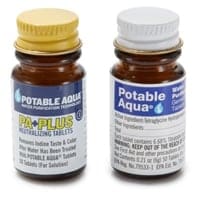
Iodine, in any form, noticeably alters the taste of water. Consider the use of taste-neutralizing tablets as a method to make the taste more acceptable.

Chlorine dioxide tablets give water an urban-chlorine taste that most people find less objectionable than iodine.

Note: Some filters include (or offer as an optional add-on) a carbon component that can rid water of any inherent unpleasant tastes, such as tannin from a leaf-filled pond.

Our advice: If you routinely collect water from funky sources, consider a device that offers a carbon component. Chemical inevitably impact the taste of water. People react differently to their presence. If you have no experience using them but are attracted by their minimal weight and size, take a trial hike with a small package of chlorine dioxide tablets to see how you react to the taste.

Cost

Less expensive: Halogens ($6.50 to $13 or more); squeeze bottles ($35 to $50 or more).

More expensive: Filters/purifiers, gravity filters and electronic devices ($60 to $220 or more).

Other Considerations

Bottle or hydration reservoir adaptors: These items directly connect a filter's outlet to a bottle or reservoir, eliminating the risk of spills. They are included with some filters; with others, they're offered as an optional add-on. They're very handy, especially if you are using a pump filter on uneven ground or in a cramped space.

Intake hose prefilters: Also very handy. These items help keep grit and silt from clogging a filter's internal element. If your water has a persistently high sediment level, or you're on an extended trip, bring some coffee filters. By securing one around the prefilter with a rubber band, it further minimizes the grit that reaches your filter. This can affect the flow rate nominally but helps you get the maximum mileage out of your filter—particularly useful on a longer trip. In a pinch, a bandana can serve as a prefilter.

Carbon component: Some chemicals and unpleasant tastes (such as leaf tannins) are removed from water when it passes through some sort of carbon core or element. Some filters include a carbon component or offer it as an optional add-on. The Katadyn carbon cartridge, for example, is an impressive add-on for chemical based systems. It really helps remove the taste of dissolved chemicals (and to some degree, leaf tannins).

Take care when using carbon with chemical treatments. Carbon stages can deactivate active iodine in solution. Used too early in the treatment process, carbon may lessen the chance of the water becoming fully "purified" by halogens should the chemicals not receive their recommended contact time with the water. If you're purifying water in 2 stages, this is important to understand. The correct order: Halogens first, filter with a carbon component second, perhaps as long as 4 hours later. Some filters include a carbon stage, and running halogenated water through one too soon can reduce the effectiveness of purification.

Base camping: Gravity filters make an excellent choice for base camping in the field or in campgrounds where piped water is not provided. No pumping necessary, just patience. Fill it up at night, wake up to clean, filtered water.

A designated "dirty" water collector: REI carries a variety of lightweight, foldable, small-packing buckets or sinks that can be used for dipping water out of lakes and creeks. (Search REI.com for "sinks" or "buckets.") This offers a number of advantages:

  • Enhanced hygiene—potentially tainted water will contact only this designated container.
  • You can carry your water to a location away from the source, thus minimizing your impact. Plus you can tote water anywhere you like (like a location where it's easier to maneuver and less prone to accidents).
  • Water can be allowed to sit so any sediment sinks to the bottom and you can avoid pushing grit through your filter.

International travel: In almost every situation, come equipped with a purifier, which is effective against viruses as well as bacteria and protozoa. For more details, please see our companion article Water for International Travel.

Chemical contamination: Herbicides and pesticides usually can be absorbed by filters equipped with a carbon element or counteracted by some purifiers that employ a chemical component. With bioterrorism agents, it depends on the size of the organism. Anthrax, for example, is a bacterium that can range from 1 to 8 microns and thus is likely to be captured by all filters carried at REI. High concentrations of chemicals and heavy chemicals, though, most likely will not be removed by portable filters or purifiers. Always avoid collecting water from water sources connected to areas of intense agricultural activity, mines or mining tailing ponds.

Medication: If visiting an area where waterborne illness is commonplace, consult with a physician about obtaining a prescription to combat symptoms. For example, Metronidazole (Flagyl) is a frequently prescribed remedy for giardiasis and/or amoebic dysentery. Nitazoxanide (Alinia/Annita) is also effective against giardiasis and cryptosporidiosis and is commonly carried by travelers, even hikers.

Notes on product availability: REI's product selection varies from time to time. Any of the specific products mentioned in this article could drop out of our product assortment at any time. Sometimes a particular item REI stocks may be temporarily unavailable due to production issues at individual manufacturers. New products may be added before we have a chance to update this article. We apologize if any of these circumstances complicates your efforts to acquire the water-treatment system that you prefer.

Bottom line: Always carry some sort of treatment method. Experienced wilderness travelers can grow to discern drinkable backcountry water from water that needs treatment. Yet uncertainty inevitably arises at some point, so always come prepared to treat water.

Back to Top

How are we doing? Give us feedback on this page.

  • Shopping Cart 
  • |
  •  
  • Buy REI Gift Cards
  • REI Gift Cards
  • Fast, easy and one size fits all.
  • Buy now!
  • Join REI today!
  • REI Membership
  • REI member benefits include an annual refund (typically 10% on eligible purchases).
  • Join REI today!
  • Sign up for REI Gearmail®
  • and get 15% off selected items!
  • Store Locator
  • Locate an REI store near you.