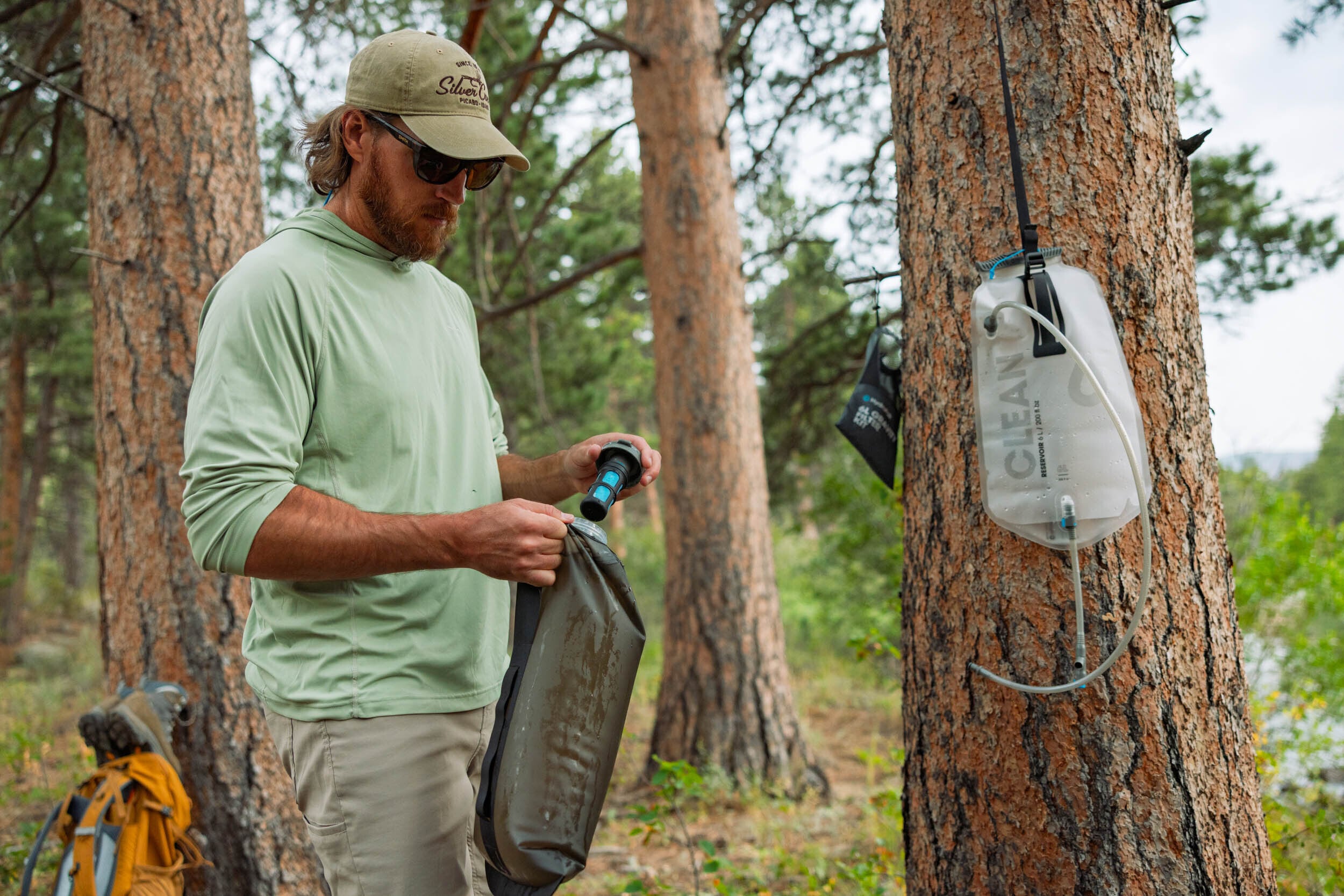
Water treatment is important to maintaining your health in the outdoors. Not all water sources are unsafe, but even the most pristine-looking source can make you sick. If livestock, wildlife or humans can reach an area, so can contaminants transmitted via their fecal matter. As more and more of us explore wild places, contamination levels rise. Why play intestinal roulette when you have so many options for treating your water?
This article offers guidance on selecting a water-treatment method to use in the outdoors. To learn about options for travel abroad, read Water Treatment for International Travel.
Consider these factors when choosing a water filter or other water-treatment method:
- Filters vs. purifiers: Know what you're trying to avoid and the basic methods for avoiding it.
- Types of water filters and water purifiers: The effort required for each type of water-treatment method varies, as does the time for water to be ready to drink.
- The role of a prefilter: If you have to treat water from a murky source, it's a valuable accessory to have.
- Know water treatment best practices: Even the best filter or purifier isn't effective if you don't follow some basic hygiene and usage guidelines.
Video: Choosing a Water Filter
Water Filters vs. Water Purifiers
The difference between a water filter and a water purifier is the size of the microorganism each combats:
Water filters work by physically straining out protozoan cysts (such as Cryptosporidium and Giardia lamblia) and bacteria (such as E. coli, Salmonella, Campylobacter and Shigella). These biological pathogens are the main water concerns if you're traveling in the U.S. and Canada.
Water purifiers also combat viruses, which are too tiny for most filters to effectively catch. If you're traveling in less-developed areas of the world, consider products that also provide protection for viruses (such as hepatitis A, rotavirus and norovirus).
How Water Filters and Purifiers Work
Every filter and many purifiers include an internal element or cartridge, a component that has microscopic pores that catch debris, protozoa and bacteria. Over time, strained matter gums up an element's pores, requiring it to be cleaned and eventually replaced.
Most purifiers use chemicals (such as iodine) to kill viruses, which are too small for most filter elements. Another purification method relies instead on ultraviolet light to treat the pathogens.
Many filters and purifiers also include activated carbon in their elements because it's effective at removing unpleasant tastes from things like leaf tannins. Activated carbon also reduces contaminants like pesticides and other industrial chemicals.
The Role of a Prefilter
Different factors can murk up your water in different ways, such as glacial sediment, silty water, leaf debris and mud stirred up by a rainstorm. Natural particles, though not a health concern, impact how easy water is to treat, how much field maintenance is required and the lifespan of filter elements.
One way to deal with these issues is to use a prefilter. A prefilter is an accessory that simply removes large particles from your water to improve the treatment process.
Many pump-style products come with a prefliter, or you may need to purchase one separately. Here are some reasons to consider using one:
- It helps maintain a pump filter's flow rate, lessen cleaning chores and extend its element life.
- It improves the effectiveness of chemical treatments.
- It's absolutely essential prior to using a UV purifier on nonclear water.
Types of Water Filters and Water Purifiers
Quick Reference Guide to Water Filters and Purifiers
| Method | All-around performance | Large volume | Low maintenance | Ease of use | Low weight | Low cost | Speed |
|---|---|---|---|---|---|---|---|
| X | X | ||||||
| Gravity filters and gravity purifiers | X | X | |||||
| Ultraviolet (UV) purifiers | X | X | X | ||||
| X | X | X | |||||
| Squeeze filters | X | X | X | ||||
| Straw-style filters | X | X | X | ||||
| X | X | X | X | ||||
| Boiling | X | X | X | X |
The summary below covers the basics for each treatment method, but innovation has produced hybrid designs and many unique products. So use this assessment as a starting point, then delve deeply into product descriptions, specs and reviews.
Pump Filters and Purifiers
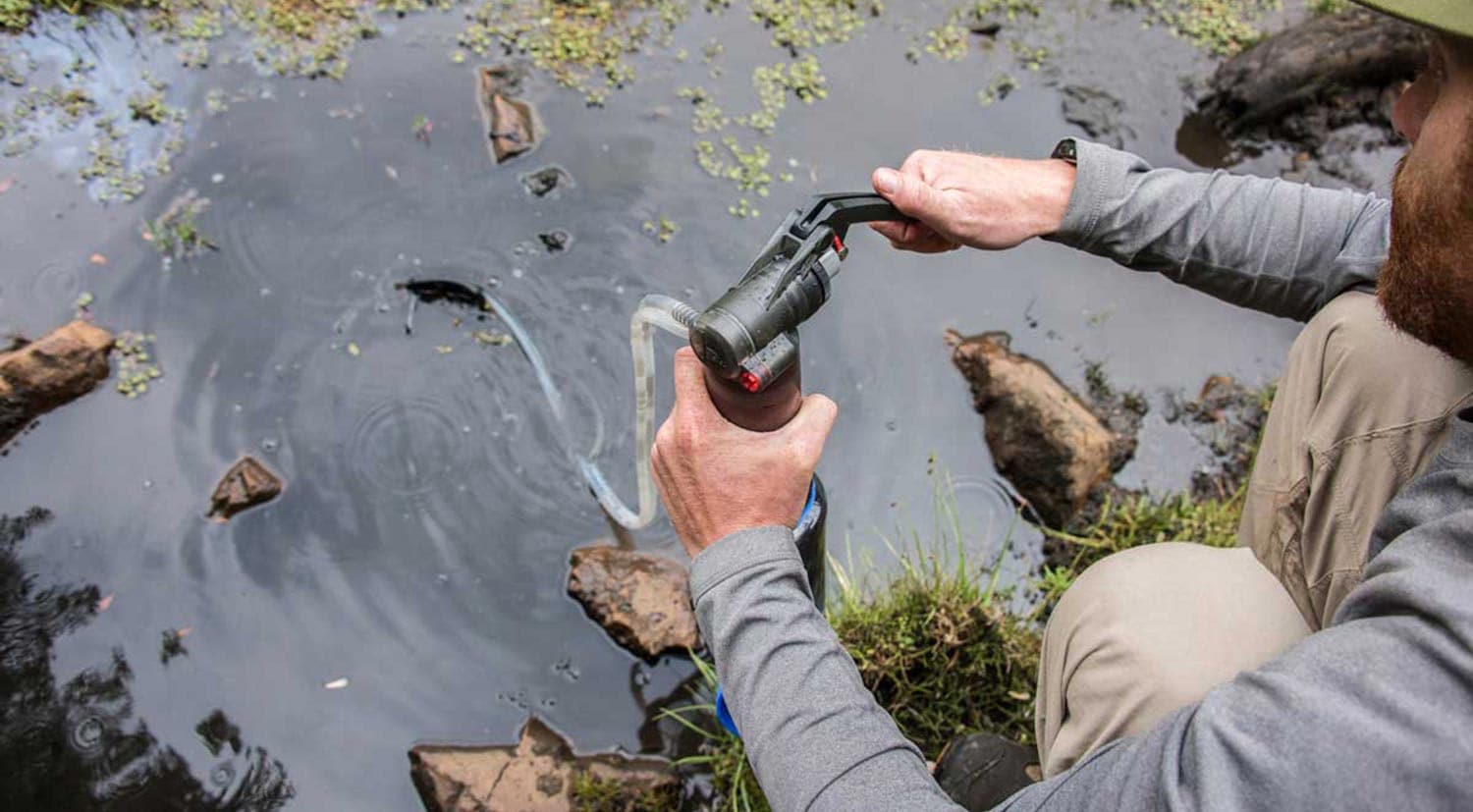
Drop the intake hose into your source and the outlet hose into your water bottle, then work the pump. Some models thread directly to a bottle or reservoir. Pump mechanisms differ, as do flow rates, so compare specs.
Pros:
- You can process precisely the amount of water you need.
- Water can be pulled from seeps and shallow water sources.
- The internal element or cartridge is replaceable.
Cons:
- Pumping can be a chore, especially at the end of the element's lifespan.
- Field cleaning of the element is required.
- Weight and bulk are greater than other treatment methods.
Shop Pump FiltersShop Pump Purifiers
Gravity Filters and Purifiers
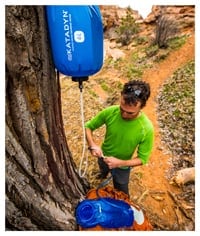
Fill a reservoir, find a suitable place to hang everything up and wait. Most models come with a pair of reservoirs and an inline filter, though the exact setup and provided water containers can vary.
Pros:
- Gravity does the work for you.
- You can easily process large quantities of water for a big group.
- The element or cartridge is replaceable.
Cons:
- It can be hard to find a place to hang reservoirs.
- Treatment process is slower than pumping.
- Seeps and shallow water sources can make it challenging to fill a reservoir.
- Field cleaning of the element is required.
Ultraviolet (UV) Light Purifiers
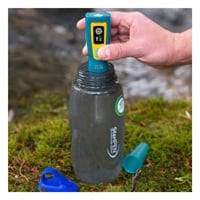
Grab one of these pen-style devices, push a button and stir. Stop when its UV light turns off (60 seconds or so) and you will have treated all the water inside a bottle.
Pros:
- Treatment is easy and water is quickly drinkable.
- No element cleaning and replacement are ever needed.
Cons:
- Requires batteries.
- Silty or cloudy water impairs effectiveness, requiring you to prefilter.
- Multiple treatments are required to produce large quantities.
Bottle Filters and Purifiers

Offering fill-and-sip simplicity, these bottles have built-in filtration or purification elements. Some use the suction provided when you sip from a bite valve, while others work like a coffee press. Another model uses UV light.
Pros:
- Treatment is easy and water is quickly drinkable.
- The element or cartridge is replaceable.
- On average, lighter and cost less than pump and gravity filters.
Cons:
- Water quantity is limited by bottle size.
- Field cleaning of the element is required.
Squeeze Filters
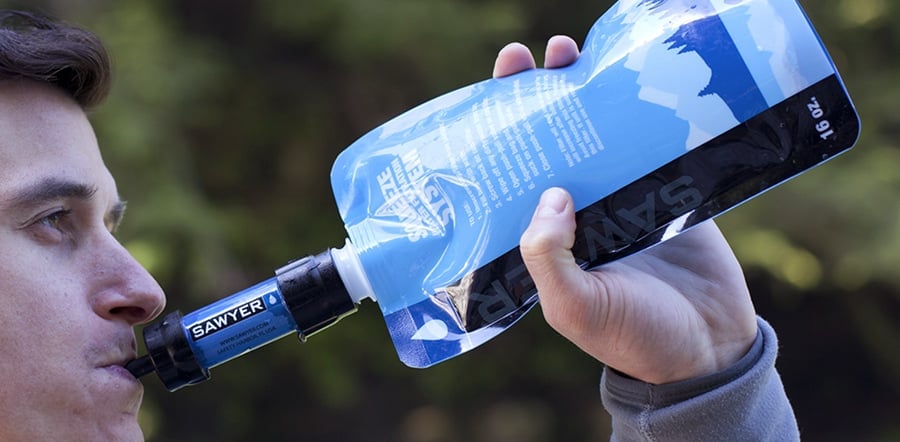
This broad category is similar to bottle filters except that you're filling a small reservoir, then squeezing water through the filtration element.
Pros:
- Treatment is easy and water is quickly drinkable.
- The element or cartridge is replaceable.
- Some double as a gravity filter or straw-style filter.
- On average, lighter, smaller and cost less than pump and gravity filters.
Cons:
- Water quantity is limited by reservoir, flask or bottle size.
- Field cleaning of the element is required.
Straw-Style Filters
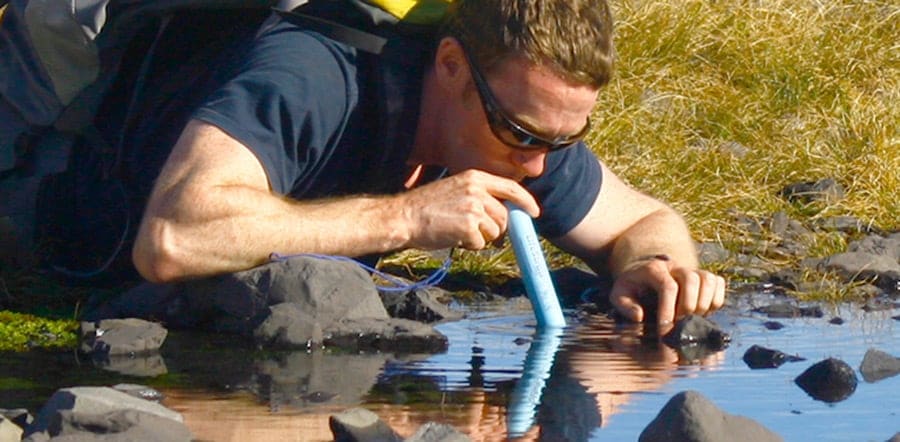
Providing water on demand, these cylinders have a built-in element that lets you slurp directly from the source.
Pros:
- Treatment is easy and water is quickly drinkable.
- On average, lighter and cost less than pump and gravity filters.
Cons:
- Water is only available when you're at a water source.
- Generally only a 1-person treatment option.
- Field cleaning of the element is required.
- Not all models have replaceable elements.
Chemical Water Treatment
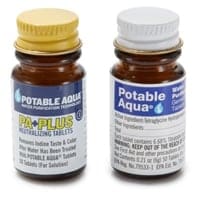
Effective against protozoa, bacteria and viruses, you simply add them to gathered water and wait. Products are typically iodine- or chlorine-based and available in drops, pills or gadgets that mix base ingredients.
Pros:
- Easy to use.
- Ultra-inexpensive, ultra-small and ultralight.
- An excellent backup method to pack in case your main filter breaks.
Cons:
- Wait time before drinking is 30 minutes to 4 hours, longer for icy cold water.
- Iodine products impart a chemical taste—can be countered by taste-neutralizer tablets.
- Iodine products aren't effective against Cryptosporidium, though they work fine against other types of protozoa.
- Iodine products can be a concern to pregnant women and people with a thyroid condition.
Boiling
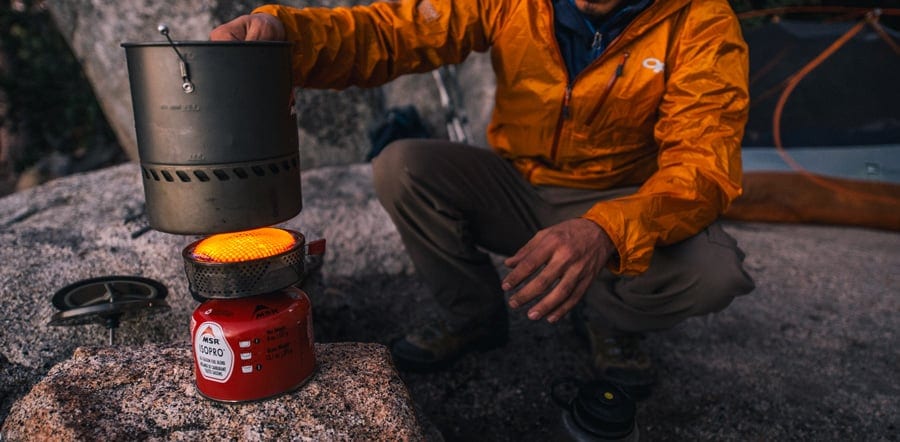
Your stove, fuel and a pot are an effective treatment system to combat the full spectrum of biological pathogens. Bring water to a rolling boil for 1 minute; if you're above 6,500 feet, boil it for 3 minutes.
Pros:
- The only additional supply you need to pack along is extra fuel.
- Murky water doesn't impair effectiveness.
- Serves as a readily available backup method in case your main filter breaks.
Cons:
- Time and effort required to bring water to a boil.
- Wait time for the water to cool.
- If it's your primary treatment method, you need to pack an extra fuel container.
Water Treatment Tips and Best Practices
Avoiding a few key mistakes and taking a few precautions will make any treatment method more effective.
- Separate and clearly designate dirty and clean water containers.
- Pay close attention to directions because every product has detailed steps to avoid cross contamination (introducing nontreated water into your treated water).
- Seek out clean water because sediment impairs treatment effectiveness. If only murky sources are available, use a prefilter or allow sediment to settle from gathered water.
- Keep your hands clean by packing hand sanitizer and using it often.
- Keep camp, toilet and dishwashing areas at least 200 feet from any water source. For details on all Leave No Trace principles see LNT.org.
- Freezing conditions require special consideration: Melting snow is your best bet. Filters that can freeze and crack can be stored overnight in your sleeping bag, though that won't help if daytime temps remain below freezing, too. Batteries on UV pens won't last as long, and many chemicals' effectiveness diminishes in the cold (so read directions carefully for any you are considering).